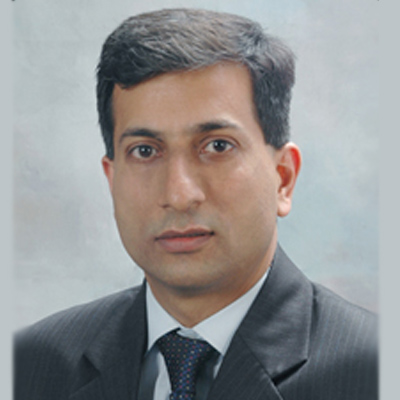
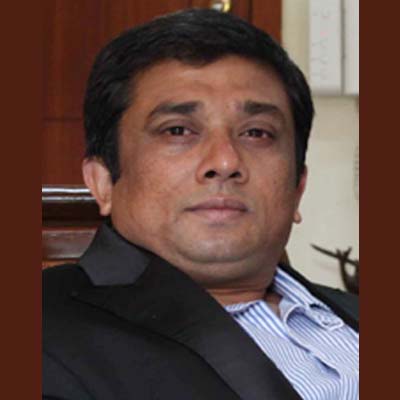
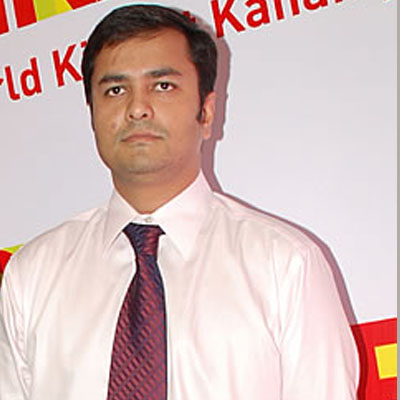
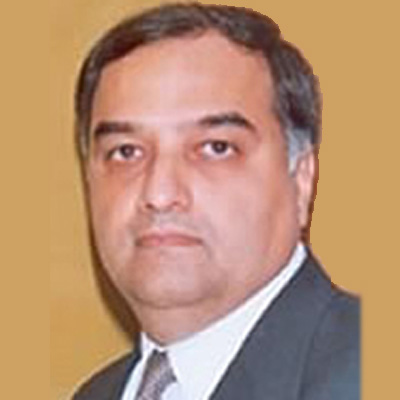
Tag: Sibabrata Das

  • ‘Going global is a key part of our TV content scale up plan’ : Ajit Thakur – UTV Television COO

    ‘Going global is a key part of our TV content scale up plan’ : Ajit Thakur – UTV Television COO

    With industry pundits expecting the television content industry to explode from Rs 14 billion to Rs 30 billion over the next two years, UTV Software Communications is laying the foundation to ride on this boom.

    Having slipped in the television content production business over the years, UTV’s revival strategy includes holding IPR rights for some of the content that it creates, working out a genre-specific approach, and striking partnerships with other production houses.

    The Ronnie Screwvala promoted company, which has set the pace for the Bollywood industry, is readying to develop formats and content that can travel across the globe.

    In an interview with Indiantelevision.com’s Sibabrata Das & Anindita Sarkar, UTV Television COO Ajit Thakur explains how the company plans to scale up its content business.

    Excerpts:

    Why is it that UTV’s television content production business slipped over the years?
    A few years back, production houses started emerging as specialist content providers. While Hats Off Productions mastered comedies, Fire Works started working on thrillers and Synergy specialised in format shows.

    UTV did not take steps in this direction. We didn’t have a genre-specific approach, but continued to do a number of things. Also, good talent was lacking in the industry.

    Is UTV going to focus on specific genres as part of its revival strategy?
    Our key focus now is to specialise in different genres and develop formats for which we can hold the IPR. We have identified a need gap in reality formats and have gone into it. We are also looking at formats and content that can travel in the global marketplace. We are clear that we want to hold the rights to some of our content. That is what keeps international content companies like Endemol and FremantleMedia in strong financial health; about 70 per cent of their turnover comes from 3-4 big shows.

    Which is why you are interested in creating a property like Gandhi?
    Exactly. If you do not hold the IPR to the big properties that you create, you will never be able to cushion yourself from the cyclic downturns that every creative content company goes through. The current structure of the broadcasting business is such that there is no value model for the production houses. We are out to change that. As part of that ambition, we are producing Gandhi for India as well as the world.

    How much will the fund requirement be for this project and are you planning to strike a deal with an international broadcaster ahead of production as a de-risk strategy?
    We will have to get there, no matter what it takes. We are creating an internal research team and will have a panel of Indian and international historians. Most of the creative team will not be from the television but the film industry. We will have writers from Bollywood and the West. Since we are sure that the content will travel, we are producing it in Hindi as well as in the English language. We are in talks with US and UK broadcasters.

    Will you hold the IPR for the Indian market as well?
    We will hold the global rights while selling the Hindi version of the drama series to an Indian broadcaster. Once we have a definite fix on the story board and zero in on the cast, we will know about the costs. We haven’t worked out the budget yet but are prepared to spend on the project. It is easy to go to the Middle East and South East Asian markets. We want our content to travel to the US, UK and European markets.

    If content firms do not hold the IPR, they will never be able to cushion themselves from cyclic downturns

    How will the basic revenue flow from the content supply to local broadcasters be taken care of?
    There is a business opportunity in soaps, reality, mythology and fantasy content. For starters, we have hit on the reality genre. We have set up the team for it and have produced EK Se Badhkar Ek for Zee TV. We will be replacing it with another reality show for the same channel. We will have Ek Khiladi Ek Hasina, a weekly dance reality show which has six leading cricketers as participants, on Colors. The game show, Cash Cab, has been developed by us on a licensed format, originally produced by Lion Television for ITV. Bindaas will be airing it from 15 September.

    We see the reality genre having the potential to travel to overseas markets as well. Our aim is to produce six reality shows by the end of this fiscal.

    Our next look will be in fiction and we will take a genre-specific approach. In fact, every six months we will get into a new genre and consolidate in that space.

    What are the genres that carry an opportunity for UTV and could be tapped?
    We are definitely not looking at the saas-bahu genre as the audience for this segment is steadily diminishing. There are thriller, comedy, fantasy and mythology genres. There is enough scope for period dramas too.

    UTV has got into co-production partnerships with different local production houses. Isn’t this the beginning of a new trend, much like what has happened in the movie business?
    Our aim is to be among the top two TV content producers in the Indian market. One way of getting there is by creating partnerships with other production houses who have a distinct content flavour. We have equal joint ventures with three players and are looking at other proposals. We have JVs with Smriti Irani Television Ltd (SITL), Windmill Entertainment with Shekhar Suman, and another with Rajesh Beri. On the Gandhi project, we are doing it with SITL.

    Going global, of course, is a key part of the scale up plan. We have another big project coming up which we feel we can take to the global arena.

    Hasn’t UTV recently started getting into TV content production in the southern languages?
    We were earlier doing only airtime sales for the Sun TV network. But recently we have got into production as well and are doing a show for Sun TV (Tamil) and Gemini (Telugu). It is not a big revenue earner for us, but is more of strategic value. Since we were doing airtime sales, it was a logical step for us to integrate it with our creative resources. Once we have 5-6 shows on Sun, it can be a big step for us.

    In a unique deal, UTV paid a minimum guarantee to NDTV Imagine for Ramayan and syndicated it to the Sun TV network of channels. Will we see more such deals?
    We are close to signing up with a broadcaster for another mythology and syndicating that content down south.

  • ‘NDTV is adequately funded to support its expansion’ : Narayan Rao – NDTV Group CEO KVL

    ‘NDTV is adequately funded to support its expansion’ : Narayan Rao – NDTV Group CEO KVL

     NDTV Ltd is on an expansion overdrive. In over a year, it has launched a slate of channels and moved beyond news into the lucrative Hindi general entertainment space.


    The company has attracted NBC Universal to pump in $150 million for an effective indirect holding of 26 per cent stake in NDTV Networks Plc. Further capital infusion of $120 million has come from a clutch of investors.


    NDTV’s stake in the joint venture company with Malaysia-based Astro has increased from 20 per cent to 30 per cent. The company has also launched NDTV Arabia to tap customised channels in international markets.


    Shepherding this growth has been NDTV Group CEO KVL Narayan Rao. In an interview with Indiantelevision.com’s Sibabrata Das, Rao chalks out the company’s expansion plans and the need for the group to consolidate its operations.


    Excerpts:

    Is NDTV floating a joint venture company with The Hindu Group to launch a Chennai city-centric channel?
    We are setting up a joint venture company with The Hindu Group where we will hold 51 per cent. The Hindu Group will have the balance 49 per cent and the JV will launch MetroNation Chennai in the next 3-4 months. Hindu is a reputed brand at the regional and national level. So we decided to have a content and commercial relationship. It was a natural gravitation towards each other.

    Will we see NDTV get into more such deals with print owners to tap regional markets?
    Regional news is not something on our radar. Our area of expertise is in English and Hindi language news. Our strategy is to do city-centric channels.

    Are the MetroNation channels being transferred to a subsidiary company called NDTV News Ltd?
    The intent is there to have MetroNation as a subsidiarised company. Since it has separate business requirements, we have got a chief executive officer for it. A distinct entity will bring in greater efficiencies.

    NDTV ended last fiscal with a consolidated loss of Rs 1.86 billion. When do we see a turnaround?
    We are in the stage of incubating various businesses. We have seen exponential growth over the last one year and have expanded into the non-news segment as well.


    We forayed into the Hindi general entertainment space with NDTV Imagine in January this year and have just launched Imagine Showbiz. We launched MetroNation in Delhi last year and it is doing well in terms of audience and reach. Now our focus will be to monetise this.


    We have already obtained licence for the World Cinema channel and will be launching it in the next couple of months. MetroNation in Mumbai will probably come up in the next fiscal. We have our plate full.

    Is NDTV spreading itself too thin?
    There are opportunities and media companies are exploiting this. There is, however, an expectation from the marketplace to grow the topline which is putting unnecessary pressure on several media firms. Nobody is given a chance to consolidate. We need to structure that expansion and build the management bandwidth.


    As for NDTV, we are adequately funded to support our expansion drives. We have have built the quality and ability to scale up. And in the news business, credibility is the only way to move forward.

    Regional news is not something on our radar. Our area of expertise is in English and Hindi language news. Our strategy is to do city-centric channels

    Will NDTV Networks Plc. raise money by listing on the Alternative Investment Market (AIM) of the London Stock Exchange?
    NDTV Networks has raised $120 million from a clutch of investors including $20 million from Velocity Interactive Group (earlier called ComVentures). This is the holding company for the verticals including NDTV Imagine Ltd, NDTV Lifestyle, NDTV Convergence, Labs and NGEN Media Services (50 per cent). We have decided that it is better to build the businesses rather than go for an initial listing.

    NBC Universal has the option to increase its stake from 26 per cent to 50 per cent. Will NDTV part with majority in its non-news company?
    NBC Universal has put in $150 million to subscribe to shares of our Dutch subsidiary company which will give it an effective indirect holding of 26 per cent in NDTV Networks. We will never part with control. The other investors are in NDTV Networks.

    Colors has made a strong debut. Will this affect the break even period of NDTV Imagine which reportedly has a funding support of $106 million?
    NDTV Imagine is well on track and is growing steadily. The funding is adequate to take it to EBITDA positive stage. I can’t talk about other GECs.

    While the trend in an entertainment bouquet is to have a GEC and a Hindi movie channel, NDTV Imagine Ltd has launched a niche channel in Showbiz through a joint venture partner. What is the holding structure and potential for this channel?
    NDTV Imagine Ltd will hold 51 per cent in the JV and the balance 49 per cent will be with Cinestar. It is a growing segment and has tremendous potential.


    The launch of a Hindi movie channel is also in the pipeline. We are already in the process of acquiring movies. We are also going to be present in film production.

    NDTV’s consolidated revenue was at Rs 3.66 billion for FY’08. What contributed to this 31 per cent jump in turnover over the year-ago period?
    NDTV 24X7 and NDTV Profit have seen strong growth. NDTV India’s revenues, however, are not growing at the same pace because of the editorial positioning it has opted to take.

    Isn’t there a temptation to take NDTV India the tabloid route as many Hindi channels have successfully done to grow audiences?
    Going the tabloid route is not our strength. That is not our USP. NDTV India is holding on to revenue because of quality. We believe in the long run, good news will prevail and more audiences will come in.

    How is the joint venture with Malaysia-based Astro faring?
    The venture has already launched channels in Indonesia and Malaysia. We were given 20 per cent stake against a fee that we were to charge Astro for our services. Our stake in the joint venture is going up to 30 per cent.

    NDTV Emerging Markets is a subsidiary company which launched NDTV Arabia. Are we going to see more such customised channels being launched in other countries through this company?
    NDTV Arabia will now break into local news bands. It is our first venture into the Middle East and Africa as a customised channel. Yes, NDTV Emerging Markets will launch more such channels in other international markets to provide local news content. It is part of our international expansion plan to reach out to new target audiences.
    NBC Universal’s investment of $150 million for 26 per cent stake in NDTV’s Dutch subsidiary company puts the valuation at Rs 24.2 billion. The market cap of NDTV Ltd, which includes the news channels as well, was marginally higher at Rs 24.5 bn (July-end). Since the true value is not captured, is this the reason why NDTV Ltd is planning to de-merge the company into “news related businesses” and “non news businesses?”
    The aim is to unlock shareholder value and to promote the focused growth of our various businesses. Consultants are working on this and we will evaluate various options after receiving their feedback.
  • ‘We are developing a 100 per cent Indian company’ : G Krishnan – TV Today Network CEO

    ‘We are developing a 100 per cent Indian company’ : G Krishnan – TV Today Network CEO

     TV Today Network Ltd. has been very conservative in expanding its footprint. While TV news organisations Network18 and NDTV Ltd. have scaled up their business model to work out a non news empire, the Aroon Purie-promoted company has stuck to its basic strength of running a string of news channels.

    Holding tight the purse strings, TV Today has stayed a profit-focussed company. Flagship Hindi news channel Aaj Tak continues to be the market leader while Tez and Dilli Aaj Tak are add-on channels serving targeted spaces. English general news channel Headlines Today has got a new positioning of being “refreshingly different.”

    The company intends to merge Radio Today Broadcasting Ltd, a group firm, with itself. TV Today, which currently holds 10 per cent in Radio Today, believes the synergy will help it to pocket local advertising much more efficiently.

    In an interview with Indiantelevision.com’s Sibabrata Das, TV Today Network CEO G Krishnan talks about the company’s plans to launch more news channels to service the need gap while stressing on the need to get it correct.

    Excerpts:

    Why has TV Today been reluctant to scale up like TV18 or NDTV when it is sitting on Rs 1.7 billion of cash on books?
    Some media companies have tied up with international majors to fund their expansion. We are developing a 100 per cent Indian company. But we will have more channel roll outs. We are firming up a robust business plan. We are looking at all possibilities and are taking our time as we want to do it correctly.

    Will you wait for digitalisation to take off in a big way before adding more channels?
    We are studying the feasibility of launching niche channels. Distribution is currently the major cost in the P&L (profit and loss) account. However if we feel there is potential in any space in the long term, we will look at launching channels to service the need gap.

    Isn’t TV Today too dependent on flagship Hindi news channel Aaj Tak with Tez and Dilli Aaj Tak being low-cost channels?
    Media companies tend to depend on a single flagship channel. Star India has Star Plus as the main revenue channel while in case of Zee, it is Zee TV. But Headlines Today is growing and targeted channels like Tez and Dilli Aaj Tak contribute both to our turnover and our profitability. Tez has shorter news wheels while Dilli Aaj Tak is a Delhi/NCR specific Hindi news channel with the content led by utility in the capital region.

    TV Today had floated a wholly owned subsidiary company, TV Today Network (Business) Ltd, a few years back and was talking to American financial and business news major Bloomberg. Are the plans to launch a business news channel still alive?
    Bloomberg was talking to several players at that stage. We are still open to launching a business news channel, with or without partners.

    Are there any big plans for Headlines Today?
    Headlines Today has been on the growth track with the new positioning of “refreshingly different” and targeting the younger audience. We will further consolidate our position and launch more properties to strengthen the various time bands.

    News channels are paying Rs 5 billion as carriage fee. It is for us as a group of broadcasters to see if we can ensure that this doesn’t gallop further

    Do you see a slowdown in the Indian economy affecting the TV news organisations?
    The TV news market, pegged at Rs 10 billion, is growing at 17 per cent. The size of the Hindi news market is Rs 6 billion while English general news channels make about Rs 2 billion. The healthy thing is that each segment is growing. The English business news space will see market expansion when the Times of India Group launches its product in this segment.

    Aren’t a rise in carriage and personnel costs a worrying feature?
    News channels are paying Rs 5 billion as carriage fee. The surge in distribution costs is killing the industry. It is for us as a group of broadcasters to see if we can ensure that this doesn’t gallop further. The personnel cost has not grown at an alarming pace for us in the last fiscal (Rs 552 million compared to Rs 445 million in FY’07). For some networks, though, the rise in costs will be really tough.

    The new players also should stick to reasonable ad rates. Everybody is hoping that good sense would prevail and the market shouldn’t be spoilt.

    TV Today’s revenue jumped 22 per cent to Rs 2.3 billion in FY’08. Was this driven by an ad rate hike and improved utilisation of Headlines Today?
    We had an effective ad rate hike of 12-13 per cent in the last fiscal. We have further increased our rates by 8-9 per cent in July.

    Was the 43 per cent surge in net profit to Rs 435.5 million led by an income in international distribution?
    We made Rs 100 million from international distribution. We plan to take both Aaj Tak and Headlines Today to Canada. We are doing research to assess that market.

    Do you see domestic pay revenues kicking in this year?
    We are a pay channel and are part of the One Alliance bouquet. We have turned pay in select markets as we do not want to lose our viewership and ratings. We will see distribution income grow.

    Zee News Ltd. has started the franchising model to have a footprint in the smaller markets. Do you see this as a growth model you would like to follow?
    We have not explored the franchising model. We feel launching our products directly in the marketplace is a better route.

    TV Today is in the process of merging Radio Today Broadcasting Ltd, a fellow subsidiary company, with itself. Why?
    The radio business will synergise with our TV business. We will tap local advertisers.

    If the government allows news on private FM radio, will we see a radical change in positioning from its current talk show format for women?
    We will have a heavy dose of news. And the synergy will work. When we launch more local channels in other markets, it will add strength to our radio advertising revenues.
    What has been the progress made by the News Broadcasters Association (NBA) on the Content Code?
    The NBA is putting systems in place for a content code based on self-regulation for news television channels. We understand the need for a self-regulatory system and are aggressively pursuing it. We have formed the ‘News Broadcasting Standards (Disputes Redressal) Authority’ to enforce NBA’s code of ethics and broadcasting standards. The authority will become operational from 2 October.
  • ‘We are open to a foreign equity partner for the English channels’ : Laxmi Narain Goel – Zee News Ltd MD

    ‘We are open to a foreign equity partner for the English channels’ : Laxmi Narain Goel – Zee News Ltd MD

     Zee News Ltd (ZNL) plans to invest Rs 5 billion in a slew of channels over two years, expanding its presence in regional markets and new segments.

    Immediately on the agenda is the launch of a Tamil general entertainment and a Telugu news channel. Plans are also afoot to launch an English business and a global news channel.

    The company is also bringing to its bouquet mix a clutch of regional movie channels. It will soon apply for a Bengali movie channel while Zee Talkies is being transferred from sister company Zee Entertainment Enterprises Ltd.

    In an interview with Sibabrata Das, Zee News Ltd managing director Laxmi Narain Goel chalks out the company’s growth roadmap.

    Excerpts:

    When Zee News Ltd was spun into a separate entity a few years back, it was making a loss due to the Telugu channel. How did things turn around?
    The losses from the new businesses have substantially reduced. Zee Telugu, in fact, should break even in the third quarter of this fiscal and Zee Kannada in the subsequent quarter. Our turnover has also gone up from Rs 2 billion to Rs 3.58 billion (standalone) for the fiscal ended 31 March 2008, with Zee Marathi and Zee Bangla seeing exponential growth in the last one year.

    Is the company still taking a cautious approach and waiting for some recent channels to break even before launching new ones?
    We are launching a Tamil general entertainment channel (GEC) with an investment plan of Rs 900 million in September as the Telugu and Kannada channels are close to earning profits. The Telugu news channel will launch in October while the Malayalam GEC should make its appearance in the next fiscal.

    ZNL is also planning to launch an English business and a global news channel. Do you see this the right stage for the company to leap into such high-cost investments?
    We plan to invest Rs 5 billion by FY’10 which will include the launch of several channels. Our intention is to have a complete presence in all the segments.

    The company is on a high growth curve and expects to clock Rs 3.55 billion in advertising revenues for FY’09, a 25 per cent jump over the prior year. Subscription revenues are expected to grow even faster, soaring to Rs 1.19 billion (from Rs 667.5 million in FY’08). The Telugu and Kannada channels have started generating pay revenues from the last quarter of FY’08 and would only add to this growth.

    Will you be inducting a foreign equity partner for the English channels?
    We are open to bringing in an equity partner. But all will depend on what proposals we receive from whom and what model is on offer.

    ZNL so far has been a mix of news channels and regional language GECs. Will we also see regional movie channels forming the bouquet?
    We will soon be applying to the information and broadcasting ministry for clearance to operate a Bengali movie channel. We are also transferring Marathi movie channel Zee Talkies from Zee Entertainment Enterprises Ltd (Zeel) to Zee News Ltd. The broad plan is to bring regional movie channels under the company. This will give us a unique mix and add to the growth of the company.

    We plan to invest Rs 5 billion. Our intention is to have a complete presence in all the segments

    Zee News has also started a franchising model to enter into new markets. Will you restrict this to smaller markets where it doesn’t make commercial sense for you to enter directly?
    The first such channel will roll out in Chattisgarh with SB Multimedia as our local partner. We will be leveraging our brand while the local partner will make the investments. We hope to strike such deals with other players in these smaller markets. Once we have a cluster of such channels, we can sell as a package to advertisers and command better rates. Significant revenues can then flow in from the franchising model. It can turn out to be a successful business model.

    What made Zee change the positioning of its flagship Hindi news channel?
    We have relaunched as a serious news channel and see it as a differentiator in a segment that is witnessing lots of competition. We have decided not to go the tabloid or sensationalism way. This is not the first time that we are changing our positioning. But our motto continues to be the same: We will show what interests the masses and is in the interests of the nation.

    When you dramatised the ‘Gudiya’ story, was this to do more with ratings than anything else?
    We saw the story as having a genuine mass interest among our audiences. It was a national interest story.

    Isn’t it time for the Hindi business news channel to get a makeover?
    We will be relaunching Zee Business and making it more market-oriented. But we will not just be a stock market channel; we will address all kinds of markets and segments.

    Do you see the surge in personnel and distribution costs upsetting the profitability of the TV news business?
    There is a lot of new manpower and talent available in the market today. The supply can only increase. I believe that manpower costs as a share to revenues will not go up, but indeed fall.

    As far as distribution expense is concerned, the industry will take 3-4 years to settle down. But with DTH (direct-to-home), HITS (Headend-In-The-Sky) and new platforms emerging, we could see carriage costs peaking once the digital systems take off in a big way.

    Zee is continuing to bleed in the Gujarat market. Are there plans to address this by launching a Gujarati news channel to support the GEC?
    Zee Gujarati is making a small loss. The local viewers watch a lot of Hindi entertainment content. But we have no plans to launch a Gujarati news channel.

    Why is the ZNL scrip lowly priced in the market?
    Zee News Ltd is a terribly undervalued stock. It is a profitable company in the news business, has leading regional GECs, and will continue to post strong subscription growth. The market should adequately react to this.

  • ‘Indian promoters have build a scale where they can attract foreign media companies’ : Ravi Sardana – ICICI Securities Limited Vice President

    ‘Indian promoters have build a scale where they can attract foreign media companies’ : Ravi Sardana – ICICI Securities Limited Vice President

     Foreign media companies like Walt Disney and Turner have entered into equity deals with Indian firms to grow their business in India.


    The last two years has seen a spate of equity deals, changing the media landscape in India. Indian promoters have raised money to build scale and also brought in corporate structures.


    In an interview with Sibabrata Das, ICICI Securities vice president Ravi Sardana talks about the immense potential that the media sector offers to investors and the consolidation that is waiting to happen.


    Excerpts:

    Multinational media companies like Walt Disney and Turner had come to India on their own. Why are they now entering into JVs with local partners?
    When the foreign players entered the market, there was no Indian media company of size to attract a buyout. Besides, the market has become too crowded today. It is better for them to build on whatever is available. Managing the government and distribution on cable networks is also difficult.

    Why are the Indian media companies becoming attractive to financial and private equity investors as well?
    Indian promoters have taken their companies to a scale where even Walt Disney and Time Warner have gone ahead to do equity deals with them. The business has become scalable with the opening of multiple platforms. There are also lots of markets in India which are still under penetrated. Media companies can expand their business by entering into new geographies.

    Which are the segments in the media sector that are proving lucrative?
    In the broadcasting space, every big player wants to build a full boutique. Even smaller TV production companies like Miditech and BAG Films are getting into broadcasting. All of this will require funding.


    Distribution is also becoming a big value driver and a new segment that investors have started looking into as the revenue leakages are getting plugged with digitalisation. The regional space is another interesting segment and will see higher growth compared to Hindi and English media. Regional TV has not build scale like print has, but there is a serious interest. Growth is faster in tier-II and tier-III towns.

    But aren’t DTH companies saddled with losses?
    In the short run, they may not be attractive for investors. But DTH service providers are mopping up subscribers. That will add value and open up the space for investors.

    Aren’t investors shying away from cable companies as digitalisation is slow?
    Cas (conditional access system) has been introduced in pockets of Delhi, Mumbai and Kolkata. Consolidation is also happening at the multi-system operator (MSO) level in analogue cable. The process is underway to convert this to digital. We are already getting feelers from investors who are exploring options to put money behind cable networks.

    Since the size and scale of the movie business has shot up, there is a need for capital. While good financing sources for debt are being made available, there is a requirement of providing risk capital for this business

    Only one media company raised money through an initial public offering in 2007. Why are IPOs drying up in the media sector?
    The first wave of IPOs happened when companies like Mukta Arts and Creative Eye tapped the market. It was a pre-matured phase. Now Indian media companies have set up corporate systems from being just promoter-led. But there are not many large media companies that are privately held.

    The economy is slowing down and interest rates are hardening. Do you see media organisations being cash strapped to fund their growth?
    Companies have chalked out aggressive growth plans. They believe the wider pull of channels they have, the easier it will be to sort out distribution issues. But to expand their presence in all genres of broadcasting, they need capital. Fund raising for some companies has definitely slowed down. But they can tap alternate sources of funding like debt, private equity and convertible instruments.

    Is the broadcasting space heading for consolidation?
    In every genre, the top 3-5 channels will make money. There will be a huge competition to reach those levels. We will see some consolidation and there will be pressure to differentiate content.

    Are news channels getting bogged down by a steep rise in operational costs?
    More than operational expense, it is distribution costs that are inflating and going to hurt.

    Is the news channel space getting too cluttered with companies from all sectors wanting to rush into it?
    Historically, the journalist-led channels have done well. Already there is a clutter and there are a large number of strongly entrenched players. New entrants will have a challenging task; they will have to create a new niche space.

    Will there be room for so many regional news channels?
    If they are able to get market share, then in 2-3 years they will break even. The big players can also amortise their costs with the main channels.

    Do you see the other revenue streams growing for news broadcasters?
    The other revenue streams in India are still very small. News channels should focus on kicking in subscription revenues.

    How are the movie companies shaping up in India and what are the challenges they face?
    In the movie business, there are already the four tigers – UTV, Adlabs, Eros and Studio18. Multiplex operator PVR is also into movie production. For a pure film exhibition company, profitability could be range bound. So there is need to enter into other streams like film production and distribution.
    What are the new financing options available for companies?
    For the film business, Indian companies have tapped the Alternative Investment Market (AIM) of the London Stock Exchange. Since the size and scale of the business has shot up, there is a need for capital. While good financing sources for debt are being made available, there is a requirement of providing risk capital for this business.
  • ‘Zee’s largest bouquet makes it the best prepared network for digitalisation’ : Joy Chakraborthy – Zee Entertainment Enterprises Ltd President, Head – Revenue

    ‘Zee’s largest bouquet makes it the best prepared network for digitalisation’ : Joy Chakraborthy – Zee Entertainment Enterprises Ltd President, Head – Revenue

     Zee is on an upsurge, driven by its flagship Hindi general entertainment channel. Kicking in ad revenues for the fiscal has not just been Zee TV but also the two regional channels – Zee Marathi and Zee Bangla – who together will make Rs 2 billion. And despite less aggressive movie buying, Zee Cinema will see a 25 per cent jump to rake in Rs 2 billion.


    As revenue head for Zee Entertainment Enterprises Ltd, Joy Chakraborthy takes credit for it. His role extends to the regional general entertainment channels (except south) which reside in sister company Zee News Ltd. The sports side of ZEEL’s business, however, doesn’t fall under his supervision.


    “I handle the power brands where effort to returns are high,” he says.


    Joy also takes pride in continuously doing price-correction deals. Even then Zee is under-priced and there is scope for growth, he says.


    In an exclusive interview with Indiantelevision.com’s Sibabrata Das, Joy talks of how Star Plus’ loss in GRPs has been pocketed largely by Zee TV and its regional channels. He also elaborates on Zee’s plans to pile up a huge bouquet so that it stays as the best network prepared for the digital era.


    Excerpts:

    How much of an ad revenue growth will ZEEL see in the current fiscal and is this still disproportionate to the rise in GRPs of the network?
    There will be a 65 per cent robust ad sales growth for the channels that are handled by me. Advertisers like to invest in channels which are growing. Zee TV, Zee Marathi and Zee Bangla particularly gained, as the leader channels in these segments (Star Plus, ETV Marathi and ETV Bangla) were falling sharply.


    The revenue has grown disproportionate to the GRP growth. The pricing, though, needs correction. We feel we are under-priced. With every new deal, we have corrected the price upwards.

    Are the channels that fall under you (ZEEL channels except sports, and the regional GECs barring the south languages) going to post a revenue of Rs 12.5 billion during the fiscal?
    Since we are a listed company, I can’t reveal the figures of the specific channels.

    As Zee TV is the predominant revenue earner, isn’t ZEEL in as risky a position as Star India is with the dominance of Star Plus?
    Zee TV accounts for 65 per cent of ad revenues that the channels under me generate. But that is how the network business will look like in India. Hindi general entertainment channels (GECs) make bulk of the ad revenue business.

    Zee Next was launched as a flanking channel in the GEC space, but it doesn’t seem to have worked at all?
    Zee Next has a problem. We are doing introspection on what went right or wrong. We will be ready with a plan within 5-7 weeks. Besides, distribution is an issue. But we feel it is not right to pay this kind of carriage fee and spoil the market.

    What is the purpose of launching a flanking channel without aggressively distributing it when in the marketplace there is a scramble for space on choked cable networks?
    Strategically, it is important to have a second GEC as a de-risk business model. The GECs are sitting on Rs 20 billion of ad revenues. In as large a size as this, we can’t put all our eggs in one basket. If viewers want something outside Zee TV, we are offering a different kind of programming in Zee Next. With fragmentation happening, our plan also is to try and grab whatever audiences we can with the concept of a family channel for all age groups.


    But we still have to be realistic on the carriage fees. Otherwise, it will affect the business model of the whole network; we are, after all, not a single channel company. We have to take a business rather than an emotional call.


    The channel will take time to build. Any GEC with less than 130 GRPs will continue to bleed – and we have been seeing that. But with a new plan in place, we will sort out the distribution and other issues that need to be corrected.

    The loss of GRPs by Star Plus has been made up by Zee TV and its regional channels. Zee Marathi and Zee Bangla are doubling their previous year’s revenues to touch Rs 1 billion each

    Isn’t growth of GEC as a category slowing down?
    The GRPs of GEC channels as a category have grown by 6 per cent. Revenue from GECs, on the other hand, have jumped 22 per cent. What is happening is that the GRPs of GECs are getting reorganised. Star Plus, for instance, has seen a fall in GRPs while we have gained.

    Could you elaborate?
    The loss of GRPs by Star Plus has been made up by Zee TV and the regional channels. Our regional channels are operating in the most important primary markets. Zee Marathi and Zee Bangla have particularly grown.

    One reason for the growth of these two channels, according to you, is because the leader ETV is falling. But what sort of ad growth are both of them going to post this fiscal?
    Zee Marathi and Zee Bangla are doubling their previous year’s ad revenues. They will end up making around Rs 1 billion each. The ad rates of regional channels, though getting corrected, are still very low.

    After rolling out Zee Talkies to addess the Marathi market, are you planning to launch a Bengali movie channel?
    We will be launching a Bengali movie channel as it will help us create a wider bouquet in that local market. We have created a GEC, a news and a movie channel in the Marathi market. We will be repeating this combination in the Bengali market. Regional movie channels work for sales as well as help boost distribution.

    Like Kalanithi Maran’s Sun network, are you looking at packing in regional music channels as well?
    We don’t see music channels being viable in these markets.

    Doesn’t Zee have such plans for Gujarat?
    Zee Gujarati didn’t see much growth. Almost 99 per cent of the Gujarati viewership is covered by Hindi GECs and movies. It is not a viable market for india, but has an international distribution story.

    Though Zee Cinema is the second biggest channel in the network, it has been less aggressive in movie buying this fiscal. Will this hurt the revenues?
    For the movie channel category as a whole, GRPs have fallen. But Zee Cinema’s revenue for the fiscal would be Rs 2 billion, up 25 per cent. We are selling better, using all time bands.

    As revenue head, why haven’t the sports, news and southern language channels come to you?
    I am handling the power brands where effort to returns are high. The sports business is cricket-centric and needs dedicated attention. So Ten Sports is handling the ad sales. I already have too much on my plate as the network revenue head.
    Will subscription revenues be sluggish, driven by slowdown in international business and foreign exchange loss?
    Domestic subscription will grow by 30 per cent – and we see the situation improving in next fiscal. The Star bouquet is strong, but we have been catching up this year. We have more pull channels than anybody else – Zee TV, Zee Cinema, Zee Cafe, Zee Marathi, Zee Bangla, Zee Talkies and Zee Studio. International distribution is outside my ambit and I can’t comment on that.
    There is a buzz in the market that the TV18 group channels including CNBC TV18 will soon move to Star DEN?
    There is still time for some channels to move out, if at all. We will soon be making an announcement of more channels in our bouquet to make it stronger.

    Are you referring to Ten Sports moving out from SET Discovery (now MSM Discovery) to Zee Turner?
    I can’t comment on this.

    Zee has the largest bouquet of channels. With carriage fee on the up, how does it impact the business at the net level?
    Since we have a large bouquet, this at one level affects us in carriage deals. But on subscription ground, it helps make our bouquet stronger. We have presence in all genres except kids. The net effect in the long term is beneficial once digitalisation happens. We are the best prepared network for digitalisation.

    What is being done to beef up Zee’s English genre channels?
    Zee Cafe is airing new American shows and has a very loyal viewership. It will grow in ad revenues by 45 per cent this fiscal. Zee Studio’s perception as a repeat channel is changing. The sub-titling has helped us, we will be seeing 37 per cent growth, and it completes our bouquet.

    What is your revenue forecast for the next fiscal?
    Keeping in mind the fragmentation scenario, our target will be to post 30 per cent growth in both ad sales and domestic subscription. It will be a challenging year and we hope that the newcomers don’t spoil the ad sales and distribution market with price cutting and high carriage deals.

    Do you see BARC (Broadcast Audience Research Council) taking off any time now?
    It is a good initiative as it represents an association of broadcasters and advertisers. TV as a medium is very research-focused. The sector is also grossly under-priced. BARC is at an initial stage of progress but the intention is there to set it rolling.

  • ‘Cable companies should start thinking like DTH operators’ : Seemanto Roy – Sahara One Media and Entertainment CEO

    ‘Cable companies should start thinking like DTH operators’ : Seemanto Roy – Sahara One Media and Entertainment CEO

    After taking charge, Subroto Roy’s younger son Seemanto Roy has drawn up an aggressive plan to grow Sahara’s media and entertainment business. His target: launch of five channels over 6-8 months, revival of the motion pictures business and setting up of a film institute.


    In this his first interview to the media after becoming Sahara One Media & Entertainment CEO, Roy spells out his plans to Indiantelevision.com’s Sibabrata Das.


    Excerpts:

    Media companies have seen opportunities and been on aggressive mode in the recent past. Why haven’t we seen that sort of game being played out by Sahara?
    We have just launched Firangi, a world TV channel dubbed in Hindi. We are also going to launch five more channels over the next 6-8 months. This will include a Bengali language channel, details of which I can’t specify now.

    Won’t this be in the entertainment space as the channel will be under the Sahara One Media & Entertainment umbrella?
    In that sense, yes. It will be in the non-news space. But we can’t spell out the positioning of the channel at this stage. We are finalising the details.

    There were plans of launching a music channel and Sahara had also initiated talks to buy out Music India. What is the status?
    Launching a music channel is on our agenda. Though people say it is a cluttered and thin-revenue market, we believe the space is growing. There is an opportunity, if the positioning is done well. We are figuring out the positioning of the channel.

    Sahara had announced in late 2004 an investment plan of Rs 15 billion for its media and entertainment business and Percept was put in an operational role. Are you happy with the speed of the progress since then?
    We relaunched our flagship Hindi general entertainment channel and ramped up our movie production business. We also launched a Hindi movie channel called Filmy. Our focus now is to widen our channel offerings.

    How much money Sahara is going to pump in for this?
    We can’t give you the financial details. We’ll announce them early next fiscal.

    In the news channel business, alliances are taking place. But in any case, we are not interested in diluting majority

    Is there a move to transfer the broadcast operations of the entertainment channels into Sahara One Media & Entertainment?
    The process is on. We want the entertainment business to be in a single entity.

    Obviously this will enhance the turnover of Sahara One Media & Entertainment. Now the listed entity does not capture the advertising revenues which is with the broadcasting entity. But is it that the past liabilities of Sahara India TV Network, the broadcasting arm, will not be transferred to Sahara One?
    No, we are not transferring the liabilities.

    How do you separate the broadcasting arm of the news channel business?
    The news channel operations, because of the regulations on holdings and other issues, will need to be separate.

    Sahara One was planning to raise up to $50 million through foreign currency convertible bonds (FCCBs). Are you going ahead with it?
    We have no plans of raising money at this stage.

    Sahara One had diluted 14.98 per cent to Sivasankaran’s Aircel Televentures (later renamed Siva Ventures) for Rs 1.2 billion. BCCL (Times Group holding company Bennett Coleman & Co Ltd) also acquired close to 6 per cent stake in the company. Are there plans to further dilute equity?
    No.

    Sahara had mandated Ernst & Young (E&Y) for offering suggestions to restructure the news channel business. What were the recommendations?
    They were appointed to look into the growth prospects. We appoint consulting firms to get their perspectives.

    Are you looking at diluting equity in the news business?
    There is nothing.

    Are you in talks with investors?
    It is difficult to comment on this. In today’s market, alliances are taking place. But in any case, we are not interested in diluting majority.

    Why did you drop the Sahara name from Samay, your national news network?
    We gave the channel a new look. Besides, we are developing the sub-brands. Having lots of brands with the Sahara tag can be confusing. We did it in Filmy as well. We are maintaining Sahara as a network brand.


    Isn’t the Hindi news space getting too cluttered and hurting channels like yours?
    There is a lot of sampling happening at the moment. Our region-centric channels continue to perform well.

    One area where Sahara had a big opportunity but let it slip was the motion pictures business which had several hits at one point of time. What went wrong?
    The movie business doesn’t always give you hits.

    But the movie production business stayed dormant for a long time as there was an exodus in the team?
    There was a gap in between. Film production is futuristic – actors are not always available, nor even directors. But it is not that we lost momentum. We went back to get our plans in place. We will be getting back into it big time in the next fiscal. We will be producing 10 movies in 2008-09, out of which 4-5 will be big budgets and the remaining in the medium range.

    Don’t you think Percept hijacked the motion pictures platform?
    Not really, we are still working with them. We are acquiring movies – so we could be buying from them as well.

    Earlier you did a long-term deal with K Sera Sera where you even took an equity in the company. Are you looking at such deals again?
    We will follow all kinds of business models – producing films ourselves, acquiring, locking directors, co-producing (including international). We will have the studio model. We have a strong team and will also be in film distribution. Besides our own movies, we will also be acquiring for distribution. We are, however, not looking at overseas distribution now. We feel the home turf is an important market.

    What about home video?
    We are not getting into it. Nor will we be launching our music label.

    Sahara has not been going slow on movie acquisitions for satellite TV rights. Why is it so when the other movie channels have been more aggressive?
    Acquisition prices have gone up, but we have brought some big titles like Guru. We have also been buying syndicated content.

    Is it that you believe in syndication of titles rather than acquisition?
    We do both. Though we have introduced programming as well, we realise that movie channels will have to revolve around films.

    Is Filmy in course for its revenue target of Rs 500 million in the year?
    I don’t want to comment on the financials. But we are doing well and reaching our targets.

    What are the plans of beefing up content on Sahara One which seems to be hovering around 60-70 GRPs?
    The market is evolving and we have plans for the channel. In future, the fight in the Hindi GEC (general entertainment channel) space will be for slots. We are targeting slots.

    Do you have a strategy for regional channels in the entertainment space?
    We may launch two channels in the regional space. We want to test the regional market. But we don’t plan to grow in every direction.

    What made you launch Firangi and how do you see its growth potential?
    We are looking at the birth of a new genre. In the general offering, it is like a GEC. And it also can be looked at like Star World. Firangi is somewhere in the middle. We can attract audiences from both sides. The content is picked up from across the world, is fresh, contemporary and bold. And its strength is that the stories end in 6-8 months.

    Have you shelved plans to start a film institute?
    We will be in it. We are talking to strategic partners. For location, we are weighing various options including Mumbai.

  • ‘Cable companies should start thinking like DTH operators’ : EVS Chakravarthy – You Telecom CEO

    ‘Cable companies should start thinking like DTH operators’ : EVS Chakravarthy – You Telecom CEO

    Having acquired a broadband company in 2006, Citigroup Venture Capital International has set its eyes on the cable TV business. You Telecom has floated a subsidiary to meet the FDI (foreign direct investment) guidelines for cable and acquired Bangalore-based Digital Infotainment, a small-sized cable network.


    You Telecom intends to invest Rs 7 billion over four years as it takes steps to enter the digital convergence space. Banking on building a Headend-In-The-Sky (HITS) platform, the company plans to invest Rs 1.2 billion in the first phase of infrastructure.


    In an interview with Indiantelevision.com’s Sibabrata Das, You Telecom CEO EVS Chakravarthy talks about the onslaught from direct-to-home (DTH) players to grab the digital space and the need for cable TV operators to up their services and invest in brand building.


    Excerpts:

    Since Citigroup Venture International holds 85 per cent in You Telecom India, how are you restructuring the foreign holding to stay within the regulatory cap of 49 per cent so as to kick start cable TV operations in India?
    We have set up a company called Digital Outsourcing where Citigroup holds 49 per cent. The balance 51 per cent is being held by high net worth individuals. We have done the capital restructuring in the cable TV company to meet the FDI guidelines.

    Did Citigroup buy out the Mumbai-based broadband company from British Gas in 2006 because it saw opportunity in expanding the footprint to cable TV?
    We will probably be the only pure broadband player to get into cable TV. Unlike Sify and the other ISP operators, we have built a cable-based infrastructure. So it is a logical extension for us.

    Are you looking at acquisition of cable networks as the entry route in different markets?
    Digital Outsourcing has bought 50 per cent stake in Bangalore-based Digital Infotainment. This is our entry into cable TV operations. We will be rolling out digital services in the next couple of weeks. In other markets, we are also looking at people who could partner with us through joint ventures where we will be offering multiple services.

    Why have you set up a headend in Delhi but not yet rolled out services? Is it that you don’t have a content tie-up with broadcasters?
    Though we have set up a headend in Delhi, we haven’t started operations. We are looking at opportunities like a JV or a 100 per cent buy out. We are also looking at an outsourced service model for digital solutions to cable operators as one option.

    You are banking heavily on the HITS model. How much are you going to invest in the venture?
    We will be investing Rs 1.2 billion in the first phase for setting up the HITS infrastructure. We are waiting for the government to come out with the regulations before we go ahead. We expect the Telecom Regulatory Authority of India (Trai) to come out with its recommendations on HITS in the next 2-3 weeks. For the digital solutions including set-top boxes, we will be using Scientific Atlanta. And for HITS, we will also be looking at Motorola.

    How much are you going to invest in the overall business?
    We plan to invest Rs 7 billion over four years. This will be in addition to Rs 4 billion that we have already put in for laying out the infrastructure for broadband. We will be doubling our footprint to 24 cities.

    Why are you so bullish on digital cable when there is a very low STB penetration in the Cas (conditional access system) belt?
    2008 will be the defining year for digital. After Reliance launches its DTH service, expect fireworks on the ground to start. The cable industry is not fully prepared to combat the DTH onslaught. Cable operators will have to figure out who is going to provide them with the right ammunition to fight DTH tomorrow.

    MSOs should have a one-million digital box seeding plan. Then everything will fall in place’

    What will you offer that will make cable operators come to you?
    It’s high time cable companies started thinking like DTH operators. Cable TV has to match DTH service standards – be it brand building, billing, marketing and services. Multi-system operators (MSOs) today are not concentrating on that. They will have to support the last mile operators with all these things. Otherwise, how are the operators going to fight DTH on behalf of the MSOs. The old mindset has to change. There has to be a complete revolution in digital cable and related services like broadband. If the old MSOs don’t do it, new players like us will show the way.

    Cable operators are willing to part with equity to those MSOs who are offering them more. Isn’t that the deciding factor?
    In the initial land grab situation, it is capital. But in the medium term, it will be quality of management and the systems and processes they work with. The valuations operators are asking for has gone up dramatically with new MSOs entering the field. But it is like the sensex; it will not last forever. We are not willing to pay exorbitantly just because we want to expand our size. In cable, it is important to remember that there is no case of first mover in the consumer’s mind. The future battle in cable will be for grabbing attention in the consumer space through brand building and quality of service. The MSOs have never thought of this as a strategy. And don’t forget that HITS will open up the smaller towns and networks. So the opportunities down close down for any new entrant.

    What brand building exercise you have put in place?
    We have an equity capital reserved for brand building. Bennett & Coleman Company Ltd (BCCL), the holding company of the Times of India, has a five per cent stake in You Telecom. We are looking at doing more such media deals. We are setting in a discipline by allocating equity for brand building.


    We have also invested in technology. We have introduced the Oracle-based billing system which we are willing to outsource to others. We have 170,000 broadband subscribers, spread across 12 cities including Mumbai, Bangalore, Chennai, Hyderabad, Gurgaon, Surat, Baroda, Ahmedabad, Rajkot and Pune. Our broadband ARPU (average revenue per user) is Rs 460. Our revenues will be Rs 1.10 billion this fiscal with just broadband in our business mix at this stage.

    Won’t the cable business require huge doses of capital?
    We realise that growth needs capital. Citigroup is committed to infusing capital to grow the business. We have a plan in place.

    But for a venture capital fund, isn’t analogue cable a matter of concern for its revenue leakages across the last mile?
    When Citigroup bought out the company from British Gas, they looked at the convergence space. We are uniquely positioned in that we already have a good broadband play. When we are in cable, we are only extending our laid out infrastructure to a new area of business. It is important to remember that a single service play is like an analogue video play. We see alliances emerging with broadcasters and cable networks across the value chain.

    What is the challenge for MSOs in digital cable?
    MSOs should have a one-million digital box seeding plan. It is possible with a well-evolved cable eco system. Once an MSO has such a deployment, then everything will fall in place. It will be like building a long lasting real estate value – with multiple services including broadband, cable TV, gaming and VoIP. Later we will see bigger cable companies converting carriage fee into equity in broadcasting networks.


    What are your views on Trai’s regulation for non-Cas areas?
    The regulator has given it some shape. If the MSOs had implemented Cas more successfully and effectively, then Trai perhaps would have been confident of extending it to other areas.

  • ‘Challenge is to scale up the production slate’ : Ravi Gupta – Mukta Arts CEO

    ‘Challenge is to scale up the production slate’ : Ravi Gupta – Mukta Arts CEO

     Subhash Ghai-promoted Mukta Arts has churned out several blockbusters in the past. But it has had to wait till 2006-07 to cross Rs 1 billion in turnover, dwarfing its earlier best performance of Rs 511.63 million in 2004-05.

    The plan now is to increase its production bandwidth and quickly build a large library. As part of this script, Mukta Arts has acquired a 50.01 per cent stake in Manish Goswami’s (who runs a TV content company Siddhant Cinevision) start-up movie company Red Carpet Films. A three-movie distribution deal has also been stitched with Eros for Rs 730 million.

    In an interview with Indiantelevision.com’s Sibabrata Das, Mukta Arts CEO says the company is set to produce 10 films a year by 2010 and create a talent pool from its film institute Whistling Woods International before it starts playing the real big game.

    Excerpts:

    How has Mukta Arts been able to hit record revenues in 2006-07?
    We had a 12-movie satellite telecast rights deal with Zee Cinema. The total size of the transaction is Rs 220 million; we got Rs 180 million in the fiscal 2006-07. We also sold the five-year home video rights to Shemaroo Entertainment for Rs 32.5 million. But there are other reasons for our strong performance in the fiscal. We released four movies in the year – Shaadi se pehle, 36 China Town, Apne sapna money money and Khanna and Iyer.

    Mukta Arts has a basket of 26 movies. Will we see the revenue rub-off from the remaining 14 movies even in 2007-08?
    The library will come up for renewals in different periods. We expect the total earning potential of the fully amortised library of 26 movies to be upward of Rs 400 million in every five-year window.This will come from re-issue rights of satellite, direct-to-home (DTH), cable, home video, terrestrial TV and other electronic media rights. It will add to our bottomline and our turnover. But the challenge is to scale up the production slate and build a larger library in quick speed.

    Which is why Mukta Arts acquired a 50.01 per cent stake in start-up company Red Carpet Films?
    The idea is to increase the bandwidth of our production capability. We bought the stake in the newly started movie company at par value. Though Red Carpet Films has not produced any movie so far, it has a distribution deal in place with Eros; it will also have Eros financing four mid-budget movies.

    Manish Goswami already runs a successful TV content company. We expect Red Carpet Films to produce at least four movies a year. We will have another source to ramp up our production. We hope to have a film project every quarter through Red Carpet Films. We are also talking to other potential filmmakers for projects.

    Are you creating divisions inside Mukta Arts to produce movies for different segments?
    Mukta Arts will produce big budget films. Mukta Searchlight will make movies for niche audiences while Malpix will be engaged in regional language films. The segmentation approach is necessary since these are films having distinct identity. We expect to step up our production to 10 films a year. This should be further ramped up including movies produced to release directly on digital format.

    But 2007-08 doesn’t look like a scale up year for Mukta Arts?
    We should be having four films in the year. We have already released Good Boy Bad Boy. While Bombay to Bangkok will be on 18 January, Black & White (directed by Subhash Ghai) will release on 7 March. The Marathi movie will also get reflected in the year. Cycle Kick may come up in the fiscal but Right yaa Wrong will get into the next financial year. We are also producing Yuvraaj (Rs 400 million budget film directed by Ghai) which is slated for release in 2008-09.

    The acceleration in producing more movies will be possible once we build an infrastructure for it. Our long term vision is to create a backward integration into education which will drive up talent pool. We expect to benefit from the talent that will get created at Whistling Woods International.

    You can’t lock in stars and star directors. The model works with younger talent; lock them at an early phase

    Are you widening the base of Whistling Woods International?
    We plan to franchise it beyond the mother campus. We are looking at other key production centres like Bangalore, Hyderabad and Chennai. We also plan to take it overseas like Dubai Media City, South Africa and Nigeria.

    Exhibition contributes to 34 per cent of the company’s revenues. Will this go up this year?
    We do bookings for PVR (all theatres), Adlabs (north), Fun City (north) and Wave Cinema. We also distribute 6-7 movies every year.

    Why did you then get into a deal with Eros for distributing three of Mukta Arts’ films?
    We will get paid Rs 730 million and Eros will have the distribution rights for five years. It made business sense for us as we were getting a higher amount.

    Many film production houses have gone in for long term deals with stars and directors. Why has Mukta Arts stayed out of it?
    There are only limited number of stars and star directors. Besides, we also don’t believe that this is the best way forward. You can’t lock in stars. The model works with younger talent; lock them at an early phase.

    Why did Mukta Arts sell out to Adlabs and exit from the digital cinema joint venture?
    Adlabs bought out our 50 per cent stake in the joint venture company, Mukta Adlabs Digital Exhibition. We realised that there is no standardisation in the marketplace. Globally, there is no technology which meets industry standards. We felt that if we were betting on the wrong technology, it could be a high risk business and our investments would go down the drain.

    Does Mukta Arts have a digital plan?
    We are learning how to create and repurpose content for digital media. We are also launching two websites – bollywoodmoviemax.com which will have digital downloads and indianfilmtrade.com. Both are on the testing stage.

    Mukta Arts had floated a subsidiary for TV production. Is there any move to energise this company?
    Mukta Telemedia is developing concepts. We are open to TV but the hurdle is that the IPR stays with broadcasters. We want to retain IPR.
     
    Why did Mukta Arts not pick up equity in Dubai-based Arab Venture Corporation?
    We had the option in the Dubai-based company which was launching a channel but decided against it. We took it up as a turnkey project.
     
    Mukta Arts had a movie production deal with Zee. Is it being extended?
    It was a single project deal. We have released Khanna and Iyer (featuring talent from Zee’s Cinestar Ki Khoj) and there is no plan yet to do more movies for Zee.
     
    Do you see movie producers holding on to rights rather than selling them for a longer period as other forms of exploitation like direct-to-home (DTH) open up?
    The number of DTH subscribers are too limited now. It will take a few more years to grow. We don’t want to deny ourselves the revenues by holding on to the rights. We lock ourselves into five-year deals like we recently did with Zee.
  • ‘Ten Sports’ distribution is open for negotiations’ : Gurjeev Singh Kapoor – Set Discovery head

    ‘Ten Sports’ distribution is open for negotiations’ : Gurjeev Singh Kapoor – Set Discovery head

    Riding high on the ICC World Cup, Set Discovery reaped a harvest of $120 million (around Rs 4.8 billion) in 2006-07.

    The challenges, though, are stiff this year as flagship Hindi general entertainment channel Sony TV is floundering. But direct-to-home (DTH) revenues will start kicking in substantially as subscribers have doubled. And the cricket play is not over yet.

    The One Alliance, Set Discovery’s brand, has recently added three news channels from TV Today including Hindi market leader Aaj Tak. It is also planning to form regional bouquets with presence in Tamil, Telugu and Bengali markets.

    In an interview with Indiantelevision.com’s Sibabrata Das, Set Discovery head Gurjeev Singh Kapoor speaks about the distribution company’s interests in bidding for Ten Sports and HBO as they come up for grabs while chalking out its expansion plans.

    Excerpts:

    Will Set Discovery manage to retain its last fiscal revenue of $120 million in a year where it doesn’t have strong cricketing properties?
    I wouldn’t like to comment on the revenue front. But we would surpass it this fiscal, thanks to DTH (direct-to-home) where the numbers have doubled. We are also close to signing up with Reliance ADAG and Bharti Airtel’s upcoming DTH ventures. We have done IPTV deals with players like IOL Broadband, HFCL and Aksh Optifibre. And don’t forget that Ten Sports had a lineup of live cricket telecast.

    But Ten Sports admits that not having India cricket will affect their ad revenues this fiscal. Won’t this same logic extend to distribution?
    Ten Sports is a good sporting channel for distribution. Though it doesn’t have live India playing content this fiscal, we could capitalise on other cricket as it was exclusive. Having no India cricket may affect advertising. But our experience shows that distribution profits if there is live and exclusive content on the channel. Besides, Ten Sports has WWE which is a good property for distribution.

    Will Ten Sports not slip out of The One Alliance after the term ends in March 2008, particularly after Zee has taken a 50 per cent stake in the sports channel?
    Ten Sports’ distribution is open again for negotiations, despite Zee having taken a 50 per cent stake. The channel strategically helped us in pushing our bouquet and with the ICC World Cup, we had back to back cricketing properties. We gained from the ‘synergy effect.’ We are going to bid for it again. The distribution is up for grabs.

    Why didn’t Sony bid for the ICC World Cup, if it is crucial to have a cricketing property to push distribution bouquets?
    Our experience shows that on the distribution revenue front, it is always good to have 2-3 boards if you are getting live and exclusive cricket. We, undoubtedly, gained in subscription revenue because of the World Cup. But it is also true that we couldn’t encash on smaller markets because the World Cup is a largely shared property. We had to share with Doordarshan the India and other important big matches.

    Which is why Sony bid and took the New Zealand cricket board?
    Our cricket story will not stop there. We are looking at cricketing properties that make business sense for us. The thought process is that we will bid for IPL and other boards that come up for renewals.

    We are actively seeking a regional presence. We are looking at having Tamil, Telugu and Bengali channels

    Sony was in talks to distribute Neo Sports. Did it fail because Neo was asking for very high minimum guarantees?
    We couldn’t agree on the commercial terms. Though Neo has the BCCI rights to international cricket played in India, matches will have to be shared with DD. We felt the asking price was on the higher side.

    Set Disocery has recently signed a pact with TV Today Network to distribute Aaj Tak, Headlines Today and Tej. Will Aaj Tak help you to push Sony TV, which has weakened its position, and Sab TV in the Hindi heartland?
    It will complement our two Hindi general entertainment channels. But more than that, it will open up the Hindi news channels to go pay. Star News and Zee News are virtually free. As Aaj Tak is the No. 1 in its genre, cable operators will now have to understand that Hindi news channels are also pay. Already NDTV India is planning to go pay.

    Our bouquet will have pay channels in every genre. We already had NDTV as the leading English news channel; and with Aaj Tak, we will now have the leader in the Hindi news segment.

    How much of an upside do you see in revenue terms?
    The only way we can ask for more revenues from cable operators is by expanding our content. As we are adding the three TV Today news channels, we are hiking our second bouquet price from Rs 58 to Rs 65. We have a 40-month deal with TV Today which extends across all distribution platforms – cable, DTH, IPTV.

    Is The One Alliance planning to add more channels?
    We will be pitching for English movie channel HBO as its distribution deal with Zee Turner comes up for renewal early next year.

    What about forming regional bouquets?
    We are actively seeking a regional presence. We are eagerly looking at having Tamil, Telugu and Bengali channels. While Andhra Pradesh has an estimated 11 million cable households, in case of Tamil Nadu it is 10 million and West Bengal five million. Even if we manage to convert 50 per cent of that, that is a lot of pay revenues. Kerala is not on our radar as even popular channel Surya is free-to-air.

    Along with the regional channels, we can push our national bouquet more aggressively into these markets.

    Will more existing channels go pay as carriage fee shoots up?
    Several existing channels are looking to go pay fast. Carriage or placement fee is going to shoot up and up as cable networks have no frequency available. Between Star, Set Discovery, Zee Turner and ESPN Star Sports, there are about 70 pay channels. So where is the space on analogue cable. Bandwidth is going to be a big problem for everybody to handle.

    The telecom regulatory authority of India (Trai) has asked for a la carte pricing from broadcasters in non-Cas (conditional access system) areas. Do you see this contributing to more carriage fee?
    If the tariff order sails through, Trai will actually be promoting carriage as a concept. The multi-system operators will charge for carrying the channels while we have to offer them on an a la carte basis.

    Why has Sony moved the Tdsat (Telecom Disputes Redressal and Settlement Tribunal) against the Trai tariff order for non-Cas areas?
    We have two points of contention. Even if broadcasters offer channels on a la carte basis, how do we get paid for the exact number of our subscribers? The other reason is that we will have to reduce the rates of our channels for non-Cas areas. In Cas areas we do so but are compensated in a way because there is exact declaration of subscribers.

    And for whose benefit is this a la carte rate for? How the hell does the consumer benefit as technology won’t allow for a la carte choice of channels without a set-top box?

    If the Trai tariff order for non-Cas areas goes through, it will be a disaster for the broadcasters. It will send bad signals to a new channel wanting to come to India.

    Aren’t broadcasters also unhappy with the progress of Cas?
    For the first time, all of us came under one roof to foster Cas. But what we realised is that MSOs were in a way curbed by the last mile operators who did not want Cas.

    We are concerned about the low penetration of set-top boxes. There was the T20 World Cup on ESPN Star Sports, India won the championship, and it was live and exclusive. How in a Cas market, there was no big upside? This defeats the purpose of Cas and leads to a lot of questions.

    Besides, Trai came out with a particular reporting format, but we haven’t got anything of that from the MSOs. We have no choice but to knock at the doors of Trai. We want the sector regulator to intervene.

    Why aren’t broadcasters joining hands with MSOs to market for set-top box penetration?
    We are willing but the MSOs have internal problems. The last mile operators see a bigger threat from digital cable rather than DTH.


    How do you see new entrants impacting the market?
    Competition is healthy for everybody so long as the new MSOs can invest in technology and have financial stability. If cable monopolies are attacked in towns, it means more choice for customers and more revenues for us.