|
Cinemax India Ltd entered into the multiplex business with a cluster approach, concentrating on Mumbai and the Maharashtra market. Running a cinema chain with 76 screens, it has a load of 40 screens in Mumbai and 18 across rest of Maharashtra.
The thrust now is to build a national footprint with focus on locations that would give it an advantage. The expansion plan is to have 300 screens over a period of three years.
Facing a slowdown, the immediate task is to add 60 screens in FY‘11 with an investment of Rs 1 billion. Cinemax will also push digital technology and expand its gaming zones.
Cinemax has plans to raise funds but is not in a hurry. Promoted by real estate developers, it has an asset bank and can leverage it to raise debt. The company has a debt of Rs 750 million and the debt to equity ratio is 1:2.
Cinemax is not keen on film distribution as it is a risky business. But it is readying to enter into film production and is waiting for the right script.
In an interview with Indiantelevision.com‘s Sibabrata Das and Ashish Mitra, Cinemax India senior vice president business strategy Devang Sampat says consolidation will take time as average occupancy needs to rise from 24 per cent to 32 per cent and profit margins improve.
Excerpts:
Are you scaling down your investments in the short run?
Will you be raising funds for this?
Wouldn‘t you like to retire some of the high-cost debt?
‘We will definitely get into film production. We are ready and are waiting for the right script. We feel this will complement our exhibition business‘
How could Cinemax achieve operational break-even during the quarter when film producers froze fresh Bollywood content to multiplexes?
We expect to clock Rs 2 billion this fiscal, up from Rs 1.54 billion a year ago.
But the first quarter turnover was weak?
Do you see a change in the revenue mix in the near future?
Having entered into film distribution, is Cinemax also looking at venturing into production?
We distributed two films – Kismat Konnection and Singh Is Kinng. We managed to break even. But this is a risky business and we are not keen on it.
We are also looking at augmenting our revenues from gaming. We have introduced gaming zones in six places and are planning to expand it to our other theatres.
Does Cinemax have plans to set up cinema theatres overseas? |
Tag: Sibabrata Das
-

‘Consolidation in the multiplex sector will happen when the real value of the business is captured’ : Cinemax India senior vice president business strategy Devang Sampat
-

Indiantelevision.com’s interview with You Telecom CEO EVS Chakravarthy
Citi Venture Capital International-owned You Telecom India has resized its investment plan amid the economic downturn.
The trimmed-down plan will mean a fresh investment of Rs 2.5 billion over two years, instead of Rs 4 billion as earmarked earlier.
Narrowing down the spread, the expansion plan will focus on depth and consolidation of the business in the cities where You Telecom runs operations.
The redrawn map will mean that You Telecom stays as a niche player in the market for at least two years, shunning away from a frenzy among many multi-system operators (MSOs) to land grab and build scale.
You Telecom is in talks to rope in Indian investors for Digital Outsourcing, its cable TV arm. Tulsi R Tanti and his family members, promoters of wind power company Suzlon Energy Ltd, hold 49 per cent stake in the company. You Telecom has 36 per cent stake while the balance is held by high net worth Indian individuals.
In an interview with Indiantelevision.com‘s Sibabrata Das, You Telecom CEO EVS Chakravarthy talks about how important it is for cable TV companies to work on their business models, stay away from reckless acquisitions, conserve capital and penetrate deeper into last mile services.
Excerpts:
Two MSOs are in the process of tapping the capital market. Do you think the cable TV sector has reached a stage of maturity for listing?
The two preliminary draft prospectus filings are the first in the cable TV sector of significance for raising money from the capital market. The outcome of these two IPOs will send strong signals for the future. Investors will watch carefully the pricing of the issues, the intrinsic value of the business it captures and the sustainability of it. Hathway Cable & Datacom and Den Networks need to do everything to make sure that the sector becomes attractive for current and future investors.How does this impact companies like yours?
We are not in a hurry to capitalise on the high valuations in the market today. We want to see if this is sustainable. We prefer to go to the market as a profitable company with a strong business model and management bandwidth. We want to time the IPO appropriately.Are you saying that Hathway and Den are in a hurry to raise money via the IPO route?
Both the MSOs expanded aggressively through acquisition of cable networks. They need further capital to fuel their growth.Will these two listings aid digitisation?
Consolidation will happen faster than digitisation. As a process of consolidation, I wouldn‘t be surprised if Hathway buys Den – or the other way round. Besides, more and more cable companies will get listed.Will the climate be favourable for foreign strategic investors like Comcast?
Foreign strategic players will still stay away because no single Indian cable TV company has built that scale. Post consolidations, they will show interest. For Comcast and others to come, it is 3-5 years away.‘Post listing of the two MSOs, consolidation will happen faster than digitisation. As a process of consolidation, I wouldn‘t be surprised if Hathway buys Den – or the other way round‘
Since the IPO is throwing open early exit options for private equity firms, won‘t they find the cable TV sector attractive?
Some of them came into the sector with the hope that the government-mandated Cas (conditional access system) will spread to other cities. That has not happened. Still the sector attracted further private equity investments as everybody saw an opportunity in the distribution business. New PE players will wait to see if the market price of the listed companies is sustainable. The calls that they will take now will be more informed due to the last two years of collective experience of the industry.You Telecom had plans to expand in the bull phase and had decided to invest Rs 4 billion over two years. What made you scale back your investment plans?
We have decided to pump in Rs 2.5 billion over the next two years to boost our cable TV and broadband business (the investments for cable TV are made through a subsidiary company, Digital Outsourcing). Our focus will be on depth and consolidation of the business in the cities where we run operations. We had earlier planned to expand into 15 new cities, including 10 for cable TV services. But in a capital scarce scenario, we will go to six more cities in the first phase. For cable service, we will be adding 2-3 cities to our existing operations in Mumbai, Bangalore and Vizag. After that, we will rework on our fund requirement.So you plan to stay as a niche player in the market for at least two years?
We have seen how some MSOs have been pursuing a high-growth subscriber universe by recklessly acquiring cable networks. Having a large universe can become a liability. The capital has dried up for them and there is no change in their business models. It is important to be consistent, strong, stable and profitable.We are looking at an optimum size of 4-5 million in the first phase, up from our current reach of two million. You can‘t just focus on the reach universe when there is just a 20 per cent revenue share (due to under-reporting). Our focus will be to penetrate deeper into last mile services.
But if government announces a policy for HITS (Headend-In-The-Sky), will you scale up?
When the regulation comes, we will be one of the applicants. We are ready as far as the rest of the infrastructure is concerned. We will partner with Cisco on technology; we already have an existing head-end infrastructure with them. We have also signed an MoU for the transponder. We plan to invest an additional amount of Rs 1.5 billion for HITS.Will Tulsi R Tanti and his family members (Suzlon promoters) commit investments for such expansions?
They currently hold 49 per cent stake in Digital Outsourcing and stand committed. We might also bring in other Indian investors.You Telecom acquired a majority stake in Scod18 Networking to have a cable TV presence in Mumbai. What are the expansion plans under this entity?
Scod18 has been a Mumbai-centric MSO. We will continue to be a significant player with a significant market share in Mumbai. We will expand in areas around Mumbai and in parts of Maharashtra along with them, if and when we get the right opportunities. Our focus will be on digitisation and other value-added services like on-demand and TV-commerce.And for Bangalore?
We acquired a 50 per cent stake in Digital Infotainment, a small-sized local cable network, and our investments in this venture so far has been Rs 500 million (out of a total investment of Rs 5.5 billion). We will expand in Bangalore and other areas in Karnataka through this joint venture.Will acquisition be the only growth route for you?
Yes, that is how we will grow. We are planning to offer stock in lieu of last mile acquisition. This is how Cisco grew from a $2 billion to a $22 billion company – by offering stock. Pragmatic cable companies, after all, have to start a trend. But for this listing is important.Having taken the position of a niche player, how important is it for you to launch premium products to drive in higher ARPUs (average revenue per user) as a strategy?
The market today is not matured for premium products. The content cost is exorbitant and pricing is a big issue. The MSO that could have monetised on value-added services is Hathway Cable & Datacom as it has a million digital subscribers. But as this has not been a focus area for them, there must be compelling reasons for this.What will the focus area for MSOs this year?
MSOs will have to make sure that they have enough capital with them. -
‘We plan to raise Rs 5 billion’ : Ravi Mansukhani – Indusind Media & Communications CEO and MD
Hinduja-owned IndusInd Media & Communications Ltd (IMCL) has survived the scare from a wave of new multi-system operators (MSOs) that threatened to land grab even in the lucrative market of Mumbai.
IMCL has expanded its footprint to 27 cities and thrived on a hefty carriage revenue that helped the MSO turn profitable. In FY‘09, carriage made up for almost 50 per cent of IMCL‘s turnover as broadcasters coughed out Rs 1.4 billion to place their channels on the network.
The media subsidiary company of Hinduja Ventures Ltd plans to list through an initial public offering (IPO). Ahead of that, it is in talks to rope in an investor. The total fund-raising agenda: Rs 5 billion.
Operating its cable TV distribution business under the Incablenet brand, IMCL has agreed to dilute one per cent stake to Ashley Investments at a valuation of $644 million. As part of this exercise, 0.22 per cent has been diluted.
The MSO has aggressive plans to grow in the digital environment. IMCL is also gearing up to grow its fledgling broadband business, after upping its primary connections to 200,000 that would give it access to the last mile.
In an interview with Indiantelevision.com‘s Sibabrata Das, Indusind Media & Communications CEO and MD Ravi Mansukhani talks about the MSO‘s growth plans.
Excerpts:
IMCL is planning to take the IPO route. How much are you going to raise?
We are out in the market, looking to raise money. We may get an investor before we possibly do the IPO. We feel this is the best route to take. But if there is no match on our valuations, we will go on our own. We plan to raise Rs 5 billion to fund acquisitions and our digital cable TV expansion. But we are not in a hurry. We want to list with the right fundamentals and the future for digitisation.Why are cable TV companies suddenly rushing to list?
DEN (Digital Entertainment Networks)a late entrant, is planning an IPO this year. There are media reports also about Hathway Cable & Datacom readying to tap the market. Wire & Wireless India Ltd (WWIL) is in the process of raising money through a rights issue. The fact is that cable TV companies are looking at expansion as they feel there is a huge potential left open. Unfortunately, DTH has not been able to fight analogue cable because of the pricing. And with digital cable growing slowly, DTH has not grown to everybody‘s expectations.But is it not true that all the DTH operators are mopping up subscribers very aggressively?
DTH is growing either in cable dark or bad cable areas. In urban India, they have made penetration in mostly multiple TV homes and, thus, co-existed with cable. A very small percentage has come at the expense of the cable TV operators, perhaps because the ARPUs (average revenue per user) are low.A wave of new MSOs have entered the market. How has this affected Incablenet?
In the urban areas, this led to ground warfare as the entrants wanted to grab territory. Subscription rates, undoubtedly, got affected as we had to retain our base. This was particularly felt in case of franchisee fees. But we held on – and are slowly getting back the old rates.We have actually grown in revenues as we expanded through acquisitions. We are present in 27 cities, up from 12 a couple of years back. We have laid more infrastructure and have over 6000 km of hybrid fibre network. We have posted a 45 per cent growth year-on-year over the last two years. We have also turned around and become profitable.
Wasn‘t this largely because of the steep growth in carriage fee which accounted for almost 50 per cent of IMCL‘s FY‘09 revenues?
Yes, the placement charges helped to a large extent for IMCL turning profitable. But we are no more stuck as just a cable MSO. Though video is the mainstay of our business, we have laid infrastructure and will now aggressively push for broadband.
‘This is a good time to make acquisitions as the cost per point has come down. In prime locations, valuations have fallen by a quarter and in other areas by almost 50%‘The company has been talking about broadband for the last few years but very little has happened. The revenue from broadband for FY‘09, in fact, was under Rs 50 million. So what changes this time?
The three bottlenecks that hindered our broadband growth are now behind us. Bandwidth costs have fallen. Secondly, we have merged the broadband company with the cable outfit, so that saves us from paying out any network charges. The third and the most important fact is that we have grown our primary points from 50,000 to 200,000 and, as we own the last mile here, we don‘t have to pay commissions to franchisee operators. We are targeting to double our revenues from broadband this year. We will also get into commercial clients as it will give us higher ARPUs. In the retail segment, our ARPU stands at Rs 400
Was there a conscious decision to acquire more of primary points?
When we went in for acquisitions, we ensured that we got into good ARPU areas. We also took care that we acquired 30 per cent of primary connections from the cable networks that we snapped up.
Were you driven to new geographies because of the carriage market and also because of a land grab situation from new competition?
The older MSOs like us expanded into new cities because of the promise of digitisation which would lead to transparency and ensure that we carve out a commission system for ourselves. The new MSOs came under the plank of carriage fees. Undoubtedly, placement charges helped all MSOs to survive and grow – including the digital business.
The economic slowdown is hurting broadcasters and they are pulling down their carriage costs. How is this going to affect IMCL‘s growth this year?
Carriage revenue will not dip but flatten for us this year. There are new channel launches but they are not of that scale as last year‘s. This will be a consolidation year for us.
How much is IMCL investing this year?
We had invested Rs 1 billion in FY‘09, equally split between acquisition, digitisation and laying of infrastructure. For this fiscal, we plan to invest a similar amount. We will add two digital headends to our existing eight. We will also supply digital feed to four more cities during the fiscal, in addition to the four that we have currently linked up.
We have so far seeded 350,000 digital set-top boxes (STBs) across eight cities. We haven‘t got fresh STBs this fiscal as the government has imposed duty on the import of boxes. But we have placed orders and expect supplies to arrive in November. Our target is to add 150,000-200,000 boxes during the fiscal. The Commonwealth Games in Delhi also could act as a big boost if the government comes out with a digitisation policy to coincide with that event.
Will you be aggressive on acquisitions this year?
We will continue to make acquisitions where we see an opportunity being thrown on us at the right value. This is a good time to buy as the cost per point has come down. In prime locations, valuations have fallen by a quarter and in other areas by almost 50 per cent. Operators need the support of bigger MSOs because of the huge subsidy in digital boxes. We will consolidate in states where we are already present.
And there will be more disturbance on the ground?
Warfare for territory will reduce as the new MSOs will not be that aggressive. Money is drying up and they are back in the market trying to raise funds.
Is there a drive to restructure the content business under associate company Planet E-Shop Holdings India Ltd?
The movie business is moving into Planet E-Shop. This is also housing the distribution of channels for retail and commercial. We are distributing ESPN in Mumbai and are in talks with two other major broadcasters. We have also taken up marketing and distribution of foreign channels like Arirang and Miracle Channel that seek downlinking in India. We are looking at signing up three more foreign channels this year.
Will the cable movie channel, CVO, move into this company?
The channel is part of IMCL and there are no plans as of now to shift this out. We may make it a pay channel down the road as the digital environment grows. We have bought 100 movies this year and are planning to add 300-400 more as prices have fallen. The revenues are getting squeezed for cable movie channels. But we have a library of 700 movies and later may create thematic channels for digital subscribers.
What plans do you have to grow the content side of the business?
We will create server-based local channels when the time is ripe. Cable news channels in metros may not be viable as it makes more sense to get placement fees than run your own channel in a choked analogue environment. The situation can be different in smaller towns. Our interest is to create these server-based local channels that do not depend on advertising but pay revenues.
Will the cable movie channel, CVO, move into this company?
The channel is part of IMCL and there are no plans as of now to shift this out. We may make it a pay channel down the road as the digital environment grows. We have bought 100 movies this year and are planning to add 300-400 more as prices have fallen. The revenues are getting squeezed for cable movie channels. But we have a library of 700 movies and later may create thematic channels for digital subscribers.What plans do you have to grow the content side of the business?
We will create server-based local channels when the time is ripe. Cable news channels in metros may not be viable as it makes more sense to get placement fees than run your own channel in a choked analogue environment. The situation can be different in smaller towns. Our interest is to create these server-based local channels that do not depend on advertising but pay revenues. -

‘Our focus in 2009 will be to maintain profitability and not get into adventurous ventures’ : Bharat Ranga – Zee Entertainment Enterprises Ltd. COO international operations
A sliding global economy has turned up the heat on the international businesses of the Hindi content broadcasters.
In 2008, Zee group stretched its wings in Russia while deepening its presence through the launch of Veria (the natural wellness channel is part of the Essel Group initiative) and Aflam (a Hindi movie channel with subtitles in Arabic) in the US and the Middle East respectively. Riding on a bull market, the group also launched a radio business in the UK.
The 2009 landscape will be far different, more punitive, and starkly grim. Delinquent ventures will be avoided and risky bets put on hold.
Zee Sports, thus, will not travel to other countries as the RoI (return on investments) just does not work out. In the US, it was launched as Zee Sports America because a partnership was hatched with EchoStar.
Zee Entertainment Enterprises Ltd (Zeel) will make efforts to guard turf in its two main markets – UK and the US – which make up 70 per cent of its total international revenues.
With around one-fourth of its revenues coming from its international business, Zeel’s drive will be to maximise revenue opportunities from each market.
In an interview with Indiantelevision.com’s Sibabrata Das, Zeel COO international operations Bharat Ranga talks about the need to value content appropriately, keep away from reckless expansion, and be tough on costs.
Excerpts:
Zee took several initatives to expand its global presence in 2008 like tapping the Russian market and launching channels in the Middle East and the US. Will the global downturn force a more conservative strategy in 2009?
Our focus in 2009 will be to maintain our profitability and not get into adventurous ventures. In these uncertain times, it is important to maintain stability. It is better to hold on to your growth plans than to expand recklessly in this market. We will have to be tough on our costs without compromising the value of our product.Will there be a drive to take Zee Sports to other markets after launching the sports channel in the US?
We launched Zee Sports in the US in partnership with EchoStar. We work along with EchoStar on that brand. For launching in other markets, we feel that the RoI (return on investments) is not there at this stage.Will there be more subscriber churn and slowdown in Zee’s two main international markets, UK and the US?
The global economic turmoil is bound to have an impact on these two markets, which make up around 70 per cent of Zee’s total international revenues. But growth in the US will be faster than in UK.‘Zee treats its international biz as a SBU. The irony is that the South Asian players have not valued their content appropriately. Hence, the revenue potential remains untapped‘Why?
UK is a tougher market because not all South Asian content is pay. This is not the case in the US. We, however, are pay in the UK and have five channels in that market – Zee TV, Zee Cinema, Alpha ETC Punjabi, Zee Gujarati and Zee Muzic. We have a subscriber base of 200,000, but it is growing slower. The yield, however, is higher and we are priced at 13 pounds a month for two channels. For each additional channel, we charge 5 pounds a month.Have you priced yourself lower in the US?
No. But unlike UK, we are not retailing ourselves. We are part of EchoStar and other cable companies like Comcast and Time Warner. We enjoy a revenue share with them.One of our group initiatives to expand in that market was the launch of Veria, a natural wellness channel, last year. It is a very premium and growing segment and we are bullish about the channel’s growth. We do not have Zee Muzic in that market. Our subscriber base in Americas is close to a million.
How far has Zee progressed in cracking the Chinese wall?
We have applied for landing rights and are waiting for approval for over a year. We hope to get the permission soon. China is a very complicated market to crack and it is important to have a very clear business model in place. Many international media companies have invested billions of dollars in that market, but not gained much. We have taken a cautious approach and, meanwhile, have started a syndication buiness there. Foreign content syndication itself is tough as there are more rules stating why not to buy such content than why there is need for it. For us at Zee, China remains a romantic thought at this stage.Even Russia is considered to be a very difficult market, as Disney found out recently when it did not get the nod for taking a 49 per cent stake in a joint venture with local firm Media-One Holdings. What has been your experience so far?
Russia is a cheap pay TV and advertising market. We launched Zee Russia last year, but the channel hasn’t taken off the way we expected. It is a pay channel with Indian content dubbed in Russian. We are at a nascent stage but, like China, it is an initiative for the future.‘We launched Zee Sports in the US in partnership with EchoStar. For launching in other markets, we feel that the RoI is not there at this stage‘Zee had to rework on its strategy in the Middle East and shut down Zee Arabia. Why?
We saw an opportunity for offering our content to local audiences in the Middle East. We tasted the water with Zee Arabia launch and learnt the nuances of the mainstream market. We replaced it with Zee Aflam, a free-to-air Hindi movie channel with Arabic subtitles, last year. Our Hindi offerings – Zee TV, Zee Cinema, and a hybrid channel of Zee News and Zee Gujarati – are, however, pay in that market.Since Zee Gujarati is wrapping up after 30 April, will that offering end in the international market as well?
We have not decided if we will do away with that offering for our international audiences. We have standalone Gujarati audiences. We may have a repurposed channel by sewing up content from others. That business decision is yet to be taken.The rates of the Zee channels have stayed flat in UK at least. Has Zee lost pricing power in the international markets?
There is room for hiking subscription and advertising rates, but it is not easy in this market condition. Besides, competitors have to work together for growing the size of the market.Which means that the revenue potential is still untapped?
There are 35 million Indians residing outside India. There are also South Asians who consume Indian entertainment content. This throws up a nice business proposition. Zee is the dominant international player, with over 50 per cent market share. We reach out to 167 countries, have 200 people spread across 16 offices, and treat it as a strategic business unit (SBU). The irony of the international business is that the South Asian players have not valued their content appropriately. Hence, the revenue potential remains untapped.What is it that Zee has done right in the global arena?
We learnt from our Indian market experiences and priced ourselves appropriately in the developed markets. -

‘Media and entertainment sector has lost a whopping Rs 640 billion of market value since last year’ : Sadanand Shetty – Kotak Securities vice president
Media and entertainment companies have been riding the market boom to expand and fund their diversified ventures. But the tide has turned against them and they are faced with a scarce capital situation.
Being in the equitties market for over 14 years, Kotak Securities vice president Sadanand Shetty knows best how rough the path is going to be for media companies to tide over the slowdown phase. Managing money on behalf of investors, he is one of the few fund managers to have caught early the trends across verticals within the media and entertainment sector.
In an interview with Sibabrata Das, Shetty talks candidly about the massive erosion of values media companies have seen over the last one year and how grim the real world is for most of them.
Excerpts:
Aren’t these companies seeing a massive skid in valuations?
The media and entertainment sector has lost a whopping Rs 640 billion of market value since last year due to the global economic meltdown. There is a massive collateral damage to the wealth of media owners. Valuation corrections for most of these companies are far greater than the broad market.Most media companies fall under mid cap and small cap categories. These categories have lost much more in stock value than the large cap companies. September ’08 has been the worst quarter in recent times for most media companies that are part of the broad-based BSE 500 Indices. The profits of aggregate listed companies are down by 60 per cent for the said quarter, including losses of new Hindi GECs (general entertainment channels). Slowdown in revenue and rising costs have hit earnings.
The market has not even spared large companies like Zee Entertainment Enterprises Ltd and Sun TV Network Ltd; they together have lost market value of close to around Rs 160 billion (as of 10 January 2009 over the year ago period). The broadcasting space has alone lost market value of nearly Rs 280 billion. Economic slowdown in general has impacted the advertising revenues of the sector. Subscription revenues, to some extend, provide the much needed cushion to falling profitability of the broadcasting companies.
Why were media valuations so unrealistic?
Being emerging businesses, the Indian media and entertainment companies commanded higher valuations. Most media companies have demonstrated robust sales, expanding margins and rapid growth in profits in recent times. The stock market rewards high growth with high valuations. A favourable equity market has also helped companies to raise large funds and command these valuations.Weren’t companies stretching themselves too thin in a market hype situation?
Still, I wouldn’t call these moves as mistakes. Expansions were planned in a growth environment, which now, though, is hitting the speed breakers. But certainly in some cases large capacities have been created ahead of demand curve and investors are suffering in those ventures.The industry also witnessed entry of new players with other objectives. For some it was pure market capitalisation as easy money poured into the sector. Investors – foreign and local – have jumped the gun and funded some of the unviable projects. Shortsighted foray into ‘new media’ business verticals that some companies have ventured into will be hard hit.
What are the lessons to be learnt from this?
This is the first true slowdown that the industry is witnessing today. It would be interesting to see how managements of the media companies respond to the situation. In general, business plans built on easy liquidity do not sustain for long. Vision, commitment and excellent execution do. Media, like any other services business, is people driven. Backing the right talent with appropriate incentives will yield large gains.
‘Economic slowdown will force companies to focus on few verticals. They will have to maintain their market share without burning too much cash‘
Have media companies become dependent on foreign capital?
Global media companies except perhaps News Corp. were late to react to opportunities in India. But today almost all the top studios of the world have their presence in India across different media verticals. Favourable economic growth and rapid rise of domestic companies have compelled the global media giants to look at India. For some of these companies, Indian operations have started contributing majorly to their profits in the Asian region.We are also witnessing rapid rise in FDI (foreign direct investments) and portfolio investments in media companies. You, after all, can’t ignore the second fastest growing economy of the world. India is also in a sweet spot today because of its huge youth population.
What are the challenges the Indian media companies face due to slowdown?
Slowing ad spend, increase in operating costs (specially distribution), and tight liquidity will impact the industry in the medium term. The sector will also have to grapple with excess inventories that have been created in the last few years. Most importantly, economic slowdown will force companies to rethink on their expansion plans and focus on few verticals. Companies will have to maintain their market share without burning too much cash in the process.
The process of consolidation will also accelerate. I expect incumbents with sound financials to take advantage of the current dismal valuations to further their business interests. Venture capital and private equity participation can’t also be ruled out. We have already seen certain GECs feel the heat. Consolidation in regional markets is also happening and expansion plans have been put on hold in some cases.Overall, the economic slowdown will impact the growth plans of most of the companies. Priorities have shifted to consolidating the existing businesses; expansion can wait.
It is testing time for media companies. There will be no better time to demonstrate the strength of their respective market/channel shares as we expect ad spend to consolidate towards the top.
‘TV content companies have suffered for long due to their fractured business model. Lack of revenue visibility and pricing power have impacted them. There is also lack of long term relationship between content and broadcasting companies‘Will news channels have a free fall as they operate in a highly cluttered environment?
News channels in India have grown significantly over the last few years. But for most companies, it has not significantly added to their profitability due to high operating costs (including distribution). Lack of robust subscription revenues have also impacted the bottom lines of many of these companies. Noise value has gone up due to entry of players with other objectives. We have witnessed the entry of so many non-serious players in the market that I think most of them will fold up in the next two years.Only few news channels with strong brand equity and distribution network would be able to make reasonable profits. Companies with strong balance sheets will survive. Rest all will fade away.
What do you think of the television content companies?
TV content companies have suffered for long due to their fractured business model. Lack of revenue visibility and pricing power have impacted them. There is also lack of long term relationship between content and broadcasting (who own the IPR) companies. The benefit of new distribution platforms has not reached most of these companies.Unless there is substantial change in the current business model, I do not see real scalability coming to companies. TV content companies also suffer from fragmentation. Having said that, this year has been particularly good for content companies as some of the dominant incumbent players have witnessed loss of market. New players have emerged and done well. I expect few credible players to emerge in the future.
Do you find the cable industry attractive?
Institutional investors have shown interest in the sector in recent times. Investments have flown into the large incumbents and fledging entrepreneurial-led companies. Investors are betting on eventual consolidation and digitalization of last mile to unlock huge value in the sector. Investors seem to be willing to wait for the interim painful process to unlock long term value. We expect increased investments will go into infrastructure creation and customer acquisition. -
‘Carriage market has exploded and will close this fiscal at Rs 14 billion’ – Gurjeev Singh Kapoor
Broadcasters are being hit hard by hefty carriage fees as bandwidth is getting choked both on analogue cable and DTH (direct-to-home). Building formidable distribution bouquets is high on their agenda as they struggle to ramp up subscription revenues which are estimated to touch Rs 28 billion this fiscal.
Star Den, a 50:50 joint venture between Star and Digital Entertainment Networks, is quickly adding regional channels to complete its otherwise strong Hindi and English entertainment-news-kids bouquet. Zee-Turner is the only other broadcasting distribution company which has a formidable regional content lineup.
Star Den is eyeing a revenue of Rs 10 billion at a time when the television industry is beginning to feel the first serious signs of a slowdown in advertising revenues. Analysts say this will be a hard task to achieve, despite the boon from DTH revenues. Big TV and Airtel Digital TV launched later in the year, reducing prospects of a full-fiscal revenue gain for the broadcasters.
In an interview with Indiantelevision.com’s Sibabrata Das, Star Den Media Services chief executive officer Gurjeev Singh Kapoor talks about the dark holes in the distribution business and how the company plans to ramp up growth in a tough business environment.Excerpts:
Is the steep climb in carriage fees upsetting the business model of broadcasters?
The carriage market has exploded and is expected to end this fiscal at close to Rs 14 billion, up from Rs 6 billion a year ago. As there is a huge amount of bandwidth constraint on analogue cable and even DTH, the industry has changed in terms of carriage. DTH operators are offering 200 channels while the Information and Broadcasting ministry has given the nod to 370 channels. A plethora of channel launches in the Hindi general entertainment, news and regional space has meant that there is a fierce fight for frequency. In a market where funding was easily available, channels were willing to pay more for space on cable networks. Insanity ruled the market.Will we see a correction in the carriage market?
The balancing act has to happen now. With private equity and other sources of funding drying up, many broadcasters have started contracting their distribution budgets. We could see a flat carriage growth next year as channels start rationalising their costs. Broadcasters are in no position to be omnipresent in all cable networks; they will have to pick and choose where they want to be present and optimise their resources.But we will continue to see more channel launches next year as Reliance ADAG is planning to get into broadcasting space. Even existing players like Star India have plans to add more channels. Won’t this ensure that the carriage tap continues to flow freely?
We may see a 10-15 per cent growth in carriage fee market in FY’11 as more channels enter the race. The next two years will be the blue litmus test for many broadcasters. For the weak channels, there could be a shake out. The fact is that distribution costs have grown unmanageably high.There can be no potential threat to carriage revenues unless the digital universe expands to at least 25 per cent. When we reach that stage, other models can emerge like broadcasters getting into agreements for sharing their distribution revenues with delivery platform providers.
Are broadcasters getting united to resist on carriage fees?
Broadcasters have doled out so much money in the past because of competition that it will be difficult to correct the system fully. More so, as we will see new channel launches. Carriage fee is being governed by market forces. But it is good that the thought process has started to fight carriage fees collectively. How far that will succeed only time will tell.Would you want Trai to (Telecom Regulatory Authority of India) come out with some regulation on carriage?
I wish there could be some kind of formula that can be arrived at to regulate carriage. As an idea, it is definitely good since the regulator has mandated pricing issues.How difficult is it to ramp up subscription revenues in the backdrop of MSOs (multi-system operators) consolidating the cable TV market and Trai introducing pricing regulations?
Subscription revenue for pay-TV broadcasters will close at Rs 28 billion in FY’09, up from Rs 23 billion a year ago. Even though there is a slowdown in the market and the times are tough, the industry expects a 10-15 per cent growth in FY’10.Isn’t that growth mainly because of DTH?
DTH, undoubtedly, has expanded the market. But ARPUs (average revenue per user) haven’t grown in the DTH business; they are virtually the same as that of cable. IPTV, though much talked about, has also not happend this year.Will Star Den’s revenue touch Rs 10 billion this fiscal?
While we are looking at very aggressive numbers and have set ourselves a very challenging task, I can’t comment on our financials.Do broadcasting distribution companies see the consolidation in the cable TV sector as a welcome change?
The marketplace will make it difficult for small networks even as broadcasters rationalise their distribution budgets. Networks who have a geographical spread can bargain hard with broadcasters. In the short term, they will get paid more and will be reluctant to pay for more subscribers. But in the long term, it is better that the industry moves towards a better structured environment. MSOs and broadcasters have to join hands and realise that ultimately money has to come from the ground.Since the parent owner of Star Den also runs a cable TV company, how do you leverage the power of your bouquet to push the cable distribution business?
We operate as independent entities. We treate Den like the other MSOs.Star India had earlier inked a distribution deal with sports broadcaster Neo which did not last long after the new management took over. Do you feel that the Star Den bouquet is strong but still incomplete without sports channels in its mix?
We are currently distributing 23 channels and are in a very strong position to post growth. We have great quality content in the Hindi general entertainment space with Star Plus as the leader and Star One in the fifth spot. In the news television space, we have Times Now which leads in the English segment, CNN-IBN, IBN7 and Star News. CNBC TV18 and Awaaz, of course, are leaders in their segments and are powerful subscription-driven channels.In the kids genre, we have Hungama and the three Disney channels. For the English-viewing audiences, we have a formidable presence in Star Movies, MGM and Star World. We also distribute NGC and Zoom.
We are now filling up the missing pieces and adding the regional bouquet. With Star buying majority stake in Asianet, we will cover all the languages down south. Star has also launched a Bengali and a Marathi general entertainment channel while the one in Gujarati is in the pipeline.
Will Colors (the second most-watched Hindi GEC from the Viacom18 stable) automatically come to your bouquet when it decides to go pay?
I wouldn’t like to offer any comments.Will you also be getting the MTV channels after Viacom’s contract with One Alliance expires on 31 March, 2009?
I don’t want to comment on this.What about the wedding and home shopping channels that Star is planning to launch next year?
Whatever niche channels Star launches, we will be happy to service. Niche channels will have a demand particularly on digital platforms. One the Fox channels launch, we will also be happy to distribute them. -
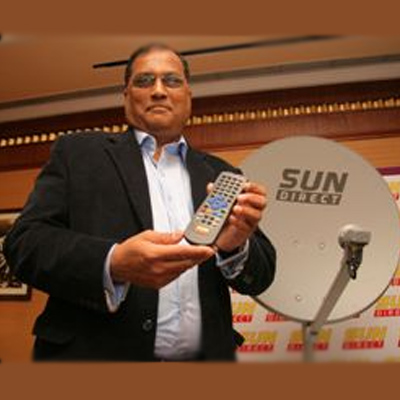
‘Pricing and creation of bouquets is our big differentiator’ : Tony D’silva – Sun Direct COO
Kalanithi Maran is building his DTH empire on one key proposition: pricing. Mopping up two million subscribers in his home turf, Maran expects to taste success in the northern pockets of the country with the very same recipe.
Armed recently with Hindi content and sports channels, Sun Direct has launched in Mumbai and will be quickly moving to other markets as a pan India direct-to-home service. The target: six million subscribers by FY’10.
Sun Direct plans to invest Rs 35 billion in the venture over two years, out of which Rs 20 billion will have been consumed by the end of this fiscal. A large chunk of this will be towards providing set-top boxes (STBs) free.
Malaysia-based Astro has taken a 20 per cent stake in the company for Rs 5.90 billion. Sun Direct is a zero-debt company and there are no plans to raise further money through dilution of equity.
Sun Direct’s ARPU (average revenue per user) is the lowest among all the DTH operators, ranging between Rs 85-90. But the costs are tightly controlled and the company hopes to break even in six years.
In an interview with Indiantelevision.com’s Sibabrata Das, Sun Direct COO Tony D’Silva speaks about the company’s ambitious growth plans.
Excerpts:
How much is Sun Direct investing in the DTH venture?
We have an investment plan of Rs 35 billion over two years. We would have consumed Rs 20 billion by the end of this fiscal. We are pumping in the balance Rs 15 billion by FY’10.How much has Astro put in so far?
Astro had made a commitment of putting in Rs 5.90 billion for a 20 per cent stake in Sun Direct. The full amount has already come in. The promoters have invested the rest of the amount. We are a zero debt company.Is there a plan to raise further money through equity?
We have no such plan. We are considering whether it would make sense for us to raise debt and sit in excess liquidity at a time when the money market is tight. No decision has been taken in this regard. The promoters are ready to pump in whatever it takes to grow the business.Since Sun Direct is offering STBs free, wouldn’t the company have to absorb huge losses?
The loss for this fiscal would be in the region of Rs 4.50 billion. This is very much a part of our business plan. For anybody who wants to build scale, the only way forward is to acquire customers with high subsidy offers. We have already mopped up two million subscribers and are looking at ending FY’09 with a base of three million. High volumes will help us reach break even as our costs are not as high as the others.Even when Sun Direct’s ARPU is the lowest among all the DTH operators?
We have grown in the southern region and our current ARPUs are at Rs 85-90. We don’t see them going up significantly even after our launch in Mumbai and the rest of India. In the volumes game, the margins will improve once you reach a particular threshhold of numbers. Our infrastructure cost is also less than the other DTH operators. We will break even in six years. ‘Astro has put in Rs 5.90 billion. We are a zero debt company and expect to break even in six years‘
Is your content cost also lower than many of the other DTH operators?
Our content cost is 45-50 per cent, one of the lowest in the industry. We have not done MG (minimum guarantee) deals with broadcasters. Our main strategy is a la carte pricing.What is your customer acquisition cost?
When we made our initial purchases, the STBs were costing us $55. But the economic meltdown is driving down the prices and our STBs currently cost $45.The advertising budget for this fiscal is Rs 1.5 billion. We aim to spend a similar amount in the next fiscal unless the market dynamics changes drastically.
Our customer acquisition cost is Rs 4500. But with our pricing strategy, we expect to garner six million subscribers by FY’10.
The pricing strategy can attract wrong customers. Isn’t it a dangerous model to have if your churn rate is high while the customer acquisition cost is steep?
We have a five per cent churn rate. We realise that it is important to have a lower churn.What is the strategy Sun Direct has adopted to repeat its success model outside its home turf?
While 99 per cent of our current two million subscriber base comes from the south, we have an aggressive pricing policy which will help us garner subscribers from the other pockets of the country. Our regional package, “My Pack,” will create hype in the market and drive our growth everywhere. Our bouquet of packages are value for money as we have custom designed packages for every state and region. We spent considerable amount of time since our launch last December.We have also introduced a Hindi package. The ‘Shine Pack’ is available at Rs 499 and Rs 999 for five and 10 months respectively.
We have the highest number of add-on packages, ranging from Rs 6 to Rs 195. And the sports channels are available on a la carte rates.
Doesn’t it make sense to offer sports channels in packages?
The rates are too high for us to offer the sports channels in basic tiers or in bundles. We recently added the three ESPN Star Sports channels into our offerings. They are available on a la carte rates – ESPN and Star Sports are priced at Rs 38 each per month while Star Cricket costs Rs 32. Ten Sports is priced at Rs 20 while Zee Sports costs Rs 15. We are in negotiations with Neo.Why was your launch in Mumbai delayed?
Adding Hindi and sports channels in the bouquet took time and the launch in Mumbai was delayed by a shortage of supply in STBs. There has been heavy snowfall in China and Beijing Olympics also delayed the supply of boxes. So during the festival season of Diwali, we did not have STBs to sell. Now the supply is comfortable and we are in a position to launch in other parts of the country.Have you added more STB manufacturers into your list of vendors?
Our STB suppliers are China-based Coship and Korean firm Homecast. We have just added Samsung into our list.Have you launched high-end STBs?
We have, but only in the southern market. They are priced at Rs 10,000 and are made by Homecast. Only a couple of hundreds have moved and we are just testing the waters.Are you lining up premium content?
We feel the market is too early for premium and interactive content. Our first task is to be successful as a pan India operator. The creation of bouquets and pricing has to be a big differrentiator.Some DTH service providers are advertising their Hindi movie offerings. Is Sun Direct going to create such content to grab viewers outside the south?
We don’t have any such plan at this stage. We are examining whether we should do that or go for HD. We have space for 5 HD channels. This will be for the top-end of the market and give us higher ARPUs.Has Sun Direct approached Isro for more Ku-band transponders?
We have asked Isro for two more transponders. We offer 200 channels including 23 radio channels and video-on-demand. We are fortunate that we are co-located on the same satellite used by DD Direct Plus and so can get their channels without consuming our own bandwidth. -
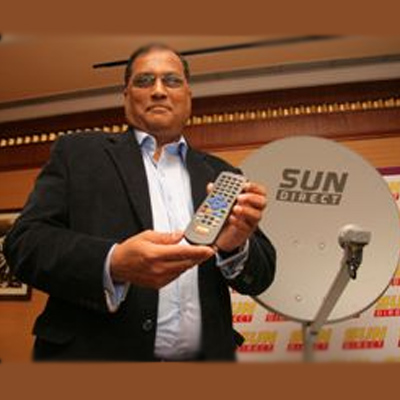
‘Pricing and creation of bouquets is our big differentiator’ Tony D’silva – Sun Direct COO
Kalanithi Maran is building his DTH empire on one key proposition: pricing. Mopping up two million subscribers in his home turf, Maran expects to taste success in the northern pockets of the country with the very same recipe.
Armed recently with Hindi content and sports channels, Sun Direct has launched in Mumbai and will be quickly moving to other markets as a pan India direct-to-home service. The target: six million subscribers by FY’10.
Sun Direct plans to invest Rs 35 billion in the venture over two years, out of which Rs 20 billion will have been consumed by the end of this fiscal. A large chunk of this will be towards providing set-top boxes (STBs) free.
Malaysia-based Astro has taken a 20 per cent stake in the company for Rs 5.90 billion. Sun Direct is a zero-debt company and there are no plans to raise further money through dilution of equity.
Sun Direct’s ARPU (average revenue per user) is the lowest among all the DTH operators, ranging between Rs 85-90. But the costs are tightly controlled and the company hopes to break even in six years.
In an interview with Indiantelevision.com’s Sibabrata Das, Sun Direct COO Tony D’Silva speaks about the company’s ambitious growth plans.
Excerpts:
How much is Sun Direct investing in the DTH venture?
We have an investment plan of Rs 35 billion over two years. We would have consumed Rs 20 billion by the end of this fiscal. We are pumping in the balance Rs 15 billion by FY’10.How much has Astro put in so far?
Astro had made a commitment of putting in Rs 5.90 billion for a 20 per cent stake in Sun Direct. The full amount has already come in. The promoters have invested the rest of the amount. We are a zero debt company.Is there a plan to raise further money through equity?
We have no such plan. We are considering whether it would make sense for us to raise debt and sit in excess liquidity at a time when the money market is tight. No decision has been taken in this regard. The promoters are ready to pump in whatever it takes to grow the business.Since Sun Direct is offering STBs free, wouldn’t the company have to absorb huge losses?
The loss for this fiscal would be in the region of Rs 4.50 billion. This is very much a part of our business plan. For anybody who wants to build scale, the only way forward is to acquire customers with high subsidy offers. We have already mopped up two million subscribers and are looking at ending FY’09 with a base of three million. High volumes will help us reach break even as our costs are not as high as the others.Even when Sun Direct’s ARPU is the lowest among all the DTH operators?
We have grown in the southern region and our current ARPUs are at Rs 85-90. We don’t see them going up significantly even after our launch in Mumbai and the rest of India. In the volumes game, the margins will improve once you reach a particular threshhold of numbers. Our infrastructure cost is also less than the other DTH operators. We will break even in six years. ‘Astro has put in Rs 5.90 billion. We are a zero debt company and expect to break even in six years‘
Is your content cost also lower than many of the other DTH operators?
Our content cost is 45-50 per cent, one of the lowest in the industry. We have not done MG (minimum guarantee) deals with broadcasters. Our main strategy is a la carte pricing.What is your customer acquisition cost?
When we made our initial purchases, the STBs were costing us $55. But the economic meltdown is driving down the prices and our STBs currently cost $45.The advertising budget for this fiscal is Rs 1.5 billion. We aim to spend a similar amount in the next fiscal unless the market dynamics changes drastically.
Our customer acquisition cost is Rs 4500. But with our pricing strategy, we expect to garner six million subscribers by FY’10.
The pricing strategy can attract wrong customers. Isn’t it a dangerous model to have if your churn rate is high while the customer acquisition cost is steep?
We have a five per cent churn rate. We realise that it is important to have a lower churn.What is the strategy Sun Direct has adopted to repeat its success model outside its home turf?
While 99 per cent of our current two million subscriber base comes from the south, we have an aggressive pricing policy which will help us garner subscribers from the other pockets of the country. Our regional package, “My Pack,” will create hype in the market and drive our growth everywhere. Our bouquet of packages are value for money as we have custom designed packages for every state and region. We spent considerable amount of time since our launch last December.We have also introduced a Hindi package. The ‘Shine Pack’ is available at Rs 499 and Rs 999 for five and 10 months respectively.
We have the highest number of add-on packages, ranging from Rs 6 to Rs 195. And the sports channels are available on a la carte rates.
Doesn’t it make sense to offer sports channels in packages?
The rates are too high for us to offer the sports channels in basic tiers or in bundles. We recently added the three ESPN Star Sports channels into our offerings. They are available on a la carte rates – ESPN and Star Sports are priced at Rs 38 each per month while Star Cricket costs Rs 32. Ten Sports is priced at Rs 20 while Zee Sports costs Rs 15. We are in negotiations with Neo.Why was your launch in Mumbai delayed?
Adding Hindi and sports channels in the bouquet took time and the launch in Mumbai was delayed by a shortage of supply in STBs. There has been heavy snowfall in China and Beijing Olympics also delayed the supply of boxes. So during the festival season of Diwali, we did not have STBs to sell. Now the supply is comfortable and we are in a position to launch in other parts of the country.Have you added more STB manufacturers into your list of vendors?
Our STB suppliers are China-based Coship and Korean firm Homecast. We have just added Samsung into our list.Have you launched high-end STBs?
We have, but only in the southern market. They are priced at Rs 10,000 and are made by Homecast. Only a couple of hundreds have moved and we are just testing the waters.Are you lining up premium content?
We feel the market is too early for premium and interactive content. Our first task is to be successful as a pan India operator. The creation of bouquets and pricing has to be a big differrentiator.Some DTH service providers are advertising their Hindi movie offerings. Is Sun Direct going to create such content to grab viewers outside the south?
We don’t have any such plan at this stage. We are examining whether we should do that or go for HD. We have space for 5 HD channels. This will be for the top-end of the market and give us higher ARPUs.Has Sun Direct approached Isro for more Ku-band transponders?
We have asked Isro for two more transponders. We offer 200 channels including 23 radio channels and video-on-demand. We are fortunate that we are co-located on the same satellite used by DD Direct Plus and so can get their channels without consuming our own bandwidth. -

‘We are entering into an era where capital will be scarce’ : Citi Venture Capital International managing director India region head PR Srinivasan
There may be pressure on Citigroup Inc. to remove the flab with the US government agreeing to infuse $20 billion of capital as part of a rescue package, but Citi Venture Capital International (CVCI) is drawing up plans to make acquisitions at attractive valuations. Out of the $4.5 billion fund, it is yet to invest $3 billion, almost a third of which will pour into the Indian market.
Though CVCI has made only one media investment in You Telecom, a broadband and cable TV company, it is also eyeing the direct-to home (DTH) and Hindi entertainment broadcasting space.
In an interview with Sibabrata Das, Citi Venture Capital International managing director India region head PR Srinivasan talks about the opportunities of investing in various sectors including media at a time when capital is going to be scarce.
Excerpts:
Being in the midst of an unprecedented global economic turmoil, how comfortable is Citi Venture Capital International (CVCI) in its funding structure to grab buying opportunities in Indian media companies?
We have a $4.5 billion fund, out of which $3 billion is yet to be invested. We have already invested $500 million in India. We are likely to pump in a further $750 million-$1 billion in this market while the balance will be put in China, Eastern Europe, etc. You Telecom has been our only investment in the media and entertainment sector. But as asset prices come down, we are open to picking up stakes in other verticals within the media sector.Have you initiated talks with any of the media companies?
We see a good investment opportunity in DTH and are talking to one player. We may also start looking at TV channels in the Hindi general entertainment space, if they come at attractive valuations and are managed well. Even if we are headed for a slowdown, the truth is that people will still want entertainment. Since we have already acquired You Telecom, we are not looking at parallel investments in the cable TV sector. We would expand and make further acquisitions through You Telecom.Since CVCI has a running investment in a broadband and cable TV company through You Telecom, why is it that you are eyeing a competing distribution platform like DTH?
There is space for all three forms of carriage – DTH, cable TV and IPTV. No form of distribution is superior or dominates over the other. In the US, both cable and DTH enjoy substantial market shares. The only country which has a single dominant platform is UK where DTH has a content advantage in form of exclusive sports telecast rights. India, however, has a content-neutral policy. The regulatory framework is also in favour of independent distributors and is neutral to broadcasters. The DTH sector also has a 20 per cent equity cap for broadcasting companies.The main cost in DTH is advertising. Unlike cable which has a capex requirement in the distribution architecture, DTH doesn’t have a wired cost. If you get scale in DTH, you will become profitable. The expense mix will change with volumes. But in India with so many players getting into the business, not all will get the scale.
When CVCI bought out British Gas’s broadband business, was the investment attractive because the infrastructure of You Telecom could be used for cable TV service?
You Telecom had world class network built to FCC standards. We were clear that we would buy this asset and wait for both competition and regulation to fall in place so that this can be developed into a last mile home entertainment network. When the government came out with Cas and DTH became active, digitalisation got a push. For the cable TV business to grow, there was need for competition, the right market, and the right regulation. We are in that environment today. India is in the early stages of having second TV – so we could have a situation where we have both cable and DTH.Were you not in discomfort because the cable TV sector has too many players and there is very little of last mile ownership with the multi-system operators (MSOs)?
In terms of reaching homes, cable with 80 million does much better than telecom. The sector needs to get more organised; it is only a matter of time before this happens. The cable industry in India is a marathon and not a sprint. Though there is a capex requirement and last mile is still not under control of the MSOs, the mix looks good once you have a base of one million digital subscribers.‘For the cable TV biz to grow, there was need for competition, the right market, and the right regulation. India is in the early stages of having second TV – so we could have a situation where we have both cable and DTH‘Why did You Telecom take so long in moving into cable TV service?
Our efforts to do the video business evolved with the DTH industry. We acquired a 50 per cent stake in Bangalore-based Digital Infotainment, a small-sized cable network, to make our foray into the cable TV business. We also took a majority in Scod18 Networking, an association of cable TV distributors in Mumbai. We have cable TV operations in Mumbai, Bangalore, Vizag and Dharwad in Maharashtra.In You Telecom, CVCI has 85 per cent stake. How did you restructure the equity structure as the government allows only 49 per cent FDI (foreign direct investment) in a cable TV company?
We floated Digital Outsourcing, the company that would handle cable TV business. Tulsi R Tanti and his family members, promoters of Suzlon Energy Ltd, have acquired 49 per cent stake in this company. You Telecom India owns 36 per cent while the rest is held by high net worth Indian individuals.How much is You Telecom investing to expand its business?
You Telecom plans to pump in Rs 4 billion over the next two years to expand its cable TV and broadband business. If we decide to go for Headend-In-The-Sky (HITS), we will require another Rs 1.5 billion. We have 1.3 million cable TV subscribers and expect this to go up to three million. We have seeded 60,000 digital set-top boxes and expect to touch one million in the next 18 months. The cable business will grow through setting up own headends, acquiring networks and forming joint venture partners in different geographies. There is a lot of entrepreneurial talent in the cable community and we want to tap into that.Do you have an aggressive plan in acquiring last mile operators?
The challenge in cable is to get direct points. We bought 5000-7000 points. Our strategy is to own last mile, but all in good time. Our plan is to own a headend and then acquire the last mile. The valuations for last mile were inflated because people thought there was abundant capital available.Have the valuations dropped drastically?
For the last three years, there has been abundant capital and liquidity. Though we purchased at 18-24 months revenue, there were MSOs who bought at 30-40 months turnover. That kind of money is not available; we will not get financing for making purchases like that any more.Most of the mid caps have fallen over 80 per cent. The last mile business has to follow along those lines. People are not going to bid prices up. It is only a matter of time before people accept the new world realities. We are entering into an era where capital will be scarce. Business plans will have to evolve accordingly.
Do you see yourself in an advantageous position because you are sitting on cash at a time when the credit markets are frozen and capital is hard to get?
Money is not going to be available on tap. This will impact the way the new financial system is going to be reshaped. Every sector will feel the jolt. As new broadcasters need to raise capital, MSOs who have planned carriage revenues over the next 2-3 years to support their business models will find the going very hard. Many of them will have to redraw their plans.It is a good time to have cash. For those who are investing now, the returns will be higher than the previous years.
-
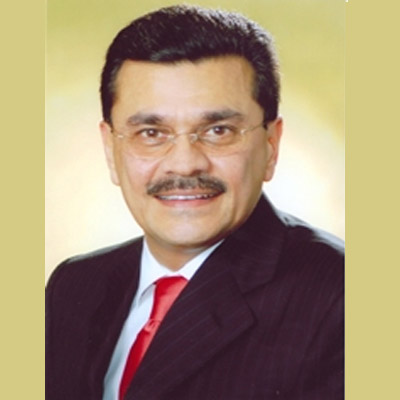
‘The price war has come at an early stage of the DTH game’ : Vikram Kaushik- Tata Sky MD & CEO
Tata Sky, a direct-to-home joint venture company between Tata Group and Star, is betting big on value-added services such as PVR (personal video recorder) and is ready to pump in another Rs 20 billion as it eyes a subscriber base of eight million by 2012.
The focus is on building a strong brand with heavy spending on advertising. While rival network Dish TV has used Bollywood star Shah Rukh Khan, Tata Sky has Aamir Khan as its brand ambassador. Occupying a premium position in the mindshare has been part of the strategy as the company has the technology support of News Corp. and the trusted name of the Tatas.
The DTH game has got tougher with competitive entries from Sun Direct, Reliance’s Big TV and Bharti’s Airtel Digital TV. This has meant a rise in project expense from Rs 30 billion to Rs 40 billion, lower ARPUs and high customer acquisition costs.
Cable TV, which has a strong footprint across the country, is also offering stiff competition to DTH operators.
In an interview with Indiantelevision.com’s Sibabrata Das, Tata Sky MD & CEO Vikram Kaushik talks about the company’s decision to stay away from being a discounted brand while fighting at different price points to tap different consumer segments.
Excerpts:
Has Tata Sky revised upwards the project cost from Rs 30 billion to Rs 40 billion?
When we first formalised our business plan, we were looking at an investment of Rs 12 billion. Then we came up with a realistic estimate of Rs 30 billion. We revisited that plan and now believe our funding requirement for the venture would be Rs 40 billion. We have already invested half of this amount.Has the project cost gone up because of the higher element of subsidy in the Indian DTH market?
When we first did our business plan, we didn’t expect so many DTH operators to come in. There is a lot of activity in the category and the price war has come at an early stage of the game. Competitive entries and an explosive growth in volumes mean higher costs. Customer acquisition accounts for a significant percentage of the costs.Will this mean that the gestation period for profitability will go up?
I wouldn’t like to comment on when we would reach the break even situation. DTH is an infrastructure business and requires high investments and long gestation periods. We have no illusions about that. Generally, the break even for this kind of business is in excess of five years.Industry estimates put Tata Sky’s losses at Rs 8.15 billion in FY’07 and a little more than that in FY’08. Do these losses fall in line with your business plan?
I can’t talk on financials.Are you in line with the projected subscriber growth?
We have already touched 2.7 million subscribers and are targeting at least eight million connections by 2012. When we were at the drawing board, our broad plan was to add a million subscribers every year. We are growing faster than that.‘When we first formalised our business plan, we were looking at an investment of Rs 12 billion. We revisited that plan and now believe our funding requirement for the venture would be Rs 40 billion‘But are ARPUs (average revenue per user) in place?
I can’t reveal to you where our ARPUs currently stand. But there are definite efforts to push ARPUs up with the launch of value-added services such as PVR (personal video recorder). This technology allows subscribers to watch a particular television show while recording another. Viewers can also pause and rewind live television programmes. We have priced the set-top boxes (STBs) for PVR, which will use MPEG-4 compression technology, at Rs 8,999. For our existing subscribers, we will be offering at discounted rates.Isn’t the pricing on the higher side?
Being below Rs 10,000, it is very competitively priced. We are aggressively marketing Tata Plus. In just a couple of days since launch, we have already sold 2500 PVRs. It took BSkyB 3-4 years to convert 50 per cent of its eight million subscribers to Sky Plus.Our priority is to make this really big as the product is very powerful and also addresses the ARPU issue. We realise that people in India are investing in high quality entertainment at home as out-of-home is becoming expensive. The PVR is a recognisation of this trend and we want to capitalise on it.
Are you looking at niche content for lifting your ARPUs?
Unless we have a critical mass, we can’t slice the market that thin in India. The Indian DTH market is endemically short of satellite capacity. We have 12 Ku-band transponders on Insat 4A, but want more and nothing is available at this stage. We can address niche audiences and offer more channels to consumers if we have more transponders available.It is, however, possible to offer premium content like lifestyle within large segments. On our interactive service, we have NDTV Good Times offering specialised cookery.
Segmentation in the marketplace is also possible. And we have interactive services like Actve Wizkids (for children and pre-schoolers), Actve Darshan (24-hour darshan of Sai Baba, SiddhiVinayak, Iskon and Kashi Vishwanath) and Actve Matrimony. But the problem with interactivity is that it is very bandwidth hungry.
What is the premium content you are lining up?
We are in talks with movie producers like Sony Pictures, UTV, Eros and Fox for sourcing their movie content. We are looking at recent Bollywood, international and Hollywood content for our pay-per-view service. The challenge is how to get into revenue share deals as we can’t pay high MGs (minimum guarantees) and it is not attractive for the content suppliers if there are not high volumes.How about getting premium content channels?
For premium content channels, we are at an early stage of development. There is also the transponder capacity issue. One area we are looking at is HD channels.Are you planning to strengthen your regional content line-up?
Regional markets are integrated into the overall content plan. We have national, regional, international and eclectic consumers.Sun Direct has mopped up over one million subscribers in a short span of time because of its aggressive pricing. How has that impacted you in the southern market?
Our growth has not stopped in the South because of Sun. We have the right kind of share in the right kind of segment. Sun’s pricing is unviable and we are at 30 per cent premium over them. Their strategy seems to reflect the pressure of their cable TV business while pricing their DTH proposition. The danger is that you can attract the wrong kind of customers – and you are vulnerable to a high degree of churn. In DTH business, this is a recipe for disaster because of the high subsidies involved in customer acquisition.The South has been a high pay-TV penetration market because of pricing. In this blood bath situation, one has to be cautious and keep away from just adding subscriber numbers.
Isn’t market leader Dish TV also involved in the price war?
More than Dish TV, it is Sun Direct which is acting as a discounted brand. The DTH market in India is open to segmentations. We are also offering subscriptions at Rs 99. But the question is how much at the bottom of the market you can afford to go.Why hasn’t the Tata Sky brand been able to stop Dish TV from mopping up a high number of incremental subscribers?
Dish TV has followed a discounted brand strategy. We have operated at a Rs 1000 premium over them from the moment we launched. Dish TV has also picked up the low hanging fruit in smaller markets. Besides, they continue to work as an integrated media company and have leveraged that advantage as a vertical player.Has regulation worked against the DTH players?
Regulations relating to the broadcast industry have been largely progressive. The problem has been the lack of a level playing field across the different addressable platforms. Why should cable operators get channels capped at Rs 5 in the Cas (conditional access system) areas? There is a structural inconsistency in this. Besides, the tax burden on DTH is scandalous. Around 40 per cent of our revenue goes towards taxes and licence fee. When our national objective is to push digitalisation, let’s lower the barriers and incentivise the sector.Hasn’t the Telecom Regulatory Authority of India provided some relief to the DTH operators by way of directing broadcasters to offer their channels at 50 per cent of analogue cable TV rates besides making them available at a la carte pricing?
When we started, there was no RIO (reference interconnect offer). In fact, it is amazing that most of the content deals were done in the court. New players like Reliance, Bharti and Sun would have found it tough if the RIO regulation hadn’t come about.But even now there is an anamoly. Why should we get content from broadcasters at 50 per cent of what they offer to analogue cable when the Trai and the Information & Broadcasting ministry have formally admitted that the cable sector operates on 20 per cent declaration of their subscriber base?
Besides, DTH should get content from broadcasters at Cas rates since we are an addressable platform.
But aren’t cable operators offering set-top boxes even below the regulated price because of competition in the marketplace?
Pay TV in India is subverted by cable prices which are artificially depressed because of under-declarations. DTH operators have had to drop prices because they have to compete with cable. Today the gap is higher between the two because cable TV pricing is artifically suppressed. If some DTH operators decide to go as low as cable, then it becomes unviable.Don’t you think exclusivity of content will allow platform providers to raise ARPUs?
The ARPUs in the UK, US and Australia vary between $60-80. In India, the ARPUs are a fraction of this. Exclusivity of content is there in all markets except India. But we hope the regulation on exclusive content will also wither away. This will allow us room for being more creative and innovative.Since cable already has a wide presence, do you see them winning the war against DTH in India as in the US?
DTH has already tapped over six million subscribers and will see explosive growth from now on. In the US, cable companies have made massive investments to digitalise their networks. And even there, 40 per cent of the market is still with DTH. Indian cable companies have not made such investments. Besides, the cable TV market here is hugely fragmented. And the last mile challenge (multi-system operators do not own much of the last mile which is with the local cable operators) will not go away.Tata Sky and Dish TV are on MPEG-2 compression technology while the new players have MPEG-4. What is the status on the inter-operable issue?
There is a regulation on DTH boxes being inter-operable. But why have a law when this is not being followed?But why was Tata Sky opposing the inter-operable clause then?
The regulator can say that the inter-operability clause was a mistake and just do away with it. We are asking for more clarity on the issue. If we are to switch over, then we want some amount of subsidy which the government can give from the revenue share that we part with them.There has been a drive to reduce the revenue share with government. What is the status on this?
The Telecom Disputes Settlement and Appellate Tribunal has ruled that the licence fee for DTH services should be based on adjusted gross revenue – and not on the basis of gross revenue. But the government has not yet issued any notification on this.After Temasek Holdings took a 10 per cent stake in Tata Sky for $55.5 million, have we seen a rise in DTH valuations?
I can’t talk about valuations or the price at which we got Temasek to invest in. But Temasek has 10 per cent while Star’s holding is untouched at 20 per cent and the Tata Group’s stake has come down from 80 per cent to 70 per cent.