Tag: Sibabrata Das

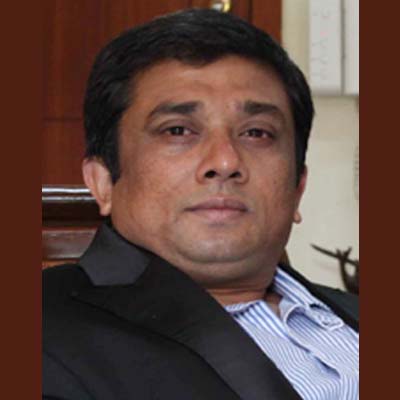
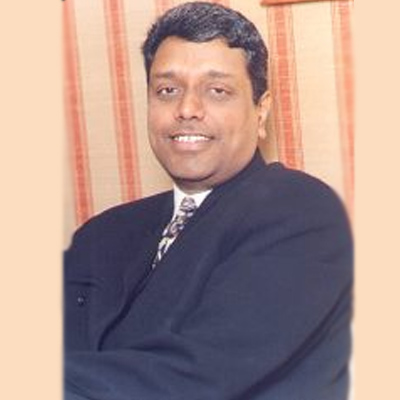
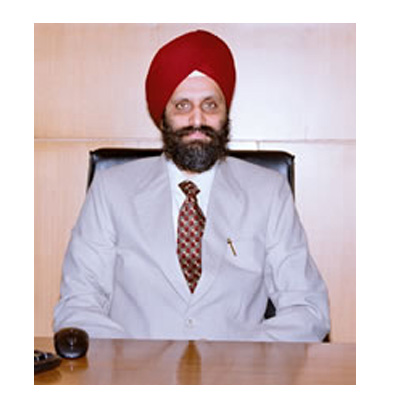
  • ‘The news terminal biz is dominated by global players and we got a good price for NewsWire18’ : Network18 head of investments Sarbvir Singh

    ‘The news terminal biz is dominated by global players and we got a good price for NewsWire18’ : Network18 head of investments Sarbvir Singh

    Founder-promoter Raghav Bahl has started shaving Network18 Group‘s non-core businesses to stay focussed on the company‘s core strengths of television, digital assets and e-commerce.


    As part of the haircut, Bahl has found a buyer for NewsWire18, the home-grown real-time financial news and information provider, which competes in India with global giants like Bloomberg and Reuters.


    Private equity firm Samara Capital is buying Network18’s 77.50 per cent stake in NewsWire18 for Rs 900 million and has drawn up plans to expand the company‘s business, including an ambitious plan to spread out to other countries.


    For Network18, it is a profitable monetisation of its stake in the company it helped grow and stabilise since 2006. NewsWire made an operational profit of Rs 70 million on revenue of Rs 445 million for the fiscal ended 31 March 2012.


    Network18 has so far raised Rs 2 billion from stake sales in non-core businesses this year and expects to raise another Rs 3 billion over the next 12 months.


    It is also in discussions with new as well as existing investors (SAIF Partners and GS Shopping) to invest in its teleshopping and e-commerce arm HomeShop18 as it needs capital to grow. It intends to continue to hold a sizeable
    stake in HomeShop18, though not a controlling one.


    The other companies which Network18 will ultimately exit are travel portal yatra.com and Infomedia’s printing business.


    In an interview with Indiantelevision.com‘s Sibabrata Das, Network18 head of investments Sarbvir Singh talks about the Group‘s focus on profitability, cautious approach towards big-budgeted television channel launches, and strong digital and e-commerce assets.


    Excerpts:

    Q. Why is Network18 exiting from NewsWiire18 when it had turned into an operating profitable company?
    The news terminal business is dominated by global players (like Reuters and Bloomberg) and doesn’t fit into our scheme of things. We are getting a good price (Rs 900 million) for selling our stake (77.5 per cent) in NewsWire18.


    Q. Why didn’t the deal with Reuters consummate? Was it because it made sense for Reuters to have Network18 as an equity partner so that NewsWire18 would continue to benefit from the television news channels of the Group?
    I can’t comment on who the other interested parties were, but that (total exit) wasn’t an issue at all. We obviously sold to private equity firm Samara Capital because we got the best deal from them.


    Q. Wasn’t there a synergistic value as Network18 Group holds interests in television news channels?
    The news terminal business does not fall into our core focus areas; it also does not fit into our core business strength. It is a standalone business by itself and requires specific focus.


    We have decided to get out of our non core businesses. Our focus will be on three core areas: television, digital and e-commerce.


    Network18 is no longer the same company as it was in 2007. Our television business has grown exponentially, be it in the areas of news or entertainment. We have strong web properties and our e-commerce play is large.


    Q. Does this mean that the Group will launch more television channels through TV18?
    We may launch smaller channels, but there is no rush as such. We have too much on our plate. In addition to the existing channels, we have made a big acquisition (Rs 21 billion for acquiring assets of ETV Network) and will have to integrate operations.


    ‘Our focus will be on three core areas: TV, digital and e-commerce. Network18 is no longer the same company as it was in 2007. Our TV has grown exponentially. We have strong web properties and our e-commerce play is large‘
     

    Q. Is there a plan to revive the launch of a Hindi movie channel?
    We are not sure whether we would need a Hindi movie channel at this stage. The Hindi general entertainment channels have become like movie channels on weekends.


    Our focus will be on profitability and getting the distribution equation right. Distribution is a very important part of the evolution process and we have to set it right. We are unlikely to do big channel launches at this stage.


    Q. Sources say there is plan to launch a Gujarati business news channel along the lines of CNBC TV18. How far has this progressed?
    In media companies a lot takes shape at the planning stage. Everybody looks at opportunities. But as I said earlier, we are in no tearing hurry to do anything.


    Q. What are the other non-core businesses that Network18 is looking to sell?
    We are looking at getting about Rs 5 billion from our asset sales. We have already done Rs 2 billion this year and expect to generate another Rs 3 billion over the next 12 months.


    Q. Network18 has sold partial stake in bookmyshow.com. Will it exit from this as well?
    We will hold on to our remaining stake in bookmyshow.com and build that business. We want to be in digital commerce. We see ourselves as being one of the largest players in e-commerce through our presence in online and television through HomeShop18.


    Q. Which means the stake in HomeShop18 will be retained?
    We are looking at a similar model like bookmyshow.com. We may not remain as a shareholder with controlling stake but have a sizeable equity in HomeShop18.

    ‘We may launch smaller channels, but there is no rush as such. We are not sure whether we would need a Hindi movie channel at this stage. We have too much on our plate. Our focus will be on profitability and getting the distribution equation right‘
     

    Q. Isn’t there a plan to raise $50 million as pre-IPO funding for HomeShop18?
    We are looking at an external investor as the teleshopping and e-commerce firm needs capital to grow. We are in discussion with existing (SAIF Partners and GS Shopping) and new investors as well. There are many who come and talk to us. In the long term, we may look at raising capital through an initial public offering (IPO).


    Q. But isn’t the mandate given to an investment bank to scout for an investor in HomeShop18?
    I can’t comment on that.


    Q. Will Network18 exit from yatra.com before or after the IPO?
    We have expressed our intent to offload stake from yatra.com. But it is difficult to say whether it will be a pre-IPO exit or after it. We will see how it goes and what is the market situation then.


    Q. How many asset sales are we looking at for getting to the target of Rs 3 billion in the next one year?
    There will be a couple of companies which will fetch us Rs 400-500 million from each transaction. And then there is yatra.com.


    Q. Will Infomedia’s printing business form a part of this?
    Yes, it is on the block. But it won’t be a major part of this.


    Q. What about your sports marketing company Sport18?
    We are not bidding aggressively for the rights. We have certain rights (Professional Golf Tour of India, India Cyclothon, Hyderabad 10K and the Chandigarh Marathon) and this fits into our TV news business.

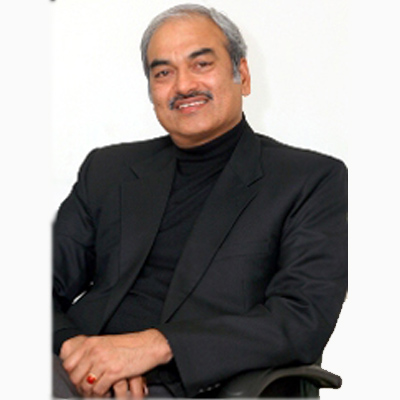
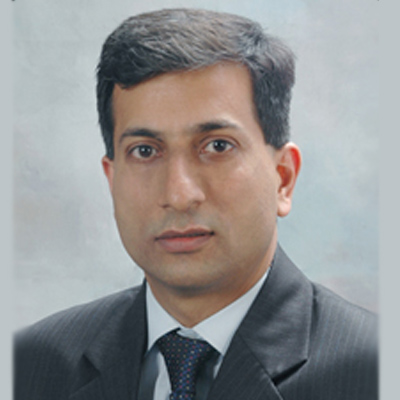
  • ‘Future bright for only right TV news players’ : ZNL CEO Barun Das

    ‘Future bright for only right TV news players’ : ZNL CEO Barun Das

    It’s the festival of lights. And for many the festival of noise courtesy exploding fireworks. In the hope of reducing the number of those belonging to the latter tribe, we, at indiantelevision.com, decided to put a display of firecracker articles for visitors this Diwali. We have had many top journalists reporting, analysing, over the many years of indiantelevision.com’s existence. The articles we are presenting are representative of some of the best writing on the business of cable and satellite television and media for which we have gained renown. Read on to get a flavour and taste of indiantelevision.com over the years from some of its finest writers. And have a happy and safe Diwali!

    (Written By Sibabrata Das in 2012. He continues to write on the cable TV industry)


    Subhash Chandra could end his long wait to expand his television news empire in the two main language segments of the business. After slimming Zee News Ltd’s (ZNL) balance sheet by demerging the regional-language entertainment channels from the bouquet in 2010, he is now planning to launch an English general news channel towards the exit quarter of the fiscal.


    The main reason behind the timing: digitisation in the four metros by 1 November. ZNL, which runs a clutch of seven news channels, has also grown to a turnover of Rs 3 billion while its Ebitda stands at Rs Rs 533.5 million for FY’12.


    Shepherding ZNL’s growth has been Barun Das, the chief executive of the company. His key strategy: staying profitable while being true to the identity of the fourth estate.


    Das, thus, took the bold step of cutting ad cut the commercial time of ZNL‘s flagship Hindi news channel, Zee News, by 30 per cent from April while upping the ad rates by 40 per cent. The move followed the change in positioning of Zee News as it shed trivial news content to differentiate itself. His belief: viewership for serious news and ad rates will rise in tandem.


    Das could possibly follow the Zee News model for the English news channel. He believes there is space for a less opinionated and more research-driven kind of reportage.


    He is optimistic about the future of TV news in India but cautions that “it is bright only for the right players”. He warns news broadcasters of not repeating the mistake of paying unrealistic carriage by masking it under placement fees in a digital environment.


    In an interview with Indiantelevision.com’s Sibabrata Das, the ZNL CEO also talks about the growth of regional news markets and the challenges that they face in each language space.


    Excerpts:


    Q. Will TV news broadcasters have to expand their bouquet to scale up revenues as growth engines of flagship news channels are aging across the sector?
    Yes, flagship channels are maturing in revenues. And it is difficult for established existing channels to post ad revenue growth beyond 10 per cent unless there is a repositioning or reinvention of the brand. Expanding the bouquet and strengthening it is key to a TV news broadcaster’s growth strategy.


    Q. Sources say ZNL is planning to launch an English-language general news channel towards the exit quarter of the fiscal. Are you waiting for digitisation to come into force in the four metros before you join the ring?
    We have been planning to launch an English general news channel for some time. The approval process is not yet formalised. Any launch plan will, however, be linked to digitisation as distribution cost will ease to a large extent with there being no capacity constraint on digital cable networks.


    Q. So ZNL is now in a position to take the load of a new channel that would consume large capital in the gestation period?
    After demerging the regional general entertainment channels from ZNL in 2010, we decided to consolidate before firming up big expansion plans. We did launch a few regional news channels just before the demerger, but then slowdown started biting the industry. Our focus was to stay profitable rather than build scale. Now that our balance sheet has grown in size and our turnover has touched Rs 3 billion, we are in a position to make heavy investments.


    Q. In the past interactions, you have always maintained that the prime business model that you follow is protecting the Ebitda margins. Will the English channel not erode the margins and make ZNL operate in the red for at least some years?
    We want to maintain the 18-20 per cent Ebitda margins. While growing in size, we have a guiding time target to return to those margins.

    ‘There are three-and-a-half English news channels. People may think it is a crowded space to be in, but we see it as an opportunity. With the kind of content that is being currently broadcast, we feel there is a lacuna and void for us to fill the gap and exist profitably. There is space for a less opinionated and more research-driven kind of reportage‘


    Q. But wouldn’t you require to make investments of Rs 3 billion over three years and wait for a longer break-even period?
    I wouldn’t like to comment on how much we plan to invest. But yes, the break even period of an English news channel is normally 4-5 years. But there is cash flow coming in before that. So it is not like we have to wait for that long to correct the Ebitda erosion. It is too early, though, for me to give a target date when we have not even launched. But there will be a significant drop in distribution payouts for all TV news broadcasters in a digitised environment. The other channels in the bouquet will also post growth. So it’s not red ink all over.


    Q. How much would you expect distribution expenses to fall for news broadcasters in a digitised environment?
    There is nothing set as a rule. But as per the former Trai chairman (JS Sarma), carriage should fall by 90 per cent. We are expecting a formalisation of that in a digitised environment.


    Q. That is a figure hard to digest. But when you launch your English channel, it is only the four metros (Delhi, Mumbai, Kolkata and Chennai) that would have digitised if the government sticks to the 31 October sunset deadline for analogue cable. How much of carriage payout is doled out by English news broadcasters to cable networks in these metros?
    It is tough to guess but it should be around 60-70 per cent of their distribution budgets. The focus of the English channels is the metros. Distribution expenses are bound to fall for these channels.


    Q. There are five English news channels jostling for a share in the Rs 5.5-6 billion ad market. So will it be a market share fight for you or there is scope for expanding the ad revenue size substantially?
    I don‘t know how you are coming to five English news channels. To my mind, there are three-and-a-half of them.

    People may think it is a crowded space to be in, but we see it as an opportunity. With the kind of content that is being currently broadcast, we feel there is a lacuna and void for us to fill the gap and exist profitably. The thumb rule in media, and even in TV news in every genre, is that the top three channels can be profitable. Even the fourth player can make money if run and managed efficiently.


    Q. ZNL weighed the option of consolidating the English TV news market and even looked at swallowing NewsX. Why did the deal fall through during the due diligence process?
    The buyout would have given us a lead time of at least six months as it is a running channel. But we did not find it a viable proposition.


    Q. ZNL cut the commercial time of its flagship Hindi news channel, Zee News, by 30 per cent from April while upping the ad rates by 40 per cent. The move followed the change in positioning of Zee News as it shed trivial news content to differentiate itself. So will the English channel follow the Zee News model of serious news?
    Most definitely. However, I can’t talk about the positioning and other specific details now. We will work out those operational details when we have finalised the launch plan. But from a personal point view, I think there is space for a less opinionated and more research-driven kind of reportage. There is scope for significant differentiation to model upon and we hope that will make an impact in the marketplace.


    Q. Flagship channel Zee News is not in the top three even after changing its positioning to a serious Hindi general news channel. Now that you have also reduced the ad time, how long do you think it will take to drive in more viewership?
    The success criteria for a media product should not be the viewership rankings. The business of TV news is primarily about profitability while being true to the identity of the fourth estate. I am sure that in both these counts Zee News channel has significant lead over its nearest competitors.

    However, viewership raking numbers is also important which I believe we should be able to improve in the near future. We have also started rolling out content initiatives. The strategy seems to be working for us at this stage, albeit a bit slower than what we had expected.


    Q. Will you also scale back on commercial time for your other six channels?
    There is no such plan. The other channels are not under so much of inventory pressure.


    Q. Are you revamping Zee Business and isn’t slowdown in the financial services sector going to affect the Hindi business news channel?
    Zee Business is one channel with which we have never stopped our revamping work. I think that our content team will come out with at least one game changing idea in every 15 days. It is possibly the most dynamic news channel.

    There is undoubtedly a pressure on airtime advertising. But we are doing events and sponsorship programmes to tide over this tight situation. Besides, it is a strong subscription-driven channel.


    Q. Akash Bangla, the Bengali infotainment channel where ZNL holds 18 per cent stake, is loss-making and you had to provide for Rs 166.7 million. Will ZNL exit from the JV as it runs a successful channel, 24 Ghanta, in that market?
    Akash Bangla channel and our joint venture for 24 Ghanta are two different arrangements. We made strategic investment in Akash Bangla channel in 2009 and given the current circumstances, we decided to provide for that funding. 24 Ghanta is a strong No. 1 Bengali news channel with strong financial performance as well.

    Bengal, after all, is a news hungry market. The advertising size for TV news is around Rs 1.20 billion, and growing.


    Q. Isn’t the Marathi TV news market a sharp contrast?
    Unlike the GEC space, the Marathi news market has not yet not grown as per its potential. There is a lot of news consumption happening in English and Hindi. In fact, the Marathi TV news market is half the size of the Bengali market. The potential, though, is very high and it should catch up to the Bengal market sooner or later. We have Zee 24 Taas and are pushing it aggressively.


    Q. Won’t the Andhra market be the toughest for ZNL to crack as it is flooded with news channels?
    While it is the largest TV news market in terms of ad revenue, it is a weird market too. There are many politically motivated channels in that market and are, therefore, not run as typical business outfits. Thus, it is a difficult market, but we do have specific plans for that too.


    The advertising size is pegged at Rs 1.40 billion, and growing. Zee 24 Ghantalu has not yet steadied in that market but we hope that our positioning as a non politically aligned channel should work .


    Q. How is Zee News UP faring?
    It is the No 1 channel there, though it is a small market with combined ad revenues of around Rs 300 million. However, we are on course with our break-even target.
     

    Covering social issues of the area is important. Being close to Delhi, national news channels are an important part of television viewing in that region. So there is need for content differentiation.


    Q. When will ZNL’s new channels turn profitable?
    There are only two of them under the new channels category. We expect them to turnaround next year.


    Q. What is the future of TV news channels in India?
    Extremely bright, but for the right players.


    Q. What do you mean by right players?
    One thing which had ailed news channels to my mind is that we have consistently converted potential revenue sources into our cost heads. That is one of the first mistakes to be classified and corrected if you want to be the right player in the market. As an example, carriage is one of the largest cost heads for TV news operations while subscription is a miniscule part of that.


    Q. Aren‘t the news channels themselves to blame for burdening themselves with such high carriage costs?
    Possibly, I tend to agree with that. However, it is a long discussion that we can have later. Bye!


    Q. Just one last related question. Won‘t news channels replace carriage with what can be termed as placement fee in an addressable digital environment?
    I wouldn‘t like to answer this question. However, in general at a philosophical level, repetition of any mistake is an offence.

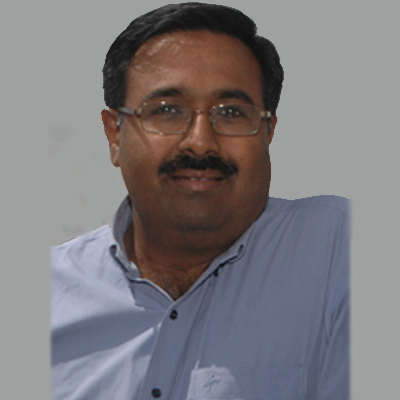
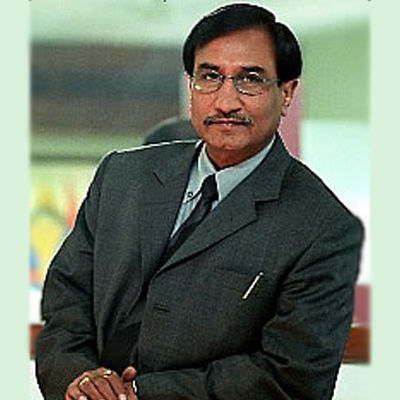
  • ‘Digitisation will throw open acquisition opportunities’ : IndusInd Media and Communications chief executive officer Nagesh Chhabria

    ‘Digitisation will throw open acquisition opportunities’ : IndusInd Media and Communications chief executive officer Nagesh Chhabria

    T he Hindujas have started the first round of cable TV digitisation in the three metro cities of Mumbai, Delhi and Kolkata. The second phase will open up 15 more cities where IndusInd Media and Communications Ltd (IMCL), the cable TV company they own, operates. Aggression is being planned to take on 14 more cities through acquisitions, joint ventures or direct entries.


    The ambitious target set is deployment of four million digital set-top boxes (STBs) on top of the 1.5 million IMCL is expecting to achieve in the first phase of digitisation. The company is also planning to own one million last mile connections in two years, up from its current base of 300,000.


    IMCL, which operates its cable TV business under the Incablenet brand, will need Rs 6 billion in the new phase that will see 38 cities go digital by 31 March 2013. The company is in talks with private equity investors to raise $75 million.


    “There is a huge appetite now to invest in cable TV companies. The first phase of digitisation has been successfully implemented in the three metro cities of Mumbai, Delhi and Kolkata. There is also no uncertainty now about India’s digitisation programme across the country. We should see equity deals happening in the sector,” says IndusInd Media and Communications chief executive officer Nagesh Chhabria.


    Chhabria believes the cable TV ARPUs (average revenue per user) would rise to Rs 500 by 2015, while carriage income would see a 10-15 per cent drop in DAS (digital addressable systems) markets.


    “In the first phase, we are looking at a 15 per cent increase and believe our ARPU would settle at Rs 225. If the ARPU is lower than this, the local cable operator will not survive,” he says.


    In an interview with Indiantelevision.com’s Sibabrata Das, Chhabria talks about the changing cable TV environment and the multi-system operator’s (MSO) expansion plans.


    Excerpts:

    Q. Is IMCL in talks with private equity investors to raise capital for funding its cable TV digitisation programme?
    We are looking at raising $75 million and have mandated Ernst & Young for this purpose. There is a huge appetite now to invest in cable TV companies. The first phase of digitisation has been successfully implemented in the three metro cities of Mumbai, Delhi and Kolkata. There is also no uncertainty now about India’s digitisation programme across the country. We should see equity deals happening in the sector.


    Q. Will $75 million meet IMCL’s total funding requirement for the second phase?
    We will need Rs 6 billion as we expect to deploy four million set-top boxes (STBs). We have existing lines of credit from banks for $15 million. We can further raise $10 million of new debt. So along with equity financing, we should be comfortably placed. Of course, there is concern about the weakening of the rupee, which will mean STBs becoming costlier. But we are asking our STB manufacturer to offer us a better rate so that it offsets any rise in dollar value.


    Q. Hasn’t IMCL lined up vendor financing so that the pressure on funding upfront eases?
    We have not gone in for that option. The Cisco set-top boxes are 15-20 per cent more expensive than ours. Our model works out cheaper for us.


    Q. Isn’t your estimate of the STB requirement too high as IMCL operates in only 15 out of the 38 cities that fall under digitisation in the second phase?
    It is easier now to get into new cities because there is less entry cost. You don’t have to pay broadcasters for an assumed number of subscribers as digitisation would reflect your actual subscriber base. Capital expenditure, of course, is going to be higher but there is an assured revenue model.


    We plan to enter into 15 more cities and anticipate a requirement of two million STBs from the new operations. For our existing operational cities, we would need two million STBs.

    ‘Even in the second phase, DTH will hardly be able to make an impact. Since most of the cities that fall in this round of digitisation are carriage markets, the national MSOs have a presence in them. Already 10 per cent of this market is digitised by the MSOs‘
    Q. Will you take the acquisition route for entering into these markets?
    Digitisation will throw open acquisition opportunities. There are many operators who will find it difficult to fund for the STBS. So they will either want somebody to invest in their cable networks or completely sell out. We are in talks with many independent operators. We can also enter on our own through fibre or available bandwidth.
     

    Q. How are valuations getting decided?
    We look at the profits made in the last fiscal and offer four times that value. The other option is to look at future profits (sans STB investment) made from the first six months of digital operations and then fix a value. But this has few takers as nobody wants to take the risk.


    Q. Are you not looking at last mile acquisitions that will give IMCL direct ownership of the consumer homes without having to share a portion of the subscription revenue with the local cable operator?
    We have an aggressive plan to own last mile. Our target is to own one million primary points in two years, up from our current base of 300,000. The acquisition of primary points, however, is much costlier and the price could be in the region of ten times the subscription fee. In Mumbai, this could go up to 20 times. But with digitisation necessitating billing systems, the primary points will be up for grabs.


    Q. Has DTH been able to eat into IMCL’s subscriber base in the first phase?
    We have hardly felt the impact. Even in the second phase, DTH will not be able to win over cable TV consumers in a big way. Since most of the cities that fall in this round of digitisation are carriage markets, the national MSOs have a presence in them. Already 10 per cent of this market is digitised by the MSOs. DTH will stand a better chance in tier III and IV towns. Acquisition of primary points in these smaller places will be a good strategy for MSOs to follow.


    Q. How many STBs has IMCL deployed across three cities in the first phase?
    We have already seeded 1.3 million boxes and our target is to touch 1.5 million. In Mumbai we will do 850,000 million and 0.5 million in Delhi. The progress in Kolkata is slow but it will also pick up.


    ‘We are looking at raising $75 mn and have mandated E&Y. There is a huge appetite now to invest in cable TV companies. The first phase of digitisation has been successfully implemented in the three metro cities of Mumbai, Delhi and Kolkata. There is also no uncertainty now about India’s digitisation programme across the country. We should see equity deals happening in the sector‘
     

    Q. Is the conversion into second TV homes significant?
    The demand for second TV sets is higher in Delhi than in Mumbai. But at a combined level we are talking of a 25-30 per cent conversion rate. We are working out a pricing for second and third TV sets as we have to match the DTH offers. But we are yet to ink deals with broadcasters on this.


    Q. What is the kind of content deals that you have stitched with broadcasters?
    We have done cost-per-subscriber deals. This works out better in the long term and is a more transparent system. We get to know our cost per box and it is easier to work out negotiations later. Our content cost would work out to 33 per cent of our subscription revenue.


    We wanted to do three-year deals with broadcasters but they were not ready for it. Most of our content deals are on a yearly basis.


    Q. What is the revenue share you are giving to local cable operators?
    The value chain will take away 33 per cent of our subscription revenue. We also have operational costs and an investment on the STBs, but we also earn carriage or placement revenue. We are seeing a 10-15 per cent drop in our carriage deals for DAS (digital addressable system).


    Q. Will ARPUs go up?
    In the first phase, we are looking at a 15 per cent increase and believe our ARPU would settle at Rs 225. If the ARPU is lower than this, the local cable operator will not survive.


    ARPUs for MSOs should at least be Rs 300 for them not to be dependent on carriage income. MSOs with ARPUs below Rs 300 will have to be carriage dependent.


    Our forecast is that cable TV ARPUs would rise to Rs 500 by 2015. What will lift up ARPUs is HD and regional packages. Premium packages will also get sold.


    Q. So are we talking of financially healthy MSOs in digitised India?
    A lot on how the market shapes up will be decided over the next six months. We will know the actual seeding of boxes in consumer homes once the subscription collections happen.


    Q. Will IMCL rely only on video services or there is a serious plan to pump up broadband investments?
    We will be investing Rs 1 billion on broadband infrastructure in the next fiscal. We are also going to prepare for IPTV and OTT (over-the-top) services.


    Q. What about launching local cable channels?
    Yes, this is very much a part of the plan. Since there will be no constraints on bandwidth in the digital era, we are planning to put together 10-12 local channels, including local news. We are also looking at ad-free channels.

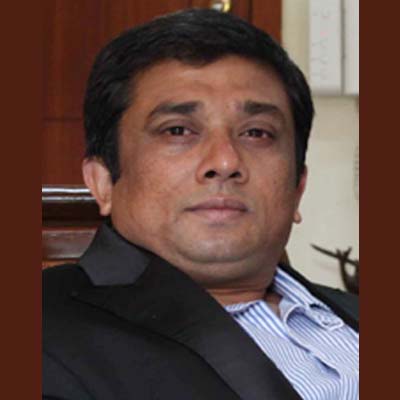
  • ‘We are net positive in our deals with cable TV networks in the metros’ : IndiaCast Group CEO Anuj Gandhi

    ‘We are net positive in our deals with cable TV networks in the metros’ : IndiaCast Group CEO Anuj Gandhi

    IndiaCast Group CEO Anuj Gandhi is spearheading an effort to extract bigger pay-TV revenues from broadcast-carriage platforms as TV18 founder-promoter Raghav Bahl searches for growth engines that would propel his media empire to the top league of broadcasters like Star India, Zee Entertainment and Multi-Screen Media.

    Known both in the broadcasting as well as the cable TV world as CEO of Den Networks, Gandhi has already turned around TV18’s distribution business in the four digitised markets of Delhi, Mumbai, Kolkata and Chennai. “We will be net positive in our deals with the cable TV networks in the metros,” he says, after sewing the new commercial deals with the multi-system operators (MSOs).

    Gandhi is ready to reap richer harvests for TV18 as India moves towards digital cable TV. “We will be doubling our subscription earnings within three years,” says the man Bahl has spotted to shepherd the growth of IndiaCast.

    Correcting that is no mean achievement. For the full-fiscal ended 31 March 2012, TV18 Group paid carriage fee of Rs 3.5 billion against Rs 3 billion earned as subscription income from TV viewers through broadcast-carriage platforms.

    Hard bargaining over legacy issues including payment of carriage fees have held up agreements between broadcasters and MSOs with just nine days left for the shift to digital delivery of television channels in the four metros of Mumbai, Delhi, Chennai and Kolkata. But Gandhi is confident that there will be no shift in the deadline of 1 November for digitisation in the four metros.

    “We are entering a new era of television history in India,” he insists, with a smile and a twinkle in his eyes.

    In an interview with Indiantelevision.com’s Sibabrata Das, Gandhi talks about broadcasters‘ different nature of commercial deals with direct-to-home (DTH) and cable TV service providers, a drop in carriage fees, the need to correct “legacy loads” and the growth prospects for all the stakeholders in a digitised regime.

    Excerpts:

    Q. How can you say so firmly that there will be no shift in the deadline of 1 November for digitisation in the four metros?
    We are entering a new era of television history in India. The bad news staring at all of us today is losses, distorted business models and bandwidth constraints. If that is going to halt, the turnaround story for all of us will have to evolve around the digitisation script. The good thing is that all the stakeholders realise that hidden value will unlock only if we end the analogue cable regime. The government is also backing digitisation and has taken all the tough decisions. While Mumbai and Delhi are in full gear, we will know about the ground reality in Chennai and Kolkata as we hit the digitisation date.

    Q. But aren’t we just nine days away and all the commercial deals between broadcasters and MSOs are yet to be in place?
    While all of us are sighting a new dawn, we have a lot of legacy issues to correct. And this takes time. But it is only a few deals that are pending, a few knots that have to be tied. I don’t think this by itself will be a strong force to push digitisation behind. We have gone too much ahead to retreat.

    Even DTH had this dark cloud hovering around it in the initial days; Dish TV did not have Star channels when it launched and Tata Sky (a joint venture of Tata Sons and Star India) had to go without Zee channels in the beginning. We will have digitisation by the set date, with or without a few deals.

    Q. Is IndiaCast unable to lock the deal with Den Networks because of historic high carriage fees?
    I can’t comment on any specific deal. But in some cases there is a revenue mismatch between carriage payouts and the subscription earnings of a broadcaster. This may be due to legacy and involves a lot of negotiations to correct. We have done deals with all the other MSOs except Den (Anuj was earlier CEO of Den Networks). We are confident of sewing a deal with them in the next few days.

    Q. What kind of deals are being stitched? Has IndiaCast done more of cost per subscriber (CPS) or fixed fee deals?
    After rounds of negotiations, we have been able to work out most of our deals with MSOs on a CPS basis. But we are not stuck on any single formula. We are also signing fixed fee deals in certain cases.

    ‘There will be no drastic fall in carriage fees. While the TAM towns are rising, the number of channels are also shooting up. But in the digitised markets, we will see a good drop in carriage fees‘
     
    Q. Are CPS deals in IndiaCast’s case easier to ink because subscription revenues have been comparatively lower than the peer networks while carriage payouts have been higher?

    It has been easier to strike CPS deals because we have been late entrants. We are also at an advantage because we are the only major distribution company to have subscription and carriage under one roof. And as we inducted a new team (Anuj Gandhi joined in March 2012) in IndiaCast, the industry knew that we would seek a revenue-carriage correction.

    Q. Are DTH service providers able to do fixed fee deals while cable is moving more towards CPS arrangements?
    We are seeing an interesting trend emerge. DTH has been able to negotiate more fixed fee deals with broadcasters as they have a national satellite footprint. They can bet on their future subscriber growth numbers with some authority. And they benefit from this kind of commercial arrangement as the yield per box comes down in a fixed fee deal.

    Cable networks, on the other hand, are moving towards CPS deals as they address a finite market (city-specific like Delhi or Mumbai or Lucknow) and there is less chance of them growing horizontally (unless acquisitions happen or they compete amongst themselves to grab more territories). Though MSOs want to do fixed fee deals, broadcasters are not comfortable in forecasting the swelling in future cable TV subscriber numbers.

    As we move towards smaller markets involving small-sized cable networks in the second and third phase of digitisation, we would definitely see more CPS deals. These could later evolve into fixed fee deals as cable networks get a fix on what subscriber growth they would be able to register in future.

    Q. TV18 and Network18 on a consolidated basis earned about Rs 3 billion of subscription income while carriage payout was Rs 3.5 billion in FY‘12. Has IndiaCast been able to do net positive deals in these four metros?
    I can’t comment on the financials but we have corrected that legacy and are in a growth phase. We will be net positive in our deals with cable TV networks in the metros.

    Q. How much of the carriage fees the four metros account for?
    For the industry, these four metros would be accounting for about 45 per cent of the total carriage payouts. We would be in line with this trend.

    Q. How much of a carriage fee drop are we seeing in the four digitised markets?
    There will be no drastic fall in carriage fees. There are twin reasons for this. While the TAM (TV ratings agency) towns are rising, the number of channels are also shooting up. And in the digitised markets, we will see a good drop in carriage fees.

    Q. Raghav Bahl had earlier stated that TV18 would have to catch up on the subscription revenue front while the advertising income had reached a level comparable with the competing networks. What sort of pay revenue growth do you forecast?
    The industry will be able to post 20-25 per cent growth in a digitised environment as revenue leakages stop and the pay-TV market gets corrected. IndiaCast would definitely do better than that. We will be doubling our existing subscription revenues within three years. And when we say this, we are not factoring in any new channel that would be added to our distribution bouquet.

    ‘While DTH has been able to negotiate more fixed fee deals with broadcasters, cable networks are moving towards arrangements on a cost per subscriber basis as they address a finite market and there is less chance of them growing horizontally‘
     
    Q. Why TV18 group could capture a comparable advertising revenue after the launch of Colors while the distribution income stayed far behind competing networks?
    Advertising revenues are broadly reflective of the ratings that the shows get. The distribution business, on the other hand, is much more complex and a late entrant will take time to catch up. The challenge is to keep a fine line of balance between subscription and carriage. Growth is also heavily influenced by the ‘legacy numbers’. Digitisation, however, will help correct some of this ‘legacy load’ much faster than what would have been achievable in an analogue cable regime.
     

    Q. The company earns around Rs 300 million from its international content syndication business. What sort of a growth are you forecasting from this segment?

    We will double our revenues from this segment in three years. We will achieve this by expanding our reach and launching in more international markets. Colors already reaches out to 68 countries and we are looking at entering the South African market where we are in talks with the leading DTH operator there.

    We have just launched MTV India in the Middle East. We are planning to take that channel to other markets including the UK (the channel is already there in the US).

    We have also launched a new channel called Rishtey in the UK. The aim is to dig into the fast-growing free-to-air (FTA) market in the UK at a time when the pay-TV growth is shrinking.

    Q. With ETV clocking about Rs 1.1 billion of subscription income in FY‘12, how much of an advantage will the acquisition of these regional-language channels have in multiplying TV18’s consolidated pay revenues?
    ETV will give us a regional footprint, add depth to our distribution strength, help us penetrate the interior markets, and provide negotiating power to ensure that our network channels get carried in the smaller places.

    Q. Has the reworking of the joint venture distribution arrangement with Sun TV Network Ltd helped? Didn‘t TV18 taken the decision of directly handling the distribution of its network channels in the southern states (except Tamil Nadu where Sun distributes) because of the low pay revenues that it used to get despite the JV with Sun?
    Even now we share a good relationship with Sun TV. We distribute the Sun network channels in the Hindi Speaking Market (HSM) while the TV18 channels in Tamil Nadu are distributed by them.

    For the other southern states, we felt that we needed to take direct control of distribution. The fresh deal with Sun has indeed worked well for us.

    Q. Will IndiaCast want to add more channels or follow the OneAlliance model where size doesn’t matter?
    We don’t want to add channels just to get volume growth. We want to have the right mix of channels.

  • ‘The last 20 years belong not to Star but to Zee’ : Star India CEO Peter Mukherjea

    ‘The last 20 years belong not to Star but to Zee’ : Star India CEO Peter Mukherjea

    Peter Mukerjea became the CEO of Star India at a crucial period of satellite television history in India when the relationship between two media moguls Rupert Murdoch and Subhash Chandra had soured.


    led Star against India’s homegrown broadcasting business of Chandra and took its flagship Hindi general entertainment channel (GEC) Star Plus to the top in 2000, the position it still enjoys after he quit to try his hands at his own private equity-backed broadcasting venture.


    The former Star India CEO admits that the last 20 years of private television broadcasting belong to Subhash Chandra despite himself being at the helm of a significant piece of Indian broadcasting history by successfully leading Star India.


    In a tete a tete with Indiantelevision.com’s Sibabrata Das, Mukerjea speaks candidly about how Chandra has outrun Star and Sony and today “runs the most effective broadcasting network, has a thriving cable business and was the first to launch DTH in India”.


    Excerpts:


    Q. Rupert Murdoch and Subhash Chandra started as allies and formed a joint venture. But this relationship turned stormy by the time you became Star India CEO. How bitter was it?
    The relationship with Zee was initially harmonious. But as News Corp started becoming more grounded in the Indian market and established its capability, Chandra’s views on Star, Murdoch and a multinational broadcaster changed.


    That in a way was inevitable to happen. So long as Star was in English and Zee in Hindi, the two companies operated in two ecosystems. The moment Star started Hindi content, Chandra saw it as a violation of the joint venture agreement and there was a major shift in relationship between the two partners.


    Q. And the beginning of the pay TV industry in India also helped in Chandra taking a hostile approach?
    Yes, it built a hostile environment. Alongside the personal stresses and strains, pay TV was becoming a reality in India. Murdoch has experienced pay TV in other markets and successfully developed it in his sprawling media empire. Chandra knew this.


    Though the two also ran an equal joint venture in Siticable (the cable TV outfit), there was mutual suspicion. The partnership became frigid and fell apart.


    I was in the hot seat as CEO. And the only way to progress was for Zee to buy out News Corp’s stakes in the joint ventures – which they eventually did. Having finished with that task, Star got an opportunity to do a total Hindi entertainment channel. Punit Goenka (son of Chandra and now in charge of Zeel and Zee News Ltd ) was a baby then and Chandra was running the company.


    Q. Were Chandra and Murdoch bitter even when they met after they split?
    Even when the meetings were pleasant, there was always tension in the background. Both were media moguls in different parts of the world and there was mutual respect. But it was always laced with a fair amount of rivalry.


    Q. In your early days as CEO, how did you find Chandra’s aggressive attacks?
    There were lots of questions put in Parliament and Star was accused of repatriating money from India and showing obscene content (Star Movies). Some of these were public petitions but we suspected that they were from our competitors. We, though, had no proof that they were Zee-backed.


    ‘Lobbying, having deeper pockets, being able to hire better executives – all these don’t matter. In love and war, all is fair. As a piece of history, it is Chandra who started DTH first in India. He has a strong presence in cable and runs the most effective broadcasting network in India. It is only in sports broadcasting that he needs an international partner‘


    Q. Murdoch always wanted to be the first to launch direct-to-home (DTH) operations in India. So what made Chandra beat Murdoch in this race?You can say it is because of lobbying or whatever. But the truth is that Chandra launched the first DTH platform in India. And he deserves credit for that.


    Q. Even Murdoch is known as a lobby master. Is that how you see this as a neutral proposition?
    Lobbying, having deeper pockets, being able to hire better executives – all these don’t matter. In love and war, all is fair. As a piece of history, it is Chandra who started DTH first in India.


    Q. So who would you say ruled the first 20 years of private satellite television broadcasting in India?
    The last 20 years surely belong to Chandra. He runs the most effective broadcasting network in India today. He has created an Indian product and has built a phenomenal international business with that content. He is the first to set up a regional-language network across India. And he has a strong presence in DTH and cable.


    Q. You say this even though you used to work in Star and later head it?
    Yes, you have to give credit to the man. He has worked so hard getting back, despite being knocked off in Hindi entertainment business in 2000. That was the time he expanded into different languages. Chandra has helped Zee stay probably as the largest broadcasting business in India today and as a publicly listed company. He had a longer part of the rule in these 20 years.


    Zee has outrun everybody else. It’s not Star, not Sony but Zee which is the leader of the pack. And this despite not having the backing of the multinationals which have an advantage in bringing truck loads of money. Look at the impact he has had in Indian society and entertainment culture. Zee has connected deeply with the Indians.


    Q. Do you see Chandra becoming a leader in sports broadcasting?
    He has to find an international sports partner. Though India is just cricket, he needs to step out of the base and bet much bigger. If he has higher risk-taking ability in sports and finds an international partner to provide richness in content, Zee will become a strong competitor to Star in sports broadcasting.


    Q. But didn’t he bid the highest for the ICC World CUP and also the BCCI rights?
    You can blame that on pedigree. The sad truth is that if you are a decision maker in allocating sports rights, you may go for a lower bid which has greater capability rather than give it to the one whose monetary bid was higher.


    Q. Chandra is now stepping into local languages in overseas markets like Middle East and Russia. Is the timing good?
    After building a solid business in India, Chandra is now stepping out to other parts of the world. There are great opportunities in eastern Europe or the entire Soviet Union country base. Parts of America are also a good hunting ground.


    I think it is a great strategy. Chandra has built the capability, the resources and the relationships. And it is not a bad time to strike. News Corp is going through a crisis and a lot of management time is wasted on external issues rather than businesses. Zee can capture market share and grow it.


    Q. Do you think Zee’s over-the-top (OTT) platform has a fair chance to succeed?
    There are serious rights issues and OTT is not still an open book. The bulk of the revenues in OTT is in the movie business. Chandra will have to wait it out. But it is creditable to pursue OTT and see it as a future growth business. Even in India, OTT will happen and grow alongside TV.


    Q. Would you have loved to work as CEO of Zee?
    That is difficult to say and I have never thought of it. I have never spent time with Chandra to understand him as an individual and what his goals are. A lot depends on the personal chemistry that you share with your personal boss. If goals do not match, then that relationship can’t work.


    Q. How much does an organisational culture matter?
    The promoter always brings a certain kind of personality into the organisation. But a lot depends on the CEO rather than the owner in influencing that culture; he brings his style and charm to the operations of the company.


    There are many critics who say the corporate culture in News Corp is not as wonderful as it is supposed to be. Citing the phone hacking issue, they say the organisational culture is wrong. There is, thus, no fixed solution to corporate culture.

  • ‘IPL is our biggest property and we can’t afford to undersell’ : MSM president network sales, licensing & telephony Rohit Gupta

    ‘IPL is our biggest property and we can’t afford to undersell’ : MSM president network sales, licensing & telephony Rohit Gupta

    Multi Screen Media (formerly Sony EntertainmentTelevision India) is beginning to enjoy a remarkable turnaround story. The Indian Premier League (IPL) has surfaced as cricket‘s most lucrative property, Sony Entertainment Television has climbed to the No. 2 position in the Hindi GEC (general entertainment channel) space andSab has grown beyond its flanking channel status.


    The other channels have also moved up the hierarchy. English movie channel Pix has raced past HBO and AXN has protected its turf quite strongly. Mix, the pure music channel, has had a good start. Being the only channel in that space that has network strength, it has taken up the challenge to grow the market and ramp up revenues.


    In an interview with Indiantelevision.com‘s Sibabrata Das, MSM president network sales, licensing & telephony Rohit Gupta talks about how the company is going to end this fiscal with a 40 per cent ad revenue growth and a 25 per cent growth in FY‘13.

    Excerpts:

    MSM raked in Rs 9 billion in ad revenue from the IPL last year. But is growth slowing down for the property due to a fall in ratings in the previous edition of the T20 tournament?
    I won‘t comment on how much ad revenue the IPL earned last year. But, yes, there is a little bit of anxiety on how IPL will do this year as advertisers have to set aside a large outlay for advertising on it. The ratings were down last time but we are sure that with marketing buzz starting, the IPL will come back on track. There was high intensity cricket with the World Cup preceding the IPL and India going on to win the championship. This year it is a clean slate and we have already stitched a few big sponsorship deals.

    Are we looking at a below double-digit growth as is evident from the deals that you have locked in so far?
    We have got marginal increase in rates but I can‘t comment on whether we will post double-digit growth or not. Also, don‘t forget that the base is already high.

    So has IPL as a property matured?
    We grew 30 per cent last year and so the IPL has matured to a certain extent. But if ratings start climbing, we will again see high growth.

    Hasn‘t it been a tough sell so far as by this time normally you manage to close almost 80 per cent of your ad inventory?
    Yes, it has taken us a longer time as we usually keep aside 20-75 per cent of the ad inventory time for spot sells. We have sold around 65 per cent of our inventory. But we will not be dropping rates as it will set a benchmark for next year. We have worked hard to scale up the value and won‘t undersell.


    The IPL TV rights are with us for another five years and it is our biggest property; we can‘t afford to discount its current value. T20 continues to grow in popularity; the formats that are not doing so well are the Tests and the ODIs.

    There is an entry barrier for new players as the cost of running a Hindi GEC is as high as Rs 5-6 billion. Which new player has that appetite after a few of them have severely burnt their fingers? This has helped us scale up revenues even as our own channels have grown

    So the new BCCI tender for international cricket played in India will not be as valuable as it was when Nimbus held the TV rights a few years back? Will that be the calculation when Sony bids this time?
    Perhaps, Nimbus was not able to exploit the revenues as well as it could have. We have a strong ad sales team. We are a network and our distribution (as a JV with Discovery) has muscle.

    When Sony launches a sports channel, it will have to acquire other cricket rights than just the IPL and New Zealand board. Can ad rates be driven further up to support aggressive bids at higher acquisition costs for cricketing properties than their current value?
    We are not going to make irrational bids but evaluate properties from a profit perspective. We feel that some of the boards are overvalued and there will be some price rationalisation. Cricket seems to have plateaued off to a certain extent. A few years back, broadcasters could get massive rate increases . That led to steep rise in acquisition costs. We are not in that market situation today. Don‘t forget that some people have lost a lot of money on cricket.

    Are we seeing some categories of advertisers retrenching from the sport due to the current tough economic environment?
    Handset manufacturers are finding it difficult today. The auto sector has taken some hit. But though telecom service providers are under profit margin pressures, the intense competition in the sector will spur them to advertise.

    When will MSM‘s ad revenues touch the Rs 20 billion mark?
    I can‘t talk on financials. But as a network, we will post a 40 per cent ad revenue growth this fiscal. Between Sony Entertainment Television, Sab and Max we are the No. 1 network in the Hindi heartland. And in the Hindi GEC space, we have two among the top five channels. The best part is that each of them is commanding a different kind of target audience and not cannibalizing each other. We are looking at a 25 per cent ad revenue growth in FY‘13.

    How far has SET contributed to this growth?
    Our flagship channel has grown this fiscal and is today the second-ranked in the space. The rise of SET has increased our negotiating power. Kaun Banega Crorepati (KBC) is an impact property and is a strong revenue driver for us.


    Fiction is what we had missed out for the last 3-4 years. But it has started doing well. We have an upscale, urban skew; our male viewership is also very strong. Advertisers chase this segment and our fitment is the best.

    Will SET launch an afternoon band to create a new revenue stream or still have a primetime overhang?
    We have no such plans; it doesn‘t make a big difference to your ratings and, hence, advertisers have little interest for it. Hindi GECs have preferred to expand their primetime and it now fills up the early evening from 6 pm right up to 12 in the night; there is a lot of viewership in that time band. The market exists in the evening-to-night slot and not in the afternoon.

    Does Sab still play the role of a flanking channel or it has grown beyond?
    It is not anymore just a flanking channel; it is a proper GEC, has a strong viewership and, as a family comedy channel, is uniquely positioned. Sab has helped our network revenues to grow.
    Has the Hindi GEC ad revenue market expanded this fiscal and will we see more channel launches in this space?
    It (Hindi GEC space) has now become a game for the big boys. There is an entry barrier for new players as the cost of running a Hindi GEC is as high as Rs 5-6 billion. Which new player has that appetite after a few of them have severely burnt their fingers? This has helped us even as our own channels have grown. Even in a digital environment, it will be tough for a new player. Segmentation is not possible because GECs have to be mass and can‘t be niche due to the huge costs involved to run it.

    Is Max under pressure due to steep acquisition costs for Hindi movies?
    The Hindi movie genre, pegged at Rs 9 billion, is under pressure from revenue as well as high acquisition costs. Viewership for the genre in terms of GRPs (GRPs) is not growing. Though Max will post ad revenue growth of 15 per cent this fiscal, costs have gone up. We did intelligent buying.


    There is bound to be a price correction in movie buying. Though Star went overboard last year, that strategy won‘t work every year. Some broadcasters are looking at launching action movie channels keeping digitalisation in mind. We have no such plans, at least not this year. We will wait to see how digitalisation evolves. Like GECs, the consumption of Hindi movies is more mass.

    Why did MSM decide to launch a music channel when the market is too crowded?
    Though the ad size is around Rs 2 billion at this stage, it is a good genre to be in. Mix‘s positioning of capturing the various moods during the day has got accepted and we believe that we will be the leader. As a pure music channel, we are here to grow the market. MTV and Channel [V] have taken a different route and focus on reality shows as their growth drivers. While other players in this pure music space have a standalone presence, we are the only one to have the network strength and will be able to ramp up revenues.
    Isn‘t the English entertainment space getting spoilt with new launches?
    The genre is growing and is still undersold. It is an important space to be in and is sold not on ratings but on perception. AXN stands out in this genre. As digitisation grows, we will see more launches.
    MSM doesn‘t have a footprint in regional-language broadcasting that is growing the fastest. Was letting TV18 Group acquire ETV a missed opportunity?
    The acquisition has to come at the right price. We are not desperate to launch channels. We do not believe in width that does not give us profits.
  • ‘We are weighing various channel launch options’ TV Today Network CEO Joy Chakraborthy

    ‘We are weighing various channel launch options’ TV Today Network CEO Joy Chakraborthy

    TV Today Network is in the process of an organisational shake-up as it prepares for expansion into regional news channels and language newspapers through the Aaj Tak brand.


    The route isn’t easy, considering that revenue growth for the TV news genre is under challenge, the advertising environment is slowing down and it is a highly competitive TV news market where there is too much supply.


    Earlier sitting on a cash pile, TV Today took a conservative approach and has in the past few years merged the loss-making promoter business of radio while taking a 13 per cent stake in TV Today for Rs 455 million. Now with no cash reserve, it is planning to expand through self-funding and debt (as it is debt free); it is also not averse to raising equity financing.


    The winds of change are blowing. There is talk of weighing each channel individually, having business heads for each of them, and even exiting from radio if the price is right while at the same time preparing for its operational profitability and building synergies between TV, print and radio.


    Late last year, the company tapped into a senior executive who has grown up in the television broadcasting space as a revenue specialist. His fast-paced aggression may have been a counter-counter to an otherwise editorial-driven organisation that believes in expanding at a comfortable speed. But that could have also worked in favour when the company’s revenues are growing at a snail’s pace, three of its loss-making channels are supported by its flagship Aaj Tak and radio needs to be turned around.


    In an interview with Indiantelevision.com’s Sibabrata Das,TV Today Network CEO Joy Chakraborthy talks about how he plans to grow the company in challenging times, upping revenues, improving profitability and making radio operationally break-even in FY‘13.


    Excerpts:

    Q. How difficult has it been to fit into a pure news organisation like the India Today Group that is very editor friendly as your past experience has been in entertainment broadcast networks?
    There is certainly a difference between an organisation which has got GECs (general entertainment channels), sports, niche and other genres and that which is a pure news outfit. When you are working for an entertainment broadcaster, it is more about using research, marketing, strategy and planning. News business, on the other hand, is very brand driven and credibility plays an important role; it is very day-to-day driven. My past exposure in Star and Zee will help me immensely to do a cross-fertilisation of cultures. The sanctity of news, however, has to prevail.

    Q. What skills you needed to acquire to transition from a revenue specialist to a CEO?
    CEOs are not born in one day; they move up the ladder from different wings like finance and revenue. When you are the revenue head, you are acting like the CEO of that arm. And I was also running P&L of eight niche channels. So, anyway, I am familiar with handling the bottom line role. What matters is a basic understanding of the industry.


    The biggest challenge in TV Today Network is to get the staff within oriented to my mindset. I have to get the existing team, which is very talented, to work at my pace. My task is to give the editorial the latest in technology and news gathering. Being a revenue specialist, I can work out innovative solutions and increase the company’s turnover.


    Spending years in Zee has made me understand the cost part of the business very well. It is important for media companies to be very cost conscious and not to splurge money. For TV news organisations in India, which have the structural issue of high manpower and low top line, this is much needed.

    Q. Will we see a new restructured TV Today that is less rigid and more nimble footed as an organisation?
    As an organisation, there is a lot of potential to grow. It has built high credibility and is a very strong news brand. The Group will start a process of synergising across departments and functions so that we can streamline costs and build economies of scale. I also hope to get the right support for taking calculated risks.

    Q. Does that mean that TV Today will have a less conservative approach to expansion in the areas of business and regional news?
    We are making business plans that include regional news channels. We will be weighing various channel launch options. We are preparing for expansion, but will wait for the market situation to be good. Also, it has to make the right business sense.

    “We are open to the idea of selling the radio biz, provided we get the right price. We are targeting break-even in FY’13. We are not going to bid for Phase III

    Q. When TV Today was sitting on cash, it did not expand. Will it not be tough when there is no cash reserve and the company is averse to raising equity funding?
    We will expand through self-funding and being a debt-free company, we can also source bank financing for our expansion. We are also not averse to raising money.

    Q. TV Today’s cash reserves have dwindled after the merger of the loss-making businesses of radio on a valuation of around Rs l billion and a 13 per cent stake buy in TV Today for Rs 455 million. How do you justify such huge valuations and how will it help TV Today?
    We feel that radio and print will help us have a 360 degree approach; along with our main television business, it will complete the link and give us a cushioning feel. It also makes us cost effective.

    Q. How do you turnaround the radio business that had an operating loss of Rs 219 million on a meagre revenue of Rs 42 million last fiscal?
    We are targeting break-even in the next fiscal. No doubt we are a weak player in radio. But we have a presence in the three main markets of Mumbai, Delhi and Kolkata. We are getting in a business head with a sales background. By doing proper structuring and sales, we can easily jump our revenues to the operating cost level. We are looking at packaging Delhi Aaj Tak sales with Oye (the radio brand). We will also be looking at the costs.

    Q.Will you be bidding for Phase III to expand or you will be content being a small player?
    We will not bid for Phase III. The radio industry is not growing substantially enough to compensate for huge capital investments and long waiting period for profitability. We will rather work on strategic sales alliances with smaller regional operators who have a presence in some of the key markets like Bangalore, Hyderabad and Chennai; they may even have a single market presence. We can handle their ad sales.

    Q. Doesn’t it make more sense to find a buyer for the radio business now, particularly when the time for renewal of licence is just four years away and costs for retention are going to be higher?
    We are open to the idea of selling the radio business, provided we get the right price. We are at the same time going to focus on reaching operational profitability and growing its revenues.


    The recently launched ‘Sabse Filmy‘ positioning of our radio station gives us a big advantage as a large amount of film content can be drawn from our TV channels. With content and ad synergies with our local and national channels, we hope to make this operation highly cost effective and benefit from the fast growing radio market, which in India is much lower than other growing and developed markets. Also with news expected to be permitted on radio in the future, the fitment with our TV channels will be perfect. Radio can be a support medium to our main television business.

    Q. What is the reasoning behind TV Today’s small stake presence in Mail Today that is bleeding profusely?
    Mail Today investment is highly synergistic to our TV business, both from content and ad revenue point of view. The paper operates in the largest ad sales market in the country (Delhi) and has a huge growth potential. A foray into the newspaper space also gives us an opportunity to set up Hindi newspaper business around the Aaj Tak brand. The Hindi newspaper space is growing very fast and the Aaj Tak brand is one of the most powerful Hindi news brands.

    Q. Sources inside TV Today tell us that you have been talking of a 20 per cent revenue growth target for TV Today in the next fiscal. Isn’t this an impossible target to achieve, considering that the revenue growth is under challenge for the genre (TV Today just grew 3 per cent last fiscal), the advertising environment is slowing down and it is a highly competitive TV news market where there is too much supply?
    The market is tough at this point of time and there is too much of inventory in the news genre. The problem of news is that it has been sold on ratings rather than perception. The truth is that it should be measured like cricket; it has a huge ‘outside home’ viewership and is consumed by a lot of people. Being a revenue specialist, I know how to drive it up but will not be in a position to share my strategy at this point of time.


    We are also looking at ways where we can have a premium rate for news and a separate pricing for non-news content.


    As a genre, we have to optimise our revenue sources. That is the only way we can stay profitable. I also plan to control and rationalise the middle line. While personnel cost comprises a good chunk, distribution expenses have to be reviewed. Digitisation is a hope for broadcasters at this stage but it will take three years to feel the real impact.


    Moving to our own building, which will have the latest technologies, will also help us save costs and make our on air news look the latest with great graphics and presentation.

    Q. TV Today’s flagship channel Aaj Tak is supporting the other three loss-making channels. Why not shut at least two of the channels which play a flanking or a niche role?
    I am planning to have business heads for each channel; they will have to manage their P&L. The idea of Tej as a flanking channel works when it is strong enough to cannibalise some viewership away from the main channel. There needs to be some shake-up; it needn’t necessarily imply a closure. We are in the process of microscopic analysis of each channel individually. We will take calls where we are heading keeping 3-5 years in mind.

    Q. How can you have pricing power and up the revenues of Aaj Tak when there is so much of commodisation of news and the second and third Hindi news channels are priced so much lower? 
    Aaj Tak may have deviated for some time and gone the wrong way of sensationalism. But it has always been a market leader and for the past 13 weeks, we have a 30 per cent lead over our nearest rival. It is present in most of the media plans. And don’t forget that 45 per cent of the channel’s viewership comes from females. There is a lot of untapped revenue potential.


    Organisations sometimes make the mistake of feeding the weak child instead of the strong. I believe in feeding your generals even at the cost of the soldiers. We will be investing a lot in Aaj Tak.


    We will be doing a lot of strategic alliances. We have tied up with Star for its biggest upcoming property with Aamir Khan; we are their channel partners for that. We will be launching a weekly show with the Bollywood star in Aaj Tak. The issue-based special follow-up show will be similar in nature to Star’s.


    We will also get into awards and events without compromising our credibility. For starters, we are doing the Aaj Tak Care Awards event.

    Q. Headlines Today has gone through new positioning and revamps a few times. How do you build the channel into a powerhouse?
    The biggest challenge is Headlines Today as we see big potential there. We are investing in the channel where we think we can make money. It has to build numbers but what it misses more is perception. In fact, TV Today needs a big marketing and PR push. We have changed our agency to Black Pencil (Leo Burnett’s creative agency) with whom we are going to work on brand films. You will see a lot of action around Aaj Tak and our other brands.


    Even with the channel’s current status, we can double its revenues next fiscal. We are setting up a separate ad sales team for Headlines Today and removing it from the rate card. The channel has not been able to get its true value because it was sold along with Aaj Tak; Hindi and English news channels have to be sold separately. We have already recruited an All-India head for Headlines Today who would be reporting to the existing network head and coming on board next week.

    Q. What about Tej and Delhi Aaj Tak?
    The value of Tej will be if it can effectively supplement Aaj Tak. Along with Delhi Aaj Tak, they can tap retail advertisers and dig deep. Retail, in any case, is Aaj Tak’s biggest strength.

    Q. Are we going to see more launches internationally?
    We will have to try and get more international revenues. We will be exploring other markets outside US and UK. We will also strengthen our existence in UK, US and Canada. We have recruited Vikram Das as our new international head who moves in from Neo Sports’ international business.

  • ‘Digitisation will not spur irrational price war as the Santa Clauses are broke’ : Hathway Cable & Datacom MD and CEO K Jayaraman

    ‘Digitisation will not spur irrational price war as the Santa Clauses are broke’ : Hathway Cable & Datacom MD and CEO K Jayaraman

    Hathway Cable & Datacom has an ambitious investment plan of Rs 10 billion as India opens up to digitisation across the country.


    In the first phase, India’s leading multi-system operator (MSO) plans to invest Rs 1.75 billion even as it expects DTH to take away 10-15 per cent of its cable TV subscribers in the two lucrative markets of Delhi and Mumbai.


    Sitting on a cash pile of Rs 2 billion, Hathway will not source equity finance at this stage. Though net losses will drag on for a long period in a digital environment, the MSO hopes to regain its old valuations if it manages to successfully implement the early phase of digitisation.


    Even as carriage revenue will shrink, Hathway’s endeavour will be to have an Ebitda of 20-25 per cent right from the start of mandated digitisation.


    In an interview with Indiantelevision.com’s Sibabrata Das, Hathway Cable & Datacom MD & CEO K Jayaraman talks about how no cable or direct-to-home company is in financial health to launch an irrational price war. He also elaborates on the MSO’s digitisation gameplan.


    Excerpts:


    DTH companies have made rapid progress in recent years. How is Hathway Cable & Datacom prepared to exploit the first phase of digitisation?
    We plan to invest Rs 1.75 billion in the first phase. This will include Rs 200 million towards marketing in Mumbai and Delhi over the next 6-8 months. It is the first time that we are splurging on media campaigns.

    Are you comfortably placed on the funding part or you plan to raise fresh capital?
    We have a cash pile of Rs 2 billion. We will not source equity finance at this stage. We are comfortably placed and will manage with bank debt and vendor credit.

    Will you need funding in the second stage?
    We will see when we reach there. We have already digitised around two million homes. We will need to digitise our remaining 6-8 million existing homes (including multiple TVs). Our funding requirement will be Rs 10 billion as we need to subsidise the set-top box (STB) cost and make further investment in infrastructure.

    Hathway was selling at Rs 500 a STB to its customers in voluntary digitisation. Will you further subsidise the boxes in a mandated digitisation environment?
    We are looking at charging Rs 750-790 a STB (including taxes) as the rupee has depreciated against the dollar.

    “LCOs will get a revenue share of 30-35%. They will gain from 2nd TV homes, operational efficiencies and Vas. Distributors will get a 5% rev share. They will also get a 30% share in carriage revenues”

    But DTH could go aggressive and there could be a price war situation?
    We won’t sell below this even if there is a price war. We do not have the financial resources to further subsidise the boxes.


    We, however, feel that no player is in a position to indulge in an irrational price war. Nobody in cable can do so. DTH will fight for market share on the basis of perception and brand. All the Santa Clauses are broke.

    Are you expecting a migration to DTH?
    We expect DTH to take away 10-15 per cent of our cable TV subscribers in the two lucrative markets of Delhi and Mumbai. But we see a surge in second TV homes. Besides, we will launch three packages – lower, middle and top-end. In all the packages, we will have a price advantage. Also, we will have more channels on offer than DTH because of our bandthwidth superiority.

    Will the supply of STBs be impacted due to a sudden rise in demand?
    We have ordered 1.3 million digital STBs and signed a letter of intent for another 0.5 million. We estimate our subscriber universe to be 1.5 million in Mumbai and Delhi. About 20 per cent of this will be second TV sets.


    We also have a presence in Kolkata through our joint venture company, Gujarat Telelinks Pvt. Ltd (GTPL), which acquired a 51 per cent stake in Kolkata Cable and Broadband Pariseva. We expect to at least seed 400,000 boxes there.


    We have already seeded 250,000 STBs on a voluntary basis in Delhi and Mumbai.

    Crucial to the whole implementation of digitisation is the appeasement of the local cable operator (LCO). Have you fixed the revenue share terms with them?
    The LCOs will get a revenue share of 30-35 per cent. There will be a loss of revenue for them but they will make up to some extent with the second TV homes, where they don’t usually charge anything from the subscriber. Besides, they will gain from operational efficiencies and will discover new homes in a digital environment. Also, there will be a revenue share for them from value-added-services (Vas). So they should reasonably settle with us.


    The distributors will get a five per cent revenue share. They will also get a 30 per cent share in carriage revenues. In Mumbai, we are comfortable with the distributors. There may be some issues in Delhi but we will manage to strike a smooth bond with them.

    Why haven’t the MSOs sat down together and decided on a common share for the LCOs who control the last mile to the consumer?
    That would attract the Competition Commission of India. But in any other form, we will make efforts to drive consensus up. We don’t want any fissure surfacing among the stakeholders. We can’t afford to derail DAS (Digital Addressable System).

    Do you expect carriage revenue to shrink considerably?
    We expect it to shrink by 30 per cent in the digital environment. This can even go up to 50 per cent. But we will be somewhat compensated by a reduction in content cost.

    How?
    We will do fixed fee deals with broadcasters and believe content cost in a digital scenario will fall in the region of 35 per cent. We are close to sealing deals with two big broadcasting companies.


    Even sports channels should allow us to price reasonably; customers should take it round-the-year. Otherwise, we will offer it on a-la-carte basis to consumers.

    Analysts predict that net losses of MSOs will drag on till at least 2016 in a digital environment?
    We can’t predict now. But Hathway aims to stay Ebitda positive. We expect our Ebitda to be at least in the 20-25 per cent range. We know it will be difficult at the early stage of digitisation but our endeavour will be towards achieving that range from the start.

    Hathway had fixed it IPO price band at 240-265 and the scrip is now quoting at Rs 116 per share. When will the valuation be regained?
    We will regain good valuations if we manage to seed the boxes. Investors are bothered about that and not about net profitability at this stage.

    Do you expect the second phase to be tougher for you?
    For Hathway, the ride in the second phase could be even smoother as we have already got a large population of digital subscribers on a voluntary basis in some of these major cities like Bangalore and Hyderabad. Our digital penetration in some of these cities is as high as 60 per cent. In Gujarat we have seeded 150,000 (out of our
    estimated current subscriber universe of 220,000) STBs, in Hyderabad we have 350,000 (out of 800,000) and in Bangalore we have a digital population of 275,000 (out of 400,000).


    And in Jaipur, Indore and Bhopal, we have a digital penetration of 40 per cent out of our current subscriber base. In Phase II, we are far ahead.

    Will you follow the acquisition route?
    We will not pursue acquisitions and will prefer to conserve capital for digitisation. We will not do any more analogue consolidation. It is bad to add analogue weight in the current circumstances. Our focus will be on digitsation.


    Post digitisation, we may be interested in acquisition in some of these cities. But it should come at the right price.

    Are you looking at launching value-added services?
    We will tie up with either Ericsson or Cisco for Video-on Demand (VoD) services. We will decide in March whom to partner with. We have launched HD services and also bundled it with our broadband offering. We hope it will enhance our average revenue per user (ARPU). We have 2000 HD subscribers. Given that we get Star bouquet on HD and spend on marketing, we expect HD to eventually account for 10 per cent of our subscriber base.

    Are you bullish on your broadband growth?
    Yes, that gives us an advantage over DTH. We are also ahead of the other big MSOs so far as broadband goes. We will be bundling broadband with digital cable to offer better value to the consumers. The broadband homes passed stand at 1.7 million and our actual subscribers are 400,000.

  • ‘We will keep aside Rs 10 bn for organic or inorganic growth opportunities’ : Zeel MD and CEO Punit Goenka

    ‘We will keep aside Rs 10 bn for organic or inorganic growth opportunities’ : Zeel MD and CEO Punit Goenka

    Punit Goenka is in control of the media empire that patriarch Subhash Chandra built assiduously over almost two decades. He is quick to take decisions, is unruffled by temporary ups and downs, and believes in continuity.


    The elder son of Chandra digs deep into the Zee culture, has his own ways of finding solutions and does not hesitate to bet on sports as he takes up the responsibility of shaping Zee‘s broadcasting business.


    “I have learnt a lot from my dad. He is no more hands-on. See, he has not called me for over an hour (during the interview). I have my own style,” says Goenka, a grin on his face.


    Soft-spoken and shy, Goenka is a people‘s man. He backs his senior team, even when certain decisions do not work in the short run.


    In an environment of raunchy reality TV shows, he believes in clean content and explains that Zee TV, the flagship channel, is designed for family viewing.


    Goenka crafts strategies that focus on profitability; he hardly plays to the gallery.


    Under his leadership, Zee ended its 12-year-old rivalry with Star to float a joint venture distribution company named Media Pro Enterprise India. The aim of the JV: to pave the path for consolidation and hasten the need for digitisation in the sector.


    In an interview with Indiantelevision.com‘s Sibabrata Das, Zee Entertainment Enterprises Ltd managing director and CEO Goenka talks about the lack of opportunity in the marketplace to make the right purchase, the need to bet on sports broadcasting and to stick to profitability in a high-cost environment.


    Excerpts:

    Zeel is sitting on a cash pile of Rs 14 billion (as of 30 June 2011). Are you looking at acquisition opportunities?
    There is nothing that is available today that is fitting our criteria; we see no opportunity in the marketplace for us to make the right purchase. Even in the southern states, we are taking the organic route and patiently building our businesses there.


    As a company philosophy, we have decided to keep aside a cash of Rs 10 billion at any stage for organic or inorganic growth opportunities.

    But isn‘t this the right time for consolidation in the industry?
    Every two years we think the time has arrived for the industry to consolidate. But then something happens and there are more launches. Last time, it was the private equity firms; before that, we had the international strategic investors.


    However, for the benefit of the industry, consolidation is the answer. The sector is sized at Rs 300 billion and there are 500 television channels in the country earning an average ARPU (average revenue per user) of $3. That is why we have become an unprofitable industry.

    In a drive to consolidate and digitise the industry, Star India and Zee Group recently ended their 12-year divorce to create a distribution company. Has the joint venture been able to shake up the pay-TV market?
    It has been three months since the merged entity got formally rolling (on 1 July). Although we have started billing as a joint entity, there are old individual contracts that have yet to run their full cycle. We have over 5000 contracts with cable TV networks individually. So the impact will be felt when we start inking new contracts. There will be no major revenue upside in the short run. The deal will have a deeper impact after 18 months of implementation.

    How deep in terms of percentage growth?
    Both Star India and Zeel are seeing single-digit growth in subscription revenue from cable TV networks. Our domestic subscription income from cable rose 16 per cent (Rs 3.88 billion) in FY’11, but that included sports. By pooling together the resources of both the partners, we hope to post strong growth and address various anomalies of the analogue market including piracy.


    A large part of the deal plays out in analogue cable. In case of DTH, both of us are in any case growing independently.

    Given our growth trajectory and contracts, the sports business should break-even in two years. In the worst case scenario, we should be able to turn it around by the middle of FY‘14‘

    How painful has been the integration process?
    We have had to let go 20-25 per cent of the combined workforce. Some of them, however, have been absorbed inside the network.

    Media analysts say Zeel’s share price will get a boost if the sports broadcasting business is hived off and capital raised by offloading equity. Has any investment bank got the mandate to hunt for an investor for the sports business?
    We have no capital-raising plans. Zeel will continue to fund the sports business till it turns around. We have taken a long term call and sports broadcasting is a strategic business for us.

    When do you expect the sports business to turn around?
    Given our growth trajectory and contracts, the sports business should break-even in two years. In the worst case scenario, we should be able to turn it around by the middle of FY’14.

    Zeel‘s sports losses for FY‘11 stood at Rs 2.08 billion on a revenue of Rs 4.4 billion (excluding a one-time revenue gain of Rs 700 million as one-time fee for the pre-mature termination of rights for AIFF). So what will drive this to profitability?
    Subscription revenue will drive the business to profitability while advertising will be event-led.


    Ad revenue is heavily dependent on cricket. And within that segment, it is India cricket. While advertising revenue is cyclical, subscription income is consistent throughout the year.

    Zeel has bagged the eight-year Cricket South Africa (CSA) television rights for $180 million. Considering that the earlier five-year rights went for $75 million, isn’t the new price tag on the higher side?
    The price is in our comfort zone. It is an inflationary rise and has been one of the most valuable boards for us. By having one of the strategic boards under our belt for a longer term, we are under less pressure.

    We get to learn from sources that the Zimbabwe board rights have been retained for $20 million (earlier it had gone for $6 million for four years). But Zeel will be able to give its sports business maximum firepower when it is able to retain the telecast rights for the other three boards – Sri Lanka, Pakistan and West Indies. So will you bid aggressively?
    We have not yet signed with the Zimbabwe board, so I can’t comment on that. The other three boards are up for renewal during FY’12 and FY’13. We have done our calculations and will not bid recklessly for these rights. There are boards outside these which are also coming up for grabs.

    When is the golf channel getting launched ?
    We are awaiting government approval. We are ready to launch the golf channel within 60 days of obtaining the regulatory clearances.

    Will Comcast be a partner for the channel?
    Earlier Taj Television (which Zeel later acquired) had some sort of an agreement with Comcast for the golf channel. We have decided that we will do it ourselves and completely own it.

    When are you launching a full-fledged HD channel in sports?
    We are launching Ten Sports in HD format later this month. This will be a full-fledged HD channel and will have varied content from the other channels. So we will have four sports channels (Ten Cricket, Ten Action+ and Ten Sports already exist) by this month-end. We have acquired a slew of properties across different sports such as football and tennis. This has enabled us to launch three different channels and post strong subscription growth.

    Are there other HD launches planned?
    Zee TV, Zee Cinema and Zee Studio will be launched in HD format soon.

    Zeel has posted a measly 0.5 per cent ad growth in the fiscal first-quarter. Do you see the market improving?
    On the ad front, we have had a flat first quarter and do not expect to post double-digit growth this fiscal. But we will have a high single-digit growth.


    Subscription revenues will continue to have a similar growth trajectory, both on analogue cable and DTH. Our international revenues should stay flat.

    International subscription income actually de-grew two per cent in FY’11. Do you have any plans to fix the international business?
    The problem is with UK and Europe; the wobbly economy there is affecting our subscriber numbers. We have launched a hybrid channel, Zee Café, in the UK to arrest our degrowth in that market. The content, aimed at the South Asian diaspora, includes cricket and regional fiction shows sub-titled in English.


    In the other markets like the US, We are seeing growth.

    Is your localisation strategy working?
    Zee Aflam has seen reasonable growth and has reached break-even status within three years of operations. But operating in free-to-air markets (FTA) means the channel can grow only at limited speed.


    The other experiment we have carried out is in Russia. The audiences there love Bollywood, soaps and dramas. However, it is early days yet.


    We are also planning to launch in 3-4 other markets.

    Zee TV has slipped to fourth position as Sony Entertainment Television rejuvenated on the back of its big-ticket game show Kaun Banega Crorepati (KBC). Will you change the programming strategy and bring in celebrity-backed reality shows?
    There has been a streak of bad launches but it has not convinced us enough to believe that we need to change our content strategy. We are relaunching these slots.


    A large part of a particular channel‘s growth still comes from one show. A reality show may bring in spikes but we will wait to see what happens after that concludes. We will not take to celebrity-based reality shows unless we feel that we have a concept that needs to engage them. We are happy with our homegrown formats.


    Our prime competitor is Star. And as a network, we are in close competition.

    We will be increasing original hours of content on Zee TV from 28 hours to 33 hours per week. There has been some delay in that because we have had a few bad launches and we want to first fix those slots. We have also had a slowdown in the ad market

    Will you increase the programming hours of Zee TV as you fight back to regain market share?
    We will be increasing our original hours of content from 28 to 33 hours per week. There has been some delay in that because we have had a few bad launches and we want to first fix those slots. We have also had a slowdown in the advertising market.

    Zee has kept away from purchasing big movie titles. Will that affect Zee Cinema when Viacom18 launches its movie channel?
    With movie acquisition costs touching the roof, we have reduced the number of big title purchases. But we have maintained our 30 per cent share in the genre due to the extensive reach the channel enjoys; we have also wisely worked on our library content. We control 2800 movies.


    Big titles give rating spikes but they are first run on GECs rather than on movie channels. The Hindi movie channel genre has become cluttered and unprofitable due to high acquisition costs. But we have stayed profitable.

    Star Gold has reduced ad inventory on the channel by 33 per cent and is showing six fresh movies a day. Will you follow suit?
    Such a move has to be compensated with an increase in ad rates. In the current market scenario, this may not be easy. But we are working on reducing the ad time on the channel. And don’t forget that Zee Cinema was the first channel to show five fresh movies a day.
    Sun TV is under attack from the Jayalalithaa government. With the launch of the state-owned Arasu cable, will you make aggressive investments in the Tamil Nadu market?
    With Zee Tamizh, we have a foot in that market. Arasu has got presence in some pockets of the state. It is still early days and we have to wait and see how the market gets impacted. But if we get more distribution, we will get more aggressive.

    Isn’t Zee under attack from Star in the Bengali and Marathi regional language markets?
    The growth of Star has only expanded the market. In the southern region, we have fortified our position in Telugu and Kannada. Going beyond the Marathi and Bengali and the southern belt, there is no distinct language difference and Hindi still rules. Bhojpuri, for instance, has not met with much success yet. The Punjabi market can see growth once TAM (the television ratings agency) starts reporting Punjab as an independent market. Now it is clubbed with Haryana, Chandigarh and Himachal Pradesh; there is no clear weightage in that market.


    Regional news, on the other hand, is easily doable.

    Isn’t the news genre too cluttered?
    The industry can support 6-7 national channels. With so much of fragmentation, the way forward is serious news.


    There should be more stringent norms in this genre as entertainment is also passing as news. We have positioned ourselves as a serious news channel and are seeing decent growth. Unlike other players, we also have a strong pay revenue from our news business.


    It is the regional markets that are getting cluttered. The Andhra market, for instance, has seen too many launches. Some national news broadcasters are also having issue over cost structures.

    Will you launch an English general news and business news channel or you feel the balance sheet of Zee News Ltd has to further strengthen before you go in for these high-cost launches?
    The balance sheet can support these launches. But strategically, we will focus on Hindi and regional news channels. Yes, we have two critical genres left. But we will first fill up the regional space.
    Are you looking at expanding through the franchise route?
    We will take the franchise route only if editorial content is with us. After all, that is what impacts our brand.
    When you started, you were part of the Agrani satellite project. Do you still nurture the ambition of owning a satellite?
    Agrani was a good project but the policies were not supportive. Banks also had no clue how satellite funding works. Owning a satellite doesn’t make sense now; it is more feasible to lease transponder space on a satellite.
  • ‘If you are up in the hierarchy, you will get pricing power’ : Star India president ad sales Kevin Vaz

    ‘If you are up in the hierarchy, you will get pricing power’ : Star India president ad sales Kevin Vaz

    Leading broadcasters will continue to post strong ad revenue growth while the long tail will be severely hurt as advertisers tend to consolidate their spends in a cautionary environment.


    Genre leaders will benefit as advertising monies get rejigged. It is the weaker performers that will not find support from advertisers; they will degrow.


    The television sector will see a 13-15 per cent growth in ad revenue this fiscal while print will be pushed back in a slowing economy.


    Star India, which has leader channels in most genres, has done more annual and network deals this year. Its top 10 clients, for instance, have done deals stretching from a minimum of 12 months to three years.


    The Hindi general entertainment channel (GEC) genre is on an upswing even as ad monies are moving away from cricket.


    The Hindi movie channel genre is set to grow at 15-20 per cent. The news genre will, however, continue to struggle this year.


    In an interview with Indiantelevision.com‘s Sibabrata Das, Star India president ad sales Kevin Vaz talks about the changing equations in the television advertising space.


    Excerpts:

    Is India‘s leading broadcasting network ready to announce that the advertising economy is slowing down?
    The ad market is not as buoyant as it was in January. The television sector will not see a 20-25 per cent growth in ad revenue this fiscal as was forecasted earlier. But it will still post a 13-15 per cent growth while print will be pushed back in a slowing economy. With print crawling at a 0-3 per cent growth rate, ad monies will move to television.

    Even then it is a slower growth for the TV broadcast segment. Is Star beginning to feel the heat?
    Leading broadcasters will continue to post healthy growth while the long tail will be severely hurt as advertisers tend to consolidate their spends in a cautionary environment.


    Genre leaders will benefit as advertising monies get rejigged. It is the weaker performers that will not find support from advertisers; they will degrow.

    Aren‘t Star‘s top advertisers noticing a slowdown?
    We have actually done more annual and network deals this year. Our top 10 clients, who account for 30 per cent of our revenues, have done deals stretching from a minimum of 12 months to 36 months. We will buck the trend and grow much faster than the industry. Having leader channels in most genres has helped us stitch long term deals.

    The fiscal first-quarter is indicating a slowdown for certain listed media companies. So isn‘t there a negative sentiment already prevailing in the market?
    The April-June quarter has been good for us. And the July-September quarter is even better. Of course, the channel performance has also improved. If you are up in the hierarchy, you will get pricing power.

    ‘The hard core press categories are shifting more to TV. The automobiles category is now spending 60 per cent of its ad budgets on
    TV, up from 30 per cent. The consumer durables segment is also
    following this trend‘

    But aren‘t we seeing a small dip in FMCG spending in the first quarter?
    The FMCG category is going to be aggressive this year. Some of them may have issues, but as a whole they will continue to spend more. P&G, Marico and ITC, for instance, will not shrink their promotional budgets. There are variants being launched and competition in the category is fierce. TV is the last thing they will cut down on as it is the most efficient medium for the category. And within TV, they will consolidate their spends.


    In a toughening economy, advertisers tend to flirt less; they commit their spends to the bigger players and keep aside a lesser amount for shopping with the rest.

    Are Hindi general entertainment channels going to benefit because cricket is not delivering due to India‘s poor performance?
    Cricket is hit in a big way. GECs are on an upswing even as ad monies are moving away from cricket. The Hindi GEC genre, pegged at Rs 37-40 billion, will grow at 12-15 per cent this year.


    It is important to note that cricket is losing out because of India‘s dismal performance; this has nothing to do with a slowdown. In fact, the Indian Premier League (IPL) will be tested next year; as ratings slip, there will be a churn.


    So what is working well for us? Cricket and print are on the losing side this fiscal.

    Are tentpole properties bringing in revenue spikes in GECs?
    Advertisers are supporting tentpole properties as they look at buying impact. Brands like Maruti and Cadbury, who are on cricket, are sponsors of Just Dance. Kaun Banega Crorepati has got Idea. If cricket was doing well, we could have come under some pressure. Even in regional language channels, we are seeing tentpole properties being created.

    What about the Hindi movie channel space?
    The ad revenue market for this genre is around Rs 8 billion. It is set to grow this year at 15-20 per cent.


    Star Gold will capitalise heavily as the channel is performing very well. We have cut the ad inventory time by 33 per cent with effect from 15 August to give it a Hindi GEC environment (Channel V saw a similar ad cut time from 1 January) and ramped up our investment on movie acquisitions.

    How will the launch of a Hindi movie channel by Viacom18 impact the market?
    We will see a huge erosion in viewership for some channels who have not invested in movies. But from a revenue perspective, we must remember that it is a very efficient genre.

    In the Bengali and Marathi regional markets, it is becoming a three-horse race with Star performing well. So how will this fragmentation impact?
    The successful launch of Star Jalsha has actually grown the market. The Bangla GEC advertising market has grown from Rs 3 billion two years ago to a size of Rs 6 billion. Even in Marathi, there will be a revenue expansion as we start monetising the growth of Star Pravah. In these stand-by-itself markets, advertisers had only limited GRPs to buy. Now that the supply has increased, we expect a 30-40 per cent expansion. National brands are going deeper and deeper and local brands are getting more aggressive.

    Now that Star is also handling ad sales of NDTV, how do you see the growth in the news genre?
    The news genre will continue to struggle this year. Banking, finance and automobile categories are seeing a huge hit; so news television will feel the impact. With the resurgence of GECs, the news genre has actually stagnated for the last few years.


    Regarding NDTV, we are selling it along with the network. So we are bringing in a wider range of advertisers.

    Do you see consortium selling growing as a concept?
    Yes, leading broadcasters will become the rallying point. It has happened in the case of distribution (Star and Zee merger) because they sensed value; we will see it in the advertising arena as well.

    Is the English entertainment segment under pressure?
    English general entertainment channels will benefit as the premium segment grows. High-end cars, for instance, will increase their exposure to TV. The English GEC genre will see a 30 per cent growth this fiscal.

    So is TV gaining at the cost of print?
    The hard core press categories are shifting more to TV. The
    automobiles category is now spending 60 per cent of its ad budgets on TV, up from 30 per cent. The consumer durables segment is also following this trend.