Tag: Shyamashis Bhattacharya

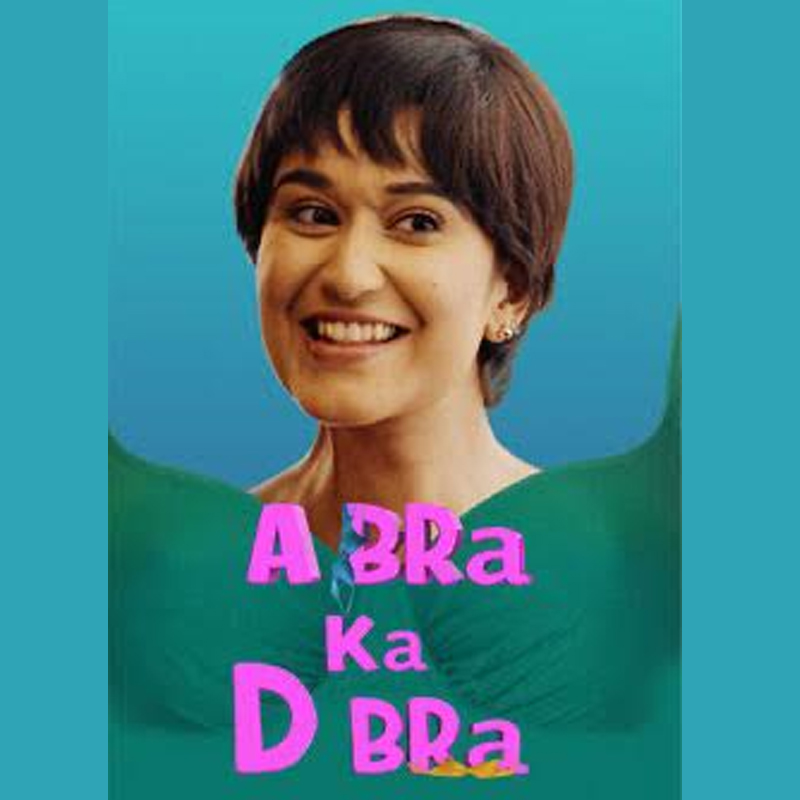
  • A Bra Ka D Bra is a takedown of the culture of body shaming

    A Bra Ka D Bra is a takedown of the culture of body shaming

    NEW DELHI: Insecurities. Everyone has them. Stemming from the perception of how others see us. In the age of Instagram we’re all on display, and for many people, their self-esteem hinges on that one ‘heart’ from virtual strangers. Even though no two bodies are alike, and there is no right way to be beautiful, we’re all chasing that unattainable ideal – be it bubble booties, thigh gaps or perfectly plump bosoms.

    Which brings us to the heart of the movie A Bra Ka D Bra – the story of a young woman struggling to accept the fact that she is flat-chested. Her struggle is very real and very valid, for she inhabits a society where adolescent girls put women like Kim Kardashian and Kylie Jenner on a pedestal and want to look like them in the hopes of one day getting a taste of their high-rolling lifestyle. While the protagonist Bani may not aspire to be a Kardashian, she is exceedingly conscious of her own lacking assets, a fact that is rubbed in her face at every turn by family members, peers and even random passers-by. Her cousin knowledgeably points out to her – bada hai tabhi to behtar hai (Bigger is better) – which perfectly sums up the mindset of people today.

    Living in this toxic environment does a number on Bani, who resorts to every trick in the book, from creams to padding, to give her cup size a boost. While these scenes may have been presented humorously, they also highlight the insidious effect that body image issues and body shaming can have on a person’s psyche. Bani, played brilliantly by Prachi Bansal, is far from defined by her boobs (or lack thereof). She is a confident ace basketball player, a starry-eyed small town girl who moves to the big city, and dreams of fulfilling her passions and finding love. Yet her vibrant personality and busy life are gradually overshadowed by one aspect of herself that she is insecure about – which society has conditioned her to believe is the be-all and end-all of being a woman.

    Like any teenage girl, Bani wants to fit in, make friends, have a lit college life – so when nature fails her, she takes matters into her own hands and stuffs her bra with fake pads. The scheme pays off – for a while. The pads hamper her when she plays, so she quits basketball. It also attracts an unwelcome suitor, which leads to unsavoury consequences. Eventually, the pretence and lies catch up with Bani, pushing her into despair and making her consider an extreme and irreversible step.

    But thanks to her clueless but supportive father, better sense prevails. The message is clear: love yourself. Acceptance and being comfortable in your skin may be hard to come by, but its better than kowtowing to superficial standards of beauty that invariably take a toll on one’s self-esteem.

    Bani’s story is a reality that millions live with. Some are unhappy with the shape of their body, some with their height, others with their skin tone. They are trolled and shamed both online and offline; they are depressed and filled with self-loathing. Producer Shyamashis Bhattacharya and director Neelima Bajpai take up a bold subject to explore in their maiden venture for the big screen and they execute it well. Bani’s inner turmoil and frustration with the world that constantly looks down on her is showcased with a deft hand by the writing team comprising Bajpai, Amit Babba and Indira Bisht. The screenplay could have been more cohesive and flown better, but doesn’t detract from the overall impact of the story. The supporting cast also leaves an impression – Avinash Mishra is Vidyut, the lovable himbo Bani crushes on; Poulomi Das plays the prickly friend Shanti and Luv Vispute shines as the happy-go-lucky confidant with a few secrets of his own.

    A Bra Ka D Bra is a step in the right direction. It’s a wake-up call for a society obsessed with outward appearances, and a shot in the arm for those lacking in body confidence. The film can be streamed online as a pay-per-view on BookMyShow.  
  • Industry needs to handhold to come out of this crisis

    Industry needs to handhold to come out of this crisis

    MUMBAI: The film and television producers are gearing up to restart shooting in the wake of guidelines issued by the Maharashtra government and the easing of lockdown restrictions. Film and TV post-production activities in Tamil Nadu, Kerala, Karnataka and Telangana have also resumed, albeit with restrictions.

    Indiantelevision.com reached out to leading TV producers to understand their plans in the days ahead.

    Shakuntalam Telefilms founder Shyamashis Bhattacharya said, “People are eager to work; getting them on set is difficult but getting them to work is easy. We have new challenges before us like sanitisation and social distancing, but we will strictly adhere to all the norms.”

    But how production houses with lower budgets will work with added costs of sanitisation and other procedures? According to him, Hindi GECs would be able to sustain and work as soon as the government gives permission. Budget constraints, however, will pose challenges to regional channels. In that case, they might take more time than others to think of suitable measures. He said that broadcasters and production houses are already in talks to find out if there can be deduction in production budgets.

    Producers already have plans to start fiction shows with a lesser number of crew. Non-fiction shows, however, will be on hold as they require larger crews. According to him, broadcasters are also under pressure as there haven’t been any advertising revenues for many months.

    Optimystix Entertainment founder-MD Vipul D Shah suggests, as a measure of social distancing, that editing rooms will require redesigning. A separate space will be allotted to editors with one in one room. Most preferably, they will be asked to work from home.

    Makeup artists and hairdressers are constantly required to be with actors. But, to maintain social distancing, actors will now have to work without makeup artists at least for a few months. However, all these measures are still on paper; one has to wait till shooting starts to test the efficacy of their implementation.

    Indiantelevision.com reached out to Vaishnave Media Works Ltd MD-chairman Kutty Padmini to understand how things have progressed in the Tamil industry.

    She said, “Full-fledged shooting has not yet started in the Tamil industry as not more than 15 to 20 people can work together at a time. So, we have requested the Tamil Nadu government to grant permission for 40 people.” She adds that 30 people can be present inside the set and 10 outside; they will include drivers, generator operators and the rest.

    She said that the pending post-production works like dubbing, CJI, and VFX have started.

    According to Padmini, the Tamil Nadu government decided to resume shooting with 20 people after someone suggested that in Hollywood the shoot is happening with just 22 members. She says that this scenario is not relevant to India.

    “Resuming shoot with minimum people is possible for me as I do my own scripts and everything else, but it might not be possible for other people. It is not quite difficult also. Today, the technology is so advanced that we do not need so many lights or technicians like in the black-and-white era.”

    Padmini made it clear that she is planning to resume shooting only after 15 June. Currently, she is busy creating content for her YouTube channel.

    On creating a bank of certain episodes, Padmini says that now broadcasters allow the creation of banks of only five episodes. Story narrations might change in accordance with other factors like change in TRPs. And then there are many other factors like availability of actors, who come from Karnataka and Kerala.

    During the pandemic, a lot of production houses had to lay off employees, but the situation has been different for Padmini as she preferred to hire people based on projects.

    Padmini is utilising this lockdown period to create scripts which are doable with lesser crew. She is currently working with MSN, Amazon Prime, Dangal and Aha Media in Hyderabad.

    Creative Eye founder Dheeraj Kumar is positive that soon Maharashtra will also start post-production works like other states. Kumar’s 20-year-old show Shree Ganesh will make a comeback on Star Plus. The show will premiere on 2 June and air from Monday to Sunday at 6:30 pm.

    “The show is going to start but I have to do some additions, promos, and post production works. So, I am giving whatever technological help that is required through constant communication with editors and technicians. Basically, my problems are very immediate. The bigger challenge is we cannot start our post-production works until and unless we follow all the guidelines imposed by Maharashtra government,” he added.

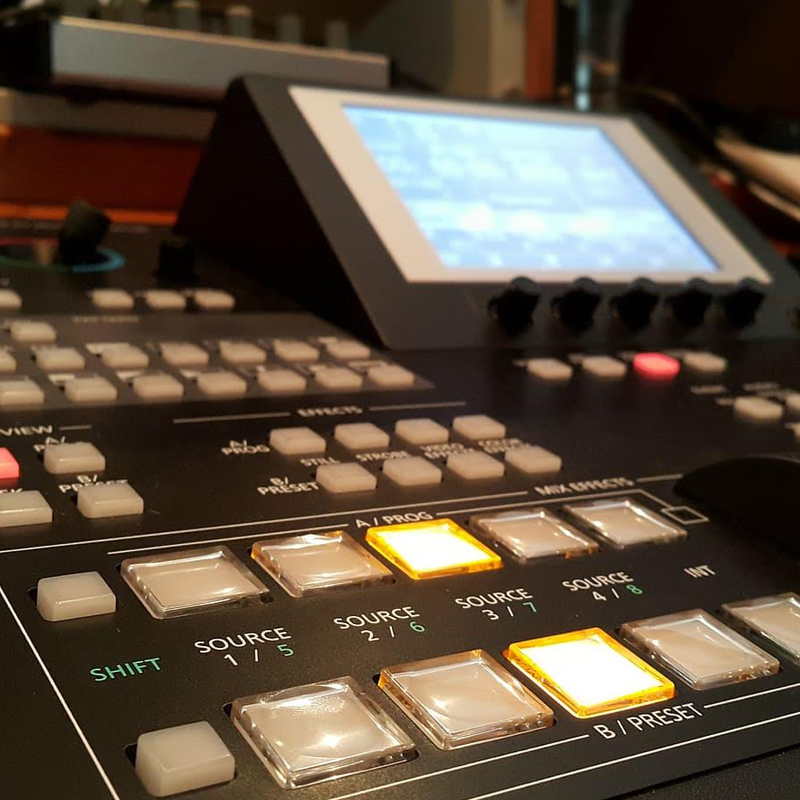
    Kumar has his own studio, pro-cut machines, tools, equipment for mixing and sound. Apart from this, he regularly sanitises his studio building. He is bringing in place sanitise tunnels to effectively disinfect offices and equipment. In order to maintain social distancing norms Kumar has enough rooms that could be allotted to the technical staff.

    Kumar is also going to implement an odd-even formula in terms of staff to begin shooting. He believes broadcasters and producers will have to support each other in these troubled times.

    “Going forward we will have to think very carefully with regard to logistics and finances. Necessity is the mother of invention. We will have to learn to work with less crew and a tight budget. Industry needs to do the handholding to come out of this crisis,” he concludes. 

  • Production houses keep their faith as they weigh impact of COVID-19

    Production houses keep their faith as they weigh impact of COVID-19

    MUMBAI: The iconic ‘Lights, camera, action’ has temporarily been silenced across the country. The COVID-19 pandemic is wreaking havoc on the once-thriving media and entertainment industry, stymieing its smooth functioning, at least for the time being. The silver lining, however, is that despite the global impact of the pandemic, production houses are hopeful of a brighter future. Industry experts are hoping that the short-term pain will be a long-term gain. While some feel that the nation will soon be back on its feet, others are thankful for the much-needed break for creative people. 

    Indiantelevision.com reached out to a cross section of players in the industry for reaction.

    The Film and Television Producers Guild of India CEO Kulmeet Makkar believes it is too early to predict the overall impact. It completely depends on how long this lockdown continues. “Everything is shut. How soon will theatres open is a huge question mark. Even if the essential commodities are made available, will cinema halls open for the public, considering the social distancing norm? Given all this, everyone except news channels is facing a huge setback,” he says.

    Production houses that had rented sets for their upcoming shoots had to hurriedly halt things. Indian Film and TV Producers Council director Shyamashis Bhattacharya says, “We are talking to all the studio owners both at an individual level as well from IFTPC that the rent of such studios should be waived off for the period where there has been no work. Film City, where the industry has the maximum number of sets, is controlled by the Maharashtra government; we are trying to reach out to them as well on this matter. I am sure they will take an empathetic view of our concern. For sets where the producer may not get any waiver on the rent, I am sure the broadcaster of that show will pitch in and help the producer.”

    Hats Off Productions co-founder Aatish Kapadia says that it is more important to look after the lives of daily wage earners and people who are in trouble because of work shortage than to worry about the rent.

    Unemployment and job cuts will be a grim reality that will hit the industry soon. Bhattacharya says: “Sacking of people would be an individual choice of every producer and that will depend on how long the lockdown continues. I don’t think anyone will like to sack people if they are able to manage financially.”

    Even though no jobs have been taken away yet, Makkar questions whether production houses can sustain those losses for long if the lockdown continues. For now, the focus is on the daily wage earners, the most hard-hit by the COVID-19.

    Playing their part to help fellow humans, industry biggies have come forward with a heart of gold.

    Red Chillies’ Shah Rukh Khan is making available his office for quarantine facilities. Balaji Telefilms’ Ekta Kapoor will donate her annual salary of Rs 2.5 crore towards helping daily wage earners and freelancers. The Yash Chopra Foundation will look after 3000 daily wage earners from the industry. The foundation will also transfer Rs 5000 to their individual bank accounts. 

    Meanwhile, streaming giant Netflix has contributed $1 million to the relief fund set up by Producers Guild of India. Sony Pictures Networks India will donate Rs 100 million. Zee Entertainment has also committed to help 5000+ daily wage earners who are working directly or indirectly in its overall production ecosystem.

    However, the question looming large is the sustainability for producers and broadcasters when revenue doesn’t kick in for a few months. Experts suggest that if the crisis continues, every stakeholder will see more than 15 per cent of the total yearly revenue being wiped out.  Although the initial support has been phenomenal, the government needs to step in soon. Even if the lockdown is lifted on 14 April, it will take time for things to get back to normal.  Every single month of inactivity would mean losing 10 per cent of the business.

    In the meanwhile, some parts of the production chain are still being oiled. A few production houses are doing background work to promote their shows on digital platforms. “We are doing a lot of collaborative work on Zoom calls and other Microsoft applications. The work is in progress with several channels. I am writing scripts for a web series and a film. Khichdi and Sarabhai Vs Sarabhai are back on television and to promote the shows every team is resorting to video conferencing. We are doing a lot of shoots on social distancing through our individual social media handles,” says Kapadia.

    Bhattacharya says that the scripting for some shows is being conducted via email exchanges. These are shows that were commissioned before the lockdown but couldn’t get started with the shoots. “As far as absolutely new ideas are concerned, I think the broadcasters will listen to them only when the situation normalises to some extent,” he says.

    Nonetheless, heads from the entertainment and media industry are hopeful that things would be better once the lockdown is lifted and the government plays its part in helping the stakeholders in the industry. But the industry will feel the pinch for the months to come.

    Let’s earnestly hope that the industry will emerge unscathed from this unprecedented and hard situation.