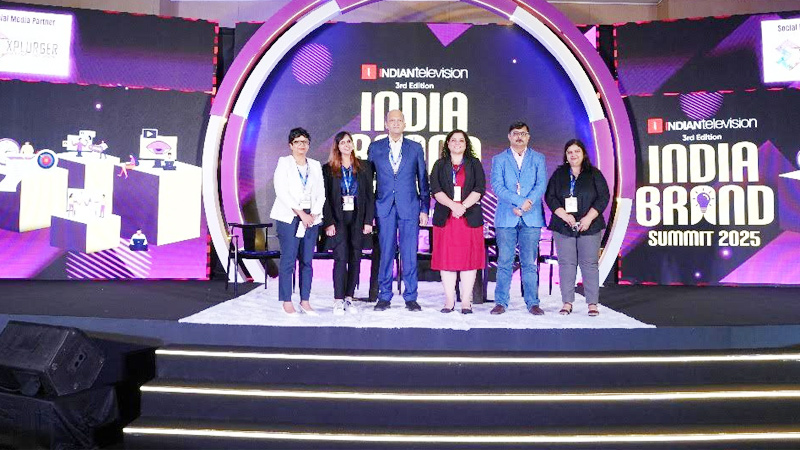
MUMBAI: What do movie remixes and customer experience (CX) have in common? Both, as it turns out, need staying power, emotional hooks, and the ability to get even the toughest crowd on their feet. That was the mood at the 3rd India Brand Summit 2025, where CX leaders gathered for a session titled CX-Led Growth: Why Experience is the Ultimate Differentiator and the conversation hit all the right notes.
Session chair Deloitte India, partner Vivette D’Cruz set the tone by urging brands to design CX not just for today but for the decades to come: “Make it like a remix that still works 20 years later evergreen, adaptable and impossible to resist.”
From there, the panellists spanning sectors from entertainment and holidays to manufacturing and consumer goods unpacked how experience has become the real battlefield for brand loyalty.
Mahindra Holidays & Resorts India VP for customer operations Shweta Srivastava traced CX’s rise from a back-end support function to boardroom strategy. “Customer experience has evolved from reactive firefighting to being a core driver. Many companies now have Chief Customer Experience Officers at the table,” she said. Her advice: pick three metrics that matter most, whether CSAT, NPS, or retention, and make them part of leadership KRAs. That way, ownership spreads across functions finance, supply chain, marketing not just the service desk.
She recalled an e-commerce fix designed through empathy: “We created a ‘green pass’ tag for loyal customers, flagged in the CRM. It allowed frontline agents to override rigid return policies and say ‘no questions asked’ because loyalty deserves flexibility.”
Panasonic Electric Works India head of customer services Rakesh Gupta highlighted how embedding CX into culture requires mapping the entire customer journey. From browsing switches on a website to watching demo panels at a shop, installation, servicing, and even product disposal, every stage was considered. “We even run chai-samosa meetings with electricians, train dealers, and reward loyalty. Because one grumpy ‘Chotu’ at the store can undo months of marketing effort,” he quipped.
Digital tools like AR/VR are now part of the mix. Customers can virtually test whether a fan matches their walls or a plate complements their curtains. Panasonic also recently piloted a “ballroom” model where its most skilled technicians guide local teams through AI-driven video support, saving costly travel and slashing resolution times.
Hindalco Industries (Aditya Birla Group) head of customer centricity Namita Bohara stressed that in B2B, trust is built as much through billing details as through product quality. “We measure customer satisfaction through something we call the Fairness Index tracking not just value but whether customers feel they are treated fairly. Even small requests like a GST line item on an invoice matter hugely in cementing loyalty,” she explained.
Her mantra: listen, learn, act, and close the loop by showing customers how their feedback drove change. Increasingly, Hindalco is co-creating solutions with clients, anticipating needs before they arise.
For Shemaroo head of digital marketing Anvesha Poswalia CX boils down to emotional connect. “We’ve pivoted from B2B to B2C. Customers come to us not for discounts but for goosebumps,” she said. Citing the Gujarati film Umrooni Pen Paar, she described how Shemaroo turned its launch into a cultural moment by encouraging audiences to share their own ‘first threshold’ stories. “It wasn’t just about streaming a film, but sparking conversations people related to. That’s how you build loyalty,” she said, adding: “Our mission is to make Gujaratis fall in love again with Gujarati cinema.”
Hamilton Housewares’ head of CX & Service, Uday Bhosale, argued that technology must augment, not replace, human connection. “Fifteen years ago, call centres were the only channel. Today, we have bots, Whatsapp, emails, even AI answering calls. But businesses must decide where to draw the line. Use bots for order status or FAQs, but when frustration and emotions enter, only a human should step in,” he warned.
He noted that 70 per cent of companies deploying AI for cost-cutting miss their targets. The better approach: let AI assist agents by surfacing faster answers, while humans handle empathy-driven queries.
Shweta added that transparency in personalisation is non-negotiable. “Customers should feel their data is enhancing their experience, not invading privacy. In our membership model, we use past holiday behaviour to design plans that fit their lives. When personalisation feels helpful, it works,” she said.
The session ended with consensus: CX is less about one-off “wow” moments and more about remixing consistency with innovation. Whether through loyalty councils, AI-enhanced service, fairness indices, or goosebump-worthy cultural campaigns, the goal is to make CX the evergreen anthem of brand growth.
As one speaker summed it up, “Technology and human connection must work hand in hand because in the end, customers don’t just remember the transaction, they remember the feeling.”