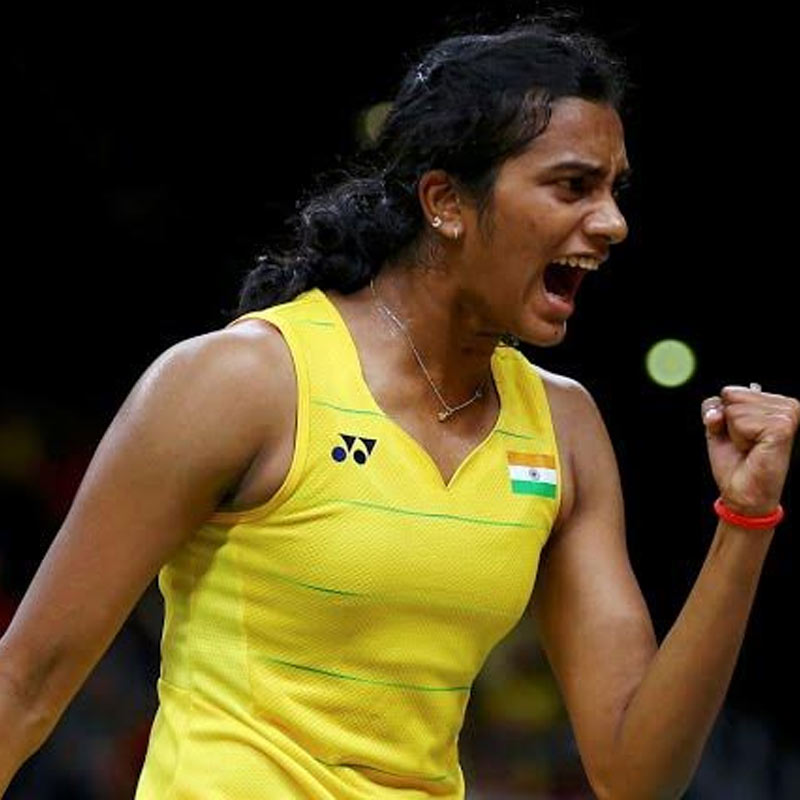
Tag: Shrinivas Dempo

  • Corporate funding vital for sports development: KPMG-CII

    Corporate funding vital for sports development: KPMG-CII

    MUMBAI: The global sports market comprising infrastructure, events, sponsorship, training and manufacturing and retail of sports goods is estimated at Rs 37.8–44.2 lakh crore (USD 600–700 billion), accounting for approximately one per cent of the global GDP.

    According to the report titled, “The Business of Sports” launched today by KPMG in India in association with CII during the summit on “Business of Sports and Entertainment”, over the years sports has evolved as a noticeable sector for all economies, presenting myriad careers as well as business opportunities. Further, sports contributes significantly towards improving the overall health and well-being of a country. Interesting trends driving the global sports sector highlighted in this report are:

    • Technology has gradually made its presence felt through applications across the entire value chain of sports business

    • Like in other industries, social media is acting as a game changer in the sports sector too. A large number of sportspersons also use the medium to connect with their fans and endorse their brand affiliations

    • Amongst the devoted sports enthusiasts globally, 45 per cent prefer viewing sports content online

    • There has been an upsurge in global women viewership for sports events. In India too, women are increasingly comprising a significant portion of the viewership pie

    Shrinivas Dempo, chairman, CII summit, and CMD, Dempo Shipbuilding & Engineering said, “The last 5-7 years have been the most dynamic for the sports industry in India with some fundamental changes. Sports not only provides an active branding and marketing opportunity to investors, but has also created value for fans all across. Addition of various sporting leagues in India have invited tremendous support and presence of corporate sector.”

    While presenting an overview of the global and Indian sports market, the report explores and assesses the sports ecosystem in India, identifies the various stakeholders concerned and addresses their specific issues and challenges while attempting to highlight the common grounds between all stakeholders to enhance the development of sports in India.

    According to Jaideep Ghosh, partner and head, transport, leisure and sports, KPMG, in India, “In February 2016, the government accorded an industry status to sports infrastructure, which is expected to attract investments from the private sector, thereby not limiting its role to just corporate social responsibility (CSR) activities and non-profit organisations.”

    Increasing viewership, sponsorship and participation in sports other than cricket, a rising number of sports start-ups and the growth in rural viewership numbers are key trends driving the growth of this sector in India. The report further highlights encouraging aspects of sports landscape in India, as below:

    • Indian sports viewership (TV) numbers grew 30 per cent over the two year period between 2014 and 2015

    • In 2015, the Indian sports sponsorship market grew 6.7 per cent y-o-y to INR 5,190 crore

    • Sports consumption in India is on the rise with leagues as well international sports garnering strong support across multiple platforms. While India is a latecomer, the concept is rapidly covering ground. Of the 11 operational leagues, nine were launched during 2013–16 and two more are planned in 2016

    • Regional games packaged in interesting league formats have been successful in garnering rural viewership as well

    The report identifies key issues facing the sports ecosystem in India across segments of governance, sports events, and infrastructure development among others, while offering recommendations to tackle these problems. It also presents a comprehensive view of the governance structure of sports in India, outlining the roles and responsibilities of major governing entities.

    “India is facing a moment of truth after its performance at the 2016 Rio Olympics. To initiate a strong foundation for the development of sports in India, the country needs to focus on three major aspects — improving governance and infrastructure, building a sporting culture and deploying a focused approach to winning medals,” added Jaideep Ghosh.

    The early success achieved by league-based events across multiple sports indicates a strong potential for Indians to consume sports other than cricket. This growing popularity of the league format in India resonates across the report. The league culture is still in its nascent stages in India, in comparison to the U.S. and Europe. IPL established a successful model for packaging and marketing. 2014 saw the emergence of some potentially successful leagues, including PKL, ISL, IPTL and CTL. However, the business of leagues requires high investments and has long gestation periods. In order to drive team success in leagues, the report suggests significant focus on fan engagement and marketing, celebrity influence, geographic location and better overall management apart from on field performance.

    India has a long journey ahead on its path to developing a strong sports culture. It needs to begin at the base, and that is what will build the future.

    KPMG in India, the Indian member firm of KPMG International, strives to provide rapid, performance-based, industry-focused and technology-enabled services, which reflects a shared knowledge of global and local industries.
  • Corporate funding vital for sports development: KPMG-CII

    Corporate funding vital for sports development: KPMG-CII

    MUMBAI: The global sports market comprising infrastructure, events, sponsorship, training and manufacturing and retail of sports goods is estimated at Rs 37.8–44.2 lakh crore (USD 600–700 billion), accounting for approximately one per cent of the global GDP.

    According to the report titled, “The Business of Sports” launched today by KPMG in India in association with CII during the summit on “Business of Sports and Entertainment”, over the years sports has evolved as a noticeable sector for all economies, presenting myriad careers as well as business opportunities. Further, sports contributes significantly towards improving the overall health and well-being of a country. Interesting trends driving the global sports sector highlighted in this report are:

    • Technology has gradually made its presence felt through applications across the entire value chain of sports business

    • Like in other industries, social media is acting as a game changer in the sports sector too. A large number of sportspersons also use the medium to connect with their fans and endorse their brand affiliations

    • Amongst the devoted sports enthusiasts globally, 45 per cent prefer viewing sports content online

    • There has been an upsurge in global women viewership for sports events. In India too, women are increasingly comprising a significant portion of the viewership pie

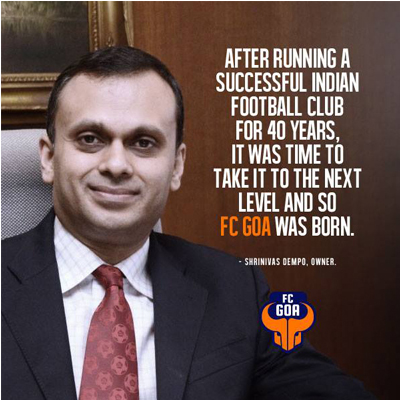
    Shrinivas Dempo, chairman, CII summit, and CMD, Dempo Shipbuilding & Engineering said, “The last 5-7 years have been the most dynamic for the sports industry in India with some fundamental changes. Sports not only provides an active branding and marketing opportunity to investors, but has also created value for fans all across. Addition of various sporting leagues in India have invited tremendous support and presence of corporate sector.”

    While presenting an overview of the global and Indian sports market, the report explores and assesses the sports ecosystem in India, identifies the various stakeholders concerned and addresses their specific issues and challenges while attempting to highlight the common grounds between all stakeholders to enhance the development of sports in India.

    According to Jaideep Ghosh, partner and head, transport, leisure and sports, KPMG, in India, “In February 2016, the government accorded an industry status to sports infrastructure, which is expected to attract investments from the private sector, thereby not limiting its role to just corporate social responsibility (CSR) activities and non-profit organisations.”

    Increasing viewership, sponsorship and participation in sports other than cricket, a rising number of sports start-ups and the growth in rural viewership numbers are key trends driving the growth of this sector in India. The report further highlights encouraging aspects of sports landscape in India, as below:

    • Indian sports viewership (TV) numbers grew 30 per cent over the two year period between 2014 and 2015

    • In 2015, the Indian sports sponsorship market grew 6.7 per cent y-o-y to INR 5,190 crore

    • Sports consumption in India is on the rise with leagues as well international sports garnering strong support across multiple platforms. While India is a latecomer, the concept is rapidly covering ground. Of the 11 operational leagues, nine were launched during 2013–16 and two more are planned in 2016

    • Regional games packaged in interesting league formats have been successful in garnering rural viewership as well

    The report identifies key issues facing the sports ecosystem in India across segments of governance, sports events, and infrastructure development among others, while offering recommendations to tackle these problems. It also presents a comprehensive view of the governance structure of sports in India, outlining the roles and responsibilities of major governing entities.

    “India is facing a moment of truth after its performance at the 2016 Rio Olympics. To initiate a strong foundation for the development of sports in India, the country needs to focus on three major aspects — improving governance and infrastructure, building a sporting culture and deploying a focused approach to winning medals,” added Jaideep Ghosh.

    The early success achieved by league-based events across multiple sports indicates a strong potential for Indians to consume sports other than cricket. This growing popularity of the league format in India resonates across the report. The league culture is still in its nascent stages in India, in comparison to the U.S. and Europe. IPL established a successful model for packaging and marketing. 2014 saw the emergence of some potentially successful leagues, including PKL, ISL, IPTL and CTL. However, the business of leagues requires high investments and has long gestation periods. In order to drive team success in leagues, the report suggests significant focus on fan engagement and marketing, celebrity influence, geographic location and better overall management apart from on field performance.

    India has a long journey ahead on its path to developing a strong sports culture. It needs to begin at the base, and that is what will build the future.

    KPMG in India, the Indian member firm of KPMG International, strives to provide rapid, performance-based, industry-focused and technology-enabled services, which reflects a shared knowledge of global and local industries.

  • We will break even in 2-4 years, says FC Goa’s Shrinivas Dempo

    We will break even in 2-4 years, says FC Goa’s Shrinivas Dempo

    MUMBAI:  Think Goa, and the imagery that one gets is that of sun kissed beaches and churches. Well, Goa is much more. While Sunday afternoons are a  siesta time for many, villages here come alive with sports fans coming together to organise and participate in what seems to be Goa’s first love – football.


    Local clubs like the Dempo’s, Salgaocar’s and Churchill Brothers are known names, which through years of play and support from their respective owners, have become a household name in the state. However, now the fan base is set to expand, thanks to the upcoming Hero Indian super League. With eight teams from across the country gearing up, it doesn’t come as a surprise that Goa too has a franchise called FC Goa.


    Owned by Dempo Group of Companies chairman Shrinivas Dempo, VM Salgaocar and Brothers managing director Dattaraj V Salgaocar, Videocon Group chairman Venugopal Dhoot and cricketer Virat Kohli, FC Goa is geared up for the tournament.


    The club has global football legends as part of its team. Arthur Antunes Coimbra better known as Zico is their marquee coach. Zico has been a part of three world cups playing for his national team Brazil. Former Arsenal star Robert Pires is the team’s marquee player.


    Dempo, a well known businessman, is a massive football fan and is also the vice president of the All India Football Federation (AIFF). He is of the opinion that the league promoted by Star, IMG-Reliance and AIFF has come at the right time. He explains with an example, “Youngsters today, do not wear cricket jerseys. They wear jerseys of Arsenal and Chelsea. We need to convert these youngsters to home grown players.”


    When asked why the football fever hasn’t caught up in the country despite a format like the I-League already existing, he explains, “We were always in a dilemma why people were not taking to the I-League.  And we felt it was the egg and chicken story.  It was quality and marketing that was required and I think the ISL has provided that platform.”


    At the international draft of the ISL, FC Goa proved to be the most generous as it spent Rs 2.46 crore on seven players. “It’s a high cost game. We are ready to invest money and in a few years see the returns. We will break even in three to four years” he adds.


    In terms of infrastructure Dempo feels that Goa has the best infrastructure in the country but still there is a lot to be done.  The club wants to have a stadium of its own but currently will be utilising the government-owned Fatorda stadium in south Goa.


    Speaking about Kohli acquiring a stake in the team, he informs that it was the cricketer who had approached them a few months back. He says that the cricketer will be an asset to them as he represents sports passion and is a youth icon.


    Dempo says “We have got professional people to run the team. We will be there from a policy perspective and advisory role.”


    Speaking further on Stars role to telecast the ISL matches in five languages, he finds it a very good move which will help the game to penetrate the market. “The quality of coverage of the I-League is really not up to the mark, but here we will get the best of coverage” he adds. He also feels that the I-League will not become what the Ranji trophy has become because of the IPL. The 45 year old says, “The I-League is the core competition and we will continue with it.”


    The team will be investing money to widen and enlarge the reach of the game in Goa. For this, it will be targeting more schools and under the guidance of Zico and assistant coach Arthur Papas, a scientific programme and high-pitched grassroots programme targeting youngsters from nine years onwards is being sketched out.


    FC Goa had announced its principal sponsor as Videocon D2H and kit partner as Adidas. It is also looking at local sponsorships ahead of the kickoff on 12 October. Videocon d2h will also be launching a new channel on its direct-to-home platform centering on the team. A magazine for fans too is slated to be launched.

  • FC Goa announces Virat Kohli as its new co-owner cum ambassador

    FC Goa announces Virat Kohli as its new co-owner cum ambassador

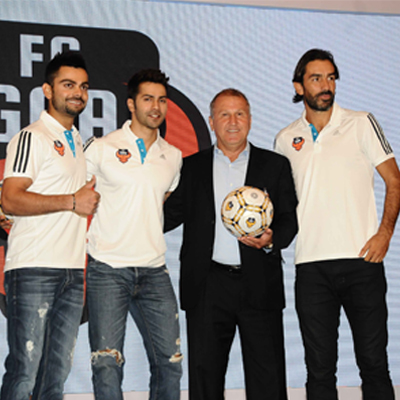
    MUMBAI: The Hero Indian Super League (ISL) franchise of Goa, FC Goa today unveiled its new co-owner, celebrity cricketer Virat Kohli. With Kohli coming on board, the team now is composed of four owners. The other three are Venugopal Dhoot of Videocon, Shrinivas Dempo and Dattaraj Salgaocar, both businessmen from Goa. Videocon d2h was named as the principal sponsor for the team.


    FC Goa also introduced its marquee coach, Brazilian football legend Zico and its marquee player, Robert Pires. Bollywood actor Varun Dhawan has been named as the team’s ‘first friend’.


    Present at the ceremony were Football Sports Development founding chairperson Nita Ambani who said that one of the main goals of the ISL was to promote the game at the grassroots levels by involving millions of kids through various programmes of the eight franchises.


    The Adidas team kit consisting of the jersey was also unveiled at the ceremony. Talking about the team kit Adidas India brand director, Tushar Goculdas says that the Goa team represented one of the ‘most passionate centres’ of football in India. He adds, “The team is supported by a strong backbone with owners having great footballing heritage, Virat- a world class athlete and Zico, one of the greatest artists of the beautiful game.” The team jersey will be available to FC Goa fans to purchase in a few weeks time.


    Speaking about his new venture, Kohli comments, “The experience of stalwarts like Zico and Pires will further strengthen the already strong DNA that the team possesses, thanks to the Salgaocar, Dempo and Videocon Groups’ involvement.”  According to sources from the team  it was Kohli  himself who approached the team owners to gain a stake in FC Goa.


     Videocon Industries chairman of the board Venugopal Dhoot says that the four partners shared a common dream which was to make a valuable contribution to Indian football and elevate the standards of the sport in the country.


    FC Goa is also the first Indian sports club to launch a satellite TV channel  called  the FC Goa TV which will be telecast on Videocon d2h with exclusive and innovative programming. The shows will also include specials such as on field programmes.  In addition to this, a special magazine dedicated to the team’s fans was also revealed.


    Dempo Group of Companies chairman and managing director Shrinivas Dempo while speaking to indiantelevision.com says that the ISL has come at the right time just after the FIFA World Cup fever. Speaking on the role of the four owners, he says, “We will look after the administration and management side of the game while the technical aspect and strategies of play will be looked by Zico and the players. Together we will work for the team’s overall success.”


    V M Salgaocar and Company managing director Dattaraj Salgaocar too agrees and says, “The Dempo group and we share decades of support towards football through our local football clubs.” In terms of sponsorship he says they are still looking at getting brands on board and are also looking at local brands for tie ups.


    FC Goa will kick off the first game of the Hero Indian Super League against Chennaiyin FC at home ground on 16 October. The team was launched on 26 august 2014.