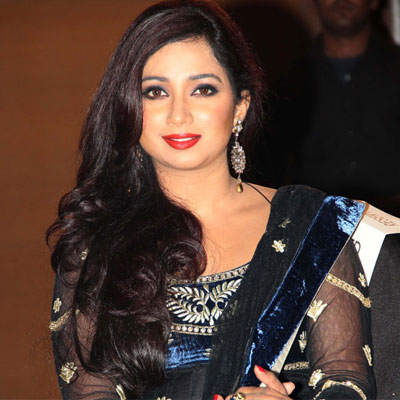
Tag: Shreya Ghoshal

  • Shreya Ghoshal: Today Bollywood is compromising a lot on good content

    Shreya Ghoshal: Today Bollywood is compromising a lot on good content

    Her fans address her by various names like ‘Selfie Queen,’ ‘Princess,’ ‘Songstress’ but the most common is ‘Queen of Melody.’ Shreya Ghoshal’s single post on social networking websites creates a hullabaloo. Fans flood her with praises and the songstress at times even replies to a few messages.


    In this exclusive interview with Dhairya Ingle of Indiantelevision.com the singer talks about various aspects of her life including Rabindranath Tagore’s project, which is collaboration between her, Shaan, Shantanu Moitra and Gulzar.


    Excerpts:


    How has your journey as a musician been so far?


    Quite exciting! Every day brings me something new and I think that is the beauty of being a musician. Especially in a country like ours where we are most of the time working for films. There is so much happening in this industry with so many languages, where different types of music comes together and co-exists. So it is wonderful being in the field of music, working with the seniors and new comers, learning new things everyday.


    You have crooned a few songs for ‘Jaanisaar.’ How was it working with Muzaffar Ali? And how different is it to sing a classical song as compared to a regular Bollywood number?


    I think there is a lot more freedom in this genre because if you hear the songs of ‘Jaanisar,’ each is a performance and there’s a constant need of improvisation. It is not something that can one can learn by heart and sing. Every line is different and there is a new expression that is required. Hailing from the era of mujra, every word has to be expressed, with the essence of pure classical music i.e. thumri, dadra, kajre.


    So I had an amalgamation of ghazals and classical music, which gave me more freedom. I don’t get to do that in any of the other songs, though I still have scope to improvise but not as much. It is not a commercial song. The songs of ‘Jaanisar’ are for people who understand and follow Indian classical music. One of the biggest reasons I did my album ‘Humnasheen’ was pretty much to feel that experience.


    Muzaffar sahab is a very revered man and I respect him a lot. His presence in the studio itself was very supportive and you know that he is there to appreciate the song and the art you possess. I give equal credits to Ustad Shafqat Ali Khan, who is the son of Salamat Ali Khan sahab. He is more of a singer composer and once he starts singing, you definitely get mesmerised and often get tongue tied.


    Which veteran musician did you always dream of working with?


    I cannot work with people who are no longer with us and so it will always remain a dream. Artists from earlier eras like Madan Mohan sahab was gifted with putting a soul into the music he composed. Same was with Anand Bakishiji, Gulzar sahab and Sahir Ludhianvi sahab, wherein the first word and the first sentence itself is poetry as it came naturally to them. These are gifted people, who possess power and sensitivity. I feel that there is still a lot of talent around and we have the audiences to appreciate the same. However, what lacks is a platform to do express freely.


    Previously a lyricist, singer or composer did not have the pressure of creating a hit song. All that a person required to do was to create a song, but now the pressure is to make a blockbuster money-making track. Hence it becomes very hard for talented people to portray their art. Today Bollywood is compromising a lot on good content.


    Tell us about your riyaaz schedule.


    I will be very honest with you. I was a very disciplined student of music in my early days and I would thank my parents for making me do so. I would travel long distances for learning music and my parents made sure that after coming from there, I would do my riyaaz. Even before going to school, my mother would wake me up at 6.30 am and I would do my riyaaz on a tanpura.


    No child would actually like doing their riyaaz so early, but that’s what built a strong foundation for me. Now I don’t give that many hours for my riyaaz but I do light vocal exercises to warm up my voice. There are thing that I cannot do very well and I keep practicing them so as to improve.


    I don’t devote hours and hours for praticising ragas as I’m in the studio the whole day and I end up singing too much. All I need to do is keep my voice intact and get better at my execution than tiring my voice. I think that is how every professional singer functions when they get to a very hectic lifestyle.


    Any non-film projects that you are currently working on?


    Yes. I just got the mixes for Gulzar sahab’s project on Rabindranath Tagore. Shaan and I have sung songs for the project and the music is composed by Shantanu Moitra. The project is very special and will be releasing under Saregama. Tagore’s style of writing has been adapted by Gulzar sahab. It takes you to an era of Tagore but completely in a new fashion. It will release in a couple of months.


    Which non-film song sung by you is your favorite?


    It would be ‘Yeh Kya Hua Tere Mere Pyaar Ki Baatein,’ from the album ‘Chandni Raatein’ in 2004, which I did very long ago. This was the first time I was doing a Hindi album song and it was really loved by people then.


    You sung Kishore Kumar’s old melody ‘Mere Mehboob.’ Do you wish to re-render any of the olden melodies? If yes, which one?


    Actually the song ‘Mere Mehboob’ got stuck in my head and I was recording a new song but ‘Mere Mehboob’ did not go off. So I got back home, sat on my piano and recorded it on my phone. I put it up on my social media and people loved it. I keep my social media very private and have never given it to any agency like many others. I personally read each and every tweet that comes to me and I was so overwhelmed with the love.


    When it comes to re-rendering any other tracks, I would say there are many. I love all Madan Mohan sahab and Lataji’s tracks. I would love to do the song ‘Jalte Hain Jiske Liye’ from the film ‘Sujata’ crooned by Talat Mehmood sahab.


    Basically I love re-rendering tracks, which are sung by male voices because when you sing a female version of the same track, you reinterpret the whole track.


    How does your partner Shiladitya react to the fame and love that you get as a singer? Is he your best critic?


    He is my best friend and likes everything I do, which is why he cannot criticise me. I feel my best critics are my parents. My dad will only point put crucial problems in what I do. 


    When it comes to Shiladitya, he has been my bestest buddy for ten years so we are each others’ confidant and now that we are married, there is an additional level of responsibility for each other. However, he is exactly the kind of spirit that I would want to be. He is the one who will push me to do all the good things even when I doubt myself. He will just ask me to follow my heart and do what I wish to do and makes me believe in me. Even my parents make me believe in myself, I feel a little responsible in front of my parents. But with Shiladitya around I can do anything I want to.
  • Gaana.com announces ‘Top charts of the year 2014’

    Gaana.com announces ‘Top charts of the year 2014’

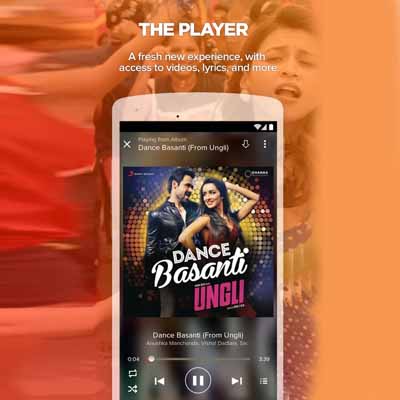
    MUMBAI: As 2015 is ringing in, Gaana.com, a music streaming service app, is all set to announce the ‘Top charts of the year 2014’, a list of last year’s most hit music records. The series comprises of the most checked songs and videos by the Gaana.com listeners and is a categorized list based on the Most Popular Song (Bollywood & International), summing up the songs striking chord with the music buffs.

    Based on the choices of nine million Gaana users across web and the mobile app, ‘Top Charts of The Year’ will help music enthusiasts have the most popular songs on their playlists without missing out on any of the hit numbers.

    Clicking the rhythm with Bollywood lovers, The Most Popular Bollywood Song of 2014 is ‘Manwa Laage’ from the movie, Happy New Year sung in the melodious voice of Shreya Ghoshal and Arijit Singh whereas Pharrell Williams’ ‘Happy’ from Despicable Me 2 became an instant hit with the music followers claiming the title of The Most Popular International Hit 2014 and The Most Popular International Pop Hit 2014.

    Favourite in The Top Tamil Song 2014 is ‘Selfie Pulla’ from Kaththi sung by Ilayathalapathy Vijay and Sunidhi Chauhan and in The Top Telugu Song 2014 is ‘Kanulanu Thaake’ from Manam by Arijit Singh.

    ‘Manwa Lage’ again won hearts for The Most Romantic Bollywood Track 2014 and ‘Maps’ by Maroon 5 claimed the spot for The Most Romantic International Track 2014. Feet tapping, dance number, ‘Bang Bang’ from Bang Bang by Vishal, Shekhar, Benny Dayal, and Neeti Mohan topped the list of Bollywood Top 50 Dance Hit 2014 while Lovers on the Sun (feat. Sam Martin) from ‘Lovers on the Sun EP’ by David Guetta ruffled to the top of International Top 50 Dance Hit 2014.


  • ‘Happy New Year’ presents a new romantic number – ‘Manwa Lage’

    ‘Happy New Year’ presents a new romantic number – ‘Manwa Lage’

    MUMBAI: After receiving an amazing response to ‘Indiawaale’, Farah Khan’s Happy New Year released its latest romantic song. Titled ‘Manwa Lage’ the song is a soulful number sung by Arijit Singh and Shreya Ghoshal.


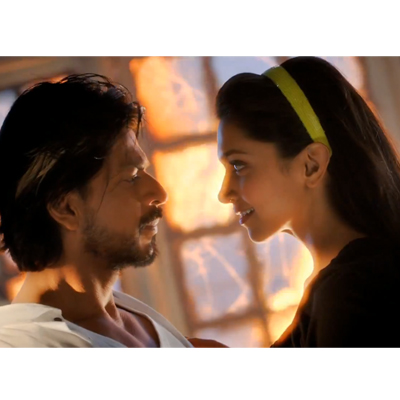
    The video shows budding romance between Shah Rukh Khan and Deepika Padukone. The song is a mixture of romance, soulful lyrics, and an electrifying chemistry between the two. The best part of the video is the clever use of the element of fire. The song also features Sonu Sood, Abhishek Bachchan, Boman Irani and Vivaan Shah but prime focus is laid on SRK and Deepika.


    Excited about the latest release actor Shah Rukh Khan tweeted, “Lov sets u ablaze, it cuts u loose like wildfire & u burn everything that u touch! It burns & flies, & u run with it Joybell. Manwa Laage”


    Penned by Irshad Kamil and sung by Shreya Ghoshal, Arijit Singh, ‘Manwa Laage’ is a melodious song composed by musical duo Vishal-Shekhar. The film tells the tale of six losers – Charlie, Nandu, Jag, Tammy, Mohini and Rohan who are on a mission.


    Happy with the new songs, Vishal Dadlani tweeted, “I love how @TheFarahKhan brings her unique insight & humour to the picturisation of any song, even a love-ballad like #ManwaLaage from #HNY.”


    And thanking Dadlani, Shreya Ghoshal tweeted, “Heart’s happy! Thank u @VishalDadlani @ShekharRavjiani for giving me such an extraordinary composition to sing!”.


    Click here to watch the Song

  • Ustad Rahat Fateh Ali Khan signs with Universal Music India for ‘Back 2 Love’

    Ustad Rahat Fateh Ali Khan signs with Universal Music India for ‘Back 2 Love’

    MUMBAI: Maestro Ustad Rahat Fateh Ali Khan has signed up with Universal Music India for the release of his long awaited album ‘Back 2 Love’.  This is his fourth album and the first in 7 years. The album will see a global release on 9 June 2014.


    `Back 2 Love’ is a collection of 10 soulful melodies that aims at enthralling audiences, both new and existing. The album includes collaborations with Indian musicians including the music composer brother duo Salim- Sulaiman and a duet with play back singer Shreya Ghoshal.


    This Ustaad of `Qawaali and `Sufi’ music, has an envious list of Bollywood hits to his credit including Sajda (My Name is Khan), ‘Teri Ore’ (Singh is King), ‘O Re Piya’ (Aaja Nachle), and ‘Jiya Dhadak Dhadak’ (Kalyug) to name a few amongst his poignant works that have always tugged many a heart strings. This time round too, the world renowned musician is all set to mesmerize with his 10 new soulful and heart rendering compositions from `Back 2 Love’.


    Rahat Fateh Ali Khan said, “I am excited about my signing with Universal Music Group and look forward in creating magic with ‘Back2Love’ as it is perhaps my best solo effort so far. I feel honoured being part of a label like Universal Music as it represents some of the top most artists in this world. I look forward for a long lasting musical relationship with UMG and thank my Producer Salman Ahmed and Universal Music’s Devraj Sanyal for putting this deal together.”


    Adding an Indian feel to his compositions is the much in love couple of `Big Boss’ fame Gauhar Khan and Kushal Tandon who feature in the music video shot for the lead track ‘Zaroori Tha’ that will break closer to the album release date.


    Universal Music / EMI Music, South Asia managing director Devraj Sanyal said, “We are extremely proud to present the work of a legendary artist as Ustad Rahat Fateh Ali Khan. Khan’s works being an inspiration and solace to many, have always been looked forward to by avid music lovers the world over. His new album `Back 2 Love’ is an all new extension to his already prolific body of work and is definitely his best work yet! Needless to say, we are rolling out a red carpet plan for this brilliant new album as we are confident of its impending success! We will ensure that this one reaches out and touches millions of hearts worldwide!”

  • Why do we need sub-franchises of popular shows?

    Why do we need sub-franchises of popular shows?

    MUMBAI: Over the years, television has spawned a slew of successful non-fiction franchises which in turn have given birth to a riot of sub-franchises that are equally popular if not more.

    In our quest to find out why sub-franchises have mushroomed when there are enough and more franchises to provide entertainment and whether franchises are mightier than their off-spring, Indiantelevision.com spoke to a cross-section of industry to get to the bottom of the matter.

    Zee TV

    In 1995, Zee TV created a home-grown music-based non-fiction format titled Sa Re Ga Ma Pa that went on to capture a country’s imagination.

    What started back then under the aegis of Gajendra Singh, went on for 16 seasons till 2004 when the brand name was changed to Sa Re Ga Ma Pa Challenge and audience interaction was incorporated through a voting system. It was in 2011 that the channel infused kids’ participation to revisit the show as Sa Re Ga Ma Pa L’il Champs.

    Recalling the journey of the show, it was post 2001 that it became a brand, giving talented, albeit anonymous singers a platform and giving Bollywood much of its current talent including Shreya Ghoshal, Kunal Ganjawala and even Sonu Nigam, who was relatively unknown back then.

    In 2009, Zee created another big non-fiction property, this time in the dancing space, called Dance India Dance (DID). Till date, DID has seen four successful seasons while also giving birth to four sub-brands: DID Super Moms, DID Tashan, DID Doubles and DID Li’l Masters.

    What made Zee launch sub-franchises in the first place? “The key for any broadcaster today is to create for viewers an umbrella brand and then do a lot of exciting things under that,” says Zee TV programming head Namit Sharma. “It was a chance that Zee took and it worked. The audience at Zee is always hungry to watch new and fresh talent. Each of these shows has its own type of audience. There is a core DID audience and additionally, a different audience for each of the sub-franchises.”

    Sharma believes only successful shows make for franchises and franchises work on three things: firstly, how successful the original brand is; secondly, how innovative the creative team is; and thirdly, how receptive the audience is. Speaking of the many seasons of DID, he says the beauty of it is that with every season, the look, feel and talent can be sharpened.

    Explaining the need for sub-brands, he says, “It is fuelled by two things – one is the desire to keep doing well to want more viewership. So you know, if you are doing a DID sub-brand, it might get you more audience than a fresh show. Two – the audience enjoys it, so why not? Three – every sub-brand is actually like a new show under a mother brand. So these are all different shows. They are under one umbrella.”

    Sharma feels Zee is lucky to have two strong franchises that allow the channel to attract very good talent and showcase it in the best possible fashion.

    “There was a desire to fulfill in the singing space with Sa Re… and in the dancing space, DID took over and fulfilled that desire for talent to have a platform and the audience to watch that platform. So DID completed that wish. One of the challenges I have as a new person is to create more such franchises in different spaces,” he says.

    While Nitin Keni of Essel Vision Productions that produces DID feels that offering the same product to viewers back-to-back might erode brand value. “One is not happy about doing it back-to-back, but if audiences are seeing it as a different show altogether, then there we win. But if audiences start feeling a sense of fatigue and see that we are doing the same thing, then it loses value. So far from the ratings, it does not feel so, but yes, as a producer, we should not be repetitive,” he says. Besides, a whole lot of work goes in with every season.

    “Conceptually, every time some new twist is given to the show, we use it as a USP. There are creative people who work on it. Also in terms of finding talent, one has to scout around and find talent across the nation, which is another big task,” he adds.

    Star Plus

    In 2010, Star Plus produced MasterChef India, Colosceum Media’s cooking reality show.

    Star Plus senior vice president – programming (non-fiction) Ashish Golwalkar, who, during his earlier stint with Zee, created sub-franchises like Sa Re Ga… L’il Champs and DID L’il Masters, opines that creating a sub-brand helps a channel to leverage the popularity of the parent brand without killing it unlike adding an indiscriminate number of seasons. “Sub-franchises play a major role if you want to use the strength of the brand without overkill. For viewers also, it is easier. They are watching a bit of the same without over killing the particular kind of content,” he says. “When you go out into the market, if it is a successful sub-brand, advertisers who have earlier had a good experience with us and the brand, will be more than happy to associate with the brand again.”

    Golwalkar gives the example of MasterChef India, where Amul was the title sponsor of both the mother brand and the sub-brand, MasterChef Junior.

    So what distinguishes the sub-brand from the parent brand? “We have to understand the elements wanted in common with the original brand and those that will be brought new to the sub-brand. But there has to be a limit to it. Sometimes, channels just get carried away by doing five versions of the same brand,” says Golwalkar.

    Sony Entertainment Television

    Sony has three non-fiction franchises: Boogie Woogie, Indian Idol and Comedy Circus.

    The channel launched Boogie Woogie in 1995 with Naved Jaffrey, Javed Jaffrey and Ravi Behl. During the time it aired, the show was very well received and provided a platform for unknown talent. Only recently, Sony telecast Boogie Woogie kids’ championship, four years after the last Boogie Woogie was telecast.

    Speaking of the franchise model in general, Fremantle Media India managing director Anupama Mandloi, says: “The franchise model has worked globally and it is that success which encourages other territories including India to invest in the proven blueprint. It is like bringing in any other branded product into the country. There is a surround sound already built around the ‘product’, which enables an effective pre-sell.”

    What about the sub-franchise? “The franchise has been built very effectively over the past 10 years in India. Most television viewers would be familiar with this property today and with the need to innovate and build the brand. A sub-franchise like Idol junior opened a new gateway of contestants, music and content. In fact, we have gone as far as creating another franchise called the Idol Academy, which provides a platform for learning and building music talent,” explains Mandloi.

    The original brand, Indian Idol, launched in 2004, was a channel driver, with its opening episode garnering a TVR of 5.4. This raised expectations from the brand and it became imperative to innovate and introduce visible changes that would keep interest and loyalty alive.

    Idol has made several changes over the years, be it in terms of positioning, scheduling, changing the way the show is consumed, its approach to music, ranging from purist singing to performance and entertainment, different modes of auditioning and creating diverse touch points with the brand and the channel on-ground and various creative innovations in the journey of finding that one ‘Indian Idol’,” reveals Mandloi.

    Season after season, there was a lesson to be learnt by every content creator. “Some of those innovations were received well and some were completely dismissed by the viewer. At the end of the day, the viewer decides and with every show that you put out there for consumption, there is a lesson to be learnt by every content creator,” says she.

    After dancing and singing, it was the turn of comedy and the channel launched non-fiction property Comedy Circus in 2007. Not only did Comedy Circus see 18 successful seasons, the brand gave rise to tons of sub-brands including Comedy Circus -Kaante Ki Takkar, Comedy Circus – Chinchpokli To China, Comedy Circus 3 Ka Tadka, Comedy Circus – Maha Sangram, Jubilee Comedy Circus, Comedy Circus Ke Taansen, Comedy Circus Ke Ajoobe and Comedy Circus Ke Mahabali, among others.

    MediaSpeak

    Big Synergy director Anita Kaul Basu who has given new dimension to Indian television by producing Kaun Banega Crorepati (KBC) on Sony believes one needs to keep re-inventing to bring in the fresh perspective to the show. KBC never had a sub-franchise when it started in the Hindi space, but it brought a lot of changes within the format with each season. Whether it is in terms of format or creative, with every season it has enthralled the audiences with its content.

    Basu explains: “For long running shows like KBC, which is a knowledge-based show, you need to bring in variations so that people don’t get bored of watching the same thing which has happened 10-12 years back. Every time you bring in a new creative, while the main show remains the same in terms of structure, but these are creatives that need to come in to bring in a certain amount of dynamics into the show. In KBC, we have introduced small changes, since it started in 2000, yet its core remains the same, because its format is incredible.”

    According to media professionals, mother brands have worked better than sub-brands; some working wonders for the channel and others not. “Frankly, I don’t think any of the franchise models have worked. Indian Idol Junior didn’t do that well for the channel. Comedy Circus was variation, but more of, it was about making themes out of the show and as a viewer; it looked like a regular show. It wasn’t a separate franchise to that extent in its pure format. Dance India Dance is the only one which has done variations, but it is always the pure form that gets the maximum ratings. From a ratings perspective, I don’t think these shows have stood out like a typical franchise,” says Helios Media managing director Divya Radhakrishnan.

    According to Radhakrishnan, a sub-franchise is just a placeholder so that the channel does not have to do the same thing over and over again. The channels have to keep the interest going for any show as a product. “You cannot run it like a daily soap for years and years. The channel has to keep the brand alive and for that, they have to always keep innovating. Then it makes sense for the channels to make a sub-franchise. The main property within that umbrella will always be an original show.”

    Investment

    Advertisers in India spend around Rs 20,000 crore on TV ads and almost a third of this money goes to Hindi GECs. Reality shows can never go wrong, reveals a TV executive on the condition of anonymity. Moreover, the channels also sell spots; a 10-second one could cost anything between Rs 3.5 lakh and Rs 5 lakh and the production cost of an hour ranges anywhere between Rs 80 lakh to Rs one crore.

  • India gets it first Indian Idol Junior Anjana Padmanabhan becomes the first Junior Singing sensation

    India gets it first Indian Idol Junior Anjana Padmanabhan becomes the first Junior Singing sensation

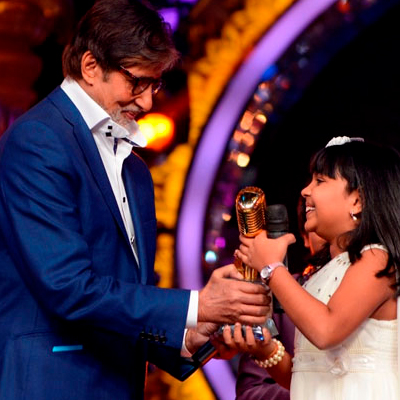
    MUMBAI: The show that enthralled viewers across the country and touched a billion hearts, a journey which started with 86 contestants who came from across India has now come to an end as India gets its ‘First Indian Idol Junior’. After three months of rigorous competition, hard work and millions of votes, Anjana Padmanabhan was crowned the winner by none other than the living legend Amitabh Bachchan himself, while Debanjana Mitra, Anmol Jaswal and Nirvesh Dave secured the first and the second runners-up position respectively. The finale was a visual spectacle of sorts with Priyanka Chopra, Shahid Kapoor and Ramcharan setting the stage on fire with their scintillating performances.

    The first Indian Idol Junior received a grand prize money of 25 lakhs from Sony Entertainment Television, a Nissan Micra Car, a fixed deposit of 5 Lakhs from Kotak and 2 Lakhs from Horlicks. The grand finale which was aired almost live on Sony Entertainment Television saw the homecoming of the top 11 contestants who entertained the audience with special performances along with electrifying performances by judges Shreya Ghoshal, Vishal Dadlani and Shekhar Ravjiani.

    Ecstatic and overwhelmed with her win, Anjana Padmanabhan said, “Although we were competing against each other, we were like a family filled with unique characters and had our moments of joy and sorrow. I am thrilled at having been chosen the nation’s first Indian Idol Junior. All I can say is a big heartfelt thank you for liking me and helping me achieve my dream.

    Ms. Sneha Rajani, Senior EVP and Business Head, Sony Entertainment Television adds, “I wish Anjana Padmanabhan, the first Indian Idol Junior all the very best for a bright future. Indian Idol Junior has set a new benchmark in the world of singing reality shows. These little wonders have created waves in the entire nation by showcasing their amazing talent.

    Anupama Mandloi, Content Head, Fremantle MediaIndia added, “This season is a matter of immense pride for us at Fremantle media. We have unearthed brilliant talent and some of the juniors are sure to make a mark in the music industry. It’s been an enjoyable and collaborative experience and we are all pleased with the show and the worldwide appreciation it has garnered”.

    The Indian Idol Junior caravan went across four cities to audition lakhs of young singing talent in search of that one unique voice. This journey brought together a galaxy of bright budding singing talent from nooks and corners of the country. The show grew stronger with each leg passing by; from auditions to the theatre round and gala and finally, the finale.
    Keep watching Sony Entertainment Television for some more breathtaking & entertaining shows!

  • Ranbir Kapoor, Vidya Balan top Apsara Awards

    Ranbir Kapoor, Vidya Balan top Apsara Awards

    MUMBAI: The Film and Television Producers Guild of India-sponsored Apsara Awards picked up Ranbir Kapoor and Vidya Balan as best actors for their performance in Rockstar and The Dirty Picture respectively (male and female) at the star-studded seventh edition of Chevrolet Apsara Awards.

    While the best film award went to Zindagi Na Milegi Dobara, Zoya Akhtar was acclaimed the best director for the film and Farhan Akhtar took home the best supporting actor award for the same film.

    The best supporting actress award went to Parineeti (Priyanka Chopra’s cousin) for her portrayal as a spoilt Delhi girl in Ladies Vs Ricky Bahl. She also bagged the best debutant (female) award. On the other hand, the best debutant (male) award was lapped up by south actor Rana Daggubati for his maiden film Dum Maro Dum.

    While Mohit Chauhan walked away with the best singer (male) award for the song Sadda haq from Rockstar, Shreya Ghoshal took the honour in the female category for her rendition of Teri meri from Bodyguard.

    A highlight of the awards ceremony, the Guild kick-started the celebrations of 100 years of Indian cinema wherein they were to honour veterans. Rajesh Khanna, Vinod Khanna, Zeenat Aman and Jaya Bachchan came up to the stage to collect the same while others were absent.

  • Disney to launch second local product ‘Dhoom Machaao Dhoom’

    Disney to launch second local product ‘Dhoom Machaao Dhoom’

    MUMBAI: As part of their five ‘local production’ roll out strategy, Disney has announced the launch of its second home grown production, Dhoom Machaao Dhoom, to premiere on 8 January in Disney Channel.

    This is Disney’s first original daily show for the tweens and the creative is handled by Show M, a joint venture between Ravina Raj Kohli’s production house Sundail.

    As opposed to the first attempt with Vicky Aur Vetaal, the channel is beefing up its localisation plan by introducing the second product as a ‘daily’ (Monday to Thursday 7:30 pm). The third original live-action production is expected in April next year.

    Specifically, eyeing live-action as a potent mechanism and the way ahead for Disney Channel, Walt Disney Television International (India) executive director Nachiket Pantvaidya believes that the channel requires a blend of local faces to be incorporated into the live action being introduced.

    As reported earlier, an emerging trend in kids television viewing suggests that the space is now inviting a large number of older girls (10 – 14 year old) as opposed to a previously a male dominated viewership attracted to action and cartoon based themes. In this respect, the channel is clearly trying to capitalize on these findings.

    With Dhoom Machaao Dhoom Disney Channel promises that it will now churn out 30 hours of locally produced content per week, moving towards its target of 130 hours. This is an important step towards building the channel’s viewership.

    The show is based on two core ideas – music and dance, which seems to have got reckoning from Indian kids following Disney’s interschool on ground activity, an adaptation the High School Musical, My School Rocks. Although, the theme seems to have a strong American resemblance, Dhoom Machaao Dhoom tells the story of four young girls who have teamed up to form a band. However, it will tackle issues often faced by teenagers like personality clashes, friendships and family influences.

    Kohli is of the opinion that the show has the potential to go beyond from being just a show, but rather to become a revolution! She believes kids programming should not merely cater to kids but to families at large. The challenge would be to drive kids from being ‘default watchers’ on GEC’s, movies and sports channels to come to kids channels.

    The marketing campaign for the daily show is, for the first time resorting to print, in addition to the expected multi media activity on outdoor, television, radio and internet.

    Sa Re Ga Ma Pa’s Shreya Ghoshal voice will feature in the show along with musician Shantanu Moitra’s. The pilot episode also includes a special performance by new kid on the block Sanchita, the winner of Lil’ Champ’s contest on Zee TV.

    “Following the success of the first local production ‘Vicky Aur Vetaal’ earlier this year, Disney Channel seeks to further strengthen its already robust connection with kids and their families with this cool and contemporary show”, says Pantvaidya. “We are a committed local player in the kid’s entertainment space and ‘Dhoom Machaao Dhoom’ is our next strong bid to showcase all that Disney Channel stands for.”