Tag: Shrenik Gandhi

  • Budget boost to ad industry: WRM’s Shrenik Gandhi foretells the future

    Budget boost to ad industry: WRM’s Shrenik Gandhi foretells the future

    MUMBAI: Like many others before him,  Shrenik Gandhi, co-founder &  CEO of White Rivers Media (WRM), has predicted a significant uptick in advertising expenditure across consumption-driven sectors following the latest Union Budget announcement. With the government providing income tax relief up to Rs 12 lakh, Gandhi anticipates a ripple effect benefiting both brands and advertisers.

    He remarked, “With more disposable income in the hands of consumers, ad spends are expected to see a positive uptick, particularly in consumption-driven sectors from the salaried class.”

    Sectoral Impact on Ad Spends

    The overall advertising market is projected to witness a 10 per cent growth, driven by increased discretionary spending. Gandhi highlighted key sectors likely to ramp up marketing investments:
    * Retail & E-commerce: Boosted by increased purchasing power, aggressive online and offline campaigns are anticipated.
    * Automobiles: Higher disposable incomes often translate into greater car and two-wheeler sales, prompting auto brands to invest more in promotions.
    * Real Estate: With improved affordability, developers are expected to push marketing efforts for mid-income housing projects.
    * Consumer Electronics & Smartphones: This segment is poised for heightened promotional activity.
    * Travel & Hospitality: Financial ease could drive a surge in both domestic and international travel advertisements.
    * Fintech & BFSI: Additional savings may lead to increased interest in investments and insurance products, encouraging BFSI companies to up their advertising budgets.

    Digital advertising, already experiencing robust growth, is expected to accelerate further as brands seek to capture positive consumer sentiment. Gandhi concluded that the budget’s impact on the advertising landscape signals a promising year ahead for the industry.

  • How are inflation-hit FMCG players protecting their bottom lines?

    How are inflation-hit FMCG players protecting their bottom lines?

    Mumbai: The domestic fast-moving consumer goods (FMCG) industry has been feeling the impact of unprecedented inflation for several quarters now. The unexpected rise in commodity prices, whether in food, chemicals, or packaging, combined with the spike in fuel prices, exacerbated by increased logistics and shipping costs, is putting pressure on FMCG companies, including packaged food companies, while also reducing the share of buyer income available for spending on consumer staples. As the market continues to witness an incremental increase in inflation, it’s not only the consumers who are feeling the pinch, but also the manufacturers, leading to a downgrading of sales across urban and rural areas.

    With no respite in near sight, how are the FMCG players dealing with the situation? How are brands resorting to innovative ways to mitigate the rise in input costs and deal with the soaring inflation?

    Most of the FMCG companies have increased prices of the products, says Kantar South Asia Insights Division managing director Soumya Mohanty. “So, it’s actually the end consumer who is feeling the pinch most. As a result, they are rationalising spends.”

    Findings from the latest Kantar Global Issues Barometer report indicates for 74 per cent of Indians, the increasing cost of living and other issues of concern are having an impact on their big life plans. “Customers are however unwilling to cut their spending on essentials, it’s the large ticket high value items which are most likely to bear the brunt most,” notes Mohanty. “We expect brands to optimise their portfolio to rationalise the cost of production and pass on the benefit to consumers.”

    Inflation’s impact can’t be “dealt with,” says White Rivers Media co-founder and CEO Shrenik Gandhi. This is why industry leaders are implementing changes that they hope will mitigate the said impact, he adds, pointing out some cost-saving initiatives that major FMCG players have begun implementing.

    Can “shrinkflation” be a solution?

    Among these methods is “shrinkflation,” which has been adopted by several major manufacturers, including Hindustan Unilever, Nestle, Dabur, P&G, Coca-Cola, and Pepsico. According to news reports, Haldiram has cut down the size of its aloo bhujia packet to 42 gm from 55 gm.
    HUL, Nestlé, Dabur, Marico, ITC, and Britannia have rolled out price increases of between 5 per cent and 20 per cent since October last year. Dabur India has introduced a mix of pricing actions and cost-control measures, even as companies across the board are using recycled aluminium for cans, cutting costs on advertising and marketing spends, and postponing new launches.

    According to Gandhi, some innovative ways FMCG brands are mitigating the rise in input costs and dealing with the soaring inflation are by investing in technology and digital initiatives to increase efficiency, introducing “bridge packs” as a strategy that gives slightly more grammage than the lower-priced pack while charging the customer higher, and by resorting to economical packaging and recycled products.

    “The Edelweiss report points out that FMCG companies are integrating systems across suppliers, inventory management, and distributor management, which were previously distinct systems in silos,” he noted. “Digital initiatives are being implemented across the board, from supplier onboarding and management to inventory management, distributor management to sales. Even if technology does not directly impact the end product, it will certainly play an increasingly important role in ensuring that it reaches customers faster and generates greater cost savings for these companies.”

    Increasing the price is not always an answer

    For FMCG and packaged food products, India has always been a very price-sensitive market, and the market volumes were at the lower end of the market, catering to the masses. In the Indian FMCG industry, smaller, single-use SKUs at price points of one rupee, two rupees, five rupees, and ten rupees are important.
    Hence, consumer companies are finding ways to increase prices without disturbing the grammage in the sensitive segments, priced less than Rs 10, and also protect margins at the same time. For fear of undermining demand in this category, they are considering launching ‘bridge packs’ at a higher price.

    Some manufacturers are using thinner packaging to counter runaway costs in commodities, packaging, and freight. Parle Products is looking at savings from carton configuration—meaning, it is looking at ways to add more packets of biscuits or snacks per carton. Britannia has said the company is bringing in process automation to raise productivity, reducing the distance to market to reduce cost and provide fresh products to consumers, reducing wastage at the factory and in the marketplace, and moving to a target of using up to 60 per cent of renewable energy.

    Avalon Consulting partner Santosh Sreedhar agrees that increasing prices is easier said than done in India, which is “a highly price-sensitive” market. However, he adds that beyond a point, this becomes inevitable as commodity pressures increase. “For brands that are operating at these price points, it’s a challenge since the product is sold on price. “In the case of one fruit juice company we are in touch with, the sales dropped as much as 40 per cent when the price of their highest-selling SKU was increased from Rs 10 to Rs 12,” he mentioned.

    “In my view, in most products, the opportunity to further reduce pack size is low as the companies have maxed out the potential. So, we may see companies now trying to move up the price point. We have already seen this happen in confectionery and shampoos more than a decade ago when 50p products moved to rupee one. There was a temporary dip in sales for many brands, but eventually, the market settled down at the higher price point,” he added.

    He lists out the following options for FMCG companies if they have to retain margins, apart from increasing prices: reduce pack sizes; change product formulation; reduce packaging/packaging reengineering. Changing product formulation is very much a possibility, but may not be applicable in many product categories, says Sreedhar. “We are not expecting at least the top brands to change the composition, but companies can come up with lower priced variants that help them continue to serve customers at lower price points. Many of the shampoo and chocolate brands have done this in the past where the product in the larger SKUs is different from the ones in the smaller SKUs.”
    According to Pescafresh founder Sangram Sawant, the quality and freshness of the product, remaining non-negotiable factors, do pose a double challenge for the brand to ensure cost optimisation across functions and efficiency. He said, “Just-in-time inventory, reducing shrinkage, maintaining cold chain across the supply chain links, and introducing technology stacks to reduce the supply chain hurdles have helped us offset a few cost increases.” The brand has currently not decided to hike prices. However, if its procurement costs continue to rise, it will “take a call accordingly.”

    The Impact on AdEx?

    Will the current scenario warrant a decrease in Advertising spends by brands, as marketing costs are known to one of the first to take a hit in uncertain times?

    Sawant says that with the introduction of Pescalive, the seafood e-supplier is innovating across the supply chain and marketing functions to control costs. With regards to ad spends, the brand is in the process of building Pescafresh as an overall foodtech brand and will continue to focus on the same for the fiscal, he adds.

    Whenever there is uncertainty, consumers need reassurance, and they fall back to familiar and known options, observes Kantar’s Mohanty. So, it will be key for the brands to stay true to their core purpose and talk to consumers about it. For this to happen, communication is going to be important. So, visibility on different medias- TV, Social media will be important and Ad expenditure is unlikely to get reduced, he believes.

    Bombay Shaving Company COO Deepak Gupta is optimistic on the impact on Adex as well. Marketing spends is a function of number of units sold, contribution margin and marketing effectiveness, he notes. “For premium brands on a growth trajectory, current situation provides a unique opportunity as reduced ad expenditure from incumbent brands is leading to higher SOV (Share of voice), and lower CPMs (cost per mille) without increasing absolute ad spends.”

    “We are increasing our ad spends on key categories with a channel focus to improve TOMA (top-of-mind awareness) and enter into consideration set of prospective buyers. Overall, we expect higher marketing investment from FMCG brands in second half of the year, considering the onset of festive season and easing of inflationary pressures,” he adds.

    While mass FMCG brands are resorting to price increase, volume reduction (or both) and cut in marketing and other discretionary spends, for premium brands the effects have been less pronounced as target consumers for premium grooming products are less price sensitive.

    According to Deepak Gupta, the brand has been able to grow by investing in strengthening brand equity and maintain gross margin by reducing discounts, promotions and other discretionary spends. 

    He takes a more optimistic outlook on the long-term impact of the inflationary trend. “In our view, July-August-September quarter bodes well for FMCG sector as inflation has peaked and festive season is expected to lead to demand revival. Count and intensity of Covid cases have also reduced considerably compared to previous quarters which will lead to incremental growth.” We do not expect any price hike or volume reduction as brands will invest to gain higher share of wallet, Gupta adds.

    New-age integrated sales and distribution SaaS platform FieldAssist CEO Paramdeep Singh Anand that connects CPG businesses to the broader value chain too holds on to a positive stance. “According to a recent report, the inflation rate in India is expected to reach five per cent by March 2023, that is a dip of two percentage points. Recently the government has asked FMCG companies to reduce cooking oil prices. Amidst these developments, it is difficult to say if inflation will rise further.”

    This is to give some respite to the CPG companies who have been dealing with the trilemma of raising prices, cutting margins or cutting corners, he adds. “It is clear that we have reached the saturation point where companies that have been reducing grams without impacting prices cannot do so anymore for having reached the threshold. A similar statement could be said of companies increasing prices. That leaves many with the option of adopting strategic moves to stay in the race.”

    Strategies such as using technology to identify “golden stores”, or the twenty percent stores that sell eighty percent of your products would help in optimising assortment, price, promotions and share of shelf, says Anand. “Another strategy could be optimising advertising costs by targeting new-age platforms to tap audience, for instance gaming sites, or utilising influencer marketing in untraditional ways. This will reduce expenditures and help utilize funds optimally,” he adds.

    Apart from reducing price and volume, FMCG brands are looking at each line of P&L to optimise cost. Reducing advertising spends, increased focus on hero SKUs to get scale advantages, premium product innovation, reducing consumer promos and discount, improving sales mix to deliver higher gross margins, allocating higher spends for more capital efficient channels and top customers etc are some of the additional ways that industry stakeholders cite to mitigate input cost pressures, other than supply side measures.

  • Weekend Unwind with: White Rivers Media co-founder & Ceo Shrenik Gandhi

    Weekend Unwind with: White Rivers Media co-founder & Ceo Shrenik Gandhi

    Mumbai: IndianTelevision moves on to the next in its series of informal, fun snippets that peek into the mind of corporate executives – akin to a virtual water cooler chat. An attempt to get to know the person behind the title a little better, by having them share their nuggets on life and their mantras to deal with the curveballs that life throws – not necessarily revolving around work life – and sometimes going beyond work.

    This week, we have on the hot seat White Rivers Media Co-founder & Ceo Shrenik Gandhi. A zealous entrepreneur, Gandhi cofounded White Rivers Media in 2012. Since then, the agency has featured in Deloitte Tech Fast 50’s ranking- a benchmark of fast-growing tech companies worldwide- five years in a row. Gandhi is also a regular speaker at digital and entrepreneurship summits, including TedX.  

    So here goes…

    ü  Your mantra for life:  My mantra for life is very straightforward- Give joy and pay it forward, always.

    ü  A book you are currently reading or planning to read: ‘Atomic Habits’ by James Clear is a book that has truly moved me.

    ü  Your fitness mantra, especially during the pandemic: My fitness routine has always been quite simple. It’s basically, getting a cardio workout by 7:30 am and dinner before 6:30 am.

    ü  Your comfort food:  I’m a big fan of Indian cuisine. So, any Indian meal is my comfort food.

    ü  When the chips are down a quote/ philosophy that keeps you going:    When the odds are not in our favour, it’s important to have faith in yourself and believe that things will get better. So my go-to quote in tough times has to be: ‘Believe. Believe in a better tomorrow, always’.

    ü  Your guilty pleasure: Binging on my favourite ice cream from NOTO would probably be it.

    ü When was the last time you tried something new?  I believe I am a curious learner by nature and someone open to new experiences. Last week I tried polishing my table tennis skills, while this week I’m going to try my hand at golf.

    ü  If you could give one piece of advice to your younger self, what would it be?  For the longest time, I was afraid of failing. But if I could give my younger self a piece of advice, I’d say, “fail faster” because failure is what leads to growth.

    ü  What gets you excited about life?  Every day, I get excited about the next day, because every tomorrow has the potential to be extraordinary.

    ü  What’s on top of your bucket list?  Well, I have a long due vacation to Iceland, so it’s fair to say that backpacking in Iceland tops my bucket list.

    ü  A life lesson you learnt the hard way: Again, just two words- Fail fast

    ü  One thing you would most like to change about the world: The world is in desperate need of empathy, and it’s about time this changes. Apart from that, on a more practical note, more financial prudence is the need of the hour.

    ü  An activity that keeps you motivated / charged during tough times: Yoga is something that keeps me charged throughout the day, especially on challenging days.

    ü  What lifts your spirits when life gets you down?  I think meditation works magically when life gets you down. It helps me clear my head which eventually leads me to come up with solutions.

    ü  Your go-to stress buster: As cliche as it may sound, getting some cardio done at the gym helps clear my mind, and it’s my go-to stress buster.

  • White Rivers Media, Phyvital team up to build Web 3.0 experience in India

    White Rivers Media, Phyvital team up to build Web 3.0 experience in India

    Mumbai: In an industry first, White Rivers Media and Phyvital have come together to offer a new realm of services to brands operating in the Indian market: the creation of Metaverse and Web3.0 user experiences.

    New York-based Phyvital is a global, integrated Web 3.0 driven tech-first organisation. It enables companies to create, engage and amplify Metaverse experiences for user communities. Backed by the Stanford University Human Perception Lab’s founder and director Dr Khizer Khaderi, it collaborates with companies globally. “The most exciting part about our collaboration with Phyvital is that it enables us to share our research with the Metaverse community. We are excited to see it partner with White Rivers Media to bring their synergies to build compelling Metaverse experiences and turn these endless possibilities into reality,” said Dr Khaderi.

    India-based White Rivers Media is an independent, full-service digital marketing agency with 300+ people working across Mumbai & Delhi. It works with brands across industries and production houses to build engaging narratives. “This is the giant leap forward that we’ve been waiting to take in the Indian advertising, marketing and gaming industries,” stated White Rivers Media co-founder and CEO Shrenik Gandhi. “In the world of creating and distributing digital experiences, stagnation is as good as sliding backward. By joining hands with Web3.0 specialists Phyvital, we now have the unique opportunity to write the Metaverse chapter in the book of White Rivers Media.”

    According to the statement, Phyvital and White Rivers Media are in the process of finalising several brand partnerships, which will be announced shortly.

  • White Rivers Media bags the digital marketing mandate for Mid-day

    White Rivers Media bags the digital marketing mandate for Mid-day

    MUMBAI: White Rivers Media, an independent, full-service digital creative agency established in 2012, has been announced as the social media, creative and digital marketing partner for the digital campaign of Mid-day’s online tabloid. With the vision of bringing global digital marketing trends to India, White Rivers Media creates innovative digital solutions for Indian brands and international brands in the country.

    Mid-Day has been a sturdy and reliable news source for 41 years. Staying one step ahead, Mumbai’s favorite newspaper has now added yet another string to its bow by launching its interactive digital tabloid on mobile.  #MadeInMumbai captures the city’s pulse and paves way for a new wave of digital reporting.

    Radio City and Mid-day COO Digital Media  Rachna Kanwar said, “We are extremely proud to launch Mid-day digital tabloid, an industry-first initiative. Over the last 41 years, Mid-day has been a strong resonance of Mumbai City, with its engaging, reliable, and credible content about the city at large. In the past 4 months of lockdown, we are proud to expand our reach to an audience of 10 crore readers consuming Mid-day and Gujarati Mid-day on their smartphones. The interactive digital tabloid is a perfect mix of technology and content layered with innovation to give the readers an engaging experience at an unbeatable price of ₹1 per day. We are happy to associate with White Rivers Media, who have helped us curate the campaign and create the right buzz on social media.”

    White Rivers Media co-founder and CEO  Shrenik Gandhi says, “It gives us immense pleasure to be associated with a leading Mumbai Daily and promote progressive change. Mid-day’s campaign is an important step towards the evolution of print. So, to have the opportunity of being associated with the industry’s best and promote nationwide change keeps us thrilled.”

  • Viviana Mall joins hands with Thane Police to tackle sexual harassment against women

    Viviana Mall joins hands with Thane Police to tackle sexual harassment against women

    MUMBAI: Every year the buzz around International Women's Day rises and falls, and we as a society fleetingly advocate the same rights with every passing year. This time, Viviana Mall went above and beyond the humdrum marketing efforts and became an agent for social change by tackling head-on a menace that plagues womankind – Ever-rising sexual harassment.

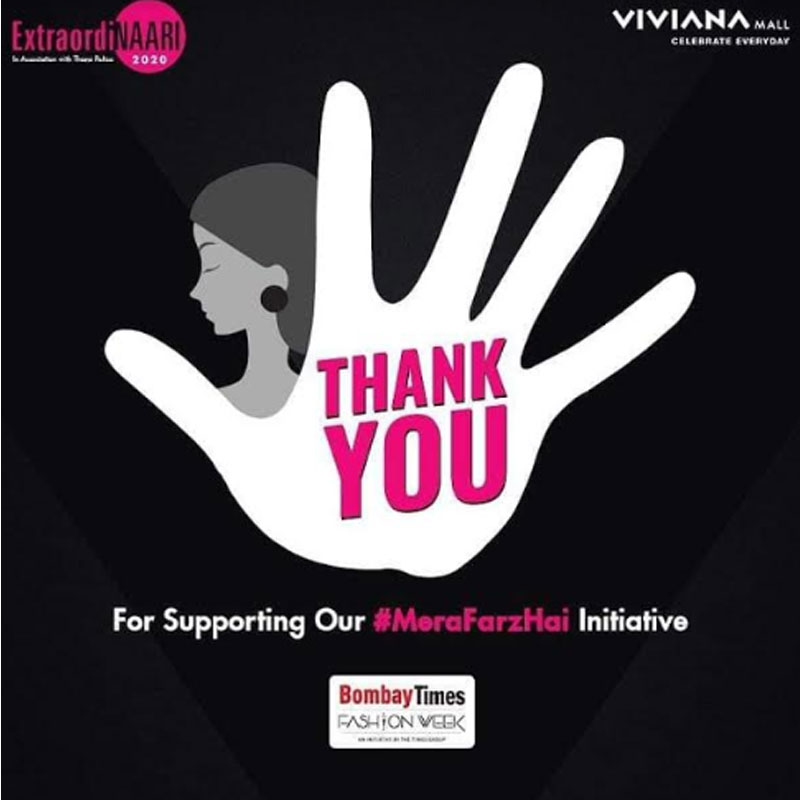
    In an endeavor to celebrate the spirit of womanhood, Viviana Mall went a step ahead of the regular run-of-the-mill engagement and partnered with Thane Police to launch #MeraFarzHai. The movement aims to tackle the menace of sexual harassment and build a safer world for women.

    Started with the aim to make a difference and bring a change in the society, the movement will include participation from the society and the customers of the mall who come.

    The campaign collectively encourages everyone to make it their responsibility to ensure the safety and security of women and contribute towards stopping sexual harassment. Launched under the aegis of the “ExtraordiNaari” initiative by Viviana Mall, this campaign released a film in a unique way by organizing India’s first-ever blindfolded press conference. The members of the press were asked to blindfold themselves and a touching poem that aligned their minds to the plight of women and the horrors they go through on a daily basis was read out to them before unveiling the film. The impact that this activity had on the press was profound. The film was later showcased across all theatre screens in the Thane, Kalyan and Dombivali area in approximately 40 theatres and 150 screens. The film received great appreciation from the audience and amassed over a million views all across the social media platforms.

    Joint CP Suresh Kumar Mekhla, Thane City, and ACP Padmaja Chavan, Special Branch, Thane City, unveiled the #MeraFarzHai hashtag.

    In addition to that, John Lazarus Mascarenhas, a well-known Martial Arts and Self-Defense Instructor with over 30 years of experience conducted a workshop on gender sensitization and self-defense demonstration for women. Over 2000+ women were trained for self-defense at Viviana Mall.

    The next leg of the campaign was aimed at making the bystanders more efficient, adept, and responsible than ever before. In India, people experience crimes as victims and as witnesses and in both these cases, the intent to call for help is evident. However, when it comes to reaching out for help, there is a lag. According to a sample survey conducted by Viviana Mall, more than 85% of people did not recollect having more than two emergency numbers. Also, people procrastinate saving emergency helpline numbers. This observation led to the campaign’s objective; delivering an easy contact saving process for victims and eyewitnesses. 

    This was achieved with the help of micro tech that was enabled on the website of Viviana Mall. A unique URL was created. This URL contained a master contact card with a list of all numbers. All one needed to do was click on the URL and all emergency contacts would be saved on one’s phone in a fraction of a second – all thanks to technology. This gave people a chance for saving all the possible helpline numbers with a single click. This URL went viral with over 15000+ saves organically and counting. The scale of this campaign was augmented through a 360° advertising model, i.e. an online and an offline marketing strategy. What was circulated as a URL online was shared as a QR code offline on Digital Screens at the mall, encouraging people to be ever ready, no matter what the nature of the emergency. 

    #MeraFarzHai was also supported by the celebrities and models at the Bombay Times Fashion Week. Well known actor, Vivek Oberoi supported it and also

    was followed by models with their mouths taped shut. The fashion show depicted day-to-day scenarios where a woman is catcalled yet no one speaks up. The show ended with a poem that encouraged people to remove their metaphorical tape and speak up during times of such crimes and incidents. 

    After the fashion show, people came forward to sign a “pledge wall”, and thereby extend their support towards the initiative. 

    Viviana Mall chief marketing officer Rima Kirtikar said: "As a responsible corporate, we have always introduced programs and campaigns that are aligned to the benefit of society in general and in particular, our "ExtraordiNaari" program that has focused on women and their welfare. This year, we believed that the sensitive issue of harassment and abuse needed to be addressed and the pertinent point that came across all of us was that it is always viewed as someone else's problem and issue to be solved. The idea here was to involve society to be more conscious and to take the onus on to themselves to report any incident and get involved where it is necessary to become a deterrent to incidents. The campaign puts the onus of creating a safer world for women, on each one of us. This was just the beginning of this never-ending campaign, we are planning on conducting various gender-sensitization and self-defence seminars in schools and colleges soon. Through all the efforts, we believe that a more inclusive and participative community will go a long way to create a more secure and safe environment for all."

    White Rivers Media CEO and co-founder Shrenik Gandhi said: "It’s a great opportunity to be serving one of our oldest clients with a campaign that will not only last for long but will have a positive impact across various strata of society. Thanks to all the support from creative and PR agencies, this campaign could reach beyond what we had initially projected. #MeraFarzHai will soon be a commonly accepted term and create a lot of vigilance amongst people at large about not only women being abused but across various causes wherein they can catalyze a change as a bystander.”

    Thought Blurb CCO and managing partner Vinod Kunj said: “We’ve worked with Viviana Mall for the last six years, and helped them grow their flagship event ‘ExtraordiNaari’ into a powerful tool of social change over the years. Sexual Violence is one topic that is, unfortunately, always ‘current’. It’s always in the spotlight. However, the conversation has mainly revolved around the victim and the perpetrator.  At thought blurb, we’ve always pushed ourselves to look at problems from new angles and perspectives. In doing so, we realized that there was a third person in the story that has always been left out of these conversations – the bystander- people like you and me. From this insight, the ‘Mera Farz Hai’ campaign was born. It’s a unique take to the problem that puts the onus of creating a safer world for women, on each of us.”

    Thought Blurb executive creative director Renu Somani said: “We didn’t have to look far for inspiration for the ‘Mera Farz Hai’ film. These were situations that we’ve seen happen around us and may have faced them too. We wanted the film to reach the ‘bystander’. People who have witnessed harassment, and never spoken up. Through this film, we tried to make them aware of their role in preventing sexual violence, by highlighting the fact that our silence will only encourage the perpetrators. We did this by introducing the victim’s POV – an empty bus or office.  This drove home the point about how helpless or lost victims feel when we turn a blind eye to harassment.”

    What began as an initiative to tackle sexual harassment against women, quickly flared into a massive movement of women’s safety. Be it SMS, Emailers, Billboards at various places across the city, or Mall brandings, the campaign leveraged all possible media and consumer touchpoints to spread the word.

  • White Rivers Media launches the second edition of its annual eBook – ‘How digital changed in 365 ways, in 365 days’

    White Rivers Media launches the second edition of its annual eBook – ‘How digital changed in 365 ways, in 365 days’

    2nd January 2020, Mumbai: The year 2019 has been a game changer for the digital world, especially in terms of global marketing. With advancements in the field of artificial intelligence, data-driven marketing, and voice search engine, the industry saw a fine blend of strategy, ideas and technology.

    After the success of the first edition of its eBook, White Rivers Media, one of the most awarded independent digital marketing agencies of 2019 has launched the second edition on how the digital scenario changed in 365 ways in 365 days. The eBook captures the evolving trends and showcases the essence of how a brand can stay on top in today's competitive online landscape.

    The eBook has been curated to keep marketers, advertisers and brand managers abreast with the digital innovations and trends that went down in 2019 and is an all-you-need reference guide for all global marketers. It includes all the major changes the industry saw in the previous year and also gives us a glimpse of what to expect in 2020.

    From LinkedIn adding new AI tools to improve matches to Facebook offering a glimpse of its work on ultra-realistic VR Avatars, there is a lot that has come to pass. LinkedIn added new interest targeting options for ad campaigns, Google+ got an official end date and Instagram opened its AR Filter Creation tools to all users.

    Talking about the launch of White Rivers Media’s latest eBook, Shrenik Gandhi, Chief Executive Officer and Co-Founder of White Rivers Media said, “The speed at which digital is changing every day, it is crucial to be abreast with all new things digital. This eBook is our annual give back to the global advertising ecosystem. I am confident that this eBook shall help not only marketers and students but also every entrepreneur whose business and/or marketing are digital driven.”

    Adding to this Mitesh Kothari, Right Brain and Co-Founder of White Rivers Media quoted, “In the world of ever-evolving technology and new age means of doing business, one has to be completely aware of the latest in digital. We have heard it enough number of times that digital is changing every day. This free eBook is our humble effort to showcase the 365 new ways digital changed in 2019. This eBook marks the beginning of our strong slate of eBooks planned for this year for the global advertising ecosystem.”

    This eBook comprises of 365 updates from the digital industry that enables one to stay on track with the changing technologies and trends. It is an insightful and compelling read that will give a competitive edge to every business owner, executive, global marketer or individual contributor.

    You can download a copy of the eBook here.

  • Despite maximum internet shutdowns, digital advertising enjoyed heyday throughout 2019

    Despite maximum internet shutdowns, digital advertising enjoyed heyday throughout 2019

    DELHI: Year 2019 was a tough slide for the advertising industry in India. The traditional model suffered because of the ambiguity over new tariff orders and the sector jumped into a reeling spiral because of the economic crunch. But there were not many hurdles to stop the magnificent growth of digital advertising. Despite 95 internet shutdowns, digital advertising in India reportedly grew 30 per cent during the year. Elections and World Cup were added bonuses. Obviously, digital marketers have their year closing on brighter notes.

    “2019 has been an interesting year for digital marketers. From the rise of augmented reality and video content to voice search and influencer marketing, this year the trajectory of digital industry has only gone up,” says White Rivers Media CEO and Co-founder Shrenik Gandhi.

    Madison Digital chief digital officer Vishal Chinchankar is pompous as he announces the fantastic year his firm had, “If I look back, Madison Digital had a fantastic year. We grew more than the industry average. After winning more than 10 digital businesses, we launched “DATASK”, our propriety consumer-based targeted marketing and insights platform, designed to identity and define personalised experiences at scale. Along with this, we also launched a suite of performance marketing tools based on algorithmic machine learning. TV Plus planning process was successfully implemented with many clients. We also saw muted spends from categories like BFSI & Auto. It’s been a year of product launches leading to more wins!”

    Logicserve Digital founder and CEO Prasad Shejale tells us that the year was all about positive transformation for his business as they unveiled a new identity for themselves. He adds, “We defined and integrated our core capability areas. This was also the year when we started experimenting much more on integrating data, media, creative, tools & technologies, etc. to provide a holistic approach to our clients’ digital strategy. There was a good addition of leadership talent in our team and we have been focusing on the consulting business as well.”

    However, Mirum India general manager – sales Srikant Subramanian feels that there were some brands who faced some hiccups in taking off, despite the stellar opportunities that digital ecosystem had to offer. He quips, “It seemed like a year where there were several companies who wanted to take the leap and do something different and challenging in a cluttered world, and others who decided to play it safe and stick to the devil they knew.”

    From the perspective of trends and technology, the year saw lots of experimentation. Social commerce gained a lot of popularity. Facebook announced newer algorithms and also came up with a new 10-second ad format called Thumbstoppers, Instagram was equipped with its own business tool , Whatsapp ads were announced, TikTok garnered massive attention with its reach multiplying in the Indian heartland, and regional content took centre-stage. E-tailers like Myntra, Flipkart, and Zomato forayed into the world of video hosting to achieve their targets of becoming integrated experience portals.

    Shejale notes that all of this eventually helped businesses get more gains out of their marketing efforts while also being able to tap the right audiences, through the right channels with the right approach of platform-specific formats.

    Commenting on these trends, Subramanian says, “Instagram for business has had an impact on small digital-first businesses in India and has helped them a lot. In many of our clients that we work with it hasn’t had too much impact. 10-sec ads of course have had a positive impact on spending on FB as they now compete with YouTube and offer the marketer a new option to play with aside from the 3-sec option from earlier.”

    He mentions another interesting trend that gained popularity within the year, which is of marketers looking at behind the scenes tools for data modelling and checking behaviour of their audiences before they launch campaigns.

    Grapes Digital COO Shradha Agarwal sharing her thoughts on the popularity of influencer marketing elaborates, “Influencer marketing became an indispensable part of the marketing plan for every brand. It was one of the most visible easily paid word-of-mouth and a tool to create new content every year. The biggest trend this year was the selection of influencers via various influencers' tools based on Engagement Rate and a mere follower base. The second was the movement from Instagram to Tiktok; a lot of brands saw a shift in their choice of influencer strategy. Tiktok is going to be the biggest social platform in 2020 too. With the rise of TikTok, brands found the way to interact with the next million internet users and NCCS B, C, and D.”

    The industry is well-positioned for an even better 2020. With Gen-Z taking centre-stage in most industries, digital consumption is expected to multiply and thus there is huge scope for digital agencies to perform.

    Gandhi is positive that 2020 is going to be a game changer for digital marketers. “With a plethora of new trends and challenges on the way, the coming year will help businesses in gaining a competitive edge, generate leads and improve the relationship with their existing customers,” he says.

    Subramanian believes that restricted budgets and a mixed economy feeling will lead clients to focus on business outcomes on digital. He adds, “We will see more integration between traditional mediums and the use of geo-targeting for those campaigns to deliver maximum impact.”

    Zirca CEO & director Neena Dasgupta quips, “Digital advertising, in the coming decade, is going to be filled with challenges as well as opportunities. For instance, the last few years have seen video consumption grown tremendously. But with shorter ad formats in the video space, brands have been challenged creatively requiring them to be very dynamic while showcasing their creative brilliance. I also see AI playing a greater role. Whoever manages to balance the aspects of efficiency with creativity will rule the roost.”

    Shejale mentions, “Looking forward to seeing increased spends on digital marketing. Focus on data-backed and insight-led solutions that are more likely to perform well and provide improved results. Amplification of technologies like AR, VR, Voice, etc and integration of these for offering unique experiences to consumers.”

    Chichankar adds that the internet population is expected to cross 750 million mark in 2020. Speaking about trends, he says, “Video, voice should continue the growth story. I am personally very bullish about the content consumption and share of advertising growth on OTTs. While Madison has already put the protocols to mitigate ad frauds and viewability, the industry needs to be more cognizant about it.”