Tag: short video apps

  • How short video apps took media brands to masses in 2021

    How short video apps took media brands to masses in 2021

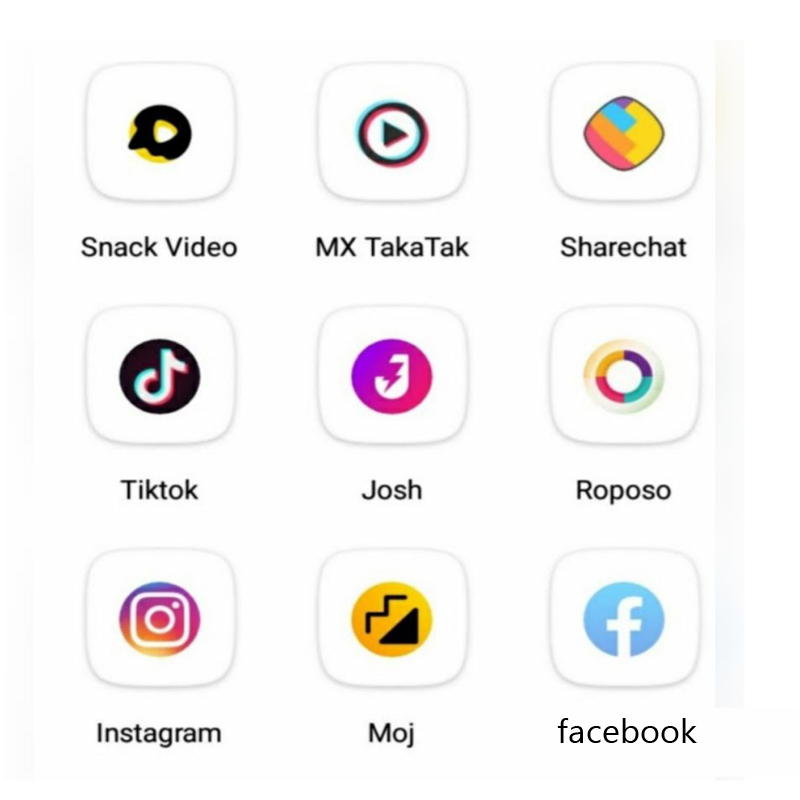
    Mumbai: “It came, it saw, it conquered…” the statement perfectly describes the meteoric rise of ByteDance-owned short video app TikTok in India. Such was the momentum created by it that by December 2020 – that just six months after TikTok was banned – the market was flooded by its Indian counterparts with Dailyhunt’s Josh leading the pack. Roposo, MXTakaTak, Chingari, Moj and others followed. 

    According to consulting firm RedSeer by April-June this year, the short-form video user base at 40-45 million creators hailing mostly from smaller towns and cities, was back to nearly 100 per cent of pre-TikTok ban, with strong loyalty to Indian apps. Monthly average users were up 1.2 times, while time spent on the apps was about 0.4 times higher.

    2021 was the time for short video app owners to tap into the goldmines that they were now sitting on. For players in the ecosystem partnerships and monetisation emerged as the key theme for the year, as all kinds of media brands like TV channels, OTT platforms and music labels latched on to the opportunity. Short-video apps were their window to ‘Bharat’.

    “Short video and entertainment platforms have seen one of the highest increases in monthly active users (MAUs) and the engagement time spent during the second wave of Covid-19. The changes in people’s emotions, platforms and emerging trends led to this growth. 

    With content offerings in 14 Indian languages, Josh boasts of 124 million Monthly Active Users (MAUs) and 60 million Daily Active Users (DAUs) coming from across 19000 pin codes in the country.

    Commenting on how the country’s dynamic digital landscape driven by ‘Bharat’ has affected partnerships and collaborations for him, Josh head of creator and content ecosystem Sunder Venketraman, says, “Tier-2 and tier-3 cities have widely been considered a niche market in terms of content, despite holding a majority of the country’s actual population. While initially it was the telcos, FMCG and handset manufacturers that targeted these markets, there has been growing interest from every major category from auto, retail, e-commerce, OTT and financial services.”

    With regard to media brands in particular, he adds, “At Josh we operate at the intersection of video and vernacular which presents a unique opportunity for media brands to reach out to a vast majority of the country’s audiences, given the growing popularity of vernacular content.”

    To promote season 15 of the popular show ‘Bigg Boss’ Josh collaborated with Voot in producing a rap song and a hashtag #BIGGBOSSS15ASLIFAN, resulting in 250 million + video views, 10,000 + UGC videos and 17 million + likes. Zee Bangla’s ‘Uma’ was promoted with a challenge around the show’s main theme Cricket. Female users on Josh were asked to balance a ball on the Cricket bat for 10 seconds. The collaboration resulted in over eight million + views, 140 + UGC videos and 630,000 + likes.

    The app also collaborated with Shemaroo, SVF Entertainment (Bengali film, television and OTT content production house), Pitaara TV (Punjabi movies channel, and recently launched OTT platform Chaupal), ALTBalaji (‘Cartel’), and ten leading music labels including Saregama. “This is revealing of how short-video apps are now a viable route for music labels to reach new audiences, and how new and upcoming artists can use platforms such as ours to reach out to niche audiences organically,” notes Venketraman.

    ALTBalaji’s senior vice-president – marketing and revenue Divya Dixit believes that such collaborations open up multiple gateways to reach out to the youth and the masses with the right message. “Short video and entertainment platforms saw one of the highest increases in MAUs, and ‘time spent’ during the second wave of Covid-19. Their tremendous growth in terms of number of content creators, brands, as well as ads on these apps, was led by changes in people’s emotions, choice of media platforms and other emerging trends,” she observes.

    A large part of ALTBalaji’s organic reach comes from short-video apps. The platform has carried out various promotional activities with the likes of Josh (‘Cartel’ and ‘Girgit’), ‘Chingari, Roposo, Moj (‘Pavitra Rishta) and Firework.

    Sharing the impact of these campaigns, Dixit states, “Our collaboration with MOJ for ‘Pavitra Rishta’ and Josh for shows like ‘Cartel’ and ‘Girgit’ helped in generating eyeballs for various show assets like songs, trailers, and dialogues that were amplified by the creators on their respective platforms via UGC push. It gave us reach in the hinterland markets, thus indirectly impacting the engagement numbers.”

    The Q COO Krishna Menon notes that while the pandemic made entertainment a bit of a challenge for most broadcasting houses and digital production houses as well, short video apps proved to be a boon for creators. “These creators are mostly the GenZ/millennials. Not only have they taken engagement on the platform higher, but are today setting day-to-day trends for people. Because The Q’s basic DNA is to work with the best of digital creators, short video platforms become like a strategic alliance for us as a source of content.”

    A recent example was the channel’s partnership with Chingari wherein it carried out digital auditions for its recently launched show ‘Jurm Ka Chehra’. Close to a million entries were received through the collaboration.  The Q runs multiple VOD platforms on Snap where the best of linear programming is cut into VOD episodes and made available for viewing. Some of the prominent platforms include ‘Daraawni Kahaaniyaan’ which has grown from few thousands to one million subscribers in the last year itself, ‘Khaao Gali’ and ‘Comedy Centre’.

    Elaborating on the significance of short video format for the Q, Menon shares, “Most broadcasting houses have their own digital storefronts. We haven’t created one for us because we want to go with those in the market. They are an additional source of revenue for us, and of entertainment for people.”

    Chingari started its collaboration journey with promoting all OTT content and moved on to launching exclusive trailers on the app, promoting web series/ music albums to now launching its own IPs.

    The app’s co-founder & COO, Deepak Salvi says, “We saw a huge surge in the time spent and engagement by users on the app during the pandemic and this is exactly what is needed by brands to promote themselves and their content. Knowing that a large population of the audience that belongs to their TG is spending time on Chingari, media companies like TV channels, OTT platforms, music labels and even production houses started associating with us for the promotion of their latest content.”

    Some of Chingari’s latest brand associations include Shemaroo Entertainment Ltd, Alt Balaji, Hoichoi, and Radio City.

    Due to the growing accessibility and affordability of the internet and the digital boost experienced in 2020-21, people in the tier 2 and 3 towns are now not only consuming content but are also very actively creating it. Salvi shares, “One of the main focus points for Chingari therefore is to create a very strong network of creators and consumers in the tier 2 and 3 cities. We are trying to reach out to the remotest areas of India by conducting events, partnering with regional content creators, OTT platforms, and music labels.”

  • Will Indian short-video apps’ monetisation experiments pay off?

    Will Indian short-video apps’ monetisation experiments pay off?

    KOLKATA: The popularity of short snackable videos exploded in India with the advent of TikTok. While it was on the way to be the indisputable leader with top influencers, premium brands, and a growing number of users, geopolitical tension curtailed the dream journey. When several homegrown apps emerged to plug the market gap left by TikTok, many experts had been sceptical about their sustainability.

    However, these apps did not tank – in fact, the ‘Made in India’ apps collectively have managed to capture TikTok’s market share. These platforms have secured 97 per cent of the Chinese app’s users, a recent report from consulting firm ReedSeer suggested. However, the time spent reaching 55 per cent of what it was in June shows there are more opportunities to boost engagement. While many of these apps are raising funds, using the capital to scale up the operations, build robust technology, adding new features, they have started looking at monetisation potentials as well.

    Unleashing brand partnership opportunities

    One of the apps that have emerged as a leading player in the ecosystem is MX TakaTak, the short video arm of MX Player. “For short video platforms, there are a variety of monetisation opportunities available. One is obviously the ad-based model, where we sell inventory to different brands. We are not focusing on that too much at the moment,” MX TakaTak business head Janhavi Parikh said.

    For now, the platform’s primary focus is to work with brands to run branded hashtag challenges to drive engagement. “Although it’s in pretty early stages for us, a lot of brands are interested in doing this. But we are taking things slow. Branded challenges, influencer marketing are big opportunities to grow monetisation,” Parikh added.

    Chingari has also tried out hashtag challenges for brands that are very popular on the platform, co-founder & CEO Sumit Ghosh said. Brands can float a hashtag and then offer money to influencers, creators to create content for the brand. It’s a win-win for the brands and creators as brands pay the latter and the platform amplifies the brand. However, the app is overall not very bullish about direct advertisements as those disrupt the user experience, he noted.

    Another homegrown app Bolo Indya has partnered with brands to do content marketing using live streaming with creators where there could be a product positioning during the live stream or purely working with a brand for brand recall being the primary objective, Bolo Indya CEO and founder Varun Saxena shared.

    Expanding the role of social commerce

    Rather than depending only on advertisers, the apps are also coming up with innovative initiatives. Take for example Chingari – the app that’s dominating the vernacular markets is experimenting with several routes. “We will get into monetisation at a later stage but right now we are just testing certain methods,” Chingari’s Ghosh said.

     “We have recently produced video commerce technology where every video that gets uploaded to Chingari, you will see a shop button on the video, powered by AI & ML. Basically, what we are doing is finding out shoppable objects within the video and comparing with the live catalogue of Amazon and showing what products you can buy from Amazon,” he explained.

    The chosen model will impact revenue as well. For Bolo Indya, it will not be a backend set-up but will be launched under a partnership model with an e-commerce player. MX TakaTak has also been toying with the idea. Lifestyle content focused short video platform Trell also entered this segment at the beginning of this year, partnering with over 500 brands across makeup, personal care, health and wellness categories.

    Building consumer-creator direct engagement

    “I think everybody is trying to innovate revenue model, somebody is trying e-commerce model, somebody is going the advertisement way. Everybody has to find which model suits their product and how to benefit. The good part for us is we have seen a good trend in terms of users spending on the platform, not just time but some money since last quarter,” Mitron TV CEO and co-founder Shivank Agarwal previously said in an interview.

    The app, which recently celebrated its first anniversary, has opened up different monetisation opportunities. One such feature is Mitron Club, Through the Club, creators can churn out engaging content exclusively for users opting for the service. The Club members can also directly connect with creators to request to create content that they would like to watch. Consumers subscribe for Rs 99 per month to become a part of the entire ecosystem of the creator.

    In addition to that, it has unveiled an on-demand service wherein consumers can ask specific help of creators and they can create videos around the queries asked by the audience.

    Direct engagement between consumers and creators to drive monetisation is a key focus for Bolo Indya. On this app, content creators can create online services and post on the platform which are delivered on a real-time interactive basis to audiences through one-to-one, one-to-many live interactions, Bolo Indya’s Saxena said. This could be an astrologer conducting an astrology session with someone or a comic creator doing stand-up comedy show for a group of audiences on a pre-ticker basis. The app takes a platform fee and the rest of the share goes to creators.

    “Our application primarily revolves around the core of enabling the content creators to monetise their content. When we native them to monetise their content on the platform, we see a revenue share out of it,” Saxena stated.

    Another major mode of monetisation for the app is through live streaming. Any creator can go and live stream and people who are watching those live streams can send gifts to those creators. These gifts can be purchased by the audience paying real money on the platform, Saxena said. Whatever the value of the gifts end up being the earning of the content creators and the platform takes a revenue share out of it. Hence, the app highly relies on consumer microtransactions which start from as low as Rs 10 and goes up to Rs 5000.

    Tapping into booming ed-tech opportunities

    Interestingly, some of these platforms are looking at ed-tech as an opportunity to bring in money. Mitron Academy is one such initiative where the creators get an opportunity to share educational videos to help users learn from the platform. It has onboarded a number of experts on different topics.

    Chingari is also working on an edtech offering called ‘Chingari Skill’ which will be launched soon. Thanks to this product, any Chingari user will be able to sell their skills. According to Ghosh, it will leave a lot of scopes for users to create such content in vernacular language as most ed-tech content is either in English or in Hindi. Notably, a large part of Chingari’s user base comes from tier-3 and tier-4 cities.

    Future opportunities

    “We have few other revenue streams in the pipeline which include launching creator rooms where the creator can post social games live learning sessions around fitness, wellness, health etc on the platform for a closed room of the audience creating their own customisation by the platform,” Saxena said.

    While MX TakaTak is already doing live streaming, Parikh seems optimistic that there are a multitude of monetisation opportunities in live streaming over time. The bigger ones could be e-commerce as well as virtual gifting, all of which will be explored in near future.

    How far is profitability?

    As the platforms are trying to build sustainable revenue models, the question of when these models will turn profitable also arises. However, Chingari is not focusing on profitability at the moment and is devoting its energies to distribution, to reach the maximum numbers of users. Ghosh added that it may take two years down the line to become profitable.

    However, Bolo Indya’s Saxena claimed the platform is very close to breaking even at the current scale as well when it comes to the monetisation side. He expects the app to be profitable in the next 12-15 months.

    “If we look towards China, after the first few years, Kuaishou, as well as Douyin, have done phenomenally well because the growth has been so huge. With all of the different monetisation opportunities kicked in, it probably took three-four or even five-six years. If we follow that China model, revenue opportunity is huge and profitability follows definitely,” Parikh commented without revealing any timeline.

  • How short video apps stepped up in the ongoing war against COVID-19

    How short video apps stepped up in the ongoing war against COVID-19

    With the world adhering to norms like social distancing in the prevailing lockdown and COVID-19 scenario, social media, and short video platforms have helped people come closer, at least virtually. Propelled by the lack of recreation options, activities on such apps have witnessed a surge in the recent past. In addition to offering recreational opportunities, short video apps such as TikTok and VMate have also been playing a crucial role in making the fight against the pandemic more effective.

    Apart from common users, such apps have witnessed increased convergence of doctors and medical professionals, who are making use of the wide reach to spread authentic information related to COVID-19. On VMate for instance, a few doctors, such as Dr. Khushboo Tanwar from Haryana and Dr. Chitra Tamta from Uttarakhand told people about how they could make sanitizers at home using doctor spirit and aloe vera and how they should use the masks properly. Similar activities were carried out on short video app Likee, wherein medical professionals even held live sessions to address queries related to the pandemic.

    Even when Prime Minister Narendra Modi addressed the nation to announce the lockdown, and days later its extension, the same was streamed on the world’s leading short video app TikTok. This helped several people who did not have access to television at that time get first-hand information rather than relying on indirect messages that often get distorted and lost in communication.

    Even celebrities from Bollywood and other fields have used short video apps extensively to spread awareness about the pandemic since its outbreak, as many have repeatedly shared videos instructing and reminding people about the Dos and Don’ts related to the novel virus and lockdown. For example, popular Haryanvi dancer Sapna Chaudhary recently performed on VMate Corona Anthem, a foot-tapping number that asserts that the virus will be gone soon and simultaneously raises awareness.

    These apps have specifically been instrumental in busting myths around the novel virus. VMate, for instance, launched an official profile titled ‘Myth Buster’, wherein info sourced from WHO was presented in an interactive and animated format. Keeping the audience base in consideration, clear Hindi text was supported with an audio voiceover reading them out.

    The short video apps have also tried to ensure that they come to the rescue of people battling boredom or scrambling for creative options to spend their lockdown time at home. The apps launched hashtags and challenges that served the purpose and were well received by the users too. TikTok, for instance, launched hashtags such as #boredathome and #thingstodo, which provided activity options to users to make the best of their lockdown days. VMate, which is called ‘Rural India’s TikTok’, too launched a #21DaysChallenge wherein the platform offered a fresh challenge to the users each day. The best videos out of them were featured and rewarded on an in-app H5 page dedicated to the challenge.

    On VMate, users shared videos to showcase how rural India was coping up with the crisis. Some of the videos depicted how authorities were using traditional means such as loudspeakers on bicycles and autorickshaws to inform people about the lockdown and the directives issued by the government. The users also shared several heart-touching moments, such as one Sunny Virdi, whose video showed his mother serving food and tea to an old man who hadn’t eaten anything for over two days. A few others from different parts of India, who distributed food among villagers and children, also shared their videos on the short video app.

    As the world encountered its biggest crisis in modern history, short videos apps stepped up in a variety of ways and undertook initiatives to ensure the absence of gloom around to a great extent. They have fought misinformation, curbed circulation of fake news and at the same time emerged as the best entertainment options when mankind is practically under house arrest by the pandemic.