Tag: Short films

  • Naomi Kawase to preside over Cinéfondation and Short Films Jury for Festival de Cannes

    Naomi Kawase to preside over Cinéfondation and Short Films Jury for Festival de Cannes

    NEW DLEHI: Japanese director Naomi Kawase, whose film Sweet Bean (An), had been the opening film of Un Certain Regard last year, is to preside over the Cinéfondation and Short Films Jury for its 69th edition of the Festival de Cannes. 

    A statement from the Festival said: “There are some directors whose careers are constantly intertwined with the Festival, much to its delight. The story with Naomi Kawase began back in 1997 when aged 27, she became the youngest winner of the Caméra d’or for her film Suzaku (Moe no Suzaku). The promise of this early discovery has since been reaffirmed time and again – as borne out by the selection in Competition of a whole series of her feature films: Shara (Sharasojyu) in 2003, The Mourning Forest (Mogari no Mori) in 2007, Hanezu (Hanezu no tsuki) in 2011 and Still the Water (Futatsume no mado) in 2014. In 2013, as a member of the Feature Film Jury, Naomi Kawase played a key role on the Croisette alongside Steven Spielberg”.

    In her films Naomi Kawase uses limited budgets and prefers non-professional actors – a sign of the director’s beginnings in the documentary genre, which first brought her to prominence after she graduated from the Photography School of Osaka. 

    When her appointment was announced, Naomi Kawase said: “Films enrich people’s lives, and their worlds inspire new possibilities. It is a little over 100 years since the advent of films, and their potential is ever expanding. They are exceptional media that can embody the diversity of world cultures, and their stories are like another life that enchants the audiences who see them. Short films are exceptionally difficult as they face the question of how much of a story can be experienced in their short duration, while they also contain myriad possibilities yet unseen. And among films created by students there will be the discovery of hidden brilliance like a gemstone, which makes me very much look forward to participating in this jury, a journey of adventure.”

    Renowned producer and director Gilles Jacob added: “From her Japanese roots, Naomi Kawase (Caméra d’or 1997) takes her extreme delicateness, refined manners and moral elegance. Her pointillist talent has helped generate a cinematic intelligence and a subtle art full of poetic mystery and graceful simplicity, conveyed through the great emotions of life and the tiny gestures of everyday existence. This year she will join a long line of great presidents of the Cinéfondation and Short Film Jury, from Martin Scorsese and Abbas Kiarostami, to Jane Campion, Hou Hsiao Hsien, John Boorman and the Dardennes brothers.”

  • Naomi Kawase to preside over Cinéfondation and Short Films Jury for Festival de Cannes

    Naomi Kawase to preside over Cinéfondation and Short Films Jury for Festival de Cannes

    NEW DLEHI: Japanese director Naomi Kawase, whose film Sweet Bean (An), had been the opening film of Un Certain Regard last year, is to preside over the Cinéfondation and Short Films Jury for its 69th edition of the Festival de Cannes. 

    A statement from the Festival said: “There are some directors whose careers are constantly intertwined with the Festival, much to its delight. The story with Naomi Kawase began back in 1997 when aged 27, she became the youngest winner of the Caméra d’or for her film Suzaku (Moe no Suzaku). The promise of this early discovery has since been reaffirmed time and again – as borne out by the selection in Competition of a whole series of her feature films: Shara (Sharasojyu) in 2003, The Mourning Forest (Mogari no Mori) in 2007, Hanezu (Hanezu no tsuki) in 2011 and Still the Water (Futatsume no mado) in 2014. In 2013, as a member of the Feature Film Jury, Naomi Kawase played a key role on the Croisette alongside Steven Spielberg”.

    In her films Naomi Kawase uses limited budgets and prefers non-professional actors – a sign of the director’s beginnings in the documentary genre, which first brought her to prominence after she graduated from the Photography School of Osaka. 

    When her appointment was announced, Naomi Kawase said: “Films enrich people’s lives, and their worlds inspire new possibilities. It is a little over 100 years since the advent of films, and their potential is ever expanding. They are exceptional media that can embody the diversity of world cultures, and their stories are like another life that enchants the audiences who see them. Short films are exceptionally difficult as they face the question of how much of a story can be experienced in their short duration, while they also contain myriad possibilities yet unseen. And among films created by students there will be the discovery of hidden brilliance like a gemstone, which makes me very much look forward to participating in this jury, a journey of adventure.”

    Renowned producer and director Gilles Jacob added: “From her Japanese roots, Naomi Kawase (Caméra d’or 1997) takes her extreme delicateness, refined manners and moral elegance. Her pointillist talent has helped generate a cinematic intelligence and a subtle art full of poetic mystery and graceful simplicity, conveyed through the great emotions of life and the tiny gestures of everyday existence. This year she will join a long line of great presidents of the Cinéfondation and Short Film Jury, from Martin Scorsese and Abbas Kiarostami, to Jane Campion, Hou Hsiao Hsien, John Boorman and the Dardennes brothers.”

  • Culture Machine and Bench Flix join hands for Bench Culture

    Culture Machine and Bench Flix join hands for Bench Culture

    Mumbai: A digital video entertainment company Culture Machine and  Karthik Subbaraj founded Bench Flix, announced the launch of Bench Culture, which will curate short films and documentaries across the world. Bench Culture will open up the world to short film-makers while making it easier for the viewers to access content from domestic and international markets.


    “With respect to content quality and viewership, short film segment is surely main stream material and ‘making short films big’ is our core vision. Bench Culture, the collaboration between Bench Flix and Culture Machine is powerful and complementing in building a brand for quality short films across the world” says Karthik Subbaraj.


    Commenting on the launch of the platform Culture Machine CEO and co-founder Sameer Pitalwalla said, “ Bench Culture is a great platform that will provide the best of short films that are still unrecognised and create great entertainment for the Internet generation.”


    Stone Bench Creations’ Bench Flix is an integrated aggregation and distribution platform for short films and is uniquely positioned in the space with over 1400 short films being curated under their banner. Besides, Bench Flix has played an integral role in bringing a mainstream credibility to this segment. Their most recent wins being the  ‘Bench Talkies’ the successful theatrical release of short film as a feature and soon to be followed by ‘Aviyal’ in December this year. Culture Machine, the only digital entertainment company that brings together great content with great technology giving it an undisputed edge, reaches out to 4 Million subscribers through its expansive network.


    The collaboration sees the coming together of the two powerhouses bringing their strengths to Bench Culture and build a platform that provides unprecedented opportunities for both the films and their makers.

  • 28 animation films in competition at Annecy in France

    28 animation films in competition at Annecy in France

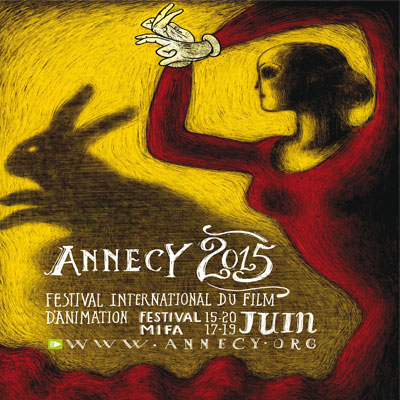
    NEW DELHI: Eight feature films and around 20 short films from all over the world are to compete for the 26 awards at the Annecy International Animation Film Festival in France this month.


    The Festival is being held in Annecy in France from 15 to 20 June.


    Held once every two years, the Festival became an annual feature in 1998. It specialises in animated films – shorts, medium, and feature length.


    The feature films are: Adama (France by Simon Rouby), Avril et le Monde truque (France, Canada), Belgium (Franck Ekinci and Christian Desmares), Mune (France – Alexandre Heboyan, Benoit Philippon), Pos eso (Spain – Sam Orti), Sabogal (Colombia – Juan Jose Lozano, Sergio Mejia Forero), Sarusuberi: Miss Hokusai (Japan – Keiichi Hara), The Case of Hana & Alice (Japan – Shunji Iwai) and Tout en haut du monde (Denmark, France – Remi Chaye).


    Apart from juries for features and non-features, there will be a jury of FIPRESCI (international Federation of Film Critics) and two separate juries of children between eleven and sixteen years of age for judging features and shorts.


    There will also be a market for animation films during the festival, apart from some Master classes by experts in animation. The emphasis will also be on women making animation films, and there will be a large number of films out of competition.

  • ESPN announces new film series, 30 for 30: Soccer Stories

    ESPN announces new film series, 30 for 30: Soccer Stories

    WORLD: ESPN Films, creators of the critically-acclaimed 30 for 30 film series, will premiere a new series in April surrounding the 2014 FIFA World Cup on ESPN. 30 for 30: Soccer Stories will include a mix of standalone feature-length and 30-minute-long documentary films from an award winning group of filmmakers telling compelling narratives from around the international soccer landscape. In addition, a collection of 10 vignettes about Brazil’s rich culture will be featured throughout ESPN’s FIFA World Cup programming.


    “With ESPN being the home of the 2014 FIFA World Cup, we know that sports fans will be looking forward to high quality content focused on what is perhaps the world’s most revered sport,” said Connor Schell, VP of ESPN Films and Original Content. “We feel this is the perfect time to expand upon the success of our 30 for 30 series by focusing this collection on some of the incredible stories of soccer’s legendary past.”


    Two feature-length films:


    Hillsborough, Directed by Daniel Gordon


    25 years ago, on April 15, 1989, the worst disaster in British football history occurred in an overcrowded stadium in Sheffield, England, 150 miles north of London. 3,000 fans flocked through the turnstiles to head to the area reserved for standing, despite a capacity of less than half of that. The result was a “human crush” that killed 96 people and injured 766.  Initially the police blamed fans for the disaster, but a long investigation revealed that was not the truth. Prior to the disaster at Hillsborough, British football was known for the grime of its stadiums, hooligan fans and inadequate facilities, but great change came after the Hillsborough disaster. What emerged is now known as the most rich and powerful soccer league in the world, the English Premier League.


    White, Blue and White, Directed by Camilo Antolini; Produced by Juan José Campanella


    Although a large number of Argentinian players have found football success around the world, few have made a name for themselves in England’s top league. One notable exception is Ossie Ardiles. Fresh off Argentina’s victory in the 1978 World Cup, Ardiles and his compatriot, Ricky Villa, joined Tottenham Hotspur later that year, when the notion of overseas players was still new to the English league. Helping lead Spurs to victory in the 1981 FA Cup, the Argentinian stars became cult heroes in England. But on April 2, 1982, everything radically changed as Argentinian troops descended on the British-ruled Falkland Islands, asserting rightful sovereignty. A conflicted Ardiles returned to Buenos Aires two days later, his bright future with Spurs suddenly in question.


    Six 30-minute films:


    Garrincha: Crippled Angel, Directed by Marcos Horacio Azevedo


    In Brazil, Pelé is “The King.” But his teammate, Mané Garrincha, is also remembered as the one of the best soccer players of all time. In a country where the sport grants its protagonists such royal deference, Garrincha is the jester– an entertainer who amused crowds and turned soccer into an irresistible spectacle, all while helping Brazil capture two World Cups. This, despite his legs being so bent that early in his career doctors deemed him unfit to play professionally. Match after match, he proved them wrong. But his unpredictable moves were of little assistance after his playing career came to an end. Abandoned by the soccer establishment, Garrincha died a victim of alcoholism in 1983. But his fans did not forget him. His body was brought to a cemetery, in the outskirts of Rio de Janeiro. Garrincha’s relatives had to borrow a grave, which turned out to be too small for his coffin. Thousands of people flooded the tiny burial ground, much more than the place could accommodate. After 49 years of a brilliant career and tumultuous life, the man who turned soccer into a “Beautiful Game” was memorably laid to rest. His legend lives on.


    Barbosa – The Man Who Made All of Brazil Cry, Directed by Loch Phillipps; Executive Producers: Jonathan Hock & Roger Bennett


    In 1949, Goalkeeper Moacir Barbosa and his Brazilian national team are on top of the world, having just won the South American championship by a score of 7-0. Barbosa is one of the heroes, widely considered one of the world’s best goalkeepers. But everything changed during the 1950 World Cup, played for the first time in Brazil. Before the final game against neighbor and rival Uruguay, the Brazilian Football Confederation was so confident of victory it had made 22 gold medals with the names of their players imprinted on them. With 11 minutes left, Uruguay shocked the estimated crowd of 200,000 at Marcana and scored the winning goal – a goal that is still considered to be the greatest sporting tragedy to befall Brazil. The blame was mostly pinned on Barbosa for being out of position on his goal line, tantamount to Bill Buckner letting a baseball roll between his legs. The country went into a deep mourning, fans committed suicide, and Barbosa was nationally blacklisted. Barbosa was considered cursed and he never played in another World Cup. He rotted away, practically penniless and alone. On July 13th, the 2014 World Cup Final will again take place at the Maracana, giving the Brazilian team the chance to write a new ending into Brazilian folklore.


    Ceasefire Massacre, Directed by Alex Gibney and Trevor Birney


    New Jersey, June 18, 1994. Giants Stadium is awash with green as Irish soccer fans arrive to watch Ireland’s opening World Cup match against the mighty Italy. The sense of optimism is infectious. The Celtic Tiger is in its infancy, Bill Clinton’s decision to grant a visa to Irish Republican leader Gerry Adams has propelled the peace process forward and Jack Charlton’s team are walking onto the pitch before 75,000 fervent spectators made up of Irish, Italians and Americans of Irish and Italian decent. Amongst the fans is Irish Prime Minister Albert Reynolds who is sitting with members of an American group who’ve been working behind-the-scenes to end the conflict in Northern Ireland. The electrifying mood is shared by the supporters watching the match in the Heights Bar, a tiny pub in the Northern Irish village of Loughin Island, 24 miles south of Belfast. At the half, the Irish are remarkably ahead 1-0. Shortly after the second half begins, two masked gunmen belonging to a Protestant terror group burst into the Heights Bar. Thirty rounds are fired and six innocent men watching a soccer match were killed. Ceasefire Massacre will reveal how the juxtaposition of the jubilation felt inside Giants Stadium against the horrors of what happened in the Heights Bar, encapsulated the mood of the time. After 25-years of conflict, Ireland and her people longed for peace and prosperity but the brutalities of the violence in the North were never far from the surface. The gunning down of innocent men as they watched a soccer match marked both a low-point and a turning-point in the Northern Ireland conflict; one that would ultimately contribute to the paramilitaries on both sides calling ceasefires just weeks later.


    The Opposition, Directed by Ezra Edelman; Co-directed by Jeffrey Plunkett


    In the wake of the 1973 military coup in Chile, American-backed dictator Augusto Pinochet transformed Santiago’s National Stadium into a concentration camp where political opponents were tortured and assassinated. Only months later, that same stadium was scheduled to host a decisive World Cup qualifier between Chile and the Soviet Union. Despite protests, FIFA’s own investigation, and the Soviet’s eventual boycott, the Chilean team still played the game as planned, qualifying for the 1974 World Cup on a goal scored against no one.


    Mysteries of The Jules Rimet Trophy, Directed by Brett Ratner


    Inspired by Nike, the Greek goddess of victory, the Jules Rimet Trophy was awarded to the nation that won FIFA’s World Cup and was among the most coveted prizes in all of sports. It is also the sports prize shrouded in the most intrigue – with the whereabouts of the original trophy unknown to this day. This film focuses on the great prize’s first brush with crime – a Nazi plan to steal the Rimet Trophy from Italy during World War II. The story unfolds like a great caper film, where our hero, Ottorino Barassi, a mild-mannered Italian soccer official, attempts to protect a valued treasure.


    Maradona ’86, Directed by Sam Blair; Executive Produced by John Battsek


    In the 1986 World Cup, Maradona redefined what is possible for one man to accomplish on the soccer field. Already a figure of notoriety, but with one failed World Cup behind him, Maradona took possession of the international stage in Mexico, the spotlight rarely drifting from him as he wrote an indelible history with his feet and, of course, with a hand from God. Delivered with passion and intelligence, Maradona ‘86 is a fascinating, evocative and operatic portrait of Maradona, revealing his inner complexity and contradictions while basking in the joy and passion of his performance on the pitch as he wrote his name on soccer history forever.


    10 Vignettes:


    Coraçao, Directed by Jonathan Hock; Executive Produced by Roger Bennett


    Brazil’s soccer tradition does not compete with other countries’ teams: it exists on a different level. But aside from soccer success, and despite Brazil’s recent economic boom, most Americans know little about the country, its geographical richness, gripping culture, and complex recent history in which the nation has transformed from a military dictatorship to a thriving, if young, republic. This short vignette series will travel from the beaches and favelas of Rio, to Salvador – the former hub of the slave trade – on a journey of music, dance, and history, to discover the stories that lie behind Brazil’s legend and explore how Brazilian soccer is truly the expression of the soul of its people.


  • Neil LaBute to create short films for DirecTV

    MUMBAI: DirecTV has entered into a partnership with the award-winning screenwriter Neil LaBute (The Shape of ThingsIn the Company of Men) to produce a set of ten short films that will air exclusively on the Audience Network.


    The pact sees LaBute writing, directing and producing ten stand-alone stories. Production is scheduled for this month and the films will begin airing later in the fall. This is DirecTV‘s second collaboration with LaBute, who previously wrote the upcoming limited series Full Circle.

    “I‘m very excited to move forward on this new project, and there is not a better home than DirecTV for an ambitious series like this,” said LaBute. “Although I am incredibly proud of my scripts for Full Circle, I was disappointed I was not available to be a part of the production. That fact drove home for me how important it is, from an artistic standpoint, to roll up my sleeves and immerse myself in all aspects of the creative process on television.”


    “We are thrilled to share these new films with our customers and are proud that Neil has chosen DirecTV as the first place to write, produce and direct his own material,” said DirecTV senior VP of original content and production Chris Long. “The films will be produced with a true auteur model; we‘re striving for the least possible distance between the artist‘s vision and the final product.”

  • Film Commission to facilitate Indian and foreign filmmakers shoot in country

    Film Commission to facilitate Indian and foreign filmmakers shoot in country

    NEW DELHI: A Film Commission of India is proposed to be set up to serve as a single-window clearance system for foreign and Indian filmmakers who propose to shoot their films in the country.

    Information and Broadcasting Ministry sources told indiantelevision.com that the Commission will provide all permissions required from different agencies in the Government of India for filming of feature films, short films, documentaries, television programmes, commercials and music videos.
     
    The sources added that the Commission will also provide support to these filmmakers in obtaining requisite permissions from the state governments and local authorities.

    A proposal in this regard is in the final stages of preparation in the I & B ministry for being put up before the Union Cabinet for its approval.

  • BRICS Youth Short Film Festival in Delhi to feature over 35 films

    BRICS Youth Short Film Festival in Delhi to feature over 35 films

    NEW Delhi: Over 35 short films from the BRICS countries – Brazil, Russia, India, China and South Africa – will be screened in a three-day festival to be held in the capital from 13 March.

    Around 31 films including four from Russia and the rest from India will be in competition. A block of short films from South Africa and one film each from Brazil, Russia, and China are in the non-competition section.

    ‘Film Dialogue 2012’, the BRICS Youth Short Film Festival, is being organised jointly by Delhi’s Citizens Film Forum and the Russian Centre for Science and Culture.

    The films include documentaries, short fiction films, animation films, and those with drama and action.

    According to Vimal Mehta of the Forum, the festival is aimed at encouraging young filmmakers from these countries and offer them a platform.

    The best films will receive awards and all films that take part will be given certificates of participation.

  • Filmmaker Mike Pandey calls for more support to documentaries

    Filmmaker Mike Pandey calls for more support to documentaries

    NEW DELHI: Eminent filmmaker Mike Pandey, who was awarded the V Shantaram Lifetime Achievement Award at the inauguration of the Mumbai International Film Festival for Documentary, short and animation films, feels a filmmaker‘s role in society is to share information that brings about a change and “that is what I constantly aspire to do through my films”.

    Pandey said during a press meet at the MIFF Media Centre in Mumbai today that “Documentary films are the backbone of a country and the Indian documentary film scene is now finally emerging after overcoming a stagnant period”.

    He said the government had also realised the importance of documentary films and informed media that a half-hour documentary chunk had been made available on Doordarshan. He said these films need to be supported by the state and central governments, people, as well as media.

    Digital technologies had opened a whole new vista of opportunities and had been responsible in broadbasing filmmaking, he said, adding that powerful and informative short films are being made using even the mobile phone camera.

    Pandey highlighted the need to make the documentary films entertaining as well, if the viewer‘s interests have to be sustained. He said the docu-drama format has opened many possibilities in this regard, as can be seen from the popularity of the History Channel.

    MIFF 2012 Festival Director Shankar Mohan underlined the commitment of the Ministry of the Information and Broadcasting Ministry to promote documentary and short films.

    He said the Indian section of the competition has been reintroduced at MIFF 2012 to encourage documentary films by Indian film makers. Mohan also informed that the Prize money had been almost doubled.

    International Film Festival of India director Mohan has been asked to step in as Director of MIFF as Films Division Chief Producer Bankim Kapadia retired on 31 January.

  • New York Indian film fest calls for entries

    New York Indian film fest calls for entries

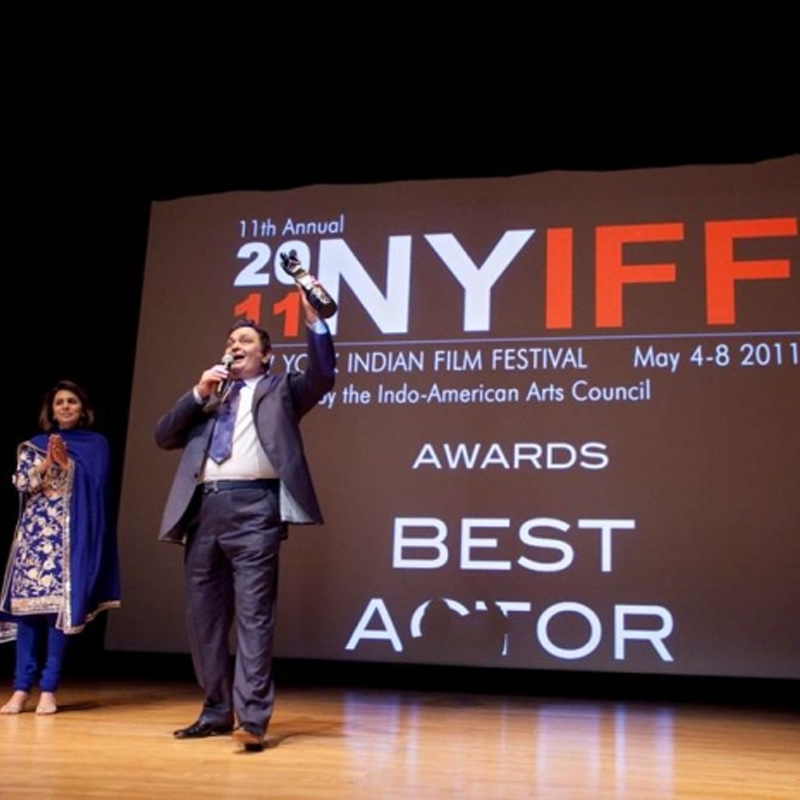
    NEW DELHI: The New York Indian Film Festival has invited entries from Indian filmmakers for features and short films for the 12th Festival to be held from 23 to 27 May.

    The entries for the festival, organised annually by the Indo-American Arts Council, will close on 15 February.

    NYIFF is an opportunity to experience five days of the rich and diverse film cultures of the Indian subcontinent through a mix of premiere film screenings, discussions, industry panels, script workshops, red carpet galas, special events, nightly networking parties and an award ceremony.

    Meanwhile, the Public Service Broadcasting Trust (PSBT) has invited proposals for documentary films from independent filmmakers for their project with the Public Diplomacy Division of the External Affairs Ministry.

    PSBT will commission around seven films under this project. The Films will need to be 26 or 52 minutes duration, shot and post-produced on Full High Definition (1920×1080, 50 mbps).

    The average budget for a 26-minute film will be between Rs One Million to Rs 1.2 million and for a 52-minute film between Rs 1.4 million and Rs 1.6 million.

    The films are intended to project India’s image to overseas audiences and will, therefore, be approved by the Public Diplomacy Division.

    The last date to submit Proposals is 24 February and can be submitted to proposals@psbt.org .