Tag: SheThePeople

  • Ideabaaz:  NSE takes stock of startups as women-led ideas drive India’s growth

    Ideabaaz: NSE takes stock of startups as women-led ideas drive India’s growth

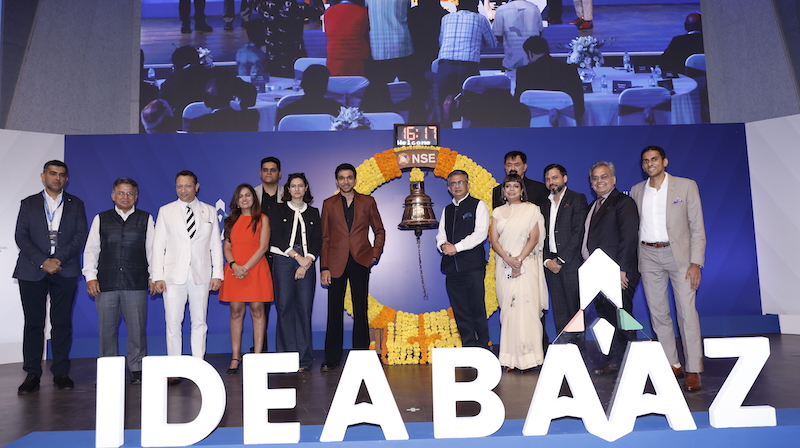
    MUMBAI: If stock markets run on bulls and bears, India’s newest marketplace is running on bold ideas led by women. At the National Stock Exchange (NSE), where fortunes rise and fall by the tick, Ideabaaz, the country’s first integrated startup-investor marketplace and entrepreneurial reality show, made its debut, promising to turn kitchen-table dreams, especially those of women entrepreneurs into boardroom breakthroughs.  

    The launch, presided over by NSE MD & CEO Ashishkumar Chauhan, brought together an eclectic mix of business leaders, venture capitalists, founders, and dignitaries, signalling that women-led entrepreneurship is now centre stage in India’s economic playbook.

    The emphasis on mentorship is particularly significant. Experienced entrepreneurs, investors, and industry leaders are providing guidance that goes beyond capital helping women navigate regulatory hurdles, refine business models, and scale operations. “Mentorship is the bridge between dreams and execution,” noted one participant. “It’s what transforms ideas into sustainable businesses.”

    Networking opportunities are another cornerstone. Ideabaaz brings together founders, investors, and experts under one roof, enabling women entrepreneurs to learn from peers and industry veterans alike. The connections made here could define the trajectory of India’s next unicorns, and the programme ensures that women are front and centre in these high-value interactions.

    Ideabaaz pitches itself as more than just another startup show. It combines investor matchmaking, mentorship, professional services, and transparent tracking, with a strong focus on women entrepreneurs in growing cities and towns. Its mission: to empower a billion dreams and turbocharge India’s economic engine. “This is not just about entertainment,” emphasised the team. “It’s about access to capital, to mentors, to opportunities that were once out of reach for small-town innovators.”

    Among the most rousing voices was SheThePeople and Gytree founder Shaili Chopra who said: “My introduction often says I’m ‘Women Entrepreneurship’s OG Queen,’ a crown I wear with pride but also with responsibility for the 6.2 million women in our network and 70,000 women entrepreneurs we meet every day. At Ideabaaz, we multiply that number seriously. We are a country of 1.5 billion, half of them women, we deserve half the opportunity and half the voice.”

    She added with characteristic punch: “Indian women entrepreneurs are not the side story, they are the centrepiece. They don’t wait for the stage they take it. From kitchens to boardrooms, women are shaping India’s growth story. And as we build this idea of ‘We the People of India,’ let’s not forget ‘She the People of India.’”

    For The Sleep Company co-founder Priyanka Salot, the moment was emotional: “As a founder, I’ve always got goosebumps watching someone ring that NSE bell. Today, being part of Ideabaaz makes it real. I started in a small town with a very big dream, and in six years of building The Sleep Co, I’ve learnt that India is the best place in the world to be an entrepreneur.”

    She stressed the macro context saying: “We’re on track to a 5 trillion dollars economy, and the backbone of that will be startups. Ideabaaz matters because it’s not just a show, it’s a movement. It gives wings to ambitions, showcases the strength of Indian innovation, and provides not just money, but mentorship and learning. Dream big, execute bigger.”

    Financial empowerment goes hand-in-hand with recognition. By giving women founders a chance to pitch directly to investors, Ideabaaz is fostering an ecosystem where funding decisions are merit-based and inclusive. For many participants, this is the first time their businesses are being assessed purely on potential, innovation, and execution, rather than traditional biases.  

    Rukam Capital founder & managing partner Archana Jahagirdar brought the VC lens: “Next year marks 10 years since the startup boom, and look how far we’ve come. Today, nearly 2 lakh startups are registered with DPIIT. At Ideabaaz, I’ve seen founders from every corner of India, every language, every kind of business. We’ve backed them with money, but more importantly with our time and belief. Capital is critical, but mentorship is priceless.”

    If the stock exchange has long been the temple of capital, then on this night, it became the stage for women-led ideas. The bell has been rung. Now it’s time for female founders across India to take their shot, proving that the next wave of entrepreneurial success will be driven by women with ambition, vision, and the right platform to shine.

  • 75 years of Indian Independence, but where are women, asks SheThePeople’s Shaili Chopra

    75 years of Indian Independence, but where are women, asks SheThePeople’s Shaili Chopra

    Mumbai: As India turns a grand 75, have we forgotten to bring to the fore women’s issues in the media, or are we merely indulging in tokenism by scratching the surface? In an interaction with Indiantelevision.com, journalist turned entrepreneur, Shaili Chopra, reflects on the critical role that the media can play in changing perceptions of women in India and how gender equality can be achieved with the media as allies.

    As a thought leader on women’s issues and now a digital entrepreneur and observer, and as someone who has worked extensively in the media sector with 18 years of television journalism behind her, Chopra shares her insights on what’s missing in mainstream Indian media today, even 75 years after the country gained its freedom.

    Chopra is the founder of SheThePeople, a digital platform that helps shape new initiatives to support women to claim their rightful space at decision-making tables. With a focus on content, community, and skill development, it covers issues like women’s health, careers, and sexuality. She was awarded the Entrepreneur of the Year award by Entrepreneur India in 2017.

    Named one of India’s 50 most influential women in media, marketing and advertising by UK-based Impact Magazine in 2016, Chopra has authored four books. Her fifth book on women’s contribution in economic growth called ‘Sisterhood Economy’ came out last week.

    Her experiences at SheThePeople have led her to her next femtech venture, Gytree, which will launch next month and aims to provide primary and preventive healthcare to Indian women. According to Chopra, Gytree.com is a fearless and comfortable space for women to discuss their sexual and gynaecological health issues and needs. 

    Edited excerpts

    On Indian media’s portrayal of women and what more needs to be done on the front

    Shaili: We are behind the curve in how we cover women. We are slow to recognise that women’s issues are headline issues and must not be relegated to the city/inside pages of the newspaper. Things have moved for the better in the last few years. However, we are still way, way behind.

    It’s not just good enough to talk about women as women. We need to showcase female mathematicians for their math, and not just because they are women. We need to talk about the politics, health, and economics of women. We are not yet there at all. We are too busy doing tokenism and celebrating the ‘womanhood’ of these females, who in fact are way beyond that in their journey of growth and success. Let’s not just celebrate their gender, but what they do and bring to the table.

    And so, I urge all that, over the next few years, let’s prove that patriotism isn’t just about hoisting a flag in every home but also about providing equal opportunity, access, and space to half of the country’s population. If India must grow to a 4.5 trillion dollar economy by 2025, be sure it won’t just be one gender that will take us there. 

    On what has changed for women in India over the last few years

    Shaili: When I set up SheThePeople in 2015, they asked me, why do women need a separate channel? With more than 700 million women and half of the country’s population, we deserve our own space, our own voice, and a return on investment for our vote.

    As we celebrate 75 years of Indian independence, I believe things are changing and I am proud to be part of changing that narrative. There is a growing sisterhood of women in the world’s largest democracy who want to get their voices heard, their presence felt, and their economics to matter.

    On why it’s vital to talk about women’s stories and what makes the media a significant tool

    Shaili: Around the world, women are far less likely than men to be seen in the media. As subjects of stories, women only appear in a quarter of all television, radio, and print news. In a 2015 report, women made up a mere 19 per cent of experts featured in news stories and 37 per cent of reporters telling stories globally. The world is becoming more diverse, and it’s a newsroom’s responsibility to reflect this.

    Today, the media as a tool is important and necessary to move beyond traditional stereotypes of women and have diverse storytellers share their unique perspective in the media. While we are at it, it’s time that the media wakes up to include voices from marginalised communities, become caste-inclusive, and go beyond the gender binary to accurately represent the society we live in and tell relevant and impactful stories. We, at SheThePeople, have used the digital platform successfully to help amplify diverse voices and help women’s issues be heard. 

    On increased representation of women as media persons

    Shaili: If seeing is believing, then we need to have far more female representation across the board, across segments of the media (front-facing on-air as well as in business). 

    Like in many sectors, in the media too, the funnel of female leadership shrinks at higher positions. At the moment, there are many top anchors, but how many of them are driving the business or managing it? very few. I think that’s part of the problem.

    A study has also found that women continue to be given what are essentially “soft” beats like lifestyle and fashion, leaving the “hard” beats like politics, economy, and sports to the men.

    The Indian media, by marginalising women’s voices, denies the rights of nearly half the population. By having more women in leadership positions in the media, we can produce more gender-sensitive and gender-transformative content. As a participant and observer of the media industry for over a decade, I have always said that women and men need to be provided the same opportunities. This includes decision-making in all kinds of activities, so that the path to gender equality is sustainable and both women and men’s interests are accounted for..