Tag: Shekhar Kapur

  • ‘Buddha’: Zee’s Sunday treat for its viewers

    ‘Buddha’: Zee’s Sunday treat for its viewers

    MUMBAI: A lot has been written and spoken about ‘the enlightened one’ but this is the first time someone has attempted to capture his life on screen. ‘It was my vision to do a conceptualised show like this on Indian television’, says Spice Studios founder and chairman and also producer of the show Dr BK Modi.

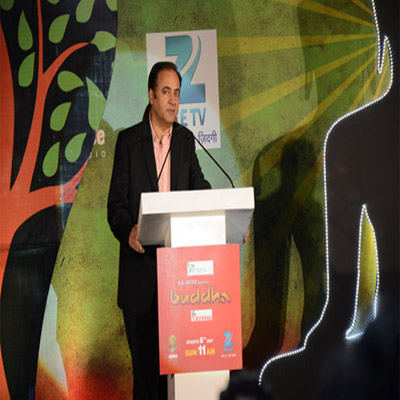
    Come 8 September, Sunday mornings are going to be much more informative and educational where the viewers will be taken to the life and journey of Buddha every Sunday at 11:00 am. The series will be an hour long and replacing Ramayan, which unfortunately has not been getting good ratings.
    Bharat Kumar Ranga Ranga feels that the epic is not only meant for Indians or Indians living abroad, but it will also have an international appeal to it as well

    Zeel and Essel group chairman Subhash Chandra exults: “We have been working with many researchers and experts on the subject. We are delighted to partner with Spice Studios to present a new series which is never-before-seen biopic on television on the life of Buddha.”

    The channel feels that the show is going to create waves around the country since the life of the Buddha would be shown for the first time on Indian television. Told in 52 gripping episodes, the series will be an entertaining action drama that will showcase the unexplored life of Buddha as Siddhartha.

    It was always Modi’s desire to showcase the life of Buddha. It is interesting to note that this was supposed to be made into a feature film. Modi had begun work on a film based on the same subject with filmmakers Shekhar Kapur and Ashutosh Gowariker helming the research and script development and was also in talks with Hollywood’s renowned scribe David Wault. But he has finally chosen the small screen to fulfill his wishful endeavour.

    He clarifies: “There is a lot to show on this subject and it was not possible for it to wrap up in just three hours. The scope of television today is larger than films and we wanted Buddha’s story to unfold in all its splendour and reach out to the largest denominator of people possible. Only TV can give us that reach, especially Zee, with its international reach spanning over 169 countries.”

    Asking whether this attempt to revive the morning slot for weekend work with the audiences, a top-placed media planner on the basis on anonymity answers: “Apart from the 90s when Ramayan and Mahabharat worked, nothing has really clicked in the Sunday morning slot. Star tried to relive it by getting Satyamev Jayate and it did work for it. Apart from that the slot is not very attractive.”
    Dr BK Modi and Subhash Chandra want Buddha’s story to unfold in all its splendour and reach out to the largest denominator of people possible

    Further adding: “But since no one has tried with Budhdha earlier maybe it will attract some eyeballs. But overall it is the treatment which matters. Let’s wait and watch if it will be able to relive the slot.”

    But on the other hand, Modi is quite confident that the historic epic will entertain the viewers. And the audience will get to learn a lot and the show will be the reference point for researchers.

    Adds Modi: “Ramayan and Mahabharat gained huge success when it started, but audiences started losing interest from the time it was repeatedly made by different channels. If one show is made in a different way by different directors, it obviously loses its charm and uniqueness. The reason these shows are not working well today is because people have already had enough of it and have seen the same thing but in different avatars.”

    The magnum opus has an international appeal with its grand scale, opulent sets at the Film City spread over a sprawling four acre plot. The promos which are already on-air are quite impressive with state-of-art 3D graphics being used to re-create the look and feel of a bygone era. Moreover, well-researched costumes have been bought out of Jodhpur and Jaipur. Customised jewellery has been sourced from Patna and will bring alive the majestic lifestyles of the royal family of that time.

    It has been more than two months that the entire cast and crew has started shooting and approximately 15-20 episodes have been canned at the time of writing.

    The channel has roped in Syska LED as the presenting sponsor and is powered by Crystal. On the promotions side, the promos are already on the television screens and one can see them focusing and promoting on the OOH platform as well.

    To top it all, Zeel chief content and creative officer Bharat Kumar Ranga feels proud to come up with such a huge show. He says: “We have concentrated in capturing the life of Buddha and the transition from prince Siddhartha to Gautama Buddha. But the life itself provides such a great dramatic possibilities that we have realised there is one story which is untold in India and worldwide and many people do not know about it. Therefore this will capture the attention because there is a value in this particular proposition.”
    The ensemble cast of Buddha

    He further adds: “Many years of research work has gone behind this. We knew that internationally there will be a lot of misconceptions so therefore we thought of not focusing on Buddhism instead we focused only on the life of Buddha. A lot of investments has gone behind the extensive research.”

    Zee and Spice are leaving no stone unturned when it comes to perfection and showing people the facts. They also wrote to Buddhists communities across the world largely in Asia pacific, asking for their valuable inputs. “The idea was to pre-inform them, so if at all somebody has some inputs they can provide it to us; otherwise we have done our research very thoroughly. Modi’s team has done a great job ensuring that every single thing is presented correctly as possible and factually as possible”, says Ranga.

    Ranga also feels that it is not only meant for Indians or Indians living abroad, but it will have an international appeal to it as well.

    Amongst the cast, veteran actor Kabir Bedi will be seen making a comeback to acting after a long hiatus. Others on the list are Samir Dharmadhikari, Nigaar Khan, Deepak Upadhyay, Gungun Uprari and Siddhartha Vasudev.

    “It should set a benchmark for the people, a point of reference. Our expectations are that people should truly enjoy this. We believe that it will add a lot to people’s lives and it will be beyond those TVTs and viewerships”, Ranga signs off.
    Though the channel has not yet thrown any light on who will portray the character of ‘the enlightened one’. We hope this Buddha brings a smile to the channel and its viewers

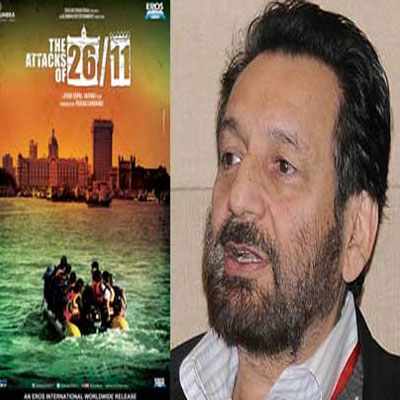
  • The Attacks of 26/11 leaves Shekhar Kapur haunted

    The Attacks of 26/11 leaves Shekhar Kapur haunted

    MUMBAI: The image of the burning dome of The Taj, the empty CST station, the bullet marks at Leopold Café and the peaceful candlelight march come flooding back when one talks about the terrible 2008 terror attacks.

    These images came flashing back to talented director Shekhar Kapur who recently watched ‘The Attacks of 26/11‘. He used the micro blogging site Twitter to express his feeling after watching the movie.

    He tweeted, “Tonight is gonna b a tough night 2 sleep. Just came out of a screening of Ram Gopal Varma‘s film on 26/11 @RGVzoomin.” He further went on to add, “Every1 will have a deeply personal reaction 2 Ram Gopal Varma‘s film on 26/11, but it left me haunted by d ghosts of those fateful days.”

    Recently even superstar Amitabh Bachchan who saw the first draft of the movie praised it. Ram Gopal Varma has done tremendous research on the subject as well as the characters and this can be seen in the reaction of everyone who has seen the movie. The promos and music of the film have been received well by the audiences. The movie is slated to release on 1 March.

  • Kamal Haasan’s Vishwaroopam crosses Rs 1 bn mark

    Kamal Haasan’s Vishwaroopam crosses Rs 1 bn mark

    MUMBAI: Controversies pay in the film world. For Kamal Haasan, it must have been worth swallowing all the problems his movie Vishwaroopam generated over its proposed release on the direct-to-home (DTH) platform ahead of the theatrical debut. Even as Haasan had to concede to the powerful film exhibition community and defer the DTH release, his much talked about magnum opus action thriller has crossed the Rs one billion mark at the box office.

    Actor Rahul Bose tweeted the milestone achievement on the micro blogging website, “Just received figures of the all India box office collections of Vishwaroopam. 120 crores and counting. Superb! Vishwaroopam‘s the first film I‘ve been a part of that‘s made over 100 crores. Congratulations to the team and mr haasan especially!”

    Bose plays the antagonist in the film. Other stars include Pooja Kumar, Andrea Jeremiah and Shekhar Kapur.

    The movie has been marred with controversies even before its release. The first tangle it got itself into was when actor-director Hasaan decided to release the movie on DTH platform before its theatrical release. Just when the issue of Vishwaroopam‘s release was resolved, Muslim bodies in Tamil Nadu opposed the movie since it showed the community in bad light which resulted in the movie being banned from release in Tamil Nadu.

    The film released worldwide on 25 January but in Tamil Nadu it hit the theatres as late as 7 February. Despite the delays and controversies, the film seems to have caught the fancy of the audiences.

    The film was also released in Hindi by the name Vishwaroop. This version, though, has failed to attract audiences since it has managed to rake in just Rs 117.5 million in its first week.

  • Haasan’s Vishwaroop is a failed effort

    Haasan’s Vishwaroop is a failed effort

    MUMBAI: After much controversy, which one realizes was totally futile and uncalled for after watching the film, Vishwaroopam‘s Hindi version finally hits the screens on Friday. Vishwaroop is an espionage drama which has Indian participants but has nothing to do with the security of India in its narrative. The target of Al Qaeda terrorists is the US but the saviours are the Indians.


    Producers: Chandra Haasan, Kamal Haasan.

    Director: Kamal Haasan.

    Cast: Kamal Haasan, Pooja Kumar, Andrea Jeremiah, Rahul Bose, Shekhar Kapur, Jaideep Ahlawat, Nassar, Miles Anderson.

    The problem is that we don‘t have stories of our spies‘ real heroics in public domain or in fiction. Recently, we had Jab Tak Hai Jaan where the protagonist Shah Rukh Khan‘s character was fitted in to the character of Jeremy Renner from Hurt Locker. Kamal Haasan, for his part, chooses the character lock stock and barrel with events and sequences like coming face-to-face with Osama Bin Laden, from a Fredrick Forsyth novel of 2006, The Afghan.

    The Afghan is about a popular Forsyth books hero, a retired spy, Mike Martin, who infiltrates the top rungs of the Al Qaeda impersonating one of their top activists who is now in a jail in the US; a man he has worked with and groomed earlier working side by side during the Russian war of Afghanistan. Now, Kamal Haasan assumes that character, infiltrating the top brass of Al Qaeda as a Kashmiri jihadi whose father was a respected jihadi martyr. The cover has been built for Haasan by the Indian spy agency, RAW, for his easy acceptance by AQ.

    As the film unfolds; Kamal Haasan is Vishwanath, an Indian classical dance teacher teaching a band of girls his art in the US. His wife, Pooja Kumar, is a nuclear oncologist. She married him as an excuse to get entry into the US and is romancing her boss; she finds her husband to be more suited to cook for her and look after the home. To her, he is a nincompoop. Not knowing her boss is dealing with the wrong people, she ends up in the hands of terrorists along with the boss and Haasan. The merciless terrorists kill their own men as easily as they kill others and next in the line are Haasan and Kumar. The boss she was getting cosy with is not up to saving her life; in fact he can‘t save his own life either. It is time for the wimpish Haasan to show his true colours. The RAW agent in him springs into action and kills the horde of terrorists to make an escape with Kumar.

    In flashback, the real Haasan turns out to be a Kashmiri Muslim spy with RAW, Wisam. The flashback takes you to Haasan‘s days with Al Qaeda in the Afghan mountains, where he becomes one of them. He gains the full confidence of the leader, Rahul Bose. While he tries to save the lives of women and innocent children, he also signals the hideouts of the terrorist groups to the American forces who then carry out bombings.

    Haasan is now back to civil life with new cover as a dance teacher but the Al Qaeda has caught up with him. Rahul Bose, the dreaded Omar, is on his tail and the action is now in the US. Bose and his group plan to blow up a major part of New York with a dirty bomb. Haasan is aided by his handler, Shekhar Kapur, and two subordinates, Andrea Jeremiah, so far posing as his dance disciple and Miles Hawkins, an American. The race begins to prevent the disaster that the bomb will wreck on New York. The bomb has already been planted and a terrorist, James Bobson, is waiting for a go ahead to press the detonator. There are hurdles as Hawkins is murdered and Haasan and Kumar are arrested by the FBI. It takes the Prime Minister of India to intervene and let Haasan get back to his task.

    The bomber is eliminated, bomb defused and New York saved but not before the Al Qaeda leader and his crony escape for the Vishwaroop saga to continue as a sequel.

    Now, that is one problem where you let a villain escape, you are not giving viewers their money‘s worth. A sequel can very well be the hero‘s new exploit. It does not necessarily have to be with the same forces. When you talk of Afghani men, you imagine a tall, strong man so what prompted the casting of Rahul Bose as the main villain? An artificial eyeball, bruised face and other makeup touches may make him look sinister at first glance but he is not a strong adversary. And how does one expect the Indian audience to identify with an adventure that has nothing to do with India except its super sleuths who are out to save America?

    It is bad enough that Haasan has lifted his character and parts from an American authors‘ book but he could have very well designed the film around security concerns of India rather than the US. In fact, after the initial few reels when Haasan Vishwaroop changes to RAW agent Wisam, the film fails to hold interest.The Afghan war parts could well be a documentary. The part about saving New York from a bomb is routine and predictable.

    As for performances, Haasan is good as usual in whatever he does. Of the girls, Jeremiah has a better part and does justice; Kumar is okay. Bose is a misfit. Kapur just has to be himself. Anderson looks the part of a RAW subordinate. Nassar and Jaideep Ahlawat are good in support. While the photography is good, not much help comes from music or dialogue. Some editing was needed.

    Vishwaroopam is a failed effort; the film neither thrills nor entertains.

    Mai is a purposeless film

    Producers: Nitin R Shankar, Subhash Dawar.

    Director: Mahesh Kodiyal.

    Cast: Asha Bhosle, Padmini Kolhapure, Ram Kapoor, Shivani Joshi, Navin Kaushik, Anupam Kher (cameo).

    Mai is supposedly a film on Alzheimer‘s syndrome, an affliction when a person loses control over one‘s faculties like memory, thinking and behaviour. However, it really is a film about an afflicted old woman and her selfish wards, who want to shirk the responsibility of caring for her, save for one. Somehow, filmmakers try to find new stories which they think will appeal to the audience. To think that Alzheimer will appeal at all to Rs 300-ticket moviegoer makes no business sense! In this case, a mother is deserted by her only son because she suffers from Alzheimer‘s, but, cause notwithstanding, there have been a score of films of aged parents being deserted by wards over the years.

    Padmini Kolhapure, her husband Ram Kapoor and their teenage daughter, Shivani Joshi, are leading a peaceful life even as they are paying off the mortgage on their house equally. Kolhapure calls the shots. Her husband is a journalist. What Kolhapure does is not deemed necessary to explain but she works and makes money enough to support the family; makes money enough to take on her husband and dominate the family on every count!

    One fine day, Kolhapure‘s brother, Navin Kaushik, says he is leaving for the US and he can‘t take their mother, Asha Bhosle, along. Of the three sisters, one is handicapped by space and economics of her family to care for her mother, the other can‘t because she is off to Switzerland for a holiday and that leaves only the eldest, Kolhapure, to bring her mother home, much against the wishes of her husband, Kapoor and the teenage daughter, Joshi.

    Bhosle is a nuisance for the family. When it is not her Alzheimer‘s, it is her being a typical grandma and lecturing everybody. Why Kolhapure is doing it and willing to sacrifice her happy married and small family life as well as her career (she is due for a promotion) is sought to be explained through various songs which become flashbacks. In fact, every song the film has is about flashbacks, which is repetitive. These flashbacks remind Kolhapure of the hard days Bhosle faced as a young widow and mother of four to give them comfortable life and education through her sacrifices.

    Mai is a purposeless film. It drags on. Both the title and ambience are heavily Maharashtrian. Casting Bhosle is not a coup; it is a setback for the film. She has a huge, iconic image in the world of playback and no way can she fit into a helpless, ailing, totally dependent old mother. Ram Kapoor and Joshi are okay while Kolhapure is good.

    Mai has no box office prospects.

     
    Listen Amaya doesn‘t have enough to help its sustain at BO

    Producer: Ashok Sahwny. 

    Director: Avinash Kumar Singh.

    Cast: Farooq Sheikh, Deepti Naval, Swara Bhaskar, Amla.

    Listen Amaya is a film about a teenage girl, Swara Bhaskar, at crossroads of life and always at odds with her single parent, Deepti Naval. Teenage is an accepted excuse for a new generation to defy the norms. Listen Amaya has one part where her mother wants her to listen but she is always in a hurry and never does; its second part is like a sequel to its first part, where, the mother says, ‘Talk Amaya‘, but she has gone mute. The concept sounds interesting but, alas, what follows is not!

    Deepti Naval, a South Indian widow in Delhi, keeps herself occupied by managing a mini-library cum coffee shop called Book A Coffee. This she runs from her house. The shop generally attracts some youths and some intellectual types who love Indian things. One of her regular customers is Farooq Sheikh, a widower in his sixties and a still photographer by profession. Bhaskar has grown really fond of Sheikh, who is fondly called by all around as Jazz. Bhaskar has a fondness for writing and she and Sheikh decide to join forces to produce a coffee table book.

    Before the book can be published, Bhaskar sees the proximity between her mother, Naval, and Sheikh. This unnerves her. The Delhi teenager can‘t come to terms with another man in her mother‘s life and equates the relationship as sexual; how could her mother bring another man in a bedroom she shared with her father? There is turmoil in Naval‘s life as Bhaskar refuses in any way to have Sheikh as part of her life and stops communication with mother. She generally sulks and also fights with her friends.

    The part about the coffee shop and its visitors, which was light and fun, is over as the drama turns into a triangular conflict with Naval at the centre. It takes time, intervention by Bhaskar‘s dad‘s sister, Amla, and the success of her book with an offer for a sequel that finally brings a change of mind.

    Sheikh and Naval are readily acceptable as a pair and their chemistry feels like a continuation of their earlier love stories. Bhaskar has to mostly sulk and be generally unpleasant which is a tough thing to do but she manages it well.

    Listen Amaya has some watchable parts but not enough to help it sustain at the box office.

    David is an idea not worth repeating

    Producers: Bejoy Nambiar, Sharada Trilok.

    Director: Bejoy Nambiar.

    Cast: Neil Nitin Mukesh, Vikarm, Vinay Virmani, Isha Sherwani, Lara Dutta, Tabu, Nassar, Rohini Hattangadi, Nishan Nanaiah, Milind Soman, Satish Kaushik, Sheetal Menon.

    David has three stories to tell, of three characters sharing the same name, David, over different periods and locations, these being London, Mumbai and Goa. This is rather ambitions since most of our films are lacking in even one story to make into an interesting movie. The stories may have started on different locations in different era but all culminate around the same time. The three parts have different issues. One is about London and its Indian underworld; the second about a middle class family in suburban Mumbai becoming a victim of the local land grab mafia and its politics while the third one is about a happy-go-lucky Goan who discovers love.

    Neil Nitin Mukesh is David, the blue eyed boy of the local don Ghani who holds sway over the local Asian community. This part is shown in black and white. The story is more about the internal passions and politics of the family with patriotism and attempts to kill him by some outer forces on the side. The part takes off interestingly as the don demonstrates his powers and Neil establishing himself as the protective shield of the household. His in-house romance with Monica Dogra and doubts about his parentage later dilute the story.

    The Mumbai David, Vinay Virmani, lives with his devout Christian father, Nassar, and two sisters. He aspires to make a name in the world of music. His relationship with his father is a love-hate one while the only person he is comfortable with is his older sister. While he is at the threshold of a break to play with a renowned music composer, his family falls victim to the local land mafia and a manipulative politician and religious activist, Rohini Hattangadi. Their peace is shattered and Virmani gets after the villain to seek revenge. However, he is no match for the mafia or the politician‘s might.

    In Goa, Vikram is David living a life of a perfect loafer, either fighting or drinking or doing both. His mother wants to see him settled and when in need of help, his dead father, Saurabh Shukla, gets into the body of somebody around and helps solve his son‘s problems. Vikram has but one buddy in town, Nishan Nanaiah. Both fall for the same deaf-mute girl, Isha Sherwani. This part offers some relief with help from Tabu and other characters.

    Finally, the story of all three end on different notes. None really gets what he had set out for. All three stories begin well but lose grip on the way.

    With three stories, David has a lot many characters playing brief parts of which the three Davids along with Tabu, Nassar, Lara Dutta and Saurabh Shukla make some impact. The film has as many as fifteen tracks and some of them blend well with the proceedings. Direction is average. Camera work is good by all three cinematographers, handling a part each. That is about all.

    David is an idea not worth repeating if commercial cinema is what one has in mind.
  • Sunny Side Up wins Qyuki.com’s creative biz

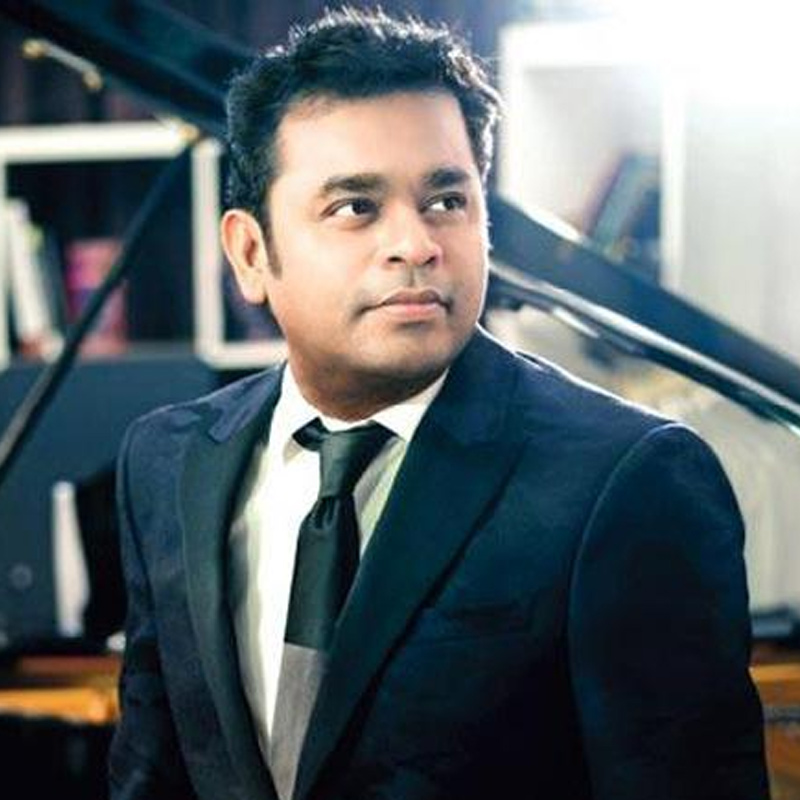
    MUMBAI: Qyuki.com, the social media platform startup by Shekhar Kapur and AR Rehman, has appointed Sunny Side Up to manage its creative duties.

    The six-year-old agency with offices in Hyderabad and Bangalore will be involved in supporting the platform with its online campaigns for promotion and building sustainable digital assets.

    Qyuki.com intends to look at the new paradigm in social media by helping people follow their creative interests. It will be supported by Sunny Side Up in finding newer ways of engaging with the platform‘s growing user base.

    Qyuki.com CMO Bidisha Nagaraj said, “The platform aims to unlock the creative potential of India by empowering people‘s self-expression and enable them to build their creative identity. At Qyuki, Indian youth come together to experience differentiated content created by Masters. In Sunny Side Up, we found a partner who understands the need of a unique platform like Qyuki to continuously stay relevant to its target”.

    The portal is targeted at Indian youth residing in Tier I, II and III markets, and Indian diaspora, aged 18 to 35 years.

  • Shekhar Kapur and AR Rahman launch social media platform

    Shekhar Kapur and AR Rahman launch social media platform

    MUMBAI: Shekhar Kapur and AR Rahman have teamed up to launch social media platform Qyuki Digital Media, which has Cisco as a key investor.

    The platform aims to discover the vast untapped talent of India and the Indian diaspora, mentor them, and turn them into brands of the future. It will offer co-creation opportunities, collaboration, recognition and a creative marketplace to the consumers.

    Qyuki will help the youth to experience and co-create differentiated content with the experts and be inspired by the ‘Masters‘ creations.

    Qyuki co-founder Shekhar Kapur said, "At Qyuki, we are creating a world of opportunity, where it doesn’t matter where you come from, but what matters is your creativity and the meaning one can derive from it. It’s a world where people can learn from established domain experts, showcase their creativity and connect with like-minded people. Ultimately, they have the potential to become the brands of the future. This is a hub where I will create compelling content experiences such as Warlord and Animalocity."
    Qyuki co-founder AR Rahman said, “Qyuki will help you creatively explore yourself, open the window for creativity that exists in all corners of India and is a first step to trigger the imagination of Indian minds. Qyuki would be active and focussed in driving creative expression of all art forms. The platform will emerge as a strong medium that will enable Indian youth to follow their creative instinct. Melange, premiered at Qyuki, is content created by young musicians at K M Music Conservatory which showcases the potential of creativity in India.”

    Qyuki’s technology platform has been developed in-house to bring to the consumer a unique multi-modal experience deployed on Cisco’s state-of-the-art datacentre technology. The entire Qyuki platform is built on Cisco’s cloud infrastructure.

    Hilton Romanski, Vice President, Head of Corporate Business Development, Cisco said, “Cisco has a long track record of driving IT market growth through investments. We have invested in Qyuki to co-create a technology platform that enables conceptualization of creative content, contextualising it and delivering it through mobile devices and cloud. With Cisco, Qyuki has the capability to build an online human network in India.”

    Qyuki will enable brands to leverage the creative community in many different ways. It will allow brands to reach out to a targeted community, interacting with content and co-create brand communication with them, directly or through online and mobile advertising. It also provides them with a chance to gauge the emotional pulse of the consumer or associate with specific genre of creativity.

  • Delhi can be a gateway to north India for filmmaking: Dr Kiran Walia

    Delhi can be a gateway to north India for filmmaking: Dr Kiran Walia

    NEW DELHI: Delhi has the potential of becoming the film city for north and north-east India.

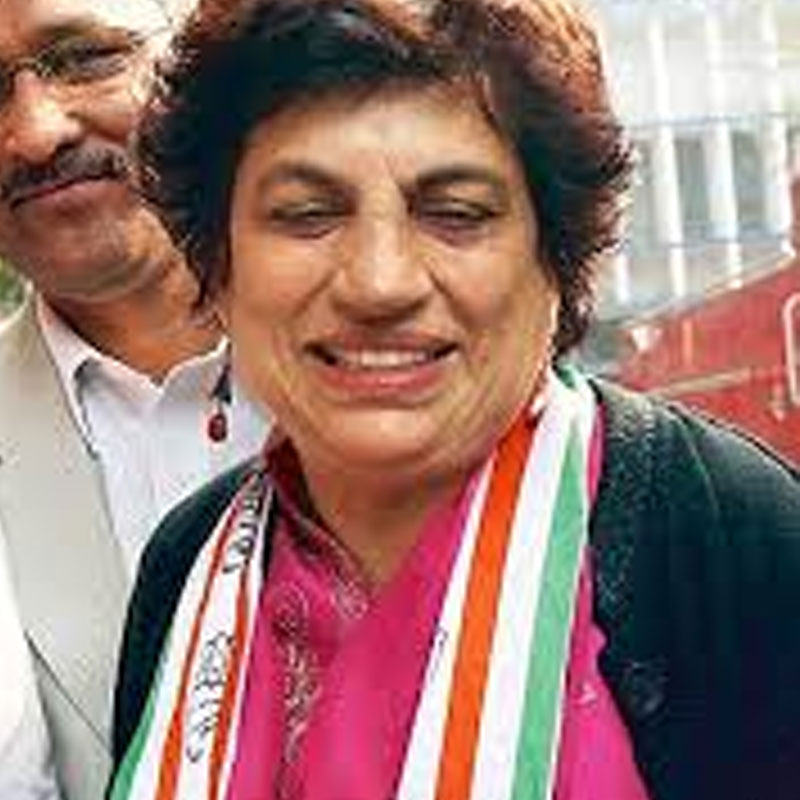
    Delhi Women and Child Development and Languages Minister Dr Kiran Walia said the Delhi government had already worked to make Delhi the cultural hub of the country and would be eager to help in turning the city into a film hub if concrete suggestions were made by anyone.

    Inaugurating a two-day meet on ‘Is India’s next film city?‘ as part of the 12th Osian’s Cinefan Festival for Asian and Arab Cinema, she said Delhi can become a film production centre as a gateway to north and north-east India.

    She said that things could be worked out if any party came forward for this purpose, adding that Chief Minister Sheila Dikshit had asked her to convey this sentiment.

    Delhi Tourism is also close to working out a policy whereby it will facilitate film shooting in the national capital territory region. Delhi Tourism and Transport Development Corporation Managing Director G G Saxena said a booklet would be issued soon about the facilities that can be offered to filmmakers.

    Earlier, Osian’s chairman Neville Tuli announced that his group was setting up a museum which will house material relating to the arts, Osianama, in Delhi as its contribution towards helping Delhi grow as a major hub of cultural activities. He said cinema can play a complimentary role in this endeavour.

    He said it was unfortunate that filmmakers never left the infrastructures they built for their films for others to use, otherwise Delhi would have had enough infrastructure by now.

    He was categorical that it was wrong to depend on the government for everything as it had no role in a private endeavour. Even monuments where filmmakers decide to shoot their films should be given on payment.

    Delhi can embrace cinema in a more systematic way, and there has to be a ‘jugalbandi’ (collaboration) between the government and the private sector.

    Bobby Bedi said it was unfortunate that cinema’s role had never been seen as culture. He said this country is held together by cricket and cinema, apart from language – English or Hindi. Thus cinema plays a major national role.

    There is, therefore, a strong case for establishing cinema in north India as a gateway to the north and the north-east.

    He said it was a cakewalk to shoot films in Delhi as compared to Mumbai, and so it was for the Information and Broadcasting Ministry to approve this. And there were ample places available in the NCR outside the main city for developing a film city.

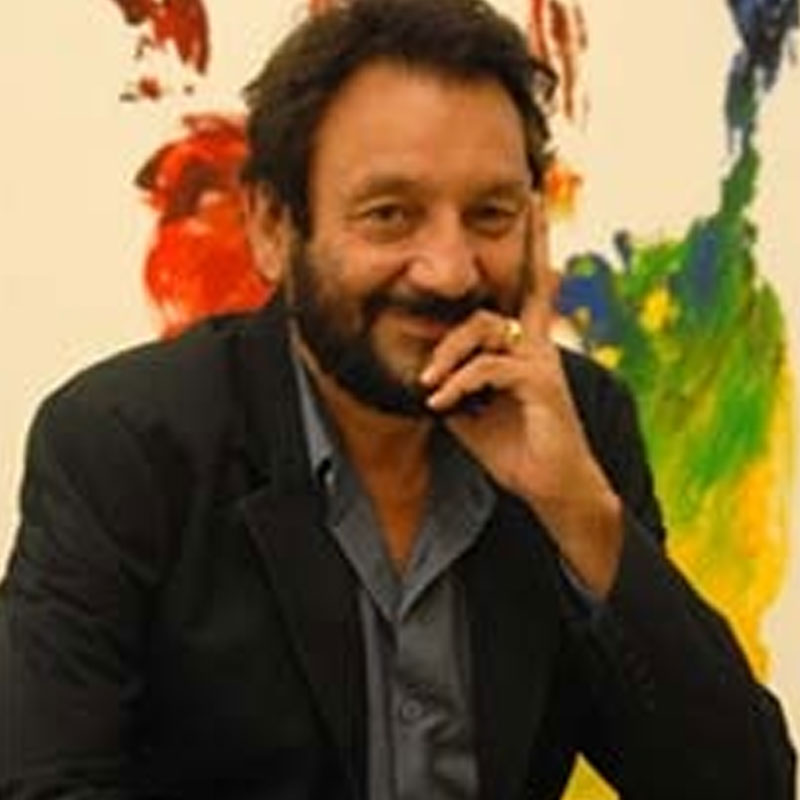
    However, eminent filmmaker Shekhar Kapur did not feel that Delhi could be a film hub because all the decision makers were in Mumbai and all the talent moved out of Delhi to Mumbai. He said that there was need to open more institutions to train people in filmmaking if Delhi was to become a hub, adding that he regretted that the talent from the National School of Drama did not stay in the capital. He also said that most of the decision makers – the producers – were in Mumbai.

    Creative people needed creative environments and could not flourish in a bureaucratic city.

    Sudhir Tandon of Osian’s who is coordinating the two-day meet said the aim of Osian’s was to start a debate on the subject.

    Meanwhile, the Government is close to drawing up a plan for single-window clearance system for those wanting to shoot in the country.

    Eminent filmmaker Bobby Bedi said the Information and Broadcasting Ministry had been working on this for several months and was very close to finalising the details of the policy.

  • India and Asia should create their own Oscar-level awards, says Shekhar Kapur

    India and Asia should create their own Oscar-level awards, says Shekhar Kapur

    New Delhi: Veteran filmmaker Shekhar Kapur said today that Indians should not be so crazy about the Oscars when Asia was vibrant enough to have its own Oscar-like awards.

    The ace filmmaker had the media and others present for the 12th Osian‘s Cinefan Festival for Asian and Arab Cinema glued to every word he said during an interaction with Osian‘s Chairman Neville Tuli on “Indian Cinema, World Cinema film festivals and cinematic heritage”.

    Shekhar, whose ‘Elizabeth‘ had won Oscars, said few knew that the Oscars were launched because March is a lean month in the United States and so it was thought that there should be some activity relating to films which will keep people enthused.

    He also said it was not correct to say that filmmakers in India did not plan for marketing when they plan their films, but said the budgets were far lower than those for Hollywood.

    He said it was wrong to claim India has the largest film industry in the world. China is ahead of India because it is creating new infrastructures for cinema. It had a very strong domestic market for cinema, worth almost $ 100,000.

    Therefore, the only way to improve the Indian market is to improve the local market for cinema by building greater infrastructure such as financial institutions to help the film industry.

    He also felt that Indians should look more towards Asia than towards the west in terms of developing its cinema.

    He said that Indians would any day prefer to see an Indian film rather than a Hollywood film, and this potential should be recognized by the film industry.

    He said the west had picked up many things from India and films there had more emotions now because they had also realized what people wanted to see.

    Shekhar also had his complaints against the Central Board for Film Certification and said many countries did not have any censorship and those that did had better and more rational regulations in place.

    Mr Tuli said that the OCFF this year was stressing on freedom of thought and expression and showing films that proved to be milestones in their fight for their right of freedom of expression.

    He also said Osian‘s was helping to build the proper infrastructure for creative freedom and also bring about a vibrant film culture that could co-exist with other forms of art.

    Shekhar was at the Festival to participate in the panel on ‘The Water Landscape‘ held yesterday as part of the section on environmental films.

  • Shekhar Kapur to chair ‘Debut Film Section’ award at Venice fest

    Shekhar Kapur to chair ‘Debut Film Section’ award at Venice fest

    MUMBAI: The 69th Venice International Film Festival has asked producer-director Shekhar Kapur to chair the Jury for Luigi de Laurentiis Venice Award for Debut Film sections of the festival.

    The festival will run from 29 August to 8 September.

    “Shekhar Kapur is not only the Indian filmmaker who enjoys the greatest international prestige – which he earned for the success of the films he made in Bollywood in the early stages of his career and later for having directed some of the major English and American productions – he is also a refined intellectual humanist interested in social issues,” the festival site read.

    He made his directing debut with Masoom and also also directed Mr. India. Later, he went on to win critical acclaim for Bandit Queen in the year 1994. His Hollywood film Elizabeth received as many as seven Oscars.

    In 2006, Kapur formed Liquid Comics and Virgin Animation, an entertainment company focused on creating new stories and characters for a global audience. In an unusual role, Kapur provided the voice of Mahatma Gandhi in the Charkha Audio books title of The Story of My Experiments with Truth.

    He was also a member of the jury at the 2010 Cannes Film Festival.

  • Ladakh Intl film fest categorised in 4 sections

    Ladakh Intl film fest categorised in 4 sections

    MUMBAI: The Ladakh International Film Festival (LIFF), which is scheduled to be held from 15-17 June, has been categorised into four sections namely World Cinema, Indian Cinema, Competition and Ladakh.


    While the World Cinema category is open only to International Films, the Indian Cinema section is open only to films made in India. While the competition section will include feature films, short films, animation films and documentary films, the Ladakh section will include only those films that are made by the residents of Ladakh or the films made on Ladakh.


    Chaired by Shyam Benegal, LIFF Patrons include a mix of senior film professionals and young, enthusiastic cine lovers. Other eminent personalities who are on board as patrons of the LFF include Christian Jeune- Deputy Director General, Festival De Cannes, Derek Malcolm, President of British Federation of Film Societies and The International Film Critics Circle, film critic and historian Jacob Neiindam, director Copenhagen Film Festival.


    Eminent filmmakers Govind Nihalani, Shekhar Kapur, Shaji N Karun, Madhur Bhandarkar, Deepti Naval, filmmaker Vishal Bhardwaj, producer-director Ketan Mehta and art director Nitin Desai would represent Bollywood among the patrons. Melwyn Williams Chirayath is the festival director of the festival.


    Speaking on the inception of the festival Benegal said, “I am extremely delighted to announce the first edition of the Ladakh International Film Festival. The effort is to create a festival that is totally distinct from other film festivals. Ladakh is a unique and apt venue for LIFF. The aspiration is to make it one of the best and exclusive film festivals on the roof of the world.”


    Chirayath added, “Ladakh International Film Festival is like a dream come true as it was always a desire for me to associate my love for cinema and love for the beautiful environs of Ladakh. Through the Ladakh International Film Festival, it will be our mission to give this region its due and at the same time, make it a green initiative by conserving the ecosphere here and introducing carbon offsets.


    “The presence of Cannes and Copenhagen Film Festival Directors and eminent Jury and Patrons members is proof to the fact that this Festival holds immense promise and potential to be one of the best and probably the most exotic Film Festivals in the world. It is high time we start thinking towards contributing back”


    Multiple screen projections along with sound for better visibility during day time screenings will be installed at the venue. There will be an auditorium screening with 35mm dual projection and 5.1 sound facilities.


    Besides this, there will be two open air screenings. Films will be screened in three venues simultaneously and venues will have transportation facilities like buses and bicycles.