Tag: Shekhar Kapur

  • IFFI 2015 to feature 200 films from 89 countries; Anil Kapoor to inaugurate

    IFFI 2015 to feature 200 films from 89 countries; Anil Kapoor to inaugurate

    NEW DELHI: Around 32 years after he first featured in a lead role, veteran actor Anil Kapoor will inaugurate the International Film Festival of India (IFFI) this month in Goa, which will feature a total of 187 films from 89 countries in the international section.


    In addition, the Indian Panorama will have 26 feature and 21 non-features in the Festival, which will open at Panaji on 20 November with the film The Man who knew Infinity by Mathew Brown. The film is a true story about the friendship between Indian mathematician Ramanujan and Professor GH Hardy that forever changed the world of mathematics.


    The Festival organised by the Directorate of Film Festivals of the Information and Broadcasting Ministry in association with the Goa Government will conclude on 30 November. It will have special classes in filmmaking in collaboration with the American Academy, which awards the Oscars.


    Noting that IFFI had become a global brand in the world of cinema, I&B Minister Arun Jaitley said that Spain is the focus country this year and the special focus within the country was on cinema from the north eastern states.


    The competition section will have 15 films including two from India and will be judged by a jury headed by filmmaker Shekhar Kapur. The other members will include Michael Radford, Julia Jentsch, Suha Arraf and Jeon Kyu-Hwan.


    The Panorama films were selected by a 13-member Feature jury headed by filmmaker Aribam Syam Sharma and a seven-member non-feature jury headed by Rajendra Janglay.


    Apart from Jaitley, those present at the press meet were Minister of State Rajyavardhan Rathore, Goa Chief Minister Laxmikant Parsekar, I&B Secretary Sunil Arora, Festival Director Senthil Rajan, and Special Secretary J S Mathur. Jaitley also released the poster for the 46th Festival at the press conference.


    Jaitley agreed to consider a suggestion that the opening of IFFI should not clash with the International Children Film Festival of India in Hyderabad, which is held every second year. However, he said this could not be done this year.


    Jaitley said the Festival promoted excellence and provided an opportunity to showcase the best domestic and international talent.


    The Spanish package would have the films of master Spanish filmmakers Carlos Saura and Pedro Almadovar along with contemporary filmmakers like Alejandro Amenabar. The section would also feature Spanish actress Leticia Dolera’s directorial debut Requirements to Be a Normal Person.


    Jaitley said IFFI this year would feature a special section on ‘World Cinema Restored Classics’ to highlight the idea of film restoration. This would feature a package of classics to put spotlight on National Film Heritage Mission (NFHM). 


    The Minister added that the film festival will also introduce a new segment – First Cut – to recognise young talent in the field of cinema and would screen some of the outstanding directorial debuts of 2015. The section would feature emerging filmmakers including Brian Perkins (Golden Kingdom, USA) and Michael Klette (Solness, Germany) among others. The festival in association with the Oscar Academy will also promote skill development in filmmaking through master classes on varied topics like sound designing, film archive and film editing.


    Jaitley said IFFI would include a special award – ICFT- UNESCO Fellini Prize – in collaboration with the International Council for Film, Television and Audiovisual Communication (ICFT), Paris and UNESCO. The award would be presented to a film, which reflects the ideals of peace, tolerance, non-violence and friendship promoted by UNESCO. 


    Answering questions, Jaitley said that film festivals all over the world were now linked to a city and therefore there was no plans to shift the festival out of Goa, which had hosted it since 2004.


    Arora added that IFFI was the biggest Film Festival in Asia and a leading platform for art and creativity. He said Goa had been the perfect venue for the past 11 years for the film festival.


    The focus on the north east at IFFI will include a Special Retrospective on Aribam Syam Sharma along with a unique segment featuring next generation filmmakers from the north east.


    Answering questions, Rajan said that there was a film from Pakistan apart from other SAARC countries as well. Speaking to Indiantelevision.com Rajan said that while the Film Federation of India (FFI) and the Federation of Western India Cine Employees (FWICE) had decided to boycott the Festival, they had not barred individual filmmakers from taking part. Furthermore, steps were being taken to address their grievances.


    IFFI will also be organising a special seminar on Film and Cultural diversity. A special series titled ‘In Conversation’ with eminent Indian filmmakers such as Shyam Benegal and Vettrimaran will also be organised to discuss films and the art of filmmaking with the audience. 
  • Nalin Mehta’s ‘Behind a Billion Screens’ examines Indian TV industry

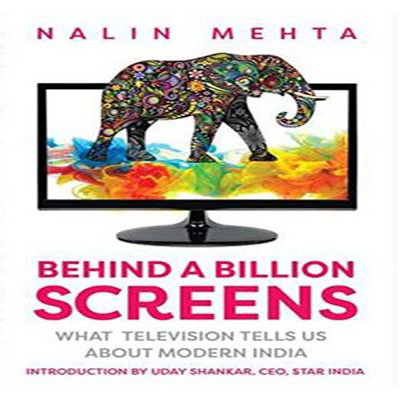
    Nalin Mehta’s ‘Behind a Billion Screens’ examines Indian TV industry

    MUMBAI: India is a country where television forms the most important part of one’s life. Everybody watches television, everybody has an opinion on it and everybody thinks they know exactly what is wrong with it. 


    It’s a topic that often raises a lot of heat and smoke but too little light. Throwing some light on this trend of television is author and journalist Nalin Mehta’s new book ‘Behind a Billion Screens.’


    The book closely examines how television works in India, how TV channels make their money or not, how this is changing and what this means for the cacophony that appears on our screens.


    The book, which was initially going to be a joint effort by Star India CEO Uday Shankar and Mehta, was later written independently by the latter.
    The book answers key questions like:


    • Who owns Indian television? Just how much is it controlled by politicians, corporations and real estate companies? What are the patterns of control nationally and across regional languages? How does India compare with other countries and why does this matter?


    • What explains television’s terrible crisis of content? Is there really no market for intelligence in India and is dumped down content the only thing that audiences want? Why do channels keep behaving like Bollywood producers of the 1980s who kept churning out the same old tired formula films till a new multiplex-savvy breed of film-makers started challenging old orthodoxies? Is there a talent problem or management problem or a crisis of business models?


    • What is wrong with current government controlling system on television and why this ‘terrible-backend’ needs to change? Indian television continues to be controlled by outdated regulations, even as it is mired in public battles for greater regulation, as called for by Justice Katju. Studying the role of the Ministry of Information and Broadcasting, Telecom Regulatory Authority of India (TRAI), state governments and the judiciary, this book answers just how much control the state still has on broadcasting, why its jugaad nature of regulation is now unsustainable and why a major change is needed.


    • Does self-regulation work? How did self-regulatory bodies governing television come into being and what has been their factual record? Has self-regulation made any difference to programming or is it simply a chimera only designed to keep government out?How does India compare to other countries?
    • Does public broadcasting still matter, what exactly is wrong with Prasar Bharti and how can it be fixed?


    • Is television becoming irrelevant in the digital age? How is television shape-shifting in response to mobiles and the net, how are companies changing their businesses and programming, where is India going and how different is India from the rest of the world.


    The book highlights how India’s $15 billion media and entertainment industry – including television, print, radio, digital media – is growing at roughly 14 per cent a year. This, by some accounts, is impressive, benefitting immensely from the tailwinds of GDP growth of the last decade. But the stark fact is that even at $15 billion, India’s entire media taken together is just about one fourth the size of Google ($59 billion in revenues) – a fourteen-year-old company that is younger than most major Indian TV channels.


    “Let us not even go that far. If the entire Indian media was a company, it would rank seventh or eighth in India! Media is a globally growing industry but our participation in that ecosystem is zero and India is hardly factored into the global thought process of technology or content,” the book points out.


    Mehta, in the book, highlights how India is drunk on its own volumes: the largest number of newspapers in circulation, the second largest number of television viewers and millions of digital consumers. Digital, in particular, is an indictment of our creative and strategic limitations.


    “We have over 700 million mobile screens and yet we do not have a relatively unique content proposition for the medium. So, our ability to convert that into corresponding value is disappointing. Both in business and creative terms, the Indian media and entertainment sector still remains much smaller than it should be in a country of 1.2 billion people,” the book says.


    Even at these volumes, the reach as a percentage of population is not spectacular. India has 100 million households with no television, their time spent on it is abysmally low when compared to global standards; some 350 million people read the newspaper – but that tells us how many do not read!


    Mehta points out that in television, India needs a lot more content and this will come not only by scaling up production but through a fundamental transformation of the ecosystem. Resources, talent and every related facet have to evolve dramatically. For example, the production infrastructure in Mumbai, studio space, access to talent is creaking and unable to keep pace with the demand.


    Despite all the gloom and doom, India’s media and entertainment sector has consistently delivered impressive growth rates for the past few years. But, this is not a sector whose value is measured just by the size of its financial contribution. Media and entertainment remains central to defining the direction of India’s social and economic path; its work remains key to the imagination and inspiration of a billion Indians every day; and its health will be central to the ethos and values of the society we collectively shape.


    Mehta, through the book, says that with Narendra Modi’s new government in place, since May 2014, there is a renewed focus on reassessing things and trying to improve them. 

    “We need to make the case, for example, digitisation is not just about putting boxes and laying cables. It entails a fundamental transformation of the way we look at media and there is an opportunity for Indian media and content to move from just being a provider of entertainment content to being a creative industry, like the IT sector, for example, that plays a much larger role in the overall economic vision for the country,” Mehta opines in the book.


    He further writes that the media has been more than just a silent victim. Too often, the news media has focused on what is sensational rather than what is important. Too often, the point of news seems to be to reduce the extraordinary diversity of the country to the most banal, a contest between extremes that canonly be resolved through a shouting match on live television. With singular dominant narratives, the trend seems to be to create heroes on a particular day only to label them as thugs and crooks the next.


    Until recently, for a long time the media–government equation seemed like a broken relationship, and one that has had dire consequences for both the industry as well as the government. The failure to establish credibility and importance meant the industry perennially stayed on the back foot, defending itself against every new wave of regulation aimed only at curtailing its wings further. In return, governments were not able to leverage either the impact that mass media can have in India or harness the power of media as an economic engine that can create jobs and wealth.


    The book, in order to put things in perspective, says, “As a $15 billion industry, we employ over six million people. This can be so much more significant and meaningful. According to official estimates, about fifteen million people are entering the job market every year while the country is generating only about three million new jobs a year. This means that we are adding, as filmmaker Shekhar Kapur eloquently put it, a city of unemployed people as big as Delhi every year. And yet, the lens often used to look at this industry is largely one of glamour and propaganda and the biggest debate is on how to control and contain it.”


    There are 161 million cable and satellite homes but the measured universe so far is much smaller. “I do not know how many subscribers I have with a particular MSO and the MSO doesn’t know how many households his LCO delivers the signals to. The same is true in advertising too. The country’s premier media agencies can’t even seem to agree on a fact as basic as the size of the advertising market. One leading agency recently estimated the total market size to be Rs 35,000 crore, while the other, equally illustrious, estimated it to be Rs 29,000 crore. A variance of no less than 20 per cent! The ambiguity in data for other sectors of the media and entertainment industry is no less. Numbers are supposed to be the foundations of rational business decisions but how can we make decisions when professionals in the business of numbers can’t get their numbers straight?”


    Reacting on the book, Shankar said, “Nalin is probably the best media academic in India…this book is a seminal contribution to the evolving debate about the role of the Indian media.”


    Author and India Today Group consulting editor Rajdeep Sardesai added, “Excellent… an incisive and much needed study of how television is changing in India.”
    Times Now editor in chief Arnab Goswami said, “Fantastic… Nalin has beautifully pieced together the real, untold story behind the sound bytes.

  • “We are playing the role of a connector between talent and viewer”: Samir Bangara

    “We are playing the role of a connector between talent and viewer”: Samir Bangara

    Samir Bangara started his career in venture capital with IL&FS Venture Corporation and moved on to becoming an investment banker. Focusing on the tech space with Ernst & Young, he drove several US sell side mandates in the IT services BPO and wireless sector as a VP in the M&A team. Post that he held stints at Indiagames and The Walt Disney Company India (Disney UTV) as the chief operating officer and Managing Director-digital respectively. 


    Thereafter he decided to don the hat of an entrepreneur by collaborating with well known industry faces like Shekhar Kapur and music maestro A R Rahman, and co-founded Qyuki Digital Media. In 2012, it was reported that Cisco Systems pumped in Rs 27 crore into the social media platform thereby becoming a strategic investor. In a freewheeling chat, the man who has a keen knowledge about the digital ecosystem talks to Indiantelevision.com’s  Herman Gomes about the multi channel network and more.


    Excerpts: How did the three of you come together and what is the stake-holding pattern in the company?

    Cisco was an investor in my previous company. They helped me re-connect with Shekhar Kapur and through him I met A R Rahman. We started talking about my plans and saw a common interest and decided to do this together. It took close to four to six months to launch after that. I worked in digital media and content for seven years prior to this selling games and video content. Those learning’s helped shape what I am doing today at Qyuki. The three of us together hold a majority stake with Cisco as an investor.


    What is the investment pattern by the three of you in Qyuki?

    We are building a large scale media business and that requires significant investments. We have already spent a few million dollars and in the near future I see us investing close to $20-30 million additionally.


    What are the evolving opportunities you see in the digital ecosystem?

    The opportunities are very clear when you analyse the macro fundamentals. From 200 million internet users, we are set to grow to 450 million users over the next 12-15 months. The confluence of video and music is very compelling and now with better access to 4G, 3G and broadband I think the macro fundamentals are very strong in terms of consumption. Companies like us are looking at building the future digital broadcast networks. 
    On platforms like YouTube it can be hard to find good content because it is very vast and discovery is a problem. We are therefore looking at organizing this plethora of content for viewers by packaging content better and paralelly adding value to talent or the creators by empowering them with technology, production resources and distribution. Thus we are playing the critical role of a connector between the talent and the viewer without thrusting our brand before that of the creators. We are a creator brand first and then a consumer brand and not vice versa.


    How do you plan to pursue the role of a connector?

    The old philosophy used by traditional media platforms said please come to my destination. We are using our production capability, technology and distribution strength to connect the talent and the consumer and in doing so across thousands of creators and channels we are creating a digital broadcast network of the future. With regard to the business model let’s appreciate that every time you see a YouTube video I am sure you are waiting to click the skip button to avoid the ad. That space of putting an ad before the content is going to become passé. I think the real growth will come from branded content or content marketing where ads actually give way to real content to communicate the brands message. This is a multi billion dollar opportunity where brands will look towards creating talent driven content that will leverage the fan base of creators and thus deliver better engagement and reach. Research clearly shows that such ‘influencer’ based marketing is more effective than doing a plan vanilla ad.


    How do you see brands employing such talent?

    Brands want to employ talent to tell a story using digital influencers rather than produce just an ad. This also comes at a cheaper cost and is a win-win situation for all. So the talent benefits, we benefit as a network and the brand receives engagement and saves on cost.


    Which are the genres that Qyuki is focusing on?

    While music is our main focus it’s not the only thing we do. One example is a very popular show with Pooja Bedi and her daughter Aalia called Eff N Bedi. Our network consists of established artists like AR Rahman, Ranjit Barot, Salim-Sulaiman, Shweta Subram and Youtubers like Shraddha Sharma, Gaurav Dagaonkar, Siddharth Slathia and lifestyle and entertainment channels like Miss Malini, The Boss Dialogues etc. The Boss Dialogues has already moved from just being on digital to a prime time TV show on NDTV Prime and will soon have a sponsor on board. 


    Who does the digital IP rest with?

    There are two formats. When we produce the content we share the IP with the creator. But when the creator creates the content and we help them distribute, they retain the IP.


    What are the facilities offered by Qyuki?

    We have five studio facilities. Three of these are based in Mumbai and are solely designed for digital. We have in-house teams that shoot and edit content. Besides production facilities, we offer technology to distribute content online. Our network can actually help drive traffic online. The technology therefore helps in discovering and distributing content, the network helps in driving traffic and in some cases we also aid in production. We also bring in brands who are looking at communicating with audiences via digital influencers.


    While audiences who come to view content online are seen as ‘snackers’ and TV viewing is seen as appointment bound, do you see this as a challenge?

    Not at all! It  may be a challenge for TV producers who have to create content online or Ad film makers  who find it challenging to create content for digital and adapt to a digital scale of production vs. the significantly larger budgets they have in traditional mediums.  It’s important to remember that in digital the cost of production and quality of content are not necessarily co-related. Some of the largest content creators on Youtube have more views than large companies like Disney and Coca Cola and yet their production budgets are near zero per episode. It is hard for large scale media companies to come up with such guerilla ideas for content and frankly no one person or team can predict what can work. It needs to be something that naturally blossoms from the ecosystem. We are thus enabling and empowering the long tail of content creation to allow precisely this.


    Which are these brands you have been working with?

    The usual suspects! We have worked with OLX and Volkswagen and are currently working with some e-commerce labels and a major liquor brand. We are working across the spectrum in categories like automobiles, FMCG, financial services companies etc.


    What is the revenue model followed by the network?

    Just like a broadcast network we will have different revenue models. These models are constantly evolving and focused towards the future. One, there will be brand sponsored shows like Roadies, which was done for Hero Honda. Two, we are looking at syndicated content. For example, the way it is done via Netflix and Amazon through licensing of shows. Three, through ad funded programming. And finally the pay per download/pay per view model common to mobile operators. One has to look at all models including ad funded on YouTube.

  • Universal Music and Qyuki launch CSR project for Dharavi

    Universal Music and Qyuki launch CSR project for Dharavi

    MUMBAI: Record label Universal Music and multi channel network Qyuki, which is co-founded by director Shekhar Kapur, musician AR Rahman and former Disney India MD – digital Samir Bangara have launched a new corporate social responsibility (CSR) initiative titled ‘The Dharavi Project.’


    This one-of-a-kind initiative will fund the expansion of the music and dance schools in Dharavi, Mumbai, which was established by Qyuki in March 2014. The school aims to discover fresh talent from Dharavi and nurture them through the programme and amplify them on a domestic and international scale via digital and traditional media.


    Universal Music Group International chairman and CEO Max Hole said, “Music has extraordinary power and I am very proud to be here in Mumbai on behalf of UMG to help give these children an education in all aspects of making music. Whether we produce stars out of the programme or simply a lifelong love of music, we will have succeeded in giving them a start along the path of discovery of this beautiful form of expression.”


    Universal Music will deploy funds towards basic infrastructure, rent, utilities and equipment for the students of the school. Through this initiative, the two partners aim to nurture home-grown talent and provide them with a platform to showcase their potential. To further enhance learning and exposure, Universal Music will periodically bring in prominent singers, musicians, choreographers and producers to mentor young artists from Dharavi, while Qyuki will amplify content via its digital broadcast network on a domestic and international scale.


    Rahman said, “I am glad that this initiative we started at Qyuki last year is maturing into a platform that provides underprivileged children a level playing field with equal opportunity as their domestic and international peers.”


    ‘The Dharavi Project’ went live at a launch event in the heart of Dharavi in the presence of Rahman, Kapur and Hole along with Bangara.


  • Qyuki and Fullscreen join forces to enhance opportunities for content creators

    Qyuki and Fullscreen join forces to enhance opportunities for content creators

    MUMBAI: Qyuki, a multichannel network founded by Shekhar Kapur, Samir Bangara and A. R. Rahman and global youth media company Fullscreen, has announced an exclusive alliance that becomes one of India’s multichannel networks.

    Indian creators in the Qyuki-Fullscreen network will receive opportunities to develop, monetise and distribute their content and leverage technology, production and optimisation of services from both networks.

    Speaking about the development Qyuki co-founder and managing director Sanir Bangara said, “The internet is about collaboration and as we build out our vision to create the largest online media company for Indian youth, we believe we have found a great partner in Fullscreen which will enable us to not only grow the Indian market rapidly but also present Indian talent at a global scale”.

    Indian creators will have access to Fullscreen’s tools and services that intersect every aspect of their careers. Its proprietary technology, the ‘Creator Platform’, offers production, audience development and measurement tools.

     Fullscreen president Ezra Cooperstein commented, “Qyuki has built a strong network and content studio featuring some of India’s most creative and acclaimed talent in music and storytelling. This partnership will strengthen our global creator network and further empower the next generation of Indian creators with Fullscreen’s global best practices in content creation and monetisation.”

    Marquee creators in the Qyuki network include AR Rahman, Ranjit Barot, Salim-Sulaiman, and YouTubers Shraddha Sharma, Gaurav Dagaonkar and Siddharth Slathia, amongst several others.


  • AR Rahman’s gift to his fans on Independence day in collaboration with Qyuki.com

    AR Rahman’s gift to his fans on Independence day in collaboration with Qyuki.com

    MUMBAI: As an Independence Day gift to all his fans, Oscar winning music director A R Rahman has announced the launch of the official AR Rahman app. There are over 24 million AR Rahman fans across Facebook and Twitter who will now be able to follow AR Rahman through one interface. What’s more AR Rahman will be able to engage directly with his fans via the app with exclusive content and merchandise. Fans can either buy or complete challenges in the app to earn points to redeem against content and merchandize.


    The “A R Rahman”app has been created in collaboration with Qyuki.com, an online multi-channel network founded by A.R. Rahman, Shekhar Kapur and Samir Bangara. The app is already live on iOS and Android and has received outstanding reviews and ratings on both app stores (iTunes and Google Play) from users across the world with high traction on engagement levels. In the first day alone more than three thousand gigabytes (GB) of content were consumed via the app which was being downloaded at a rate of 300 downloads per second.

    Speaking on the launch of the app., Rahman said“This independence day I wanted to thank my fans for their support by offering them a new and convenient way to stay in touch with me and my music. I am looking forward to a more engaging experience with my friends and well-wishers. Salaams to the motherland!”

    Commenting on the launch Qyuki.com Co-founder & MD, Samir Bangara said “This app is a first in India and goes way beyond just music in terms of fan engagement. It’s an opportunity to know AR Rahman via his music, watch videos, read trivia, and win cool stuff. If you are one of the tens of millions of AR Rahman fans, this will be a hotline into his life”

    Some of the key features of the app include:

    • A consolidated social feed including Twitter and Facebook posts made directly by A R Rahman

    • Direct access to AR Rahman videos  as well as premium videos only available in the app

    • Exclusive Photos  

    • A Gamified experience through Challenges and rewards

    • Ability to buy cool AR Rahman merchandize

  • ‘Saturday Night Fever’ actor to make Bollywood debut with Shekhar Kapur’s ‘Paani’

    ‘Saturday Night Fever’ actor to make Bollywood debut with Shekhar Kapur’s ‘Paani’

    NEW DELHI: Hollywood actor John Travolta is set to make his debut in India with director Shekhar Kapur’s highly anticipated film ‘Paani’.


    Speaking on the sidelines of the recently concluded International Indian Film Academy Awards in Tampa Bay, Florida, the actor said he is “open to working in Hindi films if I like the story and my part.”


    Travolta, who received the most popular International star of all time award has known Kapur for some time. Even though the script does not have songs, Shekhar said he will put a song to make it truly Bollywood.


    “I cannot deny music and dance in my life,” the star of the iconic musicals “Grease” and “Saturday Night Fever” said, citing it as a reason for his special love for Hindi cinema. “It is part of my soul. This is part of most of Bollywood’s films, and I agree with it,” he added.


    The 60-year-old admitted that he enjoys Bollywood’s energy and life. “Hollywood can take lessons from Bollywood, which has a lot of unabashed confidence while film- making,” he said.


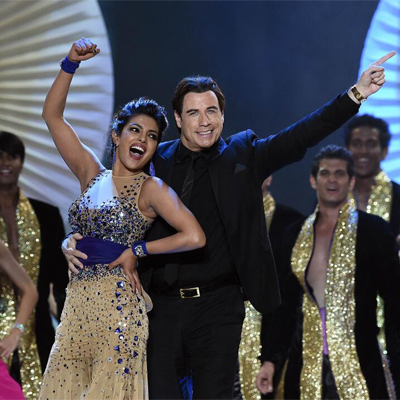
    Travolta, who shared stage with Priyanka Chopra and Hrithik Roshan at the awards ceremony, said he has watched a number of Hindi films like ‘3 Idiots,’ ‘Lagaan,’ ‘Krissh’ and ‘Ram Leela.’ He also said he loved actress Priyanka Chopra’s debut music album ‘Exotic,’ and praised Deepika Padukone’s performance in ‘Ram Leela.’

  • Indian filmfest in Melbourne to become competitive from this year

    Indian filmfest in Melbourne to become competitive from this year

    NEW DELHI: The Indian Film Festival of Melbourne (IFFM) is becoming a competitive festival with international competition in 2014.

    The festival, for which actor Vidya Balan is the brand ambassador, will take place from 1 to 11 May.

    The inaugural Indian Film Festival Awards (IFFM Awards) will honour films in five categories: Best Film, Best Performance, Best Director, Best Independent Film and the People’s Choice Award.


    A select number of narrative feature films will be invited into competition. The films will be judged by an International Jury of prominent Indian and Australian film industry figures from a wide range of backgrounds. The stellar list includes award-winning Australian director Phillip Noyce (Rabbit Proof Fence, Dead Calm, The Quiet American); world renowned Australian film editor Jill Bilcock (Strictly Ballroom, Elizabeth, Moulin Rouge, Red Dog and Shekhar Kapur’s upcoming Paani) and 2013 Gold Jury member for the Mumbai Film Festival and celebrated filmmaker Raju Hirani (Munnabhai MBBS , Lage rahoo Munna Bhai and 3 Idiots ) Indian actress, producer and television presenter Simi Garewal; film critic Rajeev Masand and Indian actress, director, writer and producer Suhasini Maniratnam. Winners of the Indian Film Festival of Melbourne Awards announced at the Festival.

    Festival Director Mitu Bhowmick-Lange said in a release from Melbourne, “We are thrilled to announce the inaugural Indian Film Festival of Melbourne Awards. The Awards will build the festival’s reputation as an important international showcase for contemporary Indian cinema.”

    Balan was a 2013 Cannes Jury Member and in January was awarded the Padma Shri, the fourth-highest civilian award given by the Indian government. Balan will be in Melbourne to launch the festival programme on March 28.

    IFFM continues to offer a window into the future of filmmaking. The Western Union Short Film Competition is now open to filmmakers from India and Australia.

    The Indian Film Festival of Melbourne was established in 2012 as an initiative of the Victorian Coalition Government and presents a broad, curated program of more than thirty films, ranging from Bollywood to art house and the sub continent, as well as master classes. In 2014, the festival presents a world-class program of films across three Melbourne cinemas.
     

  • Shuddh Desi boy to now play lead in YRF & Shekhar Kapur‘s ‘Paani’

    Shuddh Desi boy to now play lead in YRF & Shekhar Kapur‘s ‘Paani’

    MUMBAI: The hunt for the male lead in Paani is over! Close on the heels of his outstanding performance in Shuddh Desi Romance, both Shekhar Kapur and Aditya Chopra had no hesitation in confirming Sushant Singh Rajput to play the lead in their upcoming flick Paani.

    According to Kapur, Sushant is one of the most inspiring young actors to emerge out of India. “It‘s going to be exciting director-actor collaboration with him in Paani.” The film is based in a future world where war over water has broken out. Water is now owned by international corporations who use thirst as a weapon of control. In one such future city, a young love story breaks all the rules and in the ensuing war, water flows back to its people.

    The film will have a strong Indian and western star cast. Sushant will be joined by a young leading actress from the west.

    The film, produced by Aditya Chopra and directed by Shekhar Kapur, will be shot in India and overseas. Music will be by A. R. Rahman.

    Paani goes on floor mid-2014.

  • Shuddh Desi boy to now play lead in YRF & Shekhar Kapur’s Paani

    Shuddh Desi boy to now play lead in YRF & Shekhar Kapur’s Paani

    The hunt for the male lead in Paani is over! Close on the heels of his outstanding performance in Shuddh Desi Romance, both Shekhar Kapur and Aditya Chopra had no hesitation in confirming Sushant Singh Rajput to play the lead in their upcoming flick Paani.


    According to Kapur, Sushant is one of the most inspiring young actors to emerge out of India. “It’s going to be exciting director-actor collaboration with him in Paani.”

    The film is based in a future world where war over water has broken out. Water is now owned by international corporations who use thirst as a weapon of control. In one such future city, a young love story breaks all the rules and in the ensuing war, water flows back to its people.


    The film will have a strong Indian and western star cast. Sushant will be joined by a young leading actress from the west.


    The film, produced by Aditya Chopra and directed by Shekhar Kapur, will be shot in India and overseas. Music will be by A. R. Rahman.
    Paani goes on floor mid-2014.