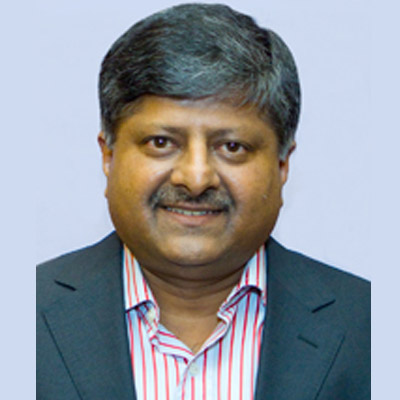
Tag: Shashi Sinha

  • Shashi Sinha is BARC TechComm chairman

    MUMBAI: The first step towards making the Broadcast Audience Research Council (BARC) operational has been taken with the formation of the television audience measurement body‘s technical committee.

    IPG Mediabrands India CEO Shashi Sinha has been appointed as the chairman of the technical committee of BARC.

    BARC, constituted in July 2010 under the Companies Act, aims to set up a transparent and credible television audience measurement system in India. BARC would be the umbrella body and television audience measurement service providers like TAM Media Research, a joint venture of Nielsen and Kantar, will function under it for the purpose of providing ratings.

    India TV strategist Paritosh Joshi and Hindustan Unilever head of CMI South Smita Bhosale are members of the committee.

    Sinha said, “Setting up of the technical committee is very important for the pushing of BARC but the board (of BARC) is supreme. The Committee will make all the recommendations in terms of how sampling and other technical things should be done. So it will be a recommendation body but the final decision will be taken by BARC board.”

    BARC is headed by Zeel CEO Punit Goenka as chairman. The board includes six broadcasters, two advertisers – HUL executive director home and personal care Hemant Bakshi and ex-P&G India chairman and managing director Bharat Patel – and two agency executives – GroupM South Asia CEO Vikram Sakhuja and RK Swamy BBDO chairman and MD Sunder K Swamy.

    BARC is 60 per cent owned by the Indian Broadcasting Foundation (IBF) and 20 per cent each by the Advertising Agencies Association of India (AAAI) and the Indian Society of Advertisers (ISA).

  • Shashi Sinha to take charge of IPG Mediabrands India as Lynn de Souza quits

    MUMBAI: A major change is taking place at IPG Mediabrands India. Shashi Sinha, the CEO of Lodestar UM, is taking charge as CEO of IPG Mediabrands India in a newly created post while Lynn D‘Souza is quitting the company to become a social entrepreneur.

    As part of the new arrangement, Initiative, BPN, Reprise and the Outdoor company will all now report to Sinha. He will also continue to function in his old role as Lodestar UM CEO.

    In a related development, D‘Souza, who has been serving as the chairman and CEO of Lintas Media Group, will be leaving IPG Mediabrands at the end of November. She will announce the launch of a pioneering new initiative for the development sector in early 2013. She is an old hat at Lintas, having joined the agency in 1995 to set up Initiative Media.

    “We want to take this opportunity to recognise another IPG veteran, Lynn de Souza. Lynn, Chairman and CEO of Lintas Media Group
     and an active participant in the non-profit space for several years, has expressed her desire to become a social entrepreneur. She will announce the launch of a pioneering new initiative for the development sector in early 2013, and will be leaving IPG Mediabrands at the end of November,” IPG said in a statement.
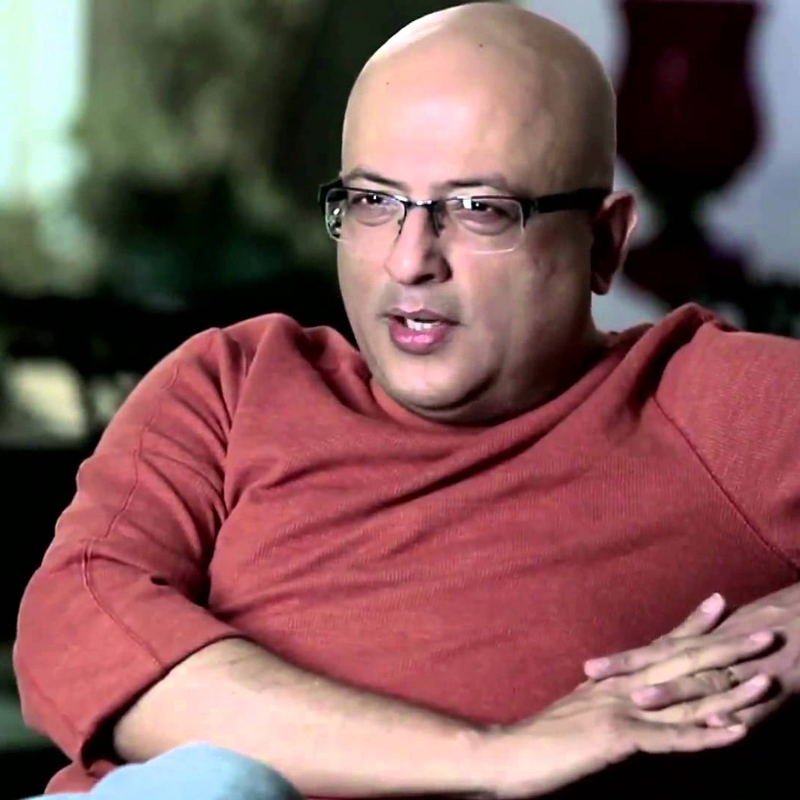
    The formation of IPG Mediabrands in March this year saw IPG leveraging its number two position with more than 17 per cent share of the Indian media market. In addition to the momentum gained by the three media agencies – Lodestar UM, Initiative and BPN – this period also saw the strengthening of the digital offering, Reprise – a joint venture with India’s largest digital independent, Interactive Avenues.

    Magna Intelligence was launched to further improve the group’s buying capabilities and IPG Mediabrands also brought its unique consumer panels to the market. With more than 16000 contacts in India alone, the consumer panels fuel proprietary tools such as Matrix.

    As IPG Mediabrands India enters the next growth phase, the agency‘s forward motion will continue with the launch of IPG Mediabrands Analytics, and the renewed focus and energy on the IPG Mediabrands outdoor business.

    Sinha, an IPG veteran of over 20 years, has rapidly expanded and developed Lodestar UM over the past six years, led the way for the foundation of many new offerings in the market, and has remained actively engaged in various industry forums. Currently, he is also the President of The Advertising Club.

  • TAM to survey digital penetration in 4 metros in November

    TAM to survey digital penetration in 4 metros in November

    MUMBAI: TAM Media Research, the only television audience measurement service in India, will conduct a survey in November in the four metros to get an estimate of digital penetration after compulsory digitisation gets implemented on 1 November.

    TAM will also conduct a special survey called All India Digital Establishment Survey (DES) across the country in December to confirm the share of digital in total television households.

    The survey to be conducted in November is part of the DAS Establishment Survey it started in May in Mumbai, Delhi, Chennai and Kolkata to keep track of the progress in switchover to digital delivery of cable television.

    In a statement released by TAM Thursday evening, TAM CEO LV Krishnan said, “TAM has been long ready to measure Indian Television Homes’ transition to the Digital World since way back in 2007. We implemented the state of the art, platform neutral, TVM5 Peoplemeter system then and started reporting data in July 2008.”

    TAM said it has been able to reflect the change from analogue homes to digital in its panel homes till now. But this change has been gradual and thus, the agency has had breathing space to make the corrections required. Of the total 8,000 homes where TAM has installed its peoplemeters to gather viewership data, 1,500 are in the four metros.

    As 1 November inches closer, there is a possibility that there will be a significant spike in the conversion from analogue to digital which TAM would find difficult to accommodate and reflect in its sample over a short period of time, which would then lead to inconsistencies in data. Hence, it accepted the decision of industry bodies Indian Broadcasting Foundation (IBF), Advertising Agencies Association of India (AAAI) and Indian Society of Advertisers (ISA) to have the ratings suspended for nine weeks till week starting 8 December.

    Clarifying further, Krishnan told indiantelevision.com, “The main question is what universe do we project the (ratings) data to? There are going to be some homes that have not shifted to digital by 1 November. Of these, some might shift; some might not while some may even go the terrestrial way.”

    This change will take some time to take place. During the stabilisation period, the universe TAM is projecting to will be in a state of flux. There are many factors that may affect the conversion from analogue to digital. Apart from people waiting till the last moment, there is also the question of availability and deployment of digital set top boxes.

    Echoing his thoughts, Lodestar UM CEO Shashi Sinha says, “There are two issues. One is the panel (television homes where TAM has installed its peoplemeters). The second is the fluctuation (in data) and viewership. The panel is the basic data but what about the fluctuation in viewership that will happen because of the digital signals?”

  • Bipin Pandit is The Advertising Club COO

    MUMBAI: Bipin Pandit, who was the general manager of The Advertising Club, has been named as the chief operating officer.

    The announcement comes close on the heels of the name change of The Advertising Club (then The Advertising Club Bombay) and the appointment of committee members. The decision was made at the first managing committee meeting held immediately after the AGM of the club.

    Pandit will report to The Advertising Club president and Lodestar UM CEO Shashi Sinha and the managing committee of the body.

    “When I had joined The Advertising Club Bombay, we used to have only one event Abby‘s. But now we have so many events happening. We also send young marketers and students to Cannes. My job will now be to travel and see that The Advertising Club is seen as more as a national body. I want to do new things and do existing things interestingly.”

    Pandit had joined the club in 1998 as the executive secretary to the manager and was later promoted as the GM.

  • Ad Club Bombay is now The Advertising Club

    MUMBAI: The Advertising Club Bombay has decided to rename itself as The Advertising Club. The decision to change the name was ratified at the club‘s annual general meeting (AGM) on Wednesday to provide it a national character.

    The club also announced the members of its management committee.

    Lodestar UM CEO Shashi Sinha will continue to be the president of the club, while Aditya Birla Group – Financial Services CMO Ajay Kakkar has been appointed as the vice president. Kakkar replaces Time TV Network MD & CEO Sunil Lulla.

    DDB Mudra Group COO Pratap Bose has been assigned the role of secretary whereas Sujoy Ghosh will take over as joint secretary.

    Ogilvy India‘s Madhukar Sabnavis is named as the treasurer of The Advertising Club.

    Commenting on why the club has undergone a name change, Sinha said, “We have changed the name with the intension of giving the ad club a national footprint.”

    Ajay Chandwani (Percept) and N Rajaram (Airtel) continue to be a part of the new management committee. The other members include Punitha Arumugam (Director – Agency Business at Google India), Sameer Sathpaty (Marico Consumer Products), Ajay Trigunayat (Times English GECs‘ CEO), Sanjeev Bharghava (JWT India) and Sajan Raj Kurup (Creativeland Asia).

  • Ad Slowdown Looms

    Ad Slowdown Looms

    MUMBAI: A slowdown in the advertising economy looms large amid weakening domestic growth, a sliding rupee and wobbly markets.

    Fears of a crisis worse than the Lehman days in 2008 are spreading fast and wide as India reports its economic growth for the latest quarter at a nine-year low of 5.3 per cent.

    The ad economy will now struggle to match up to the early hope of a 10-12 per cent growth this year.

    Admits GroupM South Asia CEO Vikram Sakhuja, “The slowdown will certainly impact ad spends. We had forecast a 12 per cent growth for the advertising industry in 2012. But now that the economy is going through a slowdown, it will be difficult to assess at this stage the exact extent of impact it will have for the year.”

    A GroupM study pegs the ad industry size at Rs 333.88 billion in 2011, up 13 per cent. It estimates this to grow 12 per cent to Rs 373.97 billion.

    Madison Media has been more conservative with the growth estimates, expecting the media advertising industry to grow 9 per cent to Rs 280.13 billion in 2012.

    Forecasters will need time to make adjustments to their predictions made at the early part of the year. But many of them feel the need to make only minor downward revisions unless the clouds get stormier.

    “A clear pattern in consumer spends is not yet visible. A clearer picture will emerge three months down the road,” says Lodestar UM CEO Shashi Sinha.

    Historically, ad spends have seen cuts when the economic growth has softened.

    Says DraftFCB Ulka Advertising ED and CEO MG Parameswaram, “We have noticed that over the last decade ad spends are broadly aligned with GDP growth numbers. We have seen that when GDP crosses 7 per cent, it has a beneficial effect on ad spends. Similarly when it goes below 5 per cent, it sends signals for a big ad cut. Fortunately we have not gone below 5 per cent, but 5.3 per cent is still bad enough.”

    Media analysts feel the road is going to be bumpy this fiscal. Last month, for example, is a bump for the auto sector. Maruti, India‘s largest carmaker, reported a 4 per cent dip in sales in May while Hyundai Motor, the second in rank, saw a paltry 3 per cent rise.

    The demand outlook is unlikely to improve, made still harsh by a sharp increase in petrol price. External factors and a slow start may upset the Society of Indian Automobile Manufacturers (SIAM) to roll back its forecast of 10-12 per cent sales growth for the fiscal.

    Says ZenithOptimedia CEO Satyajit Sen, “Consumption will get impacted and there will be pressure on price. Being dollar dependent, the telecom handset manufacturers will be hurt. The financial sector will also see a slowdown. Everything, however, will depend on how we recover from the shock of the fourth-quarter economy growth numbers.”

    Print will be hurt the most if this slide continues and companies start shrinking their advertising budgets. Television networks, who depend heavily on advertising as their source of revenue, will also feel the heat.

    Says Sen, “Magazines and radio will feel the pinch while television will be the least affected medium.”

    Multi Screen Media president network sales, licensing & telephony Rohit Gupta agrees that television is more resilient than the other ad mediums. “Television is still the cheapest medium and in hard times we have traditionally seen print and hoarding face ad cuts. Even in the ‘Lehman‘ crisis, television grew by 10 per cent.”

    The mood among Indian industrialists is gloomy as they believe that the economic mess is largely due to government mismanagement and policy paralysis. Despite the European economy getting more desperate and the world, including China, slowing down, a broader ad retreat will not happen if the government starts taking corrective measures.

    Companies, however, have already started making efforts to ensure that their ad budgets drive in efficiencies.

    Says TV Today Network CEO Joy Chakraborthy, “Advertisers are spending but are showing more caution. In case of a slowdown, they will relook at genres and their advertising mix. Sports (read Cricket) may take a hit as it is a high-investment genre. Niche channels may also get impacted.”

    Broadcasters, in fact, will find it difficult to define their terms in case of hard negotiations with media agencies. Advertisers will take a hard look at expensive genres.

    Says Sen, “The price inflation in GECs (general entertainment channels) will be under question mark. However, the genre is still a valid opportunity.”

    Gupta does not agree that mass entertainment channels will feel the pinch. “The categories which are heavy on GECs are not going to cut back their ad spends. FMCGS are doing well and telecom service providers will continue to invest in promotions. Even the auto sector, which has increased its share of ad spends on TV, will be visible as there are many car launches taking place. Retail, finance and the manufacturing sector, which are seeing a slowdown, are, in any case, not heavy on television.”

    News TV broadcasters, however, depend on the financial and retail sectors. They are already struggling to up ad rates due to competition and fragmentation in the genre.

    Joy, however, believes that the situation can‘t worsen for them as news is still a terribly underpriced genre. There are also spike events in the calendar like the Olympics and the elections.

    “News broadcasters will not get affected unless the slowdown really starts biting more broadly. Let us not forget that news has a wider source of advertisers. Local advertisers are also present. The time, however, has arrived for innovative sales,” he says.

    The next two quarters are going to be crucial and companies will swing their ad budgets accordingly.

    Says LG CMO L.K. Gupta, “If the next couple of quarters or so are bad, then companies will draw up alternatives in terms of marketing spends.”

    Advertising will become sales driven. “With the consumer market being hit and inflation staying high, ad spends will definitely take a blow. The bottom line of companies will be under pressure. Advertising in this backdrop will have to be ROI oriented,” says ZenithOptimedia managing partner Sanjoy Chakraborty.
    India is facing headwinds from high gas prices, a slowing global economy and financial crisis in Europe. However, nursing the economy back to health will depend on the government‘s drive to manage the fiscal deficit and introduce policy reforms so that investments flow in. The ad industry can only hope that the situation doesn‘t turn grim.

    (With inputs from Prachi Srivastava & Urvi Malvania)

  • Advertising to grow 8% in 2012: Lodestar UM CEO Shashi Sinha

    Advertising to grow 8% in 2012: Lodestar UM CEO Shashi Sinha


    The slowdown pinch was not felt in 2011. It was marked by the cricket World Cup and, along with the Indian Premier League, the first eight months were healthy as brands and advertisers spent a lot.

    Total TV advertising spend went up by 16-18 per cent last year. Ad growth on print, however, was slow and there were many categories that didn‘t spend on the medium. In our case, we were lucky as Tata Motors is a big spender on print.

    TV and print in combine account for around 85 per cent of India‘s total ad spend. I don’t think that has changed. TV has grown dramatically because of the World Cup and other tournaments that were telecast.

    The total ad spend in the country is estimated to be Rs 330 billion. The other mediums – radio, outdoor, digital and cinema – contribute about 15-16 per cent. The slowdown in 2011 had to do a lot with specific clients and industries. The sentiment definitely changed after Diwali, but the overall numbers were not really affected.

    Today with so much viewership fragmentation and more channels launching to fill up niches, it is becoming costlier to reach out to the same audiences. The whole ecosystem is gaining as advertisers have to spend more money to target the same audience. It is because of fragmentation that a lot of positive things are happening.

    There is much talk about digital and, though the total ad spend on that medium is just Rs 15 billion, it is occupying the mindset. I am not sure whether critical mass will come or not but a lot of people realise that the ad spend pattern will change dramatically in the future; they are talking about different forms like search, display, engagement or content.

    The big change that is happening is that people have started believing that digital has to be integrated into our plans. Unlike the US and other western countries, India is outer-directed. People in western countries do lots of stuff online and they have no time for family; Indians, on the other hand, spend more time with the family and go out to consume entertainment. Radio, Outdoor, activations in malls and Cinema is going to grow. It is not that digital will grow at the expense of something else; it will all complement each other. So, unlike the west where digital grew rapidly, in India it will not grow on value terms or size because it is too small. It may grow in percentage but in absolute numbers it may not be very big.

    In 2012, ad spend may grow 7-8 per cent increase. FMCG companies may not face a problem as they are seeing growth and there is expansion from the rural markets. Even in case of automobiles where there is tough competition, let us not forget that India is still underpenetrated and not even 7-8 per cent of people own cars.

    Slowdown in advertising will be talked about, but large organised players will be there both in terms of value and volumes; it is the smaller companies that may be affected.

    The two points to highlight here are:

    1. The ability to get the data and capture the right database in a country like India is a big challenge and it is going to multiply day by day because the country is too huge and complex. You will have to have the ability to track audiences which are across multiple touch points and multiple mediums. This will remain a big challenge because you will have to reach out to the right audiences.
    2. Convert mindset that finally you aren‘t buying GRPs. You will have to finally deliver what the client wants.

    The future is in performance driven models and databases that can track complex consumers.

  • Shashi Sinha made prez of Bombay Ad Club

    Shashi Sinha made prez of Bombay Ad Club

    MUMBAI: Lodestar UM CEO Shashi Sinha has taken guard as the new Bombay Ad Club president for 2011-12, replacing Bennett, Coleman and Co. Ltd (BCCL) director Dr. Bhaskar Das who occupied the position for two consecutive terms.


    Times Television Network‘s CEO Sunil Lulla has been elected vice president.


    The other significant positions include Aditya Birla Group – Financial Services CMO Ajay Kakar as the new secretary, while BCCL director Sujoy Ghosh has been made the joint secretary. Mudra Max CEO Pratap Bose is the new treasurer.


    Talking to Indiantelevision.com, Sinha said that the priority would be to engage advertisers from across the country.


    “We are planning to hold some of our awards functions outside Mumbai. At least, take half the judging process to Delhi and then take it to Bangalore. Goafest was quite controversial, while Emvies doesn‘t really get the clients to participate. On the other hand, Effies gets active participation from clients. So, we will try to use this opportunity to engage more people from outside Mumbai,” an elated Sinha added. 
     
    Ad Club‘s new managing committee includes Percept‘s Ajay Chandwani, Brandscapes Worldwide‘s Pranesh Misra, BBH India‘s Subhash Kamath, Concept Advertising‘s Vivek Sushanti, Ogilvy India‘s Madhukar Sabnavis, Star India‘s Gayatri Yadav and JWT India‘s Tarun Chauhan.


    Non-award properties such as creative workshops suffered in the face of economic crisis and a shift can be expected in the new tenure.


    On the team appointment, Sinha said: “It‘s a good mix of old and new members. That will reflect in our work as well. We will continue with the old policies and implement some new ones as we go along.”


    Moreover, Effies Apac will be a priority as it is going to be held in India this year.
     

  • Cricket after World Cup and IPL

    Cricket after World Cup and IPL

    MUMBAI: After the World Cup and the Indian Premier League (IPL), the value of the residual cricketing properties in the year could fall due to India‘s poor performance and an economic slowdown.

    Media analysts had forecast the cricket television broadcasting economy to earn an advertising revenue of Rs 20 billion this year. While the World Cup fetched Rs 5 billion, the IPL took home Rs 10 billion.

    “As the India-West Indies series was just after the two marquee events, there was a level of fatigue. The India-England series was a disappointment and could cast an influence on the other remaining properties in the year,” says a media analyst.

    The upcoming events include the Champions League Twenty20, the India-Australia series and the India-England ODIs.

    A media buyer says that one has to wait for the five ODI matches between India and England before valuing the other properties. “Only then we can say to what extent ad revenue will be affected. If India does well and the ratings are good, then things will be on track. If it doesn’t, then advertiser interest will fall.”

    The other issue concerning sports broadcasters is the slowdown that seems to be hitting the economy. While the effect is hard to quantify, the buyer says that the good thing about the upcoming series is that they are taking place before and during the festive season.

    Lodestar Universal CEO Shashi Sinha feels that cricket outside the World Cup and IPL will still manage at least Rs.5 billion. “Despite the performance of the Indian team, I still get inquiries from clients about cricket,” he says.

    Multi Screen Media (MSM) president network sales, licensing and telephony Rohit Gupta doesn’t think that the slowdown will hurt cricket. “Revenues will depend more on how each series is hyped up, promoted and the kind of teams India is playing against. So far television has not been affected by the slowdown,” he says.

  • ‘The ad market will grow by 13-15% this year’ : Lodestar Universal CEO Shashi Sinha

    ‘The ad market will grow by 13-15% this year’ : Lodestar Universal CEO Shashi Sinha

    Cricket is expected to earn an advertising revenue of Rs 18 billion from its television telecast this year, up from Rs 15 billion in 2010, as it showcases the World Cup and the Indian Premier League (IPL) in back-to-back events.

    The World Cup will be bigger for ESPN Star Sports than it was for Sony in 2007. Digging into the game are a lot more advertisers, offering the telecast rights owner a wider plate to bargain from. The telecom and auto categories, which are the two big cricket spenders, have also grown.

    Ad monies will not shift dramatically from other genres to the World Cup. There is no real worry for the Hindi general entertainment channels (GECs) as the ad market is expected to grow between 13-15 per cent. Cricket will get its share of ad revenue growth, but it will not substitute the Hindi GECs.

    In an interview with Indiantelevision.com‘s Ashwin Pinto, Lodestar Universal CEO Shashi Sinha talks about the advertising opportunities cricket throws up and the impact it could have on the other genres of television content.

    Excerpts:

    The cricket genre is expected to get a big boost with the World Cup and the IPL happening in the same year. Will we see a big ad shift to cricket this year?
    Our estimate is that this year cricket will earn Rs 17-18 billion from television telecast. The World Cup and the IPL will each get around Rs 6-7 billion.

    How much will ESPN Star Sports make from the World Cup?
    Eighty per cent of the figure I earlier mentioned will go to them. The balance will be shared between Doordarshan and news channels.

    The World Cup this year will be far bigger than in 2007. There is an 80 -100 per cent increase in rates compared to what was paid in 2007.

    The logic is that today there are more advertisers. In 2007, there were three telecom companies; today, there are 15. There were five auto companies then; today there are 15. Reach has also gone up. There are at least 60 per cent more TV homes today compared to 2007. I expect ESPN Star Sports to make at least double of what Sony managed to garner in 2007.

    Cricket is pre-sold. Eighty per cent of the ad inventory has been pre-sold for this World Cup, which is what also happened in 2007. It is the client and agency‘s gamble on the property when it is pre-sold.

    Was there hesitation on the part of advertisers after the disaster of 2007?
    It is a question of demand and supply. Also, the issue of India going out after two games does not arise this time (Last time in seven days India was out and people lost interest in the remaining games). Now the schedule has been done smartly. If India goes out, it will be in the third week of March. You are not just sustaining India but also the other teams around India. People, for instance, will follow Australia in anticipation of India meeting them later on, though they are not in our group. Advertisers see a great opportunity in the World Cup. They look at what the scene is today.

    The advantage of the World Cup is that there is more inventory for clients to get on-board. It is not like the 20:20 format; there are more secondages here.

    When people talk about how so much inventory will be sold, they have to keep in mind the fact that the advertising landscape has changed. Advertising was a Rs 160 billion business industry in 2007. Today, it is sized at Rs 280-290 billion. The male dominated categories have grown faster than the female categories. The telecom and auto categories, which are the two big cricket spenders, have also grown.

    Is there any performance guarantee in deals done with ESS?
    There isn‘t any in cricket. It is easy to say that there should be. If supply outstrips demand, then a broadcaster will ensure that there is performance guarantee. If 10 companies are waiting to take sponsorship, why would there be a performance guarantee? Some Indian advertisers don‘t understand that the dynamics of advertising has changed. It is about the supply and demand ratio.

    Are we going to see ad monies shifting from other genres to the World Cup?
    I don‘t think that the shift will be dramatic. There will be a temporary blip, but overall the ad market will grow by 13-15 per cent this year. That makes a big difference. If it was static, I would worry. Around Rs 35 billion will be added this year. It is not like it is not growing like the US – or is shrinking. Cricket is getting its share of ad revenue growth; it is not that it is substituting the Hindi GECs.
    ‘Our estimate is that this year cricket will earn Rs 17-18 billion from television telecast. The World Cup and the IPL will each get around Rs 6-7 billion‘

    How will news channels fare during the World Cup?
    They have built specials around it. CNN-IBN, for instance, is doing programming that is different.

    The news channels will make some money, but the genre is a small part of the overall television advertising expenditure; they earn Rs 8 billion of ad revenue in combine. They will gain but in the larger scheme of things, the gain will be small.

    News channels will make around 10 per cent of what the live World Cup broadcast earns. It is a complementary activity for some clients; others take it as it is less expensive.

    Hindi GECs say that they will hold on due to the women audience. What do you see happening?
    There will be a problem as 75-80 per cent of the Indian homes are single TV. But it depends on who controls the remote. If it is the woman, then the Hindi GECs will be watched. If it is the man, then cricket will gain.

    From an ad revenue perspective, due to competitive pressures people are advertising more; there are more companies coming in. There is no problem in the larger scheme of things. If this was 2009 or five years back, I would have spoken differently.

    How does the World Cup compare to the IPL?
    They are different properties and they do not happen simultaneously. I don‘t know why people compare them. If extra money is coming into cricket advertising, then how are they competing?

    Both properties have relative strengths. If a company is in one property, then its rival will be in the other. IPL gives sustained viewership. In the World Cup, you have to factor in the non India viewership. If India wins, the hype will be much bigger and there will be more eyeballs.

    What difference will there be between India and non India games?
    There will be a dramatic difference. When India plays, there will be an expectation of a national rating of six to seven. If the hype is generated to ensure that non India games deliver a rating of two, then we will be alright. It should not be that non India games give a rating of just 0.5 or 1.

    How do you see this event faring vis-?-vis 2003 and 2007?
    2003 was very good as India reached the final and the tournament was held in South Africa; the telecast timings were very good. 2007 was a disaster and we went out in the first round after two games. This time India would have to be unlucky not to reach the quarter-finals. We play six to seven matches.

    The problem is that with the World cup taking place in India, the hopes are higher. In South Africa, the ratings built up slowly and picked up when India played Pakistan and England. With the event being in India, there is more hype. You are seeing different commercials being created. The bad news is that India has to perform. That is the issue.

    How important will the audience delivery of World Cup be for the ODI format?
    I feel that ODIs are here to stay. People earlier said that Tests would disappear. But it remains healthy, if you look at the India versus South Africa ratings. All depends on the contest and the performance of the teams. In 2009 when Australia came here, people wondered what would happen. Each game was thrilling.

    Your client Amul has sponsored the Holland team. Could you talk more about this?
    It was a bit of a punt taken, but at this point of time the sponsorship is paying off. Holland is a milk producing country. And this is a low cost sponsorship that has been done.

    What kind of activation is being done by companies?
    The ICC should be better organised from an activation standpoint. A key component of activation is tickets. Castrol and other companies are running competitions where people can get tickets. Then you go to the stadium and make a noise, generate excitement.

    The fact, though, is that there are not enough tickets available. I have sat in meetings where ICC sponsors have jumped around and said that tickets are not available. Activation is a weak area in this World Cup.

    Sony is using Dhoni in a campaign while Coca-Cola is doing gully cricket. Can this be construed as ambush marketing?
    No! Coca-Cola did the initiative in the past also and it is for the IPL. Ambush marketing is when you are doing activities in a stadium. While Reliance is an ICC sponsor, if a competitor does something in the stadium that is ambush marketing. It is very direct. These examples that you have given do not constitute ambush marketing.

    There was ambush marketing done in the past. Now the rules are very tight and corporates realise that it is not worth the risk. Big corporates are careful about their reputations. For brands that want recall, it boils down to how good the commercial is. Does it have a good story to tell? That is what consumers will react to rather than anything else.

    Didn‘t LG make a mistake by not taking on-air sponsorship for the World Cup?
    I am sure that LG would have thought about it. Being an on-ground sponsor, the first right of refusal for on-air would have been theirs. As sport gets more official, ambush marketing is getting difficult. LG would have realised that if they did not take the on-air sponsorship, there would be five other television manufacturers waiting.

    In terms of ROI, how is cricket faring?
    Cricket gives instant reach, eyeballs and passion. The disadvantage is that the entry cost is high. With cricket you do activities in a four-to-six-week period. If you want to do activities for a sustained period, then you have to look elsewhere. Cricket is too expensive to use across the year.

    Has there been a fatigue in cricket viewership?
    In India, there is no sport apart from cricket. In the US, you have four games competing; there is an audience for all of them. Here there is a lack of sporting content. The Indian cricket team cannot play for more than 150 days.

    Are advertisers looking at other sports?
    As sports develop, advertisers will come; they chase eyeballs. In the 15-18 demographics, EPL has become big in Mumbai and Delhi. Clients are looking at it. Tennis and F1 may be very niche, but for certain clients associating with them makes a lot of sense. I expect football to become big here – as it has globally.