Tag: Shashi Sinha

  • Indian Media Review: Shashi Sinha addresses the elephant in the room — common measurement

    Indian Media Review: Shashi Sinha addresses the elephant in the room — common measurement

    MUMBAI: All eyes were trained on this year’s media review by The Advertising Club, what with the stalwarts of the industry repeatedly endorsing it on the social media weeks before the event took place. And indeed, the topic that the session addressed hit close to to every stakeholder in the industry alike — be it publishers from across media, advertisers or media agencies. It was on having a common currency of measuring the effectiveness of media for advertising across platforms.

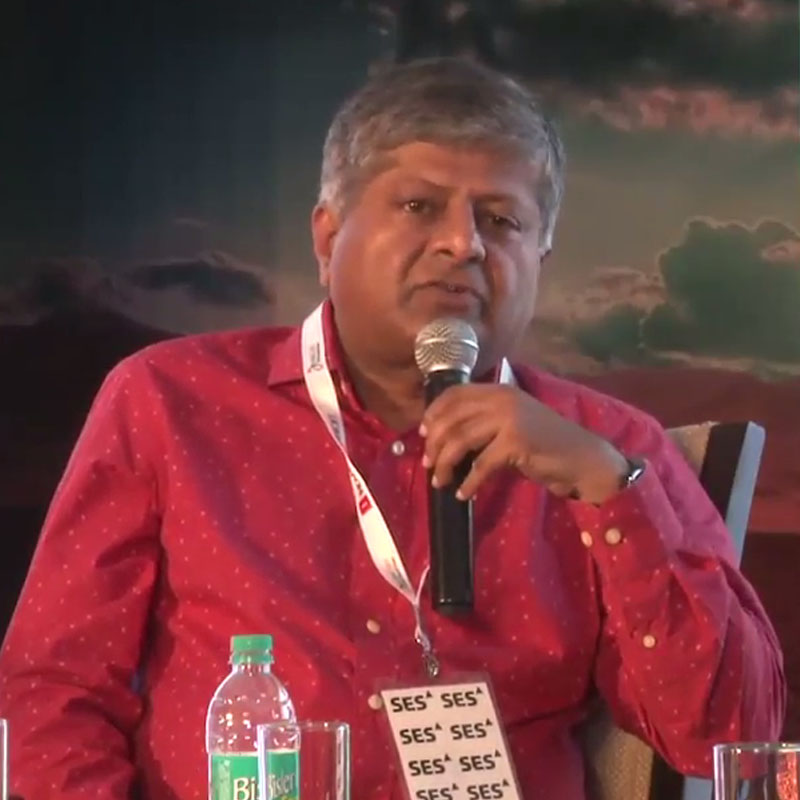
    IPG Mediabrands CEO was one of the key speakers at the review. Shashi Sinha started off on a more comfortable note of how agencies can help businesses grow with an effective measurement.

    According to him, “Instead of complaining that clients are demanding more accountability from the media they bought, agencies need to understand that better measurement gives CMOs better rationale for justifying better budgets.”

    This ‘better measurability’, as per Sinha, is being achieved in several ways at present, primarily — introduction of BARC’s measurement system for broadcasters, revival of the Indian Readership Survey (IRS) by next year, and digital.

    The issue, Sinha emphasised, came down to whether the fraternity wanted to take a few more steps further to improve the system of measurement across media after understanding the need of the hour or whether they wanted to stall the progress and delay the combined measurement system.

    Speaking specifically of the digital measurement system, Sinha shared that it was wrong to expect a panel of digital platforms or ‘OTT’ players to be self regulators of their measurement systems, given that the category is extremely fragmented. Therefore, he openly asked if “digital publishers are willing to be measured by third parties and be transparent with their numbers?”

    Highlighting how the IRS, which Sinha expects to be fully functional in eight months, will increase the sample size of print publishers by 40 per cent, he added that multimedia evaluation was also being considered by the board.

    Sinha expressed his welcome surprise at the Audit Bureau of Circulation (ABC) testing the measurement possibilities in the publishing side of digital (as BARC only caters to video consumption measurements). “Unlike video measurement, it is relatively cheap and is actually already functional for the last three to four months. We just need the heavyweights in the medium to come to a consensus for it to be fully rolled out,” Sinha added.

    After addressing and updating the audience about the different scopes of measurements in each media, Sinha quickly moved on to emphasise the need to have a common source of truth or ‘a single view of truth’

    This brings him to suggest the ambitious idea of Media Research Users Council (MRUC), the IRS, BARC and ABC to come together to contribute to a common pool of data that can be further sliced and diced in accordance with each media based on the clients requirement, although Sinha agreed that currently major challenges were in making that thought become a reality.

    Instead, one could start with thinking along the lines of a measurement currency that each media can be compared in, and according to Sinha, it is CPT,

    “Television measurement needs to move from CPRP to CPT format, and that’s a good starting point of having some commonality of currency between mediums. Publishers need to understand that moving from one currency system to the other doesn’t bring any difference in the buying and selling equation with clients. That will always be based on the demand-supply ratio,” assured Sinha, adding that the current CPT of channels is actually an opportunity to drive growth.

    CPT or Cost Per Thousand is basically the advertising cost of reaching a certain number of viewers in a defined target group on television, while CPRP or Cost Per Rating Point is the cost of advertising time on television based on the price of time for a single rating point generated by the channel.

    More mature markets such as the US, the UK and Germany have already switched to CPT as a currency when buying and selling television media.
  • IDOS 2016: OTT  advertising vs TV advertising

    IDOS 2016: OTT advertising vs TV advertising

    GOA: Is Online Video (read: OTT) advertising eating into TV’s share? That was the question posed  by the final session of IDOS 2016 held in Goa’s Leela Hotel. The obvious consensus answer from the panelists was a big “no” – and it does not take a genius to reach that conclusion.

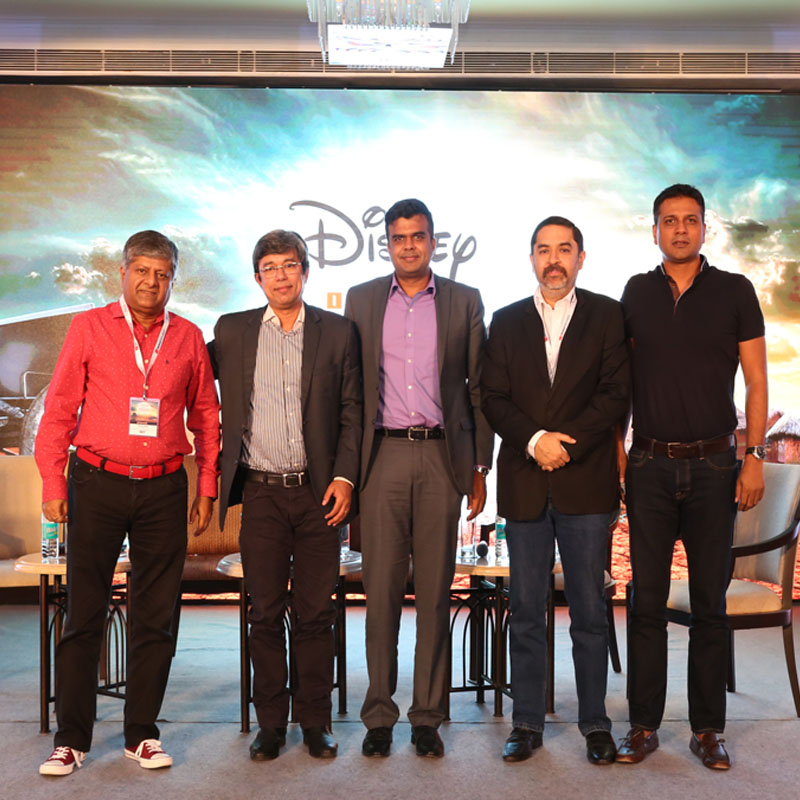
    On the panel were IPG Media brands CEO Shashi Sinha, Sony Pictures Network India (SPNI) digital head Uday Sodhi, Starcom India Group CEO, Mallikarjun “Malli”  Das and Eros Now business head Zulfiqar ‘Zulfi’ Khan.

    “Digital advertising accounts for about eight to nine per cent of total ad spends,”  said Malli. “Most of this goes towards Google, Facebook. Two to three per cent is going towards digital video, and that too most of it is going towards You Tube.  It’s early days yet for the OTT players to have any revenues of significance.”

    “Google has played a pioneering role –  the educational and evangelizing approach that it along with YouTube took visiting advertisers and agencies to explain to them the efficacy of using it  platform,” said Zulfi. “The OTT industry is too nascent and new, and has a lot of work to do.”

    Sinha pointed out that the disparity in CPMs between television and online IP video is drastic. “Television is being sold on a cost per rating point (CPRP) basis in India today. In most countries, it is on a CPMs,” he said. “The CPMs even for TV are very low, and for online video, even lower. Airtime on television has become a commodity as there is plenty of inventory, but networks have large enough audiences to present to advertisers.”

    public://IMG_5444.jpg

    Added Malli: “Television also has a reliable currency – BARC – to measure what’s happening to their spends – the reach, the viewership. Which makes all of us in the media and advertising community secure. We can buy across a network and aggregate audience.”

    The panelists agreed even though the OTT players are providing very specific – in fact a surfeit of data, enough confidence has yet to be built in among the advertisers. “There’s fragmentation in the OTT community. There are too many platforms,” said Sinha. “And you can’t aggregate enough audiences of significance to allow us to take CPMs up here.”

    Sodhi agreed that OTT video platforms had managed to build an active audience of about 70 million. He said: “China’s tipping point for OTT to significantly impact TV ad spends came when the number of users crossed 200 million.  India has to grow. SonyLiv has around around 10 million. Good and stable bandwidth and right pricing  of data are the issues to be dealt with to expand the OTT user base,” Sodhi said.

    Malli believed that the audience of 70 million is large enough. “The Times of India has a seven and a half million readership and there is thousands of crores going into the paper.”

    Both Malli and Sinha stated that agencies have started presenting media plans which, include TV plus and online video. “That’s a great improvement over earlier. We are putting in money behind online video. But it’s left to the OTT- owner – the broadcaster – to show it as OTT ad spend or TV ad spend. However, to be fair, the sector will grow when FMCGs start putting in their faith behind digital online video,” revealed Sinha.

    Then what is holding the ecosystem back? “Most of the robust OTT platforms are backed by the broadcasters,” revealed Sinha. “The leadership is fearful their targeted revenue objectives from television might get impacted if they start shifting the focus more toward digital video advertising. This leadership has to take a hard call.”

    He pointed out that BARC – of which he is a technical committee member – is gearing up to measure online video consumption and become the second country in the world to do so.

    “We are ready to launch online video measurement  by March 2017. Relevant data is going to be provided by some of our partners in the ecosystem to allow us to provide effective measurement numbers. However, the signal has to come from the broadcast community,”  he quipped.

    Zulfi pointed out that Eros Now has around a  million subscribers – split between India and overseas – paying Rs 49 a month for its Bollywood movie service.

    However, his view that today snacking was the primary form of consumption of digital video, was countered by Sodhi, who stated  that the SonyLiv audience was sticking around for  around for 16-22 minutes per session.

    They all agreed that there is a bright future for digital video advertising. But, none wanted to hazard a guess as to when will it happen. “I have no clue when will the inflection point come,” Sinha said. “It is now.”

    Malli too said that he had no clue about it. “Although the stage is set, I can’t predict when a significant migration to digital will happen — in one, two or three years from now.”

    Sodhi revealed that almost 70 million users are being added to the digital video consumers pie every year. “Within two to two and a half years we will have 200 million users,” he predicted. “And that will be a number no one will want to ignore. The advertising tap will flow and flow then.”

  • IDOS 2016: OTT  advertising vs TV advertising

    IDOS 2016: OTT advertising vs TV advertising

    GOA: Is Online Video (read: OTT) advertising eating into TV’s share? That was the question posed  by the final session of IDOS 2016 held in Goa’s Leela Hotel. The obvious consensus answer from the panelists was a big “no” – and it does not take a genius to reach that conclusion.

    On the panel were IPG Media brands CEO Shashi Sinha, Sony Pictures Network India (SPNI) digital head Uday Sodhi, Starcom India Group CEO, Mallikarjun “Malli”  Das and Eros Now business head Zulfiqar ‘Zulfi’ Khan.

    “Digital advertising accounts for about eight to nine per cent of total ad spends,”  said Malli. “Most of this goes towards Google, Facebook. Two to three per cent is going towards digital video, and that too most of it is going towards You Tube.  It’s early days yet for the OTT players to have any revenues of significance.”

    “Google has played a pioneering role –  the educational and evangelizing approach that it along with YouTube took visiting advertisers and agencies to explain to them the efficacy of using it  platform,” said Zulfi. “The OTT industry is too nascent and new, and has a lot of work to do.”

    Sinha pointed out that the disparity in CPMs between television and online IP video is drastic. “Television is being sold on a cost per rating point (CPRP) basis in India today. In most countries, it is on a CPMs,” he said. “The CPMs even for TV are very low, and for online video, even lower. Airtime on television has become a commodity as there is plenty of inventory, but networks have large enough audiences to present to advertisers.”

    public://IMG_5444.jpg

    Added Malli: “Television also has a reliable currency – BARC – to measure what’s happening to their spends – the reach, the viewership. Which makes all of us in the media and advertising community secure. We can buy across a network and aggregate audience.”

    The panelists agreed even though the OTT players are providing very specific – in fact a surfeit of data, enough confidence has yet to be built in among the advertisers. “There’s fragmentation in the OTT community. There are too many platforms,” said Sinha. “And you can’t aggregate enough audiences of significance to allow us to take CPMs up here.”

    Sodhi agreed that OTT video platforms had managed to build an active audience of about 70 million. He said: “China’s tipping point for OTT to significantly impact TV ad spends came when the number of users crossed 200 million.  India has to grow. SonyLiv has around around 10 million. Good and stable bandwidth and right pricing  of data are the issues to be dealt with to expand the OTT user base,” Sodhi said.

    Malli believed that the audience of 70 million is large enough. “The Times of India has a seven and a half million readership and there is thousands of crores going into the paper.”

    Both Malli and Sinha stated that agencies have started presenting media plans which, include TV plus and online video. “That’s a great improvement over earlier. We are putting in money behind online video. But it’s left to the OTT- owner – the broadcaster – to show it as OTT ad spend or TV ad spend. However, to be fair, the sector will grow when FMCGs start putting in their faith behind digital online video,” revealed Sinha.

    Then what is holding the ecosystem back? “Most of the robust OTT platforms are backed by the broadcasters,” revealed Sinha. “The leadership is fearful their targeted revenue objectives from television might get impacted if they start shifting the focus more toward digital video advertising. This leadership has to take a hard call.”

    He pointed out that BARC – of which he is a technical committee member – is gearing up to measure online video consumption and become the second country in the world to do so.

    “We are ready to launch online video measurement  by March 2017. Relevant data is going to be provided by some of our partners in the ecosystem to allow us to provide effective measurement numbers. However, the signal has to come from the broadcast community,”  he quipped.

    Zulfi pointed out that Eros Now has around a  million subscribers – split between India and overseas – paying Rs 49 a month for its Bollywood movie service.

    However, his view that today snacking was the primary form of consumption of digital video, was countered by Sodhi, who stated  that the SonyLiv audience was sticking around for  around for 16-22 minutes per session.

    They all agreed that there is a bright future for digital video advertising. But, none wanted to hazard a guess as to when will it happen. “I have no clue when will the inflection point come,” Sinha said. “It is now.”

    Malli too said that he had no clue about it. “Although the stage is set, I can’t predict when a significant migration to digital will happen — in one, two or three years from now.”

    Sodhi revealed that almost 70 million users are being added to the digital video consumers pie every year. “Within two to two and a half years we will have 200 million users,” he predicted. “And that will be a number no one will want to ignore. The advertising tap will flow and flow then.”

  • Raj Nayak re-elected Advertising Club president

    Raj Nayak re-elected Advertising Club president

    MUMBAI: At the annual general meeting of The Advertising Club held in Mumbai today, the members unanimously re-elected Colors CEO Raj Nayak, as its president. Raj had replaced The Social Street chairman and co-founder Pratap Bose on 16 September last year.

    Over the past year, Raj has injected new dynamism into the Ad Club. A top notch sales professional, he has expanded the membership of the Club by initiating a drive last year which saw many a fence sitter, taking up it full time membership. Its management committee members say that it has had financially the most successful year under his stewardship. Hence, his re-election was unopposed and a bit of no-brainer.

    The CEO of Viacom18 Hindi GEC Colors has had strong links with industry initiatives over the past few years. He has been associated with several industry bodies right from the Indian Broadcasting Foundation and the International Advertising Association.

  • Raj Nayak re-elected Advertising Club president

    Raj Nayak re-elected Advertising Club president

    MUMBAI: At the annual general meeting of The Advertising Club held in Mumbai today, the members unanimously re-elected Colors CEO Raj Nayak, as its president. Raj had replaced The Social Street chairman and co-founder Pratap Bose on 16 September last year.

    Over the past year, Raj has injected new dynamism into the Ad Club. A top notch sales professional, he has expanded the membership of the Club by initiating a drive last year which saw many a fence sitter, taking up it full time membership. Its management committee members say that it has had financially the most successful year under his stewardship. Hence, his re-election was unopposed and a bit of no-brainer.

    The CEO of Viacom18 Hindi GEC Colors has had strong links with industry initiatives over the past few years. He has been associated with several industry bodies right from the Indian Broadcasting Foundation and the International Advertising Association.

  • Magna revises Indian Adex growth in 2016 from 18.4 to +16.2 percent

    Magna revises Indian Adex growth in 2016 from 18.4 to +16.2 percent

    MUMBAI: Going by the recently released half yearly Adex report by IPG Mediabrands India, the Indian advertising industry is growing at a rate of +16.2 percent in 2016. The size of the industry is expected to touch $ 9 billion or Rs 564 billion (Rs 56,400 crore) equivalents by this financial year. Magna Global, an IPG resource that puts together this industry recognized report has revised the rate from its earlier prediction of 18.4 per cent in 2015, to 16.2 percent in the current report. Magna also predicts that Indian Adex will see a slight dip in 2017 and grow at a rate of +15.7 per cent.

    On  revising the forecast,  Magna Global – India director of intelligence practice EVP S Venkatesh  said, “Basis our initial read of the emerging trends we had envisaged a stronger headwind across digital formats on the mobile platform while the real numbers for H1-2016 suggests a lesser significant acceleration”

    From a global perspective, India has overtaken Italy and made space for itself in the top ten list of advertising markets, and estimated to move up 4 ranks to become the 6th largest advertising market by 2020.

    http://www.indiantelevision.com/sites/drupal7.indiantelevision.co.in/files/styles/large/public/meghna1.jpg?itok=nAzHVEH8

    On India’s performance as an advertising market, IPG Mediabrands CEO Shashi Sinha said, “The outlook is extremely positive as globally India remains one of the fastest growing markets. In fact, India is now one of the top ten advertising markets in the world.”

    http://www.indiantelevision.com/sites/drupal7.indiantelevision.co.in/files/styles/large/public/meghna2.jpg?itok=wwjk769f

    Breaking the report further into media sectors, Television with 42 per cent market share will grow +17 percent. The biggest revenue growth drivers in the sector would be the T20 World Cup, Indian Premier League (IPL) and non-cricketing leagues buttressed by E-commerce, Telecom, Auto and CPG advertising. Addressable television and expansion of the measurement into rural India equips advertisers to reach more consumers and broadcasters to monetize now counted audience. Measurement will evolve to include addressable TV audience and though connected TV currently doesn’t pose a threat to linear advertising, it will open doors for more on demand content access. Mushrooming of both domestic and international OTT (over-the-top) players will eventually fragment TV viewing time.

    Print will continue to be the second biggest medium in India with 35 percent market share and ad sales growth of +8 percent. Conventionally print heavy advertisers in CPG, BFSI, Automobile and now E-commerce will contribute to the segment growth.

    Digital formats continue to disrupt traditional with the highest growth at +40 percent and increasing its share of market by 2 points to 13 percent. Videos will be the fastest growing format driven by consumption on mobile devices. Screen time will only increase as smartphones get bigger with better displays and faster bandwidth. Trailing this trend expect advertisers to ear mark higher promotional budgets. 

    Radio through foot print expansion along with increase in volume is estimated to grow +18 percent in 2016, whereas OOH will grow +15 percent in 2016. Both these segments will hold onto their market share of 4 per cent and 6 percent respectively.

    http://www.indiantelevision.com/sites/drupal7.indiantelevision.co.in/files/styles/large/public/meghna3.jpg?itok=4D6kB7Yw

    The report also shared that India will retain its position as the fastest growing economy with real GDP (gross domestic product) growth of +7.5 percent in 2016. According to International Monetary Fund (IMF), India is likely to maintain the same GDP growth in 2017 as well. Consumer inflation slightly outside of target will force the central bank to hold onto its policy rates.

    However the earlier reduction in rates gave the much needed impetus to automobile, housing, durables and education sectors. The farm sector, if favoured with a good monsoon, will set to rebound its output. The report estimates private consumption to mirror the growth rates and push for higher marketing spends.

  • Magna revises Indian Adex growth in 2016 from 18.4 to +16.2 percent

    Magna revises Indian Adex growth in 2016 from 18.4 to +16.2 percent

    MUMBAI: Going by the recently released half yearly Adex report by IPG Mediabrands India, the Indian advertising industry is growing at a rate of +16.2 percent in 2016. The size of the industry is expected to touch $ 9 billion or Rs 564 billion (Rs 56,400 crore) equivalents by this financial year. Magna Global, an IPG resource that puts together this industry recognized report has revised the rate from its earlier prediction of 18.4 per cent in 2015, to 16.2 percent in the current report. Magna also predicts that Indian Adex will see a slight dip in 2017 and grow at a rate of +15.7 per cent.

    On  revising the forecast,  Magna Global – India director of intelligence practice EVP S Venkatesh  said, “Basis our initial read of the emerging trends we had envisaged a stronger headwind across digital formats on the mobile platform while the real numbers for H1-2016 suggests a lesser significant acceleration”

    From a global perspective, India has overtaken Italy and made space for itself in the top ten list of advertising markets, and estimated to move up 4 ranks to become the 6th largest advertising market by 2020.

    http://www.indiantelevision.com/sites/drupal7.indiantelevision.co.in/files/styles/large/public/meghna1.jpg?itok=nAzHVEH8

    On India’s performance as an advertising market, IPG Mediabrands CEO Shashi Sinha said, “The outlook is extremely positive as globally India remains one of the fastest growing markets. In fact, India is now one of the top ten advertising markets in the world.”

    http://www.indiantelevision.com/sites/drupal7.indiantelevision.co.in/files/styles/large/public/meghna2.jpg?itok=wwjk769f

    Breaking the report further into media sectors, Television with 42 per cent market share will grow +17 percent. The biggest revenue growth drivers in the sector would be the T20 World Cup, Indian Premier League (IPL) and non-cricketing leagues buttressed by E-commerce, Telecom, Auto and CPG advertising. Addressable television and expansion of the measurement into rural India equips advertisers to reach more consumers and broadcasters to monetize now counted audience. Measurement will evolve to include addressable TV audience and though connected TV currently doesn’t pose a threat to linear advertising, it will open doors for more on demand content access. Mushrooming of both domestic and international OTT (over-the-top) players will eventually fragment TV viewing time.

    Print will continue to be the second biggest medium in India with 35 percent market share and ad sales growth of +8 percent. Conventionally print heavy advertisers in CPG, BFSI, Automobile and now E-commerce will contribute to the segment growth.

    Digital formats continue to disrupt traditional with the highest growth at +40 percent and increasing its share of market by 2 points to 13 percent. Videos will be the fastest growing format driven by consumption on mobile devices. Screen time will only increase as smartphones get bigger with better displays and faster bandwidth. Trailing this trend expect advertisers to ear mark higher promotional budgets. 

    Radio through foot print expansion along with increase in volume is estimated to grow +18 percent in 2016, whereas OOH will grow +15 percent in 2016. Both these segments will hold onto their market share of 4 per cent and 6 percent respectively.

    http://www.indiantelevision.com/sites/drupal7.indiantelevision.co.in/files/styles/large/public/meghna3.jpg?itok=4D6kB7Yw

    The report also shared that India will retain its position as the fastest growing economy with real GDP (gross domestic product) growth of +7.5 percent in 2016. According to International Monetary Fund (IMF), India is likely to maintain the same GDP growth in 2017 as well. Consumer inflation slightly outside of target will force the central bank to hold onto its policy rates.

    However the earlier reduction in rates gave the much needed impetus to automobile, housing, durables and education sectors. The farm sector, if favoured with a good monsoon, will set to rebound its output. The report estimates private consumption to mirror the growth rates and push for higher marketing spends.

  • FCB Ulka Advertising promotes Nitin Karkare as CEO

    FCB Ulka Advertising promotes Nitin Karkare as CEO

    MUMBAI: FCB Ulka Advertising COO – Mumbai & Bengaluru Nitin Karkare has been elevated as CEO.


    Speaking on his new role, Karkare said, “From starting out as a management trainee at Ulka Advertising to becoming the CEO of FCB Ulka Advertising, it has been an exhilarating journey. FCB Ulka has been built on the foundation of long term partnerships with its clients and its people. I would like to build on this legacy while infusing a new creative energy into the system.”


    Karkare has been with FCB Ulka since 1986, when he joined the agency as a management trainee.


    FCB Ulka Group chairman and CEO Rohit Ohri added, “My first priority in my new assignment is to ensure that we have the right people in the right leadership roles. Nitin’s passion for advertising, his love for the company, his deep bonds with our clients and, of course, his charming, and affable work style make him the right person for the position of CEO, FCB Ulka Advertising. He has an impressive track record of building some of India’s most loved brands. His commitment to our clients is true testimony to FCB’s spirit of partnership. I’m confident that Nitin will lead FCB Ulka Advertising to new heights and will be a great partner to me in realising our vision for the Group.”


    IPG Media Brands India CEO Shashi Sinha added, “I have worked with Nitin from 1986 and am thrilled that he will lead FCB Ulka Advertising – he knows the clients, the people and more importantly the culture. This is true testimony to growth from within.”

  • FCB Ulka Advertising promotes Nitin Karkare as CEO

    FCB Ulka Advertising promotes Nitin Karkare as CEO

    MUMBAI: FCB Ulka Advertising COO – Mumbai & Bengaluru Nitin Karkare has been elevated as CEO.


    Speaking on his new role, Karkare said, “From starting out as a management trainee at Ulka Advertising to becoming the CEO of FCB Ulka Advertising, it has been an exhilarating journey. FCB Ulka has been built on the foundation of long term partnerships with its clients and its people. I would like to build on this legacy while infusing a new creative energy into the system.”


    Karkare has been with FCB Ulka since 1986, when he joined the agency as a management trainee.


    FCB Ulka Group chairman and CEO Rohit Ohri added, “My first priority in my new assignment is to ensure that we have the right people in the right leadership roles. Nitin’s passion for advertising, his love for the company, his deep bonds with our clients and, of course, his charming, and affable work style make him the right person for the position of CEO, FCB Ulka Advertising. He has an impressive track record of building some of India’s most loved brands. His commitment to our clients is true testimony to FCB’s spirit of partnership. I’m confident that Nitin will lead FCB Ulka Advertising to new heights and will be a great partner to me in realising our vision for the Group.”


    IPG Media Brands India CEO Shashi Sinha added, “I have worked with Nitin from 1986 and am thrilled that he will lead FCB Ulka Advertising – he knows the clients, the people and more importantly the culture. This is true testimony to growth from within.”

  • Google India unveils new initiative for SMBs

    Google India unveils new initiative for SMBs

    MUMBAI: In a bid to provide deeper engagement to small medium businesses (SMBs), who are looking to gain from the rising Internet user base in the country, Google India has launched a new initiative called Google Advantage.


    The initiative will entail Google hosting an offline symposium to educate small medium businesses on the benefits of the Internet and also provide one-on-one consultation on how to use the latest online tools and technologies and meet their business objectives.


    Speaking about the initiative, Google India head of small medium business marketing Sapna Chadha said, “Small and medium businesses in India have been a strategic focus for Google. In the last four years, we have rolled out several initiatives that are aimed to equip small medium businesses to get an online presence and use the digital platform to grow their business. With this initiative, we wanted to provide SMBs a platform to get direct access to Google and gain through deeper engagement and one-on-one consultations. We expect over 4000 small medium businesses to attend the program this week.” 


    The initiative in Delhi will be executed in partnership with Google agency partners IPG Mediabrands.


    IPG Mediabrands CEO Shashi Sinha said, “We’re delighted to partner with Google for this initiative. Google Advantage is a great platform for small medium businesses to connect and learn about the scope of online medium. There is a huge potential for modernization and adoption of newer marketing technology amongst SMBs in India to grow their business.”


    Out of the estimated 51 million small medium businesses, only five – six per cent have online presence. Studies done by Google indicate that at least 20 per cent of India’s SMBs are already equipped with the infrastructure to leverage technology but need the help of digital experts to help them navigate some of the complexities of navigating the constantly changing digital landscape.


    The initiative is designed to help small medium businesses get first hand information from Google in a format that will encourage SMBs to share their challenges and learn directly from Google experts. The event will be held in Delhi from 7 – 12 September, 2015 and extend to more cities basis the feedback.