Tag: Shashi Sinha

  • What IPL comeback means to the entire industry?

    What IPL comeback means to the entire industry?

    NEW DELHI-. As numerous tournaments around the globe are making their comeback, the Indian Premier League (IPL) is going to bring smiles to cricket fans’ faces from 19 September. The game will be held in UAE this year and is one of the most sought after tournaments in recent history.

    If reports are to be believed, online gaming and sports firms are all set to spend big on television and digital platforms. With live sports back in action, the biggest question that is being asked is how the business of live sports would fare during the pandemic.

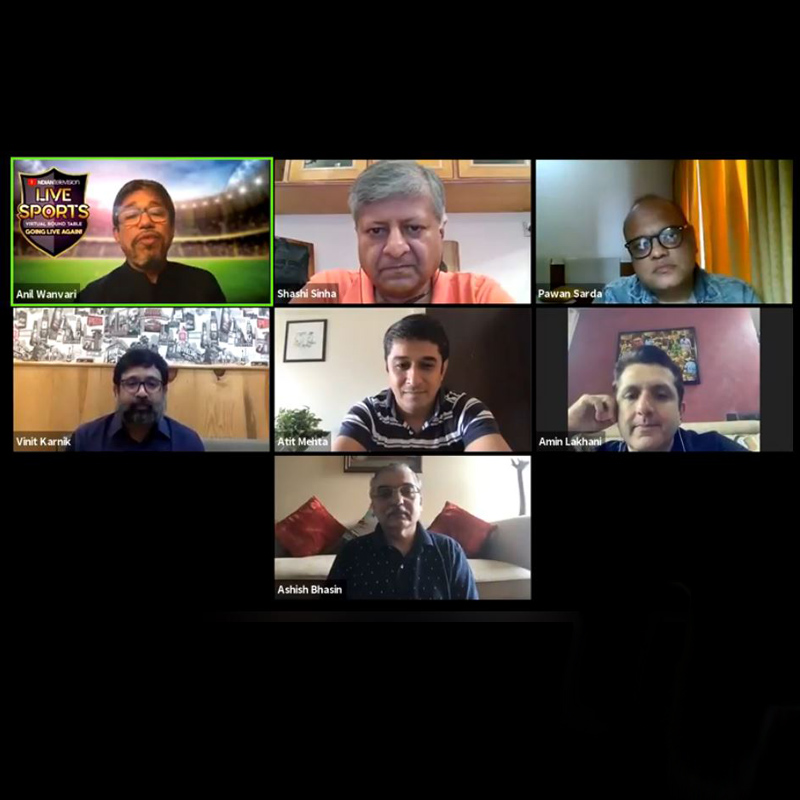
    Indiantelevision.com organized a virtual round table to discuss more about the current state and future of Live Sports in India. The round table witnessed several industry veterans sharing their opinions and insights on the subject. These veterans included – Mindshare South Asia, COO Amin Lakhani; Dentsu Aegis Network CEO APAC & Chairman Ashish Bhasin; Byju’s head of marketing Atit Mehta; Future Group’s group CMO (Marketing, digital, and e-commerce) Pawan Sarda; IPG Mediabrands CEO- India Shashi Sinha; Group M India business head (Entertainment, Sports & Live Events) Vinit Karnik. The discussion was moderated by IndianTelevision.com Group Founder, CEO & Editor-in-Chief Anil Wanvari.

    Mindshare South Asia COO Amin Lakhani mentions that since the day IPL was announced there has been a sense of positivity and it indicates that we are on the path to recovery. “There is a cautiousness in the market as the businesses have taken a huge setback in most of the segments. Many brands are looking it as an opportunity on how they can engage with IPL. The conversation with clients on IPL is three times more than what we were having with them around television ad spends in last couple of months,” shares Lakhani.

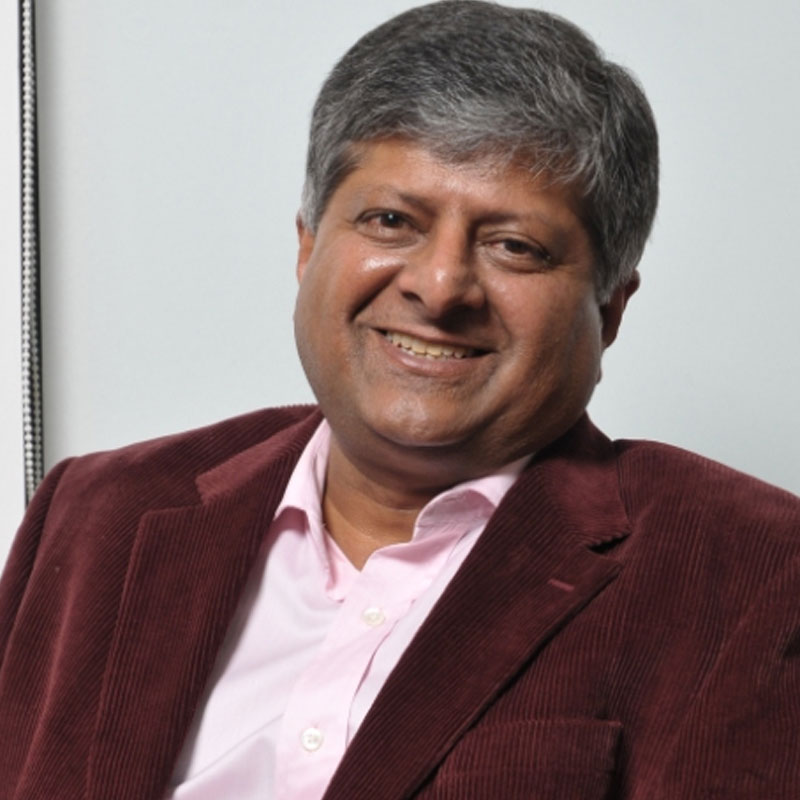
    IPG Media brands CEO- India Shashi Sinha believes that it is definitely an opportune moment for IPL to come in. “Metro cities contribute to nearly 35% of overall consumption in India. However, these cities have been most affected due to pandemic and IPL gets large traction from these regions. So, IPL is a good opportunity for brands catering to the audiences in these markets to come out from the negativity. We also feel that the sentiment is really good, and one should not compare IPL to the March – April but to what the mood was in June and July this year.”. 

    DAN CEO APAC & chairman Ashish Bhasin points out that the Indian market is more sentiment-driven as compared to any other market in the world. “If the mood is upbeat, both advertisers and consumers continue to open their purses. Last year, the economy was not doing as badly as it is doing now, but the mood was depressed. As a result, the advertising industry and many other brands were not doing well. We have already had 4-5 months of bad news, and sometimes we need an escape from it, and IPL has a potential for that. I think around the time of IPL, we will start approaching closer to normality, and once that happens, the universe will expand,” says Bhasin.

    Group M India business head Vinit Karnik opines that it’s completely unfair to compare 2020 with last year's performance. “This year has been a completely different experience for each and every sector, but still, I believe there is a reasonable amount of head-room for both GECs as well as the sports sector to survive. I think we have a decent amount of headroom to manage both,” he further adds.

    Future Group’s group CMO Pawan Sarda defines the last few months as a complete washout and believes that businesses are still struggling as they have not reached 30-40 per cent of the previous year. Says he, “It’s time to step back and observe how things will happen and then make a decision on our spendings. IPL is a platform that sets the mood for the country. A good amount of advertising is always good for healthy consumption, and since we are in retail, we tend to get the benefit from it. We are not committing anything right now.”

    During this lockdown, e-learning has performed exceptionally well. Byju’s head of marketing Atit Mehta shares, “For us, the past 4-5 months have been good in topline and bottom-line growth. We are optimistic and looking forward to the start of the festive season and every other opportunity that comes our way.”

    Says he, “As we have lost out our bid, we will now have to look at other options as far as IPL is concerned.”

    So, overall the mood is very upbeat within the brands and agencies as they keen to once again go out and reach their consumers.

  • Why IPL2020 makes sense for marketers and brands

    Why IPL2020 makes sense for marketers and brands

    MUMBAI: The countdown to the 2020 season of India’s biggest sports extravaganza – the Indian Premier League (IPL) – has begun. Come 19 September, more than a billion eyes will be riveted on their TV screens as the first ball of the first match between Mumbai Indians and Chennai Super Kings is bowled at 7.30 pm.  It does not get better than this for IPL fans, for whom it will be a revisit of the 2019 finals when the Mumbai lads beat the southern team by a whisker of a run, in a heart-stopping duel.

    The 2020 league, which is one of the most premium in the world, is coming at a time when brands sorely need to get back into the consumer’s mindset. Most marketing mavens believe there has been an erosion in brand love among consumers.  Thanks to the disruption in supply chains, consumers have hitherto been okay with buying products rather than their favourite brands. The percentage of shoppers buying online has leapfrogged, footfalls in brick and mortar stores have dived. The humungous response to the Flipkart and Amazon sales in the past two weeks shows customers want to spend and that demand is there.

    Observers believe that big brands which have refrained or cut back their communication with consumers need to get back with their mesmerising and engaging TV and digital commercials so that the consumer connect gets forged once again.

    “Even as the cases are going up, consumer confidence is slowly but surely coming back,” says Group M head of entertainment and sport Vineet Karnik.

    As time goes by, consumers will increasingly go out, spend and the economy will surely follow, or that is the corollary.

    “Marketers believe the IPL is a good opportunity to give a boost to that consumer sentiment even further,” says IPG Media Brands CEO Shashi Sinha

    Sinha had been quoted sometime back in an interview that the IPL is a tentpole property, the biggest in India. “Television is anyway fragmented. The highest ratings come on IPL in India. IPL is the only platform which allows you that single window to reach masses, audiences. Our brands have consistently used it for some time now,” he had said.

    What will make cricket an even bigger audience builder this year is the fact that viewers have not got to watch Rohit Sharma, MS Dhoni and Virat Kohli play for a large part of 2020. Clearly, the desire for sports has been bottled up and is expected to explode into a frenzy of viewing between September and November. Fans are raring to go and have been tweeting, posting their joy, annoyance and opinions on every social media and blogging platform. 

    All thanks to being locked down courtesy the virus, India and Indians have been consuming more content – video, audio, games and what have you – in heavy doses and binges. Data shows that TV consumption is up over 15 per cent (source: BARC) as compared to pre-Covid2019 times, and it is unlikely to slow down, and in fact will sharply accelerate northwards.

    The BCCI has also rejigged the match timings, which should augur well for TV viewers and advertisers. Instead of 2019’s 4 pm and 8 pm starts, the matches in the UAE will now commence at 3.30 pm and 7.30 pm IST respectively. The 3.30 slot will end up extending into early prime, while the 7.30 pm match will end during peak primetime when audiences will also be at their peak. 

    The biggest USP of the IPL, a media observer points out, is that it provides for a very good advertising environment with less clutter. Ad breaks average 50 seconds, means that four to five TV commercials can be played out.  The free commercial time per hour during the IPL is also limited at 800 seconds per hour, as compared to other genres where it crosses 920 seconds and some time goes up to as high as 1,120 seconds. All this works well for brands as the OTS on commercial and engagement goes up.

    Sinha is as optimistic – if not more – today with IPL’s prospects than he was three months ago. “I genuinely believe the IPL will do very well with viewers,” he said. “Some of our smaller brands are also asking us to put their spends behind it. The advertisers will definitely give it a good shot at giving a good push to their businesses.”

    Shall we say amen to that?

  • Shashi Sinha thanks essential service providers, urges to stay safe

    Shashi Sinha thanks essential service providers, urges to stay safe

    MUMBAI: COVID-19 has forced the population to stay indoors; and industries are moving their functions to online. In this unprecedented situation,  citizens are counting on the essential service workers who are risking their health to  keep the society running smoothly. Some of them have been working silently without us realising that how important they are. Leaders from the media and entertainment industry express their gratitude to healthcare providers and other essential services personnel for their support during the  pandemic.

  • O&M wins a black & max Kyoorius blues, FCB, BBDO, BBH & DDB bag a handful

    MUMBAI: Kyoorius announced the winners of the Kyoorius Creative Awards 2017 at DOME@NSCI in Mumbai on 2 June. 

    The 4th edition of Kyoorius Awards was attended by more  than 1200  professionals  including CEOs,  marketing directors,  brand  managers,  creative  and media gurus from the advertising, digital and media industries from across India. A total of five black elephants and 96 blue elephants were awarded across advertising, digital and media categories.

    Black Elephant winners:

    • Ogilvy & Mather for: Savlon Healthy Hands Chalk Sticks
    • Early Man Films Pvt. Ltd. for: The Hindu
    • Kinetic Worldwide for: Mukhota – The life saving mask
    • FCB Interface for: World’s 1st Streets Named after Street Kids
    • Response India for: Fat Feed Fashion | Instagram to Insta-fashion

    Black Elephants are set aside for work that signifies the best of the best, work that takes risks, creates a new conversation with the audience or has a lasting effect on the industry.

    Ogilvy & Mather won the maximum blue elephants. After the jury session in which participated Sonal Dabral, Chairman & Chief Creative Officer at DDB Mudra, Josy Paul ,Chairman    &    Chief    Creative Officer at BBDO India, Shashi Sinha Chief Executive Officer at IPG Mediabrands and Fergus O’Hare Director APAC Facebook Creative Shop, 307 entries were shortlisted as winners of a baby elephant (in- book winners).

    Kyoorius founder & CEO Rajesh Kejriwal said, “I am happy with the response that we have got for having a transparent open jury process and we shall continue to do so. I personally feel that many studios/agencies have done brilliant work this year. The Jury’s exceptional calibre and experience, acknowledge the significance of our awards and its place in the creative arts.”

    This  spectacular  show  of  Creativity  was  presented by  Colors,  powered  by  The  Times  of  India  and includes ABP News, Google,92.7 FM, Happy Finish & Kinetic as main partners. 

    See the awardees’ list here

  • Shashi Sinha named Kyoorius media jury foreman

    MUMBAI: The 4th edition of the Kyoorius Creative Awards is celebrating creative communication brilliance in the fields of digital, advertising and media. The curtain has risen, and the all-star jury panel for the media category has been unveiled.

    The media jury will be headed by IPG Mediabrands chief executive officer Shashi Sinha. He started his career as the product manager of Parle. He set up Lodestar in the early 90s. In October 2012, he became the CEO of IPG Mediabrands and was given the task of bringing together a diverse group while making it future-ready.

    Sinha took the role and made it wider – he worked on making the entire industry future-ready by participating and leading various industry organisations to look beyond their traditional beliefs.

    The panel of judges, also consists of a line-up of creative geniuses, namely, Vikram Sakhuja (Madison World – Media & OOH group CEO), Prasanth Kumar (Mindshare CEO – south Asia), Kasper Aakerlund (IPG Mediabrands – Hong Kong CEO), Susanna Cousins (MEC director of strategy), and Rahul Welde (Unilever global VP – digital transformation).

    Talking about the media category, Kyoorius founder and CEO Rajesh Kejriwal said, “Disruption is all around us. Media agencies are paving the way for marketing innovation and they are beginning in their own backyard, by re-inventing themselves. Marketers are looking to bridge the gap between content and consumers by devising effective solutions for brands.

    Creativity is stemming from innovation, and innovation is the disruptor.”

    Kyoorius Creative Awards 2017, is featuring the Media category for the second year, after its successful debut in 2016. “The Awards felicitate outstanding talent which seamlessly integrates idea and craft to create superior artistry and craftsmanship. The Jury’s exceptional calibre and experience acknowledges the importance our awards and its place in the creative arts,” said Kejriwal.

    The awards invite participation from advertising, digital, media and mobile agencies, production houses, event management companies, photographers, brands, corporates, NGOs and even individuals.

    The Open Jury Sessions will be held between 11 and 13 May, 2017, at Ecole Intuit Lab, Mumbai. This innovative session will invite people from the industry and media to attend the jury sessions, to learn and benefit from the discussions and the entries showcased.

    While entries for awards will close on 19 April 2017, 26 April 2017 will be the last day to submit physical entries. The Kyoorius Creative Awards ceremony will be held on Friday, 2 June, 2017, at the Dome, NSCI in Mumbai.

  • ‘Name and shame delinquent channels’

    ‘Name and shame delinquent channels’

    MUMBAI: Media buying and planning (advertising) agencies and brands reacted strongly or cautiously when it came to commenting on famous yet delinquent television channels suspected of wrongdoing by India’s only TV ratings points (TRP)  body. Broadcast Audience Research Council (BARC), the only television audience measurement body in India, temporarily suspended the review of viewership of three news channels. BARC had communicated to all the broadcasters that ratings for India News, TV9 Telegu and V6 News were suspended for four weeks owing to suspected mala fide practices.

    This decision may have had a bearing on advertising on the channels in question. Some industry experts were direct and forthcoming in their reactions, others were cautious, while some chose not to comment on the issue.

    Requesting anonymity, a senior media planner told Indiantelevision.com that the decision could have a mixed impact on the advertising revenue of the channels. There would be companies who believe in a particular channel since a long time. They may not get swayed by this temporary phenomenon. Companies who might want to launch a national campaign may take a channel’s current ratings into account before making their decision. Then, there are regional advertisers who want to see the effect of advertising on the ground — they may not take the BARC review into account at all. There would be some advertisers who would want to wait and watch for a while — 2-3 weeks before taking any decision.

    Dentsu Aegis chairman Ashish Bhasin lauded the BARC decision not to review certain errant channels for a period of time. “It is a bold step taken by BARC to name and shame the mischievous entities.” It sends out a warning message to the channels to behave, and will act as a deterrent for other possible mischief-mongers that could spoil the purity of the currency for a Rs 20000 crore annual TV advertising business in India, Bhasin said.

    About the impact on advertising, Bhasin said that the reputation of the errant channels would be affected owing to the suspension of review. “Although I am unaware of which channels were involved in what kind of wrongdoing, the channels would be disadvantaged due to the BARC action. In the medium to long term, the action would prove to be detrimental to the channels vis-a-vis advertising because the client decides to put his money on the basis of clear feedback and seeks value for every pie invested,” Bhasin added.

    Some experts were rather vocal about change in their approach. “I will certainly not recommend these channels for my clients,” an Initiative Media (formerly Lintas Media) business director told Indiantelevision.com.

    The business director said she would rather advise other substitute (surrogate) channels so that her clients do not suffer. She agreed that the BARC India decision may not directly impact regional and local brands, but, she said, media planners who would draw up annual national strategies for their respective clients would certainly keep the BARC India’s suspension decision in mind.

    However, some  client-companies were rather cautious. HDFC Life senior executive vice-president, marketing, analytics, digital & e-commerce Sanjay Tripathy said: “The channels concerned are denying any wrong-doing at this point. However, if the channels are found guilty of any wrongdoing as suggested in media reports, it is only fair then that they face the consequences. Prima facie, we believe before taking such a stance, due process would have been followed by the authorities by BARC (India) and should wait to this matter to be clarified before taking any hasty decisions.”  

    For the sake of an independent and unbiased article, IPG Mediabrands CEO Shashi Sinha chose not to comment since he chaired the technical committee of BARC India.

    “Advertisers who do not utilise the services of media buying agencies may continue to advertise on the errant channels,” said Madison World chairman Sam Balsara. “But, advertisers who take the help of agencies that use scientific methods of calculating GRPs (gross rating point) would over a period of time keep away from such channels,” he added. To a question whether advertisers would mind the temporary suspension, Sam said, “They would and they should.”

    Also Read :

    BARC India suspends three errant channels’ review


  • ‘Name and shame delinquent channels’

    ‘Name and shame delinquent channels’

    MUMBAI: Media buying and planning (advertising) agencies and brands reacted strongly or cautiously when it came to commenting on famous yet delinquent television channels suspected of wrongdoing by India’s only TV ratings points (TRP)  body. Broadcast Audience Research Council (BARC), the only television audience measurement body in India, temporarily suspended the review of viewership of three news channels. BARC had communicated to all the broadcasters that ratings for India News, TV9 Telegu and V6 News were suspended for four weeks owing to suspected mala fide practices.

    This decision may have had a bearing on advertising on the channels in question. Some industry experts were direct and forthcoming in their reactions, others were cautious, while some chose not to comment on the issue.

    Requesting anonymity, a senior media planner told Indiantelevision.com that the decision could have a mixed impact on the advertising revenue of the channels. There would be companies who believe in a particular channel since a long time. They may not get swayed by this temporary phenomenon. Companies who might want to launch a national campaign may take a channel’s current ratings into account before making their decision. Then, there are regional advertisers who want to see the effect of advertising on the ground — they may not take the BARC review into account at all. There would be some advertisers who would want to wait and watch for a while — 2-3 weeks before taking any decision.

    Dentsu Aegis chairman Ashish Bhasin lauded the BARC decision not to review certain errant channels for a period of time. “It is a bold step taken by BARC to name and shame the mischievous entities.” It sends out a warning message to the channels to behave, and will act as a deterrent for other possible mischief-mongers that could spoil the purity of the currency for a Rs 20000 crore annual TV advertising business in India, Bhasin said.

    About the impact on advertising, Bhasin said that the reputation of the errant channels would be affected owing to the suspension of review. “Although I am unaware of which channels were involved in what kind of wrongdoing, the channels would be disadvantaged due to the BARC action. In the medium to long term, the action would prove to be detrimental to the channels vis-a-vis advertising because the client decides to put his money on the basis of clear feedback and seeks value for every pie invested,” Bhasin added.

    Some experts were rather vocal about change in their approach. “I will certainly not recommend these channels for my clients,” an Initiative Media (formerly Lintas Media) business director told Indiantelevision.com.

    The business director said she would rather advise other substitute (surrogate) channels so that her clients do not suffer. She agreed that the BARC India decision may not directly impact regional and local brands, but, she said, media planners who would draw up annual national strategies for their respective clients would certainly keep the BARC India’s suspension decision in mind.

    However, some  client-companies were rather cautious. HDFC Life senior executive vice-president, marketing, analytics, digital & e-commerce Sanjay Tripathy said: “The channels concerned are denying any wrong-doing at this point. However, if the channels are found guilty of any wrongdoing as suggested in media reports, it is only fair then that they face the consequences. Prima facie, we believe before taking such a stance, due process would have been followed by the authorities by BARC (India) and should wait to this matter to be clarified before taking any hasty decisions.”  

    For the sake of an independent and unbiased article, IPG Mediabrands CEO Shashi Sinha chose not to comment since he chaired the technical committee of BARC India.

    “Advertisers who do not utilise the services of media buying agencies may continue to advertise on the errant channels,” said Madison World chairman Sam Balsara. “But, advertisers who take the help of agencies that use scientific methods of calculating GRPs (gross rating point) would over a period of time keep away from such channels,” he added. To a question whether advertisers would mind the temporary suspension, Sam said, “They would and they should.”

    Also Read :

    BARC India suspends three errant channels’ review


  • Indian Media Review: Shashi Sinha addresses the elephant in the room — common measurement

    Indian Media Review: Shashi Sinha addresses the elephant in the room — common measurement

    MUMBAI: All eyes were trained on this year’s media review by The Advertising Club, what with the stalwarts of the industry repeatedly endorsing it on the social media weeks before the event took place. And indeed, the topic that the session addressed hit close to to every stakeholder in the industry alike — be it publishers from across media, advertisers or media agencies. It was on having a common currency of measuring the effectiveness of media for advertising across platforms.

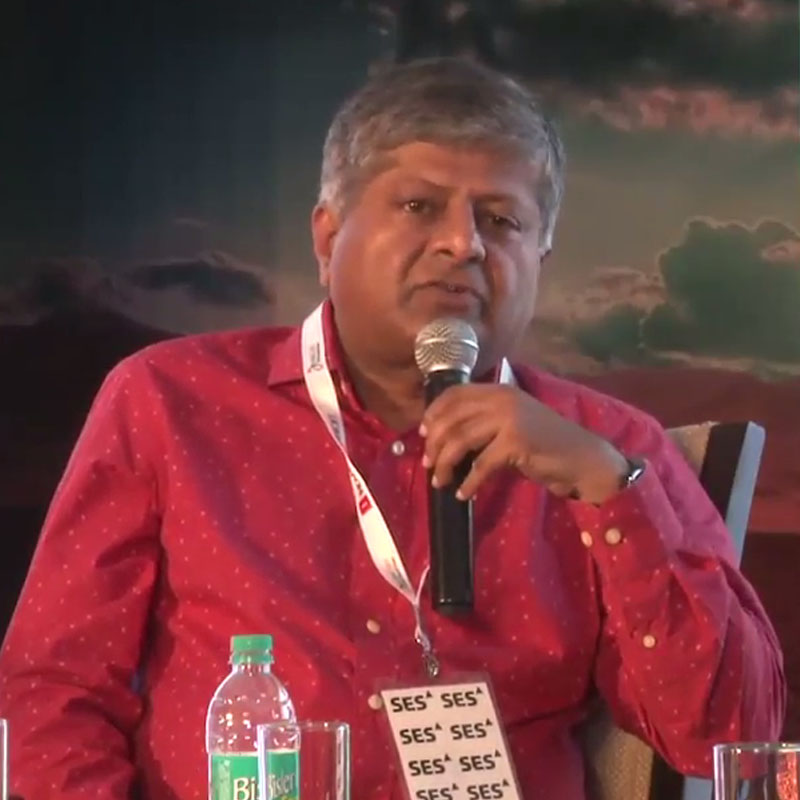
    IPG Mediabrands CEO was one of the key speakers at the review. Shashi Sinha started off on a more comfortable note of how agencies can help businesses grow with an effective measurement.

    According to him, “Instead of complaining that clients are demanding more accountability from the media they bought, agencies need to understand that better measurement gives CMOs better rationale for justifying better budgets.”

    This ‘better measurability’, as per Sinha, is being achieved in several ways at present, primarily — introduction of BARC’s measurement system for broadcasters, revival of the Indian Readership Survey (IRS) by next year, and digital.

    The issue, Sinha emphasised, came down to whether the fraternity wanted to take a few more steps further to improve the system of measurement across media after understanding the need of the hour or whether they wanted to stall the progress and delay the combined measurement system.

    Speaking specifically of the digital measurement system, Sinha shared that it was wrong to expect a panel of digital platforms or ‘OTT’ players to be self regulators of their measurement systems, given that the category is extremely fragmented. Therefore, he openly asked if “digital publishers are willing to be measured by third parties and be transparent with their numbers?”

    Highlighting how the IRS, which Sinha expects to be fully functional in eight months, will increase the sample size of print publishers by 40 per cent, he added that multimedia evaluation was also being considered by the board.

    Sinha expressed his welcome surprise at the Audit Bureau of Circulation (ABC) testing the measurement possibilities in the publishing side of digital (as BARC only caters to video consumption measurements). “Unlike video measurement, it is relatively cheap and is actually already functional for the last three to four months. We just need the heavyweights in the medium to come to a consensus for it to be fully rolled out,” Sinha added.

    After addressing and updating the audience about the different scopes of measurements in each media, Sinha quickly moved on to emphasise the need to have a common source of truth or ‘a single view of truth’

    This brings him to suggest the ambitious idea of Media Research Users Council (MRUC), the IRS, BARC and ABC to come together to contribute to a common pool of data that can be further sliced and diced in accordance with each media based on the clients requirement, although Sinha agreed that currently major challenges were in making that thought become a reality.

    Instead, one could start with thinking along the lines of a measurement currency that each media can be compared in, and according to Sinha, it is CPT,

    “Television measurement needs to move from CPRP to CPT format, and that’s a good starting point of having some commonality of currency between mediums. Publishers need to understand that moving from one currency system to the other doesn’t bring any difference in the buying and selling equation with clients. That will always be based on the demand-supply ratio,” assured Sinha, adding that the current CPT of channels is actually an opportunity to drive growth.

    CPT or Cost Per Thousand is basically the advertising cost of reaching a certain number of viewers in a defined target group on television, while CPRP or Cost Per Rating Point is the cost of advertising time on television based on the price of time for a single rating point generated by the channel.

    More mature markets such as the US, the UK and Germany have already switched to CPT as a currency when buying and selling television media.