Tag: Shashi Sinha

  • Shashi Sinha, Vikram Sakhuja join Axis My India advisory board

    Shashi Sinha, Vikram Sakhuja join Axis My India advisory board

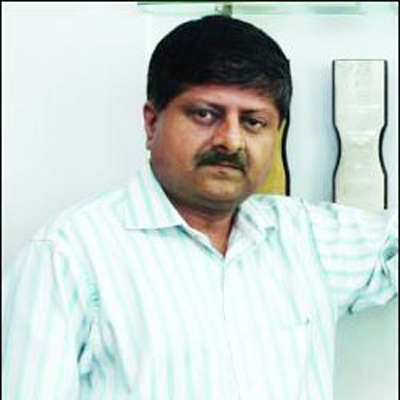
    Mumbai: Consumer data intelligence company Axis My India on Tuesday announced the constitution of a pioneering advisory board with IPG Mediabrands CEO Shashi Sinha and Madison Media Group CEO Vikram Sakhuja joining the board. Sakhuja is nominated as chairman of the board.

    “The company has embarked on an audacious mission of solving the problems of 25 crore Indian households and transforming a billion lives, and the advisory board will serve as the guiding ship to enable the success of these endeavours,” it said in a statement.

    “Our company is certainly at an inflection point, as we look to take to fruition some marquee ideas – India’s first offline-online people empowerment platform focused on listening and facilitating resolution of various issues of an everyday Indian, the country’s largest syndicated brand study, Consumer Trust Index, as well as aggressively expanding by engaging with all echelons of industry with our superior data and research offerings,” stated Axis My India CMD Pradeep Gupta. “Shashi and Vikram along with other advisory board members, with their deep understanding of India’s business landscape will be invaluable as guides and mentors as we navigate challenges in our trajectory towards rapid growth and disruption.”

    The board’s primary responsibility would be to keep track of the big picture of the organisation, anticipate challenges in the ambitious path and suggest mitigation tools to avoid the same.  Board members would also be expected to bring in diversity of thought and action, and help broaden the company’s horizons to engage with constituencies and stakeholders out of its conventional realm, said the statement.

    “Axis My India has over the years established itself to be the most accurate psephologist in India. Underlying that is one of the most innovative organisations I have encountered, in terms of their leadership, team and processes,” said Vikram Sakhuja. “As they now roll out more exciting products, they have the potential to provide not only authoritative insights about both Bharat and India, but also create a platform for meaningful dialogue with consumers that can be invaluable for marketers and policy makers. It is my privilege to be able to participate in this journey as an outside-in advisor.”

    “There is tremendous innovation and bustling activity coming out of India’s non-metros. India’s small towns and villages will power its rise to an economic powerhouse in the 21st century,” remarked Shashi Sinha. “It is my privilege to be able to engage with Axis My India on its larger vision to empower these communities and to be a part of this exercise underpinned in nation-building.”

    Axis My India, recently launched Consumer Trust Index (CTI) which is India’s largest syndicated consumption study measuring current product consumption and future purchase intent across 40 categories with yearly one million+ sample spread across 737 districts. The All-Media Measurement module (AMMS) of CTI will capture media consumption habits across touchpoints – TV, print, OTT, digital, social media, daily used apps, radio, cinema, OOH. As part of CTI, brands will also be able to do media and product consumption linkage analysis.

  • India advertising market to see 15% growth in 2022: Magna advertising forecast

    India advertising market to see 15% growth in 2022: Magna advertising forecast

    New Delhi: Advertising revenues swung back to a healthy growth rate of 14 per cent in 2021, rising from Rs 577 billion to Rs 657 billion. The growth is likely to accelerate further in 2022, with a 15 per cent rise in advertising revenue according to the Magna Global Forecasting Report released on Thursday.

    While the digital ad formats grew by 20 per cent to Rs 214 billion this year, the traditional media rose 12 per cent. Ecommerce, Retail, Durables, Beverages, Pharma, Real estate, Finance, and Education remained the most active categories while automobile, government, personal care, and communication brands continued to hold back their spending.

    TV to grow by 11 per cent to reach Rs 294 billion by 2022 end 

    Despite the Covid-led disruptions, television performed well in 2021 with original programming and Live sports events including the IPL and ICC T20 World Cup which boosted its revenue growth. With IPL media rights coming up in 2022, valuation this time is going to be even higher with the increase in the number of teams and the number of matches. With this factor, coupled with a few critical state elections, TV is expected to maintain momentum and grow by +11 per cent to reach Rs 294 billion by the end of 2022, according to the forecast.

    Video and Social Media to lead Digital ad-spends

    Digital advertising is currently the second-largest segment at 33 per cent market share. As per the forecast, Video and social platforms are likely to gain significant advertising share followed by audio and display. Overall, digital advertising revenues are expected to grow 18.5 per cent next year to top Rs 250 billion, as per the forecast.

    Growth of print to be broad-based

    In 2021, overall print grew +12 per cent from a low base (2020: -40 per cent), despite the slowdown in business. Growth has come from Retail, Durables, Finance, Real Estate, and Government spending. 2022 growth is expected to be broad-based, with most categories increasing spends and elections in a few large states helping to drive an increase of +14 per cent. With all Covid-19 restrictions lifted, the wedding season (which typically begins in October and lasts through March/April) will present another opportunity for print to thrive.

    Radio to witness growth of 21 per cent in 2022. 

    Radio is expected to gain back the transit audience listeners lost during the lockdowns. Growth in both listenership and revenue is expected to come from tier 2 and tier 3 markets. Overall, radio advertising revenues grew +20 per cent in 2021 to reach ₹16 billion, nearly 70 per cent of the pre-Covid market size.  Growth was driven by e-commerce, food, pharma, and retail advertising. Growth of +21 per cent is expected for 2022. 

    OOH growth to accelerate

    OOH traffic numbers are already reaching pre-Covid levels, with passenger footfall in airports and the metro increasing rapidly. OOH, (digital & static, not including cinema) revenues rebounded by +17 per cent in 2021 and an acceleration (+20 per cent) is expected in 2022, with revenues reaching 67 per cent of 2019 pre-Covid market size at the end of the year. Automobile, real estate, OTT and finance are a few categories driving OOH advertising growth.

    Major Sectors

    According to the forecast, travel & hospitality will see a resurgence in 2022, with the relaxation in travel regulations. The automobile and handset sectors that experienced supply-side issues will bounce back, too, along with education, realty, retail, and fashion sectors. Traditionally TV-heavy categories, like FMCG, personal products, and food are expected to increase their share of digital advertising. Advertisers will also pursue every shoppable moment to offer “anywhere commerce” to their consumers. With local players in Reliance and Tata e-commerce platforms gaining more traction, the sector will further increase its share of advertising. 

    IPG Mediabrands India CEO Shashi Sinha said, “Waning fear of the virus, along with the opening of economic and leisure activities, has given a boost to demand and improved business sentiment. The Indian advertising marketplace is experiencing recovery and accelerated adoption of non-conventional methods by all forms of media to engage consumers is helping along the recovery path. Though the second Covid wave in 2021Q2 disrupted the momentum, ad revenue in 2021 will grow at a healthy rate after contracting -22 per cent in 2020

  • MRUCI elects Shashi Sinha as chairman, Shailesh Gupta as VC

    MRUCI elects Shashi Sinha as chairman, Shailesh Gupta as VC

    Mumbai: Mediabrands India CEO Shashi Sinha and Jagran Prakashan director Shailesh Gupta have been unanimously elected as chairman and vice-chairman of Media Research Users Council India (MRUCI), respectively, for the year 2021-22. The announcement was made at MRUCI’s board meeting which was held shortly after its AGM.

    Sinha takes up the baton from Sakal Media Group chairman Pratap Pawar, who served as MRUCI’s chairman for two consecutive terms – from 2019-20 and 2020-21.

    While passing the baton, Pawar thanked all the board members and stakeholders and congratulated Sinha and the new board members. “We faced some challenging times due to the global pandemic, but I am glad we are soon returning to normalcy. With the change in name from Media Research Users Council (MRUC) to Media Research Users Council India (MRUCI), and the modification of IRS questionnaire, we will not only further boost our national stature and representation, but also successfully meet the fast-evolving needs and expectations of our stakeholders,” he said.

    New members have also been appointed to the board of governors:

    1. Sakal Media Group, chairman, Pratap Pawar.
    2. ABP Pvt Ltd, CEO, Dhruba Mukherjee.
    3. MM Publications, executive editor & director, Jayant Mammen Mathew.

    Sinha is actively involved in various industry bodies such as the Advertising Standards Council of India (ASCI), the Advertising Agencies Association of India (AAAI), Audit Bureau of Circulation (ABC), The Ad Club, Broadcast Audience Research Council India (BARC). He is an alumnus of IIT Kanpur and IIM Bangalore. An industry veteran with over 30 years of experience, where he has built a highly awarded team of professionals and organisations that today form the country’s leading media network.

    Sinha in his vote of thanks said, “I thank Pawar for his selfless leadership and valuable guidance, especially in these unprecedented times. MRUCI has long played a very crucial role in providing the industry with reliable, robust and realistic data, and now more than ever, the industry looks toward us to meet their expectations in maintaining and propagating the highest possible standards of integrity, fairness, and reliability in media research. As our Country slowly resumes to normalcy, our priority will be to begin the IRS fieldwork at the soonest, in consideration with the ground realities.”

    Over the last 25 years, Jagran’s Gupta has provided a new dimension to Jagran’s marketing strategy and has been at the heart of driving transformational change at the Jagran group. 

    He held several positions at leading industry bodies – elected as the youngest member of the managing committee of the Audit Bureau of Circulation for the year 2004-05, he was ABC chairman in 2012-13 and chairman of INS during 2019-20.

  • Some people’s misdoings cannot put BARC under spotlight: Shashi Sinha

    Some people’s misdoings cannot put BARC under spotlight: Shashi Sinha

    NEW DELHI: Ever since it was unearthed, the TRP gaming racket has caused a lot of upheaval and drawn broadcasters, regulators and research agencies into its web. The incident has raised a big question mark on the functioning and standing of the industry. Now, chairperson of BARC’s technical committee Shashi Sinha has come on record to slam the parties involved in the case, without mentioning them by name.

    “Rating is all about egos and keeping their masters happy… What they don’t play is that they are number 1 of 0.1 per cent or one per cent ratings. Some people’s misdoings cannot put BARC under spotlight. They have done undue damage,” said Sinha in a webcast with Governance Now MD Kailashnath Adhikari during the Visionary Talk series.

    Speaking in defense of BARC, the media veteran called it “one of the best systems in the world.” The problem, in Sinha’s view, is its getting into controversy with news genres.

    “News is a niche genre and not bought on ratings. At any given time one per cent people watch English prime time news. So one per cent of 44,000 homes is 440 homes that watch the 16 news channels and the average is 20-25 homes. The ratings are rounded off to 0.2, 0.3 or 0.01 etc,” he explained, adding that the level of rating error is very high and a channel with high ratings may not get best rates.

    Sinha, who is also the CEO of IPG Media Brands India, claimed that since there is a lack of self-regulation in the industry, people have started blaming the ratings agency, which is not right. He stated that BARC is already working to plug the gaps in its system.

    “BARC will do course correction. We are working to ensure sample sizes do not misrepresent. In the next few weeks we will find a solution. I think all big newscasters are realising we should not hurt the body,” he said.

    He went on to say that an industry body like BARC, where the board is governed by stakeholders including agencies, clients and broadcasters coming together to run it, exists only in France and some other countries worldwide. “I think BARC is a strong currency… Very basic things are right about it. The marking technology in place is more advanced than many other markets and the panel of 45,000 is the largest and more than double of China, a country more advanced than India. The funders i.e. the big networks and broadcasters are credible people.”

    The Mumbai police had on 8 October alleged that three channels — Republic TV, Box Cinema and Marathi channel Fakt Marathi — were rigging TRP ratings to increase their advertisement revenue.

    The TRP scam came to light when BARC filed a complaint through Hansa Research Group, alleging that certain television channels were rigging TRP numbers.

    In the meantime, BARC has hit the pause button on the weekly measurement of TRP for news channels for three months.WWWSWSAA
     

  • ‘Positive Provocation’ guiding the road for Premjeet Sodhi as chief strategy officer at Wavemaker India

    ‘Positive Provocation’ guiding the road for Premjeet Sodhi as chief strategy officer at Wavemaker India

    NEW DELHI: Things have changed significantly since Premjeet Sodhi first ventured into the media planning and marketing industry. Strategy has undergone a sea change – from sitting on the periphery of television planning to becoming integral to defining what the media tasks would be – pushing creativity into action rather than the other way around. Being a part of the process on behalf of many brands and agencies, Sodhi has witnessed this shift first-hand.

    Now, as he takes on the mantle of chief strategy officer at Wavemaker India, just six months after being made the chief growth officer, he is all set to further the role of strategy in the brand’s creative process. In an exclusive conversation with indiantelevision.com, Sodhi talks all about his new position, his plans for the agency, and his journey within the industry. 

    It was within only a few months of him joining the agency as chief growth officer that Sodhi was handed over the responsibilities of the chief strategy officer at Wavemaker India. “Things are changing rapidly these days. We are now working more closely to the media product and this role allows me to engage closely with the teams and build outputs for clients. So, the transition was made keeping that in mind,” he said, adding that he’s very much enjoying his new, engaging duties.

    Congratulating his successor to the position of chief growth officer, he said: “Kishan (Kumar MS) has taken over the role and that comes so naturally to him. He is already doing a fabulous job.” 

    For Sodhi, his initial focus is on promoting the Wavemaker operating system and deploying their approach of ‘Positive Provocation’ deep within the market.

    “Positive provocation is a recently rolled out proposition for us at Wavemaker India, consisting of various tools, frameworks, and an operating system behind it. The idea is not of disruption, as many agencies claim to do today to rebuild a brand. In fact, it is about provoking a brand to move positively in a productive fashion towards adding additional value to the system. So, it is all about asking the right questions, seeking out various aspects for growth, and arriving at the right strategy,” he elaborated. 

    Read more news on Wavemaker India 

    Positive provocation is the proprietary Wavemaker tool made up of three core aspects: Unlock, Transform, and Maximise. ‘Unlock’ caters to tools that offer complete precision in digital media audit across the full gamut of platforms the client is present on – be it e-commerce, or search, or social. The tools unlock areas for immediate growth of clients and are already doing pretty well for the agency. 

    With ‘transform,’ the agency helps clients in their classic strategy and comms planning using elements of measurement and analytics to chart out the best ways to use storytelling and related techniques. 

    ‘Maximise’ aims to provide cutting-edge tools on how to deliver media plans that are integrated across platforms. It builds attribution as a key factor in the whole media planning and strategizing process. 

    To implement these plans, Sodhi is working on a leadership style that allows the people to lead. “I work on a reverse pyramid formula; the team leads and I am there to support them at the backend and take the flak when something goes wrong. The job that I do is of an enabler in the team. I have a very open-door and casual style of working.”

    His motivation comes from the likes of Roda Mehta, Lynn de Souza, and Shashi Sinha, under whom he has worked for several years. 

    “I learned a lot under Roda Mehta. She was a perfectionist, very hard working lady and inspired me a lot. Lynn de Souza’s working style was where she got everyone together, encouraging people to deliver their best; and then there was Shashi Sinha, I was his subordinate before joining Mindshare Fulcrum. His leadership style was very casual and friendly. He drove everybody to raise the quality of the product. So, these are the people who have really shaped who I am today,” he shared. 

    Sodhi also gave a nod to his former colleagues at Mindshare, and credited friend and guru Suresh Balakrishna for teaching him how to manage day-to-day business during his stint at Lintas Media Group.

    “Amin Lakhani, Prasanth Kumar, and Parthasarathy Mandayam; though I worked with them for just two years, they inspired me a lot,” he said. 

    Sodhi had anticipated that taking up a new role in the middle of lockdown would be quite challenging. But luckily for him, the transition was eased by a warm and cooperative staff. “It was quite an experience for me. I have always been a people’s person and have realised that personal interaction within the team yields the best results. Right now, one needs to make an extra effort for that personal interaction but I am blessed with a team that is really supportive and welcoming. So, it has been a smooth landing for me,” he signed off. 

  • Shashi Sinha’s journey from a shy executive to the CEO-India of IPG Mediabrands

    Shashi Sinha’s journey from a shy executive to the CEO-India of IPG Mediabrands

    Coming from a sales background, Shashi Sinha had to actually take a pay cut to join the flamboyant team of Anil Kapoor at Ulka in the mid-80s, with the likes of Arvind Wable, Ambi Parameswaran, Niteen Bhagwat, and Nagesh Alai. The core team of the agency then, the men turned out to be the fortune turners for the agency, that was struggling to keep its boat sailing in those years, and Sinha gained prominence as one of the most revered minds within the industry, like all of his counterparts. 

    Today, after several decades, this soft-spoken, extremely shy yet confident man, sits on the chair of the CEO of IPG Mediabrands in India, the parent company, which bought the entire stake of Ulka in 2007, managing the second-largest media agency group that manages approximately 20 per cent of the overall media spends in the country. 

    In a virtual fireside chat with Indiantelevision.com founder, CEO, and editor-in-chief Anil Wanvari, Sinha shared his journey from being the part of the ambitious suited-booted team of Billy to leading the parent group’s functions in India and more. Edited excerpts follow.

    There have been two men in your life who have inspired you greatly; Dr Verghese Kurien and your boss Anil Kapoor, or Billy as you might call him. Please share with us the experience of working with the two. 

    The two definitely had a great impact on me. I met Dr Kurien when I was very young and worked for more than three decades with him. He taught me the importance of integrity, conviction, and self-belief. 

    But with Anil — I never called him Billy though as coming from an army background, I was taught from a young age that the boss is sir, and it took me quite some time to get used to calling him Anil too — it was a different experience. It would be far-fetched to say that he taught us marketing and advertising. But he taught us having guts. 

    He used to be very aggressive, very passionate about his work and I have seen him say such difficult words to clients, even to Dr Kurien for that matter, that none in the industry could even imagine saying. 

    To give an example, which was also our turnaround story, we were presenting to Air India at that time; JWT was the incumbent agency. Present in the room were (Subhash) Gupte and then minister of civil aviation, Madhavrao Scindia. As usual, we had prepared several designs and while we were presenting it, Scindia said that he is running short of time and Gupte asked us to quickly present what we had got. So, we started showing them the creatives without any logic, that’s when Anil (Kapoor) interrupted us and said, “…han han… aur dikhao… sab dikhao inhe…” (Yes, go on, show them everything you got).  He was visibly pissed. 

    But Scindia understood that this man is very passionate about his work and believes in the right campaign while we are forcing him to show more. The rest, as you say, is history. 

    There have been so many such incidents and imagine being an agency head so gutsy in those days. 

    Read about Shashi Sinha sharing his experience with Dr Kurien  

    Thanks for sharing that. You too have had quite a journey within the group. Did you ever imagine that you will reach here, where you are today? 

    I did not. Let me tell you a story, I have never shared it with anyone. So, I was working on the servicing side of Ulka, Ambi (Parameswaran) and I used to handle the Mumbai branch. It was in the late 90s that Anil asked me to take up media roles as well, and we began planning to set up Lodestar division. Kalpana Sathe Rao, Apurva Purohit, Arpita Menon, Ambi Parameswaran, and I worked together for it with ten other people. Apurva coined the brand name for us, and it was all going well. We were doing pretty good, we were winning awards, but we used to be very small, contributing hardly 5-6 per cent to the revenue. 

    Somewhere in the early 2000s, I was also expected to take a leadership role at a regional media agency that FCB was setting up, but that role was dismantled, and it was very painful. Then in 2004-05, Anil called me, Nagesh was also present in the room, and told me that since I have little exposure to media, why don’t I spin-off and start-up media as a separate company. 

    I discussed the proposal with some of my good friends then and they told me that probably Anil is trying to sideline me from FCB Ulka. They suggested that I start looking for other jobs. It was heartbreaking but I said, no if Anil is asking me to try something, he must be having a strong logic behind it. 

    I took the risk and just requested Anil to give us a separate office so we could create a separate entity altogether. He knew my independent streak and probably thought I will run away, but nevertheless, we moved from our Nariman Point office. 

    It took me some time to wrap my head around the job we were taking up and I was told by good friends, that we won’t be able to reach there as the job is about critical masses. But one of my good female friends told me that I don’t need to worry about profits as we are going to act as a service provider to a large agency.

    So, it all seems easy now, this decision was very difficult to take back then. But then luck played a big role. We got TATAs as clients, and then IPG started consolidating. UM was the first brand we acquired. We were working with them as partners for many years, since 2008-09. And then in 2013, the global company acquired it. 

    And then further acquisitions happened… Is your acquisition appetite over or we are looking at more, going ahead? 

    We don’t believe in acquisitions but believe in working as partners. Yes, there are multiple brands that we are consolidating, but the acquisition has been only for the digital agency, the story I just mentioned. 

    My personal belief is that acquisitions are all about merging with culture and managing them, which is not an easy task. That’s why around 80-90 per cent of acquisitions fail globally in the advertising industry because cultures do not match, entrepreneurs have different visions. I rather believe in partnerships and profit-sharing than having 51 per cent or higher stake. 

    And I am proud to say that we have been excellent in retaining our people. Even from the acquisition, we did in 2013, the core members of the team are still here with us. 

    Because you have retained your teams, is that the reason why your retention of clients is pretty high?

    I never thought like that. But as I speak now, I feel that the two are integrated but not related. Integrated in the sense that consistent teams and people understand the brand philosophy better and then they work as teams. 

    Additionally, we are very hands-on with our clients and their queries. We are not in the advisory business, but we consult them. That keeps the relationships with clients going. Even today, 60-70 per cent of our revenue comes from clients who are with us for more than 10 years. 

    And how much is the Indian business contributing to the overall group revenues, globally?

    India is a strong market for IPG. If we look at it from the purchasing by the parity factor, we are amongst the top 2. 

    Also, the culture of American companies is very stock market-driven. So, they don’t look at your profits as such, but there is constant pressure to maintain margins. That’s what we have to focus on. 

    Read More news about Shashi Sinha 

    But maintaining the margins during this pandemic would have been challenging…

    Yes, there is always this fear of pay cuts or job losses when it comes to maintaining margins. It was difficult in the past few months. In April-May, our revenue went down by 30 per cent. But we are slowly getting back on track. Also, I am glad that we are hanging in there. We all took pay cuts, but I am happy that we did not have to let any people go. 

    And also at an overall agency level, as some of your counterparts have shared with us, the valuations are low, toplines are shrinking, and share prices are suffering. And with big data and tech companies posing as a threat, it might get difficult from here. What are your thoughts?

    I think we tend to undervalue ourselves. Yes, the advertising industry has faced losses to a certain extent, but having said that, each and every agency has taken some positive strides. All of them are making profits, they are earning money. 

    It’s very easy to say that big (tech) companies are coming in but see, we have a unique capability as advertising agents; we have service industry mindset and we also have analytical skills, which are different. No one can match our ability when it comes to price points. I think we will stumble initially, but we will make our own way surely. There are challenges in the business, but it is a business of fun and joy. We have given life to it and we will continue to do so. 

  • Marketing sentiment is quite positive for festive season & IPL: Shashi Sinha

    Marketing sentiment is quite positive for festive season & IPL: Shashi Sinha

    NEW DELHI: While the road to economic recovery is long and troubled, there is a positive sentiment amongst the marketers to cash on the upcoming festive season, IPG Mediabrands CEO–India Shashi Sinha shared during an exclusive virtual fireside chat with Indiantelevision.com founder, CEO, and editor-in-chief Anil Wanvari. Over an hour-and-a-half-long session, the duo discussed a number of industry trends, advertiser and consumer sentiment, and the way ahead for the industry. 

    Sinha noted, “India is a very sentiment-driven market. And while it is going to be a difficult recovery and the consumer demand might or might not be there, a lot of brands are wanting to invest at this point in time; maybe not at a large value scale, but definitely far higher than they would in the months of July-August. I'm not seeing the uptick in demand but the marketing sentiment is that let us cash in on this system.”

    He insisted that the advertisers want to capture the festive season and the initial signs are already visible in the dealings. “To give an example, auto sales are there. And then there is a client of ours called Indigo Paints, which is telling us that their sales are up. I am asking them how is it possible as according to me to call people home to paint, would be the last thing on someone’s mind now. But they tell me it is for outside paints. So, yes the market has already started moving.”

    But considering the Onam and Ganpati were both muted, how is the market sentiment moving, Wanvari asked. 

    Sinha elaborated that both the festivals were very localised events and he won’t take it as an indicator of the overall market sentiment. He added that IPL is looking very positive, much above the initial expectations the market had. 

    Sinha pointed out that the upcoming new programmings on TV channels, including big-budget properties, like KBC and Bigg Boss, will also attract a lot of advertiser attention. “I am not sure if they all will earn because they are coming at almost the same time, but the marketing sentiment is quite positive right now.

    But all of this might not translate into consumer sentiment pulling up. “I see advertisers pumping money in September-October. And if the sentiment turns out to be false and they fail to move the consumers, the impact will be seen in the first quarter of the next year, which for Indian companies will start this year. So, the companies will evaluate whatever money they are investing in IPL and Diwali and if it doesn’t yield results, they might pull back.” 

    Overall, the earnings of the media companies and agencies will not be similar to what they recorded last year, but will be a great improvement from the past few months, he shared. 

  • Star Sports reveals IPL 2020 sponsors in promo

    Star Sports reveals IPL 2020 sponsors in promo

    Mumbai: The Disney Star India (read: Star Sports sales) team seems to have done it again: breasted the broadcast sponsorship tape for the IPL 2020 in good time, even as the Board of Control for Cricket in India (BCCI) has yet to close many of its deals.

    The roster of sponsors, which was revealed in the first IPL promo look pretty healthy, clearly showing the confidence that brands have in the success of the tournament which is slated to flag off on 19 September in the Dubai International Sports Stadium in the UAE.

    It’s digital first brands, as expected and predicted, that have come on board as co-presenting broadcast sponsors. This includes fantasy sports app Dream 11, online shopping major Amazon, digital payments company PhonePe, and edutech unicorn Byju’s.

    Amongst the associate sponsors figure some old sports backers and some new ones: Cadbury Dairy Milk, Sunfeast, Coca-Cola, Polycab, Rummycircle, Kamla Pasand Masala and  McDowell’s.

    For this year, Star Sports claims to have already sold out 75 per cent of the IPL inventory. There are over 60 advertisers, including FMCG, auto, BFSI, online shopping, edutech, and other new-age brands, for spot buys, PPL shows, and features. Some of the brands in this list include Coca Cola, ITC, Mondelez, P&G, Nestle, Colgate, Britannia, GSK, and Reckitt. Star has also indicated that the number of advertisers and the amount of ad spends is higher than the usual. The network claims to have witnessed heavy demand from brands as Dream11 IPL cuts across gender and ages

    The broadcaster reveals that brands from BFSI categories have shown great interest in this season of Dream11 IPL. They are seeing it as a unique combination of festive and a high impact opportunity to engage and influence consumers whose buying behaviour has been disrupted.

    On the programming front, Star Sports has increased its content for pre-shows thus making more inventories available for this popular asset for brands that want to participate in this high impact property during the festive season.

    IPL is the biggest live sporting event happening in the subcontinent after a hiatus of nearly five months. People are keenly awaiting the tournament to begin. It is expected that the viewership of the game will be higher as audiences have sorely missed live sports. As per BARC, currently, TV consumption is higher over pre-Covid2019 times as people are restricted to their homes. The matches, this year start at 7:30 pm and will increase audience availability by more than 20 per cent, as per BARC.

    Over the years, the league has been regarded as the biggest platform reach and engagement for brands as it has continued to set viewership records across demographics year-on-year. The twelfth edition of the league witnessed 613 million viewers (consolidated + PPL + Surround). The broadcaster will continue with its focus on regional channels. IPL 2019 also saw some record-breaking numbers through women viewership. Nearly 175 million women viewers aged 15 years and above watched Vivo IPL across India between 23 March and 12 May 2019. As per the data from the broadcaster, the top 50 shows among women include cricket and IPL dominates primetime with 3.5 per cent leadership margin.

  • Virtual Fireside Series: A week of exploring the new world order in the marketing space

    Virtual Fireside Series: A week of exploring the new world order in the marketing space

    NEW DELHI: The world of advertising and marketing is going through a massive transformation as the new normal of the pandemic-era syncs in. A business that was based on millions of face-to-face meetings and gazillions of group discussions has gone digital almost completely. Now client relationships are being built across screens and internal meetings are getting virtual. A sea change in consumer behaviour is also expected as they learn to live on bare essentials. 

    All this has been leading to a change in client behaviour too. There is a more than ever increased focus on digital mediums, traditional mediums are expected to transform, and the changing consumer sentiments are leading to great creative transformations too. The publishers are also reworking on their strategies. 

    To understand this new order of the marketing and advertising world, Indiantelevision.com will be hosting a series of fireside chats with the stalwarts of the industry, who will be answering some interesting questions by our founder CEO and editor-in-chief Anil Wanvari. The audience will also get a chance to directly interact with the speakers as the discussions will be live on our social media channels and website. 

    Starting today, the first live discussion will have Bennett Coleman & Co Ltd president-response Partha Sinha giving an overview of the print and digital publishing industry. It will go live at 6:30 pm and you can register for the same here.

    The next discussion scheduled for tomorrow 4:00 pm is with Zee Entertainment Enterprises Ltd chief growth officer advertisement revenue Ashish Sehgal. Register here

    On 2 September, we will be going live with Dentsu Aegis Network CEO APAC and chairman India Ashish Bhasin who will highlight the global perspective along with Indian market sentiments. You can register for the 11:00 am live here.

    The last episode, going live at 5;00 pm on 3 September will feature IPG Mediabrands CEO-India Shashi Sinha giving an extensive insight into the Indian market and changing scenarios. 

    Keep watching this space for more information. 

  • IPL and festive season to boost marketing sentiments: Experts

    IPL and festive season to boost marketing sentiments: Experts

    NEW DELHI: The Covid2019 has not only crushed the global economy, but it has badly impacted the live sporting events across the world. Every sporting event was canceled or postponed due to the virus, including the Olympic 2020. While some of the games resumed in Europe and the US, there has been a major upheaval in the sporting calendar.

    India's mecca of sports, Indian Premier League (IPL) is all set to take-off from 19 September in UAE, and cricket fans are eagerly waiting for this sporting event.

    Indiantelevision.com organized a virtual round table to discuss more on the current state and future of Live Sports in India. The round table witnessed several industry veterans sharing their opinions and insights on the subject. These veterans included – Mindshare South Asia, COO Amin Lakhani; Dentsu Aegis Network CEO APAC & Chairman Ashish Bhasin; Byju’s head of marketing Atit Mehta; Future Group’s group CMO (Marketing, digital, and e-commerce) Pawan Sarda; IPG Mediabrands CEO- India Shashi Sinha; Group M India business head (Entertainment, Sports & Live Events) Vinit Karnik. The discussion was moderated by IndianTelevision.com Group Founder, CEO & Editor-in-Chief Anil Wanvari.

    Hence, the question being asked is: will the IPL’s overlap with the festive season lead to a drop in viewership for the GECs and advertising dollars being sucked out from them towards the league?

    DAN CEO APAC & chairman Ashish Bhasin exclaimed, “It will depend on how much marketers are willing to shell out, and the next three months will disclose how marketers are going to make their next move. Covid2019 has taught us to be more adaptable. Decision-making has become more agile.”

    Talking about anti-china sentiments, he said, “I don't think there will be any impact on Chinese brands. I see it as a temporary blip, and it won't impact IPL significantly.”

    Experts hope that this festive season will bring back the cheer among consumers to buy, which will eventually help the brands. “IPL will be a great stimulator to the festive season,” shares IPG Mediabrand CEO – India Shashi Sinha.

    Group M India business head Vinit Karnik describes the upcoming months as very crucial. “From now, India will see three big festivals ­- Ganpati, Durga Puja, and Diwali. However, the fourth festival, in this pandemic, will be IPL. My optimism comes from the conversations we have had in the past 2-3 weeks, which have been very encouraging. People are willing to spend on this little festival, and that’s an opportunity for us.”

    Therefore, the question being asked is: Can we see marketers investing in spot buying instead of buying packages deals during this IPL?

    Mindshare South Asia COO Amin Lakhani affirms, “As we move forward, people are taking calculative decisions. The window is open till November end, and a lot of brands depending on their strategy will take a call, and these packages will make a bulk of consumption from the IPL perspective. There are a few clients who are evaluating their positions and want to be a part of it, but it depends on how the business shapes up.”

    He believes that IPL is a wonderful opportunity, and brands are willing to be a part of it. They are making initial strategies on how they want to participate.

    On brand sponsorship, Karnik says that this will have a huge impact on teams as most of the team sponsors rally with IPL for two reasons- brand saliency and activation. “With IPL going abroad, the activation point gets moot, and for team sponsorships, the numbers will be 12-25 per cent downward for team sponsorships point of view.”

    It has been widely reported that for this edition of IPL, Star India has set a target of Rs 3,000 crore in advertising.

    According to Sinha, “If the broadcaster reaches closer to last year's ad sales number, it will be a good sign. While the overall industry is still not doing well in terms of performance, but categories work in terms of sponsorship. It will not be as bad as people think.”

    Bhasin states that even the last two generations haven’t faced anything like this, so it is unfair to expect that this year is going to be the same as the last one. The context is where we are as compared to three years ago.

    He further says, "In this pandemic, digital consumption has reached its highest level. Digital companies have benefitted, and many of them are funded companies. They are in a much better position than many others."

    However, he believes that the only exception is live sports because you need a bigger screen. “The skew of ad spends is towards digital, but it is not at the cost of TV. Digital segment will just open up more opportunities.”

    It will be interesting to see how the next three months pan and will advertisers open up their purses.