Tag: Shashi Shekhar Vempati

  • Prasar Bharati’s Shashi Shekhar Vempati on DD India revamp, OTT plan, TRAI tariff regime

    Prasar Bharati’s Shashi Shekhar Vempati on DD India revamp, OTT plan, TRAI tariff regime

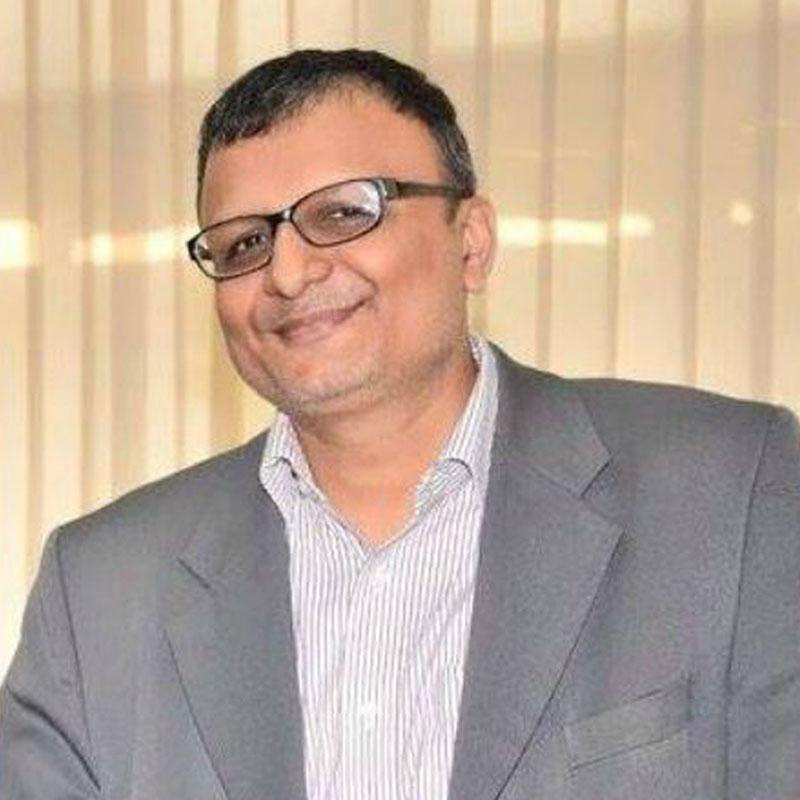
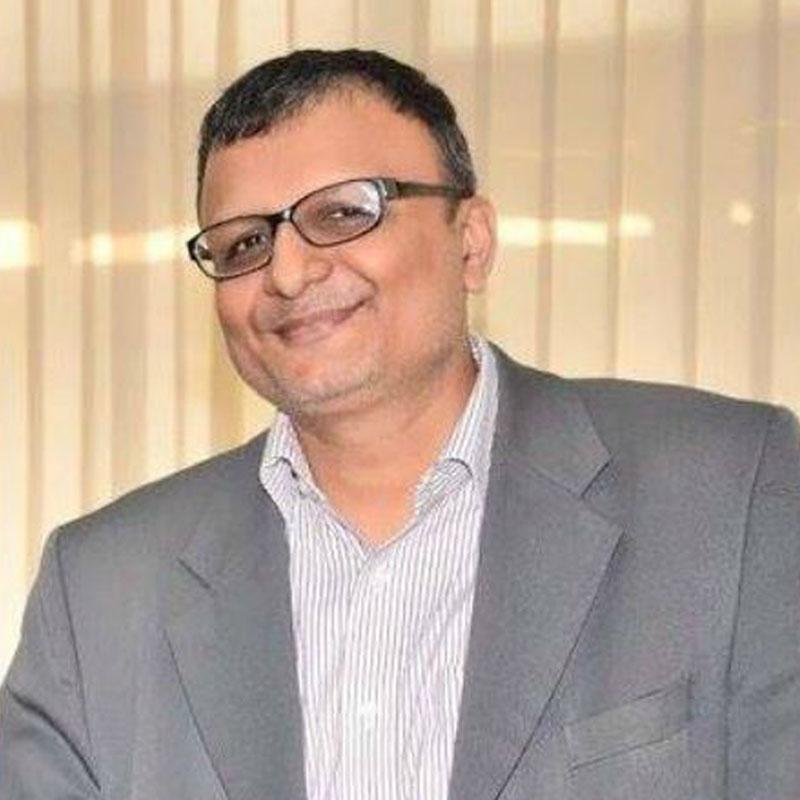
    MUMBAI: Shashi Shekhar Vempati is the first private sector executive to have a place on the Prasar Bharati hot seat. He is also one of the youngest CEOs at the organisation and in 2017 propelled it towards becoming a corporate 21st century public broadcaster.

    The pubcaster isn’t buckling under to the digital wave. The new Prasar Bharati under his vision is ready for the digital era. Recently, Doordarshan revamped DD India to an English news channel. In the latest week’s Broadcast Audience Research Council data, DD India is ahead of all private English news channels in the core target audience of NCCS AB: Males 22+ individuals.  

    Indiantelevision.com caught up with Vempati to talk about the success of DD India after the revamp, tariff order and Doordarshan’s OTT platform plans. Here are the excerpts:

    How has DD India made it to top slot in English news list? Any change in programming line-up?

    I think this needs a little bit of clarification. We have always known that the English viewership base of DD News was always quite high, but then DD news being a bi-lingual channel over the years, was being measured and reported in the Hindi genre. So, as a result, there was no reflection in BARC data of the size of the English viewership.

    What has really changed is that last year the Prasar Bharati board took a decision that we will have an English news channel in addition to the Hindi news channel and we will eventually position it as our offering to the international space as well. The reason is India doesn’t have a strong global voice unlike BBC, Al Jazeera, Russia Today and CGTN. So, with that in mind, we re-positioned DD India as the English news channel, where the English content of the news generated by DD News will also go.

    Over the last six months, BARC has started measuring it, but they have not reported it. They started reporting it from January in the English news genre. What was already a reality is now getting publicised.

    How many hours of English content is there on the channel?

    Close to 70 per cent of the Fixed Point Chart (FPC) is English news and the rest is English documentaries as of now. But the work is in progress and over the next few weeks we will increase that and it will become a full-fledged English news channel. The next big thing will be DD News and DD India becoming full-fledged Hindi and English news channels respectively.  

    What is your point of view on mandatory sharing of sports feed with the public broadcaster? Will we see IPL this time on DD?

    See when ever such a consultation happens, MIB takes feedback of all the stake holders, so our role comes much later. At this time there is no such proposal to share IPL matches. If there is anything we will let you know.

    CCEA recently approved the ‘Broadcasting Infrastructure and network development’ scheme of Prasar Bharati. How do you plan to use the budget allocated for it?

    The scheme approved by CCEA will include some expansion, modernisation of studios and upgrading of satellite infrastructure. We have a long pending modernisation. (These are some long pending modernisation. Provisions have been kept for modernisation of existing equipment/facilities in studios which are essential to sustain the ongoing activities and also for High Definition Television (HDTV) transmitters at Delhi, Mumbai, Chennai and Kolkata.)

    What is the status of the proposed Doordarshan OTT platform? What type of content will the platform have?

    Sometime in 2019, we will get to it. Right now our priority is news. It is a little early to comment on that. Firstly, we have to get our basic digital assets in place, which is what we are doing right now with the rollout of our iOS and Android apps which happened on the budget day.

    We have about 55 or more active YouTube channels. Digitisation of the archive is happening. At some point in 2019 we will put out the OTT platform for some of the premium content and rare archive and upgraded content.

    What’s your take on the TRAI tariff order?

    I think India, as a market, is clearly innovating on pricing and this tariff order reflects that. It shows the move towards greater subscription-based revenues for the media industry and I think it is a positive move in that direction. From both consumer and the broadcaster standpoint it is a positive move. It also gives flexibility to the consumer.

  • DD India to reposition as English channel; digital platform to launch before elections

    DD India to reposition as English channel; digital platform to launch before elections

    MUMBAI: Even as all the private media houses are gearing up for the general election, public broadcasters Doordarshan and All India Radio (AIR) are not lagging in their attempts to make hay out of the most lucrative season for news channels.

    According to ThePrint, DD India will be revamped and positioned as an English news channel for the global audience soon while AIR is planning to launch a 24×7 news stream in the next few weeks. Apart from this, Prasar Bharati News Service, a 24×7 digital platform for the global audience, is also set to begin in the next few weeks which is conceptualised along the lines of BBC and CNN in 2017 by a panel headed by Prasar Bharati chairman A Surya Prakash.

    The digital platform will broadcast international news to a global audience to counter anti-India narratives in the foreign media. According to reports, the platform will be an app-based interface that will offer services in multiple languages and publish news in the form of text, video, podcast and alerts.

    About the content, Vempati said, “The contents on these channels will be guided by the Prasar Bharati Act, which lays out quite clearly the mandate of the public service broadcaster.”

    The plan for the new 24X7 AIR stream is to broadcast news bulletins primarily in English and Hindi which will go live in the next few weeks.

    “AIR did not have any such channel. News bulletins were broadcast sporadically in gaps across the AIR network,” Prasar Bharati CEO Shashi Shekhar Vempati told ThePrint.

    A 24×7 stream, officials said, will help expand the reach of AIR news significantly, running parallel to AIR’s recent decision to share its unaltered news feed with private FM channels as a pilot project.

    FM radio channels are currently not allowed to produce and broadcast their own news bulletins, so the move will help the wider dissemination of AIR news since nearly 235 private radio stations across India have already registered with Prasar Bharati to source AIR news content.

  • 38th DD Free Dish e-auction on 11 February: Key highlights of revised policy

    38th DD Free Dish e-auction on 11 February: Key highlights of revised policy

    MUMBAI: The 38th DD Free Dish e-auction for 54 vacant MPEG-2 slots will be held from 11 February. The Prasar Bharati Board on Tuesday gave a green signal to e-auctioning of DTH slots on DD Free Dish. The public broadcaster will resume the allocation of slots based on a revised policy, confirmed Prasar Bharati (PB) CEO Shashi Shekhar Vempati. He thanked the Board, MIB secretary Amit Khare and minister Rajyavardhan Singh Rathore for their support.

    The e-auctioning of slots on DD Free Dish was arbitrarily called off in October 2017. Earlier, DD Free Dish would conduct the e-auction every couple of months to award vacant channel slots to private broadcasters. The last e-auction was held In July 2017.

    With the pubcaster set to kick-start the much-awaited e-auctions, here are the key highlights of the revised policy:

    · The e-auctions will be based on a differential pricing to be determined by the genre (language) of channels. Private broadcasters desirous of carriage on DD Free Dish will have to declare the same to be eligible to bid in e-auctions.

    · To lower the entry barrier for genres (languages) that are currently under-represented on DD Free Dish the differential pricing for slots is split into five disparate buckets as opposed to the 2 buckets based on which e-auctions were previously held.

    · Different genres (languages) have been grouped within these five buckets with differential reserve pricing for slots in respective buckets.

    · To promote the new DD Free Dish authorized set top boxes, the new policy also envisages invitational pricing for channels to also take up MPEG4 slots in addition to the existing MPEG2 slots.

    · The new policy also makes it attractive for channels from a cash flow standpoint through better payment terms. This will ease the burden on channels while lowering the entry barrier for channels.

    According to the PB CEO, a key consideration factored in by the new policy was to increase the diversity of content available on DD Free Dish and to expand its reach across India especially within the non-Hindi speaking states.

    The government-owned DTH platform has had a good run since its launch and is now desired beyond rural areas as well. According to industry experts, the DTH platform now has close to 30 mn subscribers.

    While there are numerous advantages of Free Dish, some private broadcasters feel it offer a threat to distribution platform operators (DPOs).

  • Prasar Bharati CEO on convergence and public b’casting

    Prasar Bharati CEO on convergence and public b’casting

    MUMBAI: Prasar Bharati’s CEO Shashi Shekhar Vempati, while dwelling on convergence and its relevance to India’s pubcaster, opined that it was important to understand the changes happening in terms of media consumption and distribution to evolve and plan for the future ahead.  

    “As a public broadcaster, we really have to face these forces of convergence if we have to transform ourselves for the next decade and beyond. Historically, our work force was trained to operate in the world of broadcast engineering and now they have to make the shift to digital and information technology,” Vempati said, adding why it was important for his colleagues to think “digital first” in terms of creation, packaging and presentation.

    Dwelling on the convergence happening at various levels of the Indian media and entertainment sector, Vempati said it was happening at three levels — at the consumer consumption level, platform and distribution level and regulatory level.

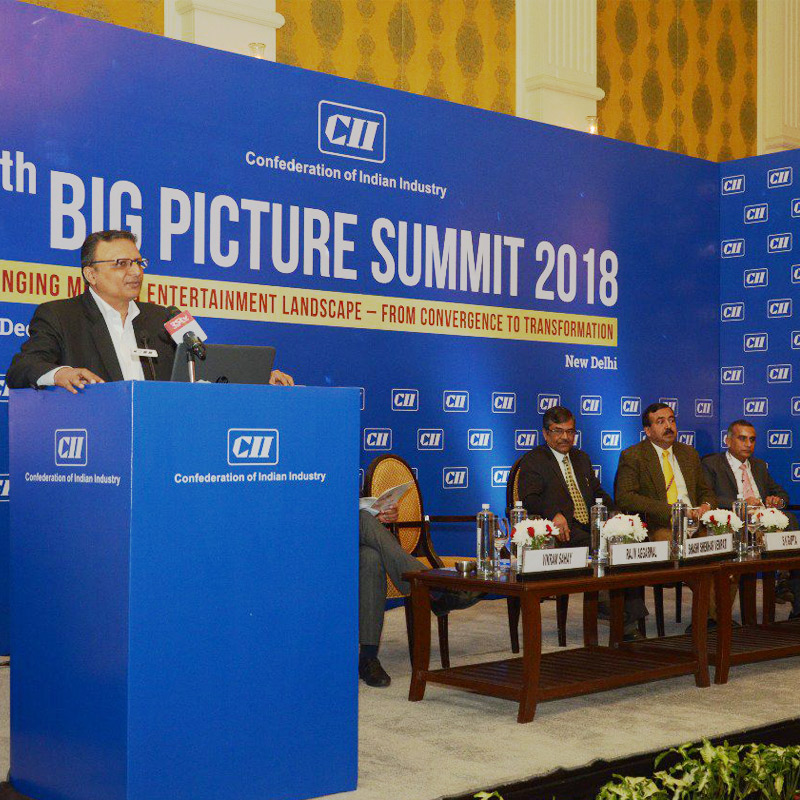
    “The convergence at the consumer level is way ahead of both the platforms and regulatory frameworks,” he stressed while delivering an address at the CII Big Picture Summit 2019 at New Delhi yesterday.

    According to Vempati, while the industry debated convergence and its pros and cons, the consumer was embracing the trend without a fuss, adapting to the various ways of consumption of the media.  

    Analysing the effect of these changes from a pubcaster’s point of view, he said Prasar Bharati was looking at the immediate outcome of the transformation on how content is discovered, measured and, more importantly, monetised.

    Without mincing words, he admitted that the content industry was today kind of trapped in a binary outlook where content monetisation was restricted to either advertising revenue or driven by subscription.

    Giving an example of consumer embracement of convergence, Vempati said Prime Minister Modi’s `Mann Ki Baat’ (Thoughts from the PM) was a prime example of convergence of technology. It is heard not only on All India Radio, which remains a primary source of dissemination of such messages but also consumed online and on traditional television.

    Dwelling on the reach of media — electronic and online — Vempati said, on one hand, there was linear TV, which is measured with set sample panels, and on the other hand there was the digital platform where measurement happened real time. On the issue of audience measurement, he said, TRAI has recently issued a consultation on how there was a need to re-think audience measurement. “So, I think there is another area of transformation that is likely to happen in the near future,” he added.

    On the topic of audience measurement and its fallout on ad revenues for TV channels, Vempati said experience has highlighted that the consumer wants a more flexible pricing model, especially when popular programmes like cricket matches are telecast by private sector TV channels, which demand that the consumer pays to watch.

    There is a need to look at a combination pricing model, which enables consumers to watch popular programmes, including sporting events, at a comparatively lower price or on FTA platforms like Doordarshan.

    “As a public broadcaster one of the greatest learning for me has been that if you have quality content there is an audience for it,” Vempati said giving an example of Rajya Sabha TV, a parliamentary news channel that is not actively marketed and promoted, but has over a million followers online.

    The pubcaster has not spent a dime advertising it anywhere and it is not even measured by BARC India, but on YouTube Rajya Sabha TV has a following that’s legion simply because of quality content it produces, Vempati said.

    Emphasising how technology and pubcasting can merge to deliver useful services, Vempati gave the example of a pilot project undertaken by Doordarshan in Bengaluru, in association with private sector players like Microsoft, to deliver to government-run schools educational programmes on DD’s digital terrestrial network that was lying under-utilised.

    “It’s a great example of convergence and transformation,” Prasar Bharati CEO said, adding that it also meant regulatory framework had a lot of catching to do as policy-makers viewed broadcasting and telecom services in silos, which is not the case now.

  • Star to share select IPL matches with DD with an hour’s delay

    Star to share select IPL matches with DD with an hour’s delay

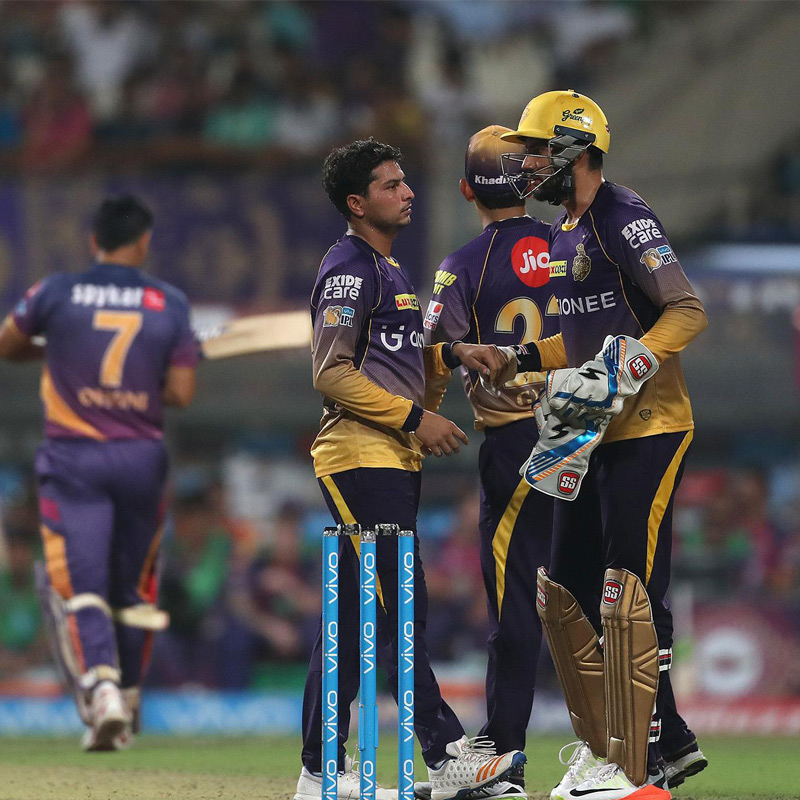
    MUMBAI: For the first time in the Indian Premier League’s (IPL) history, one of the biggest cricketing bonanzas in the world will be aired by India’s public broadcaster Doordarshan too. But there’s a catch. Rightful broadcast rights holder Star India and DD have mutually agreed that select matches out of the 60-odd ones to be played this season will get aired on the pubcaster’s channel with an hour’s delay.

    Asked specifically by Indiantelevision.com on the sidelines of an event here on Thursday, Star India chairman and CEO Uday Shankar said, “We will share with DD some highlights and one match every Sunday, apart from select other ones. It’s good for IPL that new audiences (not subscribing to pay TV) will get to sample it.”

    According to Shankar, who’s riding a wave of cricket broadcast rights and other successes, Star India will share with DD select matches of the 11th edition of the IPL in 2018 that the pubcaster will air with a delay of 60 minutes. What does it mean? If an IPL match starts at 8 pm, for instance, DD will start airing it 9 pm onwards.

    Asked as to why Star, which won the IPL global broadcast rights last year for a period of five years, is willing to share matches with the pubcaster that can probably have advertising revenue implications, Shankar said, “Its more in the nature of providing sampling opportunities to people who don’t have access to pay TV. It’s a mutual agreement [and] if we were not comfortable, we wouldn’t have shared the delayed feed also.”

    Though Prasar Bharati CEO Shashi Shekhar Vempati and Minister of Information and Broadcasting Smriti Irani tweeted about the IPL matches to be aired on DD sometime early evening Thursday quoting a media report, Prasar Bharati’s Twitter handle later expanded on the actual deal to say, “To bring Vivo IPL 2018 to a wider audience, Star TV has agreed to share with Prasar Bharati select matches on a one hour deferred live basis with 50-50 revenue sharing.”

    Indiantelevision.com also learns from industry and government sources that the as per the Star-Prasar Bharati deal, the matches to be aired on DD will also include the opener, the play-offs and the final. The 2018 edition of the cash-rich league will feature 12 matches that will be played at 4 pm and 48 matches that will start at 8 pm. According to details available, the matches will be played at nine venues over 51 days starting 7 April 2018.

    Though Star was not forthcoming on the issue, Indiantelevision.com also learns from industry sources that DD will do the ad-sales and marketing of the matches to be aired on pubcaster’s TV channel and share the revenue with the rights holder in the ratio of 50:50. Star, while quoting government norms on mandatory sharing of sporting events with DD, earlier had pushed for a revenue share in the ratio of 75:25 in its favour.

    For several months, officials of the MIB and Prasar Bharati and executives of Star India were locked in a series of hard bargaining over the finer details of match sharing with the pubcaster. Even as the finer points of sharing were being negotiated, the Indian cricket board wrote a letter to the MIB two days back expressing concerns over various government nods not forthcoming needed to telecast IPL matches live. The MIB has given its nod for temporary live uplinking of the IPL’s 11th edition, whose inaugural ceremony will be held on 6 April 2018.

    In September last year, Star India had won the global television and digital rights to IPL for the next five seasons for approximately $ 2.5 billion or Rs 16,347.50 crore. Until 2017, Sony Pictures Networks India had held the television broadcasting rights of IPL for 10 years (since 2008).

    Also Read :

    Star India beats Sony, Jio to win media rights for BCCI’s home matches

    IPL 2018 gets a makeover with Star India

    Comment: Does Star stand to gain or lose by sharing IPL with DD?

    Star’s Uday Shankar on distribution challenges, IPL, FTA vs. pay TV, innovations, Made in India content…and much more

  • 2017’s Top India TV industry leaders – Part I

    2017’s Top India TV industry leaders – Part I

    MUMBAI: The year 2017 threw up myriad conundrums and dilemmas for the men and women who are the showrunners of India’s media and entertainment (M&E) sector, which is expected to grow at a compound annual growth rate (CAGR) of 13.9 per cent, to reach USD 37.55 billion by 2021 from USD 19.59 billion in 2016, outshining the global average of 4.2 per cent.

    It was a rocky year, one during which everyone’s mettle was tested. First, there were the aftereffects of demonetisation. If that wasn’t enough, the Goods and Services Tax was unleashed in the second half of 2017. This sent everyone into a tizzy. Business targets went awry as executives grappled with the changes they had to deal with. Net results: industry growth numbers dipped. Despite this, the resilience of the industry and media leaders was never in question.

    Like in the past, we decided to list down—not in any particular order—the top 20 senior leaders from the television industry who, we believe, made noteworthy moves in 2017.  Of course almost every professional in the business deserves to be lauded in these rapidly mind-numbing-confusing-as-hell changing times—for even just hanging in there.  Forget about doing well. However, a list has to be selective and we took upon ourselves to do so. We hope you will appreciate our initiative. Read on for the first installment in our year-ender series featuring six of India’s top TV industry leaders and their achievements in 2017.

    public://Mukesh-Ambani1.jpg

    Mukesh D Ambani

    Disruption. That’s what the D in his full name stands for, apart from his entrepreneurial father’s name Dhirubhai. And clearly that’s what the chairman of Reliance Industries did in 2017. He shook old established players in the telecom sector by giving away wireless data access for free through Reliance Jio–a process he started just as 2016 was ending–quickly adding more than 100 million subscribers.

    The old guard yelped, blocked calls to their networks, but he plodded on through the year, fought them out in courts, and had his way. In the process, he forced them to rework their business plans and models.

    The entry of Jio has forever changed the way the telecom industry prices services for customers. The cheap data has also changed the way Indian viewers are consuming their video content.  Probably, forever.

    Since the launch of Jio more than 200 crore hours of video and around 10 GB data per capita per user per month are being consumed every month by just Jio subscribers. The number for the 375 odd million internet users will be much higher than that. Apart from wireless delivery of video, Ambani also has plans for distribution by fibre to the home (FTTH). If leaked pricing plans are to be believed, he is likely to totally upset the economics of the cable TV ecosystem, too.

     Jio has also invested in content companies such as Alt Balaji, partnered with Hotstar, and appointed Siddharth Roy Kapur Films to curate content for its VOD services. And Ambani already owns close to 38 TV channels under the Network18 group, and has a joint venture with Viacom that gives it a clutch of channels amongst which figures the leading Hindi GEC Colors and other entertainment channels in many languages. Ambani has more disruption plans up his sleeves. At the Viacom18 tenth anniversary celebrations in Mumbai he said he has not paid attention to the video content business under that group company. But he added that the teams there were going to see a greater involvement from his side. That should give a lot many in the TV business sleepless nights.

    public://Uday_Shankar.jpg

    Uday Shankar

    This journo turned media CEO clearly stands head and shoulders above almost every TV and media industry executive in the country. Over the years, his bold, brazen and, at times, out of the box moves have seen what was once a smallish TV network expand into the leader in the media and entertainment landscape—of course, the foundation had been laid some his predecessors and the promoters, the Murdoch family, gave ample support to this ‘jewel’ in the crown of the parent company that’s now known as 21st Century Fox and is seeking regulatory approvals in the US to merge with Disney. 2017 was no different for Uday.

    The year saw Uday getting appointed as the Asia head of Fox – of which Star India is an offshoot. But before that he betted big by coughing up USD 2.55 billion on sewing up the all-media rights for the world’s top cricket property – the Indian Premier League. Many have scoffed at the audacious price he has been willing to pay for that property; something which they did when Paul Aileo and Peter Chernin picked him to run Star India around a decade ago after Peter Mukerjea’s departure.

    But Uday proved the nay-sayers wrong in every way.  He is likely to do it again. And again. Under Uday’s leadership, the India business has firmly established itself as a world-class asset with durable businesses across entertainment, sports, satellite distribution and OTT. Now he has set his eyes to do the same with Fox Asia.

    public://Jawahar_Goel.jpg

     Jawahar Goel

    The third of the four Goel brothers who nourished Essel Group (Zee and Dish TV’s parent), along with the eldest sibling Subhash Chandra, Jawahar Goel, or JG as he’s popularly known as in the industry, has always been a street fighter—and a smart one at that. Historic boardroom battles in New Delhi’s Lawrence Road-based Essel House in the 1990s, notwithstanding (Zee had three JVs with Rupert Murdoch’s Star TV then), JG is regarded as a go-to-man in the industry by most people because of his understanding of the complexities and nuances of the various segments of the media industry. A tech-savvy person, his tablet is the holder of many secrets and strategies.

    2017 saw him getting into the limelight if, for a bit, in stops and starts. In late 2016, he announced what seemed like a mother of a merger with rival Videocon d2h–the process of regulatory clearances for the same took up most of 2017. Everyone expected the going to be smooth and the final clearance came from the ministry of information and broadcasting at close to the end of the year. And then came the announcement in the last week of December 2017 that the merger was being delayed because of technical glitches. And those glitches became clear in early 2018: JG had instructed his investment bankers and lawyers to relook the deal in the light of the fact that the Videocon group was defaulting on loans and whether any action by the government or financial institutions would have an impact on the valuation of Videocon d2h. The market has interpreted this to mean that JG is back at his best: he is striking a further hard bargain or that he has decided to not do it all.

    JG also set the cat among the pigeons in the year by alleging in letters to the TRAI, IBF and the MIB that if the rights of the IPL were awarded to Star India by the BCCI it would tantamount to a monopoly. Nobody heeded him and the rights still went to Star India. That still did not stop JG: he then appealed to the courts that Star’s pay TV service Life OK should not be allowed to go FTA as Star Bharat. Once again, the courts did not agree with him.

    2018 will be an interesting period for him. He will have to come clean on whether Dish TV is going ahead with its merger with Videocon d2h or not.  And if not then what is the course, he and his CEO—a top notch professional who ran Hero Honda—Anil Dua are going to do with the firm going forward. It’s over to the man.

    public://Arnab-goswami2.jpg

    Arnab Goswami

    You can hate him, you can love him, but you just can’t ignore him—no matter how one tries doing the last. Republic TV—Arnab’s new baby—before its debut whipped up a political storm with BJP politician Subramaniam Swamy questioning use of the word `republic’ for a commercial venture and his former employers Times TV Network dragging him to court over who owned the copyright over the phrase ‘the nation wants to know.’

    But Arnab loves a slugfest; he got into a public brawl with Times TV on ratings, distribution practices with the latter taking him to court. For a moment it looked like the News Broadcasters Association and even the ratings body had got polarized with those for and against Republic or those for Times TV. So much so that Arnab called it names. But finally sense prevailed as the dust settled and Republic took up membership of the association.

    Republic TV continued to be a hot topic of discussion throughout 2017 with its line of editorial stand and shows, which some critics dubbed as absolutely partisan and non-journalistic. However, despite widespread criticisms Republic TV not only managed to lead the ratings game amongst the TV news channels, but also succeeded in dividing the news fraternity at one time over audience measurement numbers.

    That it continues to lead a life on the edge of ethics and non-ethics — and thrive — speaks volume of the Arnab charm and his brand of opinionated journalism. With Republic TV expanding into VR programming and also spreading wings outside Indian shores ( it debuted in the Middle East last year), 2018 would be an interesting period of evolution of this news venture backed by some of the staunchest supporters of  PM Modi and his government.

    public://Smriti_Irani.jpg

    Smriti Irani

    For many years, Smriti Irani along with Ekta Kapoor and Star India contributed to the rise and rise of Indian television thanks to the hugely popular Kyuunki Saas Ki Kabhi Bahu Thi, a series in which Smriti played the role of a dutiful Indian daughter in law, who had sanskaar yet was willing to stand up for herself when she was wronged. 

    Now, 17 years later, Smriti sits over the entire broadcast sector as India’s TV content regulator as  the minister of information and broadcasting, a position none of the executives or professionals in Indian television even envisaged she would one day hold.

    Smriti acted quickly following her appointment: she put a halt to the process of e-auctions of DD’s free-to-air direct-to-home platform DD FreeDish.  She even stopped the privatisation of time slots on national broadcaster DD National and even said not yet to two productions (one by Gajendra Singh and the other by Balaji Telefilms), which had got the go ahead. That did not augur well for at least Singh as it allegedly caused him grievous losses.

    Then, under her watch, her ministry has been demanding that the world’s most valued cricket league the IPL is of national import and that Star India needs to share its feed with pubcaster DD, something which the Fox group company sees as not fair. Additionally, the ministry has also raised the fees for live uplinking—a move which many see as targeted at making things dearer for Star India as it cover test cricket in six languages in 2018.

    Smriti also left her stamp on this year’s IFFI, which was probably the most glamorous in its history with A-list Bollywood stars winging it to Goa. Her ministry lifted the bar for the festival in terms of scale and quality.

    She also clamped down on steamy condom commercials, which were flooding channels on TV channels during the day. Broadcasters were ordered to telecast such ads only between 10 pm and 6 am.

    public://Shashi Shekhar Vempati.jpg

    Shashi Shekhar Vempati

    Shashi Shekhar Vempati has quite a few creds to his name. One of them being that he is youngest executive to be the CEO of pubcaster Prasar Bharati and the other being that he is the first private sector manager called on to run the behemoth. And 2017 put all his managerial skill sets to the test.

    When he joined, there were plans already in place to grow DD Free Dish, to study if there was opportunity in the kids’ space for it and check out if a gasping DD National could be given fresh oxygen and survive the hectic competition in general entertainment television.

    Shashi slammed the brakes on all growth plans, heeding to the orders of the powers that be (read his new I&B boss Smriti Irani). Under his watch, the e-auctions of DD Free Dish, the selling of slots to private producers were called off. He also told DD director general Supriya Sahu to dive deeper into DD Kids and not rush into it. And he spent a large part of the year studying what DD was all about and what he could do and not do at the organisation. 

    This apart, Shashi has been focusing his energy on two fronts: one on sports and the second on DD’s News outreach and ensuring that the pubcaster relays the right messaging of a nation, which is being watched by the world.  India is predicted to become a global power— one of the most important consuming countries globally in the not, too, distant future.

    Most people saw the Supreme Court’s endorsement of the Delhi High Court verdict, which disallowed Doordarshan or DD from sharing the live feed of cricket matches of ESPN and Star India with cable operators as a setback. But not the new kid on the block; Shashi saw it as an opportunity.

    During an interview with www.indiantelevision.com, Vempati said that the decision forced away complacency at the pubcaster where earlier many changes and additions were either being implemented either too slowly or not at all. Prasar Bharati now had a reason to make DD Sports a go to destination for viewers and would help in promoting DD Free Dish and DD terrestrial to larger audiences across many more cities than the 19 in which DD’s terrestrial signals are available, and to switch DD Free Dish to MPEG-4.

    Shashi said that the verdict has created an avenue for making DD Sports the place for cricket. Earlier, cricket and other sports were being aired on DD National. Now they would be aired on DD Sports. The court’s verdicts’ would prevent cable operators from pushing their own ads while blanking out DD National signals during matches. In future, through DD Sports, there would be a separate feed for cricket and there would be no need to blank out an important channel like DD National.

     Shashi will be watched through the year in 2018. He has plans to harness new technologies such as in-built digital tuners in some television models, DVB through dongles and mobiles and plugging into hotspots that are DVB ready. He feels that DTT is a new viewership base and is a new way for advertisers to connect with viewers.

  • BARC ratings: DD Sports in top 5 after 37 weeks

    BARC ratings: DD Sports in top 5 after 37 weeks

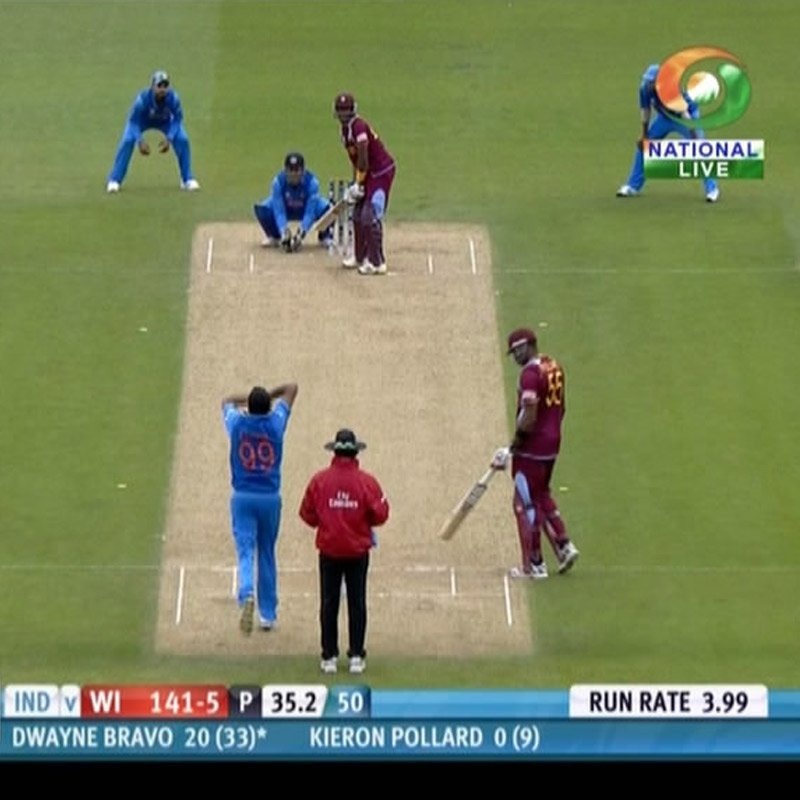
    MUMBAI: Pubcaster DD Sports surprisingly garnered third position in broadcast audience research council’s (BARC) all India ratings for week 50 in the sports genre. The live feed of India versus Sri Lanka’s second ODI match helped the channel to climb up.

    Star Sports 1 Hindi leads the chart with 20855 impressions (000s) sum followed by Star Sports 1 with 110690 impressions (000s) sum. DD Sports made an entry after 37 weeks in BARC all India ratings with 81011 impressions (000s) sum. Sony Ten 1 is in fourth position with 80695 impressions (000s) sum. We have second FTA channel in the list, Star Sports First with 57528 impressions (000s) sum.

    DD Sports’ last appearance was in week 12 at the time of India versus Australia live test series. At that time DD Sports was at fifth slot with 26973 impressions (000s) sum. Private broadcasters are up in arms against sharing their live feed with the public broadcaster.

    The Supreme Court on 22 August 2017 said that shared feed of sporting events can only be carried on the terrestrial network of Doordarshan or DD FreeDish and cannot be retransmitted to private cable and DTH operators. After this, in the month of September Prasar Bharti CEO Shashi Shekhar Vempati through a tweet directed all the private DTH and cable operators not to telecast the sporting events’ live feed from Doordarshan that have originally been shared by the rights-holding private broadcasters.

    In December some reports surfaced in the media that Star India would have to share the IPL telecasts with the pubcaster DD that will air the cricket matches on its terrestrial network and FTA DTH platform. This would be made possible as and when the government formally issues a directive as both the law and information & broadcasting ministries were being consulted under a regulation called the Sports Broadcasting Signals (Mandatory Sharing with Prasar Bharati) Act, 2007.

    If the IPL is being shared between the private broadcaster and the pubcaster, we’ll have to see which one bowls us over with higher viewership.

    Star India wins: SC disallows Prasar from retransmitting shared sports feed live

    Prasar CEO reiterates implementation of SC verdict on DD’s shared sports feed retransmission

    Comment: Does Star stand to gain or lose by sharing IPL with DD?

  • Smriti Irani: Need to reduce gap between regional & national news & democratize viewership

    Smriti Irani: Need to reduce gap between regional & national news & democratize viewership

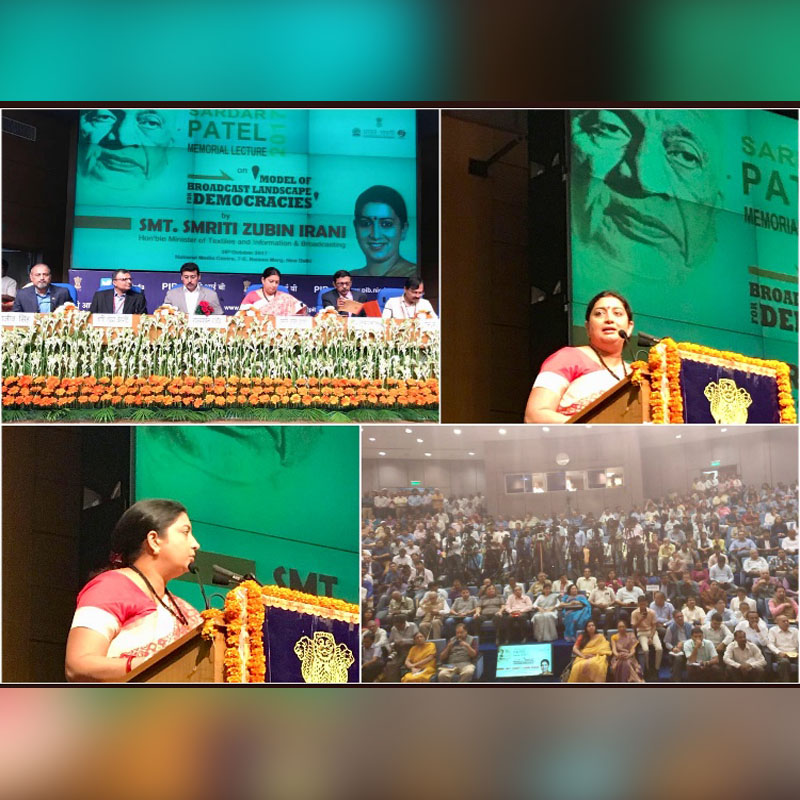
    NEW DELHI: Stressing on the need for a model structure of broadcasting, which can strengthen the Indian democracy, Minister for Information and Broadcasting Smriti Irani yesterday exhorted the media to reduce the gap between regional and national news, thus democratizing viewership, and the need for meeting objectives of public good and entertainment.

    “If we want the broadcasting landscape to be strong, the first and the foremost requirement is to give as much importance to the regional content as the national content…(and) reduce the gap between the regional news and  national content,” Irani said yesterday while delivering the Sardar Patel Memorial Lecture 2017 themed ‘Model of Broadcast: Landscape for Democracies’.
     
    Describing the broadcast news landscape as a “spectator sport”, the minister said the rush for audience ratings has reduced everything to “headlines competing with hashtags” in the wake of social media explosion taking place in the country that has provided a new pathway for information dissemination.

    Coming down heavily on a certain section of the media for being driven by TRPs, forsaking codes, ethics and conduct rules, unlike another section, Irani said, ”There is a need to democratize the (audience) measurement system in the country.”

    According to the feisty minister, who also holds the portfolio for Textiles Ministry, a model structure of broadcasting should focus on “democratized viewership” based on an accurate measurement system that reflects the strength of regional languages, varied tastes of viewers/consumers and bridges the divide on issues related to agenda setting, creative content and revenue between the mainstream and regional platforms.

    Stressing the importance of the sector keeping abreast with trends in the social media, which she described as a “disruptive” force, Irani said though the broadcasting sector is based on business propositions and technological upgradation, the ‘Mann ki Baat’ programme of Prime Minister Narendra Modi aired on AIR was an ideal example of how a technology platform blended his message with citizen understanding and awareness of the issues highlighted in each episode.

    Highlighting the difference in the way pubcasters — Doordarshan and All India Radio — functioned vis-a-vis a large section of the private sector media, Irani added: ”If you look at the broadcasting sector, the overriding focus of the public broadcaster has been on serving the public good. In today’s times, however, when news has become a spectator sport, there is a need to bridge the gap between serving the public good and providing entertainment.”

    The annual lecture held at the National Media Centre in the Capital, started by All India Radio way back in the 1950s, was attended by Minister of State for MIB Rajyavardhan Rathore, pubcaster Prasar Bharati chairman A. Surya Prakash and Prasar Bharati CEO Shashi S. Vempati, apart from other senior government officials.

    Even as Irani lauded the public broadcaster’s endeavour to focus on public good, she said it was the “duty of the public broadcaster to speak fairly and freely, as it is doing now”. She also called upon the pubcaster to weave stories on the lives of ordinary people, which could have an impact both within India and abroad.

    The minister said it would be the endeavour of MIB to promote the concept of “design thinkers” for content generation in the digital space in the light of growing use of technology by the young generation in areas of internet, mobile content and animation & gaming. This would also incorporate the elements of the New India vision envisaged by the Prime Minister by 2022.

    Highlighting the fulcrum strength of her ministry, Irani said that the Information Service officers’ profile would be strengthened in the future by giving them skill sets along with an integrated administrative exposure so as to enable them to serve policy and programmes of the people through the medium of information. This would be along the lines of Sardar Patel’s vision of creating a steel frame to serve the people through the channel of information dissemination, she added.

    The first Patel memorial lecture was delivered by C. Rajagopalachari, while the other distinguished speakers in the series have included stalwarts like Dr. Zakir Hussain, Dr. A.P.J. Abdul Kalam and Morarji Desai.

    Also Read: Smriti Irani tweets industry body advisory urging restraint by TV news channels

    MIB minister Smriti Irani orders review of DD prime time auction process

    Smriti Irani gets additional charge as MIB minister

    BARC India to TRAI and MIB: Tweak legislation to make data tamper-proof

  • Prasar Bharati CEO Shashi Shekhar Vempati on SC verdict, pushing DD Sports and DTT

    Prasar Bharati CEO Shashi Shekhar Vempati on SC verdict, pushing DD Sports and DTT

    Shashi Shekhar Vempati is probably one of the youngest CEOs to occupy the Prasar Bharati hotseat.  Additionally, he is the first private sector executive to have got the job. So, media observers expect a lot from him, especially considering his background in Infosys, one of India’s most respected infotech companies.

    And, it is during his watch last month that the Supreme Court issued a verdict upholding the Delhi High Court order which disallowed the pubcaster from sharing with cable operators through Doordarshan (DD) channels the live feed of cricket matches of which private broadcasters ESPN and Star had the exclusive rights. The bench had said under the provision of the Sports Act, the live feed received by Prasar Bharati from content rights owners was only for the purpose of retransmission of signals on its own terrestrial and direct-to-home (DTH) networks and not to cable operators.

    Many would have considered that a loss. But, not Shashi Shekhar Vempati. Clarity and optimism is something you can credit him with. He terms that loss as an opportunity. Read on to get some Vempati-speak as he talks to indiantelevision.com.

    How do you view the verdict of the Supreme Court preventing you from airing sports feeds to private cable TV operators and DTH operators which you share with private sports rights holders?

    The verdict of the Supreme Court on the sports side on the face of it looked like  a setback. And, if you go by the reactions of the viewers to them it was available by default  on Doordarshan. Several matches are not available now.

    But, in reality it was an opportunity.  Many decisions that we just postponed or did not aggressively move on.  Now, there is a real reason to do that. First is on  DD Sports. All along cricket was on DD National. The only sports channel of DD had no purpose or identity, it was just drifting.

    Now we have a reason to make DD Sports the go-to destination for cricket and other sporting events of national importance because of the manner in which the verdict forces us to operate. It creates an avenue  to make DD Sports the place for cricket.

    You cannot air cricket because of the verdict right?

    We will air it. The way the verdict on the act will be operationalised is: the signal sharing for games of national importance is meant for DD’s FreeDish and DD terrestrial. So, we will carry future matches on DD Sports, as a channel available on FreeDish and on terrestrial through DTT.

    Analogue where we have one or two transmitters where we either show DD National or News, there we will ensure that the feed is sports so that one of the transmitters will show the match on analog wherever it is available.

    For the private guys, cable and DTH operators today what are they doing? They are blanking out our screen then they are putting their own commercials, their own promotion. What we are saying is — we will have a separate feed in the future so that they don’t blank out DD National.

    It is atrocious that you can blank out a must-carry channel and put in a commercial message saying “go buy my sports pack.” That we will straightaway address.

    Now because cricket is available on DD Sports, the channel gets a facelift.  Its branding improves – brand recognition goes up. People will have a reason to periodically  tune into DD Sports. So that just takes that channel up. We have enough content on DD National.


    Which of the matches will you show?

    Well, the act,…the government has to notify what are the games of national importance.  And a that list is periodically reviewed. As of now it is all home games of India for one day and T20, then the big tournaments like the World Cup, the challenger and ICC trophy and so on.  Then certain tennis matches, certain soccer matches.

    The big thing is the FIFA under-17. The entire 52  or 56 matches we will show. The  government sees it as a big way of promoting soccer.  For the first time they are holding an international event. And if you look at the generation that we want to attract – which is what I have been talking about. Today, there is no mindshare for Doordarshan in the youth as this generation did not grow up with it. They have no memories of Doordarshan, they don’t relate to it.

    Now with FIFA Under-17 being available this soccer crazy young crowd (chuckling) have an avenue to go and see soccer on FreeDish and DD Terrestrial. DD Sports gets a facelift and it gets a mindshare in this demographic  that we have always wanted to attract and bond with.

    Second thing that I get out of this whole thing is that for all those people who think today I cannot watch those matches on DD on either my private cable or DTH…now I have an avenue to go and promote FreeDish and my digital terrestrial which is just languishing in 19 cities which are the main population centres of India.

    Now I am going to tell them you don’t have to buy that Rs 60 or Rs 120 package. Forget about all that, many of your TVs have an inbuilt digital tuner. There are certain models of Sony, LG and Samsung which have them.

    We will educate people that if you have one of these models, you already have a digital terrestrial tuner, all you need to do is turn it on.  And if you don’t have it, here is an app which you can download. And if your mobile is one of these models, using this app and the DVB-T2 dongle, which is available on Flipkart and other ecommerce platforms you can watch the matches.

    Then, there are certain makes of mobile phones where there is an inbuilt DVB chip available in the marketplace.

    The fourth innovation and I have seen certain products, there are some startups working on it: you need to plug in this hotspot, into the wall, it will get the DVB signal, it will create the wifi – and on all your devices at home you can watch it as a TV channel. We will say these products can support your app.

    How will you monetise the DTT signal?

    When we do the rights sharing under the act , the rights holder and DD both bid on who gets to market the inventory. The highest bidder then gets the rights to sell the entire FCT for the matches on DD DTT and DTH. But the sharing is 75:25.

    Now DTT becomes a new viewership base. So, for the advertisers it is a new way of connecting to the consumers. To me it is new medium to be clipped to the viewership and it’s something where we have a traditional strength because nobody else has terrestrial. We will see how that goes.

    How do you see FreeDish progressing?

    The biggest challenge with FreeDish was that STBs were not  addressable and the signals were not encrypted.  Now for a long time we have had this project to move to MPEG4…the infrastructure is in place, but it required a new STB. That spec was tendered out, iCAS was brought in. Now those boxes are getting ready and soon they will be rolling out. The biggest challenge was what was the motivation for a customer who has an MPEG 2 FreeDish STB to switch to MPEG 4. Now there is a reason, because we can go to the audience and tell them that if you want to watch cricket or any of the sports which you don’t want to pay for your Tata Sky or Dish TV or Videocon or whatever, here is a new iCAS box, it gives you all of these features. That’s another promotional avenue for me. So I am getting two promotional avenues and I am getting to rebrand and relaunch my DD Sports. So in a sense what was a setback in one aspect has opened up opportunity for me.

    One interesting thing that the TRAI is now pushing is the open STB standard with a return path. I think the return path is going to be interesting. It is going to be important for several reasons: for audience measurement, and we would all want interactivity.  Through the regulator’s efforts, and maybe a common standard – and if everyone supports that, it can bring now the price point.

    DD Kids is something which was to be launched?

    There are several ideas. And we will look at each one of them in time.

    What other steps are you taking?

    We have taken some measures following the board meeting recently. It was a long pending board meeting. A lot of decisions were taken. One of the decisions was analog.  We will start sunsetting analog. And that frees up resources. Frees up manpower. Frees up certain operating funds. Those can be put to use in areas where we definitely need a lot of things to be done.

    Information technology being a long pending area where we have not invested. Digital is another area. Then there is the sheer creativity in programming which has come down. The quality of in-house programming has come down drastically. So that requires us to invest in the right talent so we can bring it back in-house.

    DD is the largest network, it has 30,000 people and above… but it has the largest network. We have challenges that nobody else has.

    I chanced upon this report. There was a committee set up in early 2000, late nineties, led by Mr Narayana Murthy which looked at Prasar Bharati (one of the many reports). And, very interestingly, they had a chapter on engineering: they looked at the number of engineers to transmitter ratio, they said this is the highest in any country. That means there is very little automation.

    So, clearly there is a lot of opportunity to get this great talent out and put them to problems which require real attention – be it IT, be it digital, be it reskilling them and repurposing our workforce.
  • Prasar CEO reiterates implementation of SC verdict on DD’s shared sports feed retransmission

    Prasar CEO reiterates implementation of SC verdict on DD’s shared sports feed retransmission

    NEW DELHI: Prasar Bharati CEO Shashi Shekhar Vempati has directed all private direct-to-home and cable operators not to telecast the sporting events’ live feed from Doordarshan that have originally been shared by rights-holding private broadcasters.

    This was conveyed through a tweet by Vempati. Interestingly, some tweets in response vowed to switch over from private DTH to FreeDish.

    This follows orders of the Supreme Court on 22 August 2017 which stated that shared feed of sporting events can only be carried on the terrestrial network of Doordarshan or DD FreeDish, and not retransmitted.

    In the judgment, a division bench headed by Justice Ranjan Gogoi had said though the Sports Broadcasting Signals (Mandatory Sharing with Prasar Bharati) Act 2007 allows the feed of a sporting event of national importance to be shared mandatorily with Prasar Bharati, the public broadcaster cannot utilise it on a notified channel which has to be compulsorily carried by private distribution platforms.

    While the judgment enables Prasar Bharati to expropriate the feed, the private sports channels will not be competing against Prasar Bharati on a commercial basis for the same content.

    The judgment came on an appeal by the pubcaster against an order obtained by Star India Pvt. Ltd. from a two-judge bench of the Delhi High Court comprising Justice B D Ahmed and Vibhu Bakhru.

    The judgment would help private broadcasters like Star India from possible losses in subscription and advertising revenues due to sharing of signals with Prasar Bharati which were eventually carried by private DTH and cable operators.

    ALSO READ :

    Star India wins: SC disallows Prasar from retransmitting shared sports feed live