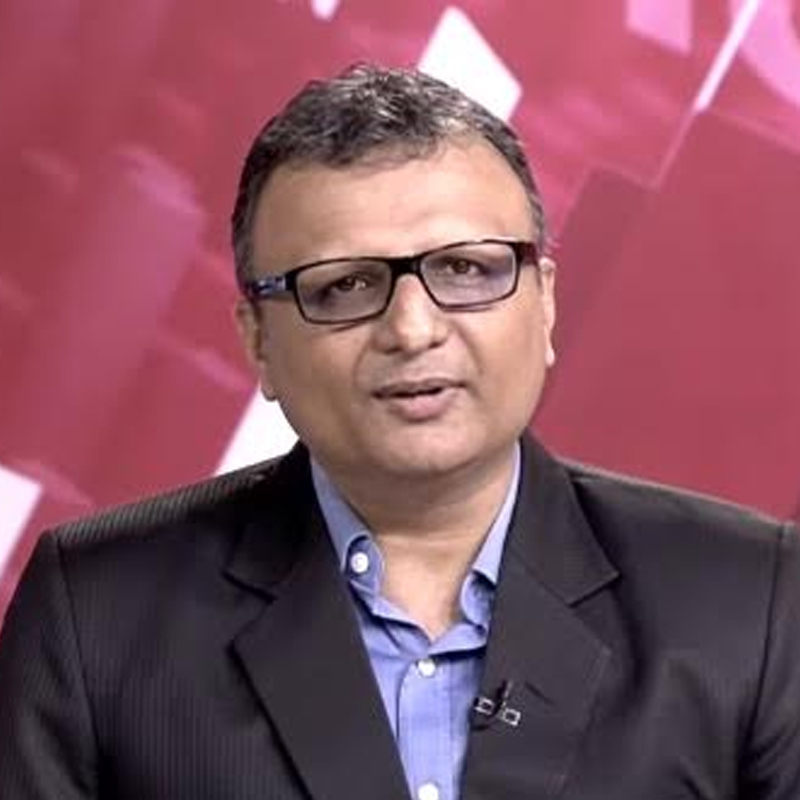
Tag: Shashi Shekhar Vempati

  • MIB gives an extension to broadcasters on TV rating committee’s report

    MIB gives an extension to broadcasters on TV rating committee’s report

    Mumbai: The ministry of information and broadcasting (MIB) has granted an extension on the deadline seeking comments from broadcasters on the report on ‘Guidelines for TV Rating Agencies in India’ till 30 November.

    Major broadcasting associations including the Indian Broadcasting and Digital Foundation (IBDF), News Broadcasters Association (NBA), and News Broadcasters Federation (NBF) have received the report.

    The MIB had reached out to broadcasters earlier in the month seeking their comments by 17 November on the report. The report was submitted by a committee instituted by MIB on 4 November 2020 and led by Prasar Bharati chief executive officer Shashi Shekhar Vempati. The committee submitted its 39-page report in January.

    Govt committee seeks to set up a specialised regulator for media ratings in India

    The comprehensive report highlights 20 recommendations of the committee to restore faith in the integrity of the TV rating system in India. The committee was formed in response to the TRP scam that broke out in October last year where three TV channels were named by Mumbai Police for allegedly tampering with rating data.

    As reported previously by Indiantelevision.com, the recommendations made by the committee in their report were aimed towards strengthening corporate governance at Broadcast Audience Research Council (Barc) India which is the premier TV audience measurement company in the country. There were also recommendations pertaining to the technical aspects of the TV measurement system like the use of return-path data (RPD), instituting a regulatory mechanism for media rating agencies, adopting an open data ecosystem, and moving towards hybrid audience measurement.

    The four-member committee included IIT Kanpur professor of the statistics department of mathematics and statistics Dr Shalabh, C-DOT executive director Dr Rajkumar Upadhyay and Decision Sciences Centre for Public Policy professor Pulak Ghosh.

  • Future lies in direct-to-mobile broadcasting: Prasar Bharati CEO Shashi Shekhar Vempati

    Future lies in direct-to-mobile broadcasting: Prasar Bharati CEO Shashi Shekhar Vempati

    New Delhi: Prasar Bharati CEO Shashi Shekhar Vempati on Wednesday batted for common shared infrastructure for both Television and radio to directly deliver broadcast content to smartphones in future. The public broadcaster’s top executive said convergence across content as well as infrastructure is needed to meet the demands of the future.

    Speaking the CII’s Big Picture Summit, Vempati said, the public broadcaster is already working on bringing convergence across TV and radio, so that a lot of content exclusively available on Radio can be made visually rich and available for TV audiences. “Prime Minister’s ‘Mann Ki Baat’ was the first such radio programme, that was made available for TV audiences. We followed the same format for another show Rangoli and even Vividh Bharti’s anniversary celebrations, where we put camera in the studio all-day long,” said Vempati.

    The Prasar Bharati CEO also talked about the digital transformation that Doordarshan and All India Radio has undergone in the recent years. Every DD channel and AIR station now has a digital presence spanning multiple platforms, like YouTube or social media or app. “Traditionally, Radio has never been measurable. But, now we have people tuning into AIR from everywhere, and choosing content of their liking. Digital an integral part of our network,” he said.

    Vempati said the public broadcaster is driving creativity and innovation on primarily several fronts. The most important being the conversion between TV and Radio. While the two have had a parallel journey of infrastructure and content creation, there was need to bring more convergence.

    “We have also collaborated with IIT Kanpur, and if our efforts bear fruits, we should be able to see smartphones directly receiving broadcast signals,” he said. “In the event of a high-viewership event like an IPL, there is no reason why millions of users need to receive that content on a unicast mode through the internet. If this works, all of the content can be delivered directly on broadcast frequencies to people on their smartphones or smart TVs.”

    Vempati also called for public private participation in developing critical algorithm, and sectors like AI, which will be needed to ensure content is available for multiple platforms, and made accessible to people across the country.

    “We are looking for more collaboration with private sector to identify these technology problems and address them, to create an intellectual capital in India, not only for content, but also for technology to power this content,” he added.

  • I&B ministry may adopt TV rating committee’s recommendations : Anurag Thakur

    I&B ministry may adopt TV rating committee’s recommendations : Anurag Thakur

    New Delhi:  The ministry of information and broadcasting (I&B) has analysed and evaluated the recommendations made by the committee led by Prasar Bharti chief executive officer Shashi Shekhar Vempati to review the current guidelines on TV rating agencies in India.

    The newly inducted I&B minister Anurag Thakur told the Lok Sabha on Friday, that the recommendations will be incorporated into the existing TV rating guidelines wherever required. “The recommendations have been analysed and evaluated vis-à-vis their being translated, if required, into the existing guidelines where-ever required,” said Thakur while responding to a question on the action-taken report of the said committee.

    The union minister said the existing guidelines have provisions like methodology for audience measurement, panel selection, viewing platform secrecy and privacy, data analysis, transparency etc. which are essential for a transparent and accountable rating system in India.

    The guidelines, inter-alia, prescribe that the panel homes shall be drawn from the pool of households selected through an establishment survey. The procedure adopted for selection and rotation of the panel homes shall be made transparent. Further, the panel size shall be increased in a graded manner and has to remain representative of all TV households in the country.

    The guidelines also prescribe that the rating agency shall publish the detailed methodology on its website. These parameters have been included in the existing guidelines to ensure transparency and representative collection of panel homes.

    “Based on the recommendations of the Committee headed by CEO, Prasar Bharati along with recommendations of TRAI, the present guidelines have been analysed / evaluated vis-à-vis strengthening of transparency / panel homes and other parameters,” the minister told the Parliament.

    The TV rating system in India came under scanner when in October 2020, the Mumbai police claimed in a press briefing that they had unearthed a case of manipulation of TRPs and found some incriminating evidence. The police said the accused were allegedly bribing households with BARC bar-o-meters installed to keep a particular channel running, leading to several arrests. In light of the controversy, BARC had temporarily suspended publishing of weekly data for news channels.

  • DD Free Dish now in 40 million households

    DD Free Dish now in 40 million households

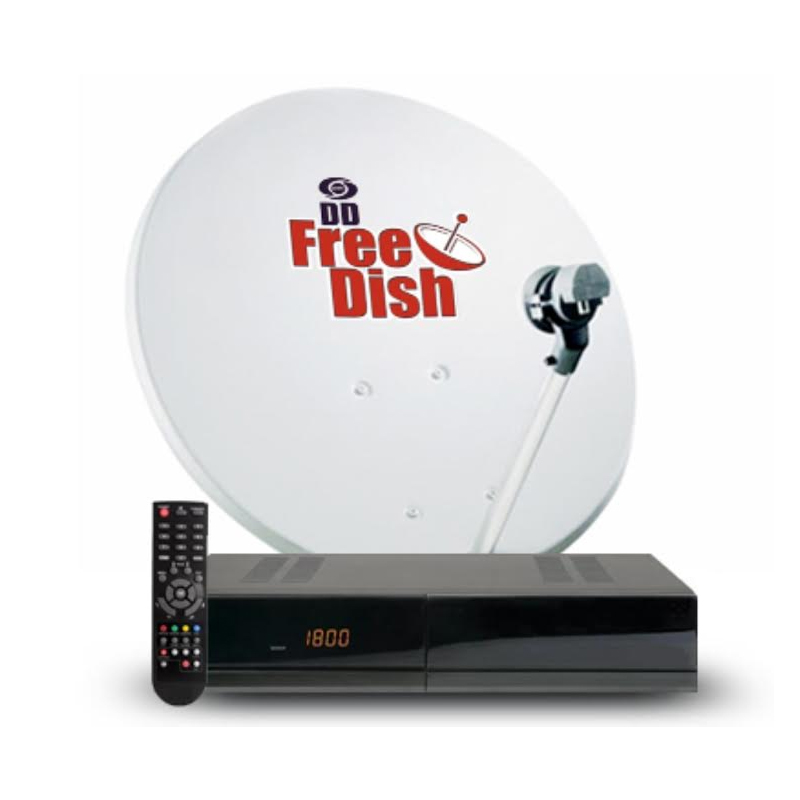
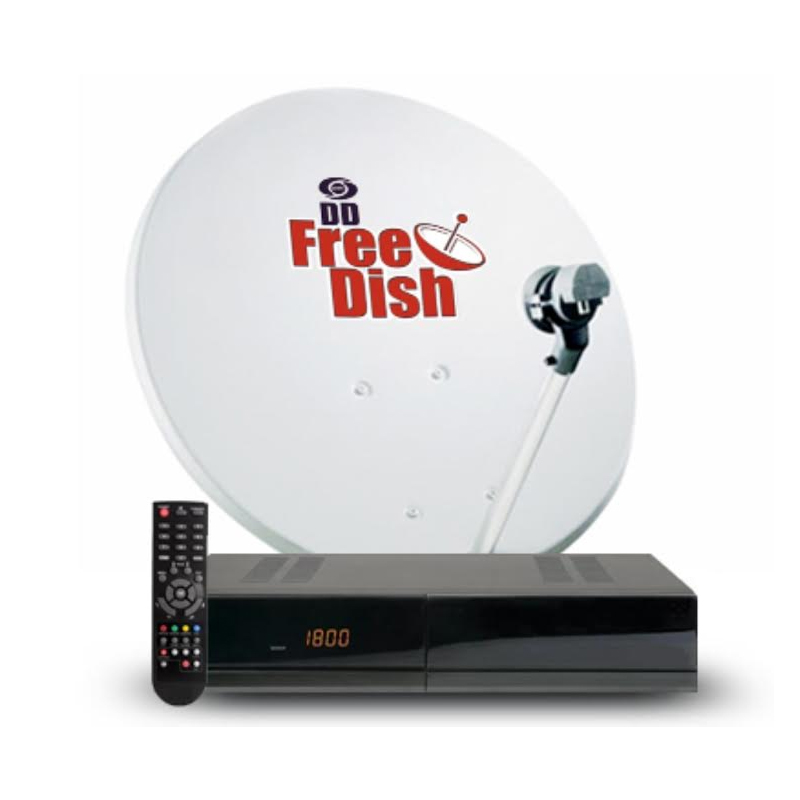
    NEW DELHI: Public broadcaster Prasar Bharati's free-to-air DTH platform DD Free Dish has continued its strong growth trajectory and the service’s subscriber base has crossed an estimated 40 million, according to the EY FICCI Media Entertainment Report 2021.

    The growth has been attributed to less expensive television sets, economic issues, launch of the DD Retro Channel and return of big broadcasters to the Free Dish platform, said the ministry of information and broadcasting in a statement. DD Free Dish has also become a second set-top box within the home, used when there are no large events on television in some cases. Free Dish distributors have mentioned year-on-year growth in sales as well as the inability to keep up with demand due to a shortage of China-manufactured chipsets.

    The report also estimates that television households will continue to grow at over five per cent till 2025, driven by connected TVs which could cross 40 million by 2025 and DD Free Dish could cross 50 million.

    The multi-channel free-to-air Direct to Home (DTH) service of Prasar Bharati, presently hosts 161 TV channels including 91 Doordarshan channels (comprising 51 co-branded educational channels), 70 private channels and 48 radio channels. With effect from 1 April, DD Free Dish private TV channel bouquet would comprise of 10 Hindi GEC, 15 Hindi movies, six music, 20 news, eight Bhojpuri, three devotional and two foreign channels.

    It is presently under upgradation and is expected to add another few channels in its bouquet by May 2021. Recently, an online web app was released that aids consumers in finding DD Free Dish set-top box dealers based on their nearest location.

    The recent e-auctions for both MPEG2 and MPEG4 slots on DD Free Dish also saw robust bidding. Prasar Bharati earned nearly Rs 10 crore through the 53rd e-auction of MPEG-4 slots of DD Free Dish and 11 channels were successfully allocated MPEG-4 slots post the auction. "The new highs in individual bids breaching earlier levels in a sign of optimism in the broadcast sector overcoming Covid2019 shock," Prasar Bharti CEO Shashi Shekhar Vempati had said, post the results.

  • DD Free Dish sees robust bidding for MPEG-4 e-auction, 11 channels allocated slots

    DD Free Dish sees robust bidding for MPEG-4 e-auction, 11 channels allocated slots

    KOLKATA: Prasar Bharati has earned nearly Rs 10 crore through the 53rd e-auction of MPEG-4 slots of DD Free Dish. 11 channels were successfully allocated MPEG-4 slots post the auction.

    The 53rd round of e-auctions was dominated by news channels, with 10 out of the 11 slot up for grabs being won by news outlets. The channels that earned the FTA tag this time are: Chardikla Time TV, I Love Pen Studios, India News, India News UP/UK, Jantantra TV, News 18 UP/UK, News 24 Think First, News India 24X7, News State UP/UK, Samay, Sudarshan News.

    The bid values of these channels were in the range of Rs 76 lakh and Rs 1.12 crore.

    “Thankful to all broadcasters who have reposed faith in DD Free Dish platform. The e-auctions for both MPEG-2 and MPEG-4 slots have seen robust bidding and new highs in individual bids breaching earlier levels in a sign of optimism in the broadcast sector overcoming Covid2019 shock,” Prasar Bharati CEO Shashi Shekhar Vempati said.

    The pubcaster recently amended the policy guidelines for DD Free Dish slots. According to new guidelines, the reserve price for MPEG-4 slots have been fixed at Rs 50 lakh per annum. Earlier, the reserve price was Rs 5 lakh per annum.

    The amended rules termed ‘Policy guidelines for allotment of slots of DD Free Dish Direct-to-Home Platform to satellite TV channels (Third amendment) 2021’ came into force from 22 February.

    Under the old rules, the participation fee was at Rs 1.25 lakh which has been revised to Rs 10 lakh. The incremental amount in the auction bids of MPEG-4 slots stands at a minimum of Rs 2 lakh, compared to Rs 10,000 under the old guidelines.

  • Draft National Broadcasting Policy ready for consultation

    Draft National Broadcasting Policy ready for consultation

    NEW DELHI/KOLKATA: A bid to showcase Brand India to the world, more FDI, push for indigenous manufacturing of consumer premises equipment, and self-regulation – these are key propositions of the draft National Broadcasting Policy (NBP), which the government has proposed for the growth of India’s broadcasting sector.

    Stakeholders and policymakers have long felt the need for a comprehensive broadcasting policy to update the existing provisions to meet the newer challenges. Last month, the ministry of information and broadcasting (MIB) had intimated that work on the new policy was in full swing. The draft has now been finalised and shared with Prasar Bharati CEO Shashi Shekhar Vempati and other scientific ministries for further consultations.

    Indiantelevision.com has accessed the draft and here are some of the key takeaways from it:

    Quality content, affordable and accessible to all

    The draft policy aims to incentivise the creation of high quality content which is accessible and affordable to the widest audience possible. This will be done by ramping up local and regional production of broadcast content. DD will be leveraged to promote content that preserves cultural diversity and Indian value system.

    The reach of public broadcaster Prasar Bharati will be maximised across the country. The policy also suggests a review and audit of ‘must provide’ and ‘must carry’ provisions in broadcasting rules and regulations, wherever applicable, to ensure availability of content everywhere. Community radio stations would also get a boost under the new draft policy. They will be able to source news and current affairs content exclusively from AIR to transmit in the local languages. The policy also makes key provisions to ensure that persons with disabilities have access to television programmes. The accessibility standards laid down by MIB will be implemented in this regard.

    It also envisages the setting up of a common independent body for prompt and effective settlement of public grievances for all broadcasting platforms.

    Adoption of state of the art technologies and digital switchover

    In line with the Digital India initiative, the draft policy lays down strategies for wider adoption of digital technologies for terrestrial platforms. This includes phased expansion of digital terrestrial TV (DTT), roll out of a digital radio policy and cutting down costs of digital radio receivers and DTT set top boxes to spur adoption for at least three years. The I&B ministry is also looking to finally open the DTT to the private sector. The policy also aims to achieve complete transition to broadband-ready cable infrastructure by enabling upgradation to fully digital infrastructure and infrastructure sharing among distribution platform operators.

    Pitch for Make in India

    The policy aims to indigenise the production of consumer premises equipment including the set-top boxes, which is heavily import dependent. This will be done by setting up a self-reliant local manufacturing ecosystem. Bureau of Indian Standards (BIS) and other agencies will be roped in to publish the quality benchmark. Measures will also be taken to rationalise the import tariffs and provide preference to domestically manufactured electronic products and mandate increasing deployment of indigenous equipment.

    Infrastructure status to broadcasting

    MIB is prioritising the policies for granting infrastructure status to mass-manufactured equipment and components of broadcasting distribution services. As a part of the initiative, the ministry will prescribe minimum eligibility requirements to bring in parity with other sectors like telecom. Last month, MIB additional secretary Neerja Shekhar had also sought the industry’s support in getting infrastructure status and called on industry bodies like CII to conduct "good periodic surveys and research" on media consumption patterns that would help the ministry in formulating policies.

    Greater FDI in the broadcasting sector

    In its effort to catalyse the growth of the booming broadcasting industry, MIB has been focusing on foreign direct investment (FDI) policies. To attract greater FDI in the sector, it has envisaged creating an investor toolkit explaining the broadcasting supply chain with relevant rules and regulations. It also envisages establishing a liaison cell within the ministry to work on foreign investment-related complexities.

    The ministry is also looking to ease the licensing and permissions regime. It will also review existing governance frameworks for both television and radio segments to ensure time-bound clearances. The policy also suggests review mechanisms for notice, disclosure, reporting of interconnection agreements between broadcasters and distribution platform operators. It will also push liberalisation in extant conditions for mergers and acquisition in the FM radio sector.

    Strengthen self-regulation

    The draft policy also highlighted that self-regulation is emerging as the preferred option for content governance globally and India would make efforts to strengthen it. The ministry is working to amend the old Cable TV Act and revisit content restrictions on live events on radio on the basis of consumer demand and national security considerations.  The policy will also provide statutory recognition to Programme Code and guidelines administered by the Broadcast Content Complaint Council, as well as News Broadcasting Standards Authority.

    Back in December, MIB joint secretary Vikram Sahay had allayed regulatory concerns from digital players by stating that it will not strangulate creative freedom and will be in touch with the industry to iron out a model that is acceptable to all parties. However, the Centre is trying "to ensure that our consumers are protected in all ways" from fake news and other unacceptable content.

    Review the current audience measurement system

    In view of the recent controversy around TV viewership measurement, the policy also plans to review the current system of ratings to improve credibility. It also suggests developing a tool kit on good data practices. It will also look at SoPs for responding to cyber-security incidents for DPOs and audience measurement agencies.

    Expand global footprint of Indian satellites

    Of all the private satellite TV channels, around 70 per cent channels are being uplinked from foreign satellites. MIB is prioritising the matter of migration of Indian broadcasters to Indian satellites in the draft policy. To make this a reality, the ministry will look at rationalising license conditions, incentivising the migration, taking note of the industry’s requirement for Indian satellites’ footprints.

    Taking the public broadcaster beyond Indian territory

    MIB is upbeat about Prasar Bharati’s international expansion with the launch of Doordarshan international channel, strengthening AIR’s external services division. Among other provisions, the ministry is highly focusing on content security and content protection, fostering competition to create the level playing field, catalysing skill upgradation and development to foster better quality content, adapt with new technologies, extending the scope for co-production, student-exchange with foreign countries.
  • Discovery Kids partners with Doordarshan to inspire & entertain children across the country

    Discovery Kids partners with Doordarshan to inspire & entertain children across the country

    MUMBAI: Discovery Kids ass partnered with  national broadcaster Doordarshan with an aim to inspire and entertain children across the country.  As part of the understanding, starting July, select episodes of animated series, Little Singham, Kisna and Sheikh Chilli and Friendz are being showcased on National broadcaster at 8 am on DD National, every day.

    “Discovery Kids is committed to bringing high-quality content for the little minds that also keeps them inspired,” said Discovery MD – south Asia Megha Tata. “We are sharing some of the most exciting Indian animation with Doordarshan to give another reason for children who don’t have access to Discovery Kids to stay at home even as the lockdown is over.”

    Prasar Bharati CEO Shashi Shekhar Vempati said, “Over the last three months, we have showcased iconic programming to engage and entertain audiences even as the country braced with a pandemic. Discovery Kids’ programming on Doordarshan is another important chapter in this journey. I am grateful to Discovery for coming forward and sharing this content for the larger good of society.”

    Little Singham, launched by Discovery Kids in collaboration with Rohit Shetty Picturez and Reliance Animation, is an animated adaptation of ‘Singham’, India’s most successful supercop brand and biggest Bollywood blockbusters of all time, showcases the fun and thrilling adventures of a brave kid super-cop with Lion powers as he defends his town, country and the world from Bad guys, scary mutants and alien invasions. Sheikh Chilli and Friendz, co-produced by Apsons Entertainment Pvt Ltd, revolves around the adventures of an innocent boy Sheikh Chilli and his friends of Jhunjhun Nagar. His heart in the right place, but his plans and actions are a source of humor as well as trouble for his friends. Kisna, co-produced by Cosmos Maya, is a story of an adventurous and amusing young boy from Anandnagri and his adversary the wicked Raja Durjan of Andhernagri. Using his superpowers, Kisna, along with his friends, try to solve every problem with wit and valour.

  • “Most private broadcasters don’t give credit to live DD feed”: Prasar Bharati’s Shashi Shekhar Vempati

    “Most private broadcasters don’t give credit to live DD feed”: Prasar Bharati’s Shashi Shekhar Vempati

    NEW DELHI: Prasar Bharati CEO Shashi Shekhar Vempati is a little miffed with private broadcasters. The reason? While 200 TV channels carried Doordarshan’s live coverage of main events, most private channels didn’t give credit.

    “I asked my team to look at how many channels gave credit to Doordarshan. There were only a handful and the rest had cleverly masked the logo with advertisements. But as a public broadcaster, it's our responsibility to share content without any expectations,” he expressed in a conversation with Governance Now MD Kailashnath Adhikari.

    Vempati shared that over 160 million people watched the live telecast of foundation stone-laying ceremony of the Ram temple in Ayodhya, which resulted in viewership hike of more than seven billion viewing minutes across television in India. The event took place between 10.45 am and 2 pm on 5 August.

    Although it is a public broadcaster, Vempati believes there is a need for it to be monetised as well. “Monetisation is a priority because it improves our self-sufficiency and reduces dependence on public money."

    However, there are several constraints while monetising a public broadcasting channel. "Unlike a private broadcaster, I can't monetise everything and anything the way I want. I have certain obligations and responsibilities. And those are not necessarily commercial. So, to the extent that we do monetise, we also share a lot without any expectation of monetisation. One new area that we have been monetising is for digital especially our archival content,” he said.  

    He also mentioned that Doordarshan is planning to leverage the phenomenal success of Ramayana and Mahabharata.

  • POGO collaborates with DD National to simulcast ‘Chhota Bheem’

    POGO collaborates with DD National to simulcast ‘Chhota Bheem’

    MUMBAI: India’s homegrown kids’ entertainment channel POGO has partnered with public service broadcaster Doordarshan to simulcast ‘Chhota Bheem’, on DD National. The hugely popular animation features the superhero Bheem who comes all the way from Dholakpur to entertain kids every afternoon from 2-2:30 PM on DD National from April 17- May 3, 2020.

    WarnerMedia Entertainment Networks in South Asia managing director Siddharth Jain said: “These are challenging times and we believe that POGO’s fun-filled, relatable content will keep kids engaged and entertained. We are very pleased to collaborate with a platform as distinguished and popular as Doordarshan. The agreement ensures that an even larger number of young viewers across the country will be able to enjoy ‘Chhota Bheem’, one of our most prominent shows.”

    Prasar Bharati CEO Shashi Shekhar Vempati said: “Doordarshan is pleased to partner with POGO to simulcast Chhota Bheem on DD National. Chhota Bheem is one of children’s most favourite cartoon character, and we are delighted to bring him on our channel to entertain our young viewers.”

    Since the commencement of the lockdown, DD National has been re-telecasting its iconic shows to entertain viewers across age groups while they stay home. With this collaboration, DD National will be able to broadcast immensely popular and iconic kids’ entertainment content from POGO, captivating audiences across the country.

  • Prasar Bharati takes nostalgic ride with new channel DD Retro

    Prasar Bharati takes nostalgic ride with new channel DD Retro

    MUMBAI: Prasar Bharati is all set to take people on a nostalgic ride after the success of Ramayan and Mahabharat re-runs with its new fourth general entertainment channel DD Retro. The channel will air some of the old iconic shows like Upanishad Ganga, Mahabharat, and Chanakya, among others. Currently, it is available on DD Free Dish which reaches out to almost 30 million people across the country.

    In an earlier interview with Indiantelevision.com, Prasar Bharati CEO Shashi Shekhar Vempati said: "After the news of Ramayan made headlines and social media trends were dominated by it, we have had a flood of rights holders themselves approaching us with iconic content that aired in the past on DD."

    Last week, two of Doordarshan's general entertainment channels, DD National and DD Bharti entered the top ten channels list in urban as well as pay platforms. DD National grabbed the leading position with the broadcast of old shows like Ramayan, Mahabharat, Shaktiman, etc. DD National also started airing Subhash Sagar's Alif Laila. Prasar Bharati's aim is to ensure that people will get to watch their favourite old shows during lockdown.