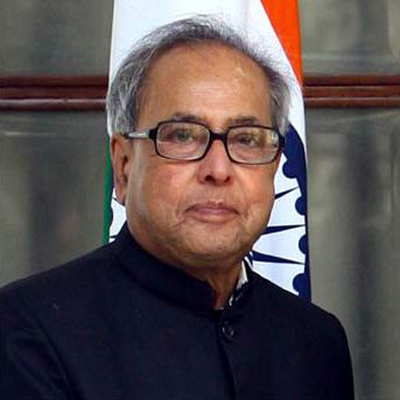
NEW DELHI: President Pranab Mukherjee has urged the film industry to look beyond markets and work together to help “nurture universal human values, which draw on our rich civilizational heritage that celebrates diversity and nurtures inclusiveness.”
In this context, he quoted the late filmmaker Ritwik Ghatak and said ‘Cinema is no art for me. It is only a means to the end of serving my people.’
The President was giving away the 62nd National Film Awards for 2014 at a function at Vigyan Bhavan yesterday.
Mukherjee said the advent of digitisation and modern technologies “do not mean that we lose touch with the grass roots. Our content has to be our strength as it is entrenched sharply in our vibrant cultural milieu. Cinema in India crosses all boundaries of region, caste, creed and religion. It reflects the immense diversity of our nation, which is home to different cultures, religions and languages. It shows the confluence of modernity as well as tradition as well as our ancient past and billion aspirations for the future.”
Mukherjee said cinema has been an integral part of Indian culture and entertainment from the days of Dadasaheb Phalke’s Raja Harish Chandra of 1913, the first film made in India. Indian cinema transcends national boundaries and is a powerful purveyor of ideas and values that impact the consciousness of millions of people. Indian movies not only showcase the multicultural diversity of the country but are also a tribute to its linguistic richness. They are a national treasure and our country’s “soft power” in the true sense of the term, forging international ties and navigating global horizons with ease.
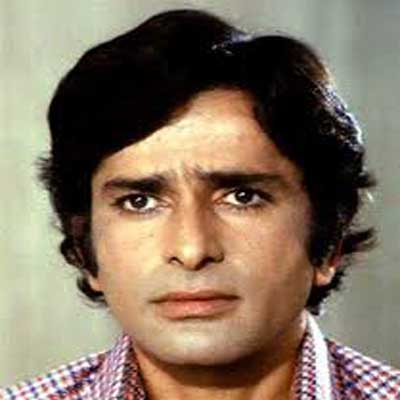
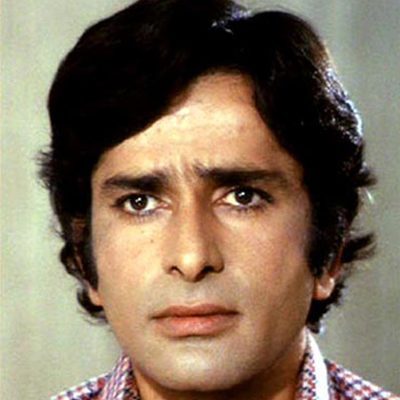
The Dadasaheb Phalke award to veteran Shashi Kapoor will be presented to him in a special function in Mumbai in view of his ill-health.
Mukherji said, “We live in a rapidly changing world to which the film industry will have to adjust and adapt. Technology has brought down the costs of production and expanded the mechanisms of dissemination. Still cameras and cell phones that record video can be now edited on a home computer and uploaded on the net. Promotion and marketing of films have now taken on a new avatar with substantial marketing happening on social media – news of a good film now spreads quicker on twitter than by word of mouth. I also understand 2014 saw the launch of four film and entertainment focused investment funds.”
He added that India is likely to soon embrace a completely digital ecosystem, which would help us connect with even larger numbers transcending geographical and cultural barriers. The President also urged the film industry to look beyond markets and work together to help nurture universal human values that draw on India’s rich civilizational heritage that celebrates diversity and nurtures inclusiveness. He congratulated all the Awardees for their contributions in various fields of cinema.
The President said that the Government was taking a number of steps for strengthening and promoting Indian cinema and the film industry. The Government is planning to set up a National Centre of Excellence for Animation, Gaming, and Visual Effects. A National Film Heritage Mission is to be undertaken by the National Film Archives of India for conservation/preservation, restoration and digitization of films made in the country. The Government also proposes to set up a Film Facilitation Unit, which will act as a facilitation point for filmmakers and production houses from foreign countries to enable them come to India and shoot their films in India.”
Information and Broadcasting Minister Arun Jaitley said Indian cinema had come a long way since its birth over a century ago. It has forayed into new avenues and innovated both in form as well as content. The production of cinema in various languages and dialects has taken this art form into new areas-geographically as well as socially.
He added that the changing social mores and aspirations also found its voice in this medium. The medium witnessed the triumph of the spirit of liberation and empowerment of women-centric themes on the Silver Screen. Social values have influenced our cinema and similarly our cinemas have had a great impact on our social values.
The Minister said, “Cinema is also a component of India’s soft power abroad. We lead the world average in terms of number of movies produced each year. Indian movies have found increasing acceptance in the international fora. Government is committed to take all possible measures towards the overall growth of the film industry – towards its even spread across the country and not restricted to certain pockets. Keeping this approach in mind, Government is keen to set up a Film & Television Institute in the North Eastern Region for the benefit of the young creative minds from that region.”
Jaitley said the saga of Indian cinema has been that of a spirit of entrepreneurship. Experimentation and innovation with new themes in form, content and technology have always been employed by creative movie makers of India. The times to come would witness disruption of familiar paradigm due to rapid strides in technology and its increasing presence in the space of our daily lives.
In his welcome address, secretary Bimal Julka said the Ministry had taken several initiatives in the film sector aimed at protecting, restoring and preserving our invaluable film heritage using the best available technology. Julka also said that in addition to the innate creativity of the film professionals, the continued growth is being experienced in large measure due to increasing systematisation of production processes, wider releases across an increasing number of screens, particularly multiplexes, aggressive promotion, as well as speedy adoption of emerging digital technologies, he added.
The highlight of the function was the live musical performance of Sukhwinder Singh and Uttara Unnikrishnan.
A total of 45 Awards were given in the Feature film category and 21 in the non-Feature Film category. Three awards were given to Best Writing on Cinema.
The Award for the Best Feature Film was given to Court (Marathi, Hindi, Gujarati & English) produced by Zoo Entertainment Pvt. Ltd. and directed by Chaitanya Tamhane. Asha Jaoar Majhe (Bengali) directed by Aditya Vikram Sengupta and producer: F.O.R Films Pvt. Ltd. received the Indira Gandhi Award for Best Debut Film of a Director. The Award for the Best Popular Film providing Wholesome Entertainment was given to Mary Kom (Hindi) produced by Viacom 18 Motion Pictures and directed by Omung Kumar.
The Award for the Best Director has been conferred on Srijit Mukherji for the Film Chotushkone (Bengali). The Award for the Best Actor was conferred on Vijay for the film Nanu Avanalla Avalu (Kannada) and the Award for the Best Actress was conferred on Kangana Ranaut for the film, Queen (Hindi). The award for the Best Children’s Film was shared by Kaakkaa Muttai (Tamil) and Elizabeth Ekadashi (Marathi). Master J. Vignesh & master Ramesh shared the Award for Best Child Artist for Kaakkaa Muttai (Tamil).
The Award for the Best Music direction (songs) was conferred on Vishal Bhardwaj for Haider (Hindi) and the award for the best music direction (Background Score) was given to Gopi Sunder for Nineteen Eighty Three (Malayalam). The award for the best lyrics was conferred on NA. Muthukumar for the song Azhagu from the film Saivam (Tamil). A special jury award has been conferred on Bhaurao Karhade for the film Khwada (Marathi). The award for the best choreography has been conferred on Sudesh Adhana for the film Haider (Hindi).