Tag: ShareChat

  • “ShareChat & Moj are focused on building robust creator economy in India”: Senior director Shashank Shekhar

    “ShareChat & Moj are focused on building robust creator economy in India”: Senior director Shashank Shekhar

    Mumbai: Social media company ShareChat which was founded back in 2015, became a unicorn in April 2021. It has raised several funding rounds over the years, most notably in 2021 as it scales up rapidly. Earlier this year, it raised $255 million from Google, Times Group, and Temasek. It is now valued at $5 billion after this multi-tranche funding round.

    In the first part of the round, ShareChat raised $266 million in December 2021 from Alkeon Capital, Temasek, HarbourVest, Moore Strategic Ventures, and India Quotient. Twitter, Tiger Global, and Snap are among the other investors of ShareChat.

    ShareChat’s parent company is Mohalla Tech. ShareChat, besides its app, also runs short-form video content platforms Moj and TakaTak. It had acquired Takatak from MXMedia earlier this year. The platforms cater to over 400 million users.

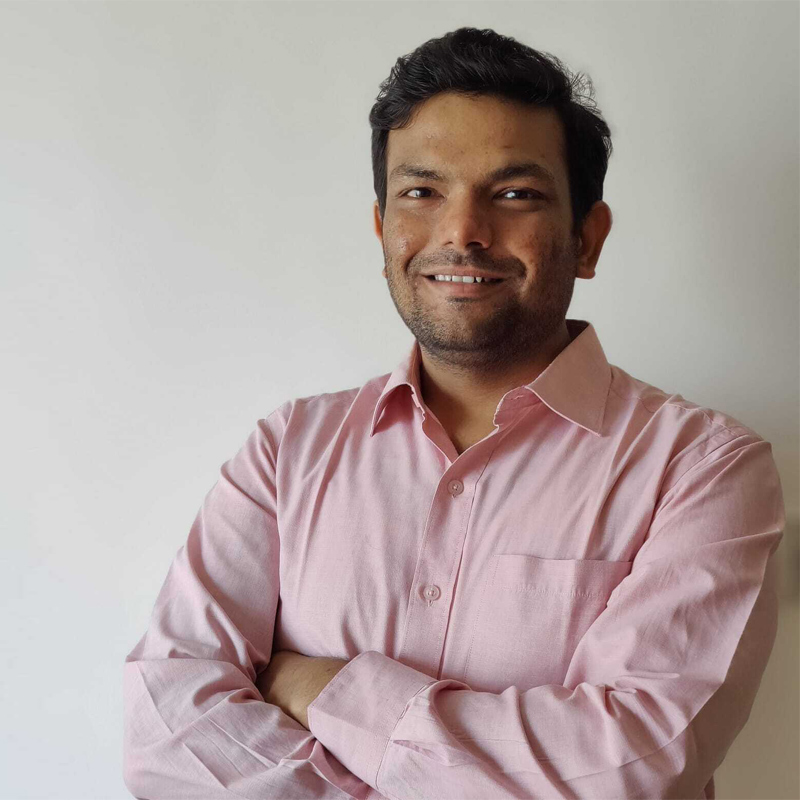
    Indiantelevision.com caught up with ShareChat & Moj senior director of content strategy and operations, Shashank Shekhar. Among other things, he shed light on how the company has built diversified monetisation avenues beyond advertising in areas like virtual gifting and video commerce.

    He leads content operations for the organisation and focuses on driving the growth of the user and creator communities across all languages. In his role, he manages the content operations, creator growth and management, feed and product operations, and the overall app experience. Prior to joining ShareChat, Shashank was an entrepreneur. He founded Circle Internet, an Indian language hyperlocal content platform in 2018, and Elegart Solar Technologies, a company focused on offering outdoor solar lighting solutions in 2014. Shashank also briefly worked with Grabhouse as category head-commercial in 2015.

    He is a BTech graduate in Material Science and Engineering from the Indian Institute of Technology, Kanpur. He is fluent in two languages—Hindi and English—and enjoys exploring all content related to social media.

    Edited excerpts:

    On the monetisation strategy for ShareChat

    Shashank: We opened ShareChat to monetisation through advertising in early 2020. We have been building ShareChat’s ad platform for over two years now. We personalise ads using machine learning and AI algorithms as this enables marketers to target their customers more effectively and makes advertisements feel very organic to the consumer. As a result, we can improve revenue yield while keeping customer retention rates high.

    As several brands want to collaborate with us to tap into regional markets with their large-scale campaigns, we are helping micro-influencers monetise their content through native brand endorsements.

    Last year, we launched virtual gifting on ShareChat Live Audio Chatrooms. This year we rolled out video commerce. We are the only platform in India that offers all three avenues of monetisation-brand collaboration, gifting, and commerce-to creators in a consolidated bouquet.

    We also introduced a self-serve advertising platform, ShareChat Self Serve Ads, a few months ago that enables SMBs to create highly targeted multilingual advertisements. So far, it has supported more than 1,500 SMBs in posting highly targeted advertisements on ShareChat.

    On the content creators and remuneration

    Shashank: More than 32 million creators use the ShareChat app, and nearly 50 million creators use Moj. A passion for creating content no longer fuels the creator ecosystem. It’s a lucrative career option, and creators are equipping themselves with the right tools, skills, and technology to stay ahead of the curve. ShareChat and Moj are focused on building a robust creator economy in India.

    To enable creator growth, Moj recently launched the ‘Moj For Creators’ programme to build a path of accelerated growth for talented creators at different stages. With plans to facilitate creator earnings worth Rs 3,500 crore by 2025, we have several revenue sources for creators on the platform—virtual gifting, influencer marketing, and video commerce. These avenues will help creators across India earn a sustained livelihood and pursue a full-time career as content creators, thereby fuelling the creator economy.

    Virtual gifting is among the successful revenue models for monetising the Live Audio Chatroom feature on ShareChat. The feature enables users to send virtual gifts in the form of digital tokens to the hosts or the chatroom creators, making them feel valued. We are one of the largest Indian virtual gifting platforms in the country right now. We have generated more than Rs 390 crore in annualised earnings through virtual gifting on ShareChat and have recently launched it on Moj, witnessing a similar trajectory of growth.

    On the live and video commerce partnership with Flipkart

    Shashank: Our Live and Video Commerce partnership with Flipkart has also been a key development. While enriching the viewing experience on the platform by providing convenient access to products that content creators are showcasing, it also allows creators to share their curated tastes with their community and opens a revenue stream for them. In recent months, Moj has also become a key social commerce platform in the country through its partnership with Flipkart.

    On trends being seen when it comes to user generated content

    Shashank: In the last two years, we have seen the growing popularity of live streaming content across both our platforms. ShareChat Live Audio chatroom has emerged as India’s largest voice-based hangout destination with 12 million+ MAUs. Users from across the country are joining the chatrooms to connect with like-minded people and express themselves. We have seen interesting use cases of our community organising birthday parties, satsangs, sermons, discussing movies, celebs launching songs and products, connecting with astrologers, jamming together through this feature.

    We recently announced the launch of live video streaming on Moj, giving creators from across the country access to create highly engaging content across different creative formats such as live talk shows, live game streaming, jam sessions, stand-up comedy, shayari, cooking, astrology, and much more. Since its beta launch, Moj LIVE is already witnessing one million daily active users watching live content on the platform.

    On the whitespace that exists

    Shashank: Of late, we have witnessed a growing preference for shorter video content from both the creator and viewer perspectives. Most of our user community prefer watching short videos that are less than 30 seconds, and are also inclined towards long format videos that are less than three minutes long.

    Users these days are looking for quick doses of entertainment and infotainment that can be consumed on the go. While comedy and challenges are the most popular content categories, infotainment content, where information is presented innovatively, in a fun manner, has a higher chance of getting more engagement. Moreover, we have seen an increase in interest in lifestyle content categories like food, fashion, beauty, and grooming, and e-gaming content is also getting popular amongst teenagers. 

    On the languages that people prefer for content consumption

    Shashank: By virtue of the large number of creators and users of that language in our country, Hindi content is consumed the most across our platforms. In the southern regions of India, regional languages like Tamil, Telugu, Malayalam, and Kannada take precedence. Other Indian languages are also gaining high traction among our users.

    On the plan to go deeper in terms of language offerings 

    Shashank: Today ShareChat is India’s leading homegrown social media platform that operates in 15 Indian languages, which include Hindi, Marathi, Gujarati, and Punjabi. Kannada, Malayalam, Bengali, Tamil, Telugu, Odia, Assamese, Haryanvi, Bhojpuri, Rajasthani, and Urdu.

    We are already present in the major languages of our country, and the short-term focus is to go deeper within them and deliver an unparalleled social experience for our community.

    On the challenge in scaling up rapidly

    Shashank: The ecosystem of social media and short videos has experienced rapid growth. Users have a wide range of options, and there is fierce competition. Only businesses with a strong retention engine—i.e., those with a high percentage of users who frequently use the app—will succeed in this market. The keys to ensuring users and creators continue to be dedicated to the apps are and will be constant innovation and product enhancement.

    The delivery of a user-specific content stream will largely depend on sophisticated recommendation engines. Most social media businesses are working to tackle the significant problem of hiring AI expertise and developing these networks.

    On the challenge posed by other platforms

    Shashank: With over 650 million Indians on the internet, there is a lot of ground to cover for all. Consumers stick to a particular platform if it is highly personalised to their interests. Both Moj and ShareChat exclusively focus on Indian users and customise the product based on their needs.

    Our goal is to make Moj and ShareChat the top two social media platforms in India. We have observed interaction overlaps between our platforms and US-based global social media platforms. This indicates that ShareChat and Moj are fulfilling certain needs of Indian audiences with their capability to reach out to language-first audiences.
  • “We help machines learn the content and AI understand the content”: TMW COO Ratnendra K. Pandey

    “We help machines learn the content and AI understand the content”: TMW COO Ratnendra K. Pandey

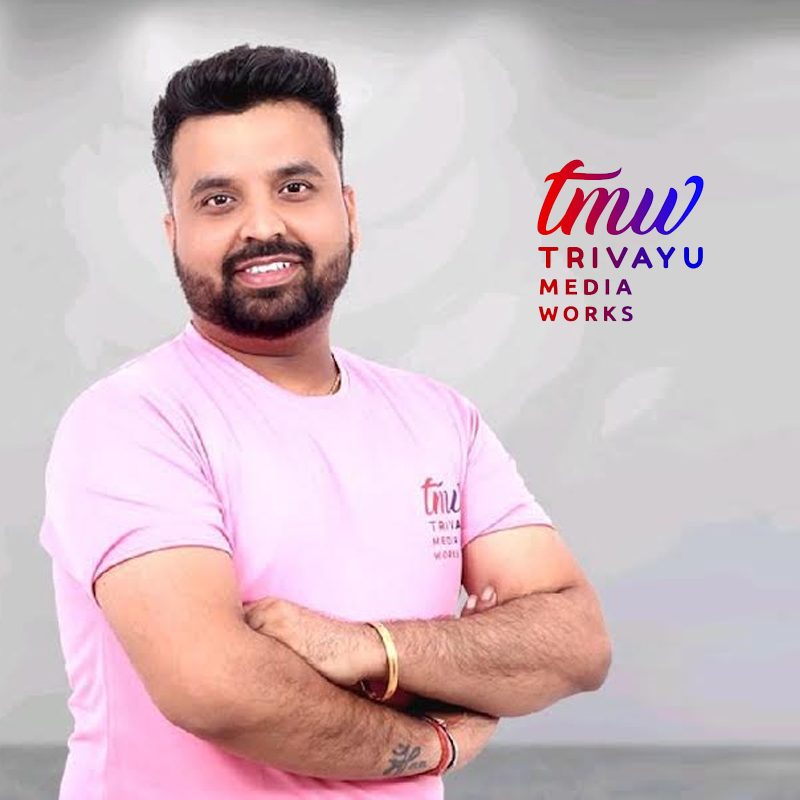
    Mumbai: Indian hyperlocal content and resource distribution platform TriVayu Media Works (TMW), which was founded on 29 March 2020, is going from strength to strength. The Noida-based company, which claims to be the country’s first hyperlocal content distribution company, today has more than 10 micro-offices and over 10,000 content partners in India. It was co-founded by Tanu Shree Rawat and Ratnendra K. Pandey. TMW said that it helps Indian companies target the hyperlocal market by creating super-niche content, marketing, and resource services.

    TMW has been providing a wide array of services which include resource management (end-to-end customer success services in 12 languages); content learning (content moderations, tagging, grading services in 12 languages); creative designs (2D, 3D, motion graphics, VFX); bulk content (India’s largest ecosystem to manually crawl content, write articles, create memes and photos).

    Presently, TMW has 15 full-time employees, 60 project-based (ad-hoc) employees, and 600+ contract-based partners.

    TMW says that its mission is to make the youth of India self-reliant with the simple tool of the internet and to create an effective ecosystem which recruits and trains more and more candidates. TMW has a network of over 10,000 people and has a unique micro-office-based model that it claims no other company currently offers.

    TMW added that it has catered to the needs of over 110 clients and reached out to over one billion users through its various social media platforms. The company is targeting Rs 50 crore in revenue in the new fiscal and expects 10X year-on-year growth. TMW is aiming to open two studios to support India’s rising live streaming content industry. One studio will be based in Noida while the other will operate out of Lucknow.

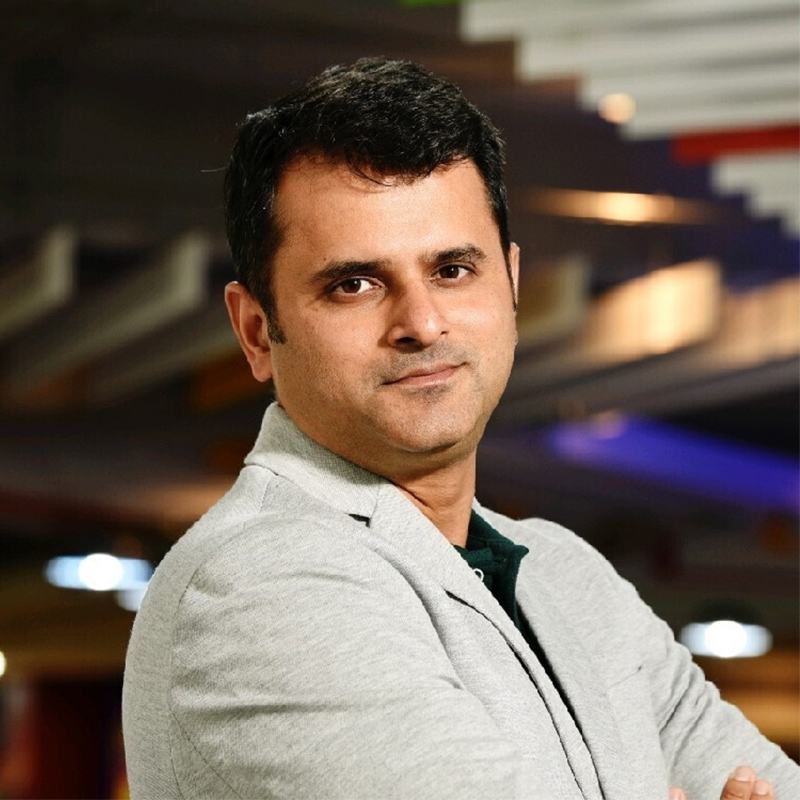
    Indiantelevision.com caught up with Ratnendra K. Pandey to find out more about the company’s plans. His responsibility is to manage the lead operations and steer the strategy for all departments. As the Chief of Operations, he is keen to raise the brand as per the companies’ requirements and immediate goals.

    He started his career as a journalist at a time when very few realised the potential of internet content. Initially, he started working at the digital desk of Star News (now ABP News). He has also worked with many companies, including Terrevive, a Hong Kong-based tech company; CCM Benchmark, a Paris-based content company; and a couple of more clients.

    To kick-start TMW, Pandey invested rupees eight lakh in 2020 from his own savings to strengthen the operations, on-board the right talent, and boost the growth of TMW.

    In his free time, Pandey loves to travel and explore new destinations. From 2017 onwards, he has explored 50 cities across 10 countries in the world. Traveling re-energizes the lost soul and fosters a sense of unity and love among his family members.

    Edited excerpts:

    On the market gap that he saw when launching TriVayu Media Works in 2020

    Ratnendra: The story of TMW started five years ago. When I was working with UCBrowser, I saw that when I had to reach out to people in tier two and tier three cities, I had no agencies. Agencies were in the metros and it was unusual for them to reach out to tier two and three cities. If they wanted someone who could create a video and write articles, it was difficult to find.

    This was the market gap that existed. So, before starting TMW, I spent six months developing a community network. These people are very well-trained in creating and writing content in hyperlocal languages based in tier two and tier three cities. They can do multiple things in the content domain.

    On whether COVID-19 forced a course correction

    Ratnendra: When I started TMW, Covid-19 had not yet arrived. In January 2020, I visited multiple cities in UP and Rajasthan. I thought of training people in these cities. For me, it is a personal story, since I come from a small city. TMW gives them training. I did this before officially launching operations. Covid-19 came in March. It gave us the power to support brands that were struggling. Brands were not getting the support from agencies as, all of a sudden, everyone was working from home. We were working on developing in a community that worked from home.

    On the services that TMW offers, like resource management and content learning

    Ratnendra: When you talk about resource management, there are two major domains, one being content moderation, tagging, and placing. Fake news is a concern for brands. On Instagram reels, you see similar content on your timeline. The majority of content is tagged by a human. So if someone is driving a car in a short video, it will be defined to the machine by a human being. Every video is defined. Similarly, if there is a bad video on level one, it will be filtered by AI (artificial intelligence), but on level two, there will be human interference. It is human interference that is tagging the content. We help machines learn the content. We help AI understand the content.

    On the 10,000 content partners that TMW works with

    Ratnendra: We try to develop smaller communities in tier two and three cities. In Rajasthan, we have around 1,500–1,600 people working for us. They are college graduates or post-graduate students. There are communities in 13 cities. In some, we have 100 people, 200 people, or 1,000 people. We educate and on-board them for more and more work.

    On the work that TMW does with clients like ShareChat and MXPlayer

    Ratnendra: We have been providing them with content services. For MXPlayer, we provide content learning services. A show concluded recently. The show was streaming 24*7. There is the comment section open to everyone, so people may use abusive language while commenting. It is the platform’s responsibility to not allow such comments. We were helping them filter such comments, delete them, and take action against the users. It was moderation work for the platform. For Sharechat, we provide them with trending content services based on events.

    On TMW’s USP vis-a-vis competition

    Ratnendra: There is no company that gives all our offerings. Some companies provide 30 percent of what we do. We also have quickly available resources. We work on that side before a client approaches us. We can service a client in 48 hours. We organise smaller events to train employees on clients’ requirements. So a brand may come tomorrow and ask for 20 people.

    We are ready for it and we are quick in terms of providing resources. We are also strong on the hyperlocal side. So we can provide someone in Rajasthan with a local dialect. Haryanvi farmers speak Haryanvi—a dialect and not a language. We can provide a company with someone who speaks this dialect and can then create a promotional video. The aim is to make the communication process smooth.

    On the two studios that will be opened to leverage the streaming opportunity

    Ratnendra: Streaming is the next big thing that is happening in the country. We are opening one studio in Noida and another in Lucknow. It is about serving as many businesses as possible. Resource or content creators must not have to travel as much. The aim is to save clients money, time and make it more feasible for the creators. If this is successful, we will open more studios and penetrate deeper.

    On the key things that marketers need to keep in mind when they use Internet-based channels to generate maximum ROI

    Ratnendra: The most important part is choosing the correct medium, whether it is influencer marketing or another platform.If you have to target a farmer and promote a tractor, you should target a Youtube influencer to do the job, not someone on Instagram or Facebook. They have a specific way of narrating & more and more people watch them from the farming community in villages. This is why research is important.

    On trends seen in influencer marketing

    Ratnendra: The trend is going to be hyperlocal. It has always been there. When you travel by road in Europe, the language changes. When you go from one country to another, the language changes. If you take a highway from Chandigarh to Maharashtra, you will encounter six to seven languages. You have platforms that target a certain language.

    Similarly, on social media, you see content in different languages. You do not have to use Hindi to speak to a farmer in a tier two or three city. If a brand is targeting consumers in Uttarakhand, then why not create an app in the Kumauni language? Why must you use Hindi? That is the opportunity for TMW.

    On the role of regional in brand storytelling

    Ratnendra: This trend started four years ago. Increasingly, you are seeing billboards in local languages. Other media will soon adopt more local languages. There is also a joy in conversing in one’s mother tongue. If an advertiser or brand wants to communicate a message, why not do it in a language that the consumer is most comfortable with? It is important to adapt to things in the local lingo.

    On whether brands use social media platforms like Instagram and Twitter better

    Ratnendra: Brands explore them. They use them. It is just that initially there was only English, then Hindi came, and then came the local languages. In the future, more local languages will debut. Brands that aspire to become big will go the local language route in communication.

    On TMW launching a podcast

    Ratnendra: The podcast aims to connect the brands that work with us with more people from tier two to three cities. The podcast communicates through voice. We will make multiple cuts and distribute them through multiple platforms, like short video apps. A podcast is the only thing that can be cut and distributed in as many mediums as possible.

    Memes are also doing well, but they target only a specific kind of audience. But the podcast format has a future in the country. It is still in an early stage in the country, and in the future it will take a larger piece of the communication pie. We are seeing influencers in fields like finance using podcasts and doing pretty well.

    On how brands are using augmented reality, AI, and machine learning to enhance their campaigns

    Ratnendra: Access is a challenge for augmented reality. There is a section of Times Square where such advertisements can be seen, but there is no such platform in India. Technology has to become easier to access. Most of the country stays in tier two and tier three cities. Until they can access it easily, it will not become a trend. In video creation, you do not need to involve AI or ML; you only use them for content distribution. They do play a role in determining where the TG of a campaign resides.

    On trustworthiness being an issue when one talks about digital trust

    Ratnendra: This is where branding comes into the picture. You will struggle till people trust you, especially if you are a D2C brand. You have to convince them, or you will not be able to sell.

    On LinkedIn’s efforts at content creation

    Ratnendra: LinkedIn is a professional community focused majorly on corporate intellectuals. The platform has also started paying attention to the creators. So, as it is majorly targeting people in metro and tier 1 cities, it is not likely that we see a lot of content in languages other than English. Yes, they have recently started promoting Hindi. It is exciting! The content on LinkedIn generally floats in two directions—formal or more educational. I believe, as far as the video content is concerned, it is an early stage for them. It is a promising area, but the category is limited. Success stories are popular. Business and finance stories are popular. But if you talk about the massy content, it will not get that kind of traction on LinkedIn. In fact, users on LinkedIn clearly understand it. However, during the last few months, LinkedIn has also become video-friendly. But right now it will not appeal to tier two, tier three cities.

  • Koo onboards Sunil Kamath as chief business officer

    Koo onboards Sunil Kamath as chief business officer

    Mumbai: Indian multilingual social media platform Koo has announced the appointment of Sunil Kamath as chief business officer. Kamath will lead growth strategies, marketing, business partnerships, monetisation and expansion at Koo – which is poised to empower over a billion voices with the freedom to share thoughts and opinions in a native language.

    He brings in a wealth of experience to Koo, having spent over two decades across various verticals of business development at high-growth companies. Prior to Koo, Sunil has worked in leadership capacities with ShareChat, Opera, OnMobile and Obopay, and was recently Play Magnus as regional VP Asia Pacific. An angel investor and advisor to several start-ups, he has been instrumental in building sustainable businesses and has domain expertise in consumer internet startups.

    Koo co-founder and CEO Aprameya Radhakrishna said, “We are pleased to welcome Sunil Kamath as our chief business officer. Having taken businesses from India to global markets, Sunil has the right experience and proven expertise in scaling and consolidating platforms. With our aligned vision, we will continue to grow Koo as a multilingual platform from India to the world.”

    Newly appointed Kamath said, “I am excited to be a part of the leadership at Koo, at this phase of hyper-growth as more users join in expressing themselves in a native language, create hyperlocal content and discover language communities. I look forward to contributing in Koo’s journey to become the multilingual platform of choice for language speakers from across the world.”

  • Mohalla Tech appoints Udit Sharma as CRO for Sharechat, Moj and Takatak

    Mohalla Tech appoints Udit Sharma as CRO for Sharechat, Moj and Takatak

    Mumbai: Mohalla Tech has appointed Udit Sharma as chief revenue officer for its social media platforms Sharechat, Moj and Takatak. He was previously associated with Disney+ Hotstar as head of ad sales for five years.

    Sharma announced his new role on LinkedIn, where he said, “For the last 5 years – I had the front-seat view of a platform that evolved from being just another streaming player to India’s most loved entertainment provider. Disney+ Hotstar – Thanks for an amazing journey!”

    “As for my next adventure, I am super stoked to be joining Ankush Sachdeva and Ajit Varghese at ShareChat/Moj and getting the opportunity to shape the local language content revolution in India.”

    Sharma is an experienced business leader with a history of working in media, mobile payments, fintech and consumer electronics. During his career of 18 years, he has been associated with Freecharge, Zomato and Samsung Electronics among others.

    He has completed his MBA from The Tuck School of Business at Dartmouth.

  • We are second only to YouTube: MX Media’s Karan Bedi

    We are second only to YouTube: MX Media’s Karan Bedi

    Mumbai: Times Internet backed MX Media is expecting to triple its revenue for its advertising video on demand (AVOD) business in the year 2022, according to its CEO Karan Bedi. “We have more than tripled our revenue last year and expect to triple again next year,” he said while speaking about its OTT business.

    In 2021,  MX Media’s OTT platform MX Player successfully scaled to more than one billion downloads and 280 million monthly active users globally. As its user base expands, the platform is effectively monetising its audience base by expanding its video offering. From a client perspective, MX Player is a part of all media plans and comes only second to YouTube in the consideration set for digital video advertising, remarked Bedi.

    Moreover, the company’s brand funded content business was spun off into a separate unit MX Studios. Bedi said, “The core focus of MX Studios is to provide brands another outlet to connect to their consumer. Branded content is something we’ve started to grow as a business and are bullish about it for the next few years. In terms of branded content, we’re second only to YouTube. Since, there’s only us and YouTube who have scale when it comes to AVOD in India, we’re very much a part of every client’s marketing plan.” 

    In February, MX Media sold its short video platform MX Takatak to Indian social media company Sharechat (Mohalla Tech) in a deal estimated at $700 million. Notably, MX Takatak was launched only in July 2020. Now, the company will focus on its long format video offerings including on-demand video and its game streaming offering MX Games.

    On the content front, the platform recently announced the launch of a reality series called ‘Lock Up’ in partnership with Balaji Telefilms. The show, which premiered on the platform on 27 February, is the streaming service’s first foray into unscripted content.

    “We are a data led organisation and were starting to see that our audience was ready for more. We have various partners who have done shows for MX Player and we have a lot of faith in Balaji (Telefilms) and Ekta (Kapoor) as someone who’s reinvented this business many times,” said Bedi.

    The OTT platform offers exclusive content in the form of MX Originals and has launched popular series such as “Campus Diaries,” “Bhaukaal 2” and “Raktanchal 2” this year. Despite being an AVOD platform, several MX Originals span across multiple seasons and garner more than 100 million views on the platform. It recently launched MX VDesi to house its international content acquired from Turkey, Latin America, Korea and Middle East and dubbed in Hindi.

    MX Player has not shied away from direct monetisation, with the launch of its MX Gold feature which allows subscribers to watch videos without any ads whatsoever. “MX Gold is not monetising access to content but rather it allows you to watch content ad free,” explained Bedi.

    “MX Player overall has multiple layers of monetisation. As we go forward, we think there is an opportunity to add on newer monetisation models as we continue to expand our user base. That can be NFTs or other blockchain based currencies. We have said from day one that we are a super entertainment aggregator. Our shows are an important vehicle for taking some of these opportunities and scaling them,” concluded Bedi.

  • Sharechat to acquire short video platform MX Takatak for $600 million

    Sharechat to acquire short video platform MX Takatak for $600 million

    Mumbai: Indian social media platform Sharechat has agreed to buy Times Internet-owned short video platform MX Takatak in a $600 million deal that includes a combination of cash and stock.

    MX Takatak is slated to be rebranded in six months and the target for the closure of the deal was at the end of this month, according to Moneycontrol.

    The report indicated that the value of the acquisition may change towards the closure of the deal.

    Mohalla Tech, the parent company of Sharechat, will also integrate 180 employees under MX Takatak as part of the acquisition. It currently employs over 2000 people. 

  • Tips Music strikes multi-year licensing deal with ShareChat and Moj

    Tips Music strikes multi-year licensing deal with ShareChat and Moj

    Mumbai: Tips Music on Tuesday announced a multi-year licensing deal with social media platform ShareChat and short video app Moj. The deal is one of the largest music deals announced this year by the company.

    The partnership will allow the 340 million active users, on both ShareChat and Moj, access to not only Tip’s latest upcoming music content but its massive catalogue of Indian music to create their own short video content using the in-app library, said the statement. 

    The robust music library offers thousands of songs in diverse Indian languages like Hindi, Bengali, Tamil, Marathi, Telugu, Malayalam, Kannada, Punjabi, Gujarati, and Bhojpuri across genres like film or non-film songs, devotional music, ghazals, and indie-pop.

    “It’s been a pleasure continuing our collaboration with ShareChat and MoJ, they are an amazing team and really have established themselves in such a short time frame, with this partnership both companies will continue to grow side by side and open possibilities for creators and users to explore their creativity,” said Tips Industries chairman and managing director Kumar Taurani.

    “Our multi-year deal with Tips Music is a key part of our strategy to be an ally of the music industry and a signal of our increasing focus on ensuring music fans have the widest library of music available on a short video platform in India to create fan-powered videos,” ShareChat and Moj senior director music partnerships Berges Y Malu. “Tips Music’s large catalog of content spreading across languages and genres provides our users with access to amazing music to create immersive social experiences. These partnerships help artists grow their audiences and break songs across India.”

  • Tata Open Maharashtra onboards ShareChat, Moj to promote tournament

    Tata Open Maharashtra onboards ShareChat, Moj to promote tournament

    Mumbai: The Tata Open Maharashtra on Tuesday announced its partnership with social media platform ShareChat and short video app Moj. The tennis tournament has started at Balewadi Stadium in Pune on 31 January and the event will go on till 6 February.   

    This partnership will allow ShareChat and Moj communities to access engaging content around the sport, with a special category titled ‘Tata Open Maharashtra’ to be created under the sports tab in ShareChat, said the statement.   

    Tata Open Maharashtra tournament director Prashant Sutar said that the partnership will aim to reach out to a much larger audience, especially millennials and Gen Z. “The tournament has always attracted the audience with the participation of top names from the world and enjoys a great viewership in India. We are delighted to have a partnership with ShareChat and Moj for creating exciting content around the tournament to engage more audience,” he added.

    The fourth edition of Tata Open Maharashtra is organised by the Maharashtra State Lawn Tennis Association. Star Sports Select channel and Disney+ Hotstar are broadcasting the tournament on its network.

    “We are delighted to partner with Tata Open Maharashtra and give ShareChat and Moj communities the opportunity to witness a prominent tennis tournament. ShareChat & Moj are the perfect platforms to revel in sports and connect with tennis fans pan India,” commented ShareChat and Moj senior director of content strategy and operations Shashank Shekhar.

  • RuPay Prime Volleyball League onboards ShareChat, Moj as content partners

    RuPay Prime Volleyball League onboards ShareChat, Moj as content partners

    Mumbai: In the lead up to the RuPay Prime Volleyball League which begins on 5 February in Kochi, social media platform ShareChat and short video app Moj have announced their association with the tournament as official content partners.

    The RuPay Prime Volleyball League will witness seven franchises from seven different cities battle it out for the trophy next month. This will include Calicut Heroes, Kochi Blue Spikers, Ahmedabad Defenders, Hyderabad Black Hawks, Chennai Blitz, Bengaluru Torpedoes and Kolkata Thunderbolts.

    ShareChat and Moj boast a reach of 32+ million and 50+ million respectively. ShareChat has a 180 million monthly active user base while Moj has over 160 million MAUs. RuPay Prime Volleyball League will work closely with the two platforms and the players as well as the teams to bring content that will catch the imagination of volleyball fans, said the statement. “The teams and players will also be creating their profiles on the two apps to engage with fans through contests and challenges,” it added.

    “We are extremely delighted to associate with RuPay Prime Volleyball League as their official content partners,” said Sharechat and Moj senior director content strategy and operations Shashank Shekhar. “Volleyball’s popularity has been increasing over the years amongst users across India and we are eager to share engaging content around the sport with our community. We are looking forward to bringing Volleyball alive on our platforms with this association.”

    Sports marketing firm Baseline Ventures is exclusively marketing the RuPay Prime Volleyball League. The global card payment network from India RuPay has come on board as the title sponsor and Fantasy games brand A23 has signed on as ‘powered by’ sponsors in a multi-year deal. EatFit and Nippon Paint are associate sponsors, while Cosco is the official partner.

    “It is imperative for us to take the RuPay Prime Volleyball League to all corners of the country. This association with ShareChat and Moj will help us share engaging content with volleyball fans and give them an opportunity to experience the League from their respective locations,” commented Baseline Ventures co-founder and MD Tuhin Mishra.

    The RuPay Prime Volleyball League will consist of 24 games that will be broadcast live and exclusive on Sony Ten 1, Sony Ten 3 (Hindi) and Sony Ten 4 (Tamil and Telugu).

  • ShareChat appoints Akshat Sahu as director of marketing

    ShareChat appoints Akshat Sahu as director of marketing

    Mumbai: Homegrown social media platform ShareChat has brought on board Akshat Sahu as director of marketing. He will report to Moj and ShareChat chief commercial officer Ajit Varghese.

    Sahu will be at the helm of all the marketing efforts and drive the platform towards a more accelerated growth among the user community and build top-of-the-mind recall in the branding and advertising community, the platform said in a statement on Monday.

    Prior to ShareChat, Sahu was heading marketing for emerging sports at Star Sports. He led the marketing strategy for diverse Indian sports, including football, kabaddi, hockey, and badminton. He also led the entire marketing and strategy of Channel [V] India in his earlier role at Star India.  

    Commenting on the new appointment, Ajit Varghese said, “Akshat brings in a strong set of skills and his expertise in branding and marketing will add a lot of value to our team. He is a proven marketing leader with strong strategic acumen, in-depth consumer insights, and a highly efficient operational focus. We hope he will bring immense value and spread our brand reputation across the diverse group of stakeholders as we continue to build ShareChat on our long-term strategy.”

    An alumnus of MICA Ahmedabad, Sahu commands over 15 years of experience in branding, marketing, consumer research, strategy, sales, and P&L management.

    Speaking on his new role, Sahu said, “I have always been intrigued by the diversity of India and it is a special opportunity to be working with a company that is pioneering the Indic language conversations in the internet space. I am looking forward to contributing to the company’s growth with my core area of expertise and making ShareChat a household name in India.”