Tag: Sharad Pawar

  • Maharashtra political dance pips English News ratings 24 per cent in week 48

    Maharashtra political dance pips English News ratings 24 per cent in week 48

    BANGALORE: The political dance, the shenanigans by various political parties for premiership in Maharashtra politics provided News channels with more eyeballs in week 48 of 2019 (Saturday, 23 November 2019 to Friday, 29 November 2019, week or period under review) as compared to the previous week according to Broadcast Audience Research Council of India (BARC) weekly data. 

    BARC data for the Top 5 English News channels for the period under review saw the combined ratings of the top 5 channels from the genre spike up to 2.211 million weekly impressions from 1.780 million weekly impressions during the previous week. 

    While the channels in the lists for both weeks were the same, there was some tweaking in the ranks – Public broadcaster Doordarshan’s English News channel slipped to fifth rank in week 48 from third rank in week 47 of 2019. The India Today group’s India Today Television climbed up a place from fourth rank to replace DD India, while Network18’s CNN News 18 also climbed up a place to fourth rank in week 48 of 2019.

    As mentioned by us earlier, the combined ratings of the Top 5 English News channels had breached a new nadir during week 47 of 2019 to reach an all-time low since BARC recommenced publication of viewership data in the public domain in week 13 of 2019. For the optimist, viewership of the English News genre could only go up from that low of week 47 of 2019.

    Please refer to the figures below:

    Top 5 English News channels in week 48 of 2019

    The Arnab Goswami led Republic TV continued its dominance of the English News genre at first rank in week 48 of 2019 with an increase in weekly viewership of 35 percent or 0.197 million weekly impressions to reach 0.755 million weekly impressions from the 0.588 million weekly impressions it had garnered in the previous week.

    Times Now continued at second place with a 35 percent or 0.146 million weekly impressions increase in week 48 of 2019 to reach 0.561 million weekly impressions from 0.415 million weekly impressions in week 47.

    India Today Television climbed up a place to fourth rank with an increase of 36 percent or 0.102 million weekly impressions  in week 48 of 2019 to reach 0.383 million weekly impressions from fourth rank and 0.281 million weekly impressions in the previous week.

    CNN News18 also climbed up a place to fourth rank with an increase of 0.05 million weekly impressions in week 48 of 2019 to reach 0.268 million weekly impressions from fifth rank and 0.218 million weekly impressions in week 47.

    DD India slipped two places to fifth rank in week 48 of 2019 with a decline of 0.064 million weekly impressions to reach 0.244 million weekly impressions from third rank and 0.308 million weekly impressions in the previous week.

    Please refer to the figure below:

  • Indian cricket’s Rocky Balboa – Jagmohan Dalmiya passes away

    Indian cricket’s Rocky Balboa – Jagmohan Dalmiya passes away

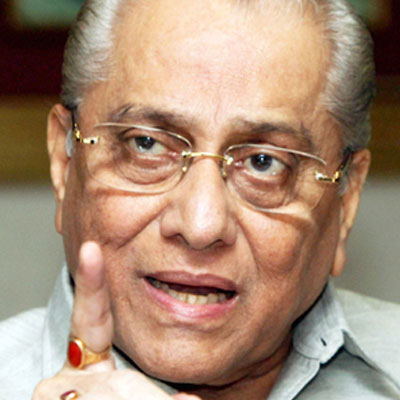
    MUMBAI: The man had a lot of problems with India not hosting any big cricket tournament in its own backyard, the man who actually understood how big a business cricket is, the man who played a pivotal role in making the Board for Control of Cricket in India (BCCI), the richest cricket body in the world, the master of comebacks, the real politick – Jagmohan Dalmiya, president of BCCI, aged 75 died due to gastro intestinal bleeding on 20 September. He had been hospitalised since Thursday following a cardiac arrest.


    In the year 1979, Jagmohan Dalmiya – the son of construction tycoon Dalmiya and Co family joined BCCI, but he came in the forefront after winning the holding rights of world cricket’s biggest tournament – the World Cup in 1987. 


    At an early stage of his administrative career, he understood the value of making money, from advertisements between the overs to on-field sponsors, Dalmiya was instrumental in playing out every such initiative. 


    His opponents took many routes to oust him but true fighter that he was, Dalmiya made a come back each time. In 2006, he was accused of “misappropriation of funds” and was thrown out of all BCCI administrative posts. Media pundits claimed his administrative career to be clinically dead and a new era was welcomed under politician Sharad Pawar. 


    However, the game of the king of comebacks, was anything but over. Dalmiya overcame all obstacles with ease, hunger and political smartness. A year later in 2007 he made a comeback as president of Cricket Association of Bengal. In 2013 he took up the role of BCCI acting president when N Srinivasan was forced to step aside. In 2015 he became BCCI president again.


    His fights were not limited to cricket administration. Even off the field, whenever needed he made notable appearances to fight for his players. In the 2001 South Africa tour, several Indian players were reprimanded by English referee Mike Denness, which was backed by ICC chief executive Malcom Speed. But Dalmiya decided to back his players and it turned out to be a war between Dalmiya and rest. The result was overwhelming. The third test for which the players were reprimanded became an unofficial one, other than the ban on Virender Sehwag, all other bans were lifted. The most important and notable outcome of the entire Denness Affair was that the Englishman managed to officiate in only two test matches and three ODIs. Post that, his contract was never renewed by the ICC.


    Dalmiya was at the forefront of many creations but what arguably will remain as one of the biggest creation of his would be cricketer Sourav Ganguly. Many still say that the master class batsmen would have never worn the national jersey if Dalmiya was not there in the administration. It was he who played a vital role in Ganguly’s debut.


    Many BCCI leaders will tweet and give news bytes condoling his death, but the only way to respect his contribution will be by bringing utmost transparency in the board’s administration. 


    Rest in Peace Mr. Dalmiya!

  • Jagmohan Dalmiya is Rocky Balboa of India

    Jagmohan Dalmiya is Rocky Balboa of India

    BCCI elections are always overhyped. Sometimes the hype even crosses the level of Lok Sabha and Assembly Elections. It is impossible to make out who is supporting whom, who is foe and who is friend. N. Srinivasan joined hands with Sharad Pawar and Ranbir Singh Mahendra to dethrone Jagmohan Dalmiya in 2004 and now 10 years later Srinivasan seconding Dalmiya is indeed unpredictable. Isn’t it?


    Unless Sharad Pawar is certain that he is going to win the election, he won’t contest it and that’s what exactly happened. It’s nothing new. Every time during BCCI elections we see such mutual understandings or adjustments. I would term it old wine in new bottle.


    Indian cricket has reached an abysmal low with so much of judicial introspection and legal obligations and it is highly important to regain the integrity of the game. Officials need to plan and act so that they can earn back the faith of cricket lovers, like me, who follow the sport. Why do we need a Supreme Court to intervene when there is a Board and its legal bodies and guidelines? The first priority of the board should be ensuring the fans that they are following a clean sport.


    Now the newly elected President is not someone new to BCCI, neither is he a politician. He has proved himself in numerous occasions. It was Dalmiya along with I S Bindra who won the rights for hosting World Cup in South Asia. When he joined BCCI it was not a very rich body, but when he left, BCCI was the richest cricket board of the world. His contribution to ICC is also of very high standard. Overall he is a veteran cricket administrator, who has adequate knowledge of the sport. He has all the potential to repair the damage done; he did it in the past too. Indian cricket was brutally affected by match fixing in 1999 -2000 but he got people’s faith back to the game. I have high expectations from Jagmohan Dalmiya as a liberal and unbiased cricket analyst and I hope he delivers. I will end with a comparison, Jagmohan Dalmiya is Rocky Balboa of India, no matter how much you try to pin him down he always gets up to deliver the knockout blow.


    (These are purely personal views of Former first class cricketer and a veteran cricket analyst Hemant Kenkre and indiantelevision.com does not necessarily subscribe to these views.)

  • It was Modi vs. the rest in Maharashtra: Nikhil Wagle

    It was Modi vs. the rest in Maharashtra: Nikhil Wagle

    My 10 takeaways from Maharashta Assembly election:


    1) The just concluded 2014 Assembly Elections in Maharashtra will go down as a historic development in the state’s politics, which has the potential to transform the face of Maharashtra. For the first time, a non-Congress party has reached a near majority. Since the inception of Maharashtra, BJP had never managed to reach the three-digit figure. Their highest number was 65 in 1995 when they formed the government with the help of their elder brother, Shiv Sena. But this time around, with 123 seats, BJP has inspired a tectonic change.


    2) The anger against the 15 years regime of Congress and NCP was palpable among the electorate. Serious corruption charges were labeled against the government, which they were unable to refute. Voters desperately wanted a change. The alternative was offered not by BJP, but by Prime Minister Narendra Modi whose impact was experienced during the Lok Sabha elections. Modi filled the credibility vacuum created by local leaders like Sharad Pawar, Prithviraj Chavan, Ajit Pawar and so on. Voters believed in Modi and decided to give him a chance. This is not a verdict for BJP, but Modi. It was Modi verses the rest.


    3) In spite of Modi’s popularity, BJP could not reach the magic figure of 144 in the assembly of 288 members. BJP’s national president Amit Shah tried his best with his electoral arithmetic. But Shiv Sena was able to stop them in regions like Kokan. In Vidarbha, BJP won 44 out of 62 seats. It is a big achievement, but the expectations were higher. The last minute decision of dropping the demand of separate Vidarbha from their manifesto could have damaged BJP here. In north Maharashta too, BJP could not live up to the expectations due to their weak party machinery. The lack of credible indigenous leaders and fragile cadres at remote places are the reasons behind BJP not crossing the halfway mark.


    4) Political pundits are blaming Uddhav Thackeray for Shiv Sena’s debacle. But I don’t agree with them. In fact, this is the best performance of Shivsena after 1995 when they got 70 seats. This time around, they were able to win 63 in spite of Modi onslaught. Many thought that Shivsena would be swallowed by the Modi-juggernaut but it did not only survive the storm but came out with their self respect intact. Credit goes to aggressive campaigning by Uddhav and grassroot machinery of party.


    5) Was it development verses Marathi pride, where the emotional issue took a back seat? I again disagree. Development was never ever a focus in this campaign. It was about clean and trustworthy leadership, where Modi won the battle. But along with this, the issue of Marathi pride helped Shivsena to protect their strongholds in Mumbai, Thane and Kokan. In fact, they totally snatched this plank from Raj Thackeray’s MNS.


    6) As far as MNS is concerned, this election has been a big blow to them. Raj is more charismatic than Uddhav. His oratory skills are as good as his uncle. But elections are never conquered on charisma. Due to wrong policies and frivolous politics, Raj has reached this stage. He started well in 2006, but was not able to build the party. In 2009 assembly elections, he had 13 MLAs, now he is decimated to just one. It is time for him to introspect.


    7) Raj should introspect but if there is anyone who needs utmost introspection, it is Congress and NCP. They have reached their lowest ever number in assembly elections. Congress is a house divided and NCP is totally engrossed in their politics of money and muscle power.


    By declaring unconditional support to BJP, Sharad Pawar once again proved his ‘Pawar Power’, which a common voter will only perceive as shameless opportunistic politics.


    8) This election could possibly write another chapter in the history of criminalisation of politics in Maharashtra. 165 of 288 newly elected MLAs have serious criminal charges against them and most of them are crorepatis.


     9) The participation of women candidates has been disappointing. Only 20 women candidates will be seen in the assembly, which is 7 per cent of the total assembly strength of 288. One wonders if it is still appropriate to call Maharashtra a progressive state.


    10) This election will also mark a black chapter for media, which witnessed unprecedented ‘Paid News’. In spite of the monitoring by the Election Commission, nobody could nail this cancer. Political parties sniffed the opportunity and took maximum advantage of the situation. It has set a dangerous precedent and the credibility of the media suffered like never before.


    (These are purely personal views of Mi Marathi consultant and veteran journalist, Nikhil Wagle and indiantelevision.com does not subscribe to these views.)

  • Google partners with Network18 on ‘In Conversation’

    Google partners with Network18 on ‘In Conversation’

    MUMBAI: Network18 and Google announced a joint initiative today to help connect prominent politicians with voters across the country. The partnership involves a series of Google Hangouts with politicians titled ‘In conversation”. First in the series will be Arun Jaitley, Leader of Opposition, Rajya Sabha, who will be addressing voters live via a hangout session on 25th March.

    The 2014 general elections have been acknowledged to be the first in the nation’s history that will be extensively discussed, debated and fought on social media platforms including Google Hangouts and YouTube. The hangout series will involve politicians such as West Bengal CM Mamta Banerjee, Jammu & Kashmir CM Omar Abdullah, Madhya Pradesh CM Shivraj Singh Chauhan, NCP President Sharad Pawar, noted economist Jairam Ramesh and social activist Anna Hazare – discussing key topics and issues on the voters minds.

    Announcing the partnership, Rajan Anandan, VP and Managing Director, Google India, said, “India is a politically vibrant country and the 2014 general elections promises to be a landmark in the history of this nation – it marks the beginning of political parties and candidates embracing Internet to reach out to an educated and digitally savvy group of young and potential voters. We are very excited to partner with Network18 to provide our users with all the information they need and engage the leaders of the country on Google products.”

     
    Commenting on this, Ajay Chacko, COO, Network18 added “At Network18, as a leading editorial voice in the country, we have always focused on ideas and initiatives that encourage our citizens to participate and engage. ‘In Conversation’ is another milestone in this direction and it assumes greater significance given the 200 million+ fast-growing, highly aware digital audience that is shaping the agenda during these elections. We are happy to partner with google in this pioneering effort and are confident that this will serve our audiences well.”

     
    Speaking on the partnership, Rajdeep Sardesai, Editor in Chief, IBN18 Network, said, “Perhaps more than any other election in the past, these elections are about capturing the imagination of millions of both first-time as well as experienced voters. And it is evident that the frontier of this battle is online. ‘In Conversation’ is a landmark because it meshes the power of digital with the impact of a town hall’.

    Making full use of the power of social media and understanding the importance of getting real time feedback from the citizens of the country, Indian politicians have increasingly started using social media platforms like Google+ to reach out to the netizens. In 2012, Gujarat Chief Minister, Narendra Modi, was the first Indian public figure to use Hangouts to reach out to his audience. A number of politicians including Arvind Kejriwal of Aam Aadmi Party (AAP), Union Finance Minister P Chidambaram, HRD Minister Shashi Tharoor and others have used Google+ Hangouts to connect with Indian citizens.

    Don’t miss this special series beginning Tuesday, March 25, 2014 at 10:00 PM on CNN-IBN and at 9:30 PM on IBN7.


  • Astill’s study of India through cricket binoculars

    Astill’s study of India through cricket binoculars

    The book came out last month; but our review has found space on indiantelevision.com only in September. Readers, who have not yet got their hands on the book, would be wise to do so. I am a cricket fanatic and thoroughly enjoyed reading this fast paced close peek of the evolution of modern India. And would advice you to do the same if you love the game of the red cherry – or white one – if one looks at what’s in use in modern day cricket.

    James Astill

    James Astill, the Economist’s correspondent in India between 2007 and 2010, watched the rise of IPL. With cricket’s biggest shebang as the back ground, he has gone on to narrate a wider story of modern India.  Much of this story is known. Yet while Astill relies on previously published material, what makes his book exceptional is his first-hand reporting.

    The ‘tamasha’ of Astill’s title is a Hindi word meaning entertainment or show. As he tells the story, it was inevitable over time that the Indian public would forsake the extended dramas and longueurs of Test cricket for the shorter, more colourful and energetic forms of the game. This process began with India’s completely unexpected victory at the 1983 World Cup under the leadership of Kapil Dev, and has now reached its ultimate incarnation in the cat and mouse game also termed as the Twenty20 format and controversy’s favourite child the Indian Premier League.

    Astill is a keen follower of the game and says “the story of Indian cricket is not only about cohesion and success, but is deeply pathetic.” He has very objectively and figuratively described the poor state of infrastructure in the country; a place where millions of children aspire to wear the Indian jersey someday. But the harsh truth is they are unlikely to even get a chance to play an organised version of the game, with a good bat and leather ball. One of the most touching stories is of the railway clerk in Rajkot who, using a concrete pitch and tattered nets, has coached several first-class cricketers, including his son – now a leading light of India’s Test team.

    Politics in democratic India, Astill observes, is “feudal, corrupt and vindictive”, and the administration of cricket is no more than an aspect of politics. Money was everything in the establishment of the IPL, the cricket itself almost incidental. More than $700 million was paid for the first franchises. The Indian captain, Mahendra Singh Dhoni, is reckoned to earn $21 million a year from the game. Foreign mercenaries such as Kevin Pietersen and Shane Warne were bid for like prize bulls at a livestock market. At some matches the players’ salaries were flashed up on the scoreboard alongside their batting averages; going on to emphasis the fact that the sport has been portrayed in a completely different light.

    Astill seems to have talked to everyone who is anyone involved in this deeply unattractive business – including Lalit Modi, the now-disgraced founder of the IPL, whose capacity for intrigue was exceeded only by his genius for making enemies. Almost equally disconcerting is the formidable Sharad Pawar, who combines the job of India’s agriculture minister with controlling the Indian Cricket Board and being president of the International Cricket Council.

    In comparison with the corporate (read: administrators) and the Bollywood stars who keenly follow the action from the boundary’s edge, the players seem considerably more likeable. Astill tracks down the inspirational Warne, former captain of the Rajasthan Royals. Warne speaks up expressively on behalf of Twenty20, before innocently sabotaging his case by admitting that “for me it’s always about Test cricket”.

    The striking thing about most of those in charge of the IPL is their lack of real passion for cricket itself. They are in it to seek exposure, to sell advertising, to exercise power. Almost none of the money filters down to fund coaching or grass-roots facilities. As for the games themselves, Astill’s judgment is that most lack tension and the real edge of competition.

    Astill relentlessly highlights all this and comes to the sad conclusion that India may end up killing the great traditions of cricket. And yet Astill finds that in the streets and on patches of waste ground in the slums and villages of India, (during his stint in the Indian-subcontinent) the game is furiously alive, uniting millions in the simple desire to hurl a ball fast or spin it with conniving intent, and to hit it far. “This is where Indian cricket resides,” Astill writes eloquently, “far from the elite, the corrupt politicians and turkey-cocking film stars who have laid claim to it.” And therein lies the hope that this most beautiful of games will survive.

  • ABP Majha celebrates excellence in Maharashtra

    ABP Majha celebrates excellence in Maharashtra

    MUMBAI: “Delhi gave me birth, Mumbai brought me up. This state and this city have made me what I am today,” said superstar Shah Rukh Khan at Majha Sanman Puraskar, ABP Majha’s pioneer initiative which celebrates the contributions of Maharashtrain’s in different fields.

    ABP CEO Ashok Venkatramani says, “We started this for recognising all the achievements that Maharashtrians have won, through excellence in their own fields and in the process have brought glory to the nation. It is a great motivator and it elevates people to greater heights that they deserve. We usually look at the last year or two and pick up stories of success and stories of excellence of Maharashtrians or people from the state of Maharashtra.”


    The awardees were selected on the basis of excellence in their respective feilds


    In its fourth year, the award function was indeed a memorable evening with union cabinet minister Sharad Pawar as the chief guest and Khan as the star attraction along with the ABP family. What more? The grand trophy is designed by eminent artist – Arzaan Khambatta who beautifully captures the dynamism, alertness, and effort of a Mahrashtrian to move ahead and benefit the society at large.

    ABP Majha recognises the work of Vijaya Mehta in the field of art

    Venkatramani informs,”This is a very well received award. It helps us to bond with our consumers and with our viewers. We are able to bring out unknown stories of excellence which is there all around the state, which otherwise does not get the focus and attention. By rewarding those achievers, we are rewarding not only from ourselves but on behalf of all our audiences.”

    (L-R) Kiran Nagarkar, Sharad Pawar and Aveek Sarkar

    ABP recognised and felicitated 11 living legends of Maharashtra, who have brought excellence in their chosen fields and have added to the pride of Maharashtra through their immense contribution.
    ABP COO Avinash Pandey emphasises: “All the people that we awarded, you wouldn’t find them getting awarded by all sections of the society. These individuals, at their individual level have done extra-ordinary service to the society. And we have recognised their contributions, irrespective of any commercial pressure. We don’t give award to anybody who doesn’t deserve it. And that’s the strength of ABP unlike many other awards which are available in the market.”

    Union cabinet minister Sharad Pawar graces the occasion as the chief guest

    The awardees this year included various personalities from Maharashtra who contributed greatly to the society in fields like art, literature, music, sports, fashion, entertainment and business. The winners are – Sanjay Nahar in Rashtriya Ekta, Rahi Sarnobat in sports, Sneha Khanwalkar in culture, Shri Milind Kamble in Industrialist, Amrishbhai Patel & Suresh Khanapurakar in social service, Dr. Chetan Chitnis in research, Prabhakar Kolte in Art (painting), Shrimati Vijaya Mehta in Art, and Shrimati Kishori Amonkar in music.

    Indeed, this is a wonderful brand property for the network considering that this gives it the opportunity to connect with the Marathi Manus sentiment of ABP Majha’s viewer’s base.

    Delhi gave me birth, Mumbai brought me up. This state and this city have made me what I am today, says Shah Rukh Khan

    Pandey talks about the importance of the awards from the business perspective. “This award function stands for three things. One, it generates extra-ordinary content for Television; Second, it helps as a party of the society as we are representatives of the society. It is our way of giving back to the society. This is our natural responsibility as a business. Third, it helps my advertisers to integrate well with the cause and the content and deliver a remarkable story to the viewers. This is why from year on year we make it better than what we did last year.”

    The evening kicked off with a fabulous performance by Sharbari Dance troop enthralling the audience with traditional Ganesh Vandana. Post this, ABP group chairman Aveek Sarkar shared his vision for ABP Majha and lauded the ceaseless commitment they put towards being a responsible and progressive News channel.

    Majha Sanman Puraskar goes on to add a commendable CSR initiate for the ABP network. What does ABP stand for as a news channel in India? Pandey concludes in his response: “I have worked in news companies all my life. ABP is one such company that it does not do anything, unless it adds immense value to the viewer, advertiser or reader. If it is not valuable information, they will not go for it.”

  • ICC to take legal action against infringing news channels, will allow WC coverage of final

    ICC to take legal action against infringing news channels, will allow WC coverage of final

    MUMBAI: The International Cricket Council (ICC) has decided to allow the news channels to cover the final of the cricket World Cup on 2 April.

    However, the game’s governing body has also decided to take legal action against the channels who are not adhering to the guidelines.

    The ICC said Friday that it “will begin legal proceedings against offending Indian news channels who have repeatedly breached the News Access Guidelines for broadcasters for the ICC Cricket World Cup 2011”.

    ICC said that despite lengthy meeting at the Information and Broadcasting Ministry in New Delhi, the National Broadcasters Association (NBA) and the Broadcast Editors Association (BEA) “refused” to give assurances that they would desist from breaching the broadcast guidelines in their news programming.

    And thus, it (ICC) has decided to commence “legal action against the companies involved and will also seek to recover damages through the courts in India rather than bar the stations from the ICC Cricket World Cup final.”

    ICC CEO Haroon Lorgat said, “I am very disappointed that it has come to this. However, we need to do everything to protect our exclusive commercial rights and those of our partners. If that means we have to resort to legal action, that is regrettable but necessary.”

    Earlier, I&B Minister Ambika Soni had intervened and written to ICC president Sharad Pawar to take some action. Lorgat said that at the Ministry’s request, ICC officials travelled to New Delhi to meet with the NBA and BEA in an attempt to resolve the issue. “But they (NBA and BEA) were unfortunately not willing to conform to the guidelines agreed with the ICC prior to the event,” Lorgat said.

    He added that accreditations were issued to the NRH reporters and cameramen on condition that guidelines were observed. Subsequently those guidelines were breached on several occasions, particularly in respect of the blatant commercialisation of ICC World Cup footage and proprietary data by certain news broadcasters.

    “In the interests of the event, we have agreed to reinstate their accreditation for the final match of this hugely successful World Cup. However, following a number of written warnings to the channels concerned, it is now time for the ICC to act through the courts,” Lorgat added.

  • News channels lobby to get ICC nod for World Cup coverage

    News channels lobby to get ICC nod for World Cup coverage

    NEW DELHI: Even as television news channels heaved a sigh of relief over the decision of the International Cricket Council to allow coverage of the Cricket World Cup final between India and Sri Lanka in Mumbai tomorrow, it was felt that the cricket body was not justified in threatening legal action against what it termed offending channels.

    ICC President Sharad Pawar had this evening agreed to lift the bar on news coverage of the World Cup bowing to national outrage, but ICC CEO Haroon Lorgat said legal action would be considered against offending Indian news channels which have repeatedly breached the News Access Guidelines for Broadcasters for the World Cup.       
     
    It is learnt that Information and Broadcasting Minister Ambika Soni’s plea to her cabinet colleague and ICC President Sharad Pawar also played a role in the final decision.

    A news channel executive on condition of anonymity said the tangle on which talks broke down between the ICC on the one hand and the News Broadcasters Association and the Broadcast Editors Association on the other was a very minor issue which was not in the hands of the news channels since the score boards were not put up at the instance of the news channels.

    Earlier, the news channels were allowed to cover the world cup semi-final between India and Pakistan after ICC lifted the ban on accredited journalists from the news channels for a day following intervention by Soni.

    The BEA had said earlier today that the decision of ICC to withdraw the accreditation of journalists covering Cricket World Cup matches is not only against this interest but also in contravention of the rights of the citizens to be informed. “We tried our best to make the ICC understand this but the recalcitrant attitude of the latter rendered our efforts sterile in the past three days,” BEA said.

    Meanwhile, it is learnt that the I&B Ministry feels that the dispute – which centres around display of scoreboards with sponsor logos by the news channels – is a very minor issue and should not hold up coverage of the final tomorrow as both President Pratibha Devisingh Patil and Sri Lankan President Mahindra Rajapaksa are expected to be present.

    Ministry sources say that the “the ball is in Sharad Pawar’s court” and he has to take a decision.

  • Murdoch mayhem hits India

    Murdoch mayhem hits India

    News Corp Chairman Rupert Murdoch seems to have made a lot out of his Mumbai visit. The media baron held a series of meetings in Mumbai. He touched base with his old friends, colleagues, to-be business partners, ex-partners, and important local political heavyweights.

    On Tuesday morning, he had a meeting with Chief Minister Vilasrao Deshmukh, wherein he reiterated his commitment to further his investments in Maharashtra, and also voiced his interest in taking part in the information technology revolution that the new NCP government is trying to bring into the state. The meeting was followed by an impromptu press conference.

    The previous day he had meetings with petrochemical and telecom baron Dhirubhai Ambani, his old partner turned rival Subhash Chandra, and the Baramati badshah and leader of the National Congress Party Sharad Pawar, apart from the Star TV staff.

    Reportedly, the meeting with Subhash Chandra was a courtesy call and no business was discussed. A large part of his day was spent at the Star TV office in Andheri. He is also seriously considering Sam Pitroda’s WorldTel venture of spreading cyber cafes all over the country at par with the STD booths.

    He is expected to meet Ratan Tata who recently announced his Infotech plans. Discussions could cover a Joint venture whereby Murdoch would provide content for Tata’s IT network. Murdoch’s agenda also includes meetings with Ashok Hinduja, Remi Hinduja and his old friend Nusli Wadia. The Hinduja-run cable network IN CableNet could do business with News Corp as IN Cablenet needs content and News Corp needs distribution. This can tackle the threat from the Zee group which owns SitiCable and which also has the content power.

    The media giant, earlier, was pretty impressed with Bangalore city. He had held preliminary talks with some portals and he is expected to fund a couple of ventures. One on the list includes a portal by the Pradip Kar owned Microland Group and the other is a Bangalore-centric portal Explocity.com. Murdoch also announced that Bangalore might be the second city to have a production studio apart from Mumbai.

    Murdoch will fly to Delhi from Mumbai and is slated to meet the Prime Minister, the Infotech Minister Pramod Mahajan apart from attending the “Janata Ki Adalat” bash in the capital.

    The shrewd businessman has made sure to make the most out of his India trip and he is expected to make big announcements within a few