Tag: Shane Smith

  • Vice India raring to break into a sprint

    Vice India raring to break into a sprint

    MUMBAI: Vice India is betting big on its creative agency Virtue Worldwide, which has helped provide solutions to brands in several markets.  Among the brands under its banner are ABInBev, Samsung, Uber, Airbnb and Google.

    Now, the agency within the Shane Smith, Suroosh Alvi-founded outfit is rolling out its suite of brand solutions in India.  Among the first partnerships, it has announced, is the one with PepsiCo’s Mountain Dew.

    The collaboration will see the Vice crew follow and explore the journey of a real-life hero Arjun Vajpai as he attempts to climb Mt Kangchenjunga – one of the most difficult summits to conquer.

    “We are excited to be the first to work with Vice India, that aims to be the vehicle and voice for the Indian youth. This partnership represents the convergence of two brands coming together to tell an inspiring story of courage to millions of young consumers across the country,” says Pepsico India associate director –Mountain Dew Naseeb Puri.

    Adds Vice India chief executive officer Chanpreet Arora:  “We are happy partnering with PepsiCo on one of our first content pieces in India so that the stories we want to tell reach out to the country with the help of one of India’s biggest and most recognisable brands.”

    Arora, along with head of content Samira Kanwar, has been working on roping in more than 40 young journalists, editors, producers and creatives in India to focus on content production, editorial, creative services and content distribution. The focus, according to a Vice India release has been to put in place “a local, young and experienced leadership team, deeply embedded in the culture of India.”

    She hopes that other brands will sign on with Vice India, which is being positioned as a full-scale media company with content at its centre and a multi-platform distribution plan – producing scripted, film, news and culture content from India for television, SVOD, OTT and digital platforms. The launch date is planned for April, and the teams in both the cities have been working at a frenetic pace to get things up and running by D-Day.

    Points out the Delhi-based Arora: “We are committed to building a company that speaks to a generation that is defining today’s cultural conversation in India and that is based on values of empathy, equality and inclusion. All our decisions, including choice of partners, must reflect this core belief.”

    Vice India’s planned local content will span conversations across topics like food, music, sex, identity, nightlife, arts, politics, literature, and comedy, showcasing the realities and diverse aspects of India without conforming to the boundaries set by multiple languages or cultures.

    Reveals the Mumbai-based Kanwar who is spearheading all the content offerings that Vice will dish out: “Content sits at the centre of everything we do. We hope to create content and experiences that matter to India’s youth irrespective of the language or regions we come from. Vice India will be a platform for young people to speak up, be heard and also feel at home about their own identities and ideas.”

    Adds Vice CEO Asia Pacific Hosi Simon: “Vice India’s goal is to be deeply locally relevant for youth across all parts and cultures of India. We are very thankful for our partnership with The Times of India, led by Times Bridge. Together, we have architected as ambitious a launch as Vice has put together anywhere in the world.”

    The Times Group investment arm Times Bridge CEO Rishi Jaitly, highlights that Vice India is poised to delight millennial and GenZ audiences across the country from day one. Says he: “The stories and experiences produced by Vice India will engage youth culture here in a manner not previously seen. We’re proud of our team and look forward to a breakthrough 2018.”

    For Vice globally, one of the big changes that happened earlier this month was the elevation of Shane Smith as executive chairman from CEO and the stepping in of former A+E Networks CEO Nancy Dubuc as his replacement. A&E was one of the earliest investors in Smith’s vision for Vice.  Smith was kicked upstairs to focus on content creation and forging strategic deals and partnerships to grow the company. 

    Also Read :

    Chanpreet Arora appointed CEO of Vice Media India

    Vice Media to launch Vice India on April 2

    Vice Media to build largest OTT platform, expand to 80 markets by early ’18

  • The year of sex scandals

    The year of sex scandals

    MUMBAI: The year 2017 will be known for the open-to-the-public-eye exposure of the dark underbelly of the media and entertainment industry. And it did not happen just in Hollywood or in American prime-time news — the Indian entertainment ecosystem was not sequestered from it.

    No, no not all. Skeletons spilled out of the closet as allegations were hurled at TV hosts, journalists, on-screen talent, creative and business icons that they could not keep a check on their excessive libido and lust and keep their pants and zippers up. Accusations of sexual molestation and abuse saw them fall from grace.

    Several of them faced the axe. Some issued denials and protested their innocence. Some of them admitted to the excesses and misuse of their positions and apologised — their organisations stated that they were bringing in place processes to prevent recurrences.

    Amongst the major scandals that hit media-dom and entertainment-dom include:

    The Viral Fever gets a virus

    The Viral Fever’s (TVF) Arunabh Kumar had become a darling of the new-age digital content generation. Almost everything he touched on behalf of brand partners was lapped up by millions who had been starved for content for too long.

    And then an anonymous post was made by a woman online. In it, she alleged that Kumar had preyed on her. His company pooh-poohed the post, saying it was put up to discredit TVF. More women surfaced to complain. The denials continued and the same digital generation that swore by him came out in hordes and trolled and slammed his behaviour on various social outlets.

    A video production executive filed a first information report (FIR). Another FIR followed. The police swooped in, Kumar was questioned several times, and he was arrested and released on bail immediately. Under pressure from investors, the company decided to let go of Kumar, who, in his parting post, said that TVF was bigger than any individual.

    Shilpa Shinde’s long running feud

    Actor Shilpa Shinde—who is stealing the limelight on Colors’ happening show Bigg Boss—had been feuding with her Bhabhiji Ghar Par Hai producer Sanjay and Benaifer Kohli about an exclusivity clause for over a year that prevented her from taking up other assignments and the mental harassment it caused her. Benaifer Kohli, on her part, had highlighted Shinde’s unprofessional behaviour, which included throwing tantrums, leaving the show mid-way and also demanding a higher per-day fee. The channel supported Kohli and Shinde was let go. Both filed suits against each other; the Kohlis wanted Shinde to cough up Rs 12.5 crore for losses caused to them on account of her walking out; Shinde wanted Rs 32 lakh for alleged back payments not made.

    Shilpa approached the actors’ union, which did not support her. All was quiet while the two fought a legal battle behind the scenes.

    And then in March Shinde shocked the world by alleging that Sanjay Kohli had touched her inappropriately and even made suggestive statements to her. She filed an FIR while the couple filed a defamation suit. The husband-wife duo denied the allegations outright and questioned her motives having taken so long to hurl such accusations.

    Somehow, Shinde stopped mouthing the charges, the controversy seemed to have lost steam—probably, it did not have too much of it in the first place—and she then moved on to reality show Bigg Boss.

    Were her charges real? Or was she just gathering enough of a bad girl and controversial reputation to push her candidature and be considered for selection to the Bigg Boss house?

    These are questions to which answers will emerge when she emerges from the Big Boss house. But, for the Kohlis, it left an extremely bad taste in the mouth.

    Harvey Weinstein: A giant collapses

    Harvey Weinstein probably did not know what hit him. One morning, he was the toast of Hollywood–an Oscar-winning producer of the Weinstein Co and the next he was consigned to being a bad memory everyone wanted to forget. Almost 50 actors, and some of them top-notch A graders — right from Rose McGowan Gwyneth Paltrow to Angelina Jolie to Selma Hayek to Ashley Judd to Kate Beckinsale to Annabella Sciorra to Darryl Hannah — came out and alleged that Weinstein had made passes or propositioned them for sex or groped them or even raped them. He denied all allegations and initially announced he would sue The New York Times, which first broke the story.

    The furore against him grew. The greater his denials, the more Hollywood women stepped forward to reveal the violations that were made into their personal spaces by somebody they once revered like the almighty.

    As the scandal continued to grow, he was evicted from the board of the company he cofounded with his brother, from the Producers’ Guild of America, he was stripped of his membership to the BAFTAs, the Academy of Television Arts & Sciences, and the Academy of Motion Pictures Arts & Sciences, and then his lawyer and later his wife left him.

    What next, only time will tell. But his image has been tarnished forever.

    Weinstein continues to insist that most of the acts he was accused to have been involved in were consensual and that he unequivocally denies any allegation of rape.

    The amazing downfall of Amazon’s Roy Price

    He had close to $4.5 billion dollars to spend every year on content for Amazon’s video play. But Roy Price paid the price for allegedly giving in to his lusty nature and repeatedly propositioning Isa Dick Hackett, an executive producer of the popular Amazon show The Man in the High Castle in 2015. Within hours of her disclosures to The Hollywood Reporter, Price was told to carry his personal belongings and leave Amazon Studios forever. He had joined Amazon in 2004 and oversaw the launch of its digital video store and then its video streaming unit, Amazon Prime.

    Price was also allegedly linked to the Weinstein scandal when Rose McGowan, who first blew the whistle on Harvey, reached out to Jeff Bezos on Twitter telling him that she had told the head of Amazon Studios that the former had raped her. And before that she had also directed a message on Twitter at Price stating: “Remember when I told you not to do a deal with him and why?”

    Post his departure, Amazon also undid a few deals that the streaming site had signed with the Weinstein Co. They ran into tens of millions of dollars. Many say that the price both paid was not enough.

    Pixar’s Lasseter: Animation’s poster boy goes down

    Pixar’s John Lasseter was not kidding around when he announced that he was taking a leave of absence after confessing to certain missteps when building the company that is a part of Disney and has produced classics such as Toy Story.

    He was the poster boy of the animation industry, renowned as a creative genius who entertained hundreds of millions of kids the world over with Pixar’s 3D CGI movies.

    Then news began to trickle out about his alleged hugging and kissing and passing lewd remarks at women at Disney and Pixar and placing his hands on their knees and legs.

    In response, Lasseter sincerely apologised in his sabbatical announcement memo. “I especially want to apologise to anyone who has ever been on the receiving end of an unwanted hug or any other gesture they felt crossed the line in any way, shape, or form. No matter how benign my intent, everyone has the right to set their own boundaries and have them respected. My hope is that a six-month sabbatical will give me the opportunity to start taking better care of myself, to recharge and be inspired, and ultimately return with the insight and perspective I need to be the leader you deserve,” he said.

    With the Lasseter myth busted, his six-month leave might extend beyond that period considering the growing number of sexual harassment scandals that are hitting the limelight and the growing public outcry against them.

    Den of Vice

    The Shane Smith-headed firm has been living up to its name. It apparently is a den of vices with charges being filed against senior male executives who preyed on women employees and even bought off their silence in a few cases.

    This was revealed following an investigation by The New York Times, which stated in its report that more than two dozen women–mostly in their twenties and thirties–had been groped, kissed, and had advances made on them by males ranging in the ages of twenties to forties.

    Vice Media settled four cases of sexual transgressions or defamation against employees, including the current president Andrew Creighton, by making hefty payments. The latter had been accused by a woman executive of propositioning her for sex; he apparently bought her silence for $135,000. Vice, however, stated that the woman had initiated and pursued a sexual relationship with Creighton.

    Jason Mojica–an executive who led Vice’s documentary film units–was accused by two women of sexual abuse. Former Vice journo Abby Ellis disclosed that in 2013 he tried to kiss her against her will and she beat him off with an umbrella several times. Then Helen Donahue, a former employee, said that he groped her breasts and buttocks at a holiday party in 2015.

    Vice has since fired Mojica and another two employees, has brought in a new HR head, created a diversity and inclusion board, which includes social activist Gloria Steinem, and issued a ban on supervisors dating juniors.

    Both Vice founders, Smith and Suroosh Alvi, have admitted that there were problems at the $6 billion valued media firm. “From the top down, we have failed as a company to create a safe and inclusive workplace where everyone, especially women, can feel respected and thrive,” they said in a statement.

    There are many other media executives who have been blamed or implicated in scandals throughout 2017. Amongst these include:  Netflix House of Cards star Kevin Spacey and comic Louis CK, NBC TV journalist Matt Lauer, ABC TV journo Mark Halperin, Def Jam founder Russel Simmons, television host Charlie Rose, and director Brett Ratner. Even documentary maker Morgan Spurlock vlountarily disclosed that he had two questionable encounters with women and resigned from his firm. Probably to preempt any shaming that may have hit him had he not. According to a Time magazine report, the figure runs into hundreds.

    According to a Time magazine report, the allegations of sexual misconduct by people in positions of power in the media and entertainment ecosystem run into hundreds in the US. India, however, had just two pretty prominent ones in 2017. Hopefully, their tribe will not increase in 2018 and thereafter.

    Also Read:

    The year the telecom sector quaked

    The year of big switch in sports broadcasting

    Kids genre grows on TV despite digital onslaught

    Guest column: Taking Indian content to the global market

    Guest Column: How 2018 could become a landmark year for OTT entertainment in India

  • Vice Media to build largest OTT platform, expand to 80 markets by early ’18

    MUMBAI: Capital infusion of $450 million in Vice Media, which is a partner of Times of India, will help accelerate its expansion from 30 to 80 markets by early 2018 for the youth-focused media group. Known for its online videos and edgy reporting, Vice operates a popular YouTube channel and also produces news programming for Time Warner’s HBO.

    Boosting Vice’s reported valuation to around $5.7 billion, and making CEO Shane Smith a billionaire, the Brooklyn, New York-based company has received investment from the equity fund group TPG, saying that the funds would help it “build out its content portfolio and delivery capabilities in the US and internationally.” Vice has earlier received investments from Disney, Comcast’s NBCUniversal, and 21st Century Fox, among others.

    The funds “will allow us to build up the largest millennial video library in the world — enabling Vice to widen our offering to include news, food, music, fashion, art, travel, gaming, lifestyle, scripted and feature films,” Smith said in a statement.

    Smith said Vice would be working on a standalone video platform (OTT) that could deliver video on demand, in the manner of Netflix, and a direct-to-consumer offering, Arab News reported.

    Vice said that it would put TPG’s investment toward building subscription streaming and video services to complement its video on digital channels as well as Viceland cable network. Vice will also use the new investment to help fund its push into scripted programming, Multichannel News added.

  • Vice, WPP sign multi-million dollar ad deal

    Vice, WPP sign multi-million dollar ad deal

    MUMBAI: Vice and WPP’s media investment unit GroupM have signed a multimillion-dollar advertising deal that will take advantage of the millennial-focused media company’s international expansion.

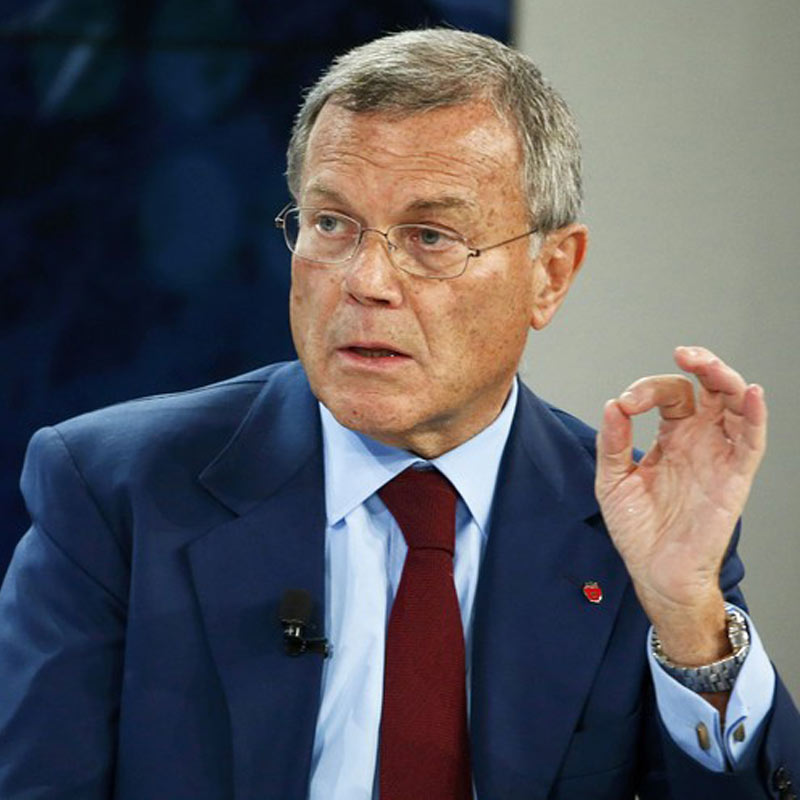
    Vice co-founder and CEO Shane Smith and WPP CEO Martin Sorrell said that they agreed that millennials were the future. They were under-serviced, and the companies had to create more content.

    The particulars of the deal involve Vice working with GroupM to use Vice’s insights, content and data to build an advertising platform across all of Vice’s global multi-screen and over-the-top properties. The deal was announced at the Dmexco conference in Cologne, Germany.

    The deal is worth hundreds of millions of dollars in ad spending, according to Smith. A Vice spokesperson later added it is a multi-year, multi territory deal.

    GroupM handles over USD 102 billion in advertising billings, according to research company Recma. GroupM said it handles one out of three ads globally.

    Sorrell said that there were some difficulties working with Google and Facebook, and that there’ was a need to find another force.

    In June, Vice announced plans to expand its presence to 51 territories, including having a TV, mobile and digital presence in India and the Middle East and TV content throughout Africa.

    It also will add a 24-hour TV channel in Australia and New Zealand, where it already has a robust digital and mobile presence. Vice’s U.S. cable channel Viceland launched in February 2016, and it’s nightly HBO news show is slated to begin on 10 October.

    WPP at present has an 8.5 per cent stake in Vice. At one point, it owned up to one-tenth of the company but has since sold some shares. Source: cnbc.com

  • Vice, WPP sign multi-million dollar ad deal

    Vice, WPP sign multi-million dollar ad deal

    MUMBAI: Vice and WPP’s media investment unit GroupM have signed a multimillion-dollar advertising deal that will take advantage of the millennial-focused media company’s international expansion.

    Vice co-founder and CEO Shane Smith and WPP CEO Martin Sorrell said that they agreed that millennials were the future. They were under-serviced, and the companies had to create more content.

    The particulars of the deal involve Vice working with GroupM to use Vice’s insights, content and data to build an advertising platform across all of Vice’s global multi-screen and over-the-top properties. The deal was announced at the Dmexco conference in Cologne, Germany.

    The deal is worth hundreds of millions of dollars in ad spending, according to Smith. A Vice spokesperson later added it is a multi-year, multi territory deal.

    GroupM handles over USD 102 billion in advertising billings, according to research company Recma. GroupM said it handles one out of three ads globally.

    Sorrell said that there were some difficulties working with Google and Facebook, and that there’ was a need to find another force.

    In June, Vice announced plans to expand its presence to 51 territories, including having a TV, mobile and digital presence in India and the Middle East and TV content throughout Africa.

    It also will add a 24-hour TV channel in Australia and New Zealand, where it already has a robust digital and mobile presence. Vice’s U.S. cable channel Viceland launched in February 2016, and it’s nightly HBO news show is slated to begin on 10 October.

    WPP at present has an 8.5 per cent stake in Vice. At one point, it owned up to one-tenth of the company but has since sold some shares. Source: cnbc.com

  • APOS 2016: Shane Smith, Viceland and ageing down networks

    APOS 2016: Shane Smith, Viceland and ageing down networks

    BALI: “Don’t hire traditional TV people.”  With those closing remarks during his keynote conversation at APOS 2016 with MPA executive director and  co-founder Vivek Couto , Vice Media co-founder and CEO Shane Smith set the tone for what his company stands for.

    Smith stated that the media today  is changing. “The Baby boomers have run media for the past 40 years. Gen Y – which is companies like us – will run it for the next many years,” he stated with absolute confidence.

    Like at a Mipcom a couple of years ago, Smith – dressed in shorts with a tattoo on his leg – reiterated that Vice hires interns and gives them money  to produce content for his network which includes news, food, music and lifestyle channels. “Yes, you give them $10 million. Sometimes you win, sometimes you get a law suit as the intern runs away to Mexico,” he said with a wry smile.

    Smith was clear that he will extend his brand to all screens and he will extend his networks to other territories with local partnerships. Earlier this year, his company launched Viceland in both Canada (with Rogers Cable) and US (in partnership with A+E Networks and Disney).  Something which got sniggers from traditional TV execs that Vice was going the traditional way. But Smith has his point of view on this.

    “Our extension to TV is helping ageing down the networks,” he stated. “We are bringing back the younger demographic to TV. We will produce anywhere there is a younger audience.”

    His belief is that the younger audiences had no programming for them, which is what has helped Vice.com succeed.  “Whether it is in China, India, Indonesia, we will move in there to serve our key demo,” he said.

    “OTT and mobile are very important for us,” he added. “But so is delivery across television but with content which is of a quality that appeals to our audience.”

    Viceland is a multinational television channel brand owned and programmed by Vice Media. Viceland’s programming consists primarily of lifestyle-oriented documentaries and reality series aimed towards millennials, directed in Vice’s trademark style of ‘character-driven documentaries’ 

  • APOS 2016: Shane Smith, Viceland and ageing down networks

    APOS 2016: Shane Smith, Viceland and ageing down networks

    BALI: “Don’t hire traditional TV people.”  With those closing remarks during his keynote conversation at APOS 2016 with MPA executive director and  co-founder Vivek Couto , Vice Media co-founder and CEO Shane Smith set the tone for what his company stands for.

    Smith stated that the media today  is changing. “The Baby boomers have run media for the past 40 years. Gen Y – which is companies like us – will run it for the next many years,” he stated with absolute confidence.

    Like at a Mipcom a couple of years ago, Smith – dressed in shorts with a tattoo on his leg – reiterated that Vice hires interns and gives them money  to produce content for his network which includes news, food, music and lifestyle channels. “Yes, you give them $10 million. Sometimes you win, sometimes you get a law suit as the intern runs away to Mexico,” he said with a wry smile.

    Smith was clear that he will extend his brand to all screens and he will extend his networks to other territories with local partnerships. Earlier this year, his company launched Viceland in both Canada (with Rogers Cable) and US (in partnership with A+E Networks and Disney).  Something which got sniggers from traditional TV execs that Vice was going the traditional way. But Smith has his point of view on this.

    “Our extension to TV is helping ageing down the networks,” he stated. “We are bringing back the younger demographic to TV. We will produce anywhere there is a younger audience.”

    His belief is that the younger audiences had no programming for them, which is what has helped Vice.com succeed.  “Whether it is in China, India, Indonesia, we will move in there to serve our key demo,” he said.

    “OTT and mobile are very important for us,” he added. “But so is delivery across television but with content which is of a quality that appeals to our audience.”

    Viceland is a multinational television channel brand owned and programmed by Vice Media. Viceland’s programming consists primarily of lifestyle-oriented documentaries and reality series aimed towards millennials, directed in Vice’s trademark style of ‘character-driven documentaries’ 

  • A+E Networks joins hands with Vice to launch Viceland

    A+E Networks joins hands with Vice to launch Viceland

    MUMBAI: A+E Networks and Vice Media have inked a joint venture – Viceland that will offer Vice as a new 24-hour channel programmed and produced exclusively by Vice.


    A+E Networks’ channel H2 will be transitioned to Viceland. H2 is an international channel brand in over 68 territories, which will continue to operate outside the US.


    Launching in early 2016, Viceland will be distributed in approximately 70 million homes, and will feature hundreds of hours of new programming developed and produced entirely in-house by the  creative minds of Vice.


     A+E Networks president & CEO Nancy Dubuc said, “Vice has a bold voice and a distinctive model in the marketplace. This channel represents a strategic fit and a new direction for the future of our portfolio of media assets. Shane Smith has led Vice from a fledgling magazine into a global media brand and all of us at A+E are excited to work with him and his passionate and innovative team.”


    Oscar-winning writer & director Spike Jonze, a long-time Vice partner and creative director for the company, has been overseeing the development of the new channel, from show creation, to production, to brand identity.


    “It feels like most channels are just a collection of shows,” said Jonze. “We wanted Viceland to be different, to feel like everything on there has a reason to exist and a strong point of view. Our mission with the channel is not that different from what our mission is as a company: it’s us trying to understand the world we live in by producing pieces about things we’re curious about, or confused about, or that we think are funny. And if it doesn’t have a strong point of view then it shouldn’t be on this channel.”


    Viceland will launch with a full slate of prime-time shows, including Gaycation (with Ellen Page and Ian Daniel), Huang’s World (with Eddie Huang), Noisey (with Zach Goldbaum), Vice World Of Sports (with Sal Masekela), Black Market (with Michael K. Williams), Flophouse, Party Legends, Weediquette (with Krishna Andavolu), and more.


    The launch of Viceland coincides with Vice’s growth across online and mobile. There’s a growing white space in the realm of Gen-Y programming, and to fill that void Viceland will offer engaging, original content covering fashion, food, music, sports, and more. The new network represents a critical build-out for the company: Vice will now be producing gold-standard content for all three screens.


    “This network is the next step in the evolution of our brand and the first step in our global roll-out of networks around the world,” said Vice co-founder and CEO Shane Smith. 


    “First: It allows us to be truly platform agnostic and enable our audience to view our content wherever they want. Second: It represents a continued growth in our content quality and raises the ceiling even higher for our brilliant teams to attack stories from long form features to multi-episode series and even short form interstitials that will challenge the accepted norms of current TV viewing. Third: We will test new and innovative monetization strategies placing VICELAND at the pointy tip of the spear of the rapidly changing terrain of TV advertising,” informed Smith.


    He further added,  “All in all, this new network allows us to continue our innovation in storytelling and content creation and take it to the next level. We couldn’t be happier working with Nancy and her team at A+E and we couldn’t be more excited to offer this opportunity to our Vice family of partners, producers, shooters, editors, and staff, to go out and make our indelible imprint on the cultural fabric of this modern age.”

    Drawing on Vice’s history as an innovator in branded content online, Viceland plans to work with brand partners to re-imagine the nature of the television commercial too—making the commercial time a valuable extension of the entertainment programming itself, and keeping viewers engaged, even as they follow Vice content across screens and formats.


    A+E Networks will oversee technical operations and distribution and will work with Vice on ad sales and sponsorships. Vice will also handle all marketing across all platforms, utilizing its various relationships with partners across mobile and digital.

  • HBO and Vice enter major news content deal

    HBO and Vice enter major news content deal

    MUMBAI: Home Box Office and Vice have inked a major news partnership that will significantly expand Vice’s Emmy-winning news programming to HBO subscribers over the next four years.


    In its most expansive programming deal ever, HBO will dramatically increase the network’s current events coverage, bringing Vice’s brand of high-impact journalism and breaking news content to subscribers in a wide-range of formats, including: 


    1) The Vice daily newscast: The launch of a daily Vice newscast, consisting of five half-hour shows per week, 48 weeks a year.


    2) The weekly series on HBO: A four-year extension (with an increase from 14 to 35 episodes a year) of the Emmy-winning documentary show.


    3) Vice specials: A four-year commitment for an increased number of Vice-produced specials, totaling 32 through 2018.


    Additionally, a Vice-branded channel on the HBO NOW streaming service will provide instant access to Vice content for all HBO subscribers.


    “Shane and the Vice team have produced some of the most groundbreaking and dynamic journalism anywhere. From the front lines in the Ukraine, to the icebergs of Antarctica and the streets of Ferguson, Vice news has helped illuminate and expand our understanding of an increasingly complex world. This extension of the HBO/Vice relationship, which will include more shows, more documentaries and even a Vice daily newscast, is a natural evolution of our partnership. All of us at HBO couldn’t be more excited working with the Vice team and helping to tell the stories which define our world,” said HBO CEO Richard Plepler and HBO Programming president Michael Lombardo.


    Vice founder and CEO Shane Smith added, “I think the first thing, perhaps the hardest thing, I learned about journalism over the past 20 years is that maintaining any type of independence, any type of freedom, is difficult as you scale up. This deal, simply put, allows Vice the freedom to go after any story, anywhere we find it – and to do so with complete independence. This deal is a tremendous gift and a tremendous opportunity, and we at Vice realize this. Together with HBO, we will expand our news offerings to viewers everywhere, creating HBO’s first-ever daily newscast, producing hard-hitting specials, like our recent Special Report on cancer, and expanding our weekly news round-ups from around the world. Over the the last few years, our relationship with HBO has morphed from a great business partnership into a transformative brand-builder. This groundbreaking deal will create a new voice in news.”


    The partnership builds off the success of the current Vice series on HBO, which received a Primetime Emmy in the category of Outstanding Informational Series or Special last August, and has quickly become an alternative voice and source for unvarnished documentary-style news. Currently debuting editions Friday nights on HBO, the Vice weekly series is dedicated to exploring today’s most pressing issues from around the globe, from civil unrest and hotbeds of terrorism, to unchecked government corruption, lawless borders and looming environmental catastrophes.


    The newscast will feature the original on-the-ground reporting viewers expect from Vice, but in a daily format. Vice will draw on its network of more than 30 global bureaus to bring viewers inside the world’s most critical stories.


    The slate of 32 specials will offer viewers in-depth examinations of pressing topics, just as Vice has done with recent specials exploring the use of deadly viruses to fight cancer and climate change affecting the West Antarctic ice sheet.


  • Vice Media sells 10% stake to A+E Networks

    Vice Media sells 10% stake to A+E Networks

    MUMBAI: Shortly after media reports about Time Warner ending talks to buy a stake in Vice Media flashed, Financial Times reported that Vice is wrapping up a deal to sell a 10 per cent stake to A+E Networks, the cable television group jointly owned by Walt Disney and Hearst Corporation for $250 million.


    According to the report, the sale could be announced as early as next week. This deal puts the entire company’s market value at $2.5 billion which represents a steep increase in Vice’s valuation since last year. The company, last year, sold a 5 per cent stake to Rupert Murdoch’s 21st Century Fox for $70 million, valuing the company at $1.4 billion then.


    Talking to the Financial Times, Vice Media co-founder Shane Smith said, “It’s a great deal for us, it means we can preserve our independence and it gives us a war chest for another three years of dramatic growth.”


    Smith also added that Vice is exploring the possibility of having its own channel, for the moment it will be producing programming for the network, which runs shows such as Duck Dynasty and Storage Wars.


    Vice operates a global network of online channels covering news, sport, technology and music. The company currently has 25 offices across six continents, while its YouTube channel has around 4 million subscribers and over 500 million views.


    According to reports, while Vice will produce digital and cable programming for A+E as part of the deal, it will not currently take over running any of its cable channels.


    Until recently, Time Warner was in acquisition talks with Vice about buying a 40 per cent stake in the company. The deal would have reportedly valued the company at about $2 billion. But talks stalled due to disputes over Vice’s valuation, The New York Times reported.


    Founded in 1994, Vice started out as a Montreal music and youth culture magazine but has since expanded into web content, making a splash with its myriad documentary videos on YouTube. It also has a television series on HBO. Vice’s free magazine is printed in 28 countries.