Tag: Shamsuddin Jasani

  • Decoding the Indian online video watchers remains an enigma

    Decoding the Indian online video watchers remains an enigma

    MUMBAI: Perhaps the biggest challenge for programmers on online media is to define and segregate the online viewers who will take to OTT mediums in India.

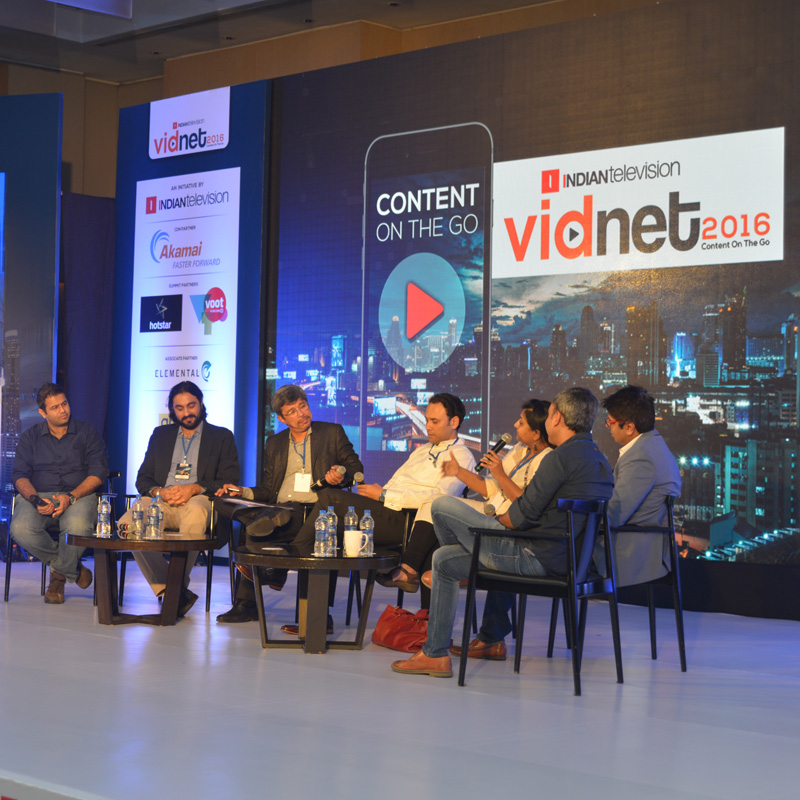
    Following the presentation on OTT trends in the APAC region by Media Partners Asia executive director Vivek Couto at VidNet, this question expectedly assumed importance.

    Indian Television Dot Com’s founder CEO and editor in chief Anil Wanvari flagged off the discussion by asking Isobar India MD Shamsuddin Jasani to define who is a customer for him?

    “A person who is consuming digital content through any medium be it TV, mobile, YouTube, Facebook, etc is my customer. I would spend dollars on a person who is consuming content via digital platforms, what is he consuming, time spent on that piece of content,” said Jasani.

    Adding his perspective on defining a digital customer was FoxyMoron co-founder Suveer Bajaj. He seconded the definition of an OTT consumer and added that he was one who migrated to the digital medium. “I have come across consumers who are consuming three hours on digital. There is a very powerful change that we are seeing right now. These people are plunging on digital than TV.”

    Citing example from his own personal experience, Jasani highlighted how his 6-year old kid consumes around six to seven hours of video content on various platforms like Voot, YouTube, etc. He opined that this is a powerful change that he is witnessing from TV which happens through demand. Bajaj further added that it is not just on demand but also on the go.

    dittoTV business head Archana Anand strongly believed on the platform’s subscription model. Underlining the success of ditto TV’s campaign and aggressive pricing, Anand believed that she and her team had grown the pie by reaching out to people who are not internet savvy audience and is very clear on not getting content for free. “We have marked the people who perhaps are not typical OTT audience to whom TV is being provided at a subscription of Rs 20. There is a huge audience who is alien to OTT in India and we are trying to get them on board by handholding them throughout the entire procedure of getting our app by just a missed call.

    Arre co-founder Ajay Chacko was sure he did not intend to become an OTT platform. “The way we are defining our consumers is not just through access and comfort but by creating new forms of content to drive change.”

    Voot, the AVOD platform from Viacom18 which is often credited with bolstering kids and originals apart from content from the various channels falling under the network, has targeted their digital natives. Their Head marketing and partnerships Akash Banerji dissected consumers into different categories depending upon-access and comfort, demographics and content business offers.

    Discussing the first point, he explained that there are 180 million TV households in India with an average of at least two persons in every house, meaning 350 million subscribers on Internet who are not necessarily active users. “In India, we have 120 video consumers out of which 20-30 million are native digital who are consuming videos online. It is up to a platform whether they are targeting digital natives or getting internet consumers who are not consuming videos or are looking at growing the pie of digital.”

    The discussion went a notch up with the panelists enlightening the audience on the regional content that the content providers have created so far.

    Even the consumers come from varied backgrounds. At the base of the pyramid is the young, college or office going people who are mostly from the metropolitans. The older males and women who are consuming on mobile and desktop are not consuming high velocity content like the youth comprise the mid level. Banerji said that in the past 18-24 months, he has also seen consumers evolving from tier 2 and tier 3 markets primarily consuming content on mobiles. “Rural consumers which are about 200 million i.e 80 per cent of India are also coming up on board in the next few years.”

    Voot follows clear cut understanding of content and is leveraging on its popular content library of TV shows from market. Kids content and Voot originals are the other two important key factors for the platform. “Our Voot originals do not have to follow any format or template. They have to resonate with the consumers”, he added.

    Banerji strongly believes that it is a myth for any business to chase app download numbers. “The players should work on active users and the video watch time.”

    With the second most important driver being content, focusing on just the demographics is not enough. Yash Raj Films Head of content and development Nikhil Taneja said the digital audience is primarily between the ages of 18 to 34. “We are not targeted at providing entertainment to the audiences through effective storytelling and providing emotions through content.”

    He also spoke about the different gender differences by sharing some interesting statistics about the traction and viewership of YRF’s shows. The platform, being a YouTube channel, manages to get some revenue from their channel but also has various other ways to make money. “We launch our own talent and if that talent gets picked by an advertiser, we are benefitted. Our show Love Shots has been picked up by airlines. It is definitely early for advertisers to invest but that does not stop us from creating good quality content.”

    Adding to that, Jasani said, “The customers are agnostic in accessing content and consume digital data through Wi-fi and other services available to them. The offline viewing space is also brewing up rapidly in India. If we are putting an advertiser on every stage of digital consumption, there is no need for him to be on TV.” With various service providers launching 4G, Jasani opined that within 18 months the data is going to become cheap. “Adding to cheap data rates is the launch of smartphones for Rs 2,000 which is also going to grow in the future.”

    Banerji also shed light on how the viewing dynamics are changing and why that change is happening. “With consumers in control of what they consume and content being the king, the need for quality content is just going to grow. The illusion that most of us have on the content that can go on a digital platform has to be broken”.

    The panel discussion also concentrated on the discovery of content in various languages which is currently difficult. The players said they were collectively working on the challenge.

    One thing that all the panelists accepted was to keep innovating and experimenting with content.

    Anand spoke of how asked how she is facing a challenge from payment gateways as they are in English which majority of the Indians do not understand. “Even if there is a potential customer, he has to be guided to pay for my subscription and so.80 per cent of my potential subscribers cannot be captured.” She opined that all the players in the eco-system and various payment platforms have to think in this direction.

    But are there advertisers willing to get on board? Bajaj said that it is no more about ads but content. Selective content will attract specific advertisers.

    “Advertisers are squeamish to put money. We decide after evaluating how it will help the brand after a year. We are no more selling a product but brand through its content,” said Taneja.

    “We are not finicky about not putting ads on dittoTV. There is an ad replacement technology through which I can have two different ads on TV and digital for the same content,” added Anand.

    Jasani said the digital advertising pie is small as the major audience is not yet online. The consumers are not ready to pay for content but the fact that innumerable content creators are evolving cannot be sidelined. With both AVOD and SVOD having their own perks and challenges, there is no tangible answer that any player can provide currently.

    It is an exciting space where everyone is experimenting and innovating. The panel discussion concluded by citing that both the models will co-exist at least for 10 years down the line.


  • Isobar India ropes in Chandrashekhar Mhaskar as VP

    Isobar India ropes in Chandrashekhar Mhaskar as VP

    MUMBAI: Isobar India has appointed Chandrashekhar Mhaskar as Vice President to drive the digital creative and services division nationally. Additionally, he will also handle the responsibilities for the West India region.

    A computer engineer by qualification and having followed his heart, Mhaskar has been part of the digital advertising industry for more than two decades including international exposure in London and Singapore. He has had varied experience in heading Digital SBUs at renowned agencies such as Ogilvy One, Cheil Worldwide, and Maxus. He was also a successful entrepreneur before taking up the mandate at Isobar. His industry experience spans Television, Film, Internet, eCommerce, Mobile, Social, Online Media and New Technology; across industry verticals like FMCG, IT, Entertainment, BFSI, Education, and Telecommunications.

    Big clients under his belt included Nokia, Cisco, British Airways, Perfetti, American Express, and Samsun. He brings with him a rich experience of integrating agency and client teams to collaboratively conceptualize award-winning digital advertising solutions and execute them to successfully tackle business challenges and drive ROI.

    Mhaskar will also join Isobar India’s Leadership team, which includes Gopa Kumar, Vice-President; Anish Varghese, National Creative Director and Rahul Vengalil, Business Head (South), alongside Shamsuddin Jasani, Managing Director for Isobar India. Isobar India has emerged as a leader amongst the digital agencies in India, winning multiple awards including Campaign Asia’s Agency of the Year, and this appointment will further strengthen it.

    Shamsuddin Jasani, Isobar India Managing Director, says: “We are happy to welcome Chandrashekhar on board with our amazing team. Over the last two years, we have clearly emerged as one the leading full service digital agencies in India of media buying and over 100 creative and technology professionals. Chandrashekhar brings a vast experience across all aspects of digital, especially creative services, which he will be heading nationally. We already have a very strong Creative services and Technology business, and with Chandrashekhar leading the way, we are looking at reaching even greater heights.”

    Commenting on his appointment, Chandrashekhar Mhaskar, Vice-President, Isobar India, said: “I am immensely excited to join Isobar and be part of a team that is brimming with stupendous energy. Isobar is already in the fray of creating some cutting-edge creative and tech solutions which have garnered media attention. I am really looking forward to working with Shamsuddin and the senior management team to take Isobar to greater heights in India.”

  • Isobar India ropes in Chandrashekhar Mhaskar as VP

    Isobar India ropes in Chandrashekhar Mhaskar as VP

    MUMBAI: Isobar India has appointed Chandrashekhar Mhaskar as Vice President to drive the digital creative and services division nationally. Additionally, he will also handle the responsibilities for the West India region.

    A computer engineer by qualification and having followed his heart, Mhaskar has been part of the digital advertising industry for more than two decades including international exposure in London and Singapore. He has had varied experience in heading Digital SBUs at renowned agencies such as Ogilvy One, Cheil Worldwide, and Maxus. He was also a successful entrepreneur before taking up the mandate at Isobar. His industry experience spans Television, Film, Internet, eCommerce, Mobile, Social, Online Media and New Technology; across industry verticals like FMCG, IT, Entertainment, BFSI, Education, and Telecommunications.

    Big clients under his belt included Nokia, Cisco, British Airways, Perfetti, American Express, and Samsun. He brings with him a rich experience of integrating agency and client teams to collaboratively conceptualize award-winning digital advertising solutions and execute them to successfully tackle business challenges and drive ROI.

    Mhaskar will also join Isobar India’s Leadership team, which includes Gopa Kumar, Vice-President; Anish Varghese, National Creative Director and Rahul Vengalil, Business Head (South), alongside Shamsuddin Jasani, Managing Director for Isobar India. Isobar India has emerged as a leader amongst the digital agencies in India, winning multiple awards including Campaign Asia’s Agency of the Year, and this appointment will further strengthen it.

    Shamsuddin Jasani, Isobar India Managing Director, says: “We are happy to welcome Chandrashekhar on board with our amazing team. Over the last two years, we have clearly emerged as one the leading full service digital agencies in India of media buying and over 100 creative and technology professionals. Chandrashekhar brings a vast experience across all aspects of digital, especially creative services, which he will be heading nationally. We already have a very strong Creative services and Technology business, and with Chandrashekhar leading the way, we are looking at reaching even greater heights.”

    Commenting on his appointment, Chandrashekhar Mhaskar, Vice-President, Isobar India, said: “I am immensely excited to join Isobar and be part of a team that is brimming with stupendous energy. Isobar is already in the fray of creating some cutting-edge creative and tech solutions which have garnered media attention. I am really looking forward to working with Shamsuddin and the senior management team to take Isobar to greater heights in India.”

  • How advertisers have ‘reacted’ to Facebook Reactions

    How advertisers have ‘reacted’ to Facebook Reactions

    MUMBAI: So, the social media giant Facebook has rolled out a whole new range of emoticons for users to ‘react’ with. This has come after the long standing legacy of the ‘like’ button. The new reactions, namely ‘Haha’, ‘Wow’, ‘Love’, ‘Sad, and ‘Angry’, were highly anticipated by the advertising fraternity until  Facebook  revealed that it won’t be letting advertisers use these new reactions as a way to create targeted ads. For now, reactions would only be counted as additional ‘likes’, meaning that an “angry” reaction would be treated the same as a “wow”.

    Though initially put off by Facebook’s decision to keep the new reactions out of their reach, advertisers and digital marketers have found ways around this. What makes these new reactions such a lucrative tool for digital marketers is its immense power to look into consumer insights.

    “There is a lot of learning from it on a broader scale, but since Facebook as of now isn’t revealing the exact numbers of ‘angry’ or ‘wow’, advertisers are having a hard time in making the most of it. But, you can actually can see who has liked it or ‘loved’ it if you hover over the new emoticons. Once you physically count that list, you can put a number of it. Though tedious, but not impossible,” points out Isobar India MD Shamsuddin Jasani Aka Shams.

    Now why would a marketer go through the trouble of physically counting these reactions? What’s in it for her or him?

    “It’s a great tool to understand, learn your consumers for a brand. You can see what tonality and emotions consumers have for content. We can figure out what kind of posts, communication and content that are working with a brand’s TG. Beyond that, the use is still limited and it will take some time before people start using it extensively,” Shams shares, adding that the new offering is all about analytics.

    PnB Metlife digital marketing, ecommerce and digitization head Abhishek Rathi too feels that the new reactions can prove to be a powerful tool for marketers like him. Especially for re-targeting of campaigns. The net adoption of these features is what marketers are closely paying attention to, Rathi says. “Right now we have to wait and watch if people are actually using it or not to make a significant difference. Currently the majority of what we can work with on Facebook are likes and shares. Comments can give you some consumer insight but isn’t a huge help. Similarly we need to wait and see exactly how we can use these features in marketing.”

    “The first thing that I predict is the number of engagements on the posts going up,” Shams observes, “ It’s not always that you like something, you might really like it, love it, or dislike it. Having more to the spectrum to react with also makes people interact with the site more. Earlier people were restricted by only the dislike button, but now the new emoticons are making engagements go up.”

    Given its potential use for brands, media planners especially on the digital front, are contemplating on how to incorporate these reactions under their bouquet of services. Shams feels that reactions have a huge scope when it comes to accentuating data and analytics further.

    “Of course the planners, who need to buy the right kind of inventory for their client will have to take the new reactions into consideration. It is still difficult to correlate who liked it or loved it and accordingly bought it, as the analytics are not in place right now,” shared another well-known media planner who wished to remain anonymous.

    But it is the creatives or the content creators who can make the most of this new feature. Content creators will be able to gauge what reactions their work is getting and where they need to tweak to get the desired result.

    “When we are talking about corporate social responsibility or a social cause, it helps to know how our viewers and consumers are reacting to the campaigns; the emotions behind their likes. It’s the next level of engagement,” says Rathi.

    Brands which are most likely to jump on this bandwagon and try out the new Facebook reactions for their campaigns are the youth oriented brands, brands with brand language that lets them experiment and try new things. Citing an example from his own client base, Shams says, “Myntra’s brand Anouk, which we handle, has a communication that many like while others may also dislike. It is very clear in what it wants to say to its audience. These reactions can be a help to the brand. Brands which are steadier in their brand communication will wait and watch first.”

    Ecommerce and digital start-up companies will be the next to take the new feature seriously for their marketing. “Then you have the likes of Coke and Pepsi who will soon follow,” Rathi adds. The sport leagues can also be big takers for this new feature, Rathi feels. “The IPLs, ISLs, kabaddi leagues and tennis leagues of the world can make a huge advantage from these as it is an association of pride and entertainment. Anything which involves a whole community will try to make the most of this tool,” he adds.

    Another advertiser who wants to stay ahead of the curve is United Beverages Limited. UBL has started to look at how these new reactions can affect its marketing strategy. Not only that, UBL, Marketing SVP Samar Singh Sheikhawat shares that UBL is also keeping the ‘angry’ reaction in mind.

    “Brands need to be more responsible and responsive now. We need to be more on the ball, because unlike earlier, the ‘angry’ button can become the new ‘dislike’. Not that it has never happened before. In the real world, there are consumers who like one product, others love the same and there are few who can even hate it. Earlier that emotion seldom got reflected to the brands, but now the game is changing,” he says.

    With so much excitement among brands in making use of Facebook reactions in marketing, one has to wonder if it’s ethical to use such data at all. “That’s true. We need to be careful how the information is used and it needs to be monitored well. As a marketer I am thrilled about the opportunities this gives us but personally I am not comfortable with my personal data, likes and dislikes being shared with companies who can make use of such data. But if it is an aggregate that you are sharing, it will not be so much of an issue. Suppose 50 per cent of ‘love’ or 20 percent of ‘angry, etc. From a privacy standpoint I don’t think it’s in the interest of customers to share individual data points.”

    Sheikhawat on the other hand has a slightly different perspective. “I don’t see how it can become unethical. The fact of the matter is when you sign up for Facebook. you share your personal data.  When you get a new app or service, you let it access your Facebook data, including your preference. When you make any of your reactions public, you are sharing it with the rest of the world. It is already happening and consumers are aware of it.

    On a positive note, many marketers also observe that NGOs and campaigns for social causes can get a huge help from the added feature. Several marketers are of the view that if the data is readily available to marketers, consumers who are aware will not adopt the feature as much and therefore its effectiveness even from an aggregate standpoint will go down.