Tag: Shaktimaan

  • Gadda Co welcomes Mukesh Khanna as brand ambassador

    Gadda Co welcomes Mukesh Khanna as brand ambassador

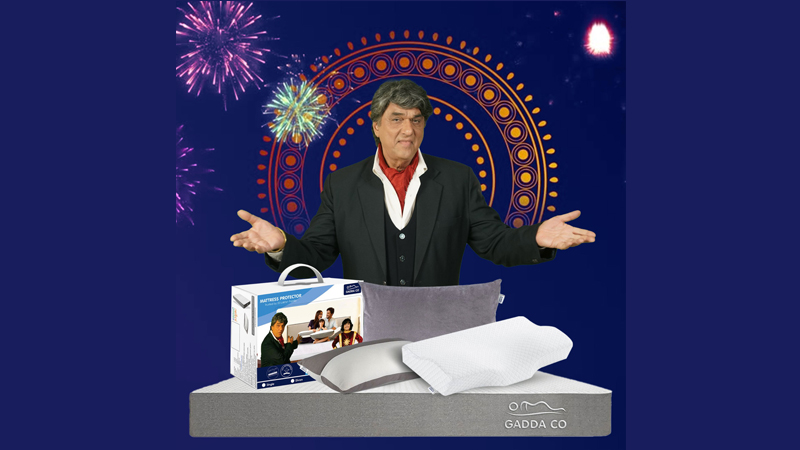
    Mumbai: Gadda Co, a leader in the mattress and bedding industry, has partnered with legendary actor Mukesh Khanna, famed for his roles as Shaktimaan and Bhishma in “Mahabharat”, as its new brand ambassador. This collaboration highlights Gadda Co’s dedication to providing top-tier sleep solutions, including mattresses, pillows, and waterproof protectors that offer unmatched comfort and durability.

    Expressing his excitement, Mukesh Khanna said, “I have always believed in the power of good health, and quality sleep is at the foundation of that. Gadda Co has proven to be a brand that cares deeply about offering products that enhance the quality of life for people across India. Their dedication to quality, comfort, and durability aligns with my personal values, and I am excited to be a part of this journey, whether it’s the mattresses or the protectors, their attention to detail in crafting products that support good sleep is truly commendable.”

    Under the Baby & Mom Retail house of brands, Gadda Co has built a reputation for delivering products that guarantee restful and rejuvenating sleep. This partnership with Mukesh Khanna reflects the brand’s strategic move to strengthen its presence in the Indian market by connecting with consumers through a beloved and trusted figure.

    Baby & Mom Retail founder and CEO, Shish Kharesiya stated, “Having Mukesh Khanna on board as our brand ambassador is an honour. His association with Gadda Co perfectly resonates with our brand’s values of providing reliable, long-lasting products. We are excited to take our brand to new heights with him by our side. At Gadda Co, we believe that everyone deserves a restful, comfortable sleep, and with Mukesh Khanna as our ambassador, we aim to communicate this message more effectively to our audience.”

    This collaboration is set to elevate Gadda Co’s brand recognition, further embedding its commitment to quality sleep for Indian consumers through its trusted products.

  • Shaktimaan celebrates sibling love in its new Rakshabandhan campaign – #LifeofaUPSCAspirant

    Shaktimaan celebrates sibling love in its new Rakshabandhan campaign – #LifeofaUPSCAspirant

    Mumbai: India’s first adaptive learning ecosystem, Shaktimaan has launched a new campaign, just in time for the biggest celebration of the bonds between siblings. The campaign, titled ‘Rakshabandhan in the Life of a UPSC Aspirant,’ revolves around the heartwarming story of a sister’s thoughtful gift to help her brother conquer the UPSC with the help of Shaktimaan.in. Through the campaign, the company aims to represent the bond between siblings, highlighting the importance of having the support of loved ones in the preparation of the Civil Service Examination. The campaign is LIVE on YouTube, Twitter, Instagram, LinkedIn, and Facebook and has already garnered over 20.4K views on Twitter and more than 2K views on YouTube.

    The campaign is strategized internally and focuses on the struggles of UPSC aspirants and how Shaktimaan can empower them to access top-tier mentorship and a disciplined ecosystem personalized as per their needs. It highlights the story of a diligent UPSC aspirant, Raghav, who is trying to cope with The Hindu newspaper editorial. On seeing his struggles on Rakhshabandhan, the elder sister, Meera, gifts him Shaktimaan, a powerful mentor for students to help him in his UPSC preparation. As the brother unveils the Rakhi gift, he explores the different features of Shaktimaan, such as the daily Hindu summary, instant doubt resolution, daily learning targets with Prelims MCQ, and MAINS hand-written answer evaluation. Their story highlights the challenges faced by Civil Service Examination candidates and how their family and friends support them in their exam preparation. The access to personalized solutions represents the support that siblings can provide for each other.

    Founding team member Lakshay Nagpal remarked, “Our Raksha Bandhan campaign highlights how family supports a UPSC aspirant. The desire to showcase the passion of today’s students and our eagerness to offer them the best solutions lies at the heart of the campaign. At Shaktimaan, we use our deep insights and execute them with the help of artificial intelligence to help students stay disciplined and focused.”

    The Rakshabandhan campaign serves as a powerful reminder that students’ family members will always be there to guide them through their struggles and support them to achieve their goals. With the help of Shaktimaan and the support of their loved ones, students can find the right balance and achieve their dreams.

  • Throwback2020: DD’s importance stood out this year

    Throwback2020: DD’s importance stood out this year

    NEW DELHI: 2020 was a challenging year for public broadcasting. But it was also the year when public broadcasting made its presence felt and reminded people of the reason it exists. That the mission was fulfilled at the peak of the pandemic, when everything was paralyzed, but Doordarshan and All India Radio (AIR) continued their services uninterruptedly.

    Unfortunately, we lost some colleagues to the pandemic. Our reporters tested positive for the coronavirus while they were out in the field. So in that sense, public broadcasting went through the test of times.

    One key area where public broadcasting came through was in delivering social messages and creating awareness about the pandemic. Doordarshan emerged as the top five social advertisers, which underscores the value of public messages put out by us. We also saw record viewership ratings in the early days of the lockdown.

    Then, the tele-classes on Doordarshan ensured that the academic year did not go waste for students from far-flung areas. India is blessed with the only free to air satellite platform DD FreeDish, reaching thirty-five million plus households. With thirty plus Doordarshan channels and fifty-one educational channels, we have eighty-six channels delivering tele-classes across different languages.

    This year reminded us why people tune into Doordarshan. It remains the only platform where the entire family can come together and watch iconic content, no matter which region they belong to. This will be our focus going forward- to create selective iconic content that is not only a part of the heritage of the country but will appeal to the entire population and becomes a benchmark for the decades to come. Content like Mahabharata, Ramayana, Shaktimaan, which have a recall value that spans decades.

    But it’s not just content, but also a question of production values. People, especially youth, have high expectations. The benchmark is, what they call ‘over the top (OTT) quality,’ coupled with the latest use of technologies, graphics, and visual effects. We will try to ensure that the projects we work on bring in those elements.

    At the same time, we need to acknowledge that public broadcasters operate on public funds. There are constraints. So it cannot invest in the same manner that a private sector media house could do.

    NewsOnAir application proved to be a dramatic game-changer this year on the radio front, just like DD FreeDish proved to be a game-changer on the television front. It ensured that traditional radio listening is no longer restricted to the terrestrial reach of the transmitters. Now, it does not matter where you are, you can listen to your favourite channel. It has changed radio listening habits for audiences across the world.

    It also brought all radio services of AIR under one umbrella. Unlike TV where everything is uplinked in the satellite so you can monitor what is going on, with radio, it used to be restricted to that particular radius of a few kilometres. But, now we can tune into any of the radio stations among the 200 livestreams. It has also brought a degree of transparency and accountability.

    We also saw Doordarshan regional channels discovering life beyond the satellite way of traditional broadcasting. From our TV rating standpoint, they may be struggling with the private channels, because there are hundreds of channels, so it’s a huge challenge for a public broadcaster to stand out. However, on the digital side, each of these channels has acquired a distinct place. Several of them crossed half a billion subscriber base on YouTube, because of teleclasses being available on demand.

    I have a special mention for north-east Doordarshan because it saw dramatic growth in the news this year. The news was available in languages that were otherwise not available in Garo, Khasi, and Assamese. DD News Guwahati and DD News Shillong performed very well digitally as youth increasingly consumed content through the internet and smartphones.

    Apart from that, the most interesting thing has been the DD archives. In order to take full advantage of the nostalgia, we had started putting the archival content online, digitising it and making it available online. Old plays, old serials, old songs, all content will be made available. So it has driven renewed interest in regional languages.

    On the revenue side, the income was fairly steady, except for some disruptions, on the radio side. There were some hiccups for DD FreeDish too and some channels had to leave, but many new channels came on board, including three movie channels in the recent auction. Overall DD FreeDish remains on a steady path and a source of substantial revenue.

    On the advertising side, we definitely saw an uptick in commercial advertising because of the renewed interest in Mahabharata. But some of the biggest sporting events did not happen, so that was a disappointment. Hopefully, we will catch up in 2021.

    (Shashi Shekhar Vempati is the CEO of Prasar Bharati. This is an excerpt from a conversation he had with Srishti Choudhary)

  • #Throwback2020: The year of reruns

    #Throwback2020: The year of reruns

    MUMBAI: Covid2019 was undoubtedly the biggest story of 2020, but it also gave new life to several well-loved stories of the past – more precisely, vintage TV shows. As productions came to a halt with the announcement of lockdowns, television broadcasters had to quickly come up with ways to fill up their time slots. As well as find ways to keep those at home engaged enough so as to not step out and possibly expose themselves to the novel Coronavirus.

    With no fresh episodes being churned out, successful TV shows went off air. TV programming executives started going through their back catalogue deciding what series and programmes to put on air once again. Doordarshan boss Shashi Shekhar Vempati took the high ground and made some audacious bets. He brought back the classics of the eighties – Ramanand Sagar's Ramayan and BR Chopra's Mahabharat.  The difference: unlike in the past when the episodes aired on Sunday mornings, Vempati put the two mythologicals on air every evening and in the afternoons. His decision worked like a charm.

    The Indian public, fearful of the havoc that Covid was wreaking on all and sundry, found solace in the two shows. The viewers swelled into millions and it seemed like all of India had connected with the story of a king and his exile and the victory of good over evil, and that of five brothers who fight adversity from their own family, go into exile only to come back and regain their rightful kingdom.

    Doordarshan regained its lost glory;  after nearly three decades of ceding ground to cable TV, it became India's most-watched channel again.

    In its heyday, the streets would be empty during showtime, and people formed queues outside shops to watch their favourite show on the pubcaster. Some people would even garland their TV sets in awe. In fact, the actors playing Ram and Sita would often be treated like  gods in public. The tables turned with the launch of satellite television in the mid-90s, and the explosive growth of private channels that followed.

    But bringing back Ramayan and other old favourites like Shaktiman and Buniyaad – created when DD monopolised TV broadcasting – forged an inexplicable and instantaneous connection with audiences. BARC has attributed the telecast of Ramayan and Mahabharat as the reason for DD’s climb to the top of the ratings chart. 

    Not only did Doordarshan succeed in chalking up record viewership, but it also generated online chatter – from memes to nostalgia posts from viewers. For many, it was a trip down memory lane.

    During an interaction, BARC India CEO Sunil Lulla remarked, “[Repeat telecasts of] Ramayan and Mahabharat, in my view, is a stellar move. It’s a nostalgia moment for people who are born in the 80’s. Because the entire family is sitting together with elders at home, it was the best thing to watch on TV. But shockingly, younger audiences were also watching the show. More of the urban audience, rather than rural, tuned in.”

    The buzz around these shows has led to an increased brand recall for Doordarshan. India’s iconic dairy brand Amul also went retro and re-released its old advertisements on the channel. 

    According to SEMrush (an online visibility management platform), ‘Ramayan’ became India's most searched term in the entertainment category in April 2020.

    Nielsen and BARC had reported that in the initial weeks of reruns, Ramayan episodes got 42.6 million tune-ins and garnered 6.9 billion viewing minutes on average.

    On 17 April, Prasar Bharati (the parent body of DD and All India Radio) announced in a tweet that Ramayan was the highest-watched entertainment programme globally, recording a viewership of 77 million. Even though the show attracted many advertisers, it irked viewers who wanted uninterrupted content. Some, bizarrely, even accused Doordarshan of streaming the show from a Moser Baer DVD.


    Certain sections of the public appealed to the government to curb the TV spots. In response, Vempati in a tweet said, "Would request everyone's patience with the advertisements. Brands reaching out to a large audience spurs consumption and economic activity at this critical juncture. Also, every rupee of commercial revenue to DD is a rupee of taxpayer money saved."  


    When I&B minister Prakash Javadekar posted a photo of himself watching Ramayan reruns during the lockdown, he was immediately panned for his “let them eat cake” moment while millions were struggling to make ends meet.

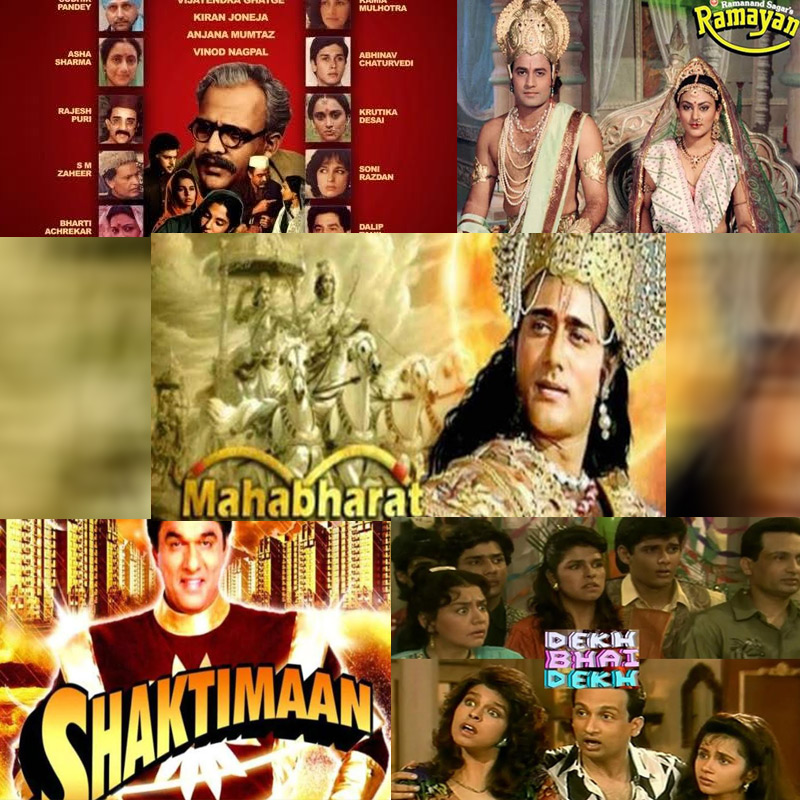
    But in the weeks that followed, public sentiment changed. Following the runaway success of the two shows, the state broadcaster went beyond mythological shows and tapped into its programming archive.  Buniyaad, Byomkesh Bakshi, Gora, Circus (starring a baby-faced Shah Rukh Khan), Shrikant (starring the late actor Irrfan Khan), Shaktimaan, Dekh Bhai Dekh, Shrimaan Shrimati, The Jungle Book, and more were back on telly – and viewers were hooked.

    Other broadcast networks followed suit. Viacom18-owned Hindi GEC Colors brought back shows such as Balika Vadhu, Jai Shri Krishna, Mahakali, Ram Siya Ke Luv Kush, Dance Deewane, Bigg Boss, Comedy Nights with Kapil, Sidharth Shukla-Rashami Desai-starrer love story Dil Se Dil Tak and comedy series Belan Wali Bahu.

    Zee TV played reruns of Jamai Raja, Pavitra Rishta, Jodha Akbar, Sa Re Ga Ma Pa Li’l Champs 2017 and Hum Paanch, Kumkum Bhagya, Kundali Bhagya, Ram Kapoor's Kasam Se, and Brahmarakshas.

    The classic sitcom Office Office was being broadcast on Sony SAB and Star Plus’ Mahabharat and Siya Ke Ram were back on TV too.

    Star Sports started showing historic cricket matches like India’s 2011 World Cup win, India vs Pakistan series, previous editions of the IPL, Formula 1 races, football and kabbadi.

    The audience's retro romance continued for three months. Almost every channel saw spikes in viewership; sadly, advertisers stayed away as overall economic and consumer sentiment had sunk to a new low.

    Came end July and governments gave the go-ahead to productions to start again under strict operating procedures. Shoots commenced and viewers rejoiced that fresh programming was back. However, none regretted the joy that reruns gave them for the three months of the initial period of the lockdown.

  • Doordarshan brings back ‘Shaktimaan’

    Doordarshan brings back ‘Shaktimaan’

    MUMBAI: After Ramayana, Doordarshan is all set to re-telecast another popular TV series Shaktimaan to entertain the masses who remain indoors on account of the ongoing lock-down caused by the Covid-19 pandemic. According to reports, the one-hour-long series will be re-telecast every day from 1 pm on DD National beginning 1 April.

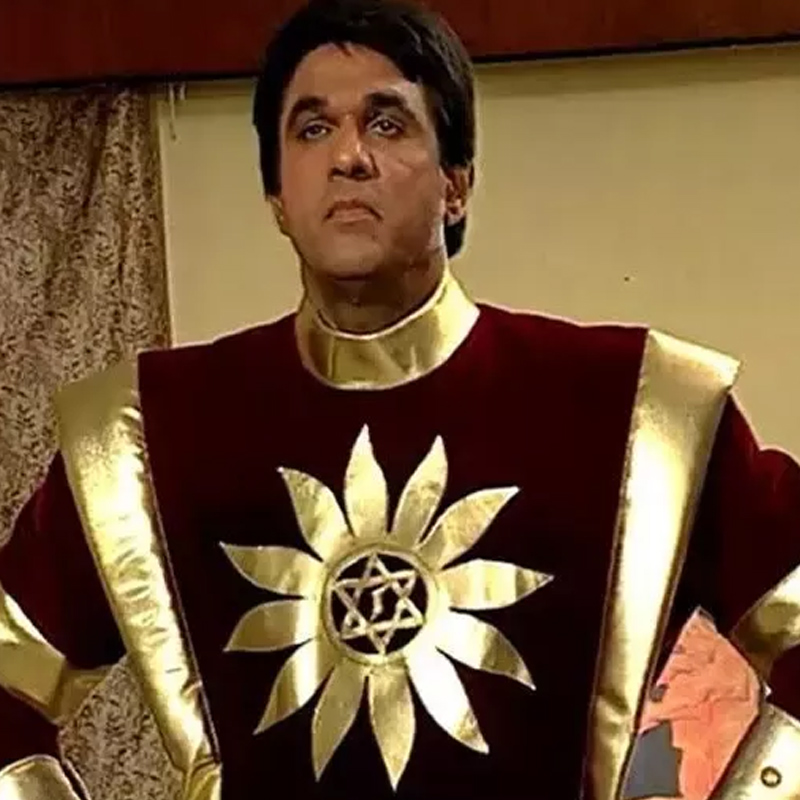
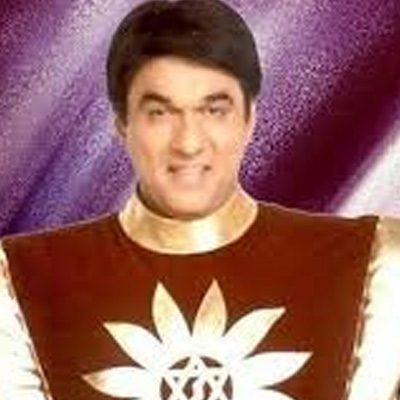
    The once-popular superman series, produced by Mukesh Khanna, who played the role of Shaktimaan, had entertained youngsters and old people alike. Khanna played the role of "Pandit Gangadhar Vidhyadhar Mayadhar Omkarnath Shastri", a newspaper photographer. Shaktimaan was portrayed as a human who achieved superhuman powers through meditation.

    The Hindi-language TV show was telecast on DD 1 from 13 September 1997 to 27 March 2005.

    Earlier, Prasar Bharati and the I&B ministry announced the re-telecasting of classics like Ramananda Sagar-directed Ramayana through the public broadcaster. When the epic TV serial was re-telecasted for the first time, people thronged the DD website to watch the streaming, causing it to crash due to the excessive traffic.

    Reports say that the public broadcaster is also planning to bring back Chanakya and Upanishad Ganga which will air on DD Bharti.