Tag: Shaji Mathews

  • NTO 2.0 will not have much impact at consumer level: Shaji Mathews

    NTO 2.0 will not have much impact at consumer level: Shaji Mathews

    MUMBAI: Even as stakeholders have moved courts against Telecom Regulatory Authority of India’s (TRAI) amendment of the New Tariff Order (NTO), analyst and consultant Shaji Mathews feels that it will not have any significant effect on the existing system. “I don’t think NTO 2.0 will have much effect on the consumer either, because whatever changes and choices consumers were to make, happened during the NTO 1.0 implementation. Once the legal battle on NTO 2.0 is over, the MSOs will implement it at the consumer level with cautiousness. They won’t disrupt the system,” says Mathews, who previously held positions as the VP of Star TV, COO of GTPL and CEO of KCCL.   

    According to him, NTO 1.0 was expected to remove discriminatory agreements which were imposed by broadcasters and create a level-playing field for small MSOs as well. “For that TRAI brought in the MRP regime, which was uniform pricing across the country for the consumers and transparent margins for the distribution platforms, whether they are small or big,” he says. It was expected that the MRP system will push broadcasters to bring consumer-friendly pricing, enabling consumers to avail a multitude of channels of their liking within the rates they were paying.

    “In the process, what happened was that consumers who were expecting to go a-la-carte found themselves at the receiving end because broadcasters basically priced the channels in such a way that they can defeat the whole purpose of the NTO itself,” he points out. 

    Now, by bringing in MRP regime, TRAI is expected to make it easy for consumers to choose channels based on prices.

    It also brought in certain regulations, on bouquet pricing, that the discount in pricing should not be more than 15 per cent. But while implementing, that was removed from the regulation and was kept in abeyance because of the remark of the Madras High Court. However, in the legal battle at Supreme Court, the remark made by the SC prompted the regulator to go approach the Supreme Court for a decision on the 15 per cent. But the apex court threw it back to TRAI and asked it to take steps which were within TRAI’s powers.

    In that scenario, he says that TRAI had to come out with NTO 2.0 wherein some regulations related to a-la-carte rate and bouquet rate had to have interlinked logics. And TRAI stepped in to clear the anomalies which were there in NTO 1.0.

    According to him, the consumers are not bothered about all these things. They want convenience. “I don’t share the views of TRAI and many other stakeholders that the consumer is so bothered about his freedom to choose on an a-la-carte basis. There are 800 channels in this country. In the NTO 1.0 regime, when broadcasters brought out the bouquets, there was no limit on the number of bouquets you could make. There were about 500 packages to choose from, and the consumers were frustrated. There is no point in forcing a-la-carte on consumers; they don’t really bother about whether it is a-la-carte or bouquet. They are bothered only about convenience, getting to watch their favourite channels, and they don’t want to pay too much. All these three were disrupted by the NTO. The consumer was not in a position to choose from too many packages and too many a-la-carte options.”

    Broadcasters, on their part, jacked up the prices, he said. All these went against the consumer requirements, resulting in a lot of them reducing their stickiness to watching TV. According to him, the cable industry lost around 10 to 15 per cent subscribers because of NTO.

    “It is not necessary that these consumers migrated to DTH. They did not go to OTT or YouTube, either. In fact, a lot of consumers did not go anywhere. They may come back to the system over a period of time. They have other priorities in life. They were like, let it be. That was the effect of NTO,” says Mathews. 

    He is certain that there won’t be much of a change in the case of NTO 2.0.

    “What I expect is that broadcasters will come out with revised prices. Having learned lessons from the implementation of the NTO, MSOs will not disrupt the system this time. If broadcasters reduce the prices, I think MSOs will give more channels to the consumers for the same price.  I don’t see the possibility of broadcasters increasing the prices, except in one or two cases. Some of the broadcasters are very aggressive in their stand. As regulator has come up with the Rs 12 pricing cap, some aggressive broadcasters might remove their channels from the bouquet,” he explains.

    Asked about the broadcasters’ complaint that their freedom to price has been curtailed by the NTO, he said: “Their freedom to price is there; only their freedom to bundle has been restricted. Their charges with regard to the loss of control over the pricing won’t stand. Broadcasters are making a fuss on this because it is their strategy of ensuring that the outcomes are advantageous for them.”

    On the question of TRAI’s authority to fix price cap, Mathews answers that the cap is only on the bundled channels, not on any other channels.

    He is also sure that none of the distribution platforms will create any disruptions under the NTO 2.0 regime. According to him, during NTO 1.0 the platforms went a little overboard in implementation. “So this time they will definitely not do anything disruptive. They will proceed cautiously. There will not have the same kind of disruption as we witnessed during NTO 1.0,” he states.

  • MSOs on distribution challenges post NTO

    MSOs on distribution challenges post NTO

    MUMBAI: The internet has given choice to consumers to select packages and watch content of their choice. A rapid increase in the viewership on mobile and OTT platforms on a daily basis has become a threat to the DTH and cable distribution ecosystem. Apart from the internet, competing with broadband services and OTT is another challenge post NTO. The experts from the broadband and cable industry gathered at Video and Broadband Summit (VBS) 2019 in December, organised by Indiantelevision.com to discuss innovative measures taken by companies to stay ahead of the curve. 

    The Remediation Company founder & partner Shyamala Venkatachalam, moderated the panel discussion on 'The Distribution Challenge' at VBS 2019. The panelists Den Networks Ltd CEO SN Sharma, Kerala Communicators Cable Ltd. (KCCL) ex-CEO and SCTE India GC member Shaji Mathews, Metro Cast Network India Pvt Ltd promoter Nagesh Narayandas Chhabria, Tata Sky Ltd chief financial officer G Sambasivan, SITI Networks Ltd chief executive officer Anil Malhotra and Fastway Transmissions Pvt Ltd consultant (strategic planning) Peeush Mahajan shared their views on how distribution companies are innovating to stay ahead of the curve. They also briefed the audiences on the measures adopted to counter relentless disruption.  

    "Technology is unstoppable and customer is the king. As lot of innovations keep on happening, the business has to adapt the changes and has to focus on two things – customer viewing experience and customer service. For making viewing experience the best, we are investing very heavily on our backend and the distribution pipeline and will be increasing the bandwidth capacity manifold,” said Sharma.

    He further continued, “In India, after a lot of HD channels were launched, still only 20 per cent of subscribers are using the HD platform. As we have taken a conscious decision to only deal with HD boxes from the new year, we will ensure that HD content will be available for every subscriber. Even if consumers are not willing to subscribe for HD channels because of the higher subscription amount, we will ensure that the consumer gets the SD service which will be as good as HD experience.”

    "The movement from SD to HD has been much below the consumer’s expectations. The movement to OTT and hybrid boxes has happened over a period of time. As today the content is produced in HD or even higher than that in 4K, lot of MSOs are setting up HEVC transmission and they will also be introducing boxes with capacity of higher than higher definition. The process has to be gradual, which also depends on the willingness of the players to invest in the business," said Mathews. 

    On the issue of interoperability of STB, he said that the concept of comparing the STP with a mobile phone is not right, as the STB is a sim card and not the mobile phone. So, the whole concept needs to be overlooked.

    The challenge for MSOs is that it is not viable for them to go to village areas and give connections to around 200 – 300 houses. “The main concern now is that 15 – 20 per cent of our existing customers are not coming back to us post NTO. This is because of the communication gap between the LCO and the customers. To bridge this gap we have to educate the LCO by training them. Also communicating through social media, direct marketing or door to door marketing is an option to convince customers,"  said Chhabria.

    He also said, “MSOs should get their existing customer base back, which is around 15 – 20 per cent. The NTO model has been stabilised and people can now invest. Two years ago it was a non-viable business, but now we can show the investors that it is a viable business and ask them to invest as there is an opportunity to earn money.”

    Sambasivan shared his view on distribution challenges. He said that as per the India projection report, OTT is growing very fast and the number of hours of video consumption is going up. DTH and cable industry need to be worried as 90 per cent consumption is on mobile. But OTT is not an immediate threat to the DTH and the cable industry because along with OTT, consumers are also watching television. The viewership on television in the last five years has not decreased. OTT may be a threat after around ten years.

    Throwing some light on the post NTO challenges faced by the industry, Malhotra said that we are facing two challenges, first is two competitions. The first competition we are facing from broadband services, which is a linear way of giving signals compared to STBs. To provide SD, HD or 4K content we need to provide STBs which will decode the signal and provide content in the respective definitions. The second competition from OTT is device agnostic because in the broadband, whether it’s 4K, HD or SD, all signals are distributed similarly. The quality bandwidth decides what kind of viewership experience a customer has.

    “The second challenge is that suddenly there are internet users in the country. As per TRAI’s published data, 64 crore is half of the population of India. This population buys smartphones and we do not know how much of this population has moved away from linear TV to internet. From a content perspective, the kind of content which is popular is the adult site and is popular on OTT platform and not allowed to be beamed on the linear TV. The unfair competition will be that if the customer demands a personalised content, which is viewable on the OTT platform, but not viewable on the linear video platform despite having user enabled features on the device. Also the password sharing piracy is a challenge as more than one person can view the same content on different devices. So, overall technological aspects have to be considered,” he said.

    Sharma added that the message for MIB is that piracy is one of the issues which need to be addressed as lot of investments have been done at the state level for implementing NTO. DOT, few years back had addressed the issue by appointing state level cells. The other issue is the linkage of a la carte price with the bouquet price.

    Mahajan thanked TRAI for implementing a la carte and said that TRAI has given a choice to the customers. In 2018, 98-99 per cent of the customers were on suggestive bouquets offered MSOs and DPOs. In last 8-9 months, a big migration has happened from 2-22 per cent from bouquet to a la carte and it keeps on happening on a daily basis. We have to put in more efforts to educate the subscribers and train the LCOs, as LCOs are the key people who can generate a need for a la carte. DPOs have put in a lot of effort and will continue in future also. By the end of 2020, 35-40 per cent consumers should move on a la carte.

    Malhotra said that as per the regulations, TRAI has done a perfect thing by giving a choice to the customers. Unfortunately, the customer needs a la carte along with a package of their suitability. It is very difficult for a customer to choose between 800 channels and make a package of its own. But packaging is important and there are three ways of doing it. Packaging happens at a broadcaster level and if the customer wants the broadcaster package, then the distributor cannot dismantle the package.

  • Dual LCN helping consumers, says KCCL’s Shaji Mathews

    Dual LCN helping consumers, says KCCL’s Shaji Mathews

    MUMBAI: Kerala Communicators Cable Ltd (KCCL) CEO Shaji Mathews believes dual local channel numbers (LCN) is helping consumers and that its fate should be left to the market.

    2017 saw many channels, especially news broadcasters, raising the issue of channels broadcasting themselves on two LCNs thus creating biased ratings in their favour. Their contention was that the channel gets overarching visibility for viewers. “I don’t see any problem in dual LCN and why the government is restricting dual LCN. They need to rectify the rating system if they see some issues in the rating of a channel. Dual LCN is helping the consumer and we should leave it to the market to decide,” Mathews told Indiantelevision.com in an interaction.

    The structure of the Indian cable and satellite TV distribution market is evolving, led by digitisation of cable network mandated by the government. The Kerala cable industry has benefitted from the digitisation process with over 5000 cable operators and 50 lakh active subscribers.

    KCCL is an initiative of independent cable TV operators in Kerala under the guidance of Cable Operators Association (COA). COA is an umbrella union of local cable operators all over Kerala. KCCL has around 25 lakh active subscribers according to Mathews. The digitisation in the state was complete in March 2017.

    “In Kerala, the majority of the market is with KCCL and Asianet Cable. Apart from this, there are about a dozen small cable operators. The size of the state’s cable industry is around Rs 100 crore,” says Mathews.

    Mathews shares that the overall revenue has gone up because pay subscribers have increased. “The ARPU (average revenue per user) remains the same after the shift to digital from analogue, which is below Rs 200 in Kerala,” Mathews reveals.

    He says that small cable operators didn’t complete the digitisation on time because of various reasons such as non-availability of STBs and expecting the dates to be postponed.

    For KCCL’s first project-Kerala Vision Channel-raised a share capital of Rs 1.5 crore in 2006. The channel today covers 20 lakh homes in Kerala. Now its share capital is enhanced to Rs 10 crore with the approval of Registrar of Companies, SEBI and other government authorities. The capital outlay for the second major project is Rs 8.5 crore, 50 per cent of which has already been raised from the existing shareholders.

    There is already a cumulative investment of Rs 500 crore in the cable TV industry in the form of equipment, networking, studios and other infrastructure owned by individual cable TV operators all over the state with a consolidated turnover of Rs 250 crore per annum.

    Mathews lashed out at broadcasters who indulge in discriminative pricing. “To keep the competition going, the big broadcasters give their channel feeds to small operators for very low rates which forces us to negotiate and accept their terms and conditions.”

    The Telecom Regulatory Authority of India (TRAI) had clarified that a channel can only be present at one LCN number and the landing page would be considered as a separate one which is not allowed and TRAI has the right to investigate and take action.

  • Industry holds bright outlook for budget 2018

    Industry holds bright outlook for budget 2018

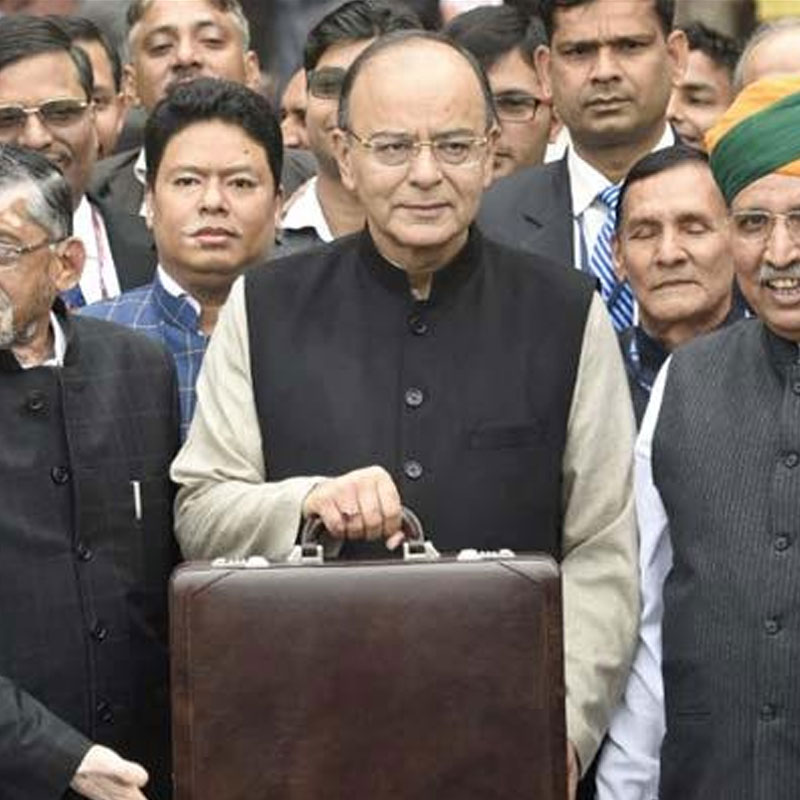
    MUMBAI: With the D-Day already here, the media and entertainment industry is keeping its fingers crossed after a difficult year that bore the full brunt of the introduction of GST. With things settling and the general elections not too far away, a more populist budget is expected from FM Arun Jaitley and his ministry this year. While all eyes will be on the fiscal consolidation roadmap and borrowing plans, the government’s action plan for ease of doing business will be in sharp focus.

    Indiantelevision.com asked industry veterans for their views on what’s likely to transpire during the mega event today. This is what they had to say:

    public://Joy Chakraborthy.gif

    “This is the last budget before the general elections, I think it will be a populist and a good budget. It should help the spending and the overall industry which will directly help advertising.

    Broadcast industry went through a major cyclic process when demonetisation and GST happened. With helping the advertising industry this budget will bring good growth to the media industry as well. It will also help in increasing the consumption, expenditure.

    Over the sentiment will get better, India as a country is very sentiment driven. If the budget is good, the general public will also be happy and half the things are taken care.”

    — TV18 president-revenue & CEO Forbes India Joy Chakraborthy

    public://frank dsouza.jpg

    “Entertainment and media industry is not just a participant but also carrier of digital revolution in the country.  Therefore, policy makers should step up to rationalise the taxation aspects impacting digital ecosystem.  Towards this end, clarification may be provided on applicability of Rule 9A of the Income Tax Rules to income from sale of digital rights of feature films certified for theatrical exhibition.  Also, with the growth in production, distribution and consumption of ‘web only’ content, provisions similar to those for feature films may be applied or at least clarity may be provided on its deductibility as revenue expenditure.  

    Though India is one of the large cinema markets around the world when it comes to admissions, the market in tier II and tier III cities still remains underserved given the limited number of screens.  A weighted deduction may be provided for developing, maintaining and operating single screen theatres or multiplexes in such tier II and tier III cities.

    GST was introduced with an intention to subsume multiple taxes levied by the State and the Union.  This had come as a major relief to all the industries including the media and entertainment industry, with of course, industry discomfort on the rate of GST is undeniable.  However, many states (like Tamil Nadu and Gujarat) have started imposing local body entertainment tax on movies. Levy of local body entertainment tax on movies exhibited defeats the whole purpose of GST.  Therefore, the government should either remove the levy in itself or at least put a minimum cap on exhibition of movies.”

    – PWC partner-India entertainment and media sector leader Frank Dsouza

    public://Megha Tata.jpg

    “Now that the GST jitters are receding and GDP growth rebounding to 6.3 per cent in Q2 of FY 2017-18, I am confident about growth of broadcast industry in FY 2018-19. Having said that, I wish to see average GST rate for media and entertainment sector be brought down from existing 18 per cent to pre-GST levels of 15 per cent. I am hopeful about Finance minister keeping his words by reducing the corporate tax rate from 30 per cent to 25 per cent as promised by him in the union budget 2015-16 speech.”

    — BTVI COO Megha Tata

    public://Vikas Khanchandani.jpg“The M&E industry will continue on its exponential growth path as we get high speed data connectivity and the corresponding data costs continue to decline. Data growth has risen on the back of high video consumption on the go and will continue to play a pivotal role for growth in both M& E and Telecom sectors. Keeping in mind the expected growth, one long -pending wish I have from the Budget is the recognition of the M&E industry as an integral part of the Infrastructure sector so that it can avail of the various benefits and incentives that are given to the Infrastructure sector. This includes better financing options, to help boost the capital investments needed in digitisation and digitalisation, technology upgradation and new technology development and deployment. The net benefit of all of the above will always flow back to the consumer.”

    — Republic TV CEO Vikas Khanchandani

    public://piyush pankaj.jpg

    “To realise the Digital India dream, it is important to promote broadband. MSO are the best to roll out faster Broadband being already have fibre reaching homes, building, society etc. Being high capex requirement of business, the industry expect that Budget will give relief to Industry by removing the AGR.”

    — GTPL Hathway Ltd head-investor relations Piyush Pankaj


    public://Rahul Puri.jpg“The budget for 2018 will be a greatly important budget as the elections for 2019 are only a year away. I think there will be some changes to the direct tax structure this year as indirect taxes were given the biggest ever overhaul last year in terms of the introduction of GST. I also feel that there will be increased spending on infrastructure likely to be announced this budget as the government looks to employ some populist measures with one eye on elections.
    As for the entertainment industry, I hope some clarity comes through on GST with relation to multiplexes as it’s important that the industry sees consistency. I also am hopeful that as the government looks to help increase infrastructure capacity, the multiplex and retail segments get a much-needed boost.”

    — Mukta Arts & Mukta A2 Cinema MD Rahul Puri

    public://shaji.jpg

    “Transparency was one of the declared objectives of digitisation and this has been achieved with the efforts and investments by MSOs and operators. Today, majority of the benefits of transparency flows to the government and broadcasters. It’s time that the government recognised the contribution of small entrepreneurs in establishing this industry, the reality that television is much more than entertainment, and the need to share the benefits of transparency with MSOs, operators and consumers by way of overall reduction in taxes to the sector.”

    — KCCL CEO Shaji Mathews

    public://Varun.jpg

    “From a personal standpoint this will be an interesting budget to see how economic reforms and political compulsions are balanced. But from an industry stand point I’m hoping that digital transactions and e commerce get a positive deal and in effect making them further appealing to consumers. If done it will be a game changer for Digital India.”

    — The Glitch co-founder and content chief Varun Duggirala


  • KCBL to launch Malayalam GEC in March 2018

    KCBL to launch Malayalam GEC in March 2018

    MUMBAI: Keralavision Channel Broadcast Limited (KCBL) is all set to launch a new Malayalam satellite general entertainment channel Kerala Vision Digital. Testing began on 1 November 2017 while the commercial launch of the same is planned by end of March 2018 for the free-to-air (FTA) channel.

    Praveen Mohan is the chairman of KCBL and Raj mohan Mambra is the managing director(MD).

    Talking to Indiantelevision.com, Kerala Communicators Cable Limited (KCCL) CEO Shaaji Mathews said, ” The normal composition of this regional channel will include current affair bulletins also apart from movies, serials events, game shows and such gec content. The serials and family drama will be totally different from the current trend of glamorous hind content being dubbed into regional languages. We will emphasise on traditions, culture, family values and original talent. Further Our current affairs will be very local and relevant to the state . The channel will also cover the local Kerala events.”

    “We have tied up with some of the operators in other states to reach the Malayalam audience. There is a large number of people with roots in kerala and residing in other states and metros”, said Mathews.

    KCBL and KCCL are the two public limited companies incorporated and formed under the initiative Cable Operators Association (COA).

    COA was formed because Cable TV networks emerged in various parts of Kerala in the early 1990s as ventures of self-employment by the youth. As the cable TV industry was entering a high-growth stage nationally and networks with massive capital investment appeared on the scene, FTA channels began turning into pay channels.

    This phenomenon posed a stiff threat to the small local neighbourhood networks. It was in such a scenario that a fellowship of cable operators calling itself the Cable Operators’ Association was born. It has been functioning with remarkable foresight in the consolidating the base of small networks and helping them pool valuable resources.

    Intelsat 17 satellite is being used for the testing of the channel.

  • IDOS 2017: OTT is here to stay but may not replace pay TV

    IDOS 2017: OTT is here to stay but may not replace pay TV

    NEW DELHI: The over-the-top (OTT) medium is here to stay and cannot be put down, but the television medium will continue to survive in the face of this challenge in India.

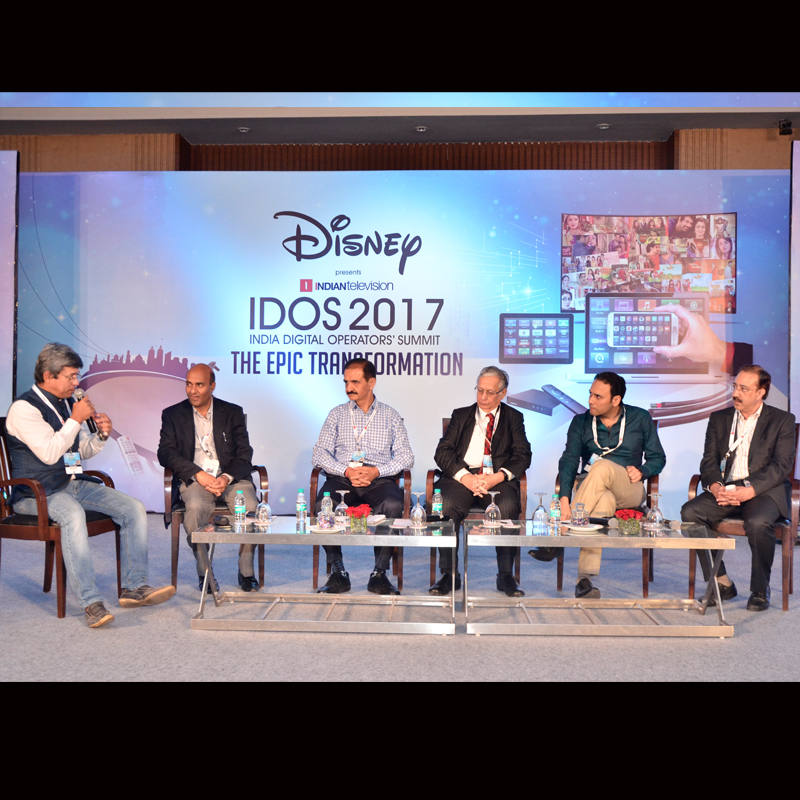
    The stressful life of today and the relationship built by the local cable operator are other reasons for the survival and well-being of the television medium. These were some of the views expressed at a discussion on the OTT Challenge to Pay TV at the Indian Digital Operators Summit organised by indiantelevision.com and moderated by the latter’s founder, CEO and editor-in-chief Anil Wanvari.

    Viacom 18 Digital Ventures’ senior vice-president and head of marketing Akash Banerji said that OTT would fundamentally change the scenario but admitted that “we over-estimate the short term, and under-estimate the long term.” He felt that the impact of OTT on pay TV may begin to show some change by 2020-21, but not immediately.

    Clearly, he said, some disconnect with the cable operators had led to the growth of OTT. Secondly, OTT was providing the content relevant to the individual viewer. Thirdly, he said that Viacom 18 was for the first time indulging in a B2C model where the consumer had the last word. He, however, admitted that the long-term survival of OTT lay in the medium moving to a subscriber-based scenario.

    Shaji Mathews, who has recently joined as the CEO of Kerala Cable Communicators in Kochi, said that OTT was no challenge, and (on the contrary) it would augment TV. He was confident that wired technologies will continue to dominate even as wireless technologies attempt to make inroads.

    He also felt that there was no level playing field for OTT at present, and so growth will take time.

    DEN Networks CEO S N Sharma said that the MSOs had entered the field of OTT in an attempt to provide a platform to various OTT players only to reach the consumer, realising that the consumer habits are changing. DEN had made inroads as far as fee-to-air OTT was concerned, and was only amalgamating the OTT players. The aim was to move with technology.

    Ashok Mansukhani of Hinduja Media Group admitted that OTT was a gigantic disruptor of the entire value chain but felt it would take some years to make inroads.

    Vynsley Fernandes of CastleMedia felt that the growth of OTT would largely depend on who has the TV remote in the home.

    Sisir Pillai of Lukup Media was confident that whatever the medium, it would survive if it had adequate content.

  • Shaji Mathews appointed as Kerala MSO KCCL CEO

    Shaji Mathews appointed as Kerala MSO KCCL CEO

    MUMBAI: From Gujarat, where he helped steer MSO GTPL towards its IPO, he is now headed back to his home city of Kochi in Kerala. Shaji Mathews has been appointed as the CEO of Kerala Communicators Cable Ltd (KCCL), a leading cable TV and broadband network in Kerala which is a consortium of operators who are shareholders and participate in management.

    An initiative of Kerala’s independent cable operators it works under the guidance of the 4,000 member strong Cable Operators Association ( COA), the main objective of which is to develop Kerala’s cable TV sector by building wider networks, upgrading technology, finding new avenues of activity apart from addressing various issues and challenges before the industry for and on behalf of its members.

    The company is led by the chairman Boobacker Siddique and managing director PP Suresh Kumar.

    KCCL’s website states that these cable operators have cumulatively invested Rs 5 billion in equipment, networking, studios and other infrastructure all over Kerala. The cable operators have a consolidated turnover of Rs 2.5 billion per annum. KCCL has a network capacity of 300 SD channels and 60 HD channels, and provides 240 SD channels and 28 HD channels to its two million digital subscribers.

    “KCCL has been one of the front runners in Kerala on digitisation and has received appreciation from the MIB and TRAI as well,” says Mathews. “The network derives huge strength from the dedicated team of operators who have active participation in the management. It is quite similar to the state my previous company GTPL was when I joined it four years back. While KCCL has completed its digitsation, there is a lot of scope in the area of broadband for which Kerala’s citizens have a huge appetite. My objective is to create a similar success story like GTPL with KCCL as it is poised for rapid growth going forward.”

  • GST benefits come with ‘daunting’ compliance & increased paperwork, say sector stakeholders

    MUMBAI: Even as the government has been attempting to convince the industry and the average tax-paper that the goods and services tax (GST) being implemented from 1 July 2017 will help not only in curbing price rise and simplifying taxation procedures, the broadcast and entertainment industry has shown mixed reaction and fears that it may, in fact, lead to more problems and paperwork — at least in the short to medium term.

    In a survey conducted by indiantelevision.com , industry pundits have questioned the increased paperwork and complex compliance that is opposed to the ease of doing business.

    Multi-system Operator GTPL COO Shaji Mathews, admitting that overall taxes related to the media and broadcast industry will come down under GST, said, “The paper work (to become GST-compliant) has increased because you need to register in every state you are operating in.” In the cable industry, the service tax has been 15 per cent. The set-top box (STB) and other equipment related to cable were in a higher tax bracket, 28 per cent earlier, which has now been reduced to 18 per cent.

    Mathews added: “The industry has a very positive approach to the government, but a similar approach is needed from the other side. As far as the consumers are concerned, GST will apparently make their payouts a little higher because the tax rate is up from 15 to 18 per cent.”

    He further said: “With GST coming, it was widely accepted that all other taxes, including entertainment tax, will get subsumed in GST. The implementation of GST was expected to give the industry a uniform pricing and clarity to all stakeholders regarding taxation. There are states where the entertainment tax is not levied by the states but by the local bodies. In these states, there is neither uniformity nor clarity.”

    However, he hoped that as long as everything was system-driven it will ultimately help better compliance and better settlement of tax returns for the cable and broadcast industry. “In the long run, we all are bought by the GST concept. However, there may be problems in the beginning. So we are being patient and are hoping that over a period of time this will definitely be beneficial and everything will fall into place,” Mathews added.

    He concluded: “All the paperwork will not lead to loss of revenue but we think that these investments are worth doing and as an industry we need to contribute to the implementation of the concept.”

    Echoing similar sentiments, Reliance Broadcast Network Limited CFO Asheesh Chatterjee said “the billing software and the entire radio industry are grappling with how the billing is supposed to emanate” because most radio stations operate across multiple states and , hence, compliance is a “challenge.”

    “From our perspective the entire compliance mechanism requires rigorous exercise from all the registrations done across the multiple states and vendors who also need to be GST registered across the space. The radio industry is much smaller, but the compliance load for the industry is much bigger. GST is for the highly automated streams where you have big teams, which are already in place because of the larger scale. But mid size firms do not have that type of automation level and suddenly you are grappling with the time driven agenda of compliance where there is no way out of it,” Chatterjee highlighted the pains of mid-size companies.

    When asked how the GST will benefit broadcasters, he commented, “It will be initially negative for the broadcasters, but may become beneficial later.” But, Chatterjee maintained that it was not easy to be GST-compliant and added, “It is not simple at all. All software, from your billing software to your traffic software, needs higher degree of customization to be ready.”

    Questioned whether the paperwork and filings with the government agencies would increase as compared to the previous set up of multiple taxes, he responded by saying though in the long run the GST regime may be beneficial, smaller organizations, which do not have a high level of automation, will find it “more difficult” to be ready in the short term.

    As to whether the sector will benefit from GST, he explained that if the country’s economy does well, it would benefit everybody, maintaining “in the short term it has pains.”

    Responding to whether getting GST-compliant will lead to loss of man-hours and revenue, Chatterjee admitted that it will lead to “lot of man-hour loss,” but added that compliance, in the long term, would have a cascading effect on the revenues that would increase as systems are properly put in place.

    Republic TV group chief financial officer S Sundaram was more candid when he said, “There is no option. We will know whether we can address all key compliances as and when the process comes into operation.”

    Still, he admitted getting GST-compliant is “not simple” and companies will have to see whether the multiple and online process is helpful.

    While making a point on the impact of GST on broadcasters, he said it was “too early” to judge whether this will benefit the broadcasters or not.

    When asked if paperwork has increased to be GST-ready, Sundaram replied that “numerically it looks daunting” but the actual difficulty can only be fathomed when the filing process begins, adding that GST is a new initiative that has its positives and negatives — while multiple taxes have got subsumed in the new structure, the GST rates have the “potential to confuse” and the robustness of the underlying IT process needs to pass scrutiny.

    However, DDB Mudra Group ED and DDB Mudra West managing partner Rajiv Sabnis was more optimistic saying “most advertisers GST touches are going to have a favourable impact.” According to him, major beneficiaries of the new tax regime would be sectors of retail and FMCG, while e-commerce may get negatively impacted.

    Still, Sabnis also admitted that prima facie GST “looks very simple, but is highly complex” as far as compliance goes. Reason? Vendors have to be registered prior to the 30 June 2017 deadline and many clients do not want to be registered as vendors as they will not get the benefit of the input credit (a technical jargon for offsetting payment of extra taxes). “So there is a complex mechanism of registering vendors,” he explained.

    As to whether GST has increased the paperwork and the filing processes, Sabnis said, “Paperwork has definitely increased for national clients. For example, the Tourism Ministry suggests that all 29 states be charged separately, which means 29 different invoices will have to be raised for one 30-second spot (of advertisement). In that sense, compliance is complex. I think it is a learning curve and if some new complexities arise in future, I am sure the government will find solutions to ease the GST pains.”

    According to Sabnis, in the long run GST would prove to be beneficial to advertising setups as his as it has a high degree of exposure to retail and retail will be benefitting the most from the GST.

    But, that is in the long run. In the short term, broadcasters are bracing for a revenue hit courtesy the GST imposition. A leading GEC CEO was recently heard telling another rival, that his network was girding up its loins for the impact of the new tax.

    “First there was demonetisation which hit our revenues, because advertisers immediately slammed the brakes on spends,” he says. “Now there is GST. While large advertisers such as Levers, Procter & Gamble may continue to spend despite the plethora of paperwork and confusion, smaller ones which do not have their systems in place, may not be that eager. They would want to understand how things will move going forward – paperwork, compliance etc – while observing for a couple of months. I expect July-mid-August to be lean months, especially for the news and smaller TV channels which are dependent on smaller advertisers. Things should ease up after that.”

    That’s a view echoed by the CEO of an advertising network. He expects an advertising flood to hit television channels by end-August. That should provide them with some relief.

    Clearly, 2017 has been a bit of a bumpy ride.

  • DAS Phase III status report: East and West

    DAS Phase III status report: East and West

    MUMBAI: Though the deadline was announced well in advance, the action on-ground took quite some time to get rolling. And now it’s certainly too late to finish on time. “It’s chaos and carnage together. Digitisation, which was meant to be a panacea has turned out to be a poison for cable operators and it’s sad that there is no one to stand by their side,” said a retired official from the Ministry of Information and Broadcasting (MIB) on condition of anonymity.


    As per the official’s assessment, on an average, 40 per cent seeding of set-top-boxes (STBs) has been done successfully and it will be impossible to meet the 31 December, 2015.


    Digitisation is an East – West – North – South affair and the progress report is quite similar everywhere. This report by Indiantelevision.com covers the proceedings of the eastern and western parts of the country.


    East


    The North Eastern part of the country has always been one of the most neglected areas when it comes to central government’s attention. The story is no different when it comes to DAS too. “People here are not aware of 10 per cent of the laws. There is nobody to go to and talk about grievances. Not everyone can go to the Telecom Disputes Settlement and Appellate Tribunal (TDSAT) as they cannot afford to. So they have two options, to either opt out entirely from the cable business or succumb to unfair means. While there are grievances involved, we cannot expect work to go on a brisk pace and it’s all delayed,” Task Force member from Assam Iquebal Ahmed tells this website.


    While Ahmed refrained from putting a number to the progress but as per the assessment of other cable operators, approximately 30 per cent of the seeding has been done so far.


    And this 30 per cent is still on higher side the story is even worse in West Bengal. “Only eight to 10 per cent of the seeding has been done so far,” estimates Siticable Kolkata director Suresh Sethia. But he also says the work has picked up recently and it is not impossible to meet the deadline provided there is a surge in consumer demand.


    “The government has to advertise more aggressively by putting more newspaper inserts to drive consumer requirement. The message needs to be very clear that people need to have set top boxes before 31 December or there will be no TV,” stresses Sethia.


    The crisis of STBs, which is very widely spoken about is not something Sethia is bothered about. “As far as we are concerned, we have enough hardware to meet the demand,” he says confidently.


    West


    The west side story is a lot better in comparison. “About 60 per cent of the seeding has been done in Gujarat and if we continue with the way we are forging forward, there is a good possibility of us reaching the target by March if not December, provided the deadline is not postponed. However, if the deadline is postponed, the momentum of work will break since the pressure will ease off and then we might not be able to achieve it by June,” says GTPL Hathway COO Shaji Mathews.


    Mathews is of the opinion that deals with broadcasters cannot be a reason behind the delay. “Even in Phase I and II, analogue deals continued in digitised areas for a brief period. The transition takes time and will gradually fall in place,” he adds.


    However, the progress report in Maharashtra is not as hunky dory as that of Gujarat. The Maharashtra government, like the Central government, is adamant on no extension of deadline. The respective collectors have also communicated the same across every nook and corner. But there is a huge lack of awareness among consumers, says a senior member of Nasik District Cable Operators Federation.


    He further adds, “Do we have the infrastructure ready? Why are we not talking about that? The MSOs will benefit the most from this chaotic scenario. They are not releasing the boxes now and the reason is that when the demand hikes up at the last moment, they can jack up the price and sell. DEN is charging Rs 1600 for a STB! Can a phase III consumer afford it? The government needs to look into the deeper issues and generate more awareness instead of showing its muscle power.”


    What the scenario at the ground level will be post 31 December, 2015, only time will tell.


    Indiantelevision.com’s next report will focus on the ground realities in the Northern and Southern parts of the country. Stay tuned.

  • Broadcasters to hike rates in both DAS and analogue areas

    Broadcasters to hike rates in both DAS and analogue areas

    MUMBAI: Things will be different the next time multi-system operators (MSOs) and direct-to-home (DTH) players sit across the table with broadcasters for renewal of channel contracts. Thanks to the price defreeze proposed by the Telecom Regulatory Authority of India (TRAI) after nearly seven years. The regulator on Monday released a notification, offering a 27.5 per cent inflation-linked hike to stakeholders in the tariff ceiling. The hike can be implemented in two phases: 15 per cent from April and the remaining 12.5 per cent from January 2015.


    Broadcasters in particular have welcomed the move. With the 15 per cent hike April onward applicable to the analogue business, broadcasters are happy that they can at least increase their ARPUs.


    “CPS deals in DAS areas will not be impacted with this tariff ceiling hike. But if the MSO or DTH player has a RIO deal, be it in the DAS or non-DAS region, the rates will go up,” informs Media Pro COO Gurjeev Singh Kapoor.


    For those wondering how rates can head north in DAS areas when the tariff ceiling notification is for non-addressable areas, here’s the logic. With RIO rates on digital platforms being 42 per cent of those on analogue platforms, a 15 per cent increase in analogue rates is bound to raise RIO rates for digital. Hence, while the hike in tariff ceiling is for non-DAS areas, the same is applicable to DAS areas as well. “This is the best thing that has happened to the industry, as we now have a platform to increase the ARPU and ask for more from consumers,” says Kapoor.


    While an aggregator, on condition of anonymity, puts it as: “DAS rates are related to non-DAS rates. The hike of 15 per cent is on the RIO rate. So even though many feel that the fixed deals will not get affected, they will. Because the matrix for negotiation will change now and this is not only for analogue areas, but also for DAS areas. The negotiation for fixed deals is done on the RIO rate, and if that goes up, of course, the fixed deal will also rise.”


    Most of the contracts are up for renewal in April; for TheOneAlliance, 60 per cent of the contracts will be renewed now whereas for Media Pro, close to 90 per cent of the contracts with both DTH operators and MSOs are up for renewal.


    “We have a very good scope and so, have decided to increase the rates for every MSO and DTH player in both DAS and non-DAS areas.  After a long time, broadcasters have got a hike in tariff ceiling and so, we would take the opportunity to hike the rates,” says TheOneAlliance EVP sales and strategy Makarand Palekar. “We will sit with the concerned MSOs and DTH players and try and incorporate this even in existing channel deals. And I am sure that DTH operators and MSOs will be happy with this as they can collect the same from the ground now.”


    Will consumers see a hike in bills this month onward? “We will move things gradually. We will sit for negotiations now,” informs Palekar.


    Are broadcasters happy with the percentage of hike? Palekar feels it could have been better. “But with digitisation, MSOs are currently in investment mode. So, in the current scenario, this could have been the best,” he says.


    Kapoor agrees with Palekar saying, “Yes, it is not enough. The increase should come in every year, but then it is a welcome move. They have finally woken up from their slumber.”


    According to the aggregator, “This figure of 15 per cent has been derived by the authority using past metrics and calibrations. While the hike is under the inflation rate, this is the best TRAI could have come up with.”


    Apart from broadcasters, are MSOs happy with the move? “MSOs will get bothered with this hike. We may end up paying for this from our own pocket if we cannot collect it from the ground,” rues ABS 7 Star CMD Atul Saraf.


    According to him, MSOs don’t put pressure on LCOs by hiking rates in the analogue regime. “There are chances that the local cable operator can go to the other MSO, if the other player doesn’t hike the price. So either both the MSOs operating in a particular area increase the price, or else, there will be competition,” he adds.


    About hiking prices in DAS areas, Saraf says, “Broadcasters have already hiked the price in DAS areas. Also, the deals are on per box basis and there is 100 per cent declaration. So why would they want to increase the price in the DAS regime? So in the DAS regime, if broadcasters plan to hike prices, a few of us may go to the court.”


    The increase in RIO by 15 per cent leaves a grey area for broadcasters to hike rates in both DAS and non-DAS areas, according to Saraf. “But there are hardly any RIO deals currently, as we prefer entering into a fixed deal, and especially in the non-DAS areas. But now it may be that MSOs may do a RIO deal, especially for sports channels,” he informs.


    GTPL Hathway COO Shaji Mathews too feels MSOs will not benefit from the tariff hike. “Given that DTH rates are also low today, this hike will lead to more competition between the MSO and DTH,” he says.


    Kapoor however begs to differ. “The ARPU for DAS phase III and IV is Rs 160 while for DTH, it is close to Rs 300. Even with the hike, the ARPU for cable will go up to Rs 190. There is a big gap between the two and I don’t see consumers moving from cable TV to DTH due to this hike,” he opines.


    Whether the MSOs and LCOs will benefit from the move or no, still needs to be seen. The question now is, whether the consumer will pay for the hiked price in the cable TV bills? “The problem is not with the consumers, they are ready to pay,” says Palekar.


    “We are showcasing around 400 channels, so the hike was much needed. It is also a good way to move people to digitisation,” concludes Kapoor.