Tag: Shailesh Kapoor

  • IPL vs GECs: Experts play down the league’s impact on the latter’s numbers

    IPL vs GECs: Experts play down the league’s impact on the latter’s numbers

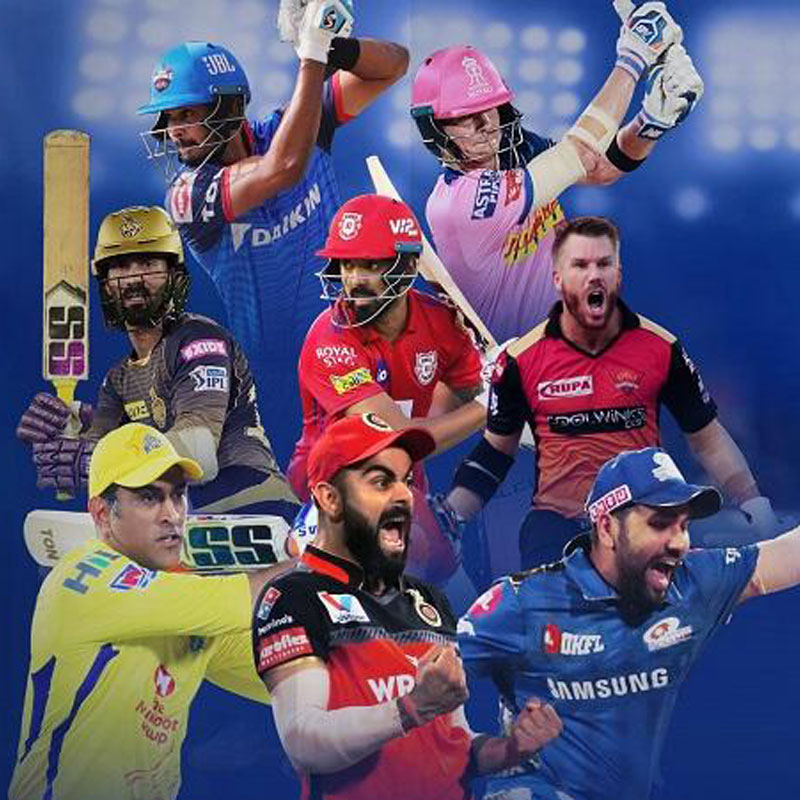
    MUMBAI: The countdown to the country's biggest cricketing extravaganza, the Indian Premier League (IPL), has begun. Any doubts about the popularity of the IPL can be laid to rest if the viewership of the thirteenth edition of the tournament is taken into account. According to BARC, IPL 13 viewership grew by 23 per cent compared to the preceding edition, with overall 400 billion viewing minutes.

    Meanwhile, GECs are lining up new fiction and non-fiction properties to counter this Goliath. However, experts believe that the whole television ecosystem is so accustomed to this phenomenon that it will hardly make any difference. Broadcasters are used to devising strategies in advance to compete against the IPL for eyeballs and ad revenue.

    IPL to not have major impact on GECs

    Last year, due to the onset of the Covid2019 pandemic, the IPL was delayed by close to six months, and when it took place, it coincided with the launch of impact properties like Bigg Boss, Kaun Banega Crorepati on GECs. Back then, analysts had pointed out how these marquee shows were unable to garner TRPs like their previous editions due to the clash with the cricketing league. However, IPL 2021 is happening at its usual time.

    Wavemaker India sports national director Jigar Rambhia asserted that the tournament has nothing to do with festive or non-festive time period, viewers tune into the IPL regardless.

    Thinking along similar lines, Ormax Media CEO Shailesh Kapoor revealed, “There has traditionally been a 10-20 per cent drop in viewership of genres like GEC, movies and news because of the IPL. This has now been a known impact for almost a decade, and broadcasters plan for it consciously.”

    How broadcasters are prepping

    IPL matches are played in two slots – in the afternoon from 3.30 and in the evening from 7.30. The question arises how primetime shows are going to perform during this time frame. The common notion is that single TV homes will opt for the IPL, with GEC shows being watched between the match breaks or viewers tuning into them when the matches end.

    Zee TV business head Aparna Bhosle disagreed with this viewpoint.

    According to her, Hindi GECs over many years have managed to sustain viewership and even grow despite the IPL. “Long running fiction or non-fiction shows have, by and large, not seen an adverse impact on viewership due to existing fan bases and the loyalty channels’ command in terms of appointment viewership,” she noted.

    Viacom18 chief content officer Manisha Sharma, during an earlier conversation, had mentioned that the network’s flagship Hindi GEC Colors will continue to spice up its existing fiction line-up with consistent highpoints across all shows, while dance reality show Dance Deewane 3 will safeguard the weekends. “With our strong weekday & weekend programming line-up, we are sure to protect our ratings from the IPL brunt,” she had stated.

    However, Kapoor is of the opinion that prime-time shows will witness a ratings drop, ranging from 10 per cent for the popular programmes, and up to 20-30 per cent for the middling ones.

    Rambhia was of the view that broadcasters are unlikely to launch new programs that directly clash with the IPL. “There are some networks who are in fact putting their original content on Sunday afternoon when there is no match. For e.g. if any GEC is putting their show at 12 pm it can easily get over by 3.30 when the match will start. I believe Filmfare is also going to premiere at 12 pm,” he added.

    Audience engagement through different devices

    Kapoor shared that the consumption of IPL on digital (Disney+ Hotstar) is largely driven by solo viewing and out-of-home consumption, such as during travel. When the family wants to watch a serial on a GEC, an IPL fan in the house will watch the match online at that time.

    Growth of online consumption has created more viewing choices within the family, and this doesn't harm GECs in any way; in fact, it helps to some extent, he opined. Additionally, while HD homes are a niche group, one doesn't expect their viewing dynamics of IPL to be too different from SD homes.

    “We are still a single TV household. There is a consumption happening on mobile phones and other mediums but for genres to target specific people on various platforms will take some time. Largely, we are still a TV viewing country. So, it is not going to make much difference,” Rambhia detailed.

    How GECs fare in terms of advertisement

    When it comes to advertising, experts are confident that GECs will fetch their usual ad rates. Rambhia revealed that since January, advertising rates are at an all-time high. He shared, “In terms of inventory, I don’t think television channels are getting impacted. Because at the end of the day, only a certain percentage of advertising is available on IPL then you have other players who advertise on GECs. Whereas there are some categories and brands like cola which advertises on both IPL and GEC.”

    Kapoor pointed out that there has been no major impact on ad rates, as most bigger deals are for a longer period, like six to 12 months.

    “Over years, advertisers who want to be seen on IPL have allotted budgets to it, some of which have come from other media like print and outdoor, while some have been diverted from other genres on TV like GECs. But IPL is so settled now that we cannot call this an impact anymore. It's more like a norm now, whereby advertisers make their annual plans keeping IPL in mind,” he shared.

    It will be interesting to see if GECs are able to hold their own against the IPL come 9 April. Or will the shorter gap between the 13th and 14th edition play against the league’s favour? However the chips may fall, for now the game is on!


  • Ormax Media relaunches film campaign tracking and box office forecasting tool Ormax Cinematix

    Ormax Media relaunches film campaign tracking and box office forecasting tool Ormax Cinematix

    MUMBAI: With the audience slowly returning to movie theatres post the Covid2019 pandemic, media consulting firm Ormax Media has announced the relaunch and expansion of its film campaign tracking and box office forecasting tool Ormax Cinematix (OCX). OCX was launched in 2010 for the Hindi film industry, and expanded to cover the Hollywood sector in India in 2014. In its new avatar, OCX will track theatrical films in nine language, namely Hindi, English, Tamil, Telugu, Malayalam, Kannada, Marathi, Punjabi and Bengali.

    OCX uses consumer research across India to measure the performance of upcoming film releases on three parameters: Buzz, Reach & Appeal. A statistical model uses these parameters to estimate the First-Day Box Office (FBO), a forecast of the opening day collections of all the films being tracked by the tool. Over the last few years, FBO has established itself as a highly credible currency in the film industry, with 83% accuracy since 2018.

    With the expansion to regional languages, Ormax Media has reiterated its focus on regional content. Earlier this year, the company had extended its television character popularity tracking tool Ormax Characters India Loves to Tamil, Telugu, Marathi and Bengali GEC categories.

    Ormax Media founder & CEO Shailesh Kapoor said, “Ormax Cinematix has been an industry benchmark for the Hindi film industry for more than a decade, and is used by studios to take key business decisions related to marketing, distribution and acquisition of films. With an expansion into nine languages, the tool will now be available for producers across India. This expansion reiterates our commitment towards increasing our focus on language markets in India in 2021”.

    OCX has been the film industry’s go-to tool for first-day box office forecasts over the last decade. At the time the tool hit the pause button in March 2020 when theatres were closed due to the lockdown, more than 30 studios and producers were subscribers of the tool, including Yash Raj Films, Dharma Productions, Disney, Viacom 18, Sony Pictures, T-Series, Zee Studios, Balaji Telefilms and Excel Entertainment, among others.

    Ormax Media partner Gautam Jain added,  “Pan-India films, which cut across languages, are an emerging trend. This year itself will see several films that will travel across languages, such as KGF Chapter 2, Radhe Shyam and RRR. Ormax Cinematix needed a multi-language expansion to keep up with this trend. With nine languages being covered now, we are confident that our first-day box office (FBO) forecast numbers will be as looked forwarded to by producers, directors and actors in the regional markets, as they have been by those in Bollywood”.

  • Only 8% HOD positions in Indian films in 2019-20 were held by women: Ormax Media Report

    Only 8% HOD positions in Indian films in 2019-20 were held by women: Ormax Media Report

    MUMBAI: On the occasion of International Women’s Day (8 March ) this year, media consulting firm Ormax Media and entertainment platform Film Companion have released a report on representation of women in Indian films, titled O Womaniya! 2021. This first-of-its-kind report will be an annual initiative that aims to start necessary conversation about the need for gender parity in Indian cinema. 

    The report is based on analysis of 129 Indian films released in 2019 & 2020 across five languages, i.e., Hindi, Tamil, Telugu, Malayalam & Kannada. The list includes the top 100 theatrical films based on their footfalls in India, and 29 direct-to-OTT films that were promoted prominently in this period. The report looks at three aspects of representation: Talent, Content & Marketing. 

    In the Talent section of the report, five key HOD positions for the chosen films were analysed, namely direction, writing, cinematography, editing and production design. Only 8 per cent HOD positions were held by women. Direction and Cinematography are particularly lopsided, at just 6 percent and 2 percent female representation respectively. 

    While female HOD representation in Hindi cinema is low at 16 per cent, it is almost non-existent in South cinema, at just 1 per cent 

    The Content section of the report uses the Bechdel Test. The Bechdel Test is an Internationally-accepted measure of female representation in film stories. For a film to pass the Bechdel Test, it needs to meet a basic requirement: It should have at least one scene in which two female characters are talking, and the conversation is about a topic other than a man/men. As many as 59% films, including some of the biggest Hindi and South blockbusters, failed the Bechdel Test. 

    In the Marketing section, trailers of the 129 were analysed, and the speaking time allotted to male and female characters in these trailers was measured. The report reveals that with 81% speaking time, male characters ‘outspeak’ female characters by more than four times in film trailers, thus concluding that most films are being marketed via male actors and characters. Only 10 out of 129 films had trailers where women spoke more than men. 

    Film Companion founder & editorbAnupama Chopra said: “We all know that the playing field is skewed in favour of men, but the numbers reveal how stark the difference is. I’m thrilled that we could partner with Ormax Media on this report, and I hope that the O Womaniya! report will ignite a conversation and hopefully, change."

    Ormax Media founder & CEO Shailesh Kapoor said: “The extremity of the numbers in the report should serve as an eye-opener for all stakeholders. Single-digit percentage representation in key HOD positions is a sign that there’s a deep-seated cultural issue to address. By tracking these factual metrics year-on-year, we will be able to conclude whether the shift in views related to gender equality in cinema are real or merely perceptual”. 

  • IPL has 86 million fans in India: Ormax Media study

    IPL has 86 million fans in India: Ormax Media study

    MUMBAI: Chennai Super Kings (CSK) is the IPL team with the biggest and most hardcore fanbase, a study by Ormax Media has revealed. With 26.8 million fans, the MS Dhoni-led CSK has emerged as the strongest franchise, as per the findings of the IPL Franchise Fans report, based on a research conducted among 3,200 urban respondents across 23 states in India. 

    The data was collected over the course of the eight weeks of IPL 2020. The study pegs the number of fans across the eight IPL franchises at 86 million (8.6 crore). The study defines a franchise fan as someone who has a clear favourite team, is emotionally connected with it, watches its matches from start to finish, and discusses the team and its players online or offline.

    Following in the wake of CSK is this season’s champion Mumbai Indians (MI) at 24.8 million devotees. Royal Challengers Bangalore (RCB) ranks third, with 13.3 million enthusiasts. Between them, these three franchises account for 75 per cent of the total fan base, while the remaining five contribute to the balance 25 per cent.

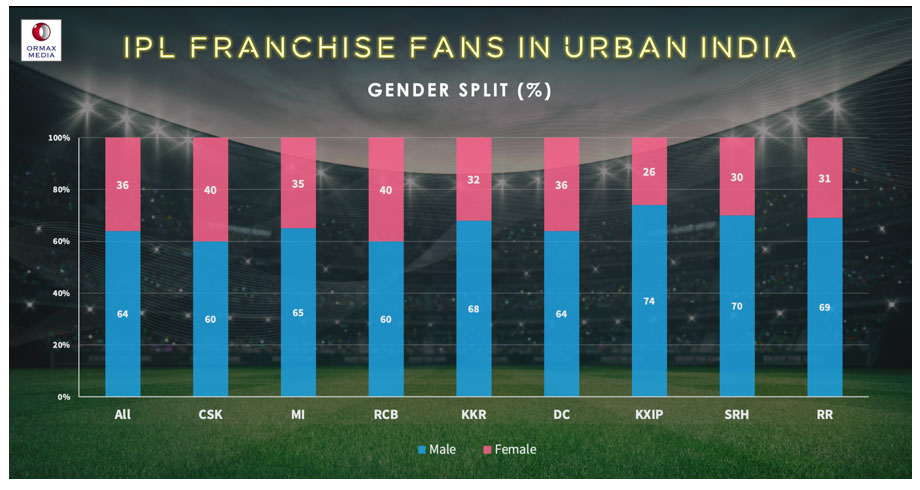
    64 per cent (55 million) of the total franchise fans are males, while the balance 36 per cent (31 million) are females.

    CSK and RCB have the most gender-balanced fan base, with the proportion of female fans being the highest at 40 per cent each. Nationwide popularity of their star players (MS Dhoni and Virat Kohli respectively) contributes to their stronger female fan base. Mumbai Indians leads Chennai Super Kings by a slender margin when it comes to the male fan base, but the latter takes the overall number one position because of its stronger female following.

    Ormax Media founder & CEO Shailesh Kapoor said: “Apart from viewership, a definitive measure of the success of a sports league is whether the teams playing in it manage to build a sizeable fan base over the years. A strong fan base is eventually the key for a profitable franchise, because it offers higher monetisation opportunities through sponsorships, ticket sales, merchandising, licensing and other such avenues. Over the last 13 years, IPL has done very well, and the fan base estimates of the top two franchises suggest that they are now two of the strongest sports teams across the world. It’s for the other franchises to learn from the success story of CSK and MI and develop a strategy to widen their fan base in the coming years.”

  • “We’ve prevented more than 100 potential TV show failures from going on-air:” Shailesh Kapoor

    “We’ve prevented more than 100 potential TV show failures from going on-air:” Shailesh Kapoor

    The television ecosystem is replete with executives who have entered the sector after getting qualified as engineers, management graduates, hoteliers, biologists and what have you. Shailesh Kapoor belongs to this cadre. An IIT Delhi electrical engineering graduate and an IIM Kolkata alumnus, he has been involved in the television business for about 17 years in various roles in marketing, content and strategy, working for companies such as Sony Entertainment Television, Zee Cinema, indya.com, Zoom and Filmy. The entrepreneurial bug bit him in 2008 when he set up Ormax Media along with consumer insight specialist and veteran Vispy Doctor.


    And since then there has been no looking back. The company celebrated its seventh year of growth recently and its client roster has been growing from the film, television, print, and branded entertainment categories. Its products have helped film and television content creators understand their audiences better. 

    Kapoor is an avid film fan himself. He is also an active blogger.


    When he is not working, watching a film or writing, there is a good chance that you will find him exchanging views and thoughts on Twitter! We spoke to Kapoor on Ormax Media and its products.


    Excerpts:


    Seven years. Ormax Media has been consistently building new products. What keeps the company so dynamic? What has been the strategy? 

    Our strategy has been to create products that address business needs that are industry-wide. For example, the need to bring a consumer perspective to a movie’s campaign and make film marketing accountable led to Ormax Cinematix, which is a tracking and forecasting product for the film industry, subscribed to by more than 15 film companies today.


    Similarly, Ormax True Value was born from the knowledge that more than 75 per cent of new launches fail, and that conventional research methods have been unsuccessful predictors of what will work and what will fail. Hence, the need to create a testing product that can forecast actual on-air performance with proven accuracy over time.


    How large is the Ormax Media team? How many offices?

    The team is 35 people strong. We run one of India’s most advanced CATI (Computer Assisted Telephonic Interviews) setup from Surat, which employs another 50 people. Some of our key products, such as Ormax Showbuzz and Ormax Cinematix, run out of this centre. We have business offices in Mumbai and Delhi. But we are present across India, in various forms, be in through affiliates, online research or CATI. More than 25 per cent of our work in the last year has been in villages or towns of population less than 50,000.


    Ormax True Value (OTV) is among the more reliable barometers, which programmers use before launching new TV shows. What has been the reason for this?

    I’d like to believe the reason has been a proven track record. The accuracy of forecast speaks for itself in a product such as Ormax True Value (OTV). Several long-running and successful shows on TV today, which unfortunately I cannot name, are OTV certified products. Thirty one shows currently on-air were tested using OTV, across genres like Hindi general entertainment channels (GECs), Regional (Marathi, Bangla & Tamil), Kids and Youth. More importantly, we have prevented more than 100 potential failures from going on-air. That’s some money saved.


    More than 200 programs tested across 21 channels in six years. That is some track record. How different is the product OTV today from the time you launched in 2009? What are iterations you have built into it and why?

    The core idea of the product has remained the same, that is, to predict the likelihood of on-air success. All such products tend to be self-learning products, whereby learnings from one test feed into the larger black box running the product. Hence, the sharpness of attributes and accuracy of forecast have improved with time. In 2013, we introduced TSV (Time Spent by Viewer) forecast as the single-number output of an OTV testing. Among the shows that have gone on-air since then, we have been within 10 per cent of actual TSV for 88 per cent of shows.


    Is OTV a decision-support tool or a decision-making tool? Can you illustrate with examples? How much does it cost clients to use it as a service?

    OTV allows for two types of decisions to be taken based on consumer data – to go or not go ahead with a show and to identify the core target audience and markets for the show, and its ideal positioning to win these audiences. We test shows at various stages, right from the audio pilot to video stimulus (for example, pilot episode or even the first episode).


    Decision-making or decision-support would depend on the context. We have tested shows where the channel head or programming head has a strong hunch that the show will work or vice versa, and they have used OTV to validate that hunch, which is more like a decision-support process. Often, it does get validated, but sometimes, the results vary from the hunch significantly, in which case, the channel takes an informed decision.


    Cost would vary depending on the markets and sample size. Broadcasters have tested shows in as many as 10 markets and as little as two markets too. The cost of testing one concept could be between Rs 2-6 lakh depending on choice of markets and TG.


    With VOD and OTT services growing are you looking at servicing that segment too?

    Definitely. Work is on in full swing on adapting OTV to online content. The principles of the product are media agnostic. We just need to calibrate the model and identify the drivers for the online medium, as they would vary vis-?-vis those for TV. Within TV too, weightages of the drivers vary for fiction and non-fiction content, for example.


    How have programmers used the tools you provide to improve their decision making process?

    OTV is a part of the standard commissioning protocol in many channels, which means that a show cannot be commissioned till OTV testing has been done. So I think we have been able to influence decision-making processes for the better.


    Is pre-testing a big part of your overall business?

    Definitely, and it’s the growing part too. Over time, everyone has realised that you can’t save a bad show idea beyond a point. Similarly, you can’t save a bad film from sinking Monday onwards. In both TV and films, the industry has become a lot more open to pre-testing than ever before. We tested more shows in the first half of 2015 than in all of 2014. Similarly, we tested more films and scripts in the last four months than in all of 2014. Ormax Moviescope is OTV’s equivalent product for film and film script pre-testing.


    Do you see traditional television reacting to the innovative programming that OTT services will launch?

    The audiences are different and the idea of “innovation” has to be contextualised to the audiences of the medium. Innovation has to be there even in traditional television, as audiences would demand new stories and ideas all the time. But reacting to OTT content is not a good idea, and the intersection between the two audience sets is minuscule. 

  • Colosceum and Ormax to launch consumer-created fiction shows

    Colosceum and Ormax to launch consumer-created fiction shows

    MUMBAI: There is no dearth of creativity in the country and to give a new meaning to how content is generated, Colosceum Media and Ormax Media, have come together to introduce consumer-created fiction shows for the Indian television industry.

    Consumer research was conducted over the last six months across more than 15 cities in India to generate original stories and then tested using Ormax True Value, an industry standard that has been used on more than 250 television shows across more than 20 channels since 2008. Together, the two companies will approach leading broadcasters with shows that have tested exceptionally well, with more than 85 per cent probability of success.

    Speaking about the deal, Colosceum Media CEO Lalit Sharma said, “Ormax has used very advanced consumer research techniques to generate original stories for daily fiction shows for Hindi GECs. These concepts are stories that have been both created and validated with the consumers. A story may have originated in Indore, developed in Jalandhar and then fine-tuned by another set of consumers in Amravati. Currently, production houses make large investments in getting concept developed in-house. The broadcasters then make investments to judge their viability. By creating concepts that are sourced from consumers, we are creating a win-win situation for all stakeholders.”

    Ormax Media founder and CEO Shailesh Kapoor said, “It’s been a long but fulfilling process of engaging with the actual consumers in story generation. Having produced shows like Roadies, Splitsvilla and MasterChef India, Colosceum are an established leader in the non-fiction space. We’re excited to partner them in their plans to establish a strong presence in the fiction space.”

    Sharma added, “Having produced shows like Jai Shree Krishna, Bandhan, Shakuntala and Bani Ishq Da Kalma in partnership with boutique creative outfits, we were keen on identifying a differentiated proposition for our next fiction offering. We couldn’t have asked for a better partner than Ormax, who are a leader in providing the industry with market insights for seven years now.”

    “When we meet the broadcasters, we are not just going with a concept but a complete consumer package that has a potent combination of consumer insights, fine storytelling and a very capable creative and producing team.” Kapoor stated.
    Tulsea Pictures conceived this partnership and brought both Colosceum and Ormax together.

    “We believe this partnership will be disruptive and will bring the much need diversification in the themes of shows running on prime time. The business model created by this partnership is very unique and there is no global precedence that we are aware of. It’s content of the consumer, by the consumer, for the consumer,” said Tulsea Datta Dave. “It’s very exciting to bring Colosceum and Ormax together. They are leaders in their respective fields and this innovative partnership has potential implications for the global entertainment industry.”


  • Ormax Xpressive: Get ready for facial coding

    Ormax Xpressive: Get ready for facial coding

    MUMBAI: Expressions say it all, and researchers for long now have been reading people’s faces to know it all. A smile, a frown, a grin and many more can’t hide the real feelings. Keeping this in mind, researchers are now using facial coding to investigate how viewers react and behave towards TV shows.


    In India, Ormax Media which has launched various products to help the Media & Entertainment industry has launched a new one – Ormax Xpressive. The newest variant from the house is an automated face coding based content testing tool. It is powered by RealEyes, a Europe-based outfit who are a global thought leader in this technology.


     “Using Xpressive, Indian companies can test video content ranging from five seconds to 50 minutes. Unlike regular research, where consumers are shown the video and then asked a series of questions, this technology captures real behavourial data. It measures the second-by-second response of the audience. TV channels can use it for promo testing and pilot testing, while movies can use it for trailer testing,” highlights Ormax Media CEO Shailesh Kapoor.


    What was the thought process behind launching the product, Kapoor says, “Ad testing and video content testing is a common need in the Indian M&E industry. The nature of the industry is such that there is rarely any time to do such studies, because the results are needed within 1-2 days. Ormax Xpressive gives real-time responses, and hence, is highly relevant to the industry.”


    Also, since it is based on real response and not claimed response, its output is more credible. “The level of detailing facial coding data can reveal is extraordinary, as you get a second-by-second response, not just an overall response. We believe use of technology for better and more effective consumer research is important, and Ormax Xpressive is an example of our belief,” adds Kapoor.


    The media insights firm piloted the product in India in February 2014 for which the technology comes from RealEyes who has a team of scientists dedicated to the best interpretation of the facial response data. “Culturally, India and the West are different, and the expression of emotions can vary. Hence, India benchmarks are critical to build. We bring in that value, as well as the ability to interpret the findings given our strong understanding of the media and entertainment consumers in India,” points out Kapoor.


    The beauty of the technology is that it does not require any gadgetry. It is entirely over the webcam. Respondents watch the video and their facial expressions and captured via the webcam and then analysed in the backend by the facial coding software. Results are ready within 10 minutes.


    The six basic emotions measured are happy, sad, scared, confused, disgusted and surprised. Then, there are derived parameters, the most important one of which is engagement, which measures the overall engagement levels of the content. All parameters are measured at a second-to-second level, and can be seen by demographic cuts, such as market, age, gender and SEC. Ormax Xpressive studies can be done in two ways: a test link can be sent to respondents who can take the test via their webcam, or a Central Location Testing is conducted, where respondents are invited to a venue and administered the test there via a webcam-enabled computer.


    The media insights firm is targeting all media and entertainment companies, who have video content for the new product. It will be used by TV channels and film studios.


    However, there are a few media analysts who believe that though it is a good initiative and has its merits, there might be a few demerits attached with it as well. For instance, they believe that the state of mind of the respondent will play an important role in a person’s facial expressions. “Today, social media listening is more important. How well this product will help the industry, we will have to wait and watch,” says a media observer.


    Another media analyst agrees and adds, “The results will be subjective and hence, cannot be depended upon solely. If it compliments other parameters then it will definitely be put to a good use.”


    As for the future, the firm believes that the importance of research will only continue to grow as the market evolves. Technology will play a role in improving the output of research and making it more reliable and actionable. “Technology should not be used for the sake of using technology, but for a better output,” concludes Kapoor.

  • Ormax Media changes gear; talks expansion

    Ormax Media changes gear; talks expansion

    Five years is not a long time to learn the ropes of a business. But media insights firm, Ormax Media seems to have not just learnt the tricks of the trade but is also branching out well. Just a little over five years, the company already boasts of a clientele including big names in the film and television industry. The agency has witnessed continuous growth of 30 to 40 per cent year-on-year with annual turnover having grown three-fold in the last three years.

    Now, the company is busy reaching out to more markets with its different tools. It is also doing a lot of research work for the Marathi and Bengali film industry and soon wants to expand its operations to the South, Gujarati and other regional markets.

    Also, while till now the company has mostly been catering to the big film studios, it now plans to work with smaller producers who aren’t a part of the studios. Also on the anvil are many new products – one of its ambitious products is a “Promo Testing Tool” that will help test the promos of films and TV shows within a short span of two-three days.

    With Cinematix, one of the most popular tools for the film industry in its basket, it plans to expand to more markets by this weekend. It started by tapping six different markets, moved to 19 and now plans to spread to 29.

    Apart from general entertainment channels (GECs), kids and infotainment channels too are now coming on board. Recently, Ormax started working with National Geographic Channel, AXN, and has also entered the regional market.

    Colors' carries out extensive research along with Ormax to study the market. A still from 'Balika Vadhu'

    The best part is that almost the entire industry is admiring the organisation for its work. Recently, with its research, Ormax helped NGC understand the equity of the brand NGC and dive deeper into analysing interesting insights about the channel’s loyalists and what kind of variety seekers is it reaching out to. “With this research findings, we are well-armed while aligning the strategy and focusing on the target markets for the channel,” says National Geographic Channel VP, marketing Debarpita Banerjee, who thinks the company is target-oriented as far as achieving the objectives of the research study is concerned.

    Ormax Media has seen a meteoric rise under the leadership of CEO Shailesh Kapoor, an alumnus of IIT-Delhi and IIM-Kolkata.

    Always a TV and film fanatic, Kapoor’s heart beats for anything that is related to entertainment. However, that isn’t the reason he started Ormax Media. Growing up in the 90s, Kapoor instinctively knew that the entertainment industry was going to witness a boom with lot of scope for experimentation and thus after nearly 10 years of occupying key positions across functions like content, marketing, sales and strategy in channels such as Filmy, Zoom, Zee Cinema, indya.com and Sony Entertainment Television, Kapoor realised that just like in any other industry, even in media, “Consumers needed to be at the heart of a lot of decisions that a company takes.”

    That’s when he joined hands with Vispy Doctor, already into consumer research since a quarter of a century, to start Ormax Media in July 2008. “Doctor’s experience in the consumer sector helped us hugely in growing. He is still one of the driving forces,” says Kapoor, who also thinks that understanding the client’s perspective has worked in favour of the company.

    Arnab Das from Colors says that the research for TV is very different

    Over the years, Ormax has developed many different products to study the audience’s mindset. One of its most popular products is Ormax Brand Matrix (OBM), a viewership maximisation tool (VMT) that is used by broadcasters to increase their consumer base by up to 50 per cent. OBM can be used by channels across genres, such as GECs, news, movies, youth, music, infotainment, lifestyle, etc. The project design, such as markets and target audience demographics, is customised to the channel’s requirement.

    Colors head strategy and research Arnab Das informs that the channel has very strategically used the “Ormax Brand Matrix” to get a detailed understanding of its brand health. The channel has also used tools like “Showtracks” that is used to make content and communication changes to a running program for improved viewership, “Showbuzz” and “Character India Loves”.

    “We have worked with them across most of our major shows, including fiction and non-fiction, including Balika VadhuBigg BossSasural Simar Ka, MadhubalaUttaranKhatron Ke KhiladiAamna Saamna, etc.,” says Das, who is of the view that research in TV space is very different from other categories, purely due to the dynamic nature of the day-to-day business. “It is extremely important for any research agency to understand and work around these limitations – something that Ormax definitely has an edge on over others,” he says.

    NGC's Debaprita Banerjee thinks Ormax Media is target-oriented

    Even other channels have used its products well. Sony Max senior VP Neeraj Vyas says that they often work with Ormax Media with many different tools. “It’s quite a frequent affair to conduct a research along with them to study the consumer behaviour. The best part is that we get a fairly deep insight in to the consumers’ mind. Once the research on a certain programme is conducted, we model our campaign accordingly. It just doesn’t give us an organised way to go about it, but at times also gives us a reality check,” he says.

    After starting out as a TV research firm, Ormax spread it wings in 2010 and expanded to the film industry as well. However, it proved to be trickier terrain considering there was no concept of consumer research for films at all. “But once we started, we realised working on films is easier. Now, 30-35 per cent of our revenue comes from films,” says Kapoor, whose tryst with films started with Yash Raj’s Lafangey ParindeyRa.OneDum Maaro Dum and Khichdi: The Movie, among others.

    Interestingly, the Ormax Cinematix tool worked really well for the company with nine studios having subscribed to it. Cinematix tracks a film’s weekly report and measures awareness and interest of audiences to watch it.

    Yash Raj Films VP Marketing and Communications Rafiq Gangjee says that Ormax Media is their agency of first choice. “This largely stems from the fact that they are willing to listen and understand the brief. Often this becomes difficult in such a passionate industry,” he says and adds, “The film industry has always believed in ‘gut feels’ and it is nice to see someone factor in that aspect when chatting with us and come back with a grounded approach to the research required.”

    Lafangey-Parindey was one of the first films for which Ormax Media conducted a study

    Yash Raj recently commissioned an exclusive and extremely pertinent study with Ormax for its film Shuddh Desi Romance aptly titled – Shuddh Desi India ki Romantic Soch. “This was done essentially to figure out the changing face of perceptions, tolerance and acceptance of social and romantic norms we have so far held sacrosanct. We had done this to understand if we needed to approach our marketing somewhat differently since we were going out exclusively to the youth,” says Gangjee.

    After being so inclusively involved with its client, it doesn’t come as a surprise that Ormax has close to 40 clients in the film industry and they have tested 275 films in the last three years.

    “In the last one month, we have tested the marketing strategy, concept, TG, etc. for nine films. Unlike TV where channels don't talk to each other, the movie industry is very close-knit where word of mouth spreads very fast. We have grwon in the industry through such word of mouth,” says Kapoor.

    Besides working with its permanent products, Ormax also conducts research from time to time to test certain aspects of viewers. For instance, a particular research was: ‘And the remote goes to…’ where it studied ‘who controls the remote control in the Indian household’.

    Ormax Media recently conducted a research for Yash Raj Films for Shudh Desi Romance

    “These tools or products are developed to help the industry in whichever way we can. When we were taking up the study on who controls the remote, we didn’t really get a good response from the industry as most of them thought they knew the answer. But the revelations were surprising as unlike the general perception that youngsters handle the remote, it was women up to 35 years of age who controlled it,” says Kapoor.

    Since the company has tested waters in almost all areas in some way or the other, it is hoping that all its expansion plans will work well. “Now, at any stage, we don’t feel handicapped. In the five years of working, we have developed our resources well to take up multiple projects, big projects and go into the areas that were thought to be unreachable till sometime back,” he says.  

  • Ormax Media launches Ormax Brand Matrix for viewership maximisation

    Ormax Media launches Ormax Brand Matrix for viewership maximisation

    MUMBAI: Media insights firm Ormax Media announced the launch of Ormax Brand Matrix (OBM), a viewership maximisation tool. Broadcasters across categories can utilise OBM to identify a focused plan to increase viewership by upto 20 per cent within six months as the firm claims.

    The tool has been created using Ormax Media’s expertise in the area of television insights, built over more than five years, with an experience of working across 55 television channels in India.

    Ormax Media CEO Shailesh Kapoor elaborated: “Channels make huge investments, both in terms of time and money, to increase their viewership. But it is well known how difficult getting new viewers, or more time-spent from existing viewers, can be. Traditionally, viewers have been segmented by age, gender, markets, SEC and intensity of viewing, such as heavy and light viewers. In Ormax Brand Matrix, we have turned the idea of viewer segmentation on its head, and used a radically different approach – one that’s simple, intuitive and effective in equal measure.”

    Ormax Brand Matrix uses a mix of quantitative and qualitative research to recommend a viewership maximisation blueprint to channels using the product. But Kapoor believes the real power of OBM lies in its construct, adding: “Brand research can be very high on good-to-know value but poor on actionability. While developing OBM, we were very conscious that the tool had to be completely action-oriented, with only one goal – viewership maximisation. If an information need or data point is not going to help a channel increase their viewership, it’s not a part of OBM.”

    National and regional channels across categories can commission an OBM project, which has been custom-made for GECs, movies, news, music, infotainment, lifestyle, kids, youth, etc. Four channels as per Ormax are already using Ormax Brand Matrix, in less than a month since the product has been ready after two years of extensive research.

  • CSK & RCB have the most loyal fan base across IPL teams: Ormax Trac20

    CSK & RCB have the most loyal fan base across IPL teams: Ormax Trac20

    Mumbai: A sizeable and loyal fan base is critical to the business plans of any sporting club or franchise. According to the findings of Ormax Trac20, a syndicated research being conducted by Ormax Media during the sixth edition of IPL, Chennai Super Kings (CSK) and Royal Challengers Bangalore (RCB) have the most sizeable base of loyal fans in their respective markets, given them an advantage over the other teams in the league.

    While CSK led the loyalty chart even in the pre-phase of the research conducted before the IPL started in March, RCB have shown a significant increase in their loyalty score during this edition of the tournament. Kolkata Knight Riders are a close no. 3, followed by Mumbai Indians at no. 4.

    Commenting on the results, Shailesh Kapoor, CEO – Ormax Media, said: "Team loyalty is important for advertisers, as sponsoring a team that has a higher loyal fan base will lead to a higher marketing ROI. In our understanding, three factors contribute to team loyalty: consistency of performance, star players and team stability over years. CSK have a huge advantage across these three factors."

    The Ormax Trac20 research is being conducted across 11 cities, in three phases, with a total sample size of 9,000. The research is targeted at advertisers considering IPL or cricket in their marketing plans. The research is tracking the performance of the various brands advertising during this year's IPL, both in terms of recall and effectiveness.