Tag: sexual harassment

  • Titus Upputuru’s short film shines bright at Indian Cine Film Festival 2022

    Titus Upputuru’s short film shines bright at Indian Cine Film Festival 2022

    MUMBAI: “Nip in the bud”, a short film by the media conglomerate, Times Internet, has won big at the Indian Cine Film Festival. Written by famous adman, Titus Upputuru, it has been awarded the Best Screenplay award and the Best Public Service award at the event.

    Titus is the man behind the screenplay and has also directed the film. Elaborating on the win, The Titus Upputuru Company founder and chief creative officer Titus said, “Wow, I am so thrilled! I thank God for these awards and dedicate them to every voice that had the courage to share the abuse that happened at their workplaces. I am also glad that a film like this has been recognized and awarded at so many award shows as I believe that voices like these influence, inspire and contribute towards rooting out this very diabolic, sickening culture from our society.”

    The film opens on a young girl weeping profusely and with a determined look, she knows what she wants to do. The very fact that her business role model, a business tycoon, tried to get awkwardly close to her, breaks her apart. But it obviously doesn’t break her confidence and grit to make sure that the world knows about his misdeeds – she walks into a café and pens a note on social media to share the horrific experience. The film takes a twist when we see the post being read by a woman, realising to her horror that it was the same man who abused her years ago. A photograph on the mantle reveals that the two women were related and happen to be mother and daughter. The film ends with the message ‘If you are delaying, you may be encouraging’.

    For the record, “Nip in the Bud” also won the prestigious DadaSaheb Phalke Award earlier this year.

  • Producers Guild of India amends by-laws Makes it mandatory for members to implement ‘The Sexual Harassment of Women at Workplace’ (Prevention, Prohibition and Redressal) Act 2013 (PoSH)

    Producers Guild of India amends by-laws Makes it mandatory for members to implement ‘The Sexual Harassment of Women at Workplace’ (Prevention, Prohibition and Redressal) Act 2013 (PoSH)

    Mumbai: Producers Guild of India at its Extraordinary General Meeting (EGM) on 14th November, 2018 in Mumbai unanimously passed a resolution to amend its by-laws thereby making  it  mandatory  for  all those  members  who  fall  under  the  purview  of  the  The  Sexual Harassment of Women at Workplace (Prevention, Prohibition and Redressal) Act 2013 (PoSH), to implement the requisite laws including constitution of Internal Complaints Committee (ICC) and accordingly submit a declaration to the Producers Guild of India confirming enforceability of necessary PoSH guidelines within their organisation.

    Prior to the EGM, Producers Guild of India also conducted a workshop through a specialized external agency  which  made  a  comprehensive  presentation  highlighting  various  facets  and  provisions required to be statutorily executed under the PoSH Act 2013. The objective of the EGM along with the workshop was not only to educate members on the legal provisions of the PoSH Act 2013 but also  sensitize  them  about  the  growing  need  and  urgency  to  institute  and  implement  robust processes at their workplaces.

    President of  the  Producers  Guild  of  India, Siddharth  Roy  Kapur  stated  that “It  is  incredibly heartening to see the unanimous support that our members have extended towards the initiatives taken  by  the Guild  to  help  make  workplaces  in  our  industry  safe  spaces  for  women.  We  are committed  to  working  closely  with  our  members  to  ensure  complete  compliance  with  PoSH guidelines across the industry.”
     

  • Producers Guild of India forms committee to address sexual harassment at work

    Producers Guild of India forms committee to address sexual harassment at work

    MUMBAI: The #Metoo campaign has finally caught the eye of the industry. The Producers Guild of India has formed a committee in order to make the industry safer and more productive for women employees. This committee will address the issues of sexual harassment at the workplace.

    Sneha Rajani will lead the committee along with Apoorva Mehta, Ekta Kapoor, Fazila Allana, Jyoti Deshpande, Kiran Rao, Kulmeet Makkar, Madhu Bhojwani, Priti Shahani, Rohan Sippy, Siddharth Roy Kapur and Vijay Singh.

    The first meeting took place on 10 October where the members were sent a copy of the Sexual Harassment of Women at Workplace law and were asked to implement them soon, in case they haven’t been done yet.

    The guild will also organise specialised workshops with the support of professional agencies, to guide the members in how to implement robust processes and best practices to deal with sexual harassment at their workplaces – whether in their offices or on the sets of their productions.

    The guild will organise multiple sessions of these workshops over the coming weeks and months, to enable all the members and their teams to participate. The special committee that has been set in place will meet frequently in the coming days to ensure that this is an ongoing and sustained effort that will lead to a safer environment for all members of our industry.

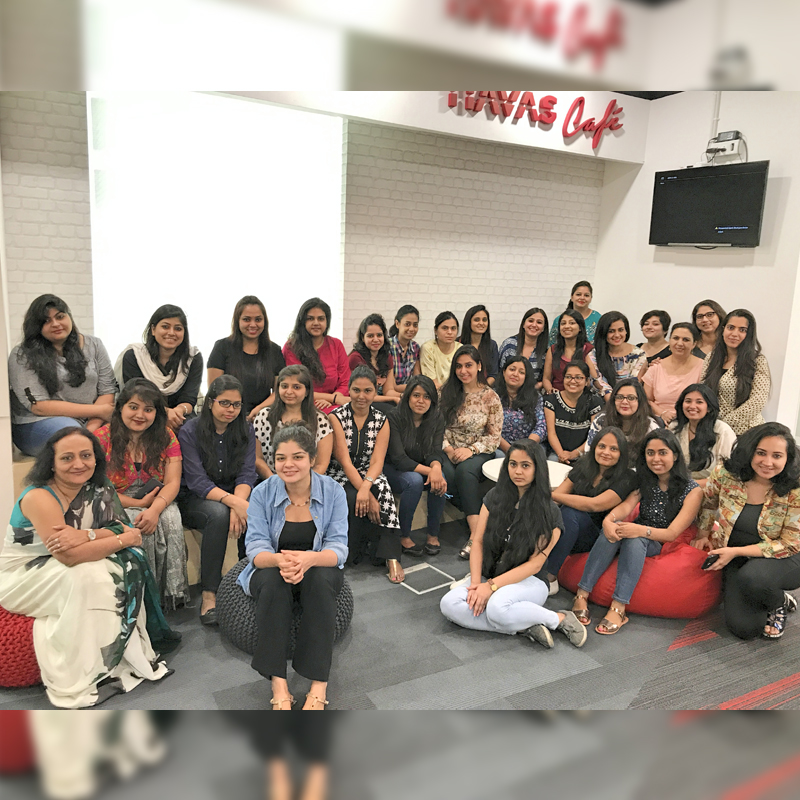
  • People’s mindset determines workplace safety: Havas’ Anita Nayyar

    People’s mindset determines workplace safety: Havas’ Anita Nayyar

    MUMBAI: Getting a job is no easy task but the place you spend nearly 9-12 hours of your day can turn into a nightmare for some women. Men touching colleagues inappropriately or passing lewd comments tend to become things that form a part of the office culture.

    Hence, it is of utmost importance that the workplace has a healthy and friendly environment. Yet, more often than not, friendly gestures by colleagues or bosses tend to overreach their professional confines creating an uncomfortable situation for women, leading to a case of sexual harassment.

    There has been no dearth of cases of sexual harassment at prominent companies over the last few months. It blew out of proportion when Hollywood’s most revered mogul and influential kingpin, Harvey Weinstein, was accused of sexually harassing and abusing women for nearly 30 years. Soon after the news broke, numerous people either used the #metoo hashtag or referenced it when discussing their experiences with inappropriate behaviour.

    This is not restricted to Hollywood, Silicon Valley or newsrooms. The issue is as pertinent in India as much as it is in the West. Producers and directors asking for sexual favours in return for a role in a movie or a TV show is not news anymore. The most recent case of a person in power taking advantage of his position was TVF CEO Arunabh Kumar.

    Sexual harassment isn’t restricted to just behaviours of a sexual nature. By definition, it is an unwelcome sexually determined behaviour (whether directly or by implication) as physical contact and advances, a demand or request for sexual favours, making sexually coloured remarks, showing pornography or any other unwelcome physical, verbal, or non-verbal conduct of sexual nature.

    To address the issue, Indian Supreme Court in 1997, directed all corporations to have a mandatory Vishakha Guidelines Internal Complaints Committee at all workplaces, headed by a woman employee, with not less than half of its members being women. All complaints of sexual harassment by any woman employee would be directed to this committee. The committee advises the victim on further course of action and recommends to the management the course of action against the person accused of harassment.

    But what is the ground reality when it comes to the advertising and media world? Indiantelevision.com got talking to Havas Media Group CEO India and South Asia Anita Nayyar, who is known to be stalwart and valorous in expressing her point of view. She spoke to us about their adherence to the Vishakha Guidelines, safety measures undertaken by the company, need for the industry to come together for this and more. Excerpts:

    Does Havas Media have a sexual harassment committee (the Vishakha committee) in place for women employees?

    Yes, the committee consists of senior executives including me, two women HR executives and an external legal counsellor. We have a proper time-bound complaint mechanism in place to redress such matters where both parties (victim & the accused) are called and talked to separately. I’m glad though that we haven’t had to call upon this committee because, at Havas, we drive a zero-tolerance culture against sexual harassment.

    What are the measures that Havas Media undertakes to ensure women safety?

    I believe there are a lot of women who are ignorant about this subject and do not even realise if they are being harassed. Hence, awareness is of utmost importance according to me. At Havas, we conduct monthly town halls where such topics are addressed and talked about openly. We also conduct such sessions for only women employees. Working late hours is often unavoidable in agencies. While we provide cab facilities to all employees in such cases, for female employees it is mandatory that they are escorted by security/office person.

    Is the Indian media environment a safer place for women to work in as compared to other industries?

    Industries are made up of people and people and their mindsets determine how safe a workplace is. The more open the environment, the much safer, thereby creating a culture of respect, equality and no-nonsense. 

    Is the Indian media a better place to work at as opposed to the West where we are seeing a lot of such cases recently? Or is it here people choose to remain silent?

    It happens everywhere. It is true that Indian women choose to succumb to societal pressures much easier than their western counterparts and refrain from talking about it. But there is a wave of change we’re seeing in the wake of the recent #MeToo revelations. We are seeing more women come out of their shells and make open confessions. Not to forget the contribution of some supportive men.

    What more needs to be done to ensure a better work environment for female employees?

    In a recent announcement made by our global CEO, Yannick Bollore, he said “Havas will be launching two new mandatory global online training for all employees that cover not only harassment but also business ethics. Harassment can take on many forms, both physical and verbal. Neither is acceptable. These courses will reinforce the behaviours expected of Havas employees.” He added, “Respect is at the core of our values at Havas.”

  • BSE seeks clarification from Sun TV

    BSE seeks clarification from Sun TV

    MUMBAI: It was on 26 December when Sun Group COO C Praveen was arrested by the Chennai crime branch, after a former employee of the network filed a harassment complaint against him.


    Praveen has been booked under Tamil Nadu Prohibition of Sexual Harassment of Women Act, as he was, as per media reports, allegedly harassing the woman for the past two years.


    While several publications carried the news, the Bombay Stock Exchange (BSE) on 29 December issued a notice asking Sun Network to clarify the news item published in Business Standard.


    The notice reads: “The Exchange has sought clarification from Sun TV Network Ltd with respect to news article appearing in Business Standard on 27 December 2014 titled “Top official of Sun Network arrested.”


    The reply is awaited, the BSE notice further says.


    The complainant, who held a senior position in the programming section of Surya TV, a Malayalam channel from the Sun stable, as per reports, had quit her job five months ago.  


  • High Court muzzles media against sexual harassment case against ex-judge

    High Court muzzles media against sexual harassment case against ex-judge

    NEW DELHI: In a directive that has not been taken kindly by the media, the Delhi High Court yesterday restrained the media from publishing and telecasting the contents of the law intern’s complaint of sexual harassment against former Supreme Court judge Justice Swatanter Kumar.


    Ordering deletion of alleged defamatory parts of the news items and the photograph of Justice Kumar within 24 hours, Justice Manmohan Singh, in his interim order, also asked the media not to carry the photographs of Justice Kumar, who is also the National Green Tribunal Chairperson in their future news reports.


    “The defendants number 1 to 5 (media houses and the law intern) are further restrained from telecasting and printing the photograph of the plaintiff (Justice Kumar),” the judge said while pronouncing the order in a packed court room.


    Interestingly, the Court order came a day after the Supreme Court issued notice to Justice Kumar on a petition filed by the law intern.


    The High Court also made it clear that its order will remain effective till 24 February, the next date of hearing, and issued notices to the woman intern, two English news channels, and a leading English daily.


    The court had earlier reserved its interim order on the plea of Justice Kumar seeking to restrain media from reporting, publishing or telecasting news relating to the law intern’s complaint against the judge, saying only court proceedings can be reported “nothing more, nothing less”.


    The plea had also sought a ban on repeat of the television programmes on the subject.

    Justice Kumar has also demanded Rs. 5 crore as damages from the law intern, who made the allegation against him, and three media groups that publicised her complaint.

    Senior advocate Mukul Rohatgi, appearing for the former judge, had said Justice Kumar has an “illustrious career spanning 43 years in the legal field as a lawyer and as a high court and the Supreme Court Judge and more over, his fundamental right of good name and reputation cannot be allowed to be blackened by the media.”


    The petition has also said, “pass a decree for damages in favour of the plaintiff and against defendant number 1 to 5 jointly and severally at least for an amount of Rs 5 crore only or for any higher amounts as this court may be pleased to determine…”