Tag: set-top-boxes

  • Videocon d2h brings Deewali surprises for its customers

    Videocon d2h brings Deewali surprises for its customers

    Mumbai: 2013: To give its customers a festive gift this Diwali, Videocon d2h, the fastest growing DTH brand in the country, has announced reduction in the price of its High Definition Set Top Boxes to Rs 2000. This makes the price of its Standard Set Top Boxes and HD STBs equal.

    The HD Set Top box was earlier priced Rs 3,090 in rest of India, and Rs 3,250 to in the South. Now, the price has come down to Rs 2,000 for all the regions. This will certainly boost the penetration of the High Definition services in the already growing HD segment. Videocon d2h has also bettered its offering on Standard Definition Set Top boxes by providing one-month free viewing for rest of India and two-months free viewing in the South.

    Videocon d2h currently offers maximum 444 channels and services and 22 Asli “HD” channels on its platform. Videocon Group director Saurabh Dhoot on this offer change said, “We have reduced the prices keeping the festive season in mind. We would like the consumers to usher in the festival mood with our pollution free Asli HD viewing experience.”

    Videocon d2h CEO Anil Khera added, “We have always believed in providing qualitative services to our customers. We want the consumers to embrace the High Definition platform and are sure this offer will prove to be irresistible for them.”

  • Netflix said to negotiate with US cable companies for set-top box app

    Netflix said to negotiate with US cable companies for set-top box app

    MUMBAI: Netflix is in talks with several US cable companies with the aim of making its video streaming app available on set-top boxes, according to various reports. The reports say that Netflix’s discussions with US operators, including Comcast and Suddenlink, are at an early stage with no deal expected soon. Last month the UK’s Virgin Media became the first cable operator to offer Netflix to its customers; companies in the US have so far been reluctant to embrace streaming services, seeing the technology as broadly competitive with their traditional content offerings.

    One reported sticking point in the negotiations is that Netflix is pushing for the cable companies to adopt its Open Connect content delivery network, which it argues will provide the best streaming quality. Previously Netflix had restricted 3D and what it calls “Super HD” content, which requires a higher bitrate, to internet service providers that participated in the Open Connect initiative, but Time Warner Cable argued that its network was “more than capable of delivering this content to Netflix subscribers.” Netflix later opened up Super HD streaming to all ISPs.

  • Comigo Duo Box galvanizes the TV market


    MUMBAI: Comigo, the creator of a comprehensive multi-screen TV platform, has announced the launch of a new generation of smart set-top-box, named Comigo Duo. Featuring the Android Jelly Bean 4.2.2 operating system and a strong dual-core ARM Cortex A9 processor, the set-top-box will provide new social and interactive features and capabilities for the TV viewer. Comigo Duo set-top-box is 3G / LTE enabled, ensuring that viewers can take advantage of the latest wireless communications service available.


    With a finger on the viewers‘ pulse for social and communications needs, Comigo Duo supports video conferencing (Skype), enabling the viewer to invite friends and family for a chat while watching their favourite programme. Keeping up with developments in mobile technology, Comigo will roll out new services that take advantage of the latest innovative solutions.

    With the Comigo Duo solution, consumers can also perform common home computing tasks, such as emailing, chatting, browsing, gaming and even document viewing and editing. Comigo attempts to bridge the gap between the complex user experience provided by personal computers and the intuitive user experience of a smart device in one handy package.


    “Today‘s consumer is more demanding than ever before – they want to interact and communicate with their friends and family,” said Comigo founder and CEO Dov Moran. “We have been working to overhaul the TV experience with our comprehensive multi-screen TV platform – our solutions portfolio has continued to expand to address the rapidly evolution of consumers‘ expectations.”

  • Kolkata’s cable TV customers feel CAF heat as blackouts spread

    Kolkata’s cable TV customers feel CAF heat as blackouts spread

    KOLKATA: Kolkata is seeing some frenetic activity on the cable TV front. The city’s multisystem operators (MSO) have started switching off signals in several pockets in Kolkata where cable operators have failed to comply with the Telecom Regulatory Authority of India (TRAI) norms and not provided them with the KYC or CAF forms of their subscribers. But MSOs have also been prompt in bringing the disconnected customers back online once the CAFs are submitted and fed into their systems.

    Apparently, the consensus amongst the cable TV fratenity is that cable TV subscribers are understanding the gravity of the situation with their cable TV connections being cut. And they have been a hurry to submit their CAFs now. “About 30,000 boxes had been deactivated and then reactivated after we received filled out forms from them,” said Manthan director Sudeep Ghosh.

     “We are in touch with the MSOs and we have been told that nearly two lakh set top boxes have been deactivated across the city and about 1.3 lakh boxes have been downgraded to DD channels only,” says a TRAI official.”And this is working as all the MSOs are saying that they are being flooded with CAFs as compared to earlier when there was lethargy.”

    The phase-wise deactivation of set top boxes had proved to be effective in sending out the intended message to consumers, he said.

    Consumers are confused and are complaining that there had been no intimation to them about the forms.

    A DTH service provider said that its call centres are receiving extra call loads with cable TV subscribers enquiring about the options available to them. “Our callers have expressed that it is better to settle with the seamless connection instead of haggling with the cable operator, who is ill-informed and not up to date with what is expected to be done,” says the DTH executive.

    We will have to simply keep our eyes glued to see if those callers will migrate to DTH. Going by past track records in other cities in phase I and phase II, it probably does not seem likely. Though many have expressed that a paradigm shift is needed.

  • Around 1.80 lakh defaulters in Kolkata face TV blackout as of 26 August

    Around 1.80 lakh defaulters in Kolkata face TV blackout as of 26 August

    KOLKATA: With the Telecom Regulatory Authority of India (TRAI) pressuring service providers in Kolkata to disconnect the television connections of customers for not submitting the subscriber application forms, multiple system operators, more than 1.80 lakh customers have experienced a black out till Monday evening.

    While talking about the snapping of the connection which started from Saturday morning, Den Networks, Hathway Cable and Datacom and Manthan Broadband Services snapped the maximum number of cable connections, out of 80,000 which were disconnected on August 24.

    Also, with just around 45 days remaining for the grand festival of Durga Puja, some cable operators are relaxed and have assured the customers that they can send the details after the festival is over, said a customer, using the service of one of the players, which has maximum penetration in KM area.

    Industry sources said: “The consumer application forms (CAF) of these MSOs were not ready as compared to other players like SitiCable. As a result, the three MSOs had to switch off the connection,” adding that the MSO will continue to switch-off few connections at a time in the coming days to guard against law-and-order problem.

    As per the TRAI mandate, the MSOs were supposed to switch-off the cable connections of those customers, who had not filled-up the CAFs in Kolkata post midnight of 23 August.

    Committee of the Association of Cable Operators, Cable Operators Digitalisation convener Swapan Chowdhury said the MSOs have been asked by the TRAI to provide details of TV connections running illegally in the KM area.

    Siticable that has disconnected more than 90,000 subscribers till Monday evening, has seen a good response from customers. “We are not switching off the connections of CAF non compliance customers at a go. We are doing it in small numbers – say 15,000,” expounded Siticable director (Kolkata) Suresh Sethia.

    Manthan Broadband Services which has installed 6.5 lakh to seven lakh set top boxes, had alone disconnected around 30,000 connections on Saturday, said Manthan Broadband Services director Sudip Ghosh.

    “Our purpose is not to switch-off the connection. But after snapping say four connections, more than 100 customers have approached from the vicinity,” he added.

    Seeing the fast response from the customers, it can be easily assumed that in the KM DAS area, CAFs rate is likely to be 70 per cent to 80 per cent in next six days – seven days, Ghosh predicted.

    Den Networks and Hathway Cable and Datacom could not be asked specifically about the connections snapped by them in KM area.

    Cable Shilpa Bachao Committee convener Mrinal Chatterjee said instead of disconnecting the TV sets, TRAI should penalise the MSOs and not the customers by asking MSOs to switch off the connection; as the CAFs were not given to the customers on time.

    With no official extension notice from the regulatory body, will Kolkata see deactivation of set-top boxes of more and more defaulters at this juncture? Watch this space for the latest updates.

  • CODA to push ahead with Maharashtra ent tax issue this week

    CODA to push ahead with Maharashtra ent tax issue this week

    MUMBAI: The ongoing struggle, regarding the entertainment tax, between the Cable Operators & Distributors Association (CODA) and the Maharashtra State government has reached the next level. After postponing the decision to blackout all Hindi, English and Marathi news channels on state revenue minister Balasaheb Thorat’s request a couple of weeks ago, the organisation met with him last week.

    “He has asked us to give a detailed presentation about the current cable TV scenario in the state, the revenue generation in the current tax regime and also compare it with what will happen when entertainment tax on subscribers and set top boxes will be brought down,” confesses Anil Parab.

    The Maharashtra regime currently levies entertainment tax on cable TV subscribers at the rate of Rs 45 per sub; CODA has been imploring and lobbying with the government to scale this down to Rs 15 or Rs 20 as is the practice in many other states and cities.

    According to Parab, the current rate is too high considering that transparency in the cable TV sector has really gone up and leakages have reduced with the introduction of set top boxes and digitisation. “The only only reason we had agreed to a hike to Rs 45 per sub was because there was under-declaration in the ecosystem and hence a perceived loss to the state exchequer. But with declarations of cable TV subs by cable operators and MSOs more than doubling, rate needs to be brought down as the burden on the industry is crippling us and really hurting our viability,” he reveals.

    CODA is slated to meet the minister this week and make its presentation. As of now, Delhi’s rate is Rs 20 while in other cities it is less than five per cent. “The current rate is too much. We would be happy with anything between Rs 15 and Rs 20,” says Parab.

  • Google joining other tech companies in race to launch pay television

    Google joining other tech companies in race to launch pay television

    NEW DELHI: Google is joining several other technology companies in the race to launch an online version of pay television and has recently approached media companies about licensing their content for an internet TV service that would stream traditional TV programming.

    A report in The Wall Street Journal quoted by CASBAA says if the Web giant goes ahead with the idea, it would join several other companies planning to offer services that deliver cable TV-style packages of channels over broadband connections.

    Intel Corp and Sony Corp are both working on similar offerings, while Apple has pitched various TV licensing ideas to media companies in the past couple of years.

    Google has made overtures to some programmers in recent months about the initiative, sources said.

    In at least one case, Google has provided a demonstration of the product, according to a person who saw the demonstration. Google did not immediately have a comment.

    If launched, the internet-TV services could have major implications for the traditional TV ecosystem, creating new competition for pay-TV operators that are already struggling to retain video subscribers.

    Existing online-video players like Netflix, Hulu and Amazon.com offer on-demand TV, but the latest efforts are aimed at offering conventional channels, allowing consumers to flip through channels just as they would on cable, as well as on-demand programming.

    There is no guarantee Google, or any of the technology companies, will be able to strike licensing deals.

    Media companies are nervous about undermining their lucrative arrangements with existing distributors by licensing to new online pay services.

    The media companies are more focused on expanding online and on-demand availability of their programming through current distributors, say media executives.

    While they are open to licensing their content, they generally give the best prices to the biggest distributors.

    To get decent rates for so-called over-the-top TV services, Google and other companies will almost certainly have to accept the standard programming bundles that cable and satellite operators pay for – packages that include highly popular and less popular channels.

    This is the second time Google has gone down this path. About two years ago Google had conversations with media companies about a similar service but the discussions did not get very far, it is learnt.

    Still, the environment has changed since then: not only are several other technology companies actively working on similar services but pay-TV providers are also asking entertainment companies for nation-wide streaming rights.

    While none of those other discussions has yet resulted in any new services that could soon change. Intel, which plans to launch its service by year-end, has had discussions with several media companies to acquire broadband-service rights for more than a year.

    It is unclear whether the company has yet struck any major programming deals. But it may at least have a name. Documents disclosed last week indicate that the company may call the service OnCue.

    The status of Sony’s plans is not clear either although one media executive said Sony could launch its service before Intel.

    As previously reported, Sony plans to beam its service over broadband connections to Sony-made devices, which include PlayStation gaming consoles, TV sets and Blu-ray players. A Sony spokesman declined to comment.

    Apple has met with resistance from media companies throughout negotiations to license content, said people familiar with the situation.

    All tech companies looking to launch a video service face a fundamental strategic challenge: If they can’t beat cable or satellite TV on pricing and offer the same lineup of channels, it is not clear why consumers would switch.

    One answer, backers say, is that the technology companies can develop far better interfaces to watch television than the clunky programming guides pay-TV operators offer now.
    Indeed, many media executives said they are impressed at the slickness of slick Intel’s set-top box and guide.

    Google has taken several other steps to expand in television and online video in recent years, including financing original programming for its online video site YouTube, launching regular cable service on its Google Fiber network in Kansas City, and developing a Google TV software to be installed on cable TV set-top boxes.
  • Consumer electronics revenues to be $209 bn in 2013: CEA

    Consumer electronics revenues to be $209 bn in 2013: CEA

    MUMBAI: Revenues for the consumer electronics (CE) industry are projected to grow nearly three per cent, reaching a new record-high of $209.6 billion, according to the semi-annual industry forecast released by the Consumer Electronics Association (CEA) in the US.

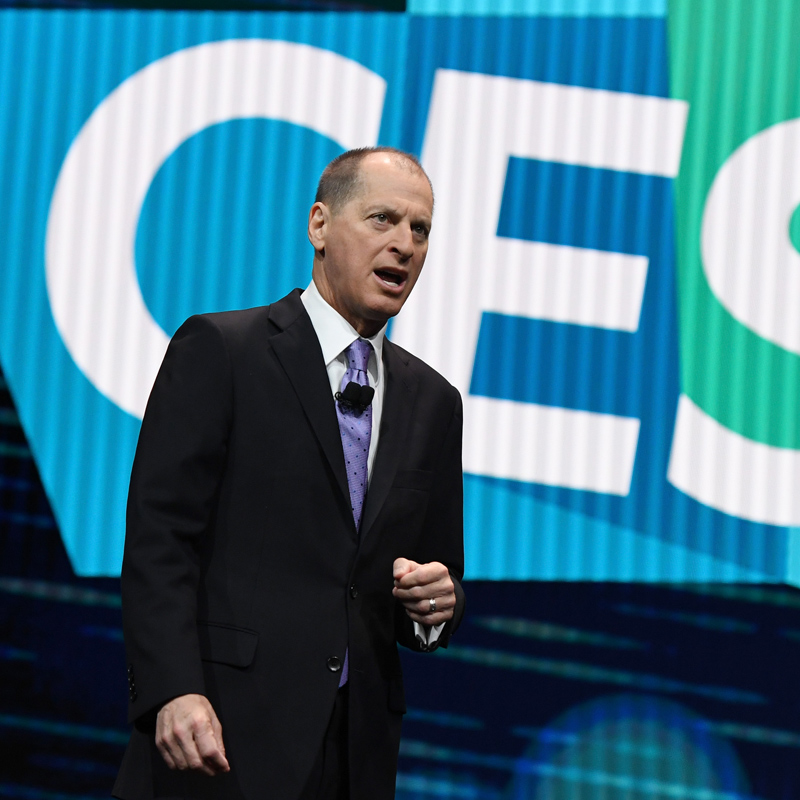
    The forecast also shows 2012 industry revenues reached $204 billion, up five per cent from the previous year. CEA President and CEO Gary Shapiro announced the forecast.

    He said, "Innovation fuels our economy and allows us to further economic growth and create jobs. There is no better place to see innovation than at the International CES, and the products on display this week will propel the CE industry to record levels in 2013."

    Mobile connected devices continue to drive industry growth:

    • Tablet computing will continue double-digit growth in 2013. Unit sales of tablets are projected to reach 116 million this year, up 45 per cent from 2012, when 80 million tablets were sold to dealers. Industry revenues for tablets are expected to surpass $37 billion this year, up from $31 billion in 2012.
    • Smartphones continue to be the primary revenue driver for the industry with growth projected to continue in 2013. Unit sales of smartphones are projected to reach 130 million this year, up from 111 million in 2012. Smartphone shipment revenues are expected to surpass $37 billion in 2013, up from $33 billion in 2012
    • Laptop/notebook computer sales will continue to rise as 26 million units are projected to be sold in 2013 accounting for $17 billion in revenue.

    CEA director of industry analysis Steve Koenig said,"CEA‘s forecast once again confirms that CE products play an increasingly indispensible role in consumers‘ lives. Consumer adoption of smartphones and tablets continues to expand briskly, as mobile connected devices take center stage in today‘s connected, digital lifestyle."

    There are a number of bright spots within the television category that are helping drive overall industry growth, despite total unit sales of displays falling slightly in 2013. Both unit sales and revenues for LCD displays are projected to increase this year. A record-high 30.4 million LCD TVs are expected to ship to dealers in 2013, resulting in more than $15 billion in revenue. Innovations within the display category continue to grow. Sales of TV sets with 3D functionality are projected to increase 39 percent to more than 5.7 million units in 2013. Internet-connected displays will also see strong growth this year, with unit sales reaching 12.3 million, up from 9.2 million in 2012.

    Elsewhere in the industry, a number of other categories are expected to see growth in 2013, including:

    • Audio: Soundbar shipments are projected to increase 22 percent to 2.2 million units.
    • Auto-sound: Aftermarket head units supporting Internet radio are projected to see sales nearly double, surpassing 2 million units.
    • Digital Imaging: Shipments of compact system cameras with interchangeable lenses are projected to grow 22 percent to 1.1 million units.
    • Set-Top Boxes: Network-enabled digital media set top box shipments are expected to hit 7.4 million units, a gain of 13 percent over 2012.
  • Trai’s DTH paper stresses on QoS, interconnect

    Trai’s DTH paper stresses on QoS, interconnect

    NEW DELHI: The Telecom Regulatory Authority of India (TRAI) just released a Consultation Paper on the issues issues arising out of the provision of the direct-to-home television service.

    The Trai paper’s focus is on three issues – interconnect agreements, quality of service standards and technical and commercial interoperability for set top boxes.

    On the Interconnection issues, Trai is taking up those relating to standardisation of interconnection agreements and use of the reference interconnect offer methodology. Additionally, issues relating to provision of access to broadcasters, must carry obligations and the related issue of carriage fee are also being taken up.

    On the tariff question, the Trai paper remains consistent with the line taken earlier as well by the sector regulator that it will not intervene or regulate matters of pricing of DTH services.

    On the subject of quality of service standards, the paper has issues of whether QOS standards for DTH should be mandated.

    The other two issues on this subject are

    Whether the approach suggested by Trai for the telecom sector where it mandates the details of the grievance redressal machinery – maintenance of call centre, appointment of nodal officers for grievance redressal and establishment of appellate body – can be followed in the case of DTH also.

    And whether quality of service standards can be voluntarily evolved by the service provider.

    Another major issue is whether technical interoperability of STBs should be retained or whether it should be replaced by commercial interoperability. And then again, if commercial interoperability is to be introduced then what is the manner in which this is to be done.

    “Interconnection for DTH is already covered on issues relating to “must provide”. However, the reverse obligations regarding “must carry” as well as issues relating to standardisation of agreements have not yet been addressed and these have been raised in the consultation paper.

    “On the quality of service standards, the basic issue is whether these should be mandated and if so, in what manner.

    “Finally, the regulatory issues regarding set top boxes focus on the need for commercial interoperability and whether this should replace the technical interoperability. The major issues posed for consultation are indicated in the box placed alongside,” the statement concluded.

     
    As regards pricing, it may be mentioned that in relation to the case between Zee Turner versus TataSky, the Telecom Disputes Settlement Appellate Tribunal had asked a few weeks ago, whether Trai would be looking into this. Trai had later responded that the process is on, and this paper now comes in part as a result of that exercise.

    “At present, apart from Doordarshan, which provides free to air channels, there are two other DTH service providers for pay channels and two more have obtained license to commence operation, a statement from Trai said today.

     
    The statement says that there are a number of issues relating to tariffs, both at the wholesale and at the retail level.

    “The foremost issue is whether there is need for any regulation of DTH tariffs since the DTH service is in fact providing some competition to cable television. Competition provides an excellent method for ensuring the consumer’s interests are protected.

    “Accordingly, regulation has a rationale when the market does not function or the level of competition is inadequate. It has been seen in the recent past that there has been some competition between the two DTH service providers as well as between DTH and cable.

    “Competitive packages and offers have been made by all the service providers as against the situation just one year back when the consumer had virtually no choice and options.

    “Considering all these developments, it has been decided that these issues should be looked at after some time when the impact of the competition in general, and impact of roll out of the CAS in cable TV in particular can be assessed. Accordingly the tariff issues have not been posed for consultation at present,” the statement said.

    The major issues posed for consultation related to interconnection, quality of service standards and regulatory issues regarding set top boxes.

    The consultation paper can be found on the Trai website, at www.trai.gov.in.

  • Trai launches ad campaign for CAS

    Trai launches ad campaign for CAS

    MUMBAI: The Telecom Regulatory Authority of India (Trai) has set the ball rolling for CAS (conditional access system).

    Not resting just on fixing the maximum rate of individual channels at Rs 5 per subscriber, the regulator has come out with an ad campaign to inform that pay broadcasters would have to provide their pricing within the ceiling by 12 October.

    “The reporting to Trai of prices of pay channels within the ceiling by broadcasters should be by 12 October,” the statement said.

    Trai has set a similar deadline for multi-system operators (MSOs) to inform the regulator about the tariff packages on their set-top boxes (STBs). The conclusion of commercial agreements by service providers should be reported to Trai by 15 Octoiber, the campaign said.

    The regulator has marked 31 December as the date for implementation of Cas.