Tag: set-top-boxes

  • Hathway Cable becomes India’s first $1bn enterprise valuation MSO

    Hathway Cable becomes India’s first $1bn enterprise valuation MSO

    MUMBAI: New year celebrations don’t seem to have ended at the Raheja group company and multi system operator Hathway Cable & Datacom. The MSO has become the first company from the cable TV industry to have crossed the $1 billion mark in terms of enterprise valuation.

    At the time of filing the report, as on 6 January 2015, (1 USD= 63.4286 INR mid- market rate), the total valuation of the company including market cap (Rs 5581 crore) and debt (Rs 806 crore) and excluding cash and cash equivalents  was close to $ 1 billion (Rs 6387 crore).  

    Hathway Cable & Datacom MD and CEO Jagdish Kumar Pillai is over the moon with this feat.  Says he, “This achievement has got more to do with the potential of the Indian cable TV market, and not just with what Hathway does.”

     For Pillai, digitisation has opened up the potential of unlocking the value that Indian cable TV industry holds. “With broadband and cable TV getting more transparent, the market is viewing this as a great industry to invest in the next five years, and that’s reflected in the balance sheet. It is a promise of a good potential,” he opines.

    With the industry getting more organised, Pillai expects more foreign investors to pump in funds into cable TV. “And that is what Hathway is doing. We are corporatising the whole industry and bringing the professionals to run our business. We have invested heavily in computer software and automation. It has become more like a telecom company. We expect a lot of investment interest in the industry now,” he adds.

    Pillai feels that it is Hathway’s broadband service which differentiates the company from the other players. “Our broadband service is strong and that has, along with our strong CATV, helped us reach at this level,” he says.  

    The plan for Hathway from here is clear: monetisation of the investments made in the phase I and II markets. “We have deployed 7 million set top boxes in the first two phases of DAS and we would like to monetise that. Also as we get closer to phase III and IV deadlines, we will look at opportunities which will enable us to expand further,” he informs.

    As for broadband, Hathway which has already upgraded its platform to DOCSIS 3.0, is looking at expanding to all the cities in which it has a presence.  “The investment will be two-fold, both in broadband and in cable TV,” concludes Pillai.

    Coming on the back of the announcement that the Videocon group has signed an agreement with US-based Silver Eagle Acquisition Corp to sell 33.5 per cent of its shares in its DTH venture Videocon d2h for $300 million, the Hathway landmark shows that confidence amongst investors for TV distribution initiatives seems to be reviving. And that’s good news for the entire TV ecosystem which has been struggling to digitise its TV viewer base.


  • CVNO Alert: Kolkata LMOs sign MoU with Meghbela

    CVNO Alert: Kolkata LMOs sign MoU with Meghbela

    KOLKATA: The Cable Virtual Network Operator (CVNO) in Kolkata is moving fast in order to meet its 15 December launch deadline. In the latest, more than 200 Kolkata based last mile owners (LMOs) have signed a Memorandum of Understanding (MoU) with city-based multi-system operator (MSO) Meghbela Cable & Broadband Services.


    The MoU, which will see Meghbela provide the infrastructure to the LMOs will be valid for 36 months.  


    “Yes, the MoU is signed and now based on this, we can initiate our work.  Around 205 LMOs have come together so far,” confirmed Cable Operators Sangram Committee general secretary Apurba Bhattacharya to indiantelevision.com.


    “Our brand name will be Meghbela, since the MSO is a DAS license holder. The watermarked logo of the MSO will also be displayed on the TV screen,” he further added.


    The nature of agreement is based on the Telecom Regulatory Authority of India’s (TRAI) regulations as well as on the demand and requirements of both the parties.


    The CVNO model, according to the LMOs will operate in all areas of Kolkata. “The MSO will levy a minimum price against every set top box (STB),” informed a LMO, who is part of the business model. 


    Talking on the cable TV tariff, Bhattacharya said, “While the package rates will be the same but the LMOs will have the freedom to allow discounts from their pocket to subscribers.”


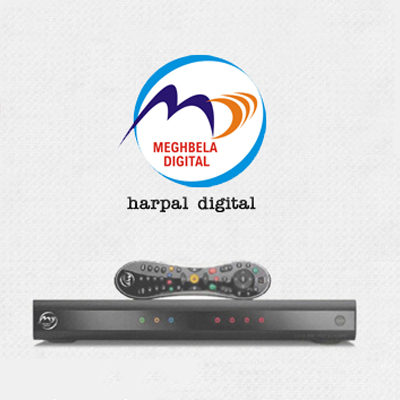
    Meghbela Cable has already installed around 1.26 lakh STBs in Kolkata DAS I areas. While in places which fall under DAS III and IV like Haldia, Bankura, Arambagh and Hooghly, the MSO offers 9-10 lakh cable TV connections, majority of which is analogue.


    The CVNO model is set to empower LMOs to give their subscribers the choice of channels according to affordability.

  • Govt does not have details of revenue generated by sale of CAS, DAS: Rathore

    Govt does not have details of revenue generated by sale of CAS, DAS: Rathore

    NEW DELHI: The Government has said that there was no provision under the present digital addressable system regulations or the Cable Television Networks (Regulation) Act 1995 for any assistance or relief to cable TV subscribers to buy set top boxes (STBs).

     
    Minister of State for Information and Broadcasting Rajyavardhan Singh Rathore has told the Parliament that the Ministry had assessed the requirement of STBs to be installed at the customer premises, based on Population Census 2011.

     
    Thus, a total of 140 million STBs were required to implement cable TV digitisation in the country. Out of this, 30 million STBs had already been installed under phase I and phase II and the balance 110 million are required to be installed in the remaining two phases which are under implementation.

     
    He said the Ministry does not make any assessment with regard to quantum of revenue generation arising out of sale of CAS and DAS.

     
    He said according to a notification issued on 11 November 2011 issued by the Ministry, digitisation of cable TV in India is to be completed in four phases. Phase I and phase-II of digitisation have already been completed.

     
    Phase III is to be completed by 31 December 2015 whereas phase IV is to be completed by 31 December 2016.


  • “Traditional STBs can no longer handle complex requirements of innovative operators”: Matthias Greve

    “Traditional STBs can no longer handle complex requirements of innovative operators”: Matthias Greve


    IPTV is moving from a pure linear product to a complete TV experience with live TV, on demand services and third party content. This new world of connecting the TV to the Internet means both, opportunities and challenges for operators, developers and integrators.


    ABOX42, is one of the leading provider of hybrid, IPTV and OTT DVB smart set top boxes (STBs), with five years expertise and knowledge in end-user mass-market products and a deployment of over 120 OTT applications. ABOX42 developed a new generation of smart STBs for the global market. The ABOX42 smart STB platform is the ideal solution for any IPTV and OTT content providers, cable-operators and ISPs, who are aiming to provide an own STB for its services to its customers. The platform was designed for fast moving OTT providers, cable operators, IPTV providers and internet service companies. With its powerful smart SDK, the Smart SaaS Services and additional Smart Solutions, the ABOX42 platform offers its customers a short project cycle, short lead times in production and includes lifecycle management for ongoing software maintenance and service updates.


    ABOX42 is taking a new approach with the ABOX42 Smart Platform and its advanced customised IPTV, OTT and Hybrid Smart STBs to solve the most important key challenges by providing the solid hardware foundation and the software features for a unique TV proposition with least cost and low development effort. In an interview, ABOX42 founder and CEO Matthias Greve answers essential questions about the rapidly changing market.


    Excerpts:


    What role do STBs play now and in future, considering Smart TVs and cloud based services?


    Modern STBs like the ABOX42 M-series are designed for local TV applications as well as for emerging cloud based TV services. Since on one hand the operators need to control the user experience and on the other hand need to be ahead of competition with the introduction of new TV features, it will be more than ever mandatory to have a modern, flexible and scalable Set Top Box platform for the first screen TV experience of paying end-users. Smart TVs offer a certain range of OTT applications, but will not replace the main Set Top Box device in end-users home, which provide a unified, rich TV experience on the first and second screen.


    Do you see a “SetTopBox-less” future for operators?


    There is currently some talk from operators about virtual STBs as SmartTV apps or STBs as CI+ modules. Since there is today no standard for the virtual STB applications and the vast majority of the installed flat screen TV in the household do not support these new applications, the operator still needs to focus on its core STB. This is the device, which can be shipped to all subscribers regardless of the type or age of the TV set.


    What view should an operator take on the virtual STB?


    The best way to view these issues is to treat the virtual STB like the operator would treat an App on iPad, XBOX or PlayStation. It is an add-on but not the core of the operators TV solution.


    What are the challenges of virtual STBs as apps?


    With the virtual STB apps within SmartTV, the operator does not have the same freedom on the user interface side. Also the quality of service cannot be guaranteed over the live time of the app. It is out of the operators´ control, how for example future software updates of the SmartTV manufacture might affect the compatibility and proper functioning of the operators TV service.


    Also Virtual STB apps are not free of charge and need costly maintenance. If you support different manufactures and different version of TV sets it quickly sums up to 5 to 10 new platforms which have to be supported each year.


    What is the major shift in the STB market?


    Traditional closed STB platforms are not any longer able to handle the complex requirements of innovative operators. The market will move from old integrated, proprietary STB products to modern SmartSTB platforms where the focus has moved to the software layer. This is a similar shift like we experienced in the last few years with the move from traditional feature phones to modern Smart phones. The same trend we see in the TV middleware segment, where operators want to move from closed propriety systems to open solutions based on modern internet technologies and open standards.


    What are the specific operator challenges solely advanced STBs are able to match?


    The biggest challenge for operators today is to understand what the difference of new IPTV & OTT solutions is and how the operator can in an effective way get to the target solution in least time.


    Basically almost all Cable and Satellite Pay TV operators want to deliver new services like network PVR, VOD and want to add OTT delivery of specific channels to free up bandwidth in their traditional DVB networks. IPTV operators who started several years ago need to upgrade their user experiences from inflexible first and second-generation STB platforms to latest (third) generation. This new generation STB platforms allow the fast development of modern user interfaces, compelling services and the integration of third party services based on HTML5. In addition these new Smart STB platforms are upgradable and much more future proof than legacy STBs.


    Do SmartSTBs already match operators´ current and future demands?


    SmartSTBs have arrived and delivery of HD live TV channels over the internet with OTT technologies is a market proven technology deployed in the mass market already. A new concept of OTT DVB, allows not only live TV signal delivery over the internet, but to also include multiple audio tracks, classical TeleText, DVB Subtitle as well as modern HbbTV application via HLS streaming.


    Will future trends in the operator area be in favour of STBs?


    There are two major trends increasing the demand for STBs. Operators who already run an older generation IPTV service plan to upgrade to a latest generation IPTV & OTT solution which is modern and scalable, which can be integrated seamlessly and offers new compelling features (additional OTT services, HbbTV, nPVR, Smart TV applications) and multi-screen capabilities.


    Operators without an existing installation who want to move into the TV space with a modern IPTV (or even more often OTT) solution which is easy to role out, does not require long integration work and offers a great first screen experience combined with multi-screen capabilities.


    What are the unique possibilities given with OTT solutions and STBs?


    OTT is a great opportunity for new players to enter the TV market, or for existing operators and internet service providers to reach new customers and add new features. ABOX42 has been an innovator in the advanced Set Top Box platform field for quite a while and we recognise that our solution is picked by both traditional operators who want to move to a future proof, modern and complete solution, as well we are serving new OTT operators who are entering the TV field with compelling new product offerings and disruptive business models. We see a major increase of our business and getting more and more request from traditional operators.


    What distinguishes the new STB generation from the preceding models?


    The new SmartSTBs will be able to handle many different standards side by side, such as streaming protocols, DRM and CAS systems. This new SmartSTB generation is HTML5 browser based and much more easier for development. A new focus will become the management of the software lifecycle and cloud services to manage the SmartSTB during the entire lifecycle, like we are all used nowadays with e.g. the iPhone.


    What are characteristic innovations in the area of OTT and IPTV technologies?


    ABOX42 as innovator in the IPTV & OTT segment is already delivering products, which offer all the latest innovations. This includes support of all major DVB features in both IPTV & OTT, supporting HbbTV services, other OTT services and third party applications with different streaming formats, different DRM systems side by side on the platform. More efficient streaming with H.265 will for sure boost the video quality especially for OTT and will allow more efficient content delivery for operators.


    Do SmartSTBs and especially ABOX42 solutions meet the customers´ demands?


    ABOX42 is supporting all demanded new features with its Smart SDK and Smart mobile Toolkit for the advanced ABOX42 STB platform. We see this as one of our competitive advantages to provide a broad compatibility to OTT services, streaming formats, DRM systems as well as the support of various TV Middleware solutions.

    This way a network operator can flexibly and easily upgrade all existing customers (digital and analog TV watchers) with new OTT and interactive services such as Catch-Up TV, Video on Demand and many more. ABOX42 offers short project cycles, short production lead times and includes lifecycle management, ongoing software maintenance and service updates.


    What are currently the typical demands of ABOX42´s customers?


    Depending on legal requirements in a certain country, cloud based recording (network PVR & network timeshift) is the most compelling feature. But also HbbTV offers a great set of additional features and on demand content which is supported by more and more countries / operators. Last but not least ‘Multi-Screen’ applications are getting more and more popular since it is not only about ‘on demand’, but about ‘any place, any time’ nowadays. In general it is all about high quality content and an intuitive user interface. This is what end-users like on the new TV experience.


    What are the prospects for a retail market as a channel for multiple services and devices?


    We believe the operators including new OTT operators are in the driver’s seat to deploy compelling multi screen solutions to their customers. Most markets are dominated by pay TV offerings by operators. Looking into the hardware devices, already today lots of retail devices (iOS or Android based) can be enabled as a second screen device, where the operator controls the application for these devices (for OTT services). For the main screen (e.g. IPTV), the operator will control and provide as well the hardware device (STB).
  • Dish TV exploring possibility of setting up domestic STB manufacturing business

    Dish TV exploring possibility of setting up domestic STB manufacturing business

    MUMBAI: The positive thrust that the cable and DTH industry has been receiving from the current Information and Broadcasting (I&B) Minister Prakash Javadekar is getting encouraging response from the industry.


    While the government has classified set top boxes (STBs) as telecom equipment to encourage indigenous manufacturing of STBs, Dish TV has decided to tap into the emerging domestic market.


    Reporting improved results, Dish TV MD Jawahar Goel said that the company is ‘re-evaluating possibilities for domestic manufacturing of STBs’.


    Speaking to indiantelevision.com, Dish TV CEO RC Venkateish said, “We are exploring the idea of domestic STB manufacturing given the incentive and fillip that the government is keen to provide to domestic manufacturers.” He added that there seems to be an overall trust of the government which is the underlying assumption that indigenous manufacturing will save costs as compared to importing boxes.


    Venkateish said that the company is currently evaluating the cost structure for setting up an STB manufacturing unit that will not just provide boxes to Dish TV but to others in the industry as well. Though the company would have to invest in capex and opex for the manufacturing unit, whether this will help them save up the additional cost of custom duties that imported boxes incur, is still a question mark.


    Dish TV has reported an addition of 332,000 subscribers in Q2 2015 with lower losses at Rs 15 crore as compared to the previous quarter.

  • Dish TV reports improved results for Q2-2015

    Dish TV reports improved results for Q2-2015

    MUMBAI: Reporting earnings for the current quarter (Q2-2015), Dish TV India Limited (Dish TV) announced addition of 3,78,000 subscribers in the quarter taking net subscriber base to 1.21 crore at the end of the quarter. The company added 3,32,000 subscribers last quarter and 164,000 subscribers in the corresponding quarter last year.


    The subscription revenue for the quarter rose 12.2 per cent to Rs 616.8 crore y-o-y while the total operating income (Total Income from Operations – TIO) at Rs 672.3 crore was 11.9 per cent more than Rs 600.8 crore in Q2-2014 and 4.9 per cent more than Rs 640.6 crore in Q1-2015.


    Also reporting the half yearly result, the HY1-2015 TIO for the company at Rs 1290.8 crore was 7.2 per cent more than Rs 1203.9 crore in HY1-2014.


    The company announced a decline in loss for the current quarter at Rs 15.1 crore as compared to the Rs 16.05 crore in the trailing quarter but higher than the Rs 8.53 crore in the corresponding quarter last year.


    The total expenditure of the company for the current quarter also rose to Rs 661.9 crore, 11.1 per cent up from Rs 595.5 crore in Q2-2014 and 5.2 per cent more than Rs 628.8 in the trailing quarter.


    The company reported the total expenditure for HY1-2015 at Rs 1290.8 crore which was 7.2 per cent more than Rs 1203.9 crore in HY1-2014.


    The increase in total expenditure can be attributed to rise in Employee benefit expense (EBE), advertising expense (AE) and selling and distribution expenses (S&DE).


    The EBE for Q2-2015 was reported at Rs 25.16 crore, up 12.6 per cent from Rs 22.34 crore in the corresponding quarter last year and 1.6 per cent lower than the trailing quarter.


    AE in Q2-2015 at Rs 17.7 crore, was 39.4 per cent more than Rs 12.7 crore in Q1-2015 while the selling and distribution expenditure rose 22.1 per cent Q-o-Q.


    The S&DE comprises of commission and other selling and distribution expenses.


    The commissions for the company in Q2-2015 was reported at Rs 60.74, 12.2 per cent more than Rs 54.12 crore announced in the immediate trailing quarter and  41.3 per cent more than Rs 42.96 crore in Q2-2014.


    While the other selling and distribution expenses at Rs 53.8 crore jumped 42.1 per cent from Rs 37.86 in Q1-2015 and 74.9 per cent from Rs 30.76 crore in the corresponding quarter last year.


    ARPU for the second quarter increased to Rs 172 from Rs 170 in the previous quarter. Despite significantly higher activations, churn continued to be at a healthy 0.7 per cent per month. Festival driven, higher selling and distribution expenses resulted in the EBITDA margin being marginally lower at 24.1 per cent compared to 24.5 per cent in the previous quarter, said the press release.


    EBITDA for the quarter was Rs 162.3 crore, up 4.4 per cent as compared to Rs 155.4 crore in the corresponding quarter last fiscal.

    Talking about the overall industry growth, Dish TV chairman Subhash Chandra said, “The industry, led by Dish TV, recorded a healthy 38 per cent Y-o-Y growth in gross additions during the second quarter of fiscal 2015.”


    “Our performance during the second quarter is a reflection of our belief that a financially stable business is best placed to capitalize on any growth opportunity. While we have been growing in the right direction, growth without healthy returns to our shareholders falls below our aspirations. However, we are committed to generate them and by focusing on revenues, expenses and balance sheet quality we are building near term benefits for all our stakeholders,” he added commenting on the company’s earnings report.


    Adding to the same, Dish TV MD Jawahar Goel said, “Dish TV maintained its leadership position during the second quarter. Buoyed by a healthy growth in HD sales and good traction coming in from sale of the ‘Zing’ brand.”


    He further added, “In view of the Prime Minister’s ‘Make in India’ campaign Dish TV is re-evaluating possibilities for domestic manufacturing of set top boxes.” High Definition (HD) box sales gained Traction. It comprises of 15 per cent of the incremental additions.


    Despite the push back of digitization, ‘Zing’ helped propel the sales of the flagship ‘Dishtv’ brand through a wider reach and top of the mind recall. The newly introduced Sports driven packaging also found instant favor with subscribers, thus enabling Dish TV outgrow the industry growth rate, the press release added.


    Click here to read the unaudited financial result


    Click here to read the press release

  • FTA DD Freedish to soon encrypt with MPEG-4

    FTA DD Freedish to soon encrypt with MPEG-4

    MUMBAI: Since inception, DD Freedish has been the only DTH service that hosts free to air (FTA) channels. Boasting 18 million subscribers on the platform, it soon plans to encrypt signals for its future channels.


    With nearly 60 channels in its roster, Freedish plans to encrypt future channels with MPEG-4 compression technology to take it up to 110. Speaking exclusively to indiantelevision.com, Doordarshan deputy director general CK Jain said that the auction for the encrypted channels will happen in November with the commercial roll out of set top boxes (STBs) soon after. “48 channels will be on MPEG-4 and 64 on MPEG-2. Viewers who opt for MPEG-4 STBs will be able to view a total of 112 channels, including the FTA ones,” he said.


    The extended version of Freedish will have two streams of MPEG-4 and four of MPEG-2 so that the existing subscribers can continue watching the FTA channels. Currently the DTH service has five transponders on Insat 4B and will be soon getting an additional one, taking its tally to six. “The two encrypted streams will allow us to know definite subscriber numbers,” he adds.


    Jain is confident that digitisation drive in phase III and phase IV markets will see households pick Freedish. He is also sure that the plus point would be in the new TV households. The MPEG-4 STBs will be sold at a price higher than the current Rs 1200 for MPEG-2. But Jain says that given an option to watch more channels, he expects people to pick MPEG-4 boxes.


    Both the boxes will be available for sale through its distributors. November will see the auction for the 48 encrypted slots. Broadcasters who wish to be on the MPEG-4 bands, will have to undergo the auction, including ones who are also available on FTA.

  • JAINHITS chooses ARRIS to meet demands of video digitisation

    JAINHITS chooses ARRIS to meet demands of video digitisation

    NEW DELHIJAINHITS, India’s first and only HITS-based Direct to Network (DTN) service, has selected set top boxes from ARRIS’s HMC portfolio to deliver digital video services across the nation. 


    According to the Telecom Regulatory Authority of India (TRAI), India is set to witness digitisation of approximately 100 million homes by the end of this year.


    Currently, JAINHITS offers more than 252 standard definition (SD) channels, following the launch of the nationwide ARRIS digital headend earlier this year, and plans to soon provide full high-definition (HD) services, which will be made available via the new ARRIS set-top boxes.


    “As we look to grow our services to meet the digital transition in India and introduce HD services later this year, we are pleased to extend our working relationship with ARRIS to add its set-top boxes to our offering,” said JAINHITS chairman JK Jain. “Our platform coupled with ARRIS set-top boxes will allow cable operators to provide 250 digital TV channels using just 12 frequencies as compared to the 106 they are using today. This will help them free valuable spectrum, and use this available spectrum to provide broadband services to increase ARPU and fulfill Prime Minister Narendra Modi’s dream of a digitally developed India.” 


    “ARRIS is driving the global transition to an all-digital content delivery platform – giving customers like JAINHITS a competitive advantage in delivering tomorrow’s services on today’s networks”, said ARRIS Asia Pacific senior vice president Tim Gropp. “JAINHITS benefits from our proven digital video portfolio and worldwide footprint, which enables us to deliver localised solutions and support.”


    JAINHITS is deploying HMC1010 SD set-top and the HMC2010 HD set-top from September 2014. Both are cost-effective digital terminal adapters (DTA) for operators looking to convert from an analog to a digital service. The compact and energy efficient design of all the HMC series set-top boxes, including the HMC1010 and HMC2010, minimizes energy consumption, reducing their impact on the environment.


  • 100 days of the I&B Ministry

    100 days of the I&B Ministry

    NEW DELHI: The Narendra Modi led NDA government has completed 100 successful days in power. And in these days, the Information & Broadcasting (I&B) Ministry has done its bit to woo the Media and Entertainment industry.


    Listing the achievements was I&B Minister Prakash Javadekar, through a press meet in Delhi.


    The government is launching a new 24×7 channel for the northeast called Arun Prabha in order to provide a strong platform for expression of cultural identities and for creating greater awareness regarding the region.


    Even as a Task Force has been constituted to steer the remaining two phases i.e. phase III and phase IV of digitisation in India, the government has made efforts towards fulfilling the long pending demand of domestic manufacturers of Set Top Boxes to get tax concession (C Form benefit) in order to compete with imported STBs.


    He said this will pave the way for implementation of digitisation initiative in India and see digitisation of about 80 million Cable TV homes in India. It is also a step towards the Prime Minister’s dream of a Digital India as digitisation will enable quick penetration of broadband connectivity in India.


    The Minister talked of initiatives taken in different sectors aimed at enhancing the outreach of policies and programmes across platforms. Some of the initiatives undertaken have been innovative involving people’s participation, enhancing government’s presence on the social media platforms and strengthening communication at the grassroots.


    He said Rs 100 crore had been allocated to Kisan Channel, which will disseminate real time information to the farmers regarding new farming techniques, water conservation, organic farming etc.


    In order to facilitate Ministries/Departments in registering their presence on social media the Ministry had organised a half day training workshop on 11 July.


    The Telecom Regulatory Authority of India (TRAI) has on the request of the Ministry given recommendations on migration of FM Radio Broadcasters from phase-II to phase-III which is under examination.


    Goa has been declared the permanent destination for the International Films Festival of India to develop the “Brand IFFI” on the lines of other International Film Festivals. Although the decision to move IFFI to Goa was taken in 2004 when the National Democratic Alliance was in power, a fresh Memorandum of Understanding was being signed year-to-year for the Festival.


    The three-day North East Film Festival held in Delhi recently will henceforth be an annual feature organised by the Directorate of Film Festivals.


    The Film and Television Institute of India and the Satyajit Ray Film and TV Institute are to be institutes of National Importance and an Act of Parliament will be passed for this. The proposed Bill would enable both the Institutes to award its own degrees and diplomas and start new activities on the lines of IITs and IIMs.


    The office of the Registrar of Newspapers for India (RNI) has streamlined its Single Window Public dealing mechanism at its office. RNI has achieved 100 per cent success in online e-filing of annual statements by publishers for 2013-14.


    Under the Rs 100 crore set aside for “Supporting Community Radio Movement in India,” 600 community radio stations will be set up across the country in the 12th Five Year Plan. This major initiative of the new government will strengthen the link with the population living in rural and marginalized areas.


    The Home Ministry has agreed to the proposal of the Ministry for not seeking security clearance for such channels whose security clearance have already been sought earlier along with the Board of Directors. This decision has paved the way for speedy clearance of additional television channel permissions, which will benefit the broadcast industry in a big way.  After the decision was taken, 23 TV channels have already been permitted by the Ministry.


    The proposal has been cleared for Rs.600 crore National Film Heritage Mission (NFHM) to preserve India’s film legacy by the Expenditure Finance Committee in the Finance Ministry. The draft Cabinet Note has been circulated to the concerned Ministries and the Note will shortly be submitted for approval of the Cabinet.


    To ensure people’s participation in Government Advertising through Crowd-Sourcing of Advertisements, the advertisement for important events are to be designed by the people. The Independence Day advertisement designed on these lines and DAVP has invited suggestions for the proposed advertisement to be brought out on 5 September to observe “Teachers Day”.


    For Independence Day, the advertisements were crowd sourced for the first time and Independence Day coverage was extended to all media platforms. Similarly, a series of press conferences being organised to highlight the initiatives of the Government and the same approach is being adopted to ensure information dissemination across all platforms.

  • Tata Sky demos 4K TV with FIFA World Cup quarter-final match

    Tata Sky demos 4K TV with FIFA World Cup quarter-final match

    MUMBAI: The era of India being a country that lags behind the more developed nations is gone. Indian  DTH operators in the country are waking up, ancticipating  future desires of Indian TV viewers. Which is why one of the oldest and largest DTH operators Tata Sky, is keeping itself and its subscribers up to date with the  introduction of its 4k Ultra HD service.


    The first quarter of 2015 will see Tata Sky roll out its set top boxes (STBs) for its 4k Ultra HD service. The STBs are being made by Technicolor and are based on the high efficiency video coding (HEVC) format that 4k uses the world over. However, prices of the STB are not yet known as the DTH operator wants to reveal it closer to the commercial launch date.


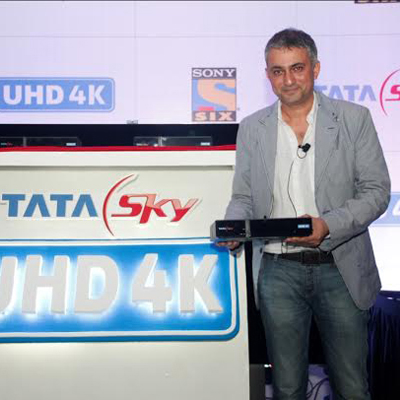
    At a demonstration event in Mumbai, Tata Sky along with Sony Six unveiled the 4k UHD service with a live uninterrupted broadcast of the France versus Germany FIFA World Cup 2014 quarter final. The FIFA 4k signal rights had been bought by Sony Six while the cost of acquisition and transmission was split 50:50 by the broadcaster and the operator. The telecast took place live via satellite transmission.  


    Indiantelevision.com readers will note that Videocon d2h had previewed its 4K service on 3 July 2014 too, a day before Tata Sky..


    Even though most industry professionals  claim that it is too early to launch 4k Ultra HD in India, Tata Sky chief commercial officer Vikram Mehra feels otherwise. “When we launched HD in 2010, people doubted us saying it won’t work. As you keep enhancing TV experience, the viewer will appreciate it. So, Ultra HD is our endeavour in that area. A technology becomes popular when mainline pay-TV adopts it.”


    Mehra feels that movies and sports will be the initial drivers for 4k technology and talks with broadcasters have already commenced. In three to four years, he expects it to be the way of life for most Indian TV viewers. Even though currently there is a lack of 4K content, he feels that it isn’t too far away. “We will make a product that makes sense to the customer. Customers will not buy STBs to adorn their homes. They will buy it for content,” he says.


    Sony Six business head Prasana Krishnan feels that more sporting events should be produced in 4K soon, probably in the next year or so. “4K is the future of broadcasting, specially sports. We saw technology move from SD to HD and now HD has become standard. 4K is next,” he says. Krishnan is aware that a full-fledged 4K channel can’t be expected very soon. Big sporting events will have 4K production on crucial days such as the finals, while the run up matches will be in HD and SD.


    The 4K screening of the FIFA World Cup 2014 quarter finals that took place in Mumbai yesterday, 4 July saw the Sony Six logo being superimposed on the FIFA feed on an 84 inch Sony television set that is soon to be launched in India and across the world. 4K screens give four times the clarity as compared to an HD feed.


    Mehra  was not willing to venture any guesstimates about how much uptake the Tata Sky 4K service will have when it launches next year as he feels making futuristic statements is of no use. However, the fact that the DTH operator is confident about its prospects is clear from the contract that it has signed with Technicolor, according to which deliveries of 4K set top boxes in “volume” are expected to commence in early 2015.


    Adds Mehra: “We started active service in 2007 and today we have 2.9million people paying Rs 45 each for them. Close to 65 per cent of our STBs sold today are HD. This from our total subscriber base of 13.5 million.” It is pertinent to note that Tata Sky, since late last year, has stopped buying any more SD boxes.