Tag: set-top-boxes

  • 44% adults used Internet TV via STBS in the last 12 months: Ofcom

    44% adults used Internet TV via STBS in the last 12 months: Ofcom

    MUMBAI: Close to 44 per cent (over four in ten) adults in the UK had used an internet connected TV – most via set-top boxes such as TiVo or Sky – in the last 12 months. Some 34 per cent had watched catch-up TV services via connected TVs or set-top boxes.


    Moreover, Ofcom’s research into UK audience attitudes to content on TV and radio showed that households surveyed owned two TV sets on average.


    This research covered what people find offensive on TV and radio, their awareness of and attitudes towards regulation and their understanding of advertising and product placement.


    The report also includes research on consumers’ access to and views on internet ‘connected devices’, which are used to watch services like the BBC iPlayer, 4oD, ITV Player, YouTube and Netflix.


    The research further found that nearly half (49 per cent) of adult TV viewers felt the quality of TV programmes had stayed the same in the past year, three in ten (30 per cent) felt they had got worse, and around 16 per cent said TV had improved.


    Among those who thought programmes had got worse, the top reasons were repeats (57 per cent), a lack of variety (43 per cent), a general lack of quality (32 per cent) and too many reality shows (30 per cent). Among those who said programmes had improved, the top reasons were a wider range of shows (50 per cent), improved quality (48 per cent), more entertaining shows (37 per cent) and better dramas (33 per cent).


    Offensive material on TV


    Close to 79 per cent people had not been offended by anything on TV in the past year. However, one in five had found something offensive, rising to a third (33 per cent) for people aged 65 and over. Those aged between 16 and 24 were least likely to be offended (nine per cent compared with 33 per cent of over 65s).


    Of those who had been offended, bad language (44 per cent), violence (41 per cent) and sexual content (41 per cent) were the top concerns. Adults below 45 years old were more likely to say they had been offended by some type of discrimination (29 per cent compared with 19 per cent of over-45s).


    On average, about half of all people thought current levels of sex (57 per cent), violence (47 per cent) and swearing (52 per cent) on TV were acceptable. Four in ten felt there was too much violence (43 per cent) and swearing (40 per cent), while nearly three in ten (28 per cent) said there was too much sex.


    Attitudes differed by age: younger adults were more likely to feel there is an acceptable amount of violence, swearing and sex, while older adults tended to feel there is too much.


    High awareness of regulation


    The vast majority of adult TV viewers (90 per cent) knew about the 9 pm watershed, with over half (57 per cent) saying about 9 pm was the right time while around a quarter (27 per cent) said the watershed should be later.


    The report found a clear understanding about what broadcast content is regulated, with over eight in ten (82 per cent) adults aware that TV is regulated. Most adults felt the current levels of TV and radio regulation were about right (61 per cent), or did not have an opinion (18 per cent for TV and 33 per cent for radio).


    The research showed that 14 per cent of adult TV viewers could identify the ‘P’ symbol, which is designed to let viewers know the channel, or the programme-maker, has been paid to include products in that programme.


    Protecting viewers


    Ofcom has a duty to protect viewers from harmful and offensive material on TV and radio, as well as ‘TV like’ content on internet connected devices. When broadcasters break the rules, Ofcom takes robust enforcement action and has issued guidance to broadcasters on how they should enforce the watershed.


    The majority of viewing today is live on the TV and many of the programmes delivered over the internet to connected devices in the UK were first aired on TV; because of this, they are subject to Ofcom’s rules.


    However, people now watch programmes in a variety of ways, and on different devices, which poses challenges for parents and regulators. Hence, Ofcom is working with government, other regulators and industry to bring about a common framework for media standards.

  • Den Network reports 11.5% growth in FY-2015 cable subscription revenue; posts loss

    Den Network reports 11.5% growth in FY-2015 cable subscription revenue; posts loss

    BENGALURU: Den Networks Ltd reported that its cable business subscription revenues net off LCO share grew 11.5 per cent to Rs 966 crore in FY-2015 from Rs 866 core in FY-2014. In the current quarter, cable business subscription revenues net off LCO share grew 13 per cent to Rs 252 crore from Rs 223 crore in Q4-2014.


    Note: 100,00,000 = 100 lakh = 10 million = 1 crore


    Including LCO share, Den Networks cable business subscription revenues grew 3.6 per cent to Rs 1093 crore in FY-2015 from Rs 1055 crore in FY-2014. Cable business subscription revenues including LCO share in Q4-2015 declined seven per cent to Rs 265 crore from Rs 285 crore in Q4-2014.


    In FY-2015, Den Networks reported loss of Rs 144.01 crore as compared to a profit of Rs 38.40 crore in the previous year. Loss in Q4-2015 was Rs 61.15 crore as compared to a profit of Rs 10.05 crore in the corresponding year ago quarter. Loss in Q3-2015 was slightly higher Rs 62.60 crore


    Den Networks says that it added 10 lakh set top boxes (STB) in FY-2015, taking the total STBs deployed to approximately 70 lakh. It says further that its current digital subscriber base in Phase 1 and 2 stood at approximately 51 lakh.


    Let us look at the other numbers reported by Den Networks


    Den Networks TIO in FY-2015 at Rs 1129.64 crore was 1.2 per cent more than the Rs 1116.69 crore in FY-2014. TIO in Q4-2015 at Rs 270.30 crore was 10.5 per cent lower than the Rs 301.86 crore in Q4-2014, but 0.6 per cent more than the Rs 268.81 crore in Q3-2015.


    Total expense (TE) in FY-2015 at Rs 1223.18 crore was 27.2 per cent more than Rs 961.92 crore in FY-2014. TE in Q4-2015 at Rs 323.79 crore was 20.3 per cent more than the Rs 269.18 crore in Q4-2014 and was 2.2 per cent more than the Rs 316.75 crore in Q3-2015. 


    The company’s content cost in FY-2015 at Rs 454.52 crore was 22.3 per cent more than the Rs 371.73 crore in FY-2014. Content cost in Q4-2014 at Rs 139.13 crore was 38 per cent more than the Rs 100.85 crore in Q4-2014 and 26.4 per cent more than the Rs 110.06 crore in Q3-2015.


    Den’s EBIDTA (without considering other income) in FY-2015 at Rs 92.41 crore was much lower than the Rs 302.17 crore in FY-2014. Q4-2015 EBIDTA was negative Rs 5.97 crore in Q4-2015 as compared to an EBIDTA of Rs 73.18 crore in Q4-2014 and EBIDTA of Rs 0.28 crore in the immediate trailing quarter.


    Company Speak


    Den Networks CEO Pradeep Parameswaran said, “We are laying the foundation of building a powerful consumer franchise in broadband, cable television and television shopping. Significant investments are being made to bring disruptive consumer offerings to the market. We are augmenting our historical strength in cable operations with high quality talent in all functions. Besides focus on internal changes, I am also hopeful of a stronger collaboration with LCOs’ and other industry partners to take steps for successful execution of digitisation process thus supporting the government push towards digital India. Our excitement in the scale of opportunities and our ability to capture it continues to remain strong.”


    “We have seen positive results on subscription revenues and collections in Q4 of the current year. The profitability has been impacted because of the new business initiatives of the company including broadband, TV Shop and Football as we build Den Networks for the future,” added Parameswaran.

  • MEASAT 3b active; Sun Direct awaits regulatory clearances

    MEASAT 3b active; Sun Direct awaits regulatory clearances

    MUMBAI: The MEASAT-3b satellite, which is co-located at 91.5 degree, has now finally gained the status of being active. However, Sun Group’s direct to home (DTH) arm Sun Direct is still in the process of getting regulatory clearances. The DTH operator will soon be able to avail the benefits that the satellite will offer. 


    Speaking to Indiantelevision.com Sun Direct CEO Mahesh Kumar says, “We are still in the process of getting all the regulatory clearances.”


    In may be recalled that in May last year, Sun Direct was looking at adding nine more transponders from its current four, to increase its High Definition (HD) and Standard Definition (SD) channel capacity. However, the delay in the launch of MEASAT-3b satellite that was to enable Sun Direct help add the additional transponders played spoilt sport. The satellite which was set for launch on 6 June 2014 (7 June Kuala Lumpur time), was postponed after the manufacturer of the MEASAT-3b co-passenger requested time for repairs to their satellite.


    In September 2014, Ariane 5 ECA successfully launched two communications satellites Optus 10 and MEASAT 3b. MEASAT 3b, which is equipped with 48 high-power Ku-band transponders would enable DTH services not just in India but also Malaysia, Indonesia and Australia. It would be serving more than 18 million households, according to Measat.


    Kumar had previously stated that with the extra capacity, the operator’s current HD offering would go up to 30 and expected the number of SD channels to go up to 350.

  • Kolkata MSO GTPL-KCBPL applies for broadband license

    Kolkata MSO GTPL-KCBPL applies for broadband license

    KOLKATA: Kolkata-based multi-system operator (MSO) GTPL-KCBPL, which boasts of having more than five lakh set top boxes (STBs) in West Bengal, has applied for a broadband license to the Ministry of Information and Broadcasting (MIB).

    Since the company is looking to launch broadband services in a big way, once the permission is granted, GTPL-KCBPL is also likely to create awareness through a multi-media campaign. “We shall inform prospective customers through various activities. We will also organize BTL activities and let people know through our distribution network,” said GTPL- KCBPL managing director Bijoy Kumar Agarwal.

    “We are shortly going to roll out the broadband service in Kolkata Metropolitan Area (KMA) to begin with, which will create more opportunities for our business partners and at the same time with state-of-the-art technologies, we will be bringing the best of services. In a digital addressable era, broadband and VAS (value added services) will become important differentiated offerings. We are upbeat about our penetration and growth in eastern region as our pack will be a value addition for the customers,” he said.

    Agarwal also hinted that broadband will be another major revenue source as it has direct control over the customers.

    An Ethernet cable carries the broadband signals between modem, router, computer, and other wired Internet-capable devices.

    Cable analyst Namit Dave said that broadband and VAS, which suppressed revenue streams so far, will get a major boost as the country advances towards the complete era of digitisation of cable TV. MSOs are also rolling out packages in vast scale.

    Another analyst added that broadband is a lucrative business now with less investment, which in turn promises higher revenue.

    In 2005, a group of 160 cable operators in a unique manner turned themselves into shareholders and made KCBPL a successful MSO in KMA. While in 2010, KCBPL entered into a joint venture with GTPL, which has enabled this new entity to gain strong foothold in the state of West Bengal.

    When asked about the company’s technology partners, Agarwal said that Cisco, Skyworth, Nagravision, Newland and Magnaquest among others are in touch with the company on a regular basis so that it can update and offer latent technology to its customers.

    It may be recalled that Indiantelevision.com recently reported that GTPL-KCBPL, which was offering around 22 High Definition (HD) channels until, has now increased the offering to 32 channels.

    “After the rollout of digitization in KMA in the first and second phase of the digitization drive, we believe that our partners and viewers stand to benefit from more opportunities, products and value with digitization,” Agarwal concluded.

  • DAS phases face problems; Parliamentary Committee asks Govt. to make amends

    DAS phases face problems; Parliamentary Committee asks Govt. to make amends

    NEW DELHI: Even as there are consistent delays on the Home Ministry’s part to examine security clearances for multi system operators (MSOs) and complaints of non-availability of reliable set top boxes (STBs), a Parliamentary Standing Committee has said suitable steps should be taken proactively to address the concerns of all the stakeholders in achieving the final phases of digitization within the envisaged time frame.


    The Committee in its recent report said that about 50 per cent of the further demand of 110 million STBs required under the final phases of digitization is likely to be met by the domestic manufacturers, which is certainly an encouraging proposition.


    Noting that the Telecom Regulatory Authority of India (TRAI) had found interoperability of STBs expensive and recommended financial interoperability, the Committee wanted to know the progress in getting inexpensive STBs as it had been informed that indigenous STBs would be made available in sufficient number.


    Regulations notified by TRAI provide an exit option for a subscriber to change the operator/platform for any reason. The Committee said it had also been informed that the Department of Information Technology had issued a Request for Proposal (RFP) for the development of an indigenous Conditional Access System (CAS) to make interoperability of STBs possible and an Indian CAS is expected to be ready in about a year’s time.


    The Committee noted the process of digitisation under Phase I and Phase II was not smooth as there was strong opposition from cable operators’ associations, non-acceptance of revenue sharing arrangements between cable operators and MSOs, and between MSOs and broadcasters, delay in filling of Consumer Application Forms, monopoly of few selected STBs manufacturers and service providers and opposition from some State Governments.


    It had been informed that the Task Force for the final two phases will provide policy direction and take stock of the progress on a regular basis in order to implement the final phases in a professional manner.


    The Committee noted that out of the four metro cities planned to be digital, digitization has been near total in Delhi, Mumbai and Kolkata. Chennai is yet to undergo the digital transition due to several pending court cases. Phase II of digitization was concluded by 31 March, 2013 in 38 cities spanning 14 states and one union territory. The Phase III and IV digitization process is now planned to be completed by December 2015 and December 2016 respectively.


    The Committee noted that during Phase I and Phase II of the Cable TV digitization, the indigenous manufacturers were able to supply only 15 per cent of the total requirement of STBs and the rest were imported from various countries, mainly from China. As a result, complaints were received about the poor quality of STBs, their non-compliance to BIS standards, and absence of service/repair centres for STBs.


    In this regard, to meet the growing demand of STBs in the country, the Ministry has reportedly taken a number of steps to promote the indigenous manufacturing of STBs, which include increasing import duty on imported STBs from five to 10 per cent, declaring STBs as a part of ‘Telecommunications Networks’ by the Department of Telecommunications on 30 June, 2014 and confirmation by the Department of Revenue on 13 August, 2014 by extension of the same under Sec 8(3) (b) of the Central Sales Tax, 1956 thus fulfilling the major demand of the indigenous STBs manufacturers for the creation of a level playing field vis-?-vis importers.


    Moreover, the Department of Electronics and Information Technology had made it mandatory for the STBs to be BIS compliant for safety certification with effect from January 2014. The Information Technology Department had also entered into a contract with a domestic company to develop CAS domestically vide its order dated 24 July, 2014, which would be made available to the domestic vendors at $ 0.5 as against the current value of $2 or more.


    The Committee also noted that in order to give time to the domestic manufacturers of STBs, the Government had extended the cut-off dates of digitisation, which for Phase III has been extended from 30 September, 2014 to 31 December, 2015 and for Phase IV from 31 December, 2014 to 31 December, 2016.

  • Catvision to install 200 headends by December 2016

    Catvision to install 200 headends by December 2016

    KOLKATA: Catvision, a manufacturer, re-seller and system integrator, which has installed more than 60 headends till now, aims to install around 200 more headends by the end of 2016 through its joint venture company Catvision Unitron.


    By looking at an additional 200 headends, the company is aiming at about 25 per cent share in the headend installation vertical by 2016.


    Speaking to Indiantelevision.com, Catvision managing director Athar Abbas said, “We have installed more than 60 headends in locations like Guwahati, Dimapur, Sonipat, Dehradun among others till now. In phase III and IV, we are looking at a market share of 25 per cent. By December 2015, we are looking at 100 headends and another 100 by 2016.”


    Catvision signed a joint venture agreement with Belgian company Unitron Group NV to set up a 50:50 joint venture called Catvision Unitron in India. The company develops AV encoders for the cable television industry.


    Now the JV develops CATV digital systems and products with the latest world-class technology. Unitron Group NV of Belgium has years of experience in the state-of-the-art digital headend technology, and is one of the leading companies in Europe in providing solutions for TV distribution to multi- dwelling units and residential complexes.


    On the other hand, Catvision has experience in the CATV industry in India, a market that is migrating to digital technology totally by the end of 2016.


    “This joint venture with Unitron has enabled Catvision to become a leading player in India and surrounding countries in the emerging digital TV space,” Abbas said.


    As was reported earlier by Indiantelevision.com, the company aims to manufacture around 15 lakh STBs to be used in the third and fourth phases of cable TV digitization process in India.


  • Catvision to manufacture 15 lakh STBs by 2017

    Catvision to manufacture 15 lakh STBs by 2017

    KOLKATA: Catvision, a manufacturer, re-seller and system integrator, aims to manufacture 15 lakh set top boxes (STBs) by 2017 fiscal end.


    The company has set sights on this goal as the cable TV sector prepares for phase III and IV of digitisation. Catvision is looking at capturing a market share of one per cent with this.


    Speaking to Indiantelevision.com, Catvision managing director Athar Abbas said, “With the extension in the deadline for cable TV digitisation, the industry will be able to cater to all the needs of the fragmented markets. By the end of 2015-16, we are looking at five lakh STBs and by 2016-17 we aim to manufacture another one million STBs.”


    Talking about Phase I and II, Abbas said that India could achieve an ambitious target as the digitization process as a whole was well executed in these two phases. “No one expected that Phase I and II would be done on time but India did it. However, in the remaining phases, the biggest challenge would be fragmented markets,” Abbas said, when queried about the challenges the locations, falling under Phase III and IV, might pose.


    Speaking on the delay that digitization Phase III and IV have encountered, Abbas said that the government was keen on STBs being manufactured in the country. “The delay will give employment opportunities to many and keep a check on the balance. The industry is happy as the VAT has been reduced from 12.5 per cent to two per cent,” he said.


    Catvision was promoted in 1985 by professionals, who earlier worked in senior positions with the HCL group of companies – India’s largest computer and IT conglomerate. In 1986 Catvision started installing complete CATV systems in company townships and hotels – the first cable TV network in India.


    In 1990, it became the exclusive agent of CNN for a period of five years. The first Gulf War, captured live on CNN, triggered commercial cable TV in India. In 1995, the company made a public issue of stock. At present the company’s stock is listed at the Bombay Stock Exchange (BSE). The company has its head office at Noida, and manufacturing unit at Dehradun.

  • I&B asks stakeholders to arrive at consensus on difficult issues for successful digitisation

    I&B asks stakeholders to arrive at consensus on difficult issues for successful digitisation

    NEW DELHI: Information and Broadcasting Ministry (I&B) additional secretary J S Mathur, who heads the Task Force for Phase III and IV of Digital Addressable Systems (DAS) for cable television has urged all stakeholders to come together and resolve issues, if targets have to be met.


    Noting in the sixth meeting held on 13 March that only seven out of 100 multi-system operators (MSOs) had given the seeding plans for Phase Ill areas.


    The data provided by them indicated that about 3.1 million set top boxes had been seeded by them with about 550,000 STBs in their stock and about 2.35 million STBs under orders of purchase. He remarked that the seeding so far was very low vis-a-vis the target.


    He said, “Each day counts towards progress in digitisation.” He also said that progress would be slow without public awareness campaign by the stakeholders.


    He said there was lack of mutual connect between broadcasters and MSOs with each stakeholder wanting to maximize self interests. There was need for coming to a consensus.


    He added that the data on subscription revenue and carriage fee from the Indian Broadcasting Foundation and News Broadcasters Association was still awaited, despite assurances.


    He emphasised that broadcasters have to contribute by mounting awareness campaign on their channels as was done by them during Phase I and Phase II and the MSOs have to contribute in this campaign. He said broadcasters should start a dialogue with MSOs immediately.


    He welcomed the initiative taken by Telecom Regulatory Authority of India (TRAI) to hold a meeting with broadcasters and MSOs to resolve the issue of interconnect agreements.


    However, the stakeholders should themselves get their act together and put in their utmost effort to ensure that such issues do not come in the way of achieving the goal of digitisation.


    He said that as pointed out by some members of the Task Force, digitisation has begun to benefit all stakeholders. Activity on the ground needs to be accomplished from now itself as it is not a matter that can be put in place overnight.


    Representative of MSOs said there were issues of content costing, due to which they were finding it difficult to plan digitisation in new areas. Seeding plans can be firmed up by MSOs only after knowing content cost. Till then, the MSOs can only give their seeding projections instead of seeding plans.


    They also stressed that revenue from Phase Ill and Phase IV areas is about 20 to 30 per cent of the total revenue from the country. So content cost in Phase Ill and Phase IV areas cannot be same as that in Phase I and Phase II areas and this has to be taken into account by all stakeholders.


    MSOs also complained that broadcasters were not entering into interconnect agreements with the MSOs for Phase Ill areas.


    Unless the input cost is known, MSOs cannot educate the consumers about the rates and there are issues of local taxation levied by some State Governments apart from local cable operators switching over to analogue when the digital signal to them is cut off by the MSO.


    Broadcasters’ representatives on the other hand said MSOs had not approached the broadcasters for entering into interconnect agreements in new areas. The broadcasters felt that this was because MSOs do not have concrete plans.


    Seeding was done by MSOs in Phase I and Phase II without first entering into interconnect agreements with broadcasters and this should not be an issue now, some of the broadcasters said.


    They claimed that channel prices had gone up due to technical upgradation from SD to HD, but there had been no increase in the advertisement rates.


    A TRAI representative said that according to a TDSAT judgment, MSO/LCO providing cable TV services were free to provide digital cable service in new areas unless it trespasses other areas. He impressed upon the broadcasters to enter into interconnect agreements with MSOs who approach them for content in Phase Ill and Phase IV areas.


    Representative of consumer forums mentioned that pricing is the main issue which the consumers are facing. He added that consumers should know the price before he switches over to digital.


    Representative  of  CEAMA  stated  that  they  approached  as  many  MSOs  as possible to clear their doubts about indigenous set top boxes. However the response from the MSOs has not been encouraging. He reiterated that they have the capacity to meet the requirements of Phase Ill and Phase IV.


    A representative of the Uttar Pradesh Government mentioned that CAF forms should be filled by the MSOs before changing to digital mode in Phase Ill and Phase IV areas. He added that the State Government was not having complete seeding data of Phase II cities.


    The representative of Jammu and Kashmir wanted consumers to be informed about the set top box price. 

  • India ready for 4K & hybrid technology: Broadcom Corp

    India ready for 4K & hybrid technology: Broadcom Corp

    KOLKATA: Broadcom Corp, one of the market leaders in providing chips for technologies such as enterprise networking, set-top boxes, and mobile connectivity functions, believes that the Indian market is ready for concepts like value added services (VAS), 4K, and hybrid technology.


    Broadcom interacted with more than 50 companies including satellite operators, cable operators, CAF players and OEM (original equipment manufacturers’) at the recently concluded 23rd Convergence India 2015 Expo, largest South Asian platform for Telecom, Broadcast and Digital Media. After participating in the fair, themed ‘Connecting India’, the company said it has got overwhelming response from the industry and trade visitors. 


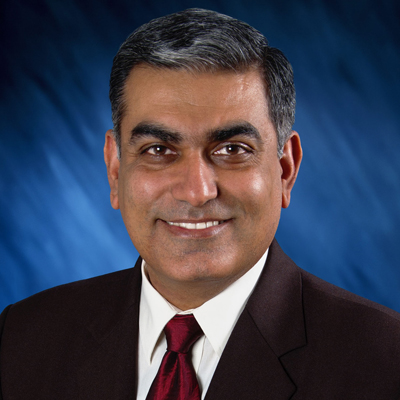
    “Newer concepts like VAS, 4K, and hybrid technology are of interest across the broader audience,” said Broadcom India managing director Rajiv Kapur.


    “We spent time and discussed about our products and services with top 30 players of the industry apart from interacting with mid-sized companies,” informed Kapur.


    While India is a large market for Pay TV and broadband, till some years ago, the technology platform was almost missing for stakeholders to gather at a platform and address the issues, challenges and scope of working.


    “Broadcom spent quality time with big players. Even small players were interested in using and leveraging our services,” he said.


    Kapur said that the company is eyeing further growth from Indian R&D centre. “Apart from executing ideas gathered from this meet at our global R&D centre, we would execute some ideas at our research centre in India,” he concluded.

  • Infrastructure status for b’cast industry, reduce customs duty on STBs: FICCI budget wish-list

    Infrastructure status for b’cast industry, reduce customs duty on STBs: FICCI budget wish-list

    NEW DELHI: The Broadcasting industry should be granted infrastructure status to push the digitisation agenda of the government. 


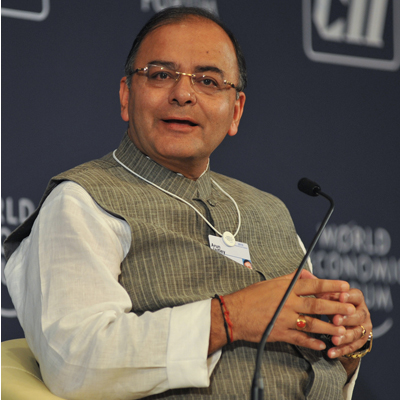
    In its wish-list submitted to Finance Minister Arun Jaitley – who also holds the Information and Broadcasting portfolio – the entertainment wing of the Federation of Indian Chambers of Commerce and Industry (FICCI) said that in the present era of convergence, the distinction between Telecom, IT and Broadcasting sectors is getting blurred. 


    The Telecom sector is already treated as “infrastructure service” and so giving the infrastructure service status to broadcasting will provide a level playing field to the sector.


    Broadcasters and distributors will be aided with better and affordable financing options in the very capital intensive growth phase. 


    The FICCI wish-list covers television and radio broadcasting, cinema and animation and gaming, apart from suggestions relating to advertising in the media. 


    At the outset, FICCI says the Indian media and entertainment industry grew from Rs 821 billion in 2012 to Rs 918 billion in 2013, registering an overall growth of 11.8 per cent. Given the impetus introduced by digitisation, continued growth of regional media, new government formation, strength in the film sector and fast increasing new media businesses, the industry is estimated to achieve a growth rate of 15.3 per cent in 2014 to touch Rs 1059 billion. The sector is projected to grow at a healthy CAGR of 14.2 per cent to reach Rs 1786 billion by 2018. 


    Television clearly continues to be the dominant segment, but strong growth has been posted by new media sectors, whereas gaming and digital advertising recorded a strong growth of 25.5 per cent and 38.7 per cent compared to the previous year. The music sector has shown a decreasing growth (-9.9 per cent growth in 2013 over 2012 compared to 18 per cent growth in 2012 over 2011) despite strong content and digitisation.


    Radio is anticipated to see a spurt in growth after the roll-out of Phase III licensing. The benefits of Phase I cable digital access system (DAS) rollout, and continued Phase II rollout are expected to contribute significantly to strong continued growth in the TV sector revenues and its ability to invest in and monetize content. 


    The sector is expected to grow at a compounded annual growth rate (CAGR) of 18.1 per cent over the period 2013 to 2018.


    Set Top Boxes 


    It said the expected investment in set top boxes alone is around Rs 20,000 to Rs 25,000 crore and therefore wants the customs duty levied on STBs to be on the transactional value and not the maximum retail price. Basic customs duty should be reduced to five per cent if not zero per cent as this will help push digitisation faster, which would lead to transparency which will result in manifold increase in the tax revenues from Service Tax, Entertainment tax and Income-Tax. 


    Television Sector


    Referring to tax withholding on Transponder hire charges (Section 9(1)(vi) Explanation 6 of Income Tax Act, 1961), FICCI pointed out that the Finance Act 2012 amended the section to retrospectively include payment for transponder hire and other charges as royalty. However FICCI wanted a clarification to be issued that Transponder hire charges are not “royalty” as Courts in India have held that such charges are not ‘royalty’ or ‘Fee for Technical Service’ (FTS). The law was retrospectively amended to nullify the effect of the judicial decisions. This is an artificial deeming provision hurting industry. These are standard services and no transfer of technology. OECD commentary also does not treat such payments as “royalty” or “FTS”. 


    On tax withholding rate on Royalty (Section 115A (1) (A) & (B) of Income Tax Act, 1961), FICCI said the Finance Act 2013 increased withholding rate from 10 per cent to 25 per cent. However, it wanted that the 10 per cent withholding rate should be restored as most of the Tax Treaties have 10 per cent or 15 per cent rate and most of the contracts are on ‘grossed up’ basis leading to 37 per cent tax burden on Indian payer. This assumes almost 100 per cent profit on the payment at current corporate tax rate and is absurd, says FICCI. The change will also reduce the cost to Indian business/consumer and would benefit Broadcasting, DTH and HITS sectors. 


    Section 72A of the Income Tax Act 1961 allows carrying forward of losses in case of amalgamation or merger for service industry. Currently, all industrial undertakings in the Manufacturing, Software, Electricity, Telecom, etc. sectors are allowed carry forward of losses in case of merger /amalgamation, but the services industry undertaking in general is not allowed such carry forward. Section 72A(7)(aa) should be amended to include Broadcasting, Media and Entertainment sector if not all services sector undertakings to ensure a level playing field with other services industry like Telecom, Software etc. as this will encourage consolidation for rapid growth.


    Credit under the ‘Served From India Scheme’ under the Foreign Trade Policy is currently available as set off against excise and customs duty liability and the period of utilisation of SFIS credit is two year and is not transferable. Therefore, the SFIS credit should be allowed as set off against Service Tax liability in addition to Excise and Customs Duty liability. SFIS credit should be made transferable or tradable outside the group entities similar to DEPB scheme. The period of utilization of SFIS credit should be increased from two to five years. FICCI says that for the purpose of CENVAT credit, there is no distinction between Service Tax and Excise duty and not all companies have import requirement and thus the benefit of the scheme is not really received by such company. Making SFIS credit transferable will give level playing field with DEPB and other incentives schemes.


    Doordarshan 


    FICCI wants Doordarshan to launch DD Kids, a channel dedicated to kids’ content in “digital terrestrial” space as it would promote intellectual property creation in India in the field of animation and other content for children. 


    Radio 


    Referring to radio, the industry body said it wanted reduction of customs duty on radio broadcasting equipment to four per cent especially on transmitters, consoles etc which are not produced in India. It said there is no justification for the high CVD and additional CVD being charged and India has one of the highest import duty rates for transistors. 


    It wanted a removal of the service tax on advertisement in radio since it competes with newspapers at local level even though there is no service tax on advertisement on newspapers. This will also provide a level playing field to radio. 


    Referring to FM Radio Phase III, FICCI wanted assistance to raise money, provide priority Provide tax holiday for five years for new capital investment in Phase III and provide a fiscal sector lending sector status so that radio industry is able to access easier availability of finance at with lower interest rates. This was because a large amount of capital is required for the roll out of phase III of FM radio privatization.