Tag: set-top-boxes

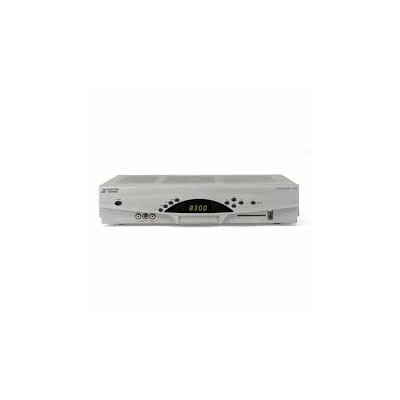
  • TRAI studying concerns of service providers about inter-operability of set top boxes for cable television

    TRAI studying concerns of service providers about inter-operability of set top boxes for cable television

    NEW DELHI: Some service providers have raised concerns about feasibility of technical interoperability of set top boxes to the Telecom Regulatory Authority of India.

    TRAI, which is considering interoperability to enable consumers to switch to other service providers if they are not satisfied, says the objections relate to technical and commercial reasons. TRAI sources said the regulator is currently in a consultative process to understand their concerns before arriving at a solution.The objective of STB inter-operability is to make available STBs in open market, which will provide an exit option to the consumers who want to change their service providers due to some reasons or the other.This is expected to facilitate competition and improve quality of services offered to the consumers TRAI feels.

    The regulatory framework of TRAI mandates the commercial interoperability by prescribing that the STBs/Customer Premises Equipments (CPE) to be provided on outright purchase basis, hire purchase basis and rental basis.

    TRAI has also notified Tariff orders for Digital Addressable Cable TV Systems which prescribes a standard tariff package for offering of STBs to the subscribers. This tariff order provides an easy exit option to the subscribers and ensures availability of STBs at reasonable price while protecting the interest of the service providers.

    Similarly for DTH services, TRAI has prescribed a tariff order which prescribes certain restrictions on the DTH operators offering schemes of Customer Premises Equipment. The tariff order for DTH services – the Telecommunication (Broadcasting and Cable) Services (Seventh) (the Direct to Home Services) Tariff Order 2015 of 1 April last year – has been challenged and is sub judice.

  • Fifteen cases for extension of Phase III DAS, Rathore says digitization nearly over in most parts

    Fifteen cases for extension of Phase III DAS, Rathore says digitization nearly over in most parts

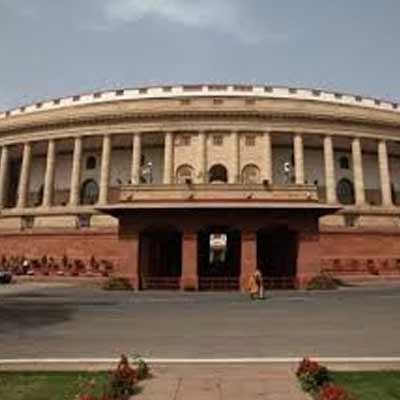
    New Delhi: Parliament was told today that cases had been filed or were still pending in around fifteen cities or states seeking extension of the deadline of 31 December 2015 on the ground of shortage of set top boxes with regard to Phase III of Digitization Addressable System.

    Minister of State for Information and Broadcasting Rajyavardhan Rathore told the Rajya Sabha that courts in these places had either granted extension of two months or dismissed the petitions with the directions not to disconnect the cable TV network operated by the petitioners and allowed them to operate in analogue system for two to three months  

    These included Andhra Pradesh, Telangana, Nashik, Orissa, Chandigarh, Allahabad, Indore, Kerala, Chhattisgarh, Jaipur, Karnataka, Guwahati, Kolkata and Shimla etc.

    In its order, the Bombay high court had said: “Since the Andhra Pradesh high court and Sikkim high court have passed an order of status quo, in view of the observations made by the apex court in the case Kusum Ingots & Alloys Ltd. Vs. Union of India [(2004) 6 Supreme Court Cases 254] and more particularly, paragraph 22 of the said order, the question of grant of interim order does not arise in this case.”

    The Hyderabad high court in the Telangana and Andhra Pradesh cases further extended the stay for 4 weeks beyond 29 February.

    The minister said that the Government was defending all the cases and had also filed a transfer petition in the Supreme Court.

    Meanwhile, Rathore said digitization has almost been completed in the states of Arunachal Pradesh, Assam, Meghalaya, Bihar, Goa, Gujarat, Haryana, Himachal Pradesh, Kerala, Karnataka, Jammu & Kashmir, Maharashtra, Nagaland, Punjab, Sikkim, Uttrakhand, West Bengal and Andaman & Nicobar according to information received from stakeholders.

    The data provided by the multi system operators (MSOs), direct to home (DTH) and HITS operators shows that digitisation in Andhra Pradesh, Jharkhand, Chhattisgarh, Odisha, Rajasthan, Uttar Pradesh, and Dadra and Nagar Haveli is nearing completion. In other states and Union Territories it is yet to be fully achieved.

    He said that public awareness campaigns were launched in print and electronic media to ensure timely completion.

    Since involvement of state governments was crucial for the implementation of digitization, 13 orientation workshops for state and district level nodal officers were held at both central and regional levels. Twelve regional units were established for coordination. Toll free helpline was made operational. A management information system (MIS) was developed wherein MSOs, DTH and HITS operators were entering the details of area wise seeding of STBs at least once a week.

    A total of 727 MSOs had been issued registration till 21 February and regular monitoring of progress was made.

    Referring to earlier phases, he said it had been completed in Delhi, Kolkata, and Mumbai had been completed on 31 October 2012, except in Chennai since some court cases are pending there.

    Phase-II of the cable TV digitization which covered 38 cities having the population more than 10 lakh has been completed by 31 March 2013 except in Coimbatore where some court cases are pending.

  • Fifteen cases for extension of Phase III DAS, Rathore says digitization nearly over in most parts

    Fifteen cases for extension of Phase III DAS, Rathore says digitization nearly over in most parts

    New Delhi: Parliament was told today that cases had been filed or were still pending in around fifteen cities or states seeking extension of the deadline of 31 December 2015 on the ground of shortage of set top boxes with regard to Phase III of Digitization Addressable System.

    Minister of State for Information and Broadcasting Rajyavardhan Rathore told the Rajya Sabha that courts in these places had either granted extension of two months or dismissed the petitions with the directions not to disconnect the cable TV network operated by the petitioners and allowed them to operate in analogue system for two to three months  

    These included Andhra Pradesh, Telangana, Nashik, Orissa, Chandigarh, Allahabad, Indore, Kerala, Chhattisgarh, Jaipur, Karnataka, Guwahati, Kolkata and Shimla etc.

    In its order, the Bombay high court had said: “Since the Andhra Pradesh high court and Sikkim high court have passed an order of status quo, in view of the observations made by the apex court in the case Kusum Ingots & Alloys Ltd. Vs. Union of India [(2004) 6 Supreme Court Cases 254] and more particularly, paragraph 22 of the said order, the question of grant of interim order does not arise in this case.”

    The Hyderabad high court in the Telangana and Andhra Pradesh cases further extended the stay for 4 weeks beyond 29 February.

    The minister said that the Government was defending all the cases and had also filed a transfer petition in the Supreme Court.

    Meanwhile, Rathore said digitization has almost been completed in the states of Arunachal Pradesh, Assam, Meghalaya, Bihar, Goa, Gujarat, Haryana, Himachal Pradesh, Kerala, Karnataka, Jammu & Kashmir, Maharashtra, Nagaland, Punjab, Sikkim, Uttrakhand, West Bengal and Andaman & Nicobar according to information received from stakeholders.

    The data provided by the multi system operators (MSOs), direct to home (DTH) and HITS operators shows that digitisation in Andhra Pradesh, Jharkhand, Chhattisgarh, Odisha, Rajasthan, Uttar Pradesh, and Dadra and Nagar Haveli is nearing completion. In other states and Union Territories it is yet to be fully achieved.

    He said that public awareness campaigns were launched in print and electronic media to ensure timely completion.

    Since involvement of state governments was crucial for the implementation of digitization, 13 orientation workshops for state and district level nodal officers were held at both central and regional levels. Twelve regional units were established for coordination. Toll free helpline was made operational. A management information system (MIS) was developed wherein MSOs, DTH and HITS operators were entering the details of area wise seeding of STBs at least once a week.

    A total of 727 MSOs had been issued registration till 21 February and regular monitoring of progress was made.

    Referring to earlier phases, he said it had been completed in Delhi, Kolkata, and Mumbai had been completed on 31 October 2012, except in Chennai since some court cases are pending there.

    Phase-II of the cable TV digitization which covered 38 cities having the population more than 10 lakh has been completed by 31 March 2013 except in Coimbatore where some court cases are pending.

  • FCC commissioner Tom Wheeler proposes universal TV set-top-box

    FCC commissioner Tom Wheeler proposes universal TV set-top-box

    MUMBAI: In an attempt to overhaul the rules for television, tear down anti-competitive barriers and pave the way for software, devices and other innovative solutions to compete with set-top boxes (STBs), the Federal Communications Commission (FCC) has proposed universal STBs for television, which would allow consumers to view traditional cable and streaming video content on television.


    Wheeler is targeting a vote on 18 February by the five-member FCC on a proposal to overhaul the rules for STBs, which connect to cable, satellite and fiberoptic video systems.


    The proposed regulation would let customers get video services from providers instead of cable, satellite and other television providers.


    “Ninety-nine per cent of pay-TV subscribers are chained to their set-top boxes because cable and satellite operators have locked up the market,” the FCC said.


    According to the FCC, Americans spent $20 billion a year to lease pay-TV boxes, or an average of $231 a year. STB rental fees have jumped 185 per cent since 1994, while the cost of TVs, computers and mobile phones have dropped by 90 per cent.


    Recognising the importance of a competitive marketplace, the Congress directed the Commission to adopt rules that will ensure consumers will be able to use the device they prefer for accessing programming they’ve paid for.


    The FCC said that the only change it was proposing was to allow consumers alternative means of accessing the content they pay for.


    Wheeler’s proposal will create a framework for providing innovators, device manufacturers and app developers the information they need to develop new technologies. Consumers should be able to choose how they access the Multichannel Video Programming Distributor’s (MVPDs) – cable, satellite or telco companies – video services to which they subscribe.


    “A competitive marketplace is required by a 1996 law. Set-top boxes should be open to pay-TV rivals using formats that conform to specifications set by an independent, open standards body,” the FCC said.


    The proposal will help promote interoperability and remove barriers to innovation, prevent theft and misuse, lift up independent and minority programming content, honour the sanctity of contracts by providing copyright protection,  provide consumer protection by offering emergency alerts, privacy and advertising restrictions.


    It will also offer consumers more choice, greater flexibility, increased innovation, more competition and better prices.


    While the proposal has been welcomed by some, others have pooh-poohed it.


    “The promising slate of reforms proposed by (the chairman) could potentially allow consumers greater access to the content that they pay for, granting greater control over when, where, and how they want to access it, on the device they choose, without being locked into constant, unnecessary fees and excruciating installation and repair appointments,” said National Hispanic Media Coalition vice president of policy Michael Scurato.


    RLJ Entertainment chairman and Black Entertainment Television chairman Robert L. Johnson also came out in support of FCC’s proposal.


    Johnson said, “In my opinion, this is the best decision that the FCC has made to increase minority diversity in media content distribution since the Commission championed the tax certificate, which allowed for the increase in minority ownership of media properties. I am also very pleased that after speaking with several Members of the Congressional Black Caucus, the Caucus has agreed to a meeting to hear my position on this matter.”


    “If you have a good program idea, some financing and access to the Internet, you can find your audience. But your audience can only find you if they have a modem or a set-top box or software that lets them know you are there and gives them access to your programs unconstrained by the network gatekeeper,” he added.


    However, a coalition of pay-TV provider called Future of TV Coalition comprising the National Cable & Telecommunications Association, American Cable Association, Motion Picture Association of America and others, which has been formed to oppose the ‘AllVid’ proposal, said the proposed regulation will not provide new programming to customers or lower their television bills.


    In a statement, the Future of TV Coalition said, “The FCC proposal, as best anyone can understand it, still strips out all the tools that are used to honour license agreements, would increase consumer costs by mandating yet a second box inside the home and thus ignores the trends away from in-home boxes and devices, eliminates security protections and provides no reassurance on privacy rights.”


    TV One CEO Alfred Liggins and Future of TV Coalition co-chair added, “The ‘AllVid’ proposal is a brazen money grab by the Big Tech companies that would do severe damage to the programming ecosystem, and in particular, niche and minority-focused networks.”

  • FCC commissioner Tom Wheeler proposes universal TV set-top-box

    FCC commissioner Tom Wheeler proposes universal TV set-top-box

    MUMBAI: In an attempt to overhaul the rules for television, tear down anti-competitive barriers and pave the way for software, devices and other innovative solutions to compete with set-top boxes (STBs), the Federal Communications Commission (FCC) has proposed universal STBs for television, which would allow consumers to view traditional cable and streaming video content on television.


    Wheeler is targeting a vote on 18 February by the five-member FCC on a proposal to overhaul the rules for STBs, which connect to cable, satellite and fiberoptic video systems.


    The proposed regulation would let customers get video services from providers instead of cable, satellite and other television providers.


    “Ninety-nine per cent of pay-TV subscribers are chained to their set-top boxes because cable and satellite operators have locked up the market,” the FCC said.


    According to the FCC, Americans spent $20 billion a year to lease pay-TV boxes, or an average of $231 a year. STB rental fees have jumped 185 per cent since 1994, while the cost of TVs, computers and mobile phones have dropped by 90 per cent.


    Recognising the importance of a competitive marketplace, the Congress directed the Commission to adopt rules that will ensure consumers will be able to use the device they prefer for accessing programming they’ve paid for.


    The FCC said that the only change it was proposing was to allow consumers alternative means of accessing the content they pay for.


    Wheeler’s proposal will create a framework for providing innovators, device manufacturers and app developers the information they need to develop new technologies. Consumers should be able to choose how they access the Multichannel Video Programming Distributor’s (MVPDs) – cable, satellite or telco companies – video services to which they subscribe.


    “A competitive marketplace is required by a 1996 law. Set-top boxes should be open to pay-TV rivals using formats that conform to specifications set by an independent, open standards body,” the FCC said.


    The proposal will help promote interoperability and remove barriers to innovation, prevent theft and misuse, lift up independent and minority programming content, honour the sanctity of contracts by providing copyright protection,  provide consumer protection by offering emergency alerts, privacy and advertising restrictions.


    It will also offer consumers more choice, greater flexibility, increased innovation, more competition and better prices.


    While the proposal has been welcomed by some, others have pooh-poohed it.


    “The promising slate of reforms proposed by (the chairman) could potentially allow consumers greater access to the content that they pay for, granting greater control over when, where, and how they want to access it, on the device they choose, without being locked into constant, unnecessary fees and excruciating installation and repair appointments,” said National Hispanic Media Coalition vice president of policy Michael Scurato.


    RLJ Entertainment chairman and Black Entertainment Television chairman Robert L. Johnson also came out in support of FCC’s proposal.


    Johnson said, “In my opinion, this is the best decision that the FCC has made to increase minority diversity in media content distribution since the Commission championed the tax certificate, which allowed for the increase in minority ownership of media properties. I am also very pleased that after speaking with several Members of the Congressional Black Caucus, the Caucus has agreed to a meeting to hear my position on this matter.”


    “If you have a good program idea, some financing and access to the Internet, you can find your audience. But your audience can only find you if they have a modem or a set-top box or software that lets them know you are there and gives them access to your programs unconstrained by the network gatekeeper,” he added.


    However, a coalition of pay-TV provider called Future of TV Coalition comprising the National Cable & Telecommunications Association, American Cable Association, Motion Picture Association of America and others, which has been formed to oppose the ‘AllVid’ proposal, said the proposed regulation will not provide new programming to customers or lower their television bills.


    In a statement, the Future of TV Coalition said, “The FCC proposal, as best anyone can understand it, still strips out all the tools that are used to honour license agreements, would increase consumer costs by mandating yet a second box inside the home and thus ignores the trends away from in-home boxes and devices, eliminates security protections and provides no reassurance on privacy rights.”


    TV One CEO Alfred Liggins and Future of TV Coalition co-chair added, “The ‘AllVid’ proposal is a brazen money grab by the Big Tech companies that would do severe damage to the programming ecosystem, and in particular, niche and minority-focused networks.”

  • FICCI demands infrastructure status for broadcast industry in pre-budget memo

    FICCI demands infrastructure status for broadcast industry in pre-budget memo

    NEW DELHI: The Indian broadcast, cable and direct-to-home (DTH) sectors have been demanding a infrastructure status for the industry as well as seeking all benefits and incentives available for the infrastructure industry including the availability of finance at a concessional rate.


    To this effect, the Indian Broadcasting Foundation (IBF) had earlier this month urged the Union Government to grant “Infrastructure Status” to the broadcasting industry.


    Now, making this demand, the Entertainment Wing of FICCI has said in a pre-budget memorandum to Finance Minister Arun Jaitley that the sector should be allowed tax concessions as per Section 80-IA of the Income Tax Act.


    The digitisation process and the deployment of set top boxes (STBs) are heavy capital oriented and thus require huge investments, which may force various amalgamations and thus they should be allowed to set off accumulated losses and unabsorbed depreciation allowances to be carried forward as per Section 72 A of the Act, the industry body said.


    Parity with Manufacturing Industry under Section 72A of the Act


    It also said that the disparity between the service and the manufacturing sector is very adversely affecting the growth and consolidation of the Service sector.


    The tax benefits under Section 72A of the Act in respect of amalgamation or de-merger (carry forward and set off of accumulated loss and unabsorbed depreciation allowances) are currently limited to industrial undertakings or a ship, hotel, aircraft or banking. The definition of industrial undertaking should be widened to include service industry, broadcasters and content production companies.


    Rationalisation of Indirect taxes


    The rate of taxes, which range from 30 – 70 per cent, especially the entertainment tax imposed by the states, over and above the service tax, are punitive in nature, FICCI said, adding that such punitive level of taxation incentivises unhealthy practices, such as piracy, revenue leakage on account of under reporting of revenues, etc. It is important that the overall taxation level is brought down for the sector as a whole.


    State Entertainment tax legislations levy high taxes on the subscription earned by cable operators and DTH operators. The non-availability of credit of central taxes against the state taxes and vice versa increases the tax burden on the entertainment industry. In addition to this, the Central Government has levied service tax at 14 per cent on the transfer of copyrights, which is already being taxed as ‘goods’ under the various state VAT legislations.


    Payment for Content Production


    FICCI said there is ambiguity since the tax authorities have been adopting a view that the payment towards production of content is in the nature of fees for technical services and subject to tax at the rate of 10 per cent under section 194J of the Act whereas Explanation III to section 194C of the Act clarifies that payments made towards a contract, concerning broadcasting and telecasting including production of programmes for such broadcasting or telecasting, would fall under the definition of ‘work’ for the purpose of section 194C of the Act.


    It suggested that to avoid difference in positions adopted by the tax payer and tax department on applicability of relevant section and to mitigate resultant litigation and hardship, a clarification may be issued regarding appropriate classification of content production services and applicability of relevant section for withholding of taxes.


    Carriage Fees/Placement Charges


    FICCI has demanded that the Government should provide a clarification that the payments made towards carriage fees are not in the nature of royalty or fees for technical services and TDS is required to be made on such payments as per section 194C of the Act.


    It said that the tax department is contending that since cable operators are providing technical services, payments made towards placement of channels is subject to TDS under section 194J of the Act.


    Broadcasters pay placement or carriage fee to the cable and DTH operators to place their channel in prime bands, which in turn enhances the viewership of the channel. Such charges are paid under a contract merely for placing the channel on agreed frequency bands.


    Deduction of tax at source under Section 194H on the “15% agency commission”


    FICCI recommended a clarification that no taxes need to be deducted at source by broadcasters on the “15 per cent agency commission” as mentioned in the invoice raised by broadcasters to advertisement agency or advertisers.


    FICCI said the 15 per cent agency commission mentioned by broadcasters in its invoices for ad airtime sale raised on ad agency or advertisers is merely a presentation in the invoices and not a real transaction. Neither the broadcasters nor ad agency recognises the same as revenue or expense. It is customary in nature, as is also evident from the fact that even on the invoices raised directly on advertisers; the said 15 per cent agency commission appears.


    Broadcasters are not supposed to make any payments towards 15 per cent agency commission mentioned in the invoice, as there is no agreement or arrangement to pay such the commission with ad agencies or advertisers. In fact, broadcasters do not make any payment in respect of the said commission mentioned on the invoices.


    At the outset, FICCI said that the Indian media and entertainment industry grew from Rs 918 billion in 2013 to Rs 1026 billion in 2014, registering an overall growth of 11.7 per cent. The industry is estimated to achieve a growth rate of 13 per cent in 2015 to touch Rs 1159 billion. The sector is projected to grow at a healthy CAGR of 13.9 per cent to reach Rs 1964 billion by 2019.


    As per FICCI, television clearly continues to be the dominant segment but strong growth had been posted by new media sectors. Gaming and digital advertising recorded a strong growth of 22.4 per cent and 44.5 per cent compared to the previous year.


    The benefits of Phase I and II of cable digital addressable system (DAS) rollout, and continued Phase III rollout are expected to contribute significantly to strong continued growth in the TV sector revenues and its ability to invest in and monetise content. The sector is expected to grow at a CAGR of 15.5 per cent over the period 2015-2019.


    Tax Exemptions for Radio Broadcasting


    While noting that radio is anticipated to see a spurt in growth after rollout of FM Phase III licensing, FICCI asked the Government to consider providing tax holiday of five years for new capital investment in Phase III; reduce customs duty on capital equipment for radio broadcasting to four per cent; and consider service tax exemption for billings to service recipients covered in the negative list.


    Tax Holiday for five years for setting up of new screens


    Noting that the film sector had shown a minimal growth of 0.9 per cent in 2014 over 2013, FICCI said there had been an increase in piracy, since the number of screens for viewing films had not increased in proportion to the increase in number of films and the number of people viewing these films.


    FICCI said that it was essential to extend the benefit to cinema owners in terms of 80-IB of the Act to multiplexes constructed after March 2005 to encourage the set-up of multiplexes and thereby improve the density of cinema houses in the country. This will encourage setting up of new screens in India and help in improving screen density.


    Reduction of prescribed time limit under Rule 9A and 9B


    FICCI suggested that the existing period of 90 days before end of the financial year (under Rule 9A and 9B of IT Rules) is suitably reduced to grant relief to assessees whose feature films have incurred losses and have been released for exhibition in the last quarter of the financial year.


    Under Rule 9A of the Income Tax Rules, if a film producer sells all rights of exhibition of his feature film, the entire cost of production is allowed as a deduction in computing the profits and gains of such previous year.


    However, if the film producer does not sell all rights of exhibition of his film, it is released for exhibition on a commercial basis at least 90 days before end of the financial year and the film producer is eligible to claim deduction of the entire cost of production. Otherwise, a feature film is released for exhibition on a commercial basis within a period 90 days before end of the financial year and the producer is eligible to claim deduction of cost of production only up to a ceiling limit and any excess cost of production is carried forward to the next financial year. This ceiling limit is the amount of revenues generated by the feature film in the financial year.


    In certain cases where not all rights of exhibition of a feature film are sold and it is released for exhibition on a commercial basis within 90 days before end of the financial year, the feature film performs poorly and it is exhibited only for a short duration. Consequently, the film producer may not recover costs. In such cases in view of the prevailing IT Rules, the film producers are unable to claim a deduction of entire production cost and, the loss is to be carried forward to the next financial year. Accordingly, such film producers are unable to claim losses in the year the feature film is released for exhibition despite no further scope of income. A similar situation exists in the case of expenditure of distribution rights in view of Rule 9B of IT Rules.


    Exemption of Service Tax on major inputs/input services


    FICCI recommended that major inputs / input services that are used in relation to theatrical rights in movies, be exempted from service tax. Since the major inputs/input services used in relation to revenue earned from theatrical rights are taxable, the CENVAT credit of service tax paid on such inputs/input services is blocked in the supply chain due to applicability of CCR. Eventually such taxes result in increase of the cost of production thereby defeating the purpose of providing an exemption on the output service.


    Re-instatement of the Service Tax exemption on Transmission of digital cinema


    FICCI also recommended reinstating the exemption to digital cinema service distributors, as it existed earlier under notification 12/2007 ST of 1 March, 2007, which had been rescinded with the introduction of the negative list.


    Service tax on transmission of digital cinema is a direct cost to the producers since the same is in relation to theatrical exhibition of cinematograph film (which is an exempt service with effect from 1 April, 2013) and hence no credit can be availed of such service tax.


    Clarity on export status of post-production services


    FICCI asked for clarity on the inclusion of post-production activities in the exclusion to this Rule. Alternatively, the second proviso to the Rule 4(a) of the POPS Rules be re-worded.


    Given the various technological advances in the Indian film industry, many Indian entities are hired by foreign producers for carrying post production activity. For such activities, the content is temporarily imported into India (either physically or electronically) and re-exported after completion of service. Post-production activities, which may be performed in India, do not find explicit mention in the proviso that carves out exceptions to the performance based rule in POPS Rules.


    Service Tax exemption to on-screen advertising in cinemas


    The industry body said on-screen advertising in cinemas and multiplexes should be exempted from levy of service tax.


    After 1 October, 2014, the negative list of services was amended and on-screen advertising within cinemas is liable to service tax.


    The on-screen advertising within cinemas caters to advertisers with small businesses, with limited resources. For large advertisers, on-screen advertising is a secondary medium of advertising at best and they have a small contribution to onscreen advertising within cinemas. The on-screen advertising forms an important source of revenue for the exhibitors, which are already reeling under the pressure of multiple taxes. Re-instatement of service tax on such revenue will only increase their tax burden.


    Applicability of Service Tax on food and beverages sold within Cinemas


    The food and beverages (F&B) sold in theatres during movies are subject to VAT under local state laws and the same is paid by the exhibitors. But with effect from 1 April, 2011, restaurant services became taxable whereby services rendered by any air-conditioned restaurant serving alcohol were made liable to service tax and later with effect from 2013 the condition of serving alcohol was withdrawn. However, it is still not clear whether the sale of F&B by cinema halls and multiplexes is covered in this service.


    Unlike restaurants, there is no seating arrangement, no cutlery is provided and no waiter serves F&B and hence there is no element of service involved in any meaningful manner.


    FICCI said levy of service tax is intended on “restaurants” rendering certain services and is not intended on sale of food, beverage and snacks from candy counters in cinema theatres.


    Service Tax exemption on entry to award functions, musical performance etc.


    The Union Budget of 2015 had amended the negative list of services and effectively withdrawn the unconditional service tax exemption, which was granted to tickets for award functions, music events, sports events etc. With effect from June 2015, service tax is payable when the consideration for admission to entertainment events such as award function, concert, pageant, sporting event etc. is more than Rs 500 per person.


    However, FICCI said payment for admission to any event is already liable to a high state entertainment tax and levying of a service tax of 14 per cent over and above the high rates of entertainment imposes a high burden on the entertainment sector.


    The industry body asked for a clarification to specify that the value of ticket for the purpose of levy of service tax on such admission (where the ticket price is more than Rs 500) should be the value excluding Entertainment tax. It also wanted clarification on if service tax is payable, the same should be computed on a value exclusive of Entertainment tax and accordingly no service tax should apply on entertainment tax amount.


    Customs Duty exemption on film equipment under the ATA Carnet


    The ATA Carnet permits duty free temporary admission of goods into a member country. The list of exempted products covers filming equipment too. However, there is no Customs Notification in order to exempt the import of filming equipment from the levy of Customs Duty, on the lines of the ATA Carnet.


    FICCI recommended that Customs Duty should be exempted on film equipment under ATA Carnet. The film production equipment is very expensive and not easily available in all countries because of which the film producers are compelled to temporarily import the same on lease for the purpose of producing the film. In absence of a customs notification to exempt filming equipment, the ATA Carnet duty exemption benefit cannot be extended to import of filming equipment.

    These imports significantly increase the burden of tax on the film producers.


    Proposals for Animation, Gaming and VFX Industries


    FICCI also made some recommendations for the Animation, Gaming & Visual Effects (VFX) industries.


    It asked for a 10-year tax holiday for the Animation, Gaming, and VFX industries; and removal of withholding tax on revenues accruing from sales of mobile games in non-India markets as well as removal of withholding tax on the development contracts given to mobile game developers outside India.


    FICCI also asked for removal of withholding tax paid by expats working in India for Indian mobile game development companies.


    The Minimum Alternate Tax (MAT) applicability for units undertaking animation work in SEZ should be withdrawn to encourage export of animated contents.


    The industry body wanted restoration of STPI advantage scheme for AVGC or ITES for another 10 to 20 years and cover/encourage exports as well as IP creation.


    To promote domestic gaming market, excise duty on local manufacture should be brought down to nil (similar to film and music industry). This will enable CVD to be brought to zero also. The effective reduction in taxes would be around 15 per cent. Import duty on consoles (gaming hardware) to be brought down to zero per cent to increase the installed base to enable the local developer ecosystem to flourish.


    There should be a provision of 50 per cent reimbursable MDA (Market Development Assistance) for travel and registration fees to international market events.


    The Government should extend support under Market Development Assistance (MDA) activity for Indian companies to exhibit by setting Indian Pavilions in the world markets. What is needed is to help bringing local production companies to international markets, collect and disseminate information and support creating the infrastructure needed for a healthy media market to develop.

  • FICCI demands infrastructure status for broadcast industry in pre-budget memo

    FICCI demands infrastructure status for broadcast industry in pre-budget memo

    NEW DELHI: The Indian broadcast, cable and direct-to-home (DTH) sectors have been demanding a infrastructure status for the industry as well as seeking all benefits and incentives available for the infrastructure industry including the availability of finance at a concessional rate.


    To this effect, the Indian Broadcasting Foundation (IBF) had earlier this month urged the Union Government to grant “Infrastructure Status” to the broadcasting industry.


    Now, making this demand, the Entertainment Wing of FICCI has said in a pre-budget memorandum to Finance Minister Arun Jaitley that the sector should be allowed tax concessions as per Section 80-IA of the Income Tax Act.


    The digitisation process and the deployment of set top boxes (STBs) are heavy capital oriented and thus require huge investments, which may force various amalgamations and thus they should be allowed to set off accumulated losses and unabsorbed depreciation allowances to be carried forward as per Section 72 A of the Act, the industry body said.


    Parity with Manufacturing Industry under Section 72A of the Act


    It also said that the disparity between the service and the manufacturing sector is very adversely affecting the growth and consolidation of the Service sector.


    The tax benefits under Section 72A of the Act in respect of amalgamation or de-merger (carry forward and set off of accumulated loss and unabsorbed depreciation allowances) are currently limited to industrial undertakings or a ship, hotel, aircraft or banking. The definition of industrial undertaking should be widened to include service industry, broadcasters and content production companies.


    Rationalisation of Indirect taxes


    The rate of taxes, which range from 30 – 70 per cent, especially the entertainment tax imposed by the states, over and above the service tax, are punitive in nature, FICCI said, adding that such punitive level of taxation incentivises unhealthy practices, such as piracy, revenue leakage on account of under reporting of revenues, etc. It is important that the overall taxation level is brought down for the sector as a whole.


    State Entertainment tax legislations levy high taxes on the subscription earned by cable operators and DTH operators. The non-availability of credit of central taxes against the state taxes and vice versa increases the tax burden on the entertainment industry. In addition to this, the Central Government has levied service tax at 14 per cent on the transfer of copyrights, which is already being taxed as ‘goods’ under the various state VAT legislations.


    Payment for Content Production


    FICCI said there is ambiguity since the tax authorities have been adopting a view that the payment towards production of content is in the nature of fees for technical services and subject to tax at the rate of 10 per cent under section 194J of the Act whereas Explanation III to section 194C of the Act clarifies that payments made towards a contract, concerning broadcasting and telecasting including production of programmes for such broadcasting or telecasting, would fall under the definition of ‘work’ for the purpose of section 194C of the Act.


    It suggested that to avoid difference in positions adopted by the tax payer and tax department on applicability of relevant section and to mitigate resultant litigation and hardship, a clarification may be issued regarding appropriate classification of content production services and applicability of relevant section for withholding of taxes.


    Carriage Fees/Placement Charges


    FICCI has demanded that the Government should provide a clarification that the payments made towards carriage fees are not in the nature of royalty or fees for technical services and TDS is required to be made on such payments as per section 194C of the Act.


    It said that the tax department is contending that since cable operators are providing technical services, payments made towards placement of channels is subject to TDS under section 194J of the Act.


    Broadcasters pay placement or carriage fee to the cable and DTH operators to place their channel in prime bands, which in turn enhances the viewership of the channel. Such charges are paid under a contract merely for placing the channel on agreed frequency bands.


    Deduction of tax at source under Section 194H on the “15% agency commission”


    FICCI recommended a clarification that no taxes need to be deducted at source by broadcasters on the “15 per cent agency commission” as mentioned in the invoice raised by broadcasters to advertisement agency or advertisers.


    FICCI said the 15 per cent agency commission mentioned by broadcasters in its invoices for ad airtime sale raised on ad agency or advertisers is merely a presentation in the invoices and not a real transaction. Neither the broadcasters nor ad agency recognises the same as revenue or expense. It is customary in nature, as is also evident from the fact that even on the invoices raised directly on advertisers; the said 15 per cent agency commission appears.


    Broadcasters are not supposed to make any payments towards 15 per cent agency commission mentioned in the invoice, as there is no agreement or arrangement to pay such the commission with ad agencies or advertisers. In fact, broadcasters do not make any payment in respect of the said commission mentioned on the invoices.


    At the outset, FICCI said that the Indian media and entertainment industry grew from Rs 918 billion in 2013 to Rs 1026 billion in 2014, registering an overall growth of 11.7 per cent. The industry is estimated to achieve a growth rate of 13 per cent in 2015 to touch Rs 1159 billion. The sector is projected to grow at a healthy CAGR of 13.9 per cent to reach Rs 1964 billion by 2019.


    As per FICCI, television clearly continues to be the dominant segment but strong growth had been posted by new media sectors. Gaming and digital advertising recorded a strong growth of 22.4 per cent and 44.5 per cent compared to the previous year.


    The benefits of Phase I and II of cable digital addressable system (DAS) rollout, and continued Phase III rollout are expected to contribute significantly to strong continued growth in the TV sector revenues and its ability to invest in and monetise content. The sector is expected to grow at a CAGR of 15.5 per cent over the period 2015-2019.


    Tax Exemptions for Radio Broadcasting


    While noting that radio is anticipated to see a spurt in growth after rollout of FM Phase III licensing, FICCI asked the Government to consider providing tax holiday of five years for new capital investment in Phase III; reduce customs duty on capital equipment for radio broadcasting to four per cent; and consider service tax exemption for billings to service recipients covered in the negative list.


    Tax Holiday for five years for setting up of new screens


    Noting that the film sector had shown a minimal growth of 0.9 per cent in 2014 over 2013, FICCI said there had been an increase in piracy, since the number of screens for viewing films had not increased in proportion to the increase in number of films and the number of people viewing these films.


    FICCI said that it was essential to extend the benefit to cinema owners in terms of 80-IB of the Act to multiplexes constructed after March 2005 to encourage the set-up of multiplexes and thereby improve the density of cinema houses in the country. This will encourage setting up of new screens in India and help in improving screen density.


    Reduction of prescribed time limit under Rule 9A and 9B


    FICCI suggested that the existing period of 90 days before end of the financial year (under Rule 9A and 9B of IT Rules) is suitably reduced to grant relief to assessees whose feature films have incurred losses and have been released for exhibition in the last quarter of the financial year.


    Under Rule 9A of the Income Tax Rules, if a film producer sells all rights of exhibition of his feature film, the entire cost of production is allowed as a deduction in computing the profits and gains of such previous year.


    However, if the film producer does not sell all rights of exhibition of his film, it is released for exhibition on a commercial basis at least 90 days before end of the financial year and the film producer is eligible to claim deduction of the entire cost of production. Otherwise, a feature film is released for exhibition on a commercial basis within a period 90 days before end of the financial year and the producer is eligible to claim deduction of cost of production only up to a ceiling limit and any excess cost of production is carried forward to the next financial year. This ceiling limit is the amount of revenues generated by the feature film in the financial year.


    In certain cases where not all rights of exhibition of a feature film are sold and it is released for exhibition on a commercial basis within 90 days before end of the financial year, the feature film performs poorly and it is exhibited only for a short duration. Consequently, the film producer may not recover costs. In such cases in view of the prevailing IT Rules, the film producers are unable to claim a deduction of entire production cost and, the loss is to be carried forward to the next financial year. Accordingly, such film producers are unable to claim losses in the year the feature film is released for exhibition despite no further scope of income. A similar situation exists in the case of expenditure of distribution rights in view of Rule 9B of IT Rules.


    Exemption of Service Tax on major inputs/input services


    FICCI recommended that major inputs / input services that are used in relation to theatrical rights in movies, be exempted from service tax. Since the major inputs/input services used in relation to revenue earned from theatrical rights are taxable, the CENVAT credit of service tax paid on such inputs/input services is blocked in the supply chain due to applicability of CCR. Eventually such taxes result in increase of the cost of production thereby defeating the purpose of providing an exemption on the output service.


    Re-instatement of the Service Tax exemption on Transmission of digital cinema


    FICCI also recommended reinstating the exemption to digital cinema service distributors, as it existed earlier under notification 12/2007 ST of 1 March, 2007, which had been rescinded with the introduction of the negative list.


    Service tax on transmission of digital cinema is a direct cost to the producers since the same is in relation to theatrical exhibition of cinematograph film (which is an exempt service with effect from 1 April, 2013) and hence no credit can be availed of such service tax.


    Clarity on export status of post-production services


    FICCI asked for clarity on the inclusion of post-production activities in the exclusion to this Rule. Alternatively, the second proviso to the Rule 4(a) of the POPS Rules be re-worded.


    Given the various technological advances in the Indian film industry, many Indian entities are hired by foreign producers for carrying post production activity. For such activities, the content is temporarily imported into India (either physically or electronically) and re-exported after completion of service. Post-production activities, which may be performed in India, do not find explicit mention in the proviso that carves out exceptions to the performance based rule in POPS Rules.


    Service Tax exemption to on-screen advertising in cinemas


    The industry body said on-screen advertising in cinemas and multiplexes should be exempted from levy of service tax.


    After 1 October, 2014, the negative list of services was amended and on-screen advertising within cinemas is liable to service tax.


    The on-screen advertising within cinemas caters to advertisers with small businesses, with limited resources. For large advertisers, on-screen advertising is a secondary medium of advertising at best and they have a small contribution to onscreen advertising within cinemas. The on-screen advertising forms an important source of revenue for the exhibitors, which are already reeling under the pressure of multiple taxes. Re-instatement of service tax on such revenue will only increase their tax burden.


    Applicability of Service Tax on food and beverages sold within Cinemas


    The food and beverages (F&B) sold in theatres during movies are subject to VAT under local state laws and the same is paid by the exhibitors. But with effect from 1 April, 2011, restaurant services became taxable whereby services rendered by any air-conditioned restaurant serving alcohol were made liable to service tax and later with effect from 2013 the condition of serving alcohol was withdrawn. However, it is still not clear whether the sale of F&B by cinema halls and multiplexes is covered in this service.


    Unlike restaurants, there is no seating arrangement, no cutlery is provided and no waiter serves F&B and hence there is no element of service involved in any meaningful manner.


    FICCI said levy of service tax is intended on “restaurants” rendering certain services and is not intended on sale of food, beverage and snacks from candy counters in cinema theatres.


    Service Tax exemption on entry to award functions, musical performance etc.


    The Union Budget of 2015 had amended the negative list of services and effectively withdrawn the unconditional service tax exemption, which was granted to tickets for award functions, music events, sports events etc. With effect from June 2015, service tax is payable when the consideration for admission to entertainment events such as award function, concert, pageant, sporting event etc. is more than Rs 500 per person.


    However, FICCI said payment for admission to any event is already liable to a high state entertainment tax and levying of a service tax of 14 per cent over and above the high rates of entertainment imposes a high burden on the entertainment sector.


    The industry body asked for a clarification to specify that the value of ticket for the purpose of levy of service tax on such admission (where the ticket price is more than Rs 500) should be the value excluding Entertainment tax. It also wanted clarification on if service tax is payable, the same should be computed on a value exclusive of Entertainment tax and accordingly no service tax should apply on entertainment tax amount.


    Customs Duty exemption on film equipment under the ATA Carnet


    The ATA Carnet permits duty free temporary admission of goods into a member country. The list of exempted products covers filming equipment too. However, there is no Customs Notification in order to exempt the import of filming equipment from the levy of Customs Duty, on the lines of the ATA Carnet.


    FICCI recommended that Customs Duty should be exempted on film equipment under ATA Carnet. The film production equipment is very expensive and not easily available in all countries because of which the film producers are compelled to temporarily import the same on lease for the purpose of producing the film. In absence of a customs notification to exempt filming equipment, the ATA Carnet duty exemption benefit cannot be extended to import of filming equipment.

    These imports significantly increase the burden of tax on the film producers.


    Proposals for Animation, Gaming and VFX Industries


    FICCI also made some recommendations for the Animation, Gaming & Visual Effects (VFX) industries.


    It asked for a 10-year tax holiday for the Animation, Gaming, and VFX industries; and removal of withholding tax on revenues accruing from sales of mobile games in non-India markets as well as removal of withholding tax on the development contracts given to mobile game developers outside India.


    FICCI also asked for removal of withholding tax paid by expats working in India for Indian mobile game development companies.


    The Minimum Alternate Tax (MAT) applicability for units undertaking animation work in SEZ should be withdrawn to encourage export of animated contents.


    The industry body wanted restoration of STPI advantage scheme for AVGC or ITES for another 10 to 20 years and cover/encourage exports as well as IP creation.


    To promote domestic gaming market, excise duty on local manufacture should be brought down to nil (similar to film and music industry). This will enable CVD to be brought to zero also. The effective reduction in taxes would be around 15 per cent. Import duty on consoles (gaming hardware) to be brought down to zero per cent to increase the installed base to enable the local developer ecosystem to flourish.


    There should be a provision of 50 per cent reimbursable MDA (Market Development Assistance) for travel and registration fees to international market events.


    The Government should extend support under Market Development Assistance (MDA) activity for Indian companies to exhibit by setting Indian Pavilions in the world markets. What is needed is to help bringing local production companies to international markets, collect and disseminate information and support creating the infrastructure needed for a healthy media market to develop.

  • Despite roadblocks, India attains 48% digital pay-TV penetration in 8 years: MPA

    Despite roadblocks, India attains 48% digital pay-TV penetration in 8 years: MPA

    MUMBAI: Following a blitzkrieg of cable set-top box (STB) deployment, the digitisation process is taking a breather as operators shift focus from deployment to monetisation in order to ensure growth with profitability. 


    As per a recent Media Partners Asia (MPA) report, the pace of India’s pay-TV growth story may appear to be in trouble. However, the report also points out that the process of profitable digitisation typically takes 15-20 years. “In this context, for a market characterised by low average revenue per user (ARPUs), absence of tiering and fragmented last mile cable distribution, India has done well to attain 48 per cent digital pay-TV penetration in eight years,” the report highlights. 


    As the industry consolidates and regroups, the current phase of India’s pay-TV industry offers significant opportunities for value creation across various business segments. The key opportunities and levers, according to MPA are as follows:


    Cable


    Initial STB seeding by cable operators has improved subscriber declarations. Accordingly, with the transition from analog to digital, net ARPUs to multi system operators (MSOs) have grown 10x, to Rs 100 per subscriber per month. However, the current balance sheet position of most MSOs does not justify market expansion. MSOs are therefore compelled to drive operational efficiencies through prepaid services and packages. This helps improve yields from existing digital subscribers. Operators successful in executing such moves will attract refinancing (of existing debt) to expand their consumer offerings with bundled broadband and HD services. Over time, MSOs will also gain more operational control of their networks through majority ownership of joint ventures, and eventually acquire primary points at affordable prices.


    At each stage of cable’s evolution, the operating margin for MSOs will grow multifold. The business will remain capital-intensive but as operators grow to become full-service providers, they hold the potential to generate significant returns on capital employed (RoCE). Cable assets should not just be evaluated on reach and the digital subs base but also on their ability to cross-sell high value services such as HD and broadband. Also important is their effective economic interest in the last mile business. As the approach for MSOs shifts from width to depth, structurally, cable platforms will remain concentrated in the top 50 cities. This could change dramatically, however, with the entry of deep-pocketed players such as Reliance Jio and the growth of Headend-in-the-Sky (HITS) platforms, which seek to digitise rural markets.


    Several international and long-term financial strategics have also been eyeing partnerships with India’s cable and broadband players. This would help expedite capital as well as technical, operational expertise.


    DTH


    Since its inception, the DTH sector has made cumulative investments of Rs 275 billion and has been primarily responsible for driving penetration of digital pay-TV. With a base of more than 41 million active subscribers, DTH is poised to benefit from greater economies of scale. In 2014, the DTH industry reported an average EBITDA of Rs 38 per sub per month, with margins at 16 per cent. Moreover, two of the leading operators, Dish TV and Airtel Digital, have already started generating positive free cash flow (FCF). 


    Over time, MPA expects the DTH industry at large to generate meaningful FCF through: 


    (1) EBITDA margin expansion, as operating leverage starts to play out with subscriber acquisitions in Phase III and Phase IV DAS markets; and 


    (2) The composition of incremental revenue becoming driven more by ARPU growth rather than subscriber volumes. Leading players will be able to self finance future growth as well as consolidate the market, creating significant value in the process.


    Broadcasting


    India’s $3.5 billion broadcast industry remains in a sweet spot. The dual revenue stream of advertising and subscription is expected to benefit from a resurgent economy as well as improved structural dynamics anchored to steady growth in the number of TV households (TVHH) and higher digital pay-TV penetration.


    At 60 per cent TVHH penetration, India continues to add seven million new TV homes each year. In other words, at an average family size of 4.5 members, TV is gaining more than 30 million potential viewers each year. Television will continue to offer the highest reach to advertisers, relative to other media. As a result, advertisements will remain the major revenue stream for broadcasters, while an increase in affiliate sales will help stabilise the business and drive profitability.


    As of end-2014, total affiliate sales for broadcasters reached $1.1 billion, according to MPA. Significantly, 80 per cent of affiliate revenues were derived from digital subscribers (cable DAS + DTH), while India’s digital pay-TV penetration stood at 48 per cent for the same period. Digitisation has therefore improved subscription yields for broadcasters.


    In 2014, an average broadcaster’s yield from digital subscribers stood at Rs 74 per sub per month, against Rs 18 per sub per month from analog. There is therefore upside on affiliate sales, as analog subscribers in Phases III and IV convert to digital.


    Besides leading to greater addressability, digitisation has also improved channel distribution economics by lowering the cost of distribution and allowing multiple modes on content delivery (SD, HD SVoD, TVE etc). Although cable continues to account for more than 80 per cent of the carriage and placement (C&P) market in India, since the roll-out of DAS in 2012, the cable net distribution income (or NDI, which is essentially subscription income minus C&P costs) for broadcasters has grown by 137 per cent, to $218 million. 


    Going forward, the growth of the broadcasting industry will be driven by:


    (1) Expansion in advertising through sub-segmentation and identifying new genres


    (2) An increase in the addressable subscriber base with more digital homes


    (3) Growth in subscription yields: MPA projects total pay-TV channel revenues for broadcasters to grow from $3.5 billion in 2014 to $6.1 billion by 2019, and to $7.9 billion by 2023.


    Based on the relative growth for other markets in Asia- Pacific (ex-China), India is expected to contribute more than one-third of the total channel revenue business in the region by 2023. India’s strategic importance in the region cannot be ignored. For major international networks,

    India already contributes a significant part of their overall APAC business.


    Broadband to sow seeds for new digital assets


    Significant investments are also being made in India’s fixed and wireless broadband infrastructure. This will help boost internet penetration and improve average broadband download speeds. To address the challenge of last mile connectivity, the Department of Telecom (DoT) is considering joining forces with cable MSOs and local cable operators to help boost broadband penetration in smaller cities and towns. The above proposal, if implemented, can open new avenues for cable broadband.


    MSOs have already increased their investments in broadband. As of end-2014, cable broadband subscribers stood at one million, or only 0.3 per cent penetration of total households in the country. However, the entry of new players such as Reliance Jio could dramatically change the fixed broadband landscape. Having recently secured a pan-India MSO license, the company claims to have built the capacity to serve 20 million fiber-to-the-home (FTTH) customers.


    Traditional broadcasters are looking to capitalise on the emerging digital opportunity by investing to create long-term assets. For instance, incumbent broadcasters Zee, Star and Sony have started to aggressively invest in delivering branded OTT services. The belief is that online video consumption will complement the existing linear pay-TV business. Eventually, subscription OTT services will take off as bandwidth costs become more affordable and compelling exclusive content is made available for online audiences. Nonetheless, revenue monetisation will require more scalability, as online video revenues are projected to account for not more than 10 per cent of total video industry revenues over the next decade.

  • TDSAT directs NSTPL to restore signals of cable network on receipt of payments

    TDSAT directs NSTPL to restore signals of cable network on receipt of payments

    NEW DELHI: The Telecom Disputes Settlement and Arbitration Tribunal (TDSAT) has asked Headend in the Sky (HITS) operator Noida Software Technology Park Ltd (NSTPL) to not disconnect signals to Guru Kripa Cable Network subject to the petitioner making certain payments.


    Member Kuldip Singh sitting in the vacation bench admitted the petition by the Cable Network.


    The Tribunal has directed payment of Rs 60,000 within three weeks from today and another payment of Rs 55,000 within three weeks thereafter.


    While the cable network admits dues of Rs 1,13,956, its counsel told the Tribunal that the amount needs to be reconciled since it had made some excess payment earlier.


    The Tribunal directed that NSTPL will file its reply within four weeks and rejoinder if any will be filed within two weeks of receipt of the reply.


    The matter will now go before the Registrar on 12 August for getting the pleadings completed, framing of issues and if the parties concur, taking evidences etc.


    Apart from the payment of the dues, Guru Kripa Cable Network will continue to make payment of the monthly subscription fees on the basis of invoices raised by the NSTPL.


     The payments will be without prejudice to the rights and contentions of the parties.


    The cable network told the Tribunal that some of their Set Top Boxes have been deactivated by NSTPL and they are not receiving all the channels on the other activated STBs. However, NSTPL counsel Joby Varghese made a categorical statement that all the channels are being given for the activated STBs. However, some STBs for which CAFs have not been submitted by the cable network have been disconnected.   


    Varghese stated that these STBs will be activated immediately but the petitioner must supply CAFs for the same, as required by the regulation.


    Cable network counsel Mayank Kshirasagar stated that the CAFs will be supplied within two weeks from today.


    The Tribunal said its order should not come in the way of the parties meeting to reconcile their accounts. The balance dues, found if any, shall be cleared by the network.

  • TRAI asks MSOs to devise rational channel rates for phase III

    TRAI asks MSOs to devise rational channel rates for phase III

    MUMBAI: Close to 61 multi system operators (MSOs) have approached the broadcaster for signing of interconnect agreements. The statistics were revealed at the eighth task force meeting by the Telecom Regulatory Authority of India (TRAI) advisor Sunil Kumar Singhal.


    Of these, according to the report received by Singhal, while the broadcasters have given their replies to the MSOs, the memorandum of understanding (MoU) is yet to be signed. The TRAI through its meetings with the MSOs and broadcasters, has identified four core issues relating to interconnect agreements. These are:


    1. While the MSOs are expressing interest for getting signals from broadcasters, they are being asked for more information, which is taking time. “Now with the intervention of TRAI, broadcasters have formalized their formats and have placed them on their websites so that all MSOs can submit requests at one go and the agreement signed,” informed Singhal.


    2. The distributors of several broadcasters in a state are also MSOs and that has led to conflict of interest with the MSOs. “We have been able to address this by seeking the details of the core team of the broadcasters to be approached for getting the signals and the broadcasters have provided such details also on their websites,” he said.


    3. The third point was related to pending dispute between MSOs in DAS areas which are both old as well as new. “These disputes need to be resolved mutually as TRAI would not intervene in such disputes,” he opined.


    4. There are differences between MSOs and broadcasters on the rate of channels.   “The larger MSOs are in negotiations with broadcasters to finalise the prices and it is indicated that they will be in a position to finalise them by mid June,” he said.


    Meanwhile, TRAI has asked the MSOs to devise means to have rational rates for phase III areas, as the rates for phase I and II cannot be workable in the remaining phases.


    The TRAI advisor also informed the task force meeting that there was confusion between both MSOs and broadcasters which related to the modus operandi for entering into agreements during the transition period.  The TRAI advisor said that the MSOs and broadcasters were business entities who should know how to communicate with each other in order to expedite and facilitate their business interests. The TRAI has asked the stakeholders to not repeat the mistakes of phase I and II by deploying pre-activated STBs.


    The representative of the MSOs, during the meeting said that whatever be the rate declared by broadcasters, TRAI should come out with a non-discriminative clause which should not push packages but allow the channels to be on a-la-carte basis. “We have been insisting on a-la-carte and not bundling of channels and any delay in the implementation of DAS will result in losses to both MSOs and broadcasters,” informed the TRAI advisor.


    According to a MSO representative, the packaging of channels should be monitored by TRAI. “The LCOs should be trained to spread DAS amongst the consumers as they are close to the consumers and can speedup this process,” opined the MSO representative.


    Information and Broadcasting Ministry (I&B) additional secretary JS Mathur, who was also chairing the meeting said that the publicity campaign for the cutoff date for phase III should start now.


    According to Siti Cable Network’s Anil Malhotra, while the target rate of seeding set top boxes (STBs) requires to be around 2 to 3 lakh per day, the present rate of seeding is about 20-30 thousand boxes which is way short and logistic support has to be planned out in order to step-up the pace of seeding.


    During the meeting, a representative from BIS raised the issue of hacking of STBs and said that a request has been received from some broadcasters to strengthen the BIS Standard of STBs.