Tag: set-top-boxes

  • MIB secretary Apurva Chandra visits Tata Play’s technology centre

    MIB secretary Apurva Chandra visits Tata Play’s technology centre

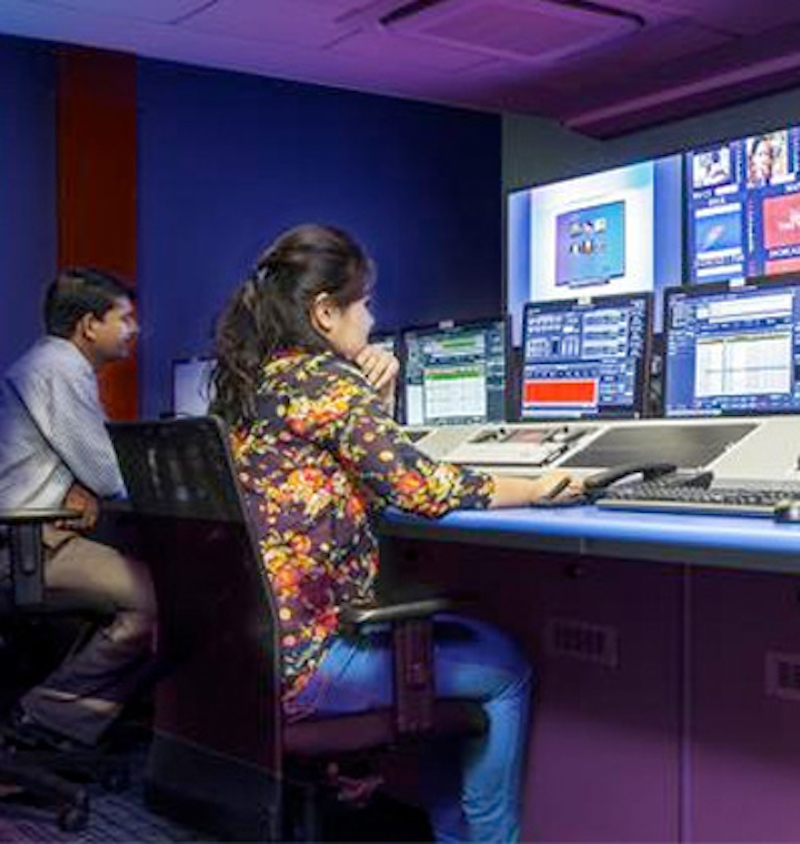
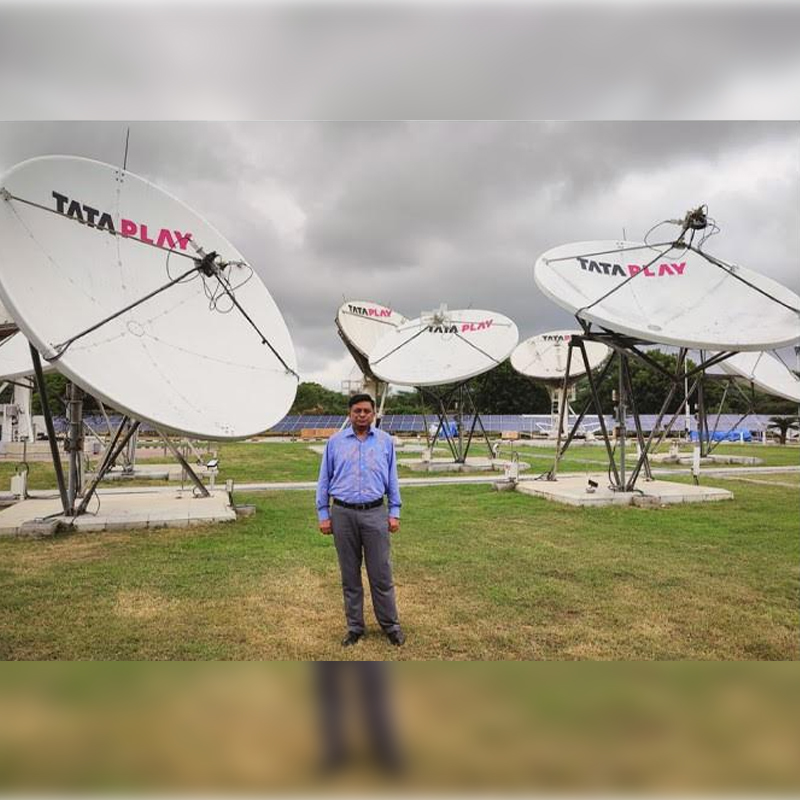
    Mumbai: Ministry Information & Broadcasting (MIB ) secretary Apurva Chandra has visited Tata Play’s technology center in New Delhi to explore how Tata Play is leveraging technology and providing benefits to the end consumers.

    While exploring various ideas about technology that can benefit the customers, Chandra spent a considerable time understanding the complexities of a content distribution platform and steps Tata Play is taking to boost Make in India efforts for manufacturing set-top-boxes.

    During his visit, the Tata Play team demonstrated to Chandra the complete satellite communication and direct-to-home (DTH) delivery workflow and discussed other topics of mutual interest.

    Last year, Tata Play launched the first batch of Make-in-India set-top boxes in association with Technicolor Home and Flextronics. Earlier, Tata Play’s managing director & CEO Harit Nagpal had said that the India made set-top boxes would help generate employment and serve Indian consumers better.

    Tata Play has invested in advanced digital infrastructure and partnered with global leaders to provide superior technology. The company has a pan-India footprint of 23 million connections.

  • TRAI invites stakeholder’s comments on proposed amendments to the interconnection regulation 2017

    TRAI invites stakeholder’s comments on proposed amendments to the interconnection regulation 2017

    Mumbai: The Telecom Regulatory Authority of India (TRAI) has issued a draft consultation paper to bring necessary changes in the Telecommunication (Broadcasting & Cable) services interconnection (Addressable System) Regulation, 2017. 

    Trai notified the interconnection regulation on 3 March 2017 and further its first amendment was notified on 30 October 2019. The first draft of the interconnection regulation was issued on 27 August 2019 and a proposed amendment was initiated to include Digital Rights Management System requirements (DRM).

    What is DRM?

    “DRM is a systematic approach to copyright protection for digital media. The purpose of DRM is to prevent unauthorized redistribution of digital media and restrict the ways consumers can copy content they’ve purchased,” Trai stated in a statement. 

    “DRM products were developed in response to the rapid increase in online piracy of commercially marketed material, which proliferated through the widespread use of peer-to-peer file exchange programs. Typically, DRM is implemented by embedding code that prevents copying, specifies a time period in which the content can be accessed or limits the number of devices the media can be installed on,” it stated.

    The authority also stated in a release that during its consultations, it received numerous feedback that the IPTV-based DPOs are switching to DRM technology. “It is necessary that the consultation committee covers the DRM-based networks and provides for enabling provisions for such operators,” Trai stated. 

    Trai conducted numerous consultation processes and gathered comments and suggestions from various stakeholders on this issue. Realising the concern with DRM, the authority decided to deal with DRM issues in a separate consultation paper. Trai further formed a committee to study DRM system issues. This committee prepared and submitted a report as well as the draft of ‘System Requirement for Digital Right Management (DRM)’ to the authority

    Currently, Trai has invited comments and suggestions from stakeholders on the proposed amendment and draft of the Telecommunication (Broadcasting & Cable) services interconnection (Addressable System) Regulation, 2022, which includes the issues related to the DRM system. The stakeholders can submit their comments on the draft regulations by 7 October and counter-comments by 21 October.

  • Tata Sky unveils its first batch of Make-in-India set-top boxes

    Tata Sky unveils its first batch of Make-in-India set-top boxes

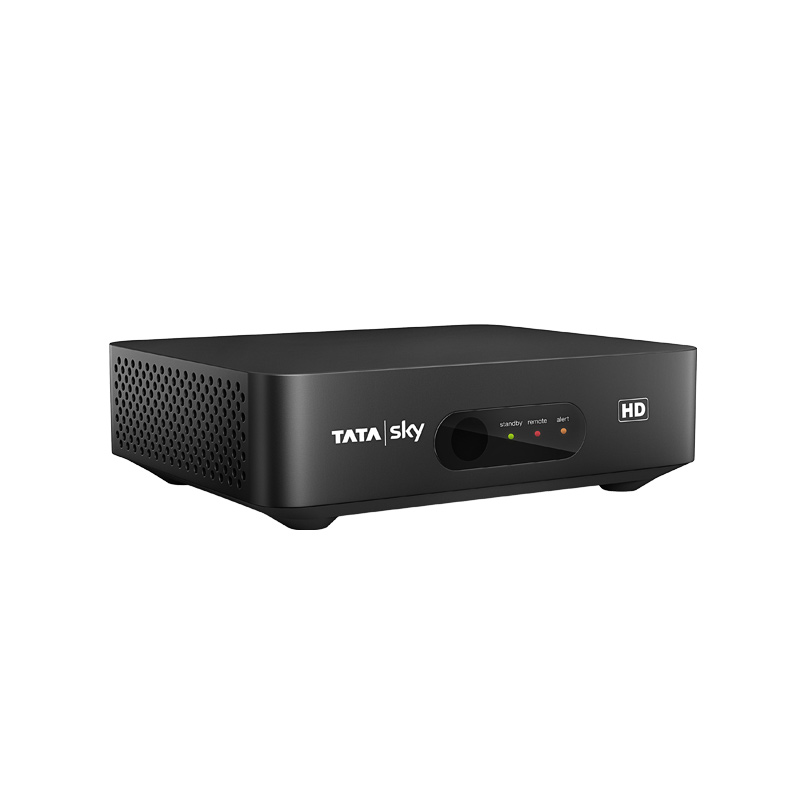
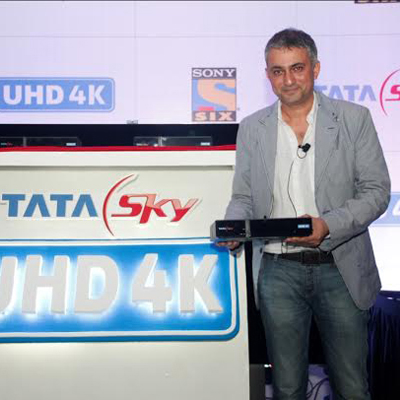
    New Delhi: DTH operator Tata Sky on Thursday unveiled its first batch of Made in India- set-top boxes which have been manufactured in partnership with Technicolor Connected Home and Flextronics.

    Talking about this landmark milestone, Tata Sky’s MD & CEO, Harit Nagpal said, “The India-made set-top boxes will help generate employment while reducing lead time. The boxes have been tested and re-tested beyond the factory floor for quality assurance, and we hope this endeavor will help us to serve the Indian consumers even better.”

    According to the DTH operator, the project builds further on the long-standing partnership between Tata Sky and Technicolor Connected Home, which provides set-top boxes and broadband access solutions for network service providers (NSPs) around the world. The mass production of the set-top boxes developed for Tata Sky by Technicolor Connected Home started in Chennai, in partnership with Flextronics in June 2021.

    Technicolor Connected Home, president, Luis Martinez-Amago said the announcement marks the accomplishment of objectives outlined in August of 2020, in which Tata Sky and Technicolor Connected Home committed to shifting the production and distribution of STBs – including Android TV-based Binge+ set-top box – within India.

    “This is another step in Technicolor Connected Home’s continuing investment in the growth of the important Indian market. The disruptions brought about by COVID-19 have illustrated the importance of having manufacturing and distribution operations that are as close to the subscriber base as possible. We remain committed to minimise risks and total cost of ownership of STB deployments,” he added.

  • NXT Digital does a financial turnaround in FY 2020

    NXT Digital does a financial turnaround in FY 2020

    MUMBAI: Among the early movers in the cable TV industry, the Hinduja group run – NXT Digital has turned out impressive financials for the financial year 2020. The topline has shown significant growth, it has turned EBIDTA positive and how; the red ink on its bottomline has been replaced by fat profits and to top it all it has even declared a dividend of 50 per cent. And it's all thanks to its subsidiary IMCL, which has declared a robust performance over the past four quarters. 

    On a consolidated basis, revenues grew by 65 per cent over FY19, from Rs 704.62crore to Rs 1,162.10crore; operating EBIDTA rose significantly to Rs 218.01crore against a loss of Rs 72.61crore; its PAT is a healthy Rs 110.05 crore as against a loss of Rs 303.43 crore in FY19. Buoyed by the great showing, a dividend of 50 per cent has been declared to the joys of many a shareholder. 

    NXT Digital announced that its HITS platform today has five million subscribers through local cable operators (LCOs) and smaller multisystem operators (MSOs) in 1500 towns all over India, and even in remote places such as Ladkah, Kargul, the far north east and the Andaman, Nicobar and Lakshwadeep islands. The technology, using C-band is not affected by rain or adverse weather and customers in these areas continue to enjoy digital services, uninterrupted. 

    "This kind of outstanding performance consistently over the last four quarters speaks volumes on our commitment towards our subscribers through strong value creation," says IMCL CEO Vynsley Fernandes."We firmly stand committed to further our endeavor of creating an integrated platform for digital services, offering cable TV, satellite, broadband and other digital media, all under one roof. Building an effective framework along with our product bundling strategy has been crucial for our business turnaround in FY20. With close to a 100 per cent prepaid base and a substantial presence in phase 3 and 4 markets, IMCL expects to continue on its digital growth path."

     The company says it has continued to focus on key drivers through FY' 20. Some of these include: 

    * Targeting the the fastest growing segments of semi-urban and rural India. Over 60 per cent of its subscriber base is in these markets which continue to see increasing pay TV penetration as well as growing average revenue per user (ARPU).

     *Growing ARPU through value added services and differentiated products in the cities. Launching innovative products like layering cable TV with broadband and value-added services, coupled with 24X7 services on ground.

     * Successfully implementing the new regulatory framework, set out by the TRAI (Telecom Regulatory Authority of India) in early 2019. The visionary framework which brought in much needed transparency to the pay TV ecosystem and enhanced subscriber choice has buoyed the business model and set out a clearly defined level playing field for the industry. 

    * Maintaining pre-paid collections at nearly 100 per cent, whilst ensuring low churn through a focused E&R (engagement &retention) model for subscribers and franchisees. 

    * Leveraging its leadership position in technology, whilst improving cost efficiencies. Recently moved to 32APSK technology, that improves satellite throughput by over 30 per cent. 

    * Working closely with its 9,000 plus franchisees to remain focused on the subscriber through continuous enhancement of the quality of service and viewership experience. 

     This apart, the company is working on developing an indigenous set top box keeping in mind the government's Make in India mandate; it has been conducting digital online training for its LCOs; it has built a robust digital payment collection platform, and even rolled out a proactive business continuity plan to ensure that its subscribers get top class service even during cyclone and the ongoing Covid2019 pandemic that has rocked India and the world. 

    Going forward, it plans to expand on its managed services model and has signed on additional MSOs; that should double its subscriber base to 10 million. The company says the model effectively supports these smaller MSOs and LCOs several of whom are unable to sustain their businesses due to increasing costs of connectivity and technology obsolescence. 

    Fernandes adds that the idea is to expand the services its franchisees can offer, making them multi-product and multi- service providers; offering customers a whole range of services from FMCG products to digital and financial solutions. 

    "This will help our franchisees not only sustain their businesses, but diversify and grow their earnings portfolio, across the country," he says. "We remain focused on delivering integrated services to customers, bundling television with broadband services from our ISP subsidiary OneOTT iNTERTAINMENT, which has a presence in over 40 cities."

  • GST on set-top boxes & optic fibre down to 18%

    GST on set-top boxes & optic fibre down to 18%

    NEW DELHI: The Goods and Services Tax (GST) for set top boxes has been reduced to 18 per cent from the previously announced 28 per cent.

    Similarly, the GST Council also reduced the tax on coaxial cables and optical fibre to 18 per cent from the hitherto 28 per cent in both cases.

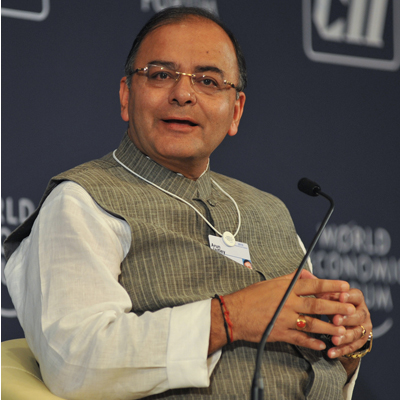
    Finance Minister Arun Jaitley said: “After considering recommendations of fitment committee, rates are being reduced in the case of 66 items.” 

    Jaitley is also the chairman of the GST Council. He said that there were 133 representations and these were considered.

    Other items relating to the electronics and the media and entertainment industry in which GST was reduced are: 

    public://gst.jpg

  • MSOs get permission to operate in other areas apart from permitted areas

    MSOs get permission to operate in other areas apart from permitted areas

    NEW DELHI: In a major change of policy aimed at expediting digital addressability of cable television in the country, the Government late this evening said all registered multi system operators “are free to operate in any parts of tire country, irrespective of registration for specified DAS notified area(s) granted earlier”.

    Until now, MSOs are licensed by the Information and Broadcasting Ministry to operate only in areas specified by them in their applications, unless they have applied for pan-India registration.

    A notice on the Ministry website said if any registered MSO has operationalized the service in any DAS notified area(s) in any part of the country, it would be treated as having been implemented the service on his part irrespective of the number of the Set Top Boxes (STBs) installed by him.

    However, the registered MSO has to submit the details of Headend, SMS, subscribers list and a self-certificate that he is carrying all the mandatory TV channels.

    This has to be done within six months from date of issuance of MSO registration to the Ministry, failing which the MSO registration is liable to cancelled/suspended.

    All other terms and conditions of the registration shall remain unchanged

    Also Read :

    No DAS III extension beyond 31 Jan, reiterates MIB

    Budget 2017 Wish-list: MSOs demand industry status, rationalisation of entertainment & services taxes

    TRAI to meet b’casters, MSOs, DTH ops, telcos on ’17 roadmap

  • MSOs get permission to operate in other areas apart from permitted areas

    MSOs get permission to operate in other areas apart from permitted areas

    NEW DELHI: In a major change of policy aimed at expediting digital addressability of cable television in the country, the Government late this evening said all registered multi system operators “are free to operate in any parts of tire country, irrespective of registration for specified DAS notified area(s) granted earlier”.

    Until now, MSOs are licensed by the Information and Broadcasting Ministry to operate only in areas specified by them in their applications, unless they have applied for pan-India registration.

    A notice on the Ministry website said if any registered MSO has operationalized the service in any DAS notified area(s) in any part of the country, it would be treated as having been implemented the service on his part irrespective of the number of the Set Top Boxes (STBs) installed by him.

    However, the registered MSO has to submit the details of Headend, SMS, subscribers list and a self-certificate that he is carrying all the mandatory TV channels.

    This has to be done within six months from date of issuance of MSO registration to the Ministry, failing which the MSO registration is liable to cancelled/suspended.

    All other terms and conditions of the registration shall remain unchanged

    Also Read :

    No DAS III extension beyond 31 Jan, reiterates MIB

    Budget 2017 Wish-list: MSOs demand industry status, rationalisation of entertainment & services taxes

    TRAI to meet b’casters, MSOs, DTH ops, telcos on ’17 roadmap

  • New addl secy, advisor in IT Ministry

    New addl secy, advisor in IT Ministry

    NEW DELHI: Anuradha Mitra has been appointed as the additional secretary and financial advisor in the electronics & information technology ministry. Mitra is a 1984 batch officer of the Indian Defence Accounts Service.

    She was until now the joint secretary & financial advisor in the same ministry. She has been assigned the new role by upgrading her position for a period of two years or until further orders, whichever is earlier.

    The ministry is in charge of the development of set-top boxes for digital addressable system, and for implementing the Indian conditional access system (iCAS) which has been adopted by Doordarshan’s Freedish DTH platform.

  • New addl secy, advisor in IT Ministry

    New addl secy, advisor in IT Ministry

    NEW DELHI: Anuradha Mitra has been appointed as the additional secretary and financial advisor in the electronics & information technology ministry. Mitra is a 1984 batch officer of the Indian Defence Accounts Service.

    She was until now the joint secretary & financial advisor in the same ministry. She has been assigned the new role by upgrading her position for a period of two years or until further orders, whichever is earlier.

    The ministry is in charge of the development of set-top boxes for digital addressable system, and for implementing the Indian conditional access system (iCAS) which has been adopted by Doordarshan’s Freedish DTH platform.

  • What really happened at the 16th DAS Task Force meeting

    What really happened at the 16th DAS Task Force meeting

    NEW DELHI: Even as the government has once again reiterated that it is firm on Phase IV of digital addressable systems for cable television to commence on 31 December this year, the Information and Broadcasting Ministry (MIB) has for the first time admitted that the Law Ministry had observed that the order passed by the Andhra Pradesh High Court staying Phase III “appears to have all lndia applicability”.

    (The Ministry had sought this opinion in view of the Mumbai high court making a reference to the Kusum Ingots case which had said that if one high court gives an order, others can give similar orders if similar circumstances exist. indiantelevision.com had reported in January this year that the MIB had told the Punjab and Haryana high court that it had ‘decided not to press the requirement of having a STB as for now till the decision of the cases which are pending before various other high courts’).

    The MIB affirmed this at the 16th DAS IV Task Force meeting held on 26 July in Delhi. MIB secretary Ajay Mittal who presided over the meeting said digitisation is a process which cannot be stopped. He said that Ministry has been proactive in the matter of dealing with all the court cases filed by some MSOs for extension of cut-off date for phase lll. He suggested that the stakeholders should supplement the efforts made by Ministry to dispose off these cases.

    He cautioned that MSOs and LCOs should desist from transmitting or re-transmitting un-authorized TV channels which are not permitted by the Ministry. He informed that Ministry has written to all the district collectors/magistrates in this regard to take action under the law against those who are violating the law.

    Advisor DAS Yogendra Pal told the Task Force Meeting for DAS that there were no cases in twenty states but the MIB was not in a position to issue orders in view of the advice given by the law ministry.

    However, he said following the decision to transfer all DAS cases to the Delhi high court following a petition in the Supreme Court by the MIB, 29 cases have so far been transferred by various courts to Delhi and 18 cases are still left to be transferred.

    He said 62 cases had been filed by some multi-system operators (MSOs) in various courts in the country for extension in the deadline of Phase lll. Out of these 62 cases, 12 cases had been disposed off by respective courts and 3 cases had been withdrawn by the petitioners. Two months extension in the deadline was granted by the Andhra Pradesh high court. Both Mumbai high court and the Aurangabad Branch of that court had passed orders to the effect that the order passed by the Telengana bench of the high court of Andhra Pradesh had all India applicability in view of the Supreme Court judgment in Kusum Ingots case.

    Two cases are scheduled for hearing by the Delhi High Court on 13 September 2016. He added that the MIB as approached the Solicitor General to defend the cases and for an early hearing of the cases in Delhi high court. He added that a special leave petition (SLP) is also being drafted against the order of Aurangabad Branch of Mumbai high court.

    The Ministry had recently conducted one workshop with state level nodal officers in Delhi and three regional workshops with state and district level Nodal Officers at Dehradun, Shimla and lmphal.

    The Joint Secretary said that there were a reported 6000 MSOs in the country but only 965 MSO had got registrations so far and about 200 applications are under process in the Ministry.

    She requested the Indian Broadcasting Foundation, the News Broadcasters Association, and the ARTBI to tell their member broadcasters to check with all MSOs with whom they have interconnect agreements whether they were registered and if they have not applied for it so far, advise them to do so immediately. She said that broadcasters should be having the details of all MSOs operating in phase lV areas in their data base which can be crosschecked with the list of registered MSOs on MIB website to identify the MSOs who have not applied for registration so far. She asked the representatives of broadcasters to send a list of these MSOs operating in phase lV areas but who have not applied for MSO registration to Ministry by 7 August 2016. She added that as a next step the broadcasters should communicate with these MSOs and ask them to apply for MSO registration if they want to continue to operate as MSOs in DAS notified areas.

    A representative of the Telecom Regulatory Authority of India emphasized that broadcasters should start entering into interconnect agreements with MSOs and likewise MSOs should enter into interconnect agreements with LCOs for phase lV areas. He said that broadcasters should collect STB requirements from local cable operators in phase lV areas.

    The representative of IMCL said broadcasters have offered separate digital and analogue rates in phase lV market and suggested that TRAI may issue an advisory/directive that there should be only analogue rate till 31 December 2016.

    TRAI said no such advisory which is outside the regulations can be issued. He said put of 900 TV channels, about 600 channels are free to air (FTA) channels and operate through about 2000 LCOs from their head ends. He suggested that in their case the State Governments can asks these LCOs to apply for MSO registration.

    Joint secretary Jaya said MSOs had sought an extension from the courts on the plea that broadcasters had not signed interconnect agreement with them. She said agreements between broadcasters important for further signing of agreements between MSOs and LCOs. She said that broadcasters, MSOs and LCOs should prioritize this issue everywhere and make concerted efforts to seal the agreements for phase lV areas by August 2016.

    TRAI said all MSOs who have any issue with broadcasters with regard to signing of interconnect agreements should write to the TRAI. He added that TRAI would review the situation in this regard from time to time.

    A representative of a cable operator association from Maharashtra (MocF) mentioned that about 200 LCos have signed interconnect agreements with Hathway in Maharashtra. He suggested that other large MSOs like IMCL & Siticable may also enter into agreements with LCos there on the basis of model inter-connect agreement.

    He complained that the post offices in Maharashtra were asking for no objection certificates from the offices of the district magistrate for renewal of registration to LCOs. He was told that with regard to this issue, which was raised in the last meeting also, proper reference with details should be sent to MIB He also wanted to know whether an MSO registered with MIB and operating as an LCO also is required to obtain the LCO registration from local the post office.

    A representative of CEAMA mentioned that orders for STBs had peaked in October 2015. Thereafter, except for supply orders from DTH operators and some small MSOs, no major orders have been received by them. He suggested that the MSOs planning for procurement for phase lV should place the orders now for timely delivery of STBs. He re-confirmed that they have the capacity to meet the complete requirements of phase lV.

    Representatives of state nodal officers from the Himachal Pradesh, Telengana, UP, Uttarakhand, MP, Karnataka, Bihar and J & K briefed about the various measures undertaken by them to implement the last phase of digitisation in their states. Most of them confirmed that monitoring committees have been set up and they are holding regular meetings to monitor the progress.