Tag: Set top Box

  • Pay TV growth spurred by BRIC nations, says ABI Research

    Pay TV growth spurred by BRIC nations, says ABI Research

    MUMBAI: India is just a year into the process of digitisation, and, in another year, it is quite likely all of the nation’s 100-odd million cable TV homes will be having a set top box (STB) perched on top of their TV sets. The rapid spread of the STB and pay TV is ensuring that India increasingly pops up in research reports on pay TV as a major contributor of growth. Other countries which are also helping spike pay TV growth are Brazil, Russia and China.


    Take a dekko at the latest report released by international research firm ABI Research. It states that the pay TV subscriber base across the world surpassed 886.5 million at the end of Q3 2013, a six per cent YoY increase and generated $ 62.6 billion service revenue. Maintaining its Q2 2013 status, BRIC (Brazil Russia India China) nations were a major contributor and will continue to be in the future years, ABI has stated.


    The research predicts that by 2018, global pay TV subscribers will shoot to more than 1 billion out of which BRIC countries will be responsible for 68 per cent of total net additional subscribers.


    “Emerging markets are key drivers of global growth in pay-TV subscribers as developed markets are experiencing flat growth rates,” said ABI Research VP and practice director Jake Saunders.


    The US Pay TV market grew at less than one per cent as compared to Q3 2012, due to increasing cord cutting by cable TV subscribers who are switching over to cheaper OTT services such as Netflix and Hulu. According to the report, approximately 1.7 million subscribers were lost from cable TV last year in North America. However, revenues increased due to high ARPUs (Average Revenue per User) driven by increasing HD and advanced DVR (Digital Video Recorder) subscribers.


    European countries also showed marginal growth with less than two per cent increase than Q3 last year. Service providers in Spain lost over seven per cent of their pay TV subscribers and Italy over two per cent as compared to a year ago due to the weak economic environment. However, markets such as the UK, France and Germany along with other Western Europe countries saw IPTV subscribers increase by 1.9 million from Q3 2012 to Q3 2013.


    According to a 2012 report by the Singapore-based Media Partners Asia (MPA) overall pay TV subscribers in India were expected to cross 170 million in five years. Much like the US, India is also set to see revenue increase due to HD TV sets. India has one of the lowest ARPUs in the world at approximately Rs 140 ($ 2.2) but the industry is optimistic that it will grow to Rs 550 ($ 8.73) once digitisation is complete.


  • I&B minister wants the industry to define self-regulation levels

    I&B minister wants the industry to define self-regulation levels

    NEW DELHI: Information and Broadcasting minister Manish Tewari has said the process of mainstreaming self-regulation as a statutory mechanism should be led by the industry and not the government.


    Speaking at a panel discussion on Media Regulation: Is status quo the option?, the minister emphasised that the government’s approach towards the media was an ‘essay in persuasion not regulation’.


    The stakeholders within the industry would have to define the equilibrium levels to ensure that the paradigm of transparency, fairness, sobriety and avoidance of sensationalism becomes the key driver of the national discourse in the media space, Tewari stated.


    He said digitisation as a process could be leveraged to augment sample sizes by re-engineering every Set Top box to function as a virtual people’s meter. Out of the box innovation and creative thinking by media entrepreneurs could surmount the current challenges by a technological leap that could transform the dynamics at the back end of the media sector. Industry could then utilise the data and develop business models that were transparent and workable.


    This process would ensure an alternative to the ongoing conflict surrounding TAM / TRP that the Broadcasting industry held responsible for much of its woes. He emphasised that the way forward was also to fast track Broadcasting Audience Research Council (BARC) as an industry led body that would provide a reliable measurement of popular viewership patterns and help broadcasters overcome corrosive narratives.


    The minister also referred to the growing importance of the new media space which had revolutionised the media landscape. The growth of the internet had led to a situation where there could be a conflict between the physical and virtual civilisation. It was important to comprehend the fact that the power of expression and dissemination through the internet had added a new dimension to innovations in information dissemination. While the opening up of the virtual space had led to democratization of the information paradigm, it had also led to technology becoming a leveller.


    Tewari added that these developments could also lead to a situation where one could also face “Balkanization of the Internet” if agreed rules of international engagement did not emerge as a binding international compact that encompassed states and other entities who controlled the underlying hardware. This situation needed to be avoided at all costs so as to ensure that no artificial divisions are created in the World Wide Web on ideological entities and Westphalian lines.


    The minister also discussed critical paradoxes within the media space that would need to be reconciled. These included proliferation of numerous mediums of communication as qua a growing intolerance to an opposite viewpoint, right to a fair trial qua trial by the media, presence of flawed revenue models qua questionable methods of revenue augmentation, TRP qua the truth and the raging debate between self regulation and statutory regulation.

  • Digitisation: Cisco ships 1.3 mn STBs to India in Q4

    Digitisation: Cisco ships 1.3 mn STBs to India in Q4

    MUMBAI: Cisco, which acquired NDS, has won a significant standard definition (SD) set-top box business in India for the quarter ending January, benefitting from India‘s move towards mandatory digitisation.

    Cisco shipped 1.3 million boxes in the fourth quarter compared with 850,000 in the trailing three-month period, with a large portion of the increase coming from India.

    Cisco CEO John Chambers remarked that the company has “been more selective in the business we are taking in terms of set-top boxes and the lowest margin set-top box business in particular.”

    “Cisco has been able to retain attractive margins delivering set-top boxes in India because the engagements are based on end-to-end services. These engagements include Cisco headend equipment (notably, cable modem terminations or CMTS), middle ware, and conditional access systems in addition to the set-top boxes,” comments Sam Rosen, practice director at ABI Research.

    ABI Research‘s Set-Top Box Database has provided further details.

    Chinese set-top box manufacturers ChangHong and Jiuzhou surged in unit shipments in the third quarter of 2012 and together grew 66 per cent sequentially to nearly 5 million units from 3 million in the prior quarter. The tracked market grew approximately 10 per cent worldwide.

    ChangHong serves primarily the Asian markets, while Jiuzhou has more of a mix of domestic and international business.

    “Asian market strength within the set-top box sector is no surprise. North American and Western European markets are largely flat as Asian markets grow and African markets are expected to open up in the next few years,” continues Rosen.

    “Western manufacturers are using end-to-end strategies, as shown by Cisco, while Asian manufacturers are operating at lower margins and aiming to compete on price within low-ARPU Asian markets.”

  • RBNL rolls out ‘Switch To’ campaign for digitisation

    Mumbai: As 31 October has been decided as the deadline for digitisation in four metros, Reliance Broadcast Network (RBNL), is all set to make the most of it with its new campaign titled ‘Switch To‘.

    The campaign is designed to create awareness amongst target audiences – to ‘switch to‘ the right service provider who can offer best value. It provides operators a tool to reach out through the marketing muscle and expertise of RBNL‘s mediums across television, radio, on-ground, digital and outdoor, to gain “increased visibility” through this multi-media campaign, the company said.

    ‘Switch To‘ launches on the back of Reliance Broadcasts‘ very successful campaign which rolled earlier this year called ‘Choose Your Set Top Box Wisely‘ tailored to increase awareness and empower consumers with adequate information to make the right choice while choosing their set top boxes, while parallely enabling operators to build their brand equity. This campaign takes it a step further highlighting key entertainment options available to be able to make a more informed switch! The first phase of this campaign will be led across four metros viz: Delhi, Mumbai, Bangalore and Kolkata by key shows from the BIG CBS Network viz. America‘s Got Talent, The X Factor and American Idol being simulcast on BIG CBS Prime, BIG CBS Love and BIG CBS Spark.

    The campaign reaches out to the consumers, in whose hands the power to Switch To lies as they make a well informed decision on their DTH provider. Similarly, it also offers operators an excellent marketing campaign to strengthen their brand equity and gain optimally from the eminent revolution.

    Ensuring optimal reach, the entire media muscle of Reliance Broadcast Network will come into play across its television channel bouquet – BIG CBS PRIME, LOVE, SPARK, BIG MAGIC, BIG CBS SPARK PUNJABI and BLOOMBERG TV INDIA, its extensive radio network 92.7 BIG FM, the out of home vertical Big Street and print, on ground and digital. With a strategically crafted campaign and an extensive media outlay, the campaign promises to create significant impact.

    BIG CBS Networks business head Anand Chakravarthy said, “Digitisation is an imperative step for the growth of the broadcast sector in India. While we have technologies available to improve efficiencies of broadcasting across the value chain, the lack of adoption from consumers slows the growth of the industry. This campaign enables consumers to Switch To the provider that meets their requirements, while at the same time offering the operators with an effective marketing campaign to partner with. Together, we are confident, we can bring about the much needed Switch!”

  • International Datacasting Corporation wins contract from Shin Broadband for New Asia IPTV service

    International Datacasting Corporation wins contract from Shin Broadband for New Asia IPTV service

    MUMBAI: Shin Broadband Internet in Thailand has awarded a contract for a next generation Internet Protocol TV (IPTV) push video on demand service in Asia to International Datacasting Corporation to provide IDC’s Datacast XD Content Management and Distribution software.

    The contract calls for the initial roll-out phase of the system with options for expansion as the service reaches full deployment.

    Shin Broadband Internet pushes High Definition (HD) movies over the Shin Satellite Ipstar system across Asia to low cost consumer Set-Top-Boxes (STBs) located in user’s homes. IDC’s Datacast XD software will be used to manage the delivery of this content on this network.

    IDC is also responsible for the project management and system integration of the project which also utilizes Irdeto encryption for content security inside the STBs which are manufactured by Homecast of Korea.

    Ipstar is a new satellite network that provides business and residential Internet service throughout the Asia-Pacific region. The total number of satellite user terminals provided by Shin Satellite is currently over 70,000 and growing.

    The new PUSH-VOD service uses excess Ipstar satellite bandwidth when available to push HDTV movies onto the local hard disk drive of the Homecast STB, storing digitized movies for later use. The new PUSH-VOD subscription service ensures that users receive new movies daily and operation of the STB is similar to the way a consumer plays back movies from a PVR/DVR at any time.

    The STB utilizes the most modern MPEG AVC/ H.264 video compression technology available to provide the highest quality video possible along with multi-channel sound. The STB inside of the customer’s house is connected to the TV and to the Shin’s Ipstar terminal.

    Ron Clifton the President and CEO of International Datacasting Corporation said “Shin Satellite is one of the most advanced service providers in Asia and we are delighted that they selected our technology and recognized our skills and experience in integrating IPTV systems of this type.

    Our Datacast XD technology was originally developed to meet the needs of satellite, cable and IPTV customers for a broad range of multimedia file transfer and streaming applications. The inclusion of Datacast XD in a consumer set-top-box has opened new doors for this product line in a rapidly growing market and hopefully this opportunity will be the first of many such consumer applications.”

    Teerayuth Boonchote, Vice President of Ipstar, said that “Shin Satellite and our sister company Shin Broadband Internet are excited by the potential of this new service offering to our Ipstar customers which we will initially roll-out in Thailand. A success in Thailand means we’ll expand the service throught our Asian footprint.

    IDC was chosen because they have demonstrated commitment and performance in terms of their proven Datacast XD content delivery technology which is easily integrated into set-top-boxes and because they have an excellent history of successful systems integration projects.”

  • Apple launches TV interface

    Apple launches TV interface

    MUMBAI: Apple is moving steadily towards its aim of changing the way consumers view entertainment in the digital arena. The company’s founder and CEO Steve Jobs has unveiled a new mobile phone and a set-top box that allows people to stream video from their computers to their televisions.

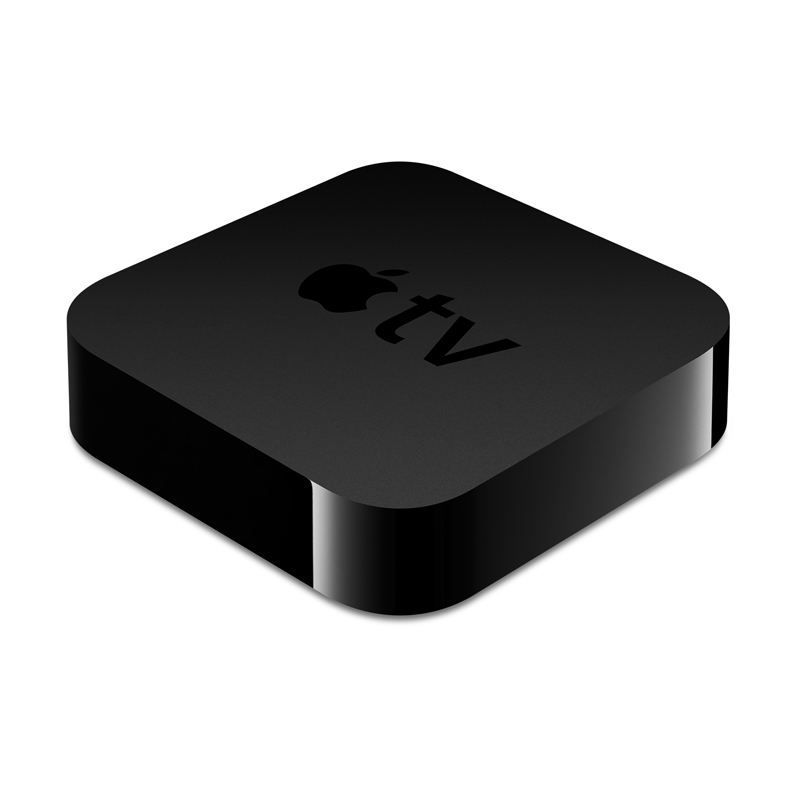
    Apple TV, the company says allows users to wirelessly play iTunes content from the Mac or PC onto the teelvision. This service can be used for movies, TV shows, music, photos and podcasts.

    Using Apple TV’s interface, one can browse and view his/her entire collection of digital media from across the room using the simple and intuitive Apple Remote. Apple TV connects to almost all modern widescreen television sets.

    Jobs says, “Apple TV is like a DVD player for the 21st century—you connect it to your entertainment system just like a DVD player, but it plays digital content you get from the Internet rather than DVDs you get from a physical store.

    “Apple TV plays the same iTunes content that users enjoy on their computers and iPods, so now they can even watch part of a movie in their living room, and watch the rest later on their iPod.”

    Apple TV has a 40GB hard drive to store up to 50 hours of video, 9,000 songs, 25,000 photos or a combination of each and is capable of delivering high-definition 720p output. Apple TV can be connected to a broad range of widescreen TVs and home theater systems and comes standard with HDMI, component video, analog and optical audio ports. Using high-speed AirPort® 802.11 wireless networking, Apple TV can auto-sync content from one computer or stream content from up to five additional computers right to your TV without any wires.

    The integration of Apple TV and iTunes lets users choose from over 250 feature-length movies and 350 TV shows in near DVD quality; four million songs, 5,000 music videos, 100,000 podcasts and 20,000 audiobooks.

    Apple also unveiled the iPhone. it has partnered with and Cingular which cloaims to be the largest wireless carrier in the US. It will be Apple’s exclusive US carrier partner the iPhone. As part of this multi-year partnership, Apple and Cingular are working together to provide innovative new features to mobile phone users, such as iPhone’s pioneering and unique Visual Voicemail, a first on any mobile phone in the world.

  • Conexant’s satellite set-top box solution wins ‘leading product award’

    Conexant’s satellite set-top box solution wins ‘leading product award’

    MUMBAI: Conexant Systems Inc., a supplier of semiconductor solutions for broadband communications and the digital home, has announced that its CX2430X family of MPEG decoders for free-to-air satellite set-top boxes (STBs) has received the leading product award in the consumer electronics category in the EDN China innovation award 2006 competition.

    The system-on-chip (SoC) decoders were developed in Conexant’s Shanghai design center, which is focused on developing STB chips for worldwide applications.

    The award was presented to Conexant at a ceremony in Shenzhen. The 131 entries in the competition were judged by a panel of specialists that included representatives from academic and research institutions, universities, and Chinese original equipment manufacturers.

    Conexant’s broadband media processing business, executive vice president and general manager Lewis Brewster said, “We are honoured that our CX2430X MPEG decoders were chosen for this important award by a group of esteemed industry experts. We remain focused on delivering innovative solutions that will help Chinese manufacturers design and develop products for domestic and international markets.”

    The CX2430X family can be used for applications ranging from basic STB functionality to advanced STB applications. The devices include an integrated high-speed data port that easily interfaces to a variety of broadband front-ends, allowing the decoders to serve as a common back-end platform for satellite, terrestrial, and cable platforms, asserts an official release.

    In addition, the decoders can be used with our satellite tuners to form a complete front- and back-end system solution. This flexibility, along with the robust feature set, provides manufacturers with economies of scale as they can leverage a single device across multiple product offerings.

  • DTV, IPTV growth to boost Set-Top Box, Chipsets & Flat Panel industries

    DTV, IPTV growth to boost Set-Top Box, Chipsets & Flat Panel industries

    MUMBAI: The anticipated growth of digital television (DTV) and high-definition television (HDTV) is expected to positively influence the development of a range of support industries. These include those of flat panel displays, broadcasting, telecommunications, chipset design and production, set-top box manufacturing, and software or middleware development, according to a Frost & Sullivan – Technical Insights study.

    The flat panel display industry, in particular, has recorded huge revenue growth since the launch of DTV and HDTV services. Moreover, emerging display technologies such as organic light-emitting diodes (OLED) and field emission displays (FED) are being seen as a challenge to the market dominance of liquid crystal displays (LCDs) and with the recent advances in manufacturing techniques, the future for both OLED and FED look promising.

    With regard to the set-top box (STB) technology, new STB chipsets are steered toward the direction of providing a single-chip solution. The introduction of advanced compression standards such as Moving Pictures Expert Group (MPEG)-4 AVC has highly enhanced the video streaming capability of the high-end STBs, and future STBs will have more programmability and advanced functions such as a personal digital recorder. Future chipset designs are likely to focus on the convergence of TV and computer networks and the concept of a multimedia home platform (MHP).

    “Determined to lead the broadcast technologies, the Information Society Technologies (IST) and European Union (EU) have been funding numerous projects in the field of digital and high-definition television, driving the European companies and universities in this area,” notes technical insights (www.technicalinsights.frost.com) research analyst Dr. Jayson Koh.

    “While countries such as Greece are laying infrastructures for the digital switch over, terrestrial DTV services are already well developed in Germany and France, and Britain has also recently introduced many DTV and IPTV services.”

    In Asia, South Korean, Japanese and Taiwanese companies are leading the flat panel display industries, catering to the increasing demands for LCD and plasma discharge panel (PDP) TV from Europe, North America, and notably, China. Also there have been a significant number of IPTV and DTV deployments in Asian countries such as Hong Kong, Taiwan, China, Singapore and South Korea.

    Amidst these positive trends, the high entry barrier and the lack of cost-effective techniques for mass production are the most critical issues that the new companies and technologies in the flat panel display industry face. Other obstacles that add to the entry barrier include competing with the low average selling price of LCD, high cost of investment, lack of customer awareness, availability of raw materials and components suppliers, and the distribution networks, the study notes.

    “The prolonged format war between HD-DVD and Blu-ray is expected to delay the integration of new DVD standard in high-end STBs and manufacturers would prefer to wait till a common format arises,” says Koh. “In the case of new video compression standard, the H.264 would slowly take over the MPEG-2 market but face competition from both AVS and VC-1.”

    In the near term, STB manufacturers have to decide whether to support a certain new generation DVD format or to provide a multiple format drive. Although chipset companies are providing more multiple video compression supports in their products, the high licensing fee arises from this kind of chipsets may not be encouraging.

    Global Advances in Digital TV and HDTV Chipsets, a part of the Electronics Device Subscription, provides informative insights on the progress and development of flat panel display, chipsets, compression and broadband television technologies. In this research service, Frost & Sullivan’s analysts thoroughly examine the following technologies: flat panel display, set-top box and its chipsets, compression coding and broadband television technologies. Analyst interviews are available to the press.

    Technical Insights is an international technology analysis business that produces a variety of technical news alerts, newsletters, and research services. Frost & Sullivan, a global growth consulting company, has been partnering with clients to support the development of innovative strategies for more than 40 years.