Tag: Set top Box

  • DTH service providers say STB interoperability unlikely to succeed in current conditions

    DTH service providers say STB interoperability unlikely to succeed in current conditions

    MUMBAI: Tata Sky, Dish TV and Hathway – Indian direct to home (DTH) service providers have provided their inputs to Telecom Regulatory Authority of India (TRAI)’s consultation paper on the issue related to interoperability of set-top-boxes (STB).

    According to Tata Sky’s response, having interoperable STBs will not be desirable due to commercial, technical, security and service-related reasons. The response stated that interoperability will only be viable if the new design of STB will have a reasonable cost with highest standards of quality, but not have any detrimental impact on the STB’s security and privacy features. The current STB ecosystem allows operators to provide secure solutions like HDCP, water-marking, fingerprint, among others at an optimum cost. The serious concern is, will third party manufacturers, developers be able to maintain the same security standards in the interoperable STB?

    As different operators keep entering the market at different points of time, operators use different compressions standards like MPEG2, MPEG4, HEVC, among others. The presence of multiple compression standards comes in the way of interoperability. As the STB model, functionality, processor speed, memory, software configuration, encryption and transmission standards are different with different operators, this will lead to serious compatibility issues if interoperability is attempted.

    The interoperable STB would soon get outdated and obsolete as a requirement would arise for operators to upgrade their STBs. The operator would get stifled by the slow pace of upgrade.

    The BIS standardisation process of various STB features would require significant cost and long gestation period. In the current scenario of the sector, with aggressive and unregulated competition coming in from OTT and mobile operators, STB interoperability is not feasible.

    According to Dish TV’s response, TRAI envisaged that it is not desirable to roll out interoperable STBs for a number of reasons, apart from the technical factors elaborated by Dish TV.  The response states that the dynamics of the STB industry are very rapid and will enable new product cycles at relatively low cost and advanced features which will get impeded, if an elaborated mechanism of interoperability including that of digital video broadcast (DVB)-C and DVB-T will be gone through. It will increase the cost at the same time disproportionately.

    TRAI should not ignore the devices including the STBs the come with broadband and OTT delivery, which are the rapidly gaining segments, having their own technologies of DRM and content protection, based on two way interconnectivity rather than one way DSA and key transfer algorithms.

    The structure of STBs vary in the cable and DTH segments, which does not warrant any interoperability to be mandated between them. DTH STBs have multiple functions that become redundant in cable-based STBs and vice versa.

    Hathway believes that there should be a provision for interoperability of STBs because with the rapid technological advancement, it will provide lot of options to subscribers. The concept is in a preliminary stage and there are not any known examples of STB interoperability available in any other country. The concept could proceed in India methodically but also need to think about various aspects and interests of all the stakeholders involved in the broadcast service value chain.

    At present, the STB architecture is designed in a way which meets the requirements of conditional access system (CAS). STB needs to be tightly bound with the CAS system for content security, which requires some parts of the CAS software to be hardcoded in the STB chipset during the manufacturing process, because of which not all chipsets support all available CAS systems. CAS is a very important component in the eco system of digital TV service. It defines the content security, specifies minimum requirement of STB’s CPU, RAM and FLASH memory, operating system and the requirement of a critical head end component – Multiplexer (MUX).

    MUX is used to encrypt channels based on ECMs generated by the CAS systems. All CAS systems have different methods of generating ECMs, that depends on various parameters like service ID, transport stream ID, source channel, session ID, among others. The length of ECMs varies in different CAS systems, which makes it difficult for MUX vendors to support all available CAS systems.

    The benefits of interoperability cannot be passed on to the subscribers in the case of an MSO, since its functioning is restricted to a specific area. The infrastructure and the set up for provision of services with a MSO and a DTH operator are completely different. The provision of service with a DTH operator is a wireless infrastructure, while with a MSO is a wired set up and depends on a local cable operator for end mile connectivity. A DTH operator can have a boundless reach, but MSO will have a limitation of reach due to infrastructure and geographical conditions.

    Due to the disparity in re-transmission infrastructure of a DTH operator and MSO, the DTH operator will not be in a position to give access to subscribers or customers of a MSO. Hence, STB interoperability for MSO and DTH operators should not be allowed.

  • IBF, AIDCF say STB interoperability unviable in current conditions

    IBF, AIDCF say STB interoperability unviable in current conditions

    MUMBAI:  Universal interoperability of STBs in cable and DTH is not viable in the given conditions, Indian Broadcasting Foundation (IBF) and All India Digital and Cable Federation (AIDCF) said in response to Telecom Regulatory Authority of India (TRAI)’s consultation paper on the (set top box) STB interoperability.

    Both associations suggested the authority to understand and analyse the transition of STB interoperability on the broadcasting ecosystem, with no disruption to the pay TV system before proceeding further on the consultation paper.

    The authority on 11 November had released a consultation paper on interoperable STBs for digital TV broadcasting services. It had sought comments from all stakeholders on the best solution to implement the STB interoperability.

    AIDCF brought to TRAI’s notice that DPOs and MSOs have invested a huge amount in the STB system to adapt the process of digitisation. And, any sudden change could put DPOs and MSOs in financial risk, which eventually could lead to job losses.

    The associations urged the authority to review the adherence of license conditions of the DTH operators at the field and analyse the behaviour of subscribers with respect to migration from one DTH Player to another.

    Even after the merger of Videocon and Dish TV the platforms are maintaining their separate systems and set top boxes due to no interoperability.  

    AIDCF in its comments said, around 40 million households, availing Free Dish broadcasting services, are using the non-interoperable STBs. The implementation of STB-interoperability would force subscribers to purchase new STBs while shifting to alternate service providers/DPOs.

    Similarly, investment of interoperable STBs is likely to be passed on to the subscribers, which would lead to a rise in consumer price for viewing cable services, added AIDCF.  

    Meanwhile, IBF said: “The authority, in the present consultation paper has stated that though there is de-jure technical interoperability but there is de-facto technical non-interoperability. Despite the presence of provisions relating to interoperability in the existing DTH guidelines, the concept has not yet been implemented owing primarily to the inability to provide get solutions.”

    IBF has also requested the authority to consider the preliminary submissions related to the viability of implementation of STBs: cost, safeguarding content, and no compromise on security, while contemplating any options for the implementation of STB interoperability.  

    “To proceed any further with the consultation, it would be most useful and relevant to conduct a technical and operational session to get a better understanding of the technology and possibly emerge with a proof of concept, prior to commenting on the technology and viability,” IBF suggested.

    The association believes that the introduction of STB interoperability would require a number of technological as well as operational capabilities and change thereby fostering the necessity to introduce content security provisions and anti-piracy mechanisms.

    They have also asked the authority to ensure that the expenditure incurred in acquainting the STBs with interoperability features, does not get irrationally passed on to consumers and that they are not burdened with the increased costs incurred.

    Most importantly, any regulatory provisions should be mandated after confirming viability, quality and standards of the emerging technology and should ensure that the security of the CAS, SMS and other related addressable systems of the DPOs is not compromised and is not susceptible to piracy.

    IBF also raised a concern over Embedded Common Interface (ECI), a solution considered by TRAI to achieve interoperability.

    “ECI does not meet the content security and technology needs of major content providers. ECP includes strong content security features and the ability to forensically watermark content distributed on home devices, set-top boxes, etc. ECI falls short of the ECP requirements. In particular, ECI does not require watermarking and does not create a secure location for a watermark,” IBF added.

  • TRAI extends time to receive comments on STB interoperability consultation paper

    TRAI extends time to receive comments on STB interoperability consultation paper

    MUMBAI: TRAI has extended the deadline for receiving comments on the consultation paper ‘Interoperability of Set Top Box (STB)’ for digital TV broadcasting services by 10 days till 18 December. Earlier, the deadline for the same was 9 December.

    The consultation paper was issued by TRAI on 11 November.

    “TRAI had issued a consultation paper on "Interoperability of Set Top Box (STB)" for digital TV broadcasting services on 11 November 2019. The last date for receiving written comments from the stakeholders was fixed as 9 December and thereafter counter comments by 23 December. The stakeholders have sought extension of time for sending their comments on the Consultation Paper,” the regulatory body said in a statement.

    “In view of this, it has been decided to extend the last date for submission of written comments up to 18 December and counter comments by 30 December. No further request for extension would be entertained,” the statement added.

    The consultation paper was issued with a view to eliciting responses from all the stakeholders for suggesting the best solution to implement the interoperability of STB.

    The paper provided a brief overview of various available options and technical solutions for achieving interoperability of STB. It sought responses with detailed justifications for suggesting most optimal and cost-effective solution.

  • TRAI releases consultation paper on Interoperable Set Top Box

    TRAI releases consultation paper on Interoperable Set Top Box

    MUMBAI: – The Telecom Regulatory Authority of India (TRAI) has released a consultation paper on interoperable Set Top Box (STB) for digital TV broadcasting services. A consultation paper is now issued with a view to elicit response from all the stakeholders for suggesting the best solution to implement the interoperability of STB.

    The consultation paper provides brief overview of various available options and technical solutions for achieving interoperability of STB. The paper seeks response with detailed justifications for suggesting most optimal and cost-effective solution.TRAI has requested stakeholders to provide their written comments on the proposed solution architecture for technical interoperable STB by Monday, December 9, 2019. Counter-comments can be submitted upto Monday, December 23, 2019

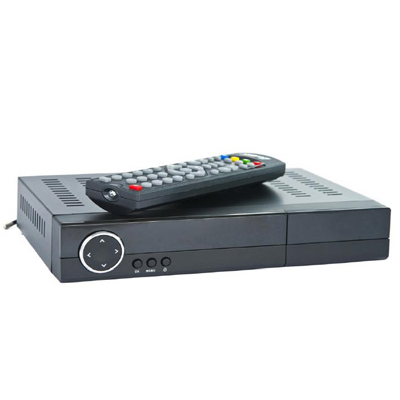
    The digital TV broadcasting services are received by subscriber using a Set Top Box (STB), connected with the TV set. The STB receives TV signals from distribution network and decodes them into viewable form for TV set. STB enables the subscriber to view only those TV channels which he has subscribed.

    Presently the STBs deployed in the network are non-interoperable, i.e. the same STB cannot be used interchangeably across the different service providers. As far as STBs deployed by Direct to Home (DTH) players are concerned, STBs comply with the license conditions to support Common Interface (CI) module based interoperability.

    The lack of interoperability of STBs between different service providers has not only compromised the competition in the Pay-TV market but also a major hindrance to technological innovation, improvement in service quality, and sector growth.

    TRAI had issued a pre-consultation paper on set top box interoperability during April 2016. Thereafter, a consultation note on solution architecture developed by C-DoT for technical interoperable set top box was issued during August 2017. The smart card-based solution has been successfully tested in lab conditions using separate instances of CAS developed by C-DoT. However, the field testing with third party CAS solution is still to be conducted with different industry stakeholders. 5. TRAI has been taking vanous measures to achieve the set top box interoperability including the stakeholders' meetings/ discussions.

    The Authority also engaged with various technology companies in the broadcasting technology space for information exchange. A consultation paper is now issued with a view to elicit response from all the stakeholders for suggesting the best solution to implement the interoperability of STB.

  • TRAI comes out with recommendations for KYC of DTH set top boxes

    TRAI comes out with recommendations for KYC of DTH set top boxes

    MUMBAI: After issuing a consultation paper and holding open-house discussion on KYC of DTH set top boxes, the Telecom regulatory authority of India (TRAI) has finally come out with a set of recommendations on the issue. The authority has recommended the DTH operators to install DTH connections at the address mentioned in the Customer Application Form(CAF) only and verify the address.

    “DTH operator should install the DTH connection at the address mentioned in the Customer Application Form(CAF) only and the address of such installed set top box must be verified by the representative of the DTH operator and record of such installation shall be maintained by the DTH operator,” TRAI said.

    The recommendation also stated that the DTH operator should ensure identity of the subscriber by sending the one-time password (OTP) to his registered mobile number. In cases where registered mobile number is not provided by the subscriber/corporate body, DTH operator should collect Proof of Identity or any other similar document which can establish the identity of the user either in physical or electronic form before provisioning of DTH connection.

    “There is no need to mandate physical verification at regular intervals as it will incur huge cost burden to the DTH operators and inconvenience to the consumers. However, for existing set top boxes, which are not attached to any mobile number of the subscribers, efforts should be made by the DTH operator to associate such set top boxes issued by them to link with a mobile number within a period of two years,” TRAI added.

    However, DTH companies including Dish TV, Tata Sky, Bharti Telemedia were not in favour of changing KYC process for set-top-boxes as they though current process is well-equipped to meet the requirements of the industry, as per their submission on the CP.

  • TRAI chairman RS Sharma says STB portability possible by yearend

    TRAI chairman RS Sharma says STB portability possible by yearend

    MUMBAI: Telecom Regulatory Authority of India (TRAI) chairman RS Sharma has said that by the end of the year, set top box interoperability’s is likely to become functional.

    Speaking to news agency PTI, Sharma said, "Since last two years we have been trying to make STBs interoperable. Large part of problem has been resolved. There are some business challenges (which) remain… we are looking at this to happen by end of this year."

    He added that interoperability in a product should not come as an "after thought" but should be in place at the product planning stage itself. “Open systems are going to be the future. The entire back-end of Aadhaar has been developed on open source software except biometric de-duplication system," he said.

    Those who want to change their provider currently have to buy a new STB but soon they will only have to change the sim card, like mobile phones, for which the government is working on standard STB features.

    He released a study on open ecosystem for devices in India, prepared by the Indian Cellular and Electronics Association (ICEA) and consultant firm KPMG, which showed that 89 per cent of mobile phones in the country work on open source operating systems.

    Sharma further cited interoperability as one of the key factors behind the success of the Indian mobile phone industry where no subscriber is required to buy a new phone if he wants to change his service provider.

    The report found that Open OS mobile operating systems have expanded the smartphone market in India by reducing barriers to entry. The regulator has been working for quite some time, to introduce a similar system in the broadcasting sector. This will provider STB ownership to the consumer.

  • Delhi High Court orders release of all seized Tata Sky STBs

    Delhi High Court orders release of all seized Tata Sky STBs

    MUMBAI: The Delhi High Court directed the centre on Monday to release all the Tata Sky set-top boxes, barring five pieces, which were seized by the government for not displaying the maximum retail price.

    A bench of Chief Justice Rajendra Menon and Justice AJ Bhambani, in an interim order, directed the Ministry of Consumer Affairs to release the over six lakh STBs it had seized in January but allowed it to keep five of those for continuing with its probe.

    Issuing the direction, the bench said the government's decision was "prima facie arbitrary" and resulted not only in a financial loss to the direct broadcast satellite television provider, but also affected consumers who could not shift to the new STBs.

    "Here, the arbitrariness is writ large on the face of it," the bench added.

    It said the proceedings initiated by the government might go on in accordance with law and the company would participate in it.

    With the directions, the bench listed the matter for further hearing on 27 July.

    According to PTI reports the interim order came on Tata Sky's plea challenging the seizure of its STBs for not displaying the MRP.

    The company, in its petition, has also challenged the constitutional validity of a rule, which makes it mandatory to display the MRP on STBs.

    Besides seeking setting aside of the 17 January seizure report, Tata Sky has also requested that Rule 4 of the Legal Metrology Rules, which makes declaring the MRP on STBs mandatory, be quashed.

    It has also sought quashing of a 9 August 2018 circular by which the rule was made applicable to STBs.

    The company has contended that it is not required to declare the MRP on STBs as those fall under the definition of "industrial-consumer" according to the Legal Metrology (Packaged Commodities) Rules 2011.

    It has also said that since the STBs are not for sale, there is no need to indicate the MRP on those.

  • Facebook planning smart STB for TVs with video calling support

    Facebook planning smart STB for TVs with video calling support

    MUMBAI: According to a United States news website, Cheddar, social networking company Facebook is working on smart set-top boxes for TV.

    And according to the sources, the set-top box will be camera equipped. It will also allow video calling along with entertainment services like Facebook’s YouTube competitor.

    Internally codenamed ‘Ripley’, the device uses Artificial Intelligence (AI) to automatically detect and follow people as they move around during a video call.

    Apart from opening the door for video chat feature, the new hardware would help Facebook compete in the TV market averse to Apple and Amazon.

    With concepts like Ripley, Facebook is attempting to build consumer hardware business outside of its virtual reality brand ‘Oculus’. Oculus VR is an American technology company acquired by Facebook in March 2014 for around $2 million.

  • STB import duty doubled to 20%

    STB import duty doubled to 20%

    NEW DELHI: In a fresh bid to boost domestic production under the Make in India project, the Indian government has increased the import duty on set-top boxes (STBs) to 20 per cent, including a host of other electronic items such as TVs sets and smartphones.

    The duty hike from 10 per cent could impact the ongoing digitisation of TV services in India. Experts and stakeholders in the country’s broadcast and cable industry are still assessing the directive, including the fact whether the move is aimed at arresting imports from China.

    A ministry of finance notification dated 14 December 2017 stated the federal government was “satisfied” that the import duty on certain goods, including electronics, should be increased as “circumstances exist” that render it “necessary to take immediate action”.

    Though officially over, India’s digitisation of TV services is still a work in progress with many big MSOs admitting in private that the last and fourth phase is still far from over.

    A cable industry source highlighted that India’s DTH operators annually import about 10 million STBs, while an additional 20 million boxes approximately would still be needed to fully cover areas falling under phase IV of digitisation.

    While many India companies, including big companies like the Hero group, are manufacturing and/or assembling STBs in India, the supply, according to industry sources, isn’t enough to meet the demand. It is also expected that whenever the next round of survey is undertaken, the total number of TV homes in India would increase much beyond the figure of 183 million (as indicated by BARC India).

    Will this increase in import duty also up the cost of STBs for consumers via a mixed business model of rentals and outright purchase of the product? It’s still not clear.

    An industry source, however, said whether this government move would give a fillip to domestic manufacturing is not yet known. Most Indian DTH operators have already started importing STBs from countries like Thailand and Vietnam to take advantage of an ASEAN (Association of Southeast Asian Nations) trade pact, which is aimed at lowering trade barriers and help economic growth in general.

    STBs can be now imported by Indian companies from ASEAN countries at very low tax rate that is in the range of 2-3 per cent, the source elaborated.

    ALSO READ:

    Budget 2016: STBs exempt from basic customs duty

    DAS: Even official figures show digitization is incomplete

    DAS phase IV pace slack; MIB to make Indian STB makers


  • TRAI tightens landing-page norms

    TRAI tightens landing-page norms

    MUMBAI: Distributors of television channels, according to a directive issued by the Telecom Regulatory Authority of India (TRAI), have been restrained from placing any registered satellite television channel whose TV rating is released by a TV rating agency on the boot-up screen or the landing channel.

    Broadcasters and distributors are required to comply with the direction within fifteen days.

    The landing channel or the logical channel number (LCN) is first displayed when the set-top box is switched on. The landing channel, or page, is normally used by the distributor of television channels for providing information to consumers and promotion of its distribution platforms.

    In the recent past, however, a number of representations from stakeholders have been received stating that the landing page has the potential to affect the viewership data of that channel and, therefore, it is susceptible to influence the television audience measurement ratings.

    Placing of a channel on the landing page is the issue relating to interconnectivity between the broadcaster and the distributor of the television channel.

    The regulator, on examination of the issue, reached the conclusion that placement of any registered TV channel, whose rating is released by a TV ratings agency, on the landing page may affect orderly growth of the sector and is against the spirit of the policy guidelines for such agencies.