Tag: Set Top Box STB

  • Parliamentary Committee hopes Prasar Bharati will plan better in 2016-17

    Parliamentary Committee hopes Prasar Bharati will plan better in 2016-17

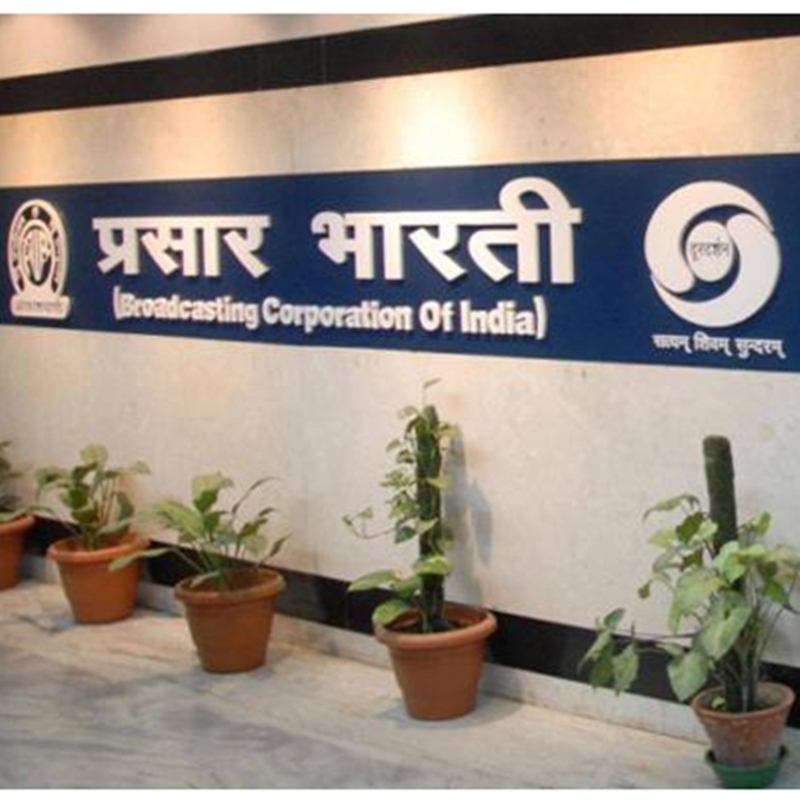
    NEW DELHI: Noting that delay in Plan Expenditure has affected studio modernization, a Parliamentary Committee has expressed the hope that Prasar Bharati would resort to better planning during 2016-17 in execution of schemes for Doordarshan and All India Radio with available state of-the-art technology and gainfully utilize the allocated funds.

    The Parliamentary Standing Committee on Information Technology which goes into I and B issues took note of the assurance of the pubcaster’s chief executive officer Jawhar Sircar in this connection.

    Sircar told the Committee that the reason for under-utilization of Plan funds during 2015-16 as a policy decision was to avoid expenditure on obsolete technology such as analogue transmission, short wave and medium wave radio transmission etc.

    Observing there had been delay in procurement of Camera Chains, XD Cam, Recorders and digitisation of transmitters, the Committee said less utilization of funds is likely to result in spill over of schemes to the next year.

    The Committee noted that for the 12th Five Year Plan, the Government approved a total outlay of Rs 3,826 crore for Prasar Bharati – Rs 2,614.86 crore for Continuing Schemes and Rs 1,211.14 crore for New Schemes.

    The outlay for Broad schemes namely ‘Broadcasting and Infrastructure Network Development’ was Rs 3,500 crore, for ‘Content Development and Dissemination’ Rs 186 crore and for ‘Special Project’ Rs 140 crore.

    In addition, a separate outlay was being provided for ‘Kisan Channel’ – Rs 26 crore in 2014-15, Rs 45 crore in 2015-16 and Rs 60 crore for the year 2016-17.

    For the Annual Plan 2016-17, the total outlay is Rs 450 crore which includes Rs 60 crore for the Kisan Channel and Rs 390 crore for Schemes ‘Broadcasting Infrastructure Network Development’ and ‘Special Projects’.

    The Committee was told that there had been reduction in funds at the Revised Estimates stage as compared to the Broadcast Estimates given in 2015-16 for certain schemes as these were not expected to be executed by the Prasar Bharati during the remaining period of that  financial year. These pertained to Digital Terrestrial Television (DTT) transmitters, Direct to Home (DTH), Set Top Boxes (STBs), Digital Satellite News Gathering Vehicles (DSNGs) etc., in the case of DD. In the case of AIR, the requirement of funds was reduced, broadly because various schemes of AIR were reviewed in 2013-14 and 2014-15, and those found as having negative cost benefits were ordered to be ceased or tapered off.

    The Committee noted that the Ministry had released Rs 453.77 crore to Prasar Bharati during the year 2015-16 and this amount was construed as expenditure by the ministry. However, Prasar Bharati said out of this, an amount of Rs 246.42 crore had been actually booked as expenditure by them which includes Rs 220.17 crore on Plan Capital in AIR and DD and Rs 26.25 crore for Content Development and Dissemination for DD Kisan.

  • Parliamentary Committee hopes Prasar Bharati will plan better in 2016-17

    Parliamentary Committee hopes Prasar Bharati will plan better in 2016-17

    NEW DELHI: Noting that delay in Plan Expenditure has affected studio modernization, a Parliamentary Committee has expressed the hope that Prasar Bharati would resort to better planning during 2016-17 in execution of schemes for Doordarshan and All India Radio with available state of-the-art technology and gainfully utilize the allocated funds.

    The Parliamentary Standing Committee on Information Technology which goes into I and B issues took note of the assurance of the pubcaster’s chief executive officer Jawhar Sircar in this connection.

    Sircar told the Committee that the reason for under-utilization of Plan funds during 2015-16 as a policy decision was to avoid expenditure on obsolete technology such as analogue transmission, short wave and medium wave radio transmission etc.

    Observing there had been delay in procurement of Camera Chains, XD Cam, Recorders and digitisation of transmitters, the Committee said less utilization of funds is likely to result in spill over of schemes to the next year.

    The Committee noted that for the 12th Five Year Plan, the Government approved a total outlay of Rs 3,826 crore for Prasar Bharati – Rs 2,614.86 crore for Continuing Schemes and Rs 1,211.14 crore for New Schemes.

    The outlay for Broad schemes namely ‘Broadcasting and Infrastructure Network Development’ was Rs 3,500 crore, for ‘Content Development and Dissemination’ Rs 186 crore and for ‘Special Project’ Rs 140 crore.

    In addition, a separate outlay was being provided for ‘Kisan Channel’ – Rs 26 crore in 2014-15, Rs 45 crore in 2015-16 and Rs 60 crore for the year 2016-17.

    For the Annual Plan 2016-17, the total outlay is Rs 450 crore which includes Rs 60 crore for the Kisan Channel and Rs 390 crore for Schemes ‘Broadcasting Infrastructure Network Development’ and ‘Special Projects’.

    The Committee was told that there had been reduction in funds at the Revised Estimates stage as compared to the Broadcast Estimates given in 2015-16 for certain schemes as these were not expected to be executed by the Prasar Bharati during the remaining period of that  financial year. These pertained to Digital Terrestrial Television (DTT) transmitters, Direct to Home (DTH), Set Top Boxes (STBs), Digital Satellite News Gathering Vehicles (DSNGs) etc., in the case of DD. In the case of AIR, the requirement of funds was reduced, broadly because various schemes of AIR were reviewed in 2013-14 and 2014-15, and those found as having negative cost benefits were ordered to be ceased or tapered off.

    The Committee noted that the Ministry had released Rs 453.77 crore to Prasar Bharati during the year 2015-16 and this amount was construed as expenditure by the ministry. However, Prasar Bharati said out of this, an amount of Rs 246.42 crore had been actually booked as expenditure by them which includes Rs 220.17 crore on Plan Capital in AIR and DD and Rs 26.25 crore for Content Development and Dissemination for DD Kisan.

  • DTH operators wooing subscribers into HD

    DTH operators wooing subscribers into HD

    MUMBAI: A recent study in the US revealed that nearly 60 per cent of homes in the country have one or more high-definition (HD) TV sets; a significant rise from just 35 per cent five years ago.


    In India too, HD TV viewing is on the upswing – though not as big as in the US yet – with two DTH operators having recently added a slew of HD channels to their bouquet to take the total tally of HD channels to over 25. So much so, DTH operators are confident that the demand for HD TV will only grow from here onward.


    “More than 50 per cent of new customers are buying HD TVs and the other 50 per cent, who are buying SD boxes, will after a while come and say that they have upgraded to HD TV sets. Would you have thought of this scenario two years ago?” says Tata Sky CEO Harit Nagpal.


    Videocon d2h CEO Anil Khera echoes similar thoughts. “Close to 8 per cent of our subscribers have taken HD packs. Interestingly, almost double of these have taken our HD boxes in anticipation of their future transition to HD services,” he says.


    Not so long ago, Videocon had declared it crossed 10 million subscribers.


    To leverage the growing interest in HD, DTH operators have come up with innovative techniques including advertisements, pricing and packaging of HD channels to make customers opt for their HD service packs


    For instance, Dish TV ensures it does not have floating subscribers, so only if a customer opts for an HD pack will he/she be provided with an HD set top box (STB). Customers are not allowed to jump between SD and HD packs.


    On the other hand, Tata Sky subscribers have to pay just Rs 125 above the pack price to avail both SD channels and the channels in the pack which have an HD version. From 1 November, 2013, Tata Sky has stopped ordering SD boxes and is offering HD boxes at the same price as SD boxes at Rs 2,000 per piece. Currently, it has about 2 million subscribers with an HD connection.


    Like Tata Sky, Videocon d2h too is offering SD and HD boxes at almost the same price. While an SD box costs Rs 1,990 with a one month free view, the HD box costs Rs 2,000 without a free view. “Subscribers are taking to HD viewing very well. They are increasingly opting for bigger screens at home and HD feeds for a better viewing experience. We expect that in the next few years, HD viewing will account for almost 20 per cent of the total viewership,” says Khera.


    For Airtel Digital TV, it is about striking a balance between the HD and SD consumers. 


    More importantly, HD subscribers imply more revenue. “Revenue from an HD subscriber today is almost 10 per cent. However, this has potential to grow up to 35 to 40 per cent of our revenue base in a few years’ time,” says Khera.


    According to Nagpal, as and when regional channels start broadcasting in HD, the subscriber base may go up. “HD packs increase as channels get added. Initially, only knowledge and sports channels were available in HD. The next level will be with regional channels. Sun Network has already taken the initiative,” he says.


    With Dish TV, currently, 7 per cent of its revenues come from HD subscribers. However, Dish TV CEO RC Venkateish feels that the price of an HD TV set, which is nearly three times that of an SD TV set, could be a deterrent.


    While it’s a long road ahead, DTH operators anticipate that the future will see HD TV viewing increase by a substantial amount, thus also increasing Average Revenue per User (ARPU). Khera feels it is possible that in a few years from now, Videocon (like Tata Sky) may stop selling SD boxes altogether.