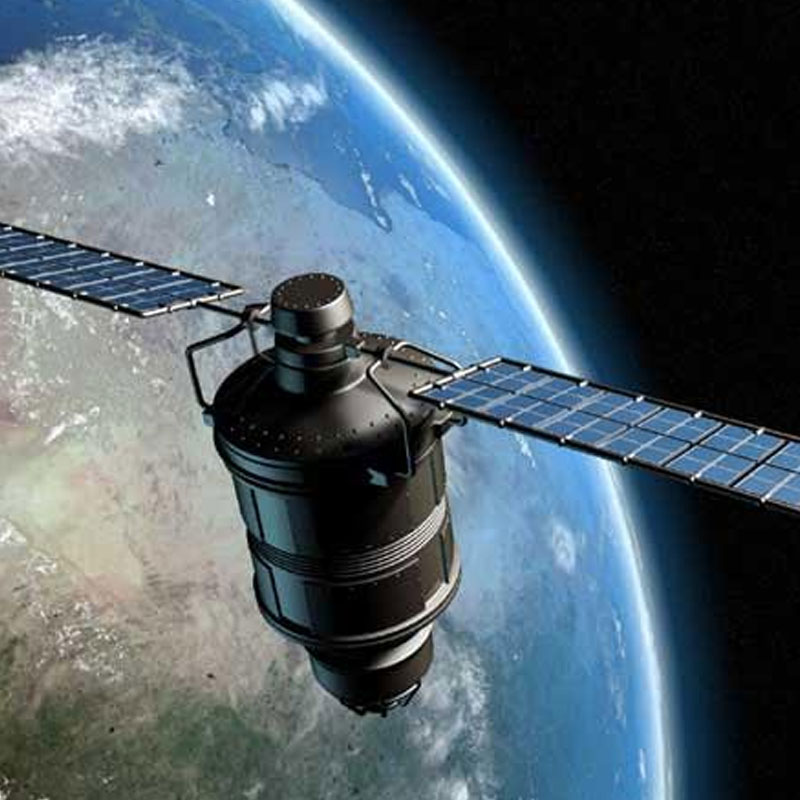
Tag: SES-12

  • Launch of SES-12 to assist Digital India vision

    Launch of SES-12 to assist Digital India vision

    MUMBAI: The successful launch of SES-12, which provides coverage over Asia will assist the acceleration of the country’s push towards a digital India and financial inclusion initiatives, according to a leading satellite industry expert as per a report by the Press Trust of India from London.

    SES Video EVP global sales Deepak Mathur said, “The successful launch of SES-12 recently would help support India’s growing direct-to-home (DTH) TV market, as more and more consumers in rural India embrace the medium.”

    The government’s vision to digitally empower India and transform connectivity in the country will see a push through the launch of the satellite, Mathur informed.

    The senior executive at SES, one of the world’s leading satellite operators, also pointed out that the satellite’s concentrated beams could also provide highly cost-effective capacity to enable in-flight connectivity services in line with the recent directive to allow mobile and internet services in Indian airspace by Telecom Regulatory Authority of India.

    SES-12, which is uniquely designed with state-of-the-art wide beams and high throughput beams, was successfully launched onboard a flight-proven SpaceX Falcon 9 rocket from Cape Canaveral in Florida, US, on 4 June 2018. Together with SES-8, it is expected to reach 18 million homes.

    This satellite will provide coverage from the Middle East to Australia. The combination of two satellites will offer powerful Ku-band wide beams for broadcast and media applications, and high throughput spot beams for providing internet connectivity, reliable cellular services and content targeted at specific language groups.

    The ever-increasing demand of audience will be addressed by the pay-TV operators as the satellite will provide reliability and scalability to elevate the viewing experience by adding more content and delivering good picture quality for high definition (HD) and ultra HD content.

    Mathur explained, “With its dual capabilities of both wide beams and high throughput spot beams, SES-12 will serve to enhance connectivity for people and businesses in remote and unconnected parts across Asia, where providing rural connectivity and eliminating the digital divide is a key priority for many governments. SES-12 also brings augmented capacity to enable satellite broadcasting and DTH services across Asia-Pacific.”

    Specifically over India, SES has five satellites – NSS-12, SES-8, NSS-6, SES-7 and SES-9 – currently operational. SES-12 will be replacing NSS-6 as the largest satellite to offer services and capacity over India.

    The company’s primary customer in the Indian market is Antrix, the commercial arm of the Indian Space Research Organisation (ISRO), with whom it has worked to help augment the enormous demand for satellite connectivity over India.

    Mathur also mentioned that ISRO has a pivotal role to play in the development of new space technologies and in making space more accessible, and affordable. SES is also exploring potential areas of collaboration with Indian partners to see how they both can work together to advance the development of space technologies.

  • SES entrusts Arianespace with SES-12 launch

    SES entrusts Arianespace with SES-12 launch

    MUMBAI: SES has selected Arianespace to launch the powerful new hybrid communications satellite, SES-12, on board an Ariane 5 booster from the European Space Center in Kourou, French Guiana, during Q4 2017. This will be the 40th launch of an SES spacecraft on board an European Ariane launch vehicle.


    The new satellite will expand SES’s capabilities to provide direct-to-home (DTH) broadcasting, VSAT, Mobility and High Throughput Satellite (HTS) data connectivity services in the fast growing Asia-Pacific region, including rapidly growing markets such as India and Indonesia.


    The spacecraft will be positioned at the well-established SES orbital slot of 95 degrees East, providing incremental as well as replacement capacity with excellent view angles across the Asia-Pacific region. SES-12 will replace SES’s existing NSS-6 satellite and will be co-located with SES-8. Today, SES serves close to 20 million DTH households in India and Indo-China from this orbital slot.


    SES-12 is being built by Airbus Defence and Space based on the highly reliable Eurostar E3000 platform. The satellite is designed to operate for 15 years, with a payload comprising 68 high-power physical Ku-band transponders and eight physical Ka-band transponders. The spacecraft will be equipped with an electric plasma propulsion system for orbit raising and on-orbit manoeuvres.


    The payload of the hybrid SES-12 satellite consists of two distinct but complementary missions: first, traditional wide beam coverage, and second, a high-powered Ku-band multi spot beam payload (HTS).


    The traditional wide-beam mission consists of 54 (36 MHz equivalent) transponders that will provide state-of-the-art replacement and growth capacity for SES’s existing DTH, government and VSAT customers, allowing for a seamless transition from NSS-6 to SES-12. In addition, the design provides incremental growth capacity to support new DTH platforms and other services targeting the Asia-Pacific region.


    The second mission consists of 70 Ku-band spot beams and 11 Ka-band spot beams delivering over 14 GHz for VSAT, Enterprise, Mobility and Government applications. This mission also includes a Digital Transparent Processor (DTP), which provides anti-jamming capabilities as well as increased payload flexibility in order to provide customized bandwidth solutions to SES customers.

  • SES to launch SES-12 for Asia

    SES to launch SES-12 for Asia

    MUMBAI: Satellite operator SES is looking at building a new hybrid communications satellite, SES-12. And for the same, the operator has selected Airbus Defence and Space. The new satellite, which is set for a launch in 2017, aims to serve the fast growing direct to home (DTH), data, mobility and government markets in Asia.


    The new satellite will expand SES’s capabilities to provide DTH broadcasting, VSAT, Mobility and High Throughput Satellite (HTS) data connectivity services in the Asia-Pacific region, including rapidly growing markets such as India and Indonesia.


    The spacecraft will be positioned at the well-established SES orbital slot of 95 degrees east, providing incremental as well as replacement capacity with excellent view angles across the Asia-Pacific region.


    SES-12 will replace SES’s existing NSS-6 satellite and will be co-located with SES-8.  The satellite operator currently serves close to 20 million DTH households in India and Indo-china from this orbital slot.


    The new satellite will be built by Airbus Defence and Space based on the highly reliable Eurostar E3000 platform. The satellite is designed to operate for 15 years, with a payload consisting of 68 high-power physical Ku-band transponders and eight physical Ka-band transponders. The spacecraft will be equipped with an electric plasma propulsion system for orbit raising and on-orbit maneuvers. The payload of the hybrid SES-12 satellite consists of two distinct but complementary missions: first, traditional wide beam coverage, and second, a high-powered Ku-band multi spot beam payload (HTS).


    The traditional wide-beam mission consists of 54 (36 MHz equivalent) transponders that will provide state-of-the-art replacement and growth capacity for SES’s existing DTH, government and VSAT customers allowing for a seamless transition from NSS-6 to SES-12. In addition, the design provides incremental growth capacity to support new DTH platforms and other services targeting the Asia-Pacific region. The second mission consists of 70 Ku-band spot beams and 11 Ka-band spot beams delivering over 14 GHz for VSAT, Enterprise, Mobility and Government applications. This mission also includes a Digital Transparent Processor (DTP) which provides anti-jamming capabilities as well as increased payload flexibility in order to provide customised bandwidth solutions to SES customers.


    “I salute SES’s ambitions when it comes to innovation and responsiveness in a rapidly changing market, and we are pleased to be able to provide them with our very best technology for both the payload and the platform,” said Airbus Defence and Space head of space systems Francois Auque. He added, “We have been using electric propulsion for station-keeping for 10 years now and have equipped 10 Eurostar E3000 satellites with this technology, which we are now also offering for initial orbit raising. The resulting weight saving will enable us to combine two high-capacity missions equivalent to two conventional satellites in one satellite, SES-12.”


    SES-12 is the eleventh spacecraft that SES has ordered from Airbus Defence and Space, eight of these satellites are in operational service, one is ready to be launched and a tenth, ordered this year, is currently under construction. The satellite operator has decided that it will keep its annual spending to around Euro 450 million. It has also drawn up a five year plan, as part of which SES from 2014 to 2018 will spend a total of Euro 2.3 billion. It currently has four satellites under construction, including SES-12. Plans are also afoot to start more five satellite builds during this five year period. 


    SES chief technology officer Martin Halliwell said, “We look forward to working again with Airbus Defence and Space on this important addition to our global fleet. SES-12 will greatly expand our capacity over Asia and is fully in line with our capital expenditure plan. Through its unique hybrid DTH/HTS design, SES-12 will continue to support our growing DTH platforms and provide a new, lower cost HTS product, further enhancing our customer’s options for growth.”