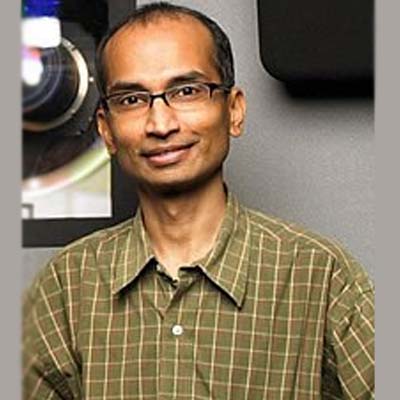
Tag: Senthil Kumar

  • JWT and McCann Worldgroup tie at No 1 spot in Gunn Report 2015

    JWT and McCann Worldgroup tie at No 1 spot in Gunn Report 2015

    MUMBAI: J. Walter Thompson and McCann Worldgroup have scored the most number of awards in India for their creative campaigns spanning across print, digital, film, and AGB as per The Gunn Report 2015.

    J. Walter Thompson Mumbai and Bangalore, and McCann Mumbai have their sum totals tied at 10 each, while J Walter Thompson’s South Asia group company Contract Advertising came in at the third spot with a tally of six.

    On the whole, India has jumped a position higher from it’s last year’s world rank of 14 to 13 in 2015, as per the GR Creative Ranking.

    When it comes to film category, JWT stole the show with the lead score of seven, closely followed by its sister arm Contract Advertising with five.

    McCann Worldgroup chairman Asia Pacific and McCann India CEO and chief creative officer Prasoon Joshi said, “I am excited with this outcome, the hard work and dedication that our teams put in has come to the fore with this recognition.  I also want to thank our clients who have always believed in us and value ideas and long term relationships.”

    JWT South Asia CEO Tarun Rai said, “To have two of our group companies right at the top of the creative charts is really satisfying. This is an unprecedented achievement. I am really proud of the fantastic teams led by Senthil and Ashish.”

    J. Walter Thompson India chief creative officer Senthil Kumar added, “It’s a great start to the year with J. Walter Thompson India topping the Global Gunn Report India agency ranking. We have always gone in with all guns blazing for our clients with sharp ideas that strike the bulls’ eye more often than not.”

    Contract Advertising NCD Ashish Chakravarty said, “While I am quite happy about the Gunn report rankings, I believe that awards (and, therefore, such rankings) are the by-product of the passion and rigour that we put into our work… so, the many creative awards, new business wins, and rankings, only go to show that we are doing it right. Maybe.”

    On the world stage however it was Always #LikeAGirl from Leo Burnett Toronto that emerged as the most awarded All Gunns Blazing in the World advertising campaign of the year 2015, while “Monty’s Christmas” by adam and eve DDB London took away the most number of awards in Film Commercial category. The title for Most Awarded Agency in the World this year was taken away by BBDO, followed by Leo Burnett and DDB.

    The Gunn Report 2015

  • JWT and McCann Worldgroup tie at No 1 spot in Gunn Report 2015

    JWT and McCann Worldgroup tie at No 1 spot in Gunn Report 2015

    MUMBAI: J. Walter Thompson and McCann Worldgroup have scored the most number of awards in India for their creative campaigns spanning across print, digital, film, and AGB as per The Gunn Report 2015.

    J. Walter Thompson Mumbai and Bangalore, and McCann Mumbai have their sum totals tied at 10 each, while J Walter Thompson’s South Asia group company Contract Advertising came in at the third spot with a tally of six.

    On the whole, India has jumped a position higher from it’s last year’s world rank of 14 to 13 in 2015, as per the GR Creative Ranking.

    When it comes to film category, JWT stole the show with the lead score of seven, closely followed by its sister arm Contract Advertising with five.

    McCann Worldgroup chairman Asia Pacific and McCann India CEO and chief creative officer Prasoon Joshi said, “I am excited with this outcome, the hard work and dedication that our teams put in has come to the fore with this recognition.  I also want to thank our clients who have always believed in us and value ideas and long term relationships.”

    JWT South Asia CEO Tarun Rai said, “To have two of our group companies right at the top of the creative charts is really satisfying. This is an unprecedented achievement. I am really proud of the fantastic teams led by Senthil and Ashish.”

    J. Walter Thompson India chief creative officer Senthil Kumar added, “It’s a great start to the year with J. Walter Thompson India topping the Global Gunn Report India agency ranking. We have always gone in with all guns blazing for our clients with sharp ideas that strike the bulls’ eye more often than not.”

    Contract Advertising NCD Ashish Chakravarty said, “While I am quite happy about the Gunn report rankings, I believe that awards (and, therefore, such rankings) are the by-product of the passion and rigour that we put into our work… so, the many creative awards, new business wins, and rankings, only go to show that we are doing it right. Maybe.”

    On the world stage however it was Always #LikeAGirl from Leo Burnett Toronto that emerged as the most awarded All Gunns Blazing in the World advertising campaign of the year 2015, while “Monty’s Christmas” by adam and eve DDB London took away the most number of awards in Film Commercial category. The title for Most Awarded Agency in the World this year was taken away by BBDO, followed by Leo Burnett and DDB.

    The Gunn Report 2015

  • J. Walter Thompson India promotes Senthil Kumar as CCO

    J. Walter Thompson India promotes Senthil Kumar as CCO

    MUMBAI: J. Walter Thompson has promoted Senthil Kumar as chief creative officer (CCO) for India.


    Kumar was most recently JWT India national creative director (NCD) for South and has been  the agency for the last 15 years. 


    JWT South Asia CEO Tarun Rai said, “It’s a new world of communication. Creativity is no longer only about the 30-second TVC but has to work across various platforms. For this new world of communication, I needed a new age creative chief – someone who thinks digital first. Senthil is extremely talented, is focused on work and always leads from the front. His passion for excellence and his boundless energy is infectious. He will partner me in raising the bar of our creative product, building our clients’ brands and attracting the best talent in the industry.”


    Kumar added, “I am thrilled to lead J. Walter Thompson India as its CCO. The opportunity to partner Tarun in steering India’s largest agency into the future, challenges and motivates me. Am proud of our current creative firepower across the country and our collective ambition will be to spearhead marketing success stories for our clients with world-beating ideas. The way forward is not just language-neutral and media-agnostic ideas, but to invent platform-specific creative solutions that solve business problems.”


    “The journey is never over in this business of ideas as we continue to push harder on the creative front and attract the best talent from within and outside the industry. Our creativity should leap from deep human insight and be driven by ‘Curiosity’ and ‘Collaboration’ while we build our ‘Capability’ to generate ideas that engage with millions of consumers,” he further said.


    J. Walter Thompson worldwide chief creative officer Matt Eastwood said, “Senthil is the definition of a modern ideator and leader who thrives on constantly exploring the power of new technologies and platforms to create truly pioneering work. His boundless energy and enthusiasm for his craft, clients and employees alike, will serve him well in guiding and building our creative brand in the region.”

  • PepsiCo’s D Shivakumar to chair Mobile Marketing Association India’s board

    PepsiCo’s D Shivakumar to chair Mobile Marketing Association India’s board

    MUMBAI: PepsiCo India Holdings chairman and CEO D Shivakumar has been elected as the head of the Mobile Marketing Association (MMA) India board of directors. 


    This is the association’s maiden board, which comprises 12 industry stalwarts across the marketing, technology and advertising spectrum.


    The board members include Novi Digital Entertainment president Ajit Mohan, OLX South Asia CEO Amarjit Singh Batra, United Spirits Limited chief marketing officer Amrit Thomas, GroupM CEO South Asia CVL Srinivas, Facebook India MD Kirthiga Reddy, Millward Brown MD South Asia Prasun Basu, Hindustan Unilever Limited executive director – Home Care Priya Nair, Mobile Marketing Association Asia Pacific MD Rohit Dadwal, J. Walter Thompson chief creative officer Senthil Kumar, Godrej Group head – strategic marketing Shireesh Joshi and One97 Communications & Paytm founder & CEO Vijay Shekhar Sharma.


    Speaking on the appointment of the new board, Shivakumar said, “The Indian market is brimming with great opportunities for mobile media and marketing. The MMA India Board of Directors brings together some of the best practitioners and minds in marketing, advertising and media, and our collective experience and expertise will hopefully propel the market to quickly adopt mobile marketing as a mainstream medium.”


    “Our board members have identified key areas where our immediate focus in needed. These initiatives will facilitate sharing insights, create industry benchmarks and guidelines that will help marketers leverage mobile as core to their business and marketing strategies,” he added. 


    “Mobile continues to push India marketers to re-think the way they approach marketing and use data and technology to engage with consumers. The conversation has shifted towards how we can build capabilities and further help the ecosystem to leverage mobile,” said Dadwal. “I’m confident that under the guidance of the new Board, our members will be able to leverage the MMA’s resources and network to accelerate mobile marketing in India. The Board of Directors will be instrumental in shaping the future of the industry and developing the MMA and its initiatives. I look forward to working with them to drive the growth of our industry.”


    Recent studies from the MMA, Mary Meeker and others suggest that there will be a dramatic shift in media spending in the near future and it is imperative for the marketing community to reboot their marketing mix with mobile as a key driver for future business strategies especially when mobile is poised to be the third largest mass medium in India after TV and print.

  • Hungama Digital Services to manage SunRisers’ digital activities

    MUMBAI: Hungama Digital Services (HDS) will be working on the complete online and social media content for SunRisers, an IPL team owned by Sun Group.

    Incidentally, JWT, which won the creative duties of the new team, earlier this year acquired HDS and works with them to offer digital marketing and social media solutions to its clients.

    Sun Group, the owner of the Hyderabad IPL franchisee, unveiled the name and logo of its Hyderabad IPL team, designed and conceptualized by JWT. The Sun Group named its IPL team, ‘SunRisers‘ symbolizing birth of a new life.

    JWT India has designed the Hyderbad team‘s logo, team identity and will be working on the entire 360 communication for Team SunRisers. The jersey launch will be closer to the IPL season.

    JWT Chennai VP and general manager M L Raghavan said, “The brief to the agency was simple. ‘The name and logo of the team is being revealed on the 20th at Hyderabad. How best can you bring this alive?‘ Senthil and his team came up with the wonderful idea of using silhouettes to bring alive the power of the sun and the soaring eagle. Once the idea was cracked, the film was completed in a record four days along with digital initiatives like getting the website up and running, creating the Facebook page and a Twitter account.”

    According to the agency, the ‘SunRisers‘ logo depicts an eagle soaring high, looking into the core of a rising sun, absorbing the colors of the bright star to become ‘one with the sun‘. “The new identity encapsulates the valor, chivalry, endurance, independence and fearlessness of the eagle synthesising with energy and radiance obtained from sun,” the agency said.

    Sharing his thoughts on the conceptualisation and execution of ‘chanthem‘, the first brand film for SunRisers JWT India NCD Senthil Kumar, said: “The chanthem, is a visual idea amplified by a rocking chant created by Swarathma The Band. “Shooting in the morning magic light hours only i.e. shoot only when the sun is rising between 5am and 7am for a few days until we got the right shots but since time was limited we captured a combination of natural light and studio light and put this film together with some intense post production. It was a step up moment for the production team as well.”

  • Nike rolls out ‘Parallel Journeys’ campaign

    MUMBAI: Nike has launched a television campaign titled ‘Parallel Journeys‘. The ad campaign is a part of Nike‘s Bleed Blue campaign.

    The TVC has been created by JWT Bangalore. It has been directed by Abhinay Deo (RDP Films) with creative direction by Senthil Kumar (JWT).

    The TV campaign celebrates the millions of young cricket athletes in India who relentlessly pursue perfection in the sport, no matter where they are or on what field they play. It features a roster of the sport‘s best athletes, parallels the journey of hard work, training and dedication young cricketers take to achieve success, just as India‘s elite athletes do, the company said.

    Nike India marketing director Avinash Pant said, “Nike‘s ‘Parallel Journeys‘ captures the journey to perfection in the sport clearly demonstrating the passion and hunger of a new breed that will stop at nothing. In the true spirit of ‘Just Do it‘, a new generation of millions of young athletes can believe that one day they will be the voice of an entire nation.”

    According to the official communiqué, Nike‘s ‘Parallel Journeys‘ travels the length and breadth of the country capturing the determination, passion and aspiration through the eyes of every young cricket athlete. It also features a “dynamic” soundtrack inspired by the sounds that surround the street game in India by simply using nothing but voices.

  • What ails the Indian film industry?

    What ails the Indian film industry?

    BANGALORE: A panel discussion on ‘What ails the film industry – A reality checkup of the filmed entertainment sector‘ at the third edition of the Ficci‘s two-day Media and Entertainment Business Conclave highlighted a number of issues that plagued the film industry in India.

    The session, moderated by actor, director and screenwriter Kamal Hassan had film producer, director and scriptwriter S Priyadarsan, South India Film Chamber of Commerce Secretary L Suresh, Cinemax CEO Suresh Shenoy and Real Images co-founder Senthil Kumar as panellists.

    Piracy, multiple sales of the same ticket and the state governments‘ role in fixing movie ticket prices were highlighted as the main banes of the Indian film industry.

    In the case of producers, besides piracy, the other major ailments were high cost of talent and high cost of production; cost inflation; lack of understanding of Intellectual Property (IP) and Copyright (CR) rules; lack of access to institutional funding; lack of good scriptwriters and original content.

    From the exhibitors point of view, archaic rules and regulations, some as old as 1947, such as getting licenses and renewals, needed a relook since most of the theaters had gone digital. The laws based on the Electricity and the Projection Acts were not really relevant today.

    From the distributors point of view some of the problems faced included exorbitant acquisition costs; because of non-availability of institutional funds, regional distributors were finding it difficult to grow beyond their limits, hence making it difficult to release films during peak season time because of high prices by the exhibitors and also multiple releases during a week makes it difficult for the distributor to get good show timings from the exhibitors who control the last mile.

    The industry needed to embrace technology at all places down the value chain. Priyadarsan shared the approach of the Kerala Film Industry to curb piracy and revenue leakages through wide releases of films and computerised ticketing. Instead of the 30 or 40 screens that a film was released earlier, it is now being released across 100 screens. In the case of computerised tickets, Priyadarsan said that sitting in his house, he could know how many tickets of his film were sold in real time.

    Shenoy cautioned that the viability of a wide release varied from movie to movie. It should be based on the merit of the film. He pointed out the wide release had brought down the shelf life of a movie from 4 weeks to 1 week, hence there could be problem with maintaining a flow of content for the exhibitor. The number of movies being produced had to be at least doubled to maintain a steady flow of content and to advocate wide releases for big ticket films.

    Shenoy also suggested that the government should take up piracy issue on a pan India basis and bring in a suitable law and impose it on the states, rather than the current situation where piracy which came mainly under the ambit of state governments‘, many of whom did not take the matter seriously.

    Suresh said that Tamil Nadu had one of the best laws to combat piracy that was being emulated by a number of states, but bemoaned the fact that implementation of the law was very poor. Piracy could be eradicated only if the administrators in a town were adamant and ruthless in implementing the law.

    Suresh also questioned a state government‘s (like Tamil Nadu) curbs in the pricing of film tickets. The ticket price of a small budget film could be low, while in the case of the big budget film, the producer, with the knowledge-not permission from the state government, could fix whatever price he chose. Computerized ticketing would ensure that a government would get its taxes.

    Hassan agreed with Suresh saying that the state government should treat films as any other business, more so in the case of the southern states, where the governments saw films more as a political platform.

    Suresh also suggested dynamic pricing of film tickets, maybe, the price could be higher for the first few weeks and then lowered later. He further said that the in the case of other major cities and towns, the benefits of dynamic rates that were being arbitrarily fixed by theater owners depending upon show timings did not filter down to the producers who owned the copyrights of the content.

    Shenoy informed, “In some cases, the cost of talent is almost 60 per cent of the film‘s budget”. He suggested that rather than paying per film, the actors should be paid a fixed sum and part of the profits which depended upon the box-office performance of a film, a model similar to the one followed in Hollywood.

    Senthil agreed that most of the problems faced by the industry could be alleviated with the right application of technology. Piracy, which caused leakage of 30 to 50 per cent revenue leakage, could be prevented to a great extent. Technology made it possible for piracy to be curbed in all means except through a cam-coder brought into the movie hall. Technology will make the necessity of a film print redundant.

    Shenoy said that there was a need for open dialogue between all the stakeholders and the government as well as a constructive dialogue amongst various stakeholders in the film world is critical. For example the multiplex impasse a couple of years ago impacted not only the warring parties, but everyone in the value chain. “The industry must keep channels of communication open and look for alternative means for dispute resolution,” he suggested.

    Shenoy further suggested that producers should garner together an initiative to train scriptwriters and paid great importance to research and development to enable only quality scripts being made into films.

  • ‘The real push for digital cinema will come when biggies like Adlabs decide to ramp up’ : Senthil Kumar – Real Image Media Technologies director

    ‘The real push for digital cinema will come when biggies like Adlabs decide to ramp up’ : Senthil Kumar – Real Image Media Technologies director

    Already setting cash registers ringing across Hollywood, with movies like Beowulf, Hannah Montana and Meet the Robinsons, Digital Cinema has been touted as the next big thing in the entertainment industry. And Chennai-based Real Image Media Technologies (RIMT) is already geared up to herald a major resurgence of the film exhibition industry in India with the introduction of this new technology.


    In an interview with Indiantelevision.com’s Anindita Sarkar, Real Image Media Technologies director Senthil Kumar says that the future of cinema lies in digital and unveils the company’s growth plans.


    Excerpts:

    Do you see digital cinema growing faster from now on?
    Several things that were roadblocking the growth have got sorted out. Prices have fallen and the technology has settled down. Film producers, distributors and exhibitors have realised that digital makes better economics. There has been an improvement in sound, though we do not see the same jump in picture quality.

    What will fuel the growth?
    Digital cinema will grow on its own as it is an effective tool against piracy and saves on print costs. But what will further fuel this growth is the emergence of 3D. Across the world today, there are around 5000 digital screens of which at least 1000 are 3D – that is 20 per cent already. In India, we are already seeing a 15 per cent conversion of theatres (about 10,000) into digital. We haven’t seen a 3D wave as yet, but I am sure it will come. More and more people are finding that with plenty of 3D Hollywood ventures coming up in the next two years, 3D makes a lot of sense commercially. That realisation will come in India too.

    What will drive digital cinema growth in India?
    We are already seeing decent growth in India. We have installed 550 digital systems across the country. UFO Moviez has touched 1000 theatres. Reliance ADAG’s Adlabs is testing the technology.The real push will come when Reliance decides to ramp up.

    What is the model that you follow?
    We sell our equipment to various providers like E-City, Pyramid Saimira, and PVR. UFO Moviez, on the other hand, follows a rental model; they act like a technical service provider.

    So you are not looking at the rental model….?
    The rental model is not lucrative for us right now.

    Digital cinema will grow on its own as it is an effective tool against piracy and saves on print costs. But what will further fuel this growth is the emergence of 3D

    But doesn’t this model provide UFO the volumes?
    If you put out the money and you operate at the theatre saying pay me a rental, why would you not have takers? Theatre owners do not have any commitment. If the theatres want the digital systems for two weeks, UFO will give it for that period and then take back the services when they do not want it anymore. So it is an easy scheme. Therefore, it is quickly chosen. But these theatres do not always run on digital systems.

    Isn’t your system more costly?
    We charge Rs 3 million for installation of our system. But we have a cheaper option where theatre owners have to pay Rs 1-1.2 million; they can upgrade later on. Most of our customers are from this bracket. For the 3D system, theatre operators will have to further part with Rs 2 million. So it takes Rs 5 million to do digital plus 3D.

    Is the growth coming in from smaller cities?
    No.These 550 equipments are mainly with mainstream A and B theatres including multiplexes. E-City alone is using 150 systems, mainly in Gujarat. Pyramid Saimira has taken 100 while Sri Venkatesh Films in West Bengal has installed our systems in 40-50 theatres. PVR is also using our systems.

    Is an export market available?
    We have sold 150 systems in overseas markets. Our main clients overseas are in US, Canada, Korea and European countries.

    How effective has digital cinema been in tackling piracy?
    We have put in invisible water markings into our system to fight piracy. If a film has been shot from the screen directly, we can tell exactly from which theatre the copy came from. And the best thing about these water markings is that it cannot be edited. We also lock the projector and the server in such a way that the projector is unable to work with any other server.

    Do you see digital theatres tapping new streams of revenue?
    Advertising is a new revenue opportunity. We are going in for consolidated advertising. We have a technology wherein you can put in an ad at a particular time to get the best audience attention. You can also decide the number of times the ad could appear, thereby hitting at the target audience directly. Using this technique, You can also choose the theatres in which you would want your ad to get displayed. This leads to targeted advertising, next only to internet.

    How big an attraction is 3D?
    3D is definitely an attraction – like digital. Take for example the 3D Disney film Hannah Montana that is stated to have made $30 million during its opening weekend.


    3D is also lucrative for other programmes like live concerts and sports. Today, concerts are being covered in 3D and released; sports are being covered live on 3D and released.

    Is the cost of covering a live concert on 3D the same?
    Covering live concerts on 3D is much more cost effective when compared to films. When you are making a full movie, of course, the cost on the budget will go much higher; live event coverage is on the other end much cheaper.

    How is the installation done?
    The movie is placed on the server to a digital projector and we transmit the movie through satellite or by hard drive depending upon how many theatres are receiving it. Our system accecpts anything. There are two kinds of technology that can produce a 3D effect, the passive and the active.


    When it comes to the passive technology, we put them up along with the system in our servers. For example the external rotating polarizing filter that works with a single projector for the single screen. We have taken this technology from Master Image. The other technology is for the dual projector with fixed polarizing filters on each projector. It is for the silver screen. Here there is not active involvement of the eyewear.


    The active systems include the infrared emitter and shutter glasses technology from XpanD. It requires a single projector and has and active eyewear and is for the white screen.

    How cost effective is it in converting old movies into 3D?
    The cost varies between $5 million to $30 million, depending upon how lengthy and complex the movie is. There is only one company that is currently doing it. It’s called In3.

    How many movies have been converted till now?
    Nothing has been released yet. But yes, there are movies like Star Wars (1979) that have been converted.

    What are your 3D plans for India?
    We are trying to act as a catalyst to make 3D happen in India, in both production and exhibition.


    Satyam in Karnataka has already installed one screen with 3D and we assume that a few more will be coming up very quickly like Adlabs and PVR. Also, we will start helping Indian films shoot in 3D. And this we see will definitely bring in a huge boost to our technology.

    Since the digital market is growing, will you need to raise money to fund your expansion?
    We are looking at a third round of funding within 6-12 months and expect to raise Rs 600-800 million. The funds will be mainly used for rolling out digital cinema and development work. We are also looking at expanding in the area of 3D. We already have Intel Capital supporting us in the second round. Street Edge and Novastar have participated as initial investors.

  • Digital cinema to go low-cost route in India

    Digital cinema to go low-cost route in India

    MUMBAI: Digital cinema is about to take off in India with major players like Anil Ambani-controlled Adlabs Films and Subhash Chandra’s E-City chalking out rollout plans, speakers at a seminar in Mumbai said.

    There are around 400 theatres who have installed digital systems and many more are in the pipeline. But the model being followed so far is low-cost digital cinema or “e-cinema” in contrast to the 1200 installations of “d-cinema” (top quality) made across the world.

    “E-cinema is going to be the larger play in India because of its low-cost model. There is no proper initiative of d-cinema with just two installations so far,” Texas Instruments India business development manager of DLP Products S Ganesh said while speaking at the sixth exhibition of Cinema India 2006.

    Though digital cinema is yet to catch on, this year will see growth from the US which had 600 installations till 31 March 2006. “D-cinema installations are expected to touch 2500 in FY07 with US seeing close to 1800 screens,” said Ganesh.

    Mumbai-based UFO Moviez, a service provider, services 300 theatres in B and C centres. Though it also uses hard disk mode of distribution, the main format to download movies is through satellite delivery. “Digital cinema was a dormant market that was not addressed. Digital delivery of movies has made it possible for B and C centre theatres to have first day releases of big movies. This has meant more audiences and revenues for them,” said Valuable Media Pvt Ltd chief technical officer Sanjay Chavan.

    There are three modes of digital delivery of movies. At the low end is the hard drive model which is loaded into the server in the theatre. Big telecom players like Reliance Infocomm can use their fibre optic backbone to deliver content. The most cost-effective model is the satellite distribution system but it would require more bandwidth.

    “Interoperability and playability across the service providers need to be tackled. We provide solutions which can interchange packages with Dolby and Kodak among others,” said real Image Media Technologies director Senthil Kumar.

    Real Image, which recently received funding from Intel Capital, serves 70 cinema theatres in Tamil Nadu. The Chennai-based company has also sold servers to theatres in the US. “Digital cinema enables democracy in filmmaking and can beat back video pirates. Only a complete end-to-end digital solutions can completely prevent piracy,” says Senthil.

    There is a big task at hand if digital cinema has to be a major force as India has converted only 400 out of a total of 8,000 theatres. While there are 110,000 theatres across the world, the US has 35,000 screens.