Tag: SEMrush study

  • In the vein of Coronavirus threat, people in India massively search for face masks and hand sanitizers — searches are up 1024% and 82%” reveals SEMrush study

    In the vein of Coronavirus threat, people in India massively search for face masks and hand sanitizers — searches are up 1024% and 82%” reveals SEMrush study

    MUMBAI: Unless you’ve been living under a rock for the past two months, news about the latest coronavirus epidemic has undoubtedly reached you. A SEMrush study has captured the extent of the Indian public’s awareness about coronavirus and what steps the public is taking to prevent infection.

    Awareness about coronavirus has reached millions across India. SEMrush found that the number of times the word “coronavirus” was searched online grew an astounding 2.54 lakh per cent from December 2019 to January 2020. In December 2019, the term "coronavirus" was searched a mere 2,400 times, and this number spiked to a massive 61 lakh in January 2020. In February, the keyword “coronavirus" was searched 162.5 per cent more than it had been searched for in January. In India, it was searched over 1.6 crore times in February.

    The words “coronavirus symptoms” were searched a massive 12.2 lakh times in January 2020 from a mere 40 in December 2019. The SEMrush study highlights that news about the coronavirus is being disseminated far and wide by the Indian media. The public is aware of the origins of the coronavirus. The third most searched for keyword related to the virus was "china virus" showing that many who don’t know the name coronavirus, know its origins lies in China.

    The keywords "coronavirus disease", "coronavirus treatment", "coronavirus cause", "coronavirus infection”, “coronavirus vaccine”, “coronavirus diagnosis”, and “novel coronavirus" were the other top searched for keywords related to coronavirus.  Each keyword was searched between 1 lakh and 30k times in January. 

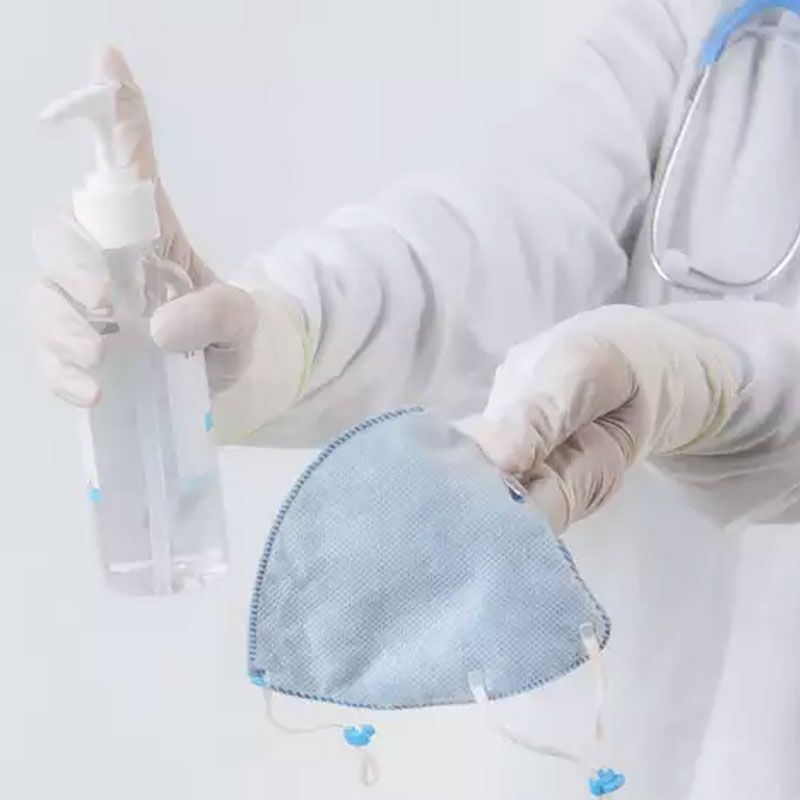
    The public also searched for ways to prevent infection. Online searches with keyword “n95 mask”, “n95 mask price”, and “3m n95 mask” rose an astonishing 1017%, 3002%, and 1962% respectively in January compared to December. From January to February, the per cent increase in online searches for the respective masks was 122.1%, 123.9%, and 83.11%. The SEMrush study shows there was reasonable awareness about the n95 face mask before the coronavirus epidemic. The per cent increase in the keyword “n95 mask” was relatively low compared to the per cent increase for other keywords because it was searched for a considerable number of times in December.  

    Other mask related keywords included “n95 respirator mask”, “n95 pollution mask”, “n95 face mask”, “medical mask”, “n95 mask uses”, “n95 mask price in India”, and “n95 mask reusable”.  Each keyword was searched between 7,500 and 700 times. Notably searches with the keywords “n95 respirator mask” increased a whopping 10400% times since December 2019.

    The SEMrush study shows that in addition to buying face masks, Indians are taking other measures as well to protect themselves from coronavirus. The study found that from January to February, searches for the keywords "hand sanitizer” grew by a substantial 82.43%.

    Speaking about the study Mr. Fernando Angulo, Head of Communications  SEMrush said, “Our study demonstrates that Indians actively try to protect themselves from epidemics, even when their epicentre is distant and the possibility of infection relatively low. The SEMrush study also captured data showing the kind of protective equipment Indians turn to protect themselves from airborne viruses. The n95 face mask was a relatively unknown product before the coronavirus epidemic; today, it is less so. The reason behind the massive increase in the number of times the n95 mask is being searched for is apparent; Indians concerned about the danger posed by coronavirus are scouting for the best preventative tool.

    For marketers, our study has captured the media’s role in creating demand. While the coronavirus certainly needs to be safeguarded against and the media’s is playing an essential role in keeping people safe; news created by the media is more likely than ever to present marketing opportunities in India”.  

  • Diwali Season witnesses Increase in online searches for Diwali Offers and Promotions reveals SEMrush study

    Diwali Season witnesses Increase in online searches for Diwali Offers and Promotions reveals SEMrush study

    MUMBAI: A SEMrush study shows that when Diwali, the most important festive season in India approaches, online searches for Diwali offers and discounts skyrocket. The SEMrush study shows every year over the past few years, with Diwali approaching, increasing numbers of people search online for Diwali offers, promotions, discounts, and make inquiries about pollution levels. With internet penetration growing considerably every month, the number of searches related to Diwali is expected to reach hitherto untouched heights in October 2019.

    While during the Diwali season in 2015 Diwali related keywords were used approximately 1 million times, in 2016 this number grew to well over 1.25 million. During the 2017 festive season, Diwali related keywords were used a whopping 3.3 million times but unexpectedly fell to 1.8 million the following festive season. In October of this year, Diwali related keywords are expected to be used approximately 4 million times. The SEMrush study shows in 2019, online searches containing Diwali related keywords have been steadily increasing since July. In that month they were used 246,000 times. In the following two months, such keywords were used 450,000 and 560,000 times.

    The SEMrush study shows the festive season piques consumer interest in online shopping. The Keyword “Flipkart Diwali Sale” was used an average of 17,992 over the past 4 years. Keywords such as “Diwali offer”, “Diwali Special Rangoli”, “Amazon Diwali Sale”, “Diwali Offer Mobile”, “Amazon Diwali Offer”, “Jio Diwali Offer”, “Diwali Offers Flipkart”, “Diwali Sale”, “Snapdeal Diwali Offer”, and “Diwali Special” were each used an average of 15371, 8031, 7957, 5759, 5200, 4475, 4266, 4175,4157, 3697 times respectively since 2015.

    The SEMrush study shows consumers have come to expect online retailers to provide intriguing discounts during the Diwali season. The study also highlights that many consumers still search for products from specific online retailers by inputting keywords in search engines rather than by directly going to their website or app. This is likely because many consumers are aware that online retailers have attractive offers during the festive season yet remain unaware of how to take advantage of them. They see no other alternative than to input their queries into search engines. It may also highlight that Indian consumers don’t find online retailers websites and apps user-friendly enough to spot the best deals. Hence many turn to search engines which seem less intimidating. The SEMrush study also reveals the relative popularity of online retailers in India with both Flipkart and Amazon in dominant positions with Snapdeal an also-ran. 

    Indians are also aware that Diwali produces pollution. Online searches containing keywords “Diwali air pollution” were made a total of 550 times during the festive season in 2015. In 2016, 2017, 2018 these keywords where input a total of 550, 1300, and 1000 times respectively. The SEMrush study also shows that many input searches with keywords “eco-friendly crackers” and “green crackers”. Of these two keywords, “green crackers” was searched 20000 times in October 2019 while “eco-friendly crackers” was searched 4500 times. This signals that Indians eager to buy fire crackers that don’t pollute are most likely to recognise such crackers when they are labelled “green crackers” as opposed to “eco-friendly crackers”.  The study shows Indians are not only aware that Diwali produces air pollution but are also sophisticated enough to try and mitigate such pollution by buying fire crackers that produce little or no pollution.

    Mr. Fernando Angulo, Head of Communications, SEMrush, said “Diwali is by far the most important festival in India and Indians have demonstrated immense adaptability by incorporating into Diwali their joy of shopping. The festival of lights burns considerably brighter because it is accompanied by major new purchases by most households. And growing numbers of Indian consumers don’t just buy more during the festive season, they buy more at the best possible discounts because they know where to find them online.

    He further added- Customers also know which online retailers are likely to offer them products at the best prices, this is highlighted by the diminishing popularity of an also-ran online retailer. Our study also shows that pollution during Diwali is a major concern as online inquiries about pollution levels are growing with each passing year”.    

  • Howdy Modi Summit in Houston leads to Spike in Number of Online Searches reveals SEMrush study

    Howdy Modi Summit in Houston leads to Spike in Number of Online Searches reveals SEMrush study

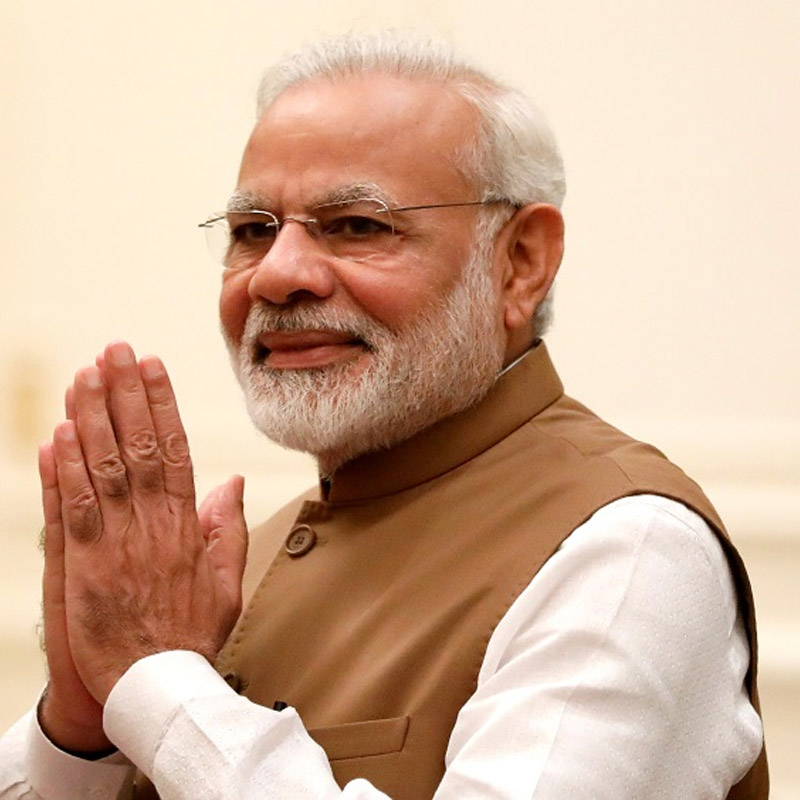
    MUMBAI: After winning the last election in the biggest landslide in Indian electoral history, PM Narendra Modi’s popularity hasn’t yet peaked globally shows a recent SEMrush study. Though everyone in India knows PM Modi, his popularity globally is still on the ascent. The Indian PM was welcomed at the Howdy Modi summit in Houston organized by his fans in the Indian American community. The Howdy Modi summit was held on September 22nd, 2019 and that date, online searches for “Narendra Modi” and “PM Modi” spiked 346% and 725% respectively.

    No doubt many in America took to Google to learn more about Narendra Modi, the SEMrush study captured this well. Of course, Indians searched for him as well. The sentiment expressed on Twitter was overwhelmingly positive. From September 15th-25th the SEMrush study showed that 66.37% of the sentiment expressed online about PM Narendra Modi had positive connotations and 18.42% of sentiment had neutral connotations. Only 15.22% of online sentiment about PM Modi during the same period had negative connotations.

    Emojis shared in tweets that had the words PM Modi and Narendra Modi during the mentioned period radiated positive sentiments. In tweets that used the words PM Modi and Narendra Modi, the most common emoji was a birthday cake; it was used a total of 4,865 times. The second most common emoji was one every Indian recognises, the folded “Namaste”; it was used a total of 4,858 times. The third most common emoji was a human face bursting with laughter with tears of joy falling from each closed-eye. The fourth most common emoji was a bouquet of flowers.

    Hashtags such as #howdymodi, #happybdaypmmodi, #watch, #happybirthdaynaredramod, #modi, #modiinhouston, #modiinusa were used a total of 12824, 3736, 2474, 2391, 1933, 1824, and 1750 times respectively. As PM Modi’s birthday is on 17th September, it’s understandable why #happybdaymodi and emojis with birthday cakes were used, Indian Americans wanted to wish the Indian PM a belated happy birthday. Twitter handles where PM Modi was mentioned most included that of American president Donald Trump who, calling the Indian PM a friend let him know he would be with him during the Howdy Modi summit in Houston. Engagement on the American Presidents tweet to PM Modi stood at 134982. Tweets by Indian politicians and Bollywood stars congratulating PM Modi during the Howdy Modi summit enjoyed considerable engagement as well.

    Speaking about the rising global popularity of PM Narendra Modi Mr. Fernando Angulo, Head of Communications, SEMrush, said "No Indian PM ever has enjoyed the huge popularity in India and overseas that Narendra Modi does today. While Narendra Modi’s popularity in India is understandable his popularity in the US and other foreign countries is unprecedented for an Indian politician. His popularity in the land of the free and close friendship with Donald Trump is all the more remarkable considering that just over a decade ago he was denied a US visa. Today he’s welcomed in America as a great friend and global leader, that’s statesmanship.

    He further added, I believe that our study captures the evolving global political landscape in which the popularity of national leaders isn’t confined to their own countries; rather great leaders today win admirers among the masses even in countries whose interests they aren’t elected to represent”.

  • Maruti, is the most searched automotive brand reveals SEMrush study

    Maruti, is the most searched automotive brand reveals SEMrush study

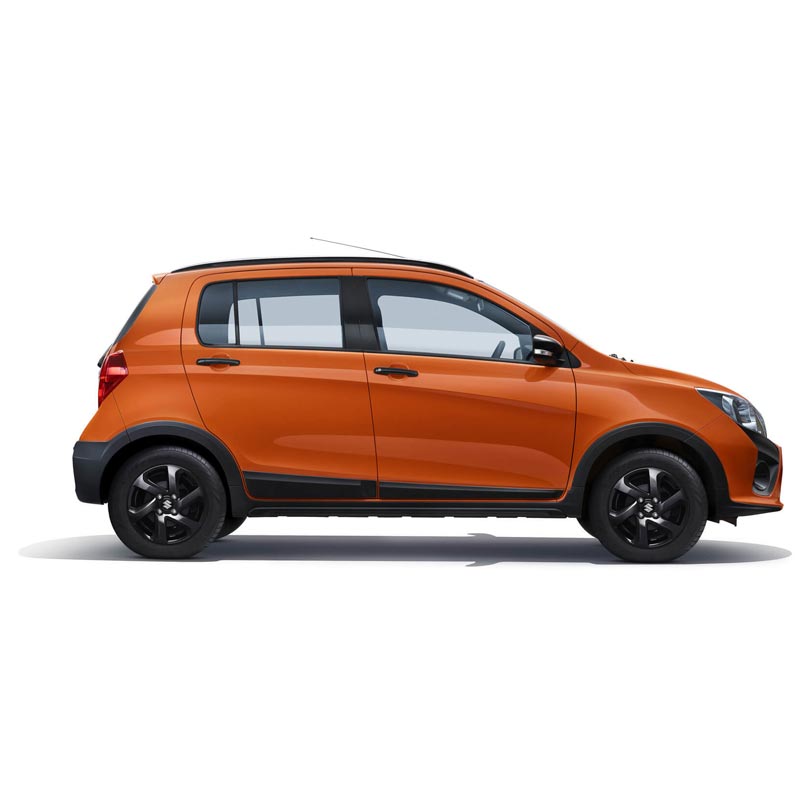
    MUMBAI: A recent SEMrush study revealed that during the current downturn, stalwart automotive brands Maruti, Hyundai, and Honda are the 3 most searched for automotive brands. India’s leading automotive brand Maruti was searched an average of 492,626 times each month between January to August 2018 and an average of 452,250 times during the same period in 2019. Hyundai, the second leading automobile brand in India, was searched an average of 309,375 times each month between January to August 2018 and an average of 295,625 times during the same period in 2019. Honda was searched 295,625 times between January to August 2018 and 280,375 times during the same period in 2019.

    The SEMrush study reflects that the current slowdown is impacting how many times online searches for automobiles are made. That demand for automobiles is falling is understood, the SEMrush study shows that fewer online searches for automobiles are concomitant with a fall in demand for automobiles. Clearly, when searching for a new automobile Indians use the internet to make a buying decision.

    Searches were made for other automobile brands as well. The fourth-highest numbers of online searches were made for Tata Motors followed by Mahindra, Volkswagon, Ford, and Renault. Each of these brands was searched for fewer times between January to August 2019 than during the same period in 2018, except Tata Motors, which was searched more often in 2019 than in 2018. 

    Several reasons have been given for the slump in the automotive sector of which one is that people are increasingly using ride-hailing services. The SEMrush study shows that view is not quite correct as during the period January to August 2019, there was a huge drop in the number of times people searched for cabs online compared to the same period in 2018. The number of searches made for the 4 leading ride-hailing companies Ola, Uber, Meru, and Mega fell dramatically from 683,825 to 465,350 in the 2 mentioned periods.

    Yet ride-hailing companies aren't going anywhere according to the SEMrush study. While people may be searching less often for ride-hailing companies, traffic to the site of ride-hailing company Uber increased in January to August 2019 compared to the same period in 2018. The number of visitors to Uber’s site in January to August 2018 was a little less than 4.5 million while during the same period in 2019 it increased to a little over 5.6 million.

    The SEMrush study suggests that a majority of those who know of ride-hailing companies and can use their services already do so as the number of people searching for them online is falling.

    Speaking about the results of the study Mr. Fernando Angulo, Head of Communications, SEMrush commented, “Our study has verified that there is indeed a slowdown in the automotive sector. That there is a slowdown isn’t news, yet that it shapes what consumers search for online is something few in India know. Our study verifies that online searches and demand for goods in the economy are strongly correlated; it also verifies that Indians are growing accustomed to learning about products online before buying them.

    He further added: The flow of online traffic also highlights consumer behaviour. Traffic to Uber’s website is increasing while the number of those searching for it online is falling. This highlights that there is significant awareness among consumers about Uber's services. Most consumers directly visit the company’s website to use its services and don’t need to perform a search for it”.