Tag: Self Regulation

  • Govt committed to self-regulation on issues of freedom of press: Rathore

    NEW DELHI: Minister of State for Information and Broadcasting Rajyavardhan Rathore today said the Government believes in the philosophy of Self Regulation regarding to the issues related to freedom of Press.

    The Minister was speaking with a UNESCO delegation led by its Assistant Director General for Communication & Information today in New Delhi Frank La Rue.

    The delegation apprised the Minister about the varied activities of UNESCO in the field of Media and Communication. Possible areas of collaboration with the Government were also highlighted by the delegation.

    The Minister said Community Radio will address the information needs at the grassroot level, providing updates on different local and relevant issues in their own language and dialect.

    He said the Government stood committed in its objective to provide the last mile connectivity through various communication platforms including Community Radio which has been provided a big push through various initiatives.

    He said the Ministry has increased the subsidy for setting up CRS from 50 per cent to 90 per cent in the North Eastern States and 75 per cent in other states subject to a maximum limit of Rs 7,50,000. In order to make it more participatory, varied set of participants including Universities and NGOs have been permitted to set up CR stations in the country.

  • Media told to exercise self-regulation and ensure balance

    Media told to exercise self-regulation and ensure balance

    NEW DELHI: Information & Broadcasting Minister M Venkaiah Naidu has stressed on the need for self-regulation and reasonable restrictions in the context of rapid expansion of different forms of media in the country and the attendant competition in reporting on various events to maintain public order and ensure integrity and sovereignty of the country.

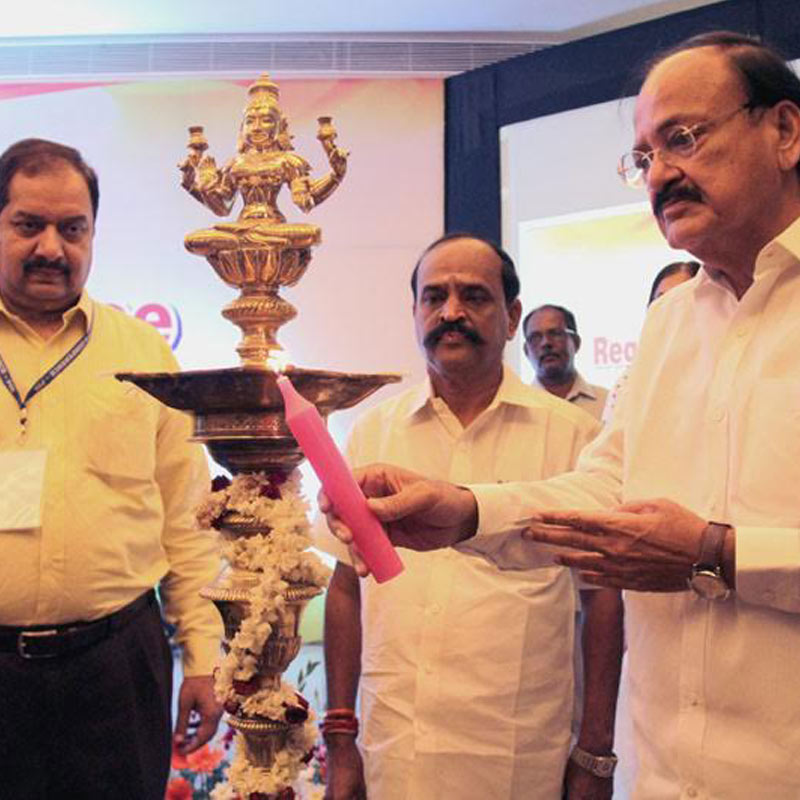
    Inaugurating a two day ‘Regional Editors Conference’ at Chennai today, Naidu said that there is a need to ensure balance between freedom of expression and the genuine need for reasonable restrictions to ensure that that there is no ‘divisive communication’ given the social, cultural and economic diversity in the country. About 100 media persons from the southern states and Lakshdweep are attending the conference.

    Self-regulation by media could be useful in this regard, he said. The growing compulsion of ‘instant communication’ should not lead media away from truthful reporting, the Minister stressed.

    He urged the media to effectively play out its role as a partner in the progress of the nation by empowering the citizens with required information that would give them a voice. Naidu noted that success of developmental programmes of central and state governments depend on mass mobilization of people in which the media has an important role to play. “Hence, the Government led by Prime Minister Narendra Modi has placed communication as a critical component in the Governance of the Nation”, he added.

    Noting that media in the country has been by and large progressive, Naidu reminded it of its first responsibility being towards the nation and the society. He noted that despite the emergence of new forms of media, print media has been reporting steady growth which is being driven by the growth of regional media. Naidu noted that regional media is uniquely placed in connecting the governments and the people given their focus on regional and local issues and their proximity to the people.

    He expressed concern over politicization of public discourse on issues that have a bearing on social cohesion and national unity and integrity. He said that “Human rights are meant for human being and not for terrorists. One should not identify those imprisoned by their caste or religion. Illegal detention is not correct. One can seek fast track adjudication but not on the basis of caste or religion. Media should guard itself while reporting on such demands and events”.

    Tamil Nadu Information & Publicity Minister Kadambur Raju referred to the developmental initiatives of the State Government, the efforts being made to create an enabling environment for effective functioning of the media and the positive role being played by the media.

    The two day Regional Editors conference organized by the Press Information Bureau is aimed at sharing with the senior journalists of the southern States and Union Territories, the perspectives of and performance under new initiatives of the Government of India in sectors pertaining to Urban Development, Information Technology, Coastal security, Commerce and Industry and Shipping and Highways Development.

  • Media told to exercise self-regulation and ensure balance

    Media told to exercise self-regulation and ensure balance

    NEW DELHI: Information & Broadcasting Minister M Venkaiah Naidu has stressed on the need for self-regulation and reasonable restrictions in the context of rapid expansion of different forms of media in the country and the attendant competition in reporting on various events to maintain public order and ensure integrity and sovereignty of the country.

    Inaugurating a two day ‘Regional Editors Conference’ at Chennai today, Naidu said that there is a need to ensure balance between freedom of expression and the genuine need for reasonable restrictions to ensure that that there is no ‘divisive communication’ given the social, cultural and economic diversity in the country. About 100 media persons from the southern states and Lakshdweep are attending the conference.

    Self-regulation by media could be useful in this regard, he said. The growing compulsion of ‘instant communication’ should not lead media away from truthful reporting, the Minister stressed.

    He urged the media to effectively play out its role as a partner in the progress of the nation by empowering the citizens with required information that would give them a voice. Naidu noted that success of developmental programmes of central and state governments depend on mass mobilization of people in which the media has an important role to play. “Hence, the Government led by Prime Minister Narendra Modi has placed communication as a critical component in the Governance of the Nation”, he added.

    Noting that media in the country has been by and large progressive, Naidu reminded it of its first responsibility being towards the nation and the society. He noted that despite the emergence of new forms of media, print media has been reporting steady growth which is being driven by the growth of regional media. Naidu noted that regional media is uniquely placed in connecting the governments and the people given their focus on regional and local issues and their proximity to the people.

    He expressed concern over politicization of public discourse on issues that have a bearing on social cohesion and national unity and integrity. He said that “Human rights are meant for human being and not for terrorists. One should not identify those imprisoned by their caste or religion. Illegal detention is not correct. One can seek fast track adjudication but not on the basis of caste or religion. Media should guard itself while reporting on such demands and events”.

    Tamil Nadu Information & Publicity Minister Kadambur Raju referred to the developmental initiatives of the State Government, the efforts being made to create an enabling environment for effective functioning of the media and the positive role being played by the media.

    The two day Regional Editors conference organized by the Press Information Bureau is aimed at sharing with the senior journalists of the southern States and Union Territories, the perspectives of and performance under new initiatives of the Government of India in sectors pertaining to Urban Development, Information Technology, Coastal security, Commerce and Industry and Shipping and Highways Development.

  • “Reaching out to the mass is our biggest challenge”: ASCI’s Benoy Roychowdhury

    “Reaching out to the mass is our biggest challenge”: ASCI’s Benoy Roychowdhury

    MUMBAI:  Step outside your home and there is hardly a place where you can’t spot an advertisement — bus stops, public transports, and of course, the hoardings.  At home it reaches us through the glaring television screen or through melodious jingles via radio waves, in the newspapers and newspaper inserts, in magazines and leaflets. Many advertisers know us on a first name basis and communicate with us through SMS and WhatsApp forwards. Given their all-encompassing nature, there is no shortage of ads that claim everything and anything under the sun and  prey on gullible consumers.


    In spite of disagreements and disapprovals on certain advertisements, people hardly raise their voice against such ads assuming it is beyond their power – a fact that poses a challenge to the Advertising Standards Council of India (ASCI)


    Need to be better known:


    While ASCI commands considerable credibility amongst the industry operators, there is a growing need for it to be better known as an organisation. “Today pretty much all of the industry knows us. The large advertisers, the big companies who deal with us know how we function. The issue lies with the lay consumers who are directly affected by rogue and misleading advertisements,”says  HT Media executive director and recently appointed ASCI chairman Benoy Roychowdhury.


    “Often people come across something offensive or false, but aren’t informed enough to take action against it. When they see something offensive, they question themselves ‘what to do about it? Most of them are unaware of a body that protects their interests against advertisers, without drawing them into court litigations, etc.  I think informing them about ASCI and encouraging them to actively use our help to address misleading advertisements is our biggest challenge at hand,” Roychowdhury admits.


    ASCI is already taking action to redress the situation by reaching out to the consumer digitally.


    Roadmap for maximum reach:


    Considering the fact that gaining popularity is ASCI’s biggest challenge, Roychowdhury shares the regulatory body’s plans to launch a campaign to spread awareness of ASCI and its functions. “We are working on an advertising campaign, which we plan to put in place in the next few months. The purpose is to reach out to consumers and tell them what to do when they see some offensive advertising and familiarising them with how ASCI functions,” shares Roychowdhury.


    He also adds that the agencies on board with ASCI will contribute to the concept and execution of the ad campaign ASCI is about to launch.  With 2015 being the thirtieth year of ASCI’s operation, the organisation wants to send out a message through the campaign about how it has been working to protect consumers and what it has to offer.  “In fact, five or six years ago, we did a similar campaign with a popular television actress with the tagline, ‘Jhoot bole kauwa kaate’”, Roychowdhury recollects.


    “The second step in ASCI’s roadmap is to make it easier for consumers to reach out to ASCI and lodge their complaints. A vital step in this process was to put out an ASCI app that enables consumers to immediately share their grievances with us. Today, we have also started receiving a bulk of our complaints through emails as well, and we are also looking at other modes of communication with consumers like Whatsapp etc.,” shares Roychowdhury. His contention is that if the process to lodge a complaint becomes complicated, consumers are likely not to reach out to ASCI.


    While conventional media like print and broadcast are going steadily, it is the digital media that is growing rapidly. “Hence we need to focus on ad campaigns on the digital platform as well,” he asserts. Following this directive, the organisation has upped its ante in the social media sphere in the last one and half years. “We are taking part in more online discussions and expanding our engagement with people through various social networking sites like Facebook, Twitter, LinkedIn etc. as well,” he adds.


    Digital India- an edged sword: Native advertising


    While technology and digitisation has brought ASCI closer to the consumer, it has also the paved way for new marketing initiatives by advertisers using different mediums and tools that makes it harder for the self-regulatory body to implement its guidelines.


    “Digital is great for ASCI as 15 percent of our complaints are digitally sent to us now. Our app allows you to take a photograph of the advertisement you want to complain about and send us through the app.  10 percent of our digital presence is through this app. To that extent digital is something great,” Roychowdhury reveals.


    ASCI does not find any major problem in dealing with digital advertisers since the body believes in accepting and evolving with the society. “The real issue is that digital advertising is giving way to these so called native advertising, most of which is content driven. They fall into this grey area between content and advertising. We need to develop norms for them as we as a body do not pass any comment on content, unless it is offensive and obscene to the public,” he says.


    While consumers have predominantly complained about TV Commercials, ASCI has also seen an increase in the complaints against digital advertisements rising from 5 percent  in 2013-14 to 11 percent in 2014-15. The challenge is also to identify an advertisement from user uploaded content, and differentiate between advertorial and editorial.


    Reassuring consumers, Roychowdhury further adds, “Thankfully there are people ahead of us in the curve in other countries like Advertising Standards Authority (ASA) in UK. We are examining their rules and bylaws to figure how to incorporate them in India. Also the sheer size of the digital space is so vast that it becomes difficult to monitor each sphere of it.”


    Censorship of advertisement:


    Apart from mitigating issues about misleading advertisements, ASCI also has the additional responsibility to look out for advertisements that hurts people’s sentiments. Several consumers complain about vulgar and obscene advertisement to ASCI. But unlike film and television content, advertisements don’t go through a censorship screening.


    Explaining the knowhow behind the process, Roychowdhury says, “We don’t pre-screen advertisement in India. Every channel has its own set of rules and regulations that the advertiser has to adhere to. Moreover, ASCI being a self-regulatory body can only provide an advertising advice when a certain advertiser approaches them with questionable content, which is not binding on them. Having said that, most of the suggestions given by us have been upheld by advertisers and have worked to their advantage.”


    The parameters of judging whether an ad is offensive and vulgar are changing with times as society moves ahead and becomes more progressive. “There was a time when airing lingerie ads was unthinkable and now we don’t even flinch at them,” Roychowdhury compares. “Therefore the question of offensive content is a subjective matter and the norms keep evolving.”


    “When a council member looks into such ads they take into consideration if it can cause grave or widespread offence. An ad can cause grave offense to an individual, while others will be fine with it. Secondly, we judge an advertisement based on the product it is selling. If it is for lingerie or a condom, then the advertisement’s content needs to be taken in that light. On the other hand, we will raise an eyebrow to a car advertisement having unnecessary skin show,” he explains.


    Industry support:


    Being a self-regulatory body comprising of all four sectors connected with Advertising — advertisers, agencies, media including broadcasters and the press and others like PR agencies, market research companies, the organisation enjoys support and reverence from its stakeholders.


    “The specific reason behind why you have a self-regulatory body is because before moving the court, here is an option to settle the issues as per industry guidelines. It is challenging at times to keep our stakeholders on the same page, but if they are reminded of the option they have apart from ASCI – moving the court or going to the government, they clearly prefer us. Going to the government is a terrible option as it takes time due to bureaucratic involvement and secondly it comes at a hefty price. Whereas, ASCI addresses the issues without having to employ fancy lawyers or going through a tedious process,” explains Roychowdhury.


    While Chowdhury doesn’t cringe at the idea of going to the court if any party has been given a court notice, as ASCI isn’t above the court, going by industry behaviour, advertisers tend to settle intra-industry disputes through ASCI.


    “Most advertisers see us a far better option than going for either litigation or moving any other government body.” But the picture is completely different when it comes to the masses, the consumers who are directly affected by misleading advertisements.


    Industry dispute:


    “Lately we have observed a number of broadcasters using ASCI mails to settle their own personal score with rivals”. Roychowdhury makes it very clear that ASCI is strongly against such usage of their notices and mailers that are not included in their press releases meant for the public.


    “It’s not like we are carrying out any business behind closed doors. All the decisions we make are available through our press releases on our website and people are free to go over it. But picking specific details to carry out their rivalry is uncalled for,” he says.


    Out of the 1877 advertisements complained against during the year, 71 were received from industry regarding misleading advertising or unfair competitive advertising. Of these, 58 were upheld, as per ASCI’s CCC analysis report.


    “We are here to promote self-regulation among advertisers, so intra-industry disputes are more than welcome at ASCI. Because the resolution takes less time thanks to our fast track mechanism for intra member complaints, we are a more preferred mode to address their grievances. What we do discourage is going to the media with individual decisions to settle personal or industry rivalry. In the long run it doesn’t benefit the industry. In fact we don’t entertain queries on such issues,” he shares.


    While health and teleshopping remain an issue for ASCI to tackle, Roychowdhury informs that education has emerged as a sector that gives way to rogue advertisement.


    Biggest offenders:


    A majority of the advertisements against which complaints were upheld fall under the educational sector (439), followed by the healthcare sector (297) and medical services clinics (271).


    “This year we also see emergence of complaints against advertisements in the automotive (69) as well as the telecom sector (58). There have been other complaints against leadership claims of media (Channels/Publications), teleshopping advertisements promising magical results and real estate advertisements as well,” Roychowdhury informs.


    Surprisingly, he doesn’t find any issues with Ayurvedic and herbal product advertisers. “Ayurvedic remedies form a very respectable section of Indian traditions. ASCI doesn’t discourage advertisement of such products, as long as they don’t make unnatural claims like pills that reduce weight in a  jiffy and Ayurvedic products that cure cancer, AIDS  etc,” he says.


    Overall, ASCI has been able to achieve close to 90 per cent compliance, which is a good figure considering ASCI is a self-regulatory body. With the backing of regulatory agencies such as the MIB as well as the DCA, Roychowdhury hopes that this number will go up in the coming year.

  • Government to look at law for preventing attacks on press

    Government to look at law for preventing attacks on press

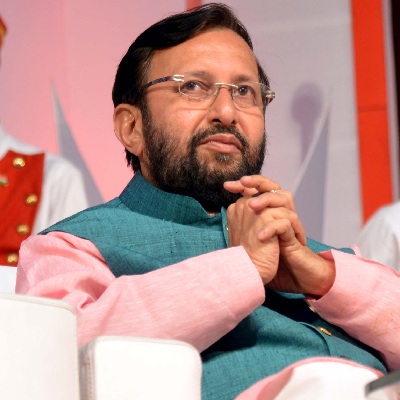
    MUMBAI:Prakash Javadekar has been making a lot of appearances since he took over as the new Information and Broadcasting Minister. For a man who is aiming to be a media-friendly rather than a media-shy I&B Minister,  Javadekar took the centrestage at the Red Ink Awards held in Mumbai on 7 June, to send across a message from the government to the media fraternity.


    He started off by stating that the essence of democracy is the freedom of press and the Modi government is fully committed to the full freedom of media and it is their cardinal principle. While he questioned whether press meant owners, editors, the journalists or the readers and viewers, he also reminded the media that “society expects accuracy, balance and fairness from the media.”


    According to Javadekar, self-regulation is better than censorship. “I don’t like the word regulation. It should be self-restraint. Media needs to think whether it will play only what the public is interested in viewing or if it will also play what is in the public’s interest,” he said.


    Attacks on the press are not unknown of and Javadekar in his speech did not fail to acknowledge it. “This needs to be prevented. We will surely see if there is a possibility of a central law for prevention of attacks on press,” he stated.


    Expectations from the new Minister are high and he is in no hurry to come up with a game plan on the various issues. “There are many issues pending such as foreign direct investment in media, FM news, social media, digital media, digitisation etc. These are issues we will talk to all the stakeholders and then come to a consensus. We don’t want to thrust some decision on the whole sector but evolve it by consensus.”


    He also stated that both the  print and the electronic media will flourish in the upcoming years. 

  • Self-regulation has to come from within

    Self-regulation has to come from within

    NEW DELHI: The government should restrict itself to penalising inaccuracies in reportage while allowing the television news industry to regulate itself, senior journalists said here today.

    India’s news channels, which had faltered in the Mumbai terror coverage, have worked out stronger internal checks and that seems to be working.

    Speaking at the fourth Indian News Television (NT) Summit here today, MCCS editor Shazi Zaman said that the only way to protect the freedom of the media is self-regulation and that has to come from within. “Neither an organisation nor an editor can impose self-regulation; it is something that everyone has to practice.”

    Commercial considerations, however, have forced news channels to have a high-quotient of entertainment and trivial content.  
         
      “In primetime, news channels have an equal proportion of entertainment and political content. Sports takes up 15 per cent of the primetime space, while issues related to agriculture and development stories get less than a five per cent share,” said CMS director PN Vasanti, who was moderating the session on “Making an Impression”.

    Even staying objective is an arduous task. TV Today Network news director QW Naqvi quoted examples of how all the news channels aired stories on “Delhi getting drowned with floods” which was far beyond the scope of objectivity.

    Naqvi said that with the mushrooming of news channels, quality has taken a hit.
    “With the increase in quantity, the quality has gone down,” he rued.

    NewsX co-promoter and Editor-in-Chief Jehangir S Pocha, however, disagreed. “The Indian media industry needs enough media so that viewers have options and there is no cartelisation. What is needed on the other hand, is stringent laws that can penalise those who disseminate inaccurate information.”

    CNN IBN managing editor Vinay Tewari emphasized on the need to rigorously train the new crop of reporters and journalists.

    The time has arrived for the industry to go back to the basics. “While dealing with serious issues, there is sometimes fear and mistrust, even in legitimate cases,” said Tewari.