Tag: Self Regulation

  • Govt supports self-regulation for OTT industry, says I&B minister Anurag Thakur

    Govt supports self-regulation for OTT industry, says I&B minister Anurag Thakur

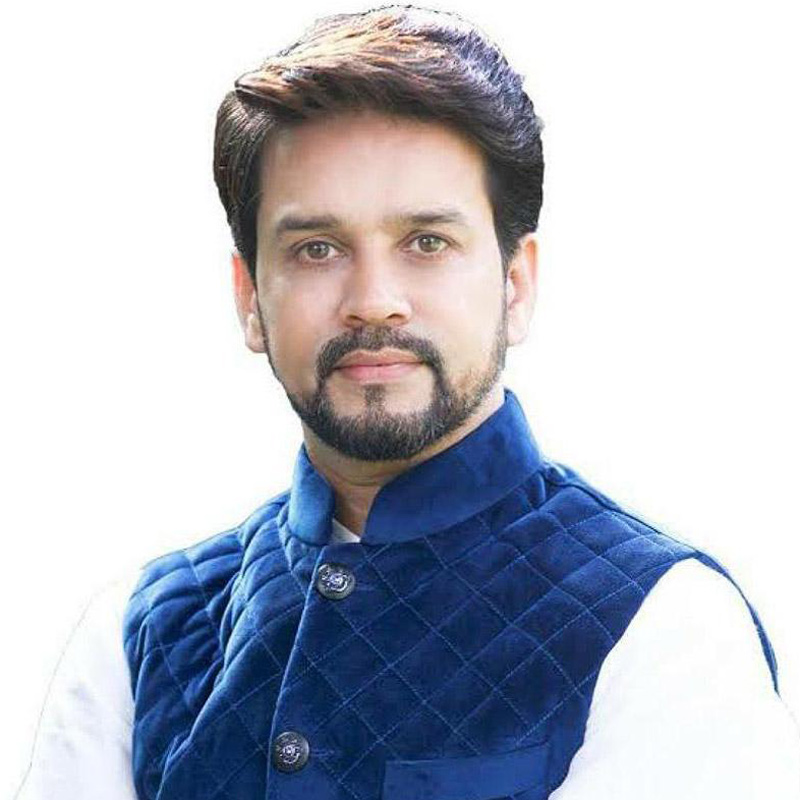
    Mumbai: The minister of information and broadcasting, sports & youth affairs, Anurag Thakur said that the government supports self-regulation for OTT industry. He said while addressing the inaugural of CNN-News18 Town Hall recently.

    “When we decided on self-regulation on OTT, we wanted to create an industry driven check on everything,” Thakur said.

    Thakur said that systems and processes were already in place for viewers to raise any complaints or grievances. He said that in case the government had any complaints with any scenes, they raise it directly with the platforms.

    “There are age groups, where a viewer can submit their credentials and watch whatever they wish to. We have never stopped a movie, or certification. But in case there are complaints for a particular scene we do raise the same with the platforms and the same is usually taken down by themselves to ensure that there is no tension in the country.” Thakur added.

    CNN-News18 hosted the inaugural session of ‘Town Hall,’ an on-ground event where top policy makers, opinion leaders and prominent voices engage in meaningful conversations with the channel’s news team.

    The first edition of Town Hall was held on Saturday with top union ministers of the Narendra Modi government such as Dr S Jaishankar, Anurag Thakur and Smriti Irani were present.

  • No case has gone to tier-3 so far for Digital Media Ethics Code violation: SC justice Arjan Sikri

    No case has gone to tier-3 so far for Digital Media Ethics Code violation: SC justice Arjan Sikri

    Mumbai: Publishers of online curated content have successfully implemented the three-tiered redressal mechanism for addressing grievances regarding violations of the Digital Media Code of Ethics as set forth by the IT Rules 2021, said former Supreme Court justice Arjan Kumar Sikri. “No case has gone to tier-3 so far for Digital Media Ethics Code violation,” he noted.

    Sikri was addressing the Pixels conference organised by Internet and Mobile Association of India (IAMAI). He chairs IAMAI’s grievance redressal board formed as a part of the digital publisher content grievances council (DPCGC).

    “All complaints directly addressed to MIB/Inter-departmental Committee (level-3) should be pushed by the committee to be addressed by the platform (level-1) and then by the self-regulating body (level-2) before being taken by level-3. The exercise of adjudicatory powers by the executive branch of the Government, if not done judiciously, will jeopardize the freedom of digital entertainment in India,” he said.

    He further stated that the main concern of the industry is protecting intellectual rights in the digital entertainment space as well as addressing questions about data privacy. He added that ultimately when these issues come to regulators or courts, it is to be examined from the prism of – democracy, dissent, and the Constitution of India which guarantees freedom of speech under Article 19 (1) (a). He emphasized the need for an equilibrium between all the stakeholders, with minimal governmental control and maximum self-regulation to seamlessly regulate emerging sectors.

    The conference was also addressed by the Government of Telangana principal secretary for the industries and commerce department and information technology, electronics, and communications department Jayesh Ranjan.

    He stated that the Telangana government is looking to strengthen infrastructure for the sector. “We are setting up a facility of 1.4 million square feet in Hyderabad called image tower, which would be a hub of animation and VFX. We are confident that once the image tower is up and running this would be the new face of Hyderabad,” Sikri said.

  • Association of Regional TV Broadcasters of India merges with NBF

    KOLKATA: The Association of Regional Television Broadcasters of India (ARTBI), on Friday merged with the News Broadcasters Federation (NBF), making NBF the largest body representing the business interests and editorial freedom of news television broadcasters in the country.

    “The amalgamation of ARTBI makes NBF beyond doubt the largest pan India broadcasters’ body, more than twice as large as another existing broadcasters’ association. With this significant scale NBF will set new news standards and highest self-regulation and editorial standards,” said News Broadcasters Federation president Arnab Goswami.

    The decision was ratified at the NBF Governing Board meeting on 18 June. The amalgamation is the first-ever coming together of two industry bodies in the news broadcasting sector, under a single umbrella to help news broadcasters be independent and successful. It is crucial as it would help regional news channels and their digital platforms to understand and comply with regulatory requirements. The huge step aims to strengthen the industry by building the Federation more democratic, diverse, and united in spirit, in the best interest of the news broadcasting industry and the public at large.

    “We are happy with the merger of India’s first recognized Association of Regional Television Broadcasters of India with NBF. Now the time is there for the consolidation where we must consolidate NBF and ARTBI together so we form the largest body and can do much better for all stakeholders involved,” said ARTBI founder Kartikeya Sharma.

    ARTBI is the only regional news broadcasting industry organisation that also sits on the empanelment committee to empanel channels and it is recognized by the ministry of information and broadcasting (MIB). Post the amalgamation, NBF members will also benefit from the empanelment and other benefits.

    “NBF most proudly and humbly welcomes the members of ARTBI into the NBF fold to stand together strongly for the sustainability of the news broadcasting sector in India,” said NBF secretary-general R. Jai Krishna. “The joint entity will support and help smaller and regional news broadcasters, and will upgrade the standard of the news broadcasting industry in a more comprehensible manner.”

    “Association of Regional Television Broadcasters of India (ARTBI) has been working for resolution of the issues of regional channels at national and state levels with government and other agencies for the past over a decade. The broadcasting industry has evolved during this period. The issues of regional and national broadcasters are almost the same. To leverage the strength and bring in efficiency it has been decided to merge ARTBI with NBF. I am sure this initiative will strengthen the cause of regional channels,” said Rakesh Sharma, Convenor, ARTBI.

  • IBF ropes in Siddharth Jain as secretary general

    IBF ropes in Siddharth Jain as secretary general

    New Delhi : The Indian Broadcasting Foundation (IBF), the apex body of broadcasters, on Thursday appointed Siddharth Jain as its secretary general.

    An industry veteran, Jain’s career spans over three decades. Until 30 April, he was working with Turner International India Pvt. Ltd. as SVP and managing director – South Asia.

    Commenting on the appointment, IBF president, K. Madhavan said, “Siddharth has demonstrated great competency in nurturing efficient, talented cross border teams of industry experts and is highly adept in driving innovation to turn adversities into opportunities. Given his remarkable expertise in leadership and advocacy, business strategy, corporate governance and compliance, we are confident in his ability to steer the IBF on a path that helps realize the sector’s value chain to the optimum. I, along with the rest of the IBF members, welcome Siddharth and wish him the very best for his new role.”

    Jain is an accomplished enterprise business leader known for expertise in business strategy, revenue/profitability/EBITA growth, financial management, sales & marketing, business development, international brand launches & development, account management, strategic alliances & partnership development, relationship management, and corporate governance and compliance stated IBF in a release.

    Meanwhile, IBF is being renamed as Indian Broadcasting & Digital Foundation (IBDF), as it expands its purview to cover digital platforms to bring all digital (OTT) players under one roof. IBF is also in the process of setting up a separate subsidiary to facilitate the entry of OTT players.

    The subsidiary will be carrying out various activities for its member OTT players including handling the day-to-day activities of the industry-led Level-II appellate Self-Regulatory Body (SRB) called Digital Media Content Regulatory Council (DMCRC) for non-news digital OTT platforms, similar to Broadcast Content Complaint Council (BCCC).

  • Former SC judge Justice Vikramjit Sen appointed chairman of IBF’s new self-regulatory body

    Former SC judge Justice Vikramjit Sen appointed chairman of IBF’s new self-regulatory body

    New Delhi: Former Supreme Court judge Justice Vikramjit Sen was on Monday appointed as the chairman of the newly formed self-regulatory body – Digital Media Content Regulatory Council (DMCRC) formed by the Indian Broadcasting Foundation (IBF), the apex body of broadcasters.

    The industry-led self-regulatory body (SRB) for digital OTT platforms will work as a second-tier mechanism at the appellate level, quite similar to the Broadcast Content Complaint Council (BCCC), which IBF had implemented for the linear broadcasting sector in 2011. DMCRC was formed as per the mandate of the Information Technology (Intermediary Guidelines and Digital Media Ethics Code) Rules, 2021 that came into effect on 26 May, with active consultation amongst the creative industry fraternity.

    The newly formed Council constitutes prominent personalities from the media & entertainment industry and Online Curated Content Providers (OCCPs), with experience in IPR, programming, and content creation. Meanwhile, IBF will also be renamed as the Indian Broadcasting and Digital Foundation (IBDF) as it expands its purview to cover digital platforms to bring all digital (OTT) players under one roof. 

    A former supreme court judge, Justice (retd) Sen has practiced in all the courts in Delhi, although primarily in the high court of Delhi. He was elevated to the apex court on 24 December 2012. He was also appointed chairman of the Broadcast Content Complaints Council (BCCC)- a self-regulatory body for the non-news and current affairs television channels in India in 2017, said IBF in a statement on Monday.

    The other members of the council are national award-winning filmmaker Nikkhil Advani, Banijay Group CEO and founder Deepak Dhar,  prominent artist, filmmaker, and writer Ashwiny Iyer Tiwari and creative writer and innovative director, Tigmanshu Dhulia. The other two members from the OCCPs include Sony Pictures Pvt. Ltd, general counsel Ashok Nambisan, and Star and Disney India, chief regional counsel Mihir Rale and Disney India.

    Speaking on the appointment of the committee, IBF president, K. Madhavan said, “I am delighted that so many experts from the media and entertainment industry have come forward and accepted the invitation of IBDF to be part of the proposed self-regulatory body. I look forward to working with the Council whose mandate is to ensure freedom of expression of the Indian creative industry as well as help the discerning audience of the OTT platforms to have unhindered access to world-class and differentiated content. This is a historical and win-win moment for all the stakeholders i.e. the M&E industry, the policymakers, and the subscribers of the OTT platforms.”

  • SonyLIV and Lionsgate sign IAMAI’s self regulation code

    SonyLIV and Lionsgate sign IAMAI’s self regulation code

    KOLKATA: The Internet and Mobile Association of India (IAMAI) today announced SonyLIV and Lionsgate as the latest leading online curated content providers in India to sign the Universal Self-Regulation Code.

    The code has already garnered wide support from the industry and has onboarded 15 of the leading Online Curated Content Providers in India like ZEE5, Viacom 18, Disney Hotstar, Amazon Prime Video, Netflix, MX Player, Jio Cinema, Eros Now, Alt Balaji, Arre, HoiChoi, Hungama, Shemaroo, Discovery Plus, Flickstree.

    Read more coverage on self-regulation code 

    IAMAI digital entertainment committee chairman Tarun Katial said, “I am overwhelmed with the support received on the code and delighted to welcome SonyLIV and Lionsgate as the 16 and 17 leading OCC providers in India to sign the ‘Universal Self-Regulation Code’. We already have India’s leading OTT providers as the signatories and expect more players to join the initiative in the coming weeks.”

    Sony Pictures Networks India general counsel Ashok Nambissan said, “We are delighted to join the league of signatories of the Universal Self-Regulation Code. We look to working closely with the IAMAI and other OTT players to get broader acceptance for the Code as well as the Government’s support for the industry’s efforts at self-regulation.”

    Read more coverage on IAMAI

    The Code is effective from 15 August 2020 and allows OCCPs to comply with all the guidelines in a timebound manner. Each signatory to the code has agreed to appoint an external advisor as part of the grievance redressal mechanism within 60 days from the launch of the code i.e. 4 September 2020.

  • MIB may nod in favour of self-regulation code for online video streamers

    MIB may nod in favour of self-regulation code for online video streamers

    MUMBAI: An upswing in online streaming platforms in India has drawn attention of authority as well as stakeholders on regulation. As per industry sources, most of the major players have agreed to a code of self-regulation that may receive an endorsement from the Ministry of Information and Broadcasting (MIB).

    While Netflix, Star India’s Hotstar, Reliance Jio, Zee5, AltBalaji, SonyLiv and Times Internet Limited-owned MX Player are ready to follow the codes, giant international players Amazon Prime Video, Google and Facebook are not in agreement. According to sources, there are some differences over details of grievance redressal mechanisms among the players who are ready to accept the code.

    Indiantelevision.com has learnt of the existence of a document called “Code of best practices for curated online video platforms” which depicts the principles, objectives as well as the codes of the self-regulation.

    The key objectives of the code is to empower consumers to make informed choices and protect the interests of consumers. It also looks at the creative freedom of content creators and artists. Providing mechanism for grievance redressal in relation to content made available by the platforms has also been highlighted under the objectives.

    As per the said draft, the code properly defines prohibited content and age-inappropriate or sensitive content. Any content showing disrespect to the national emblem or national flag, child engaged in sexual activities, outrages religious sentiments, promotes terrorism will be prohibited.

    “The signatories to this code seek to protect the consumers’ ability to choose the content that is appropriate for themselves and their families. The objective is to use information and technological tools to equip consumers with requisite knowledge and awareness, to enable informed decisions on the consumption of content,” the draft is said to mention.

    Discussions on grievance redressal mechanism have also acquired an important place in the document. There is suggestion to internally institute as part of their operational systems an independent Standards and Practices (S&P) department to receive, objectively address any online consumer related concerns and complaints in relation to content made available.

    There are also suggestions that the signatories of the code shall establish a grievance redressal body – the Content Committee, which shall address grievances from users on violations of the code. The detailed process, functioning and powers of the Content Committee will be institutionalised in due course. However, ZEE5 and Netflix have not agreed to complaint redressal codes yet.

    Although the voluntary censorship code is aimed at maintaining creative freedom, the rules under the code highly reflect the model of TV content censorship. According to earlier reports, The Internet and Mobile Association of India (IAMAI) has supposedly drafted the code.

  • MIB’s Rathore signals liberalised regime for online media

    MIB’s Rathore signals liberalised regime for online media

    MUMBAI: Hardly 24 hours into his job and minister of state (independent charge) in the Information and Broadcasting ministry (MIB) Rajyavardhan Singh Rathore is saying things that could make him the industry’s and more specifically the independent media crowd’s darling.

    Speaking to reporters in New Delhi, Rathore emphasised that media has to opt for self-regulation and the government has no plans to regulate news portals and media websites.

    He said most publications and TV channels are already self-regulating at various levels, first at the reporting journalist’s level and then at the editor’s desk. He added that this was a model that the government was more than happy to continue with and support wholeheartedly.

    He clarified that media had misunderstood reports that it was setting up a committee to frame rules to regulate news portals and media news websites.

    The prime minister is very clear that the media in our country is one of the very important pillars of democracy and they have to self-regulate, Rathore highlighted.

    He said Prasar Bharati will be strengthened and high priority would be given to better and informative programmes.

    He also pointed that “it is about a collective responsibility that media becomes the voice of the people, whether it is Prasar Bharati or private network or channel. We will work in this direction.”

    Just yesterday, the baton was handed over from senior minister Smriti Irani to junior Rathore. He now has independent charge while she heads over to textiles. He has been in the ministry for the last four years as state minister and has finally got full command.

    Also Read :

    Smriti Irani moved out of MIB as Rajyavardhan Singh Rathore gets independent charge

    MIB moves to regulate online media: various organisations join issue

    Online media professionals write to Smriti Irani expressing regulation concerns

  • IT minister says won’t allow India to be centre of data pilferage

    IT minister says won’t allow India to be centre of data pilferage

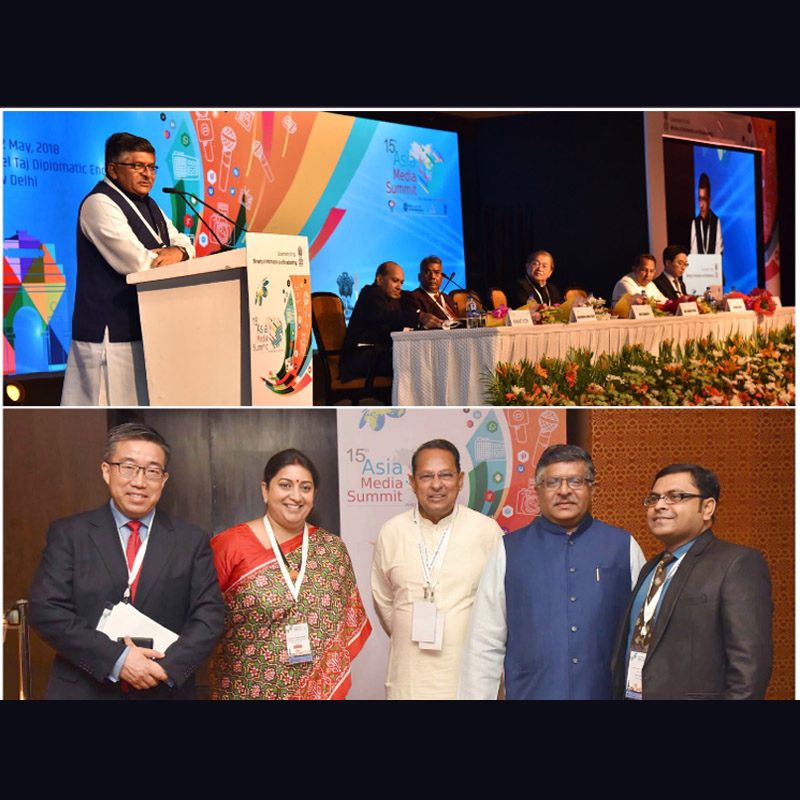
    MUMBAI: The country’s Electronics & IT and Law & Justice minster Ravi Shankar Prasad has come down sharply on data misuse. Speaking at the 15th Asia Media Summit, he said that the government would not allow the country to become a centre of data pilferage and data commerce that, through collusive methods, would be used to influence its electoral process.

    He added that all online companies, which were in the business of data commerce, must understand the nuances of accountability. When the recent controversy surrounding data privacy cropped up, with the Facebook-Cambridge Analytica scandal, the government took a firm stand. Since it is expected that India will be a big centre of data analytics, there is a need to have a proper coordination on data availability, data utility, data innovation, data anonymity and data privacy. Prasad also mentioned that a committee headed by a retired Supreme Court judge was looking into the issues and would soon come out with a data protection law.

    Though social media poses several challenges, Prasad said that the government was committed to the freedom of press but there was a need to segregate the real from the dangerous. The media, he said, had all the rights to inform, circulate, criticise, advice and counsel but the constitution allows for reasonable restrictions to be placed.

    He stated that he was in favour of self-regulation by media along with adherence to the IT Act, which says that content should not be dangerous, libellous or impinge upon the security and integrity of a country or encroach upon copyrights.

    Also Read :

    Efficient digital transition; MyGov.in pockets citizen engagement award

    FB reveals CA harvested data of up to 87 mn people

  • ‘Sanskari’ India wants condom ads off primetime

    ‘Sanskari’ India wants condom ads off primetime

    MUMBAI: India is a country that takes offence at the slightest suggestion of titillation. The Advertising Standards Council of India (ASCI) has approached the ministry of Information and Broadcasting (MIB ) for withdrawing condom ads that are telecasted during prime time or ‘family viewing time’. The council received several complaints on the kind of content condom brands show in ads, which may not be suitable for kids and teenagers. The ASCI, in its letter to the ministry, has specifically stated that ads that are explicit and vulgar in nature should be aired only between 10 pm to 6 am.

    The most recent instance wherein our sanskari-ness was awakened was when Mankind put up banners across Gujarat that had Sunny Leone advertising condoms with a tagline to ‘Play Navratri but with love’ that did not impress people one bit. Twitter and Facebook were bombarded with hate posts, forcing Manforce to eventually pull down the banner.

    ASCI’s consumer council looks into the content of advertisements and decides whether the ad is a s per its self-regulation code or not. Speaking to Indiantelevision.com, ASCI secretary general Shweta Purandare said, “Given the nature of the category (condoms), some sort of intimacy shown in the ad is inevitable but viewers are upset about them being shows during family viewing time. We replied to a few complaints that were forwarded to us by the MIB , by stating that those ads were not considered objectionable as per ASCI’s code but they (I&B) could consider the timing.”

    Vouching for brands, Vizeum Media Services associate vice president Saumya Agarwal adds, “One cannot penalise the product for the incorrect/unacceptable treatment in their communication. The guidelines must be placed towards how should the creatives be designed, without demeaning any gender in any way, etc., but to put an embargo on their exposure time is not justified.”

    Calling it an extremely myopic and ad hoc approach to solving a much larger issue, Agarwal notes that given the plethora of freely available information across multiple media, this would hardly make any difference. In fact, it is an irony that a country that is promulgating sex education is also fighting to ban condom advertising to the same audience.

    Doordarshan during the 1980s had declared that sanitary pads are ‘unmentionable’ and were not allowed to be advertised before 10 pm. That created a vicious circle for the product since young girls were the primary target. Brand-Building.com brand strategist and founder Ambi MG  Parameswaran is of the opinion that there is nothing wrong with pushing what is known as ‘unmentionable’ products into a more ‘adult’ time slot. “We should remember that condoms are in fact health products, they are for family planning and for prevention of sexually transmitted disease and that needs to be kept in mind when pushing condom ads to midnight slot.”

    On a different note, Harish Bijoor Consults brand strategy expert and founder Harish Bijoor said that laws such as these will help protect the innocence of young audiences that are besotted with television. “If implemented, I do believe that the meaning of explicit should be common to all categories and not condoms alone. If showing skin above the knee is explicit, it should be common to every category for sure. If a skin cream can get away with it, why not condom brands,” he adds.

    Pointing out that brands need to self-regulated before they put out ads, Purandare added, “We are not against advertising of products but the execution is very important. Some ads are quite bold in nature and may not be appropriate for kids and we can’t allow them to show pornography at prime time. Advertisers have to be more conscious about what they put out.”

    One might want to consider the fact that even if the I&B accepts the proposal, kids and teenagers are fairly active on digital as well. They can view the content on digital platforms making it a moot point. Havas India CCO Nima Namchu believes that the content can be delivered to the target audience with a relatively higher degree of accuracy on digital media. But if the idea is to regulate content so that explicit content is not viewed by our children, then this step with ads on television will perhaps be followed by similar requests with digital content as well.

    Doesn’t the nature of the product need ads to be creative with raunchiness and ‘explicit’ communication? Our media experts tend to think otherwise. While Namchu thinks that is not the case, Agarwal adds that categories like alco-bev (Alcohol and Beverages), condoms, feminine hygiene need to be portrayed sensitively without falling into the obvious traps and there must be some sure shot ‘socially responsible’ guidelines in order to prevent marketers crossing the line of objectification of women which is indeed objectionable!

    If and when the move happens, it will impact brand communication and marketing spends for these brands on television as the viewership between 11 pm to 5 pm is negligible. Advertisers would be forced to find alternative routes, use surrogate advertising and move to digital platforms. Harish Bijoor added, “The loss is more for the medium of television rather than for the brand player. The brand player will find other means to advertise. Water will find its own level.”

    Purandare also points out that whether prime time ban would only be applicable for certain products or the entire category would be I&B’s call.

    A head of a big TV network, who did not wished to be named, says it is “hypocritical “ on the part of any government or regulator to say condom ads pollute Indian culture or corrupt young minds, especially when government  itself runs awareness campaigns for HIV/AIDS.

    “At a time when bursting population is becoming a problem for a government and the country, saying young people should not be taught or made aware of sexual activities of humans, especially as it has a big health angle (prevention against AIDS, etc.), any effort to push ads of condoms to unearthly hours past midnight defeats the whole purpose of sex-health education of young people,” the TV exec adds. 

    However, sources in Ministry of Information and Broadcasting (MIB) said no decision has been taken on the issue yet, though, prima face, some content and it’s depiction in such ads are a bit explicit .

    KamaSutra and Durex declined to comment on the issue.