Tag: section 377

  • StayUncle opens hotel rooms for LGBTQ

    StayUncle opens hotel rooms for LGBTQ

    MUMBAI: Hotel booking website Stay Uncle has launched a unique marketing campaign to address the problem of hotel booking for the LGBTQ community.

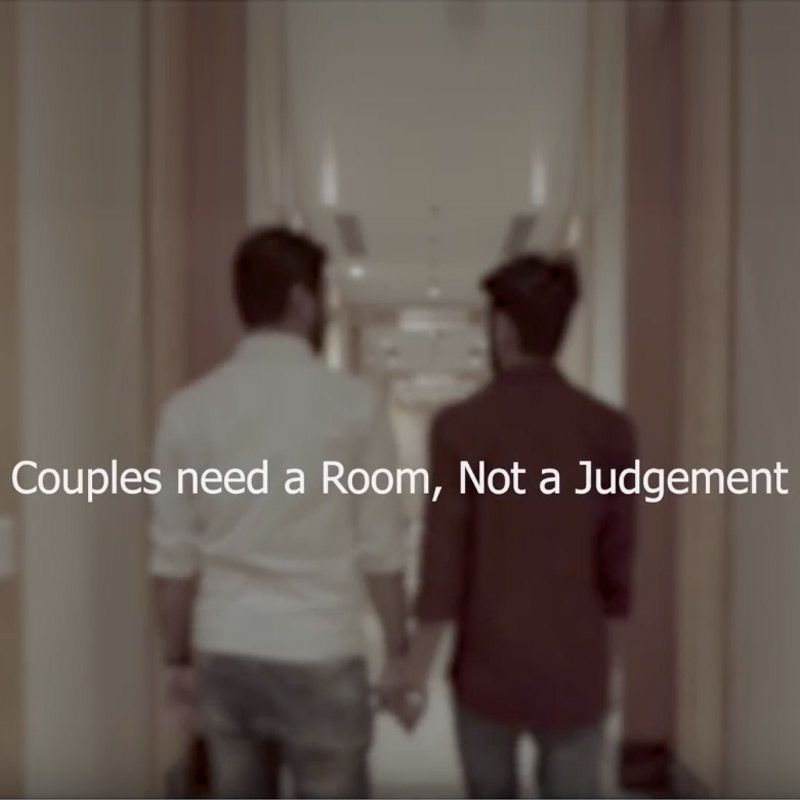
    To reach out to the masses and spread awareness about the problem StayUncle created an ad, which showcased a gay couple walking into a hotel to book a room and how people around judge them. Stay Uncle raised a question to most of the Indian brands about their stance on the rights of the LGBTQ community.

    Stay Uncle’s unique initiative was not limited to releasing an online ad but their unique marketing tactic pulled in a lot of brands to come out and speak on the rights of the LGBTQ community, though most of them were silent.

    Brands celebrated scrapping of article 377 with a lot of enthusiasm but it is now that we can actually see something happening on-ground.

    Twitteratis picked up this unique initiative and in return they also started asking questions to different brands on the ongoing topic.

    Stay Uncle co-founder and CMO Blaze Arizanov says, “We all had opinions while the article 377 made an exit, but we at Stay Uncle took this a little more seriously and introduced same sex friendly hotels for the LGBTQ community. The idea of the entire campaign was to launch the Ad in a unique way so that most of the brands come out in full support for the community not just limited to having opinions but deeds too.”

    The campaign was planned and executed by Buzzoka, India’s leading Influencer marketing company. Buzzoka CEO Ashutosh Harbola adds, “It is always a pleasure to work with Stay Uncle and the team as their initiatives are path breaking and allows us to justify our creative flair as an organisation.”

    Stay Uncle has been a disruptor in the marketing sphere with bringing out of the box marketing ideas for launching their products. One of their previous campaigns, which had a Fake Online Website (www.staylaid.com) to book girls online, went viral and gave a very strong message to the users.

    The entire campaign went viral on Twitter and saw over 15,000 conversations floating with a reach of over 20 Million.

  • Mirror NOW celebrates the landmark judgement of abolishment of section 377

    Mirror NOW celebrates the landmark judgement of abolishment of section 377

    MUMBAI: Mirror NOW, the channel that fights for you and channelizes its focus on issues that impact people’s lives, has been actively supporting the cause of LGBTQ community rights and raising awareness through active and continuous discussions and impactful reportage on the channel.

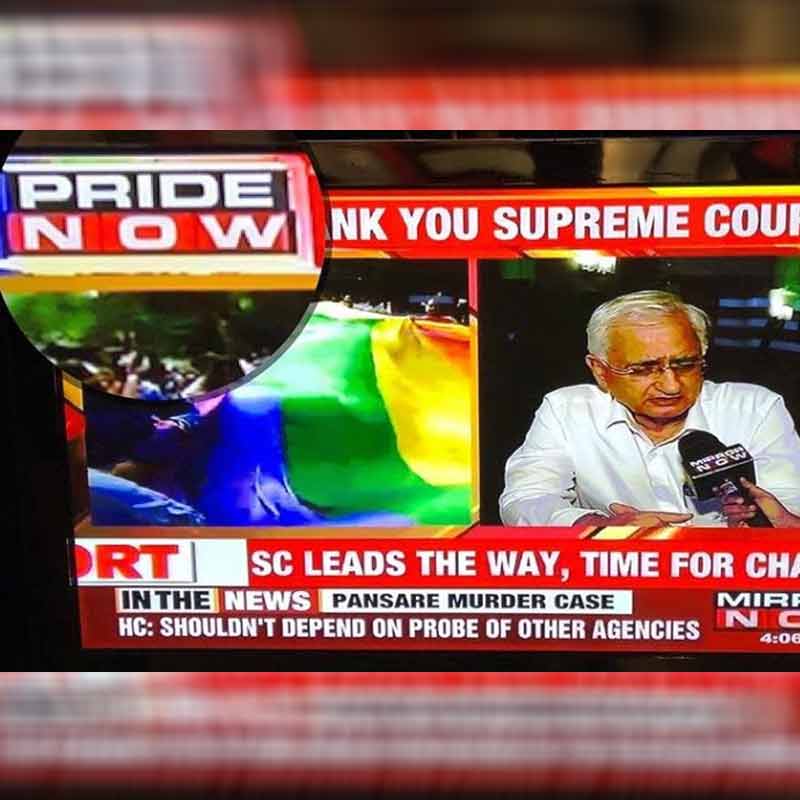
    As the country celebrates this landmark judgement, Mirror NOW supports and welcomes the verdict to acknowledge the fight put by the community. As a mark of solidarity, the channel celebrated the historic verdict by adding PRIDE NOW to its name for a day along with a specially curated programming line-up. ‘The Urban Debate’ anchored by Faye D’Souza featured parents of prominent personalities from the community. Sridhar Rangayan, Director & producer, Harish Iyer, LGBTQ Rights Activist, Onir, film maker, Sushant Divgikar and many more were part of the special programming line-up on the channel throughout the day.

    Expressing her views on the verdict, Faye D’Souza, Executive Editor, Mirror NOW said, “I am thrilled with the Supreme Court’s verdict to scrap the controversial Section 377 of IPC. This is great news for LGBT brothers and sisters, who they have fought hard and long for this day and it has been an honour to stand along with them. It is a progressive move and I sincerely hope this verdict will shift people’s mindset towards the community.”

    With the Supreme Court’s decision to finally abolish the British-era Section 377 of the Indian Penal Code (IPC) which criminalised same sex relationships, it’s a respite for the LGBTQ community that has been fighting long for right to live and right to acceptance.

  • Do you know ‘All About Section 377’?

    Do you know ‘All About Section 377’?

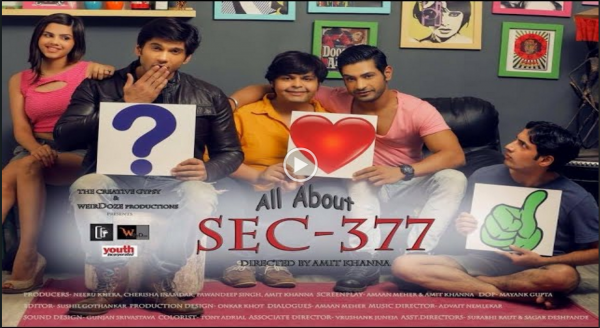
    MUMBAI: With a number of campaigns fighting for the rights of the LGBT (lesbian, gay, bisexual and transgender) community and the continuous squabble to decriminalize section 377 of the IPC, The Creative Gypsy and Weirdoze are all geared up to launch their revolutionary web series All About Section 377. AAS 377 will launch on the YouTube channel on 27 March 2016.

    The series aims at breaking the perceptions of the LGBT community in society. The team has also sent a two hour cut out of the series to various web series festivals.

    The very draconian and archaic Section 377 from chapter XVI of the Indian Penal Code dating back to 1860 introduced during the British rule of India, criminalises sexual activities ‘against the order of nature’, including homosexual acts, as past orders of some of the courts indicate.

    Highlighting the joys and sorrows of the much neglected and side-lined community by most of people, the 8 episode series of 18 minutes each presents a light-hearted look at a male gay couple’s life as seen through the eyes of a straight homophobic man.

    Directed by Amit Khanna, the series is about Suresh who comes to Mumbai from Delhi to pursue a career in acting and modelling. His worst nightmare comes alive when he realizes that his cousin Rohit with whom he is supposed to live with is gay and also has a live-in boyfriend Sid in the same apartment. Thus begins the journey of a homophobic man who lives with a gay couple and how his perception changes over a period of time.

    “From episode 6, the story changes completely and whoever is against the community will have no other go except to accept the fact. My expectation from this web series is that people must understand that they can’t bind love by gender, by society or by social status. I want our society to be more open-minded,” says Amit Khanna.

    The Creative Gypsy’s Khera reveals that since the series did not have any sponsors on-board, they had to launch a new channel for it. “Whoever was ready to take the series was not ready to pay us the amount we have put in producing this series. They wanted to own all the rights of the series, and a few of them didn’t even want our name in it. We have all worked hard for this series. OTT is definitely an emerging platform, but the waters are being tested as yet. We are passionate about having our series up everywhere”, she further adds.

    AAS 377 features an enthusiastic cast of 6 that includes Gulshan Nain aka Suresh, Ankit Bhatia playing Sid and Mustafa Shaik enacting the character of Chotu. The series also shows two girls Fiza Aziz and Surabhi Raut. Amit Khanna makes his debut in the series playing the role of Rohit. Celebrities like Niranjan Iyengar, Iris Maity and Suzanna Mukherjee will also be seen in cameos.

    There are plans to launch a second series. “The second series depends on the success of this one. Till now, we have got a good response from the screening. We aim to give our viewers a strong message through the content on our channel. We have not compromised on anything and have poured our hearts in it”, concedes Khera.

    Here is the trailer of the web-series:

  • Do you know ‘All About Section 377’?

    Do you know ‘All About Section 377’?

    MUMBAI: With a number of campaigns fighting for the rights of the LGBT (lesbian, gay, bisexual and transgender) community and the continuous squabble to decriminalize section 377 of the IPC, The Creative Gypsy and Weirdoze are all geared up to launch their revolutionary web series All About Section 377. AAS 377 will launch on the YouTube channel on 27 March 2016.

    The series aims at breaking the perceptions of the LGBT community in society. The team has also sent a two hour cut out of the series to various web series festivals.

    The very draconian and archaic Section 377 from chapter XVI of the Indian Penal Code dating back to 1860 introduced during the British rule of India, criminalises sexual activities ‘against the order of nature’, including homosexual acts, as past orders of some of the courts indicate.

    Highlighting the joys and sorrows of the much neglected and side-lined community by most of people, the 8 episode series of 18 minutes each presents a light-hearted look at a male gay couple’s life as seen through the eyes of a straight homophobic man.

    Directed by Amit Khanna, the series is about Suresh who comes to Mumbai from Delhi to pursue a career in acting and modelling. His worst nightmare comes alive when he realizes that his cousin Rohit with whom he is supposed to live with is gay and also has a live-in boyfriend Sid in the same apartment. Thus begins the journey of a homophobic man who lives with a gay couple and how his perception changes over a period of time.

    “From episode 6, the story changes completely and whoever is against the community will have no other go except to accept the fact. My expectation from this web series is that people must understand that they can’t bind love by gender, by society or by social status. I want our society to be more open-minded,” says Amit Khanna.

    The Creative Gypsy’s Khera reveals that since the series did not have any sponsors on-board, they had to launch a new channel for it. “Whoever was ready to take the series was not ready to pay us the amount we have put in producing this series. They wanted to own all the rights of the series, and a few of them didn’t even want our name in it. We have all worked hard for this series. OTT is definitely an emerging platform, but the waters are being tested as yet. We are passionate about having our series up everywhere”, she further adds.

    AAS 377 features an enthusiastic cast of 6 that includes Gulshan Nain aka Suresh, Ankit Bhatia playing Sid and Mustafa Shaik enacting the character of Chotu. The series also shows two girls Fiza Aziz and Surabhi Raut. Amit Khanna makes his debut in the series playing the role of Rohit. Celebrities like Niranjan Iyengar, Iris Maity and Suzanna Mukherjee will also be seen in cameos.

    There are plans to launch a second series. “The second series depends on the success of this one. Till now, we have got a good response from the screening. We aim to give our viewers a strong message through the content on our channel. We have not compromised on anything and have poured our hearts in it”, concedes Khera.

    Here is the trailer of the web-series:

  • Section 377: Films, TV, Online and LGBT content

    Section 377: Films, TV, Online and LGBT content

    MUMBAI: Ten years ago most Indians probably did not know what Section 377  of the Indian Penal Code was all about. But the lobbing around that it has received since then has made it a common-as-garden word in the country today.

    It dates back to 1860 and it criminalises  “voluntarily carnal intercourse against the order of nature (by) any man, woman or animal.” Under it, any member of the already marginalised lesbian, gay, bisexual, transgender (LGBT) community could be sent to jail.

    In 2009, in keeping with the rising LGBT voices, it was declared unconstitutional by the Delhi High Court. Four years later, that decision was overturned by the Supreme Court, which said that its amendment or annulment should be the prerogative of the parliament, not the judiciary. Then on 2 February, 2016, a three-member bench of the Supreme Court said that a five-member bench would review afresh all the petitions that had been filed with it. A decision that was met with resounding applause by an estimated three million publicly declared Indian LGBTs (the number would be higher if one were to consider those who prefer to keep their sexual preferences private).

    Indiantelevision.com decided to take a dekko at how TV channels and other audiovisual media have dealt with those who prefer the same gender.

    Indian news channels have on the whole been objective, giving both sides – those favouring gay and bisexual rights and those against – an equal platform to air their views. Some English news channels have however taken an advocacy position for them. India’s first transgender news anchor Padmini Prakash made her debut on Tamil television recently. A few years ago, India’s first transgender television talk show hostess Rose Venkatesh was seen on Ipapdikku Rose on Star Vijay.

    Hindi GECs on the whole have caricatured and forced stereotypes on audiences – whether it was ‘Maddy’ in Jassi Jaisi Koi Nahi or characters in Pyaar Kii Yeh Ek Kahani. On the unscripted front, cross dressing male actors on various comedy shows have parodied the third gender. Recently, MTV India was bold enough to air an episode of The Big F titled ‘I Kissed A Girl,’ which featured two young girls’ desire for each other and also the first lesbian kiss on Indian television.

    TV audiences either did not watch the episode or thought it was okay for girls to make out and fall in love with each other because no complaints to the Broadcasting Content Complaints Council (BCCC) were announced at least till the time of writing this story. However, a few months back viewers objected to an episode of Grey’s Anatomy featuring a homosexual encounter and complained against the broadcaster Star World to the BCCC. They however have kept mum when episodes of American series like Orange is the New Black, Lost Girl, Orphan Black, Faking It, and How to Get Away with Murder aired, featuring steamy and risqué scenes between members of the same sex.

    “Though TV has tried to experiment with LGBT content, shows like Maryada… Lekin Kab Tak, which dealt with matured relationship between two married gay men, need to come back to the idiot box,” says Sridhar Rangayan, who directed many a Hindi TV series before setting up Solaris Pictures, which makes films with a special focus on queer subjects.

    Rangayan has also been the festival director of the Kashish Mumbai-International Queer Film Festival. This year’s edition, which is to be held from 25 to 29 May 2016, will take a look at the LGBT community in a larger way. “Love is not just romantic love but is also different shades of love. We are bringing in more regional and Indian films this year. We are going to encourage more parents, friends and colleagues to attend this festival,” adds Rangayan.

    Talking about the representation that the community gets in today’s society in India he further adds, “There is a need for happy, affirmative and positive stories or at least a normal portrayal of them. What bothers me and is sickening is this entire image of them taken as caricatures. Shows like Comedy Circus or Comedy Nights with Kapil (now off air) ridicule them and the way they are conceptualised is gross. I don’t know why they can’t have actual transgender actors coming in which can make it look more real for people to watch them.”

    “I don’t think a subject or work or genre works independently. It goes hand-in-hand. In such a scenario, producers need to be sensitive about not using the characters in the show as caricatures just for the sake of it,” expresses Monozygotic co-founder Rajiv Ram. “I also believe that we should watch our sense of humour. Jokes are being cracked on other communities as well, which is not a problem. The problem is the lack of acceptance, knowledge, sensitivity and the mindset of the people in the society.”

    Rangayan believes that Indian TV production houses have been progressive and have been open to deal with stories around various subjects (including those targeting the LGBT community) but the fear of governmental, legal and societal retribution has made them tread cautiously. “The same applies to actors, broadcasters and the entire TV fraternity. We all are just waiting for that spark from the government,” he adds.

    Whether there will be a backlash or not will be tested in the not too distant future. If the gossip rags are to be believed, veteran actor Anil Kapoor has expressed his interest to adapt the American sitcom Modern Family (featuring gay characters as two of the main protagonists) for Indian television.

    “We look for great stories wherever they come from. I believe there are great stories within the gay and lesbian community just like any other and we do seek to tell them within the confines of what is permitted by broadcasting regulations and sensibility. In our youth series Kaisi Yeh Yaarian, we explored stories in this space and told them well and were also well received,” says BBC Worldwide India MD and creative head Myleeta Aga.

    Industry professionals say shows will pass muster as long as certain criterion are kept in mind.

    “The content should comply with the internal decency standards of the regulatory board and the government,” says AXN and Sony Pix business head Saurabh Yagnik.

    “The characters need to be interesting and universal, and the stories need not be written from the western mindset. They need to have an Indian context,” says Sunshine Productions founder Sudhir Sharma. “If you are creating something, which is not relevant to the Indian audiences or from the Indian culture’s point of view, such content will be difficult to digest. I think the government will have an issue only if we get into some edgy controversial topics.”

    Media and creative professionals say the winds of change have been blowing in other mediums and will continue to do so. Hindi cinema, for instance. Films like Margarita with a Straw and Aligarh have gone an inch forward in spreading the right message about the community. Other films like Dostana, Fire, Bomgay, My Brother Nikhil, Honeymoon Travels Pvt Ltd, etc, have portrayed characters partially related to those preferring same sex or from the third gender.

    Online is one medium, which is going to see a flood of LGBT content flowing. Badmshiyaan director recently shared the promo of his soon to be launched series titled All About Section 377. The web series consists of eight episodes produced by Weirdoze and The Creative Gypsy. It features Gulshan Nain, Ankit Bhatia, Mustafa Shaikh and Amit Khanna himself. 

    Yash Raj Films’ youth banner Y-Films has also got into the fray when it launched the music video of India’s first transgender band named 6-pack band. The video features its first song titled as ‘Hum Hai Happy,’ which is a cover version of Pharell Williams’ song, ‘Happy.’

    ALT Entertainment – a Balaji Telefilms company – is believed to be incubating ambitions to launch many a web series targeting LGBT subjects for its soon to be launched OTT platform.

    Khanna echoed many an Indian’s thought at the launch of his web series promo when he said, “The existence of Section 377 itself is frightening. How does someone else get to decide how, when and who, one should love? Basically the right of ‘freedom of choice’ isn’t legal anymore…”

    That is something the five member  Supreme Court bench will have to really ponder on.

  • Section 377: Films, TV, Online and LGBT content

    Section 377: Films, TV, Online and LGBT content

    MUMBAI: Ten years ago most Indians probably did not know what Section 377  of the Indian Penal Code was all about. But the lobbing around that it has received since then has made it a common-as-garden word in the country today.

    It dates back to 1860 and it criminalises  “voluntarily carnal intercourse against the order of nature (by) any man, woman or animal.” Under it, any member of the already marginalised lesbian, gay, bisexual, transgender (LGBT) community could be sent to jail.

    In 2009, in keeping with the rising LGBT voices, it was declared unconstitutional by the Delhi High Court. Four years later, that decision was overturned by the Supreme Court, which said that its amendment or annulment should be the prerogative of the parliament, not the judiciary. Then on 2 February, 2016, a three-member bench of the Supreme Court said that a five-member bench would review afresh all the petitions that had been filed with it. A decision that was met with resounding applause by an estimated three million publicly declared Indian LGBTs (the number would be higher if one were to consider those who prefer to keep their sexual preferences private).

    Indiantelevision.com decided to take a dekko at how TV channels and other audiovisual media have dealt with those who prefer the same gender.

    Indian news channels have on the whole been objective, giving both sides – those favouring gay and bisexual rights and those against – an equal platform to air their views. Some English news channels have however taken an advocacy position for them. India’s first transgender news anchor Padmini Prakash made her debut on Tamil television recently. A few years ago, India’s first transgender television talk show hostess Rose Venkatesh was seen on Ipapdikku Rose on Star Vijay.

    Hindi GECs on the whole have caricatured and forced stereotypes on audiences – whether it was ‘Maddy’ in Jassi Jaisi Koi Nahi or characters in Pyaar Kii Yeh Ek Kahani. On the unscripted front, cross dressing male actors on various comedy shows have parodied the third gender. Recently, MTV India was bold enough to air an episode of The Big F titled ‘I Kissed A Girl,’ which featured two young girls’ desire for each other and also the first lesbian kiss on Indian television.

    TV audiences either did not watch the episode or thought it was okay for girls to make out and fall in love with each other because no complaints to the Broadcasting Content Complaints Council (BCCC) were announced at least till the time of writing this story. However, a few months back viewers objected to an episode of Grey’s Anatomy featuring a homosexual encounter and complained against the broadcaster Star World to the BCCC. They however have kept mum when episodes of American series like Orange is the New Black, Lost Girl, Orphan Black, Faking It, and How to Get Away with Murder aired, featuring steamy and risqué scenes between members of the same sex.

    “Though TV has tried to experiment with LGBT content, shows like Maryada… Lekin Kab Tak, which dealt with matured relationship between two married gay men, need to come back to the idiot box,” says Sridhar Rangayan, who directed many a Hindi TV series before setting up Solaris Pictures, which makes films with a special focus on queer subjects.

    Rangayan has also been the festival director of the Kashish Mumbai-International Queer Film Festival. This year’s edition, which is to be held from 25 to 29 May 2016, will take a look at the LGBT community in a larger way. “Love is not just romantic love but is also different shades of love. We are bringing in more regional and Indian films this year. We are going to encourage more parents, friends and colleagues to attend this festival,” adds Rangayan.

    Talking about the representation that the community gets in today’s society in India he further adds, “There is a need for happy, affirmative and positive stories or at least a normal portrayal of them. What bothers me and is sickening is this entire image of them taken as caricatures. Shows like Comedy Circus or Comedy Nights with Kapil (now off air) ridicule them and the way they are conceptualised is gross. I don’t know why they can’t have actual transgender actors coming in which can make it look more real for people to watch them.”

    “I don’t think a subject or work or genre works independently. It goes hand-in-hand. In such a scenario, producers need to be sensitive about not using the characters in the show as caricatures just for the sake of it,” expresses Monozygotic co-founder Rajiv Ram. “I also believe that we should watch our sense of humour. Jokes are being cracked on other communities as well, which is not a problem. The problem is the lack of acceptance, knowledge, sensitivity and the mindset of the people in the society.”

    Rangayan believes that Indian TV production houses have been progressive and have been open to deal with stories around various subjects (including those targeting the LGBT community) but the fear of governmental, legal and societal retribution has made them tread cautiously. “The same applies to actors, broadcasters and the entire TV fraternity. We all are just waiting for that spark from the government,” he adds.

    Whether there will be a backlash or not will be tested in the not too distant future. If the gossip rags are to be believed, veteran actor Anil Kapoor has expressed his interest to adapt the American sitcom Modern Family (featuring gay characters as two of the main protagonists) for Indian television.

    “We look for great stories wherever they come from. I believe there are great stories within the gay and lesbian community just like any other and we do seek to tell them within the confines of what is permitted by broadcasting regulations and sensibility. In our youth series Kaisi Yeh Yaarian, we explored stories in this space and told them well and were also well received,” says BBC Worldwide India MD and creative head Myleeta Aga.

    Industry professionals say shows will pass muster as long as certain criterion are kept in mind.

    “The content should comply with the internal decency standards of the regulatory board and the government,” says AXN and Sony Pix business head Saurabh Yagnik.

    “The characters need to be interesting and universal, and the stories need not be written from the western mindset. They need to have an Indian context,” says Sunshine Productions founder Sudhir Sharma. “If you are creating something, which is not relevant to the Indian audiences or from the Indian culture’s point of view, such content will be difficult to digest. I think the government will have an issue only if we get into some edgy controversial topics.”

    Media and creative professionals say the winds of change have been blowing in other mediums and will continue to do so. Hindi cinema, for instance. Films like Margarita with a Straw and Aligarh have gone an inch forward in spreading the right message about the community. Other films like Dostana, Fire, Bomgay, My Brother Nikhil, Honeymoon Travels Pvt Ltd, etc, have portrayed characters partially related to those preferring same sex or from the third gender.

    Online is one medium, which is going to see a flood of LGBT content flowing. Badmshiyaan director recently shared the promo of his soon to be launched series titled All About Section 377. The web series consists of eight episodes produced by Weirdoze and The Creative Gypsy. It features Gulshan Nain, Ankit Bhatia, Mustafa Shaikh and Amit Khanna himself. 

    Yash Raj Films’ youth banner Y-Films has also got into the fray when it launched the music video of India’s first transgender band named 6-pack band. The video features its first song titled as ‘Hum Hai Happy,’ which is a cover version of Pharell Williams’ song, ‘Happy.’

    ALT Entertainment – a Balaji Telefilms company – is believed to be incubating ambitions to launch many a web series targeting LGBT subjects for its soon to be launched OTT platform.

    Khanna echoed many an Indian’s thought at the launch of his web series promo when he said, “The existence of Section 377 itself is frightening. How does someone else get to decide how, when and who, one should love? Basically the right of ‘freedom of choice’ isn’t legal anymore…”

    That is something the five member  Supreme Court bench will have to really ponder on.