Tag: Secretary

  • “Traditional media in India is also experiencing a steady growth”: Kevin Vaz

    “Traditional media in India is also experiencing a steady growth”: Kevin Vaz

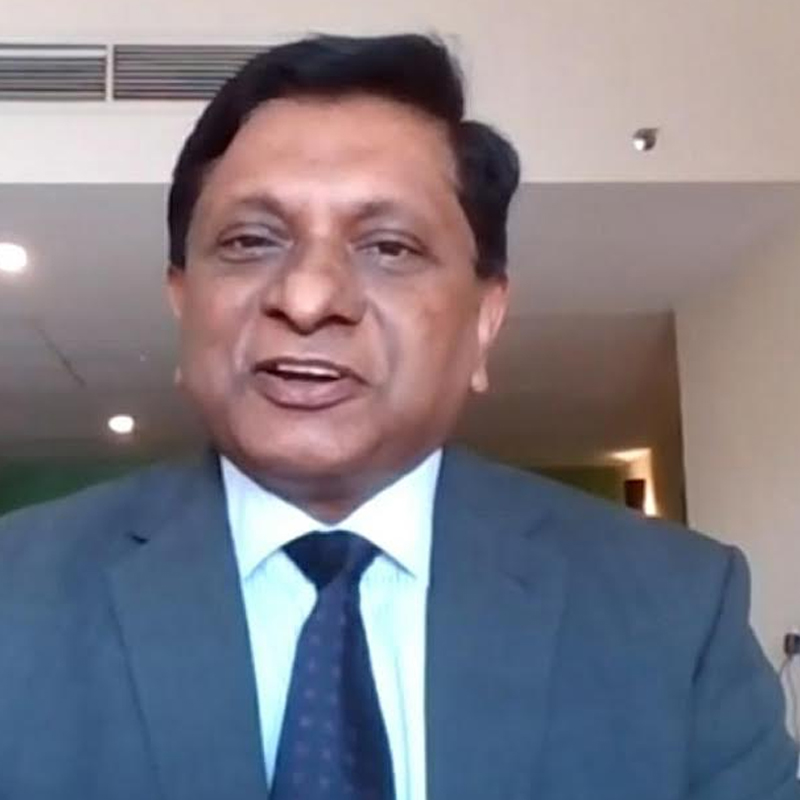
    Mumbai: Viacom18 CEO- Broadcast entertainment Kevin Vaz reflected on the Media & Entertainment sector, both on a global scale and within the Indian context at FICCI frames 2024 event. He said, “In 2023, our industry witnessed a remarkable era of content creation, with over 200,000 hours of content produced annually. Indian content has transcended international boundaries, captivating audiences in more than 160 countries and topping streaming charts on global platforms. In 2023, Indian content bagged not one but two Oscars for the best song and the best documentary respectively. Indian music talent has bagged 3 Grammys recently. 2 Indians (Vir Das And Ekta Kapoor) won the prestigious International Emmy’s awards. This shift indicates a new era where local flavors and stories are embraced by audiences worldwide, showcasing the universal appeal of Indian stories and our storytelling.

    The integration of digital technologies in the Indian M&E industry is at a scale without parallel amongst the comity of nations. Driven by accessible and affordable internet, with Commercial 5G services rollout propelling the growth of India M&E, we must recognise the virtuous cycle of investments in creativity that drive the expansion of affordable internet in India. We can be proud of the fact that Indian companies, Indian creators, Indian producers, are at the forefront of the digital content revolution, be it in films, music or gaming.

    Platforms like JioCinema have revolutionized sports viewership in India, offering accessible and affordable access to live matches like the IPL. This goes to show the importance of internet accessibility in driving the growth of the M&E industry. Unlike other industries, M&E has caught the digital transformation wave early and stand ready to reap the benefits with supportive developments in the all-critical triad of infrastructure readiness, consumer market growth, and enabling public policies.

    The surge in digital media is forecasted to propel the M&E sector’s growth to a 10% annual rate, reaching INR 3 Trillion by 2026. Technological innovations have brought with it a paradigm shift in consumer preferences. Consumers now demand more personalised, interactive, and immersive content. This creates another facet to the growth of the entire digital media segment, including online curated content, digital advertising, online gaming, to name a few. Each of us need to reflect on how these preferences will change the way we think about the future of M&E, and the business models that are most suited to respond. To navigate the future, all of us at various intersections of the industry need to adopt innovative strategies and create engaging content across multiple platforms, leverage big data analytics, collaborate with global partners, and explore new revenue streams.

    Despite this digital boom, traditional media in India is also experiencing a steady growth, showcasing India’s diverse media consumption habits. While this might appear to be a paradox when viewed through a singular global lens, this is the truth of India – a market of AND, not OR.

    As we reflect on the journey of 2023, it becomes clear that it was a year marked by both challenges and triumphs. The first half was subdued, with modest growth rates across various segments of the industry. However, as raw material prices stabilized and marquee events like the ICC Cricket World Cup and Assembly Elections unfolded, we witnessed a significant uptick in the second half. And while the M&E industry is estimated to grow at 10% CAGR through the next few years led by digital, traditional mediums such as Television and print are also poised to grow.

    This growth underscores the enduring appeal of linear TV, particularly among established advertisers who value its unmatched brand-building capabilities at scale. It’s essential to acknowledge the continued significance of traditional media, including television, print, and outdoor advertising, in reaching diverse audience segments, especially in regional markets.

    The road ahead for the industry is brimming with possibilities and challenges alike. The integration of artificial intelligence promises to reshape the landscape of content creation, distribution, and consumption. Particularly generative AI, which is now an inexorable part of M&E supply chains. Advances in generative AI, while still relatively nascent, have produced an explosion of possibilities in the creative sector. It has ushered in a new dimension to the creative process, allowing the industry to explore uncharted territories of creativity and push the boundaries of productivity.

    As AI technologies continue to evolve, they offer unprecedented opportunities for personalized experiences and targeted advertising. However, this next-gen transformation also presents challenges such as data privacy concerns, reskilling and the need for ethical considerations – concerns that the industry and government together need to explore and address.

    Amidst these dynamics, the industry must also address the pressing need for stronger intellectual property rights protection to safeguard the integrity of our creative ecosystem. The proliferation of digital platforms and content creation tools has exponentially increased the avenues for creative expression, yet it has also heightened the risk of copyright infringement. Strengthening our IPR laws is essential to foster a conducive environment for innovation and creativity while ensuring fair compensation for content creators. The National Intellectual Rights (IPR) Policy, established in 2016, is due for review. This presents an occasion for all of us to engage on how we think about monetisation, commercialisation of content as well as the protections required for it, in a fast-evolving technological environment.

    The road ahead encompasses both opportunities and challenges in equal measure. As we navigate this complex landscape, as stakeholders of this vibrant sector, we must all remember that at the heart of it, our industry is about our consumers in a very human sense – their emotions, relationships, talents – their stories. All of us here today are simply facilitators – connecting stories to audiences and audiences to stories.

    As we begin FICCI Frames 2024, I look forward to the next three days filled with enlightening discussions, insightful sessions, and meaningful collaborations. Let us seize this opportunity to chart a course towards a future that embraces innovation, leverages technology, and upholds the timeless values of creativity and expression.

    Finally, I’d like to express my gratitude and admiration for Leena Jaisani and her team for putting FICCI Frames 2024 together. This is the 24th edition of India’s biggest media and entertainment symposium and it just keeps getting bigger and better. So kudos to the team for scaling this up consistently!” he concluded. 

  • Apurva Chandra talks about credibility of social media, RPD and direct-to-broadcast: CII The Big Picture Summit 2022

    Apurva Chandra talks about credibility of social media, RPD and direct-to-broadcast: CII The Big Picture Summit 2022

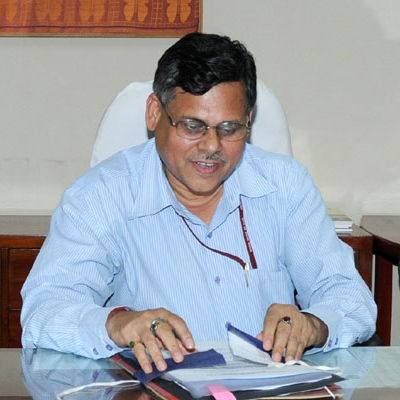
    Mumbai: At the Big Picture Summit organised by the Confederation of Indian Industry (CII) on 16 & 17 November, among the many dignitaries that were in attendance and spoke on various topics, the ministry of information & broadcasting (MIB) secretary Apurva Chandra was also present.

    On his recent visit to the Global Media Congress in Abu Dhabi, he made some observations and spoke about the same. He raised his concern (as well as the concern of many) with regard to the fact that the use of social media is on the rise and traditional media is on the decline.

    “The use of social media is increasing – that is how the consumption of media now takes place. And within that too, there is the short video format, which has become more popular. In fact, I was surprised to learn that youngsters now turn to TikTok for search and not Google anymore – TikTok has now become a more popular search engine as compared to Google because nowadays short videos are available for anything and everything,” he stated.

    Chandra elucidated that now there is an issue of credibility. “For people of our age, the credibility of the media is paramount. Achieving credibility in social media will be the challenge. The media authorities will also have to consider that viewers’ tastes are changing towards shorter and shorter versions.”

    He went on to reveal that the next big thing that MIB is working on is direct-to-mobile broadcast. A pilot study by IIT Kanpur and Sankhya Labs on direct-to-mobile broadcasting that had been undertaken in Bengaluru has been successful; a similar pilot study will be launched soon in Noida or someplace near Delhi.

    He added, “There are 20 crore households, 60 crore smartphone users, and 80 crore broadband users. Once we start direct-to-mobile broadcasting, the reach of the TV media would be much higher.”

    Additionally, Chandra mentioned that they are also working on the issue of TRP ratings.

    “The reverse path data (RPD) pilot has also been successful; the report has been submitted. We will now take it forward on integrating more and more RPD. The major concern was that the number of households involved in Barc ratings is very low and it should be increased. Once RPD is implemented, the TRP will become much larger,” he assured.

  • Apurva Chandra appointed as Secretary, I&B ministry

    Apurva Chandra appointed as Secretary, I&B ministry

    New Delhi : The Union Cabinet on Thursday appointed Apurva Chandra as secretary, ministry of information and broadcasting (I&B).

    Chandra was previously holding the charge of secretary, ministry of labour & employment. The appointment was cleared by the appointment committee of the Cabinet.

    Chandra belongs to the 1988 batch of the Indian Administrative Service (IAS) of the Maharashtra cadre. He has spent more than seven years in the ministry of petroleum and natural gas and four years as principal secretary ( industries) in the Maharashtra government. In 2017, he joined as the special director general (acquisition) in the ministry of defence with the mandate of strengthening the Indian Armed Forces by expediting the acquisition process.

    Last year in October, he took over the charge of secretary, ministry of labour and employment. He was also elected as the chairperson of the Governing Body of the International Labour Organisation (ILO) for the period October 2020- June 2021, a position of international repute.

  • V Raghunandan roped in as new TRAI secretary

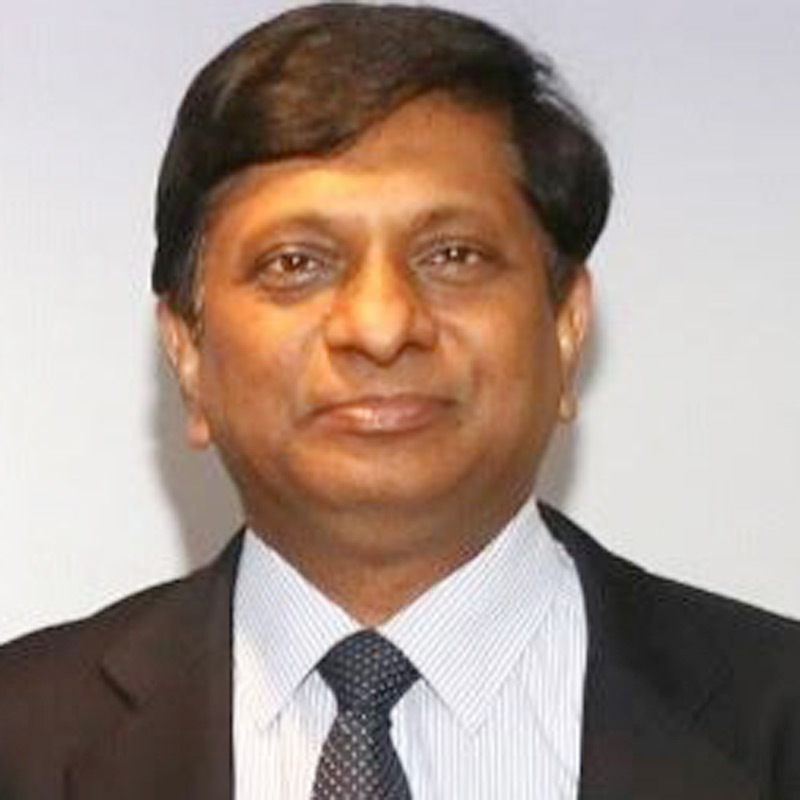
    New Delhi: The Telecom Regulatory Authority of India (TRAI) on Monday announced the appointment of V Raghunandan as the new secretary of the regulatory body.

    Raghunandan was working as a deputy director general at the Department of Telecommunications (DoT).

    The decision comes after the current TRAI secretary Sunil Kumar Gupta’s two-month extension comes to an end. Gupta was appointed the TRAI secretary in September, 2018, post the retirement of Sudhir Gupta. His tenure was extended till 31 May.

    Gupta has now been appointed as a senior deputy director general at the office of director general – Telecom in the DoT. He will oversee all field units under the 22 Licensed Service Areas (LSA).

  • Former I&B Secretary proposes fresh study into ad cap

    Former I&B Secretary proposes fresh study into ad cap

    NEW DELHI: It’s been a month and more since former Information & Broadcasting secretary Uday Kumar Varma relinquished his post to Bimal Jhulka. But you can’t get broadcasting  out of Varma’s blood. After all he and his team in the I&B almost single handedly forced a fragmented cable TV sector and a disbelieving television ecosystem to follow the government mandate for digitsation.  

    Now the former secretary has proposed that with the onset of digitisation, it is  possible for the Telecom Regulatory Authority of India (TRAI) to get all the data needed for a fresh look at the 12 minute ad cap which the regulator had mandated earlier this year.
    Uday Kumar Varma

    Speaking exclusively to indiantelevision.com Varma said  that the Telecom Disputes Settlement & Appellate Tribunal (TDSAT) has stayed the implementation  of the ad cap on news channels, and the TRAI should use this time to conduct a study on how much time is being devoted to advertising by the various television channels and determine how much can and should actually be devoted by them.  He stated that the regulator should be able to complete a thorough study in two or three months.

    Varma said that while the ad cap was sought to be enforced in view of the provisions of the Cable Television Networks (Regulation) Act 1995, the situation had changed considerably since with a much larger number of television channels than previously anticipated.

    He felt the 12-minute ad cap was in any case arbitrary as it was based on the experiences in other countries rather than in the Indian context.

    He agreed that there were some channels – particularly regional language ones – which aired up to 30 minute per hour of ads, but pointed out that the new regime under digitisation afforded TRAI the freedom to study the issue afresh.

    He said a method had to be found to enforce whatever ad cap is decided upon finally, since many channels are not members of either the News Broadcasters Association or the Indian Broadcasting Foundation. Even otherwise, he said all broadcasters were not on the same page on this issue.

    Asked about the demand that the ad cap be put off to December 2014 by when the entire country would have gone digital, Varma declined to comment as he said the matter was before the TDSAT.

    Merger of Phase III and IV of DAS

    On the topic of the merger of Phase III and IV of the digitisation process, Varma said it had been found this would work better since towns and rural areas in these two phases come under the jurisdiction of district collectors, and management would be easier.

    The merger would also give more time to stakeholders to put their infrastructure in place.

    Analogue Switch-off Justified

    Meanwhile, Varma said he stood by the decision to switch off analogue transmissions when resorting to digital addressable systems.

    He further added that permitting the co-existence of  both analogue and DAS, as had been done in the United States or the United Kingdom, would have led to a ‘warped policy’ in a country like ours.

    Digitisation should be seen as a means to make the broadcasting sector more transparent and give a better choice and viewing experience to the consumer, he said, adding that it  had also led to greater investments from India and overseas.

    The very fact that subscribers, who have switched over to DAS were not complaining and there were many others opting for the new system, meant the average Indian had become more conscious of what they were watching on TV.

    Affordability is not a major issue as those who have not yet bought digital set top boxes ‘will do so without being coerced’ once they see the advantages in terms of quality of picture, services, and value added services that may follow.

    Varma felt the method of collection and sharing of subscription fees too is undergoing a major change, and the consumer will be able to see the benefits of this. Furthermore, carriage fees charged by cable TV operators and MSOs had also come down and this would be reflected in the fee they charge subscribers.

    Varma believes that even the rural TV viewer will be in a position to partake of the fruits of cable TV digitisation. He pointed out that fatter wallet subscribers in metros and cities who will be paying  for value-added services and other benefits  will, in a sense, subsidise the rural consumer who is not so rich.

    As the adage goes, take from the rich to feed the poor. Even in television!

  • Iranians access Facebook, Twitter accounts for a day – albeit by error

    Iranians access Facebook, Twitter accounts for a day – albeit by error

    NEW DELHI: Facebook and Twitter, which are taboo in Iran, accidentally became available to users on 16 September – only to be shut off the next day with the government blaming a technical glitch for this sudden freedom.

    The two social sites had been shut off in Iran in the summer of 2009 after riots erupted following a disputed win of Mahmoud Ahmadinejad.

    A number of Facebook and Twitter users said on Monday that that they could access the social networking sites without bypassing the firewall which Iranian government had imposed for monitoring the social media.

    Correspondents of almost every western newspaper tweeted that they were able to access their accounts using regular internet services.

    Reuters reported that not only Facebook and Twitter was being accessed, but other blocked sites were also opening.

    But then Secretary of a State Committee Abdolsamad Khoramabadi said it was a technical glitch by a few internet service providers and there were no plans yet to lift the ban. An inquiry has been ordered.

    However, media sources said that the Iranian government may be testing the intensity of response if the ban is lifted. This is borne out by the fact that Iranian Foreign Minister Mohammad Javed Zarid created his Facebook and Twitter accounts during this period.

    Newly-elected President Hassan Rouhani is believed to be more liberal and has already hinted earlier that he would tackle the social media differently.

  • India requests IOC to retain wrestling in the category of core sports in Olympic Games

    India requests IOC to retain wrestling in the category of core sports in Olympic Games

    NEW DELHI: The Union Ministry of Youth Affairs and Sports has requested full membership of the International Olympic Committee (IOC) to take up the matter of wrestling at the 125th session of IOC at Buenos Aires (Argentina) and take a decision to retain Wrestling in the category of core sports in Olympic Games.

    In a letter written to all the IOC members, Sports Secretary P K Deb has said that Wrestling, which combines Freestyle (Men and Women) and Greco-Roman events, goes back to the inaugural modern Olympics held in Athens in 1886 and has been a core sport from the first Olympics onwards. It was a part of the ancient Olympics too. The exclusion of the discipline from the core sports of Olympics is against tradition which is so much a part of Olympics.

    The letter said, in modern times, wrestling has immense popularity and fan following world-wide. Its popularity can be gauged from the fact that 71 countries participated in wrestling events in the London Olympic 2012, to full houses. The letter said the decision of the executive board of IOC not to include Wrestling in the core sports for 2020 Olympics will severely affect the sustenance of the game in future.

    The letter said, India believes that the decision to exclude the sport of wrestling from the 25 core sports needs to be reconsidered particularly in view of the fact that wrestling has got not only universal appeal, but is also very affordable.

    The letter has been written in the context of the decision of the Executive Board (EB) of the International Olympic Committee (IOC) at its meeting held on 12 February 2013 recommending that wrestling governed by the International Federation of Associated Wrestling (FILA), be not included in the list of core sports for the 2020 Olympics. The Executive Board of IOC at its meeting held at St. Petersburg (Russia) on 20 May 2013 recommended that baseball / softball, squash and wrestling be proposed to the 125th session of IOC for possible inclusion as an additional sport in the Olympic Programme for 2020 Olympic Games. The full IOC membership will meet for the 125th session in Buenos Aires, Argentina from 7th to 10th September 2013 and will vote on which of the three sports to add to the programme of the Games for 2020 Olympics in addition to the 25 core sports.