Tag: SEBI

  • Cdsl Ipf slams scams with witty investor awareness drive this Diwali

    Cdsl Ipf slams scams with witty investor awareness drive this Diwali

    MUMBAI: Marking world investor week 2025, the CDSL Investor Protection Fund (CDSL IPF) has launched a spirited awareness campaign titled ‘Sawaal karo, scams ko slam karo’, urging Indians to take a stand against financial frauds by doing one simple thing, ask questions before investing.

    Organised under the aegis of Sebi and the International organisation of securities commissions (Iosco), the week-long initiative (October 6–12) rolled out across multiple platforms, from digital films and Paytm sound boxes to railway announcements, turning everyday moments into gentle reminders to stay alert.

    Two specially produced awareness videos anchor the campaign, spotlighting how curiosity can be a powerful safeguard against scams. The message is clear: when in doubt, pause, verify, and question before you click, share, or invest.

    Adding an artistic flourish, a 20,000-square-foot rangoli by artist Shikha Sharma brought the campaign’s spirit to life, transforming a symbol of celebration into one of caution and empowerment.

    “Through our ‘Sawaal karo, scams ko slam karo’ campaign, we aim to inspire investors to question, verify, and invest wisely,” said Cdsl Ipf secretariat head Sudhish Pillai. “Awareness is your strongest defence, before you invest, pause and verify.”

    Cdsl Ipf has long championed financial literacy and investor empowerment through its nationwide Investor Awareness Programmes (IAPs). In FY 2024–25 alone, it conducted 2,526 sessions across 34 states and union territories, reaching over 1.47 lakh participants in 15 languages, a testament to its commitment to building an informed investor base.


  • Adani declares victory over Hindenburg storm as profits soar in letter to shareholders

    Adani declares victory over Hindenburg storm as profits soar in letter to shareholders

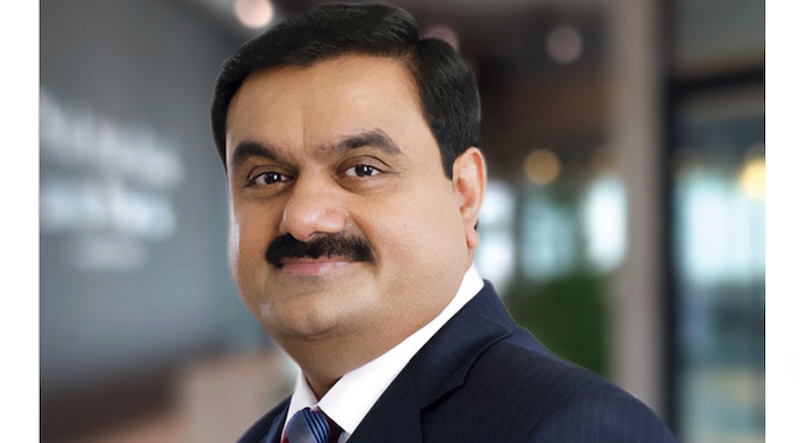
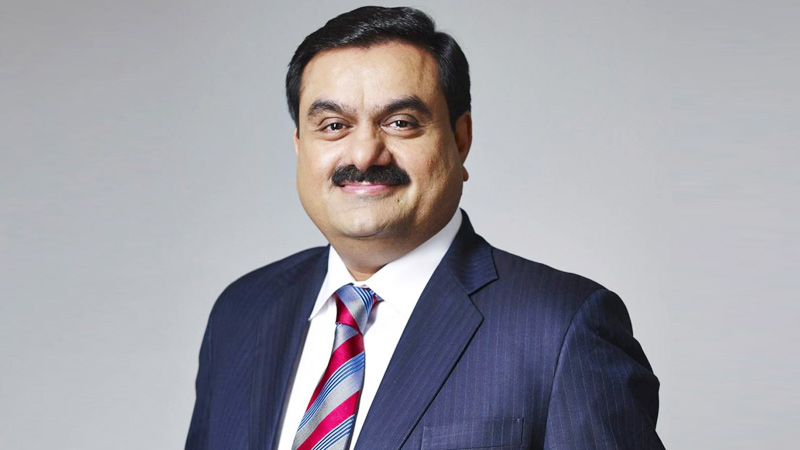
    MUMBAI: Gautam Adani has emerged from his regulatory bunker swinging, declaring the Hindenburg Research controversy a “defining inflection point” that strengthened rather than weakened his sprawling business empire.

    In a defiant letter to shareholders, the Indian billionaire framed last week’s Securities and Exchange Board of India (Sebi)  clearance as complete vindication, proclaiming “truth has prevailed” after nearly two years of scrutiny following the short-seller’s damning January 2023 report.

    The Adani Group chairman marshalled impressive financial firepower to support his narrative of resilience. Portfolio EBITDA rocketed from Rs 57,205 crore in FY23 to Rs 89,806 crore in FY25—a staggering 57 per cent absolute growth representing a two-year compound annual growth rate of 25 per cent.

    Asset expansion proved equally dramatic, with gross block swelling from Rs 4,12,318 crore to Rs 6,09,133 crore over the same period. That Rs two lakh crore addition marks a 48 per cent surge whilst the group battled accusations of accounting manipulation and stock price inflation.

    Adani positioned his conglomerate’s infrastructure achievements as proof of substance over speculation. The group commissioned India’s first container trans shipment port at Vizhinjam, added six gigawatts of renewable capacity including the world’s largest single-location renewable project at Khavda, and completed what it claims is the world’s largest copper smelter.

    The rhetoric veered between wounded pride and renewed ambition. Hindenburg’s assault wasn’t merely corporate criticism, Adani argued, but “a direct challenge to the audacity of Indian enterprises to dream on a global scale.” The implication: attacking Adani amounted to attacking India itself.

    Looking forward, the chairman promised to “further strengthen governance standards,” “accelerate innovation and sustainability,” and “double down on nation building”—language that suggests the controversy has hardly dented his expansionist appetites.

    The letter’s tone reflects broader themes in Indian corporate culture, where business leaders frequently cast commercial success in nationalist terms. For Adani, surviving Hindenburg’s onslaught becomes not just corporate vindication but validation of India’s global ambitions.

    Whether Sebi’s clearance truly closes the book on governance questions remains to be seen. But Adani’s defiant missive makes clear he views the storm as survived rather than merely weathered, with ambitious expansion plans intact.

  • Paisabazaar banks on bonds & FDs with new wealth management foray

    Paisabazaar banks on bonds & FDs with new wealth management foray

    MUMBAI: Paisabazaar, one of India’s largest consumer credit marketplace, has taken a bold step into wealth management by launching fixed deposits (FDs) and corporate bonds on its platform.

    Best known as the go-to hub for free credit scores and loans, the fintech giant now wants to be the one-stop shop for all things money. “Our vision is to be a lifelong financial partner by offering a full suite of borrowing, saving and investment options,” said Paisabazaar, ceo, Santosh Agarwal.

    The move comes on the heels of PB Money, Paisabazaar’s personal finance management tool built on the account aggregator framework. With the latest launch, the platform promises retail investors a digital-first, transparent experience to compare, choose and book investment products, all from the comfort of their phones.

    FDs from players like Bajaj Finance, Suryoday Bank, Shivalik SF Bank, Slice SF Bank, Utkarsh SF Bank, Shriram Finance and South Indian Bank are now live on the app. Meanwhile, corporate bonds, powered by SEBI-regulated Grip Invest are being pitched as a high-yield alternative, with potential returns of up to 13.25 per cent, and investments starting as low as Rs 1,000.

    Investors can filter bonds by yield, credit rating and ticket size, and even access SEBI-registered analysts’ curated advice on theme-based portfolios. The aim: to make fixed income appealing again.

    Long term, Paisabazaar plans to balance its credit engine with savings and investment offerings, while targeting underserved and ‘new-to-credit’ segments. The company believes its data-led approach will deepen customer engagement and build a resilient, diversified model.
     

  • Dialling into deeper losses as MTNL posts weak first quarter numbers

    Dialling into deeper losses as MTNL posts weak first quarter numbers

    MUMBAI: MTNL’s first quarter call sheet for FY26 is anything but music to investors’ ears. The state-run telecom player rang up a consolidated net loss for the three months ended 30 June 2025, as falling revenues and swelling expenses continued to choke its balance sheet. The company’s unaudited results, approved by its board on 13 August, showed total income at Rs 334.11 crore, down sharply from Rs 455.29 crore a year earlier. Revenue from operations slipped to Rs 329.36 crore, a 27.6 per cent drop year-on-year, with other income contributing Rs 4.75 crore.

    Expenses told an even starker story total outgo rose to Rs 425.92 crore, including operating costs of Rs 142.10 crore, employee benefits at Rs 42.16 crore, finance costs of Rs 64.12 crore, and depreciation and amortisation of Rs 105.28 crore.

    The red ink has left MTNL’s net worth in the negative, with accumulated losses outstripping its equity share capital. A long-running license fee battle with the Ministry of Information and Broadcasting continues to loom large, the PSU has a provision of Rs 4,680.24 crore against the MIB’s April demand of Rs 8,735.67 crore (including interest) for fees since inception, a claim it is contesting in court.

    The bonds issued by MTNL remain unsecured, making certain SEBI disclosure norms inapplicable, but the financial stress remains very much on record and in the spotlight for shareholders watching every rupee spent.

  • Pine Labs appoints Sameer Kamath as CFO ahead of IPO; Shalini Saxena returns as General Counsel

    Pine Labs appoints Sameer Kamath as CFO ahead of IPO; Shalini Saxena returns as General Counsel

    Mumbai: IPO-bound Pine Labs has announced two key leadership appointments ahead of its planned public offering: Sameer Kamath is set to join as chief financial officer, while Shalini Saxena returns
    as general counsel. The announcement follows closely on the heels of the company’s draft red herring prospectus (DRHP) filing with the Securities and Exchange Board of India (SEBI) on 27 June.

    Kamath, currently group CFO at Avendus Capital, brings over two decades of financial leadership experience. He previously served as CFO at Motilal Oswal. He replaces Marc Mathenz, who stepped down in June shortly before the DRHP was filed.

    Saxena re-joins Pine Labs after her tenure as legal head at CoinDCX. She had earlier served as general counsel at Pine Labs from 2019 to 2022. Her return signals renewed legal leadership focus as the company navigates regulatory and compliance processes tied to its public listing.

    Pine Labs’ senior leadership team now includes:

    Amrish Rau, chief executive officer

    Kush Mehra, chief business officer

    Sumit Chopra, chief operating officer

    Navin Chandani, chief business officer – issuing business

    The Gurugram-based fintech firm is looking to raise Rs 2,600 crore via a combination of fresh equity issue and an offer-for-sale (OFS) of up to 147.8 million shares. Pine Labs is reportedly seeking a valuation in the range of $4.5–5 billion. Key shareholders include Peak XV Partners, Mastercard, PayPal, and Actis.

    The appointments place Pine Labs alongside a growing cohort of Indian startups accelerating towards public markets-a signal of rising maturity within the country’s fintech and technology sectors.

    (If you are an Anime fan and love Anime like Demon Slayer, Spy X Family, Hunter X Hunter, Tokyo Revengers, Dan Da Dan and Slime, Buy your favourite Anime merchandise on AnimeOriginals.com.)
     

  • Trust fund rally as mutual industry eyes Rs 100 lakh crore with caution

    Trust fund rally as mutual industry eyes Rs 100 lakh crore with caution

    MUMBAI:If India’s mutual fund industry were a blockbuster, it would now be at its intermission Rs 100 lakh crore down, and another Rs 100 lakh crore to go. That was the spirit animating the fourth edition of the Moneycontrol Mutual Fund Summit in Mumbai, where the country’s top fund managers, regulators, and market veterans converged to chart a responsible roadmap to the next trillion-dollar milestone.

    The big number Rs 100 lakh crore in AUM (Assets Under Management) is no longer a pipe dream. But as SEBI Whole-Time Member Amarjeet Singh warned in his keynote, with great inflows come great responsibilities. “People are trusting mutual funds with their money, and that trust should not be disturbed,” he said. “Growing the right and responsible way becomes very important.”

    That note of caution echoed across the summit, where talk veered from geopolitics to granularity, inflation to inclusion. HDFC AMC MD & CEO Navneet Munot offered a moral compass: “Truth is the foundation, transparency is the path, and True North can be like our compass.” He praised SEBI’s “co-creative” approach to regulation, one that encourages dialogue, not duels.

    Liquidity, not just logic, remains the dominant force in markets, observed Axis AMC CIO Ashish Gupta. “No market is insulated from global risk trade or geopolitics. But liquidity continues to be the biggest driver of asset prices.”

    With fund launches, especially thematic ones, flooding the market, the panel agreed that innovation must be balanced with investor education. “We’ve created many pieces like Lego. What’s missing is education,” said Edelweiss AMC MD & CEO Radhika Gupta. “We need to tell people kaunsa mutual fund sahi hai which one fits their goals.”

    Gupta also hailed SEBI’s nod to Social Impact Funds as “forward-looking”, opening the doors for ethical investing in India’s evolving MF landscape.

    Meanwhile SBI Mutual Fund deputy MD & joint CEO D P Singh reminded the audience that education is also about action. “We’re powering platforms like mutualfundskyusahihai.com to take investor awareness to the next level.”

    One number got heads nodding: Kotak AMC’s Nilesh Shah pointed out that India has nearly 30 crore vehicle owners but just 5.5 crore mutual fund investors. “The next leg of growth is clearly in Bharat,” he said, emphasising the need to tap into smaller towns and first-time investors.

    The summit closed with a call for balance. More innovation, but with integrity. More investors, but through inclusion. And more funds, but built on fundamentals. With Rs 100 lakh crore already clocked, the mutual fund industry isn’t just managing wealth anymore, it’s managing trust.

    And in this next chapter of financial deepening, India’s mutual fund fraternity knows the best returns will come not just from markets, but from meaning.

    (If you are an Anime fan and love Anime like Demon Slayer, Spy X Family, Hunter X Hunter, Tokyo Revengers, Dan Da Dan and Slime, Buy your favourite Anime merchandise on AnimeOriginals.com.)

  • Mutual fund bigwigs to chart India’s $1 trillion AUM journey at Moneycontrol summit

    Mutual fund bigwigs to chart India’s $1 trillion AUM journey at Moneycontrol summit

    MUMBAI: For India’s booming mutual fund sector, the trillion-dollar mark is no longer a distant pipe dream—it’s a target with a ticking clock. On 23 June 2025, Mumbai will host the fourth edition of the Moneycontrol Mutual Fund Summit, themed ‘The Trillion Dollar Dream’, aiming to unpack the roadmap to reach $1 trillion in Assets Under Management (AUM) by 2030.

    The summit, presented by HDFC Mutual Fund and powered by Axis Mutual Fund, will bring together a high-powered roster of financial minds, market regulators, and investment strategists. The agenda: laying down actionable insights to accelerate investment growth, widen retail participation, and future-proof India’s fund ecosystem.

    The speaker lineup reads like the Who’s Who of the Indian financial galaxy. From SEBI whole time member Amarjeet Singh to top AMC heads including Navneet Munot (HDFC AMC), Nilesh Shah (Kotak Mahindra AMC), and Radhika Gupta (Edelweiss Mutual Fund), the event promises both brain and brawn. Other stalwarts include Vishal Jain (Zerodha Fund House), Niket Shah (Motilal Oswal AMC), Kalpen Parekh (DSP), and Rahul Singh (Tata Mutual Fund), among others.

    “The mutual fund industry is at the heart of India’s retail investor boom and we are delighted to be hosting the fourth edition of the Moneycontrol Mutual Fund Summit”, said Moneycontrol managing editor and Network18 chief AI officer – editorial operations Nalin Mehta. “Our theme of ‘The Trillion Dollar Dream’ this year captures myriad aspects of India’s incredible journey, from expanding financial inclusion to the fast-changing demographic of the country’s retail investor base”.

    The summit will feature a mix of panel discussions and standalone sessions. Topics on the docket range from regulatory frameworks and digital democratisation to the changing behaviour of young investors and the evolving role of AI in personal finance management.

    The annual summit has become a marquee event in India’s financial calendar, offering not just macroeconomic perspectives but also granular playbooks for AMCs, distributors, and policy stakeholders. The 2025 edition is expected to underscore how collaboration across regulation, distribution, and innovation is key to India’s financial future.

    The live event will stream on Moneycontrol.com at 5:00 pm IST on 23 June. For more details, visit: https://www.moneycontrol.com/msite/mutual-fund-summit-2025

  • Asci calls time on opinion trading ads: dicey bets, dodgy claims under the scanner

    Asci calls time on opinion trading ads: dicey bets, dodgy claims under the scanner

    MUMBAI — The Advertising Standards Council of India (Asci) has fired a warning shot at the fast-growing world of opinion trading, releasing a hard-hitting whitepaper titled Examining Opinion Trading in India. With more than 50 million users and Rs 50,000 crore in annual transactions, the sector is booming—but flying in regulatory grey zones.

    Opinion trading platforms let users place monetary bets on binary outcomes of real-world events—from cricket matches to political polls. While they claim to be skill-based, Asci argues that many mirror gambling platforms and carry serious risks, particularly for young and financially vulnerable users.

    Globally, these markets are regulated either as financial instruments or as betting operations. In India, however, stock market watchdog Sebi has already washed its hands off, stating in its 29 April 2025 advisory that “opinion trading does not fall within Sebi’s regulatory purview… as what is traded is not a security.”

    Meanwhile, courts are mulling over public interest litigations, and the legal status remains fuzzy. Amid this uncertainty, Asci has flagged influencer-driven ads that sell these platforms as knowledge games—without any disclaimers or warnings.

    “Opinion trading platforms raise serious concerns as their structure and mechanics closely resemble betting in some instances, and can expose consumers to significant financial risk,” said Asci CEO & secretary general Manisha Kapoor. “The advertising that accompanies these platforms often heightens the risk, with exaggerated claims of easy winnings and false assurances of reliability.  No disclaimers cautioning consumers are provided. Asci’s whitepaper highlights these risks and urges urgent regulatory clarity so appropriate steps can be taken to protect consumers from potential harm.”

    Asci is now calling for one of two outcomes: either formalise opinion trading with tight advertising guidelines, or outlaw it and clamp down on rogue promotions. The whitepaper also dives into global approaches, existing Indian laws, and highlights how current ads may be skating on thin legal ice.

    Until then, it’s a gamble—one that consumers may be taking without knowing the odds. Read the whitepaper here.

  • Lather rinse profit as Marico cleans up with Rs 1658 crore in FY25

    Lather rinse profit as Marico cleans up with Rs 1658 crore in FY25

    MUMBAI: When it comes to FMCG bigwigs, Marico isn’t just oiling the wheels, it’s flying on full throttle. Marico has closed FY25 with a consolidated net profit of Rs 1,658 crore, marking a 10 per cent rise over last year’s Rs 1,502 crore. The standalone numbers weren’t far behind either, with net profit at Rs 1,541 crore, reflecting a hefty 43 per cent jump from Rs 1,078 crore in FY24.

    Revenue from operations touched Rs 10,831 crore, up from Rs 9,653 crore a year earlier, while other income surged to Rs 208 crore from Rs 142 crore. That’s a total income of Rs 11,039 crore, served up with a generous side of operational efficiency.

    The Board, clearly in a generous mood, has recommended a final dividend of Rs 7 per share, bringing the total payout for the year to Rs 10.5 per equity share, including the interim Rs 3.5 disbursed in January.

    A major ingredient in this profitable recipe? Cost control. Despite global macro headwinds and raw material volatility, Marico kept total annual expenses at Rs 8,923 crore, managing margins smartly. Advertisement and promotion spends stood at Rs 1,128 crore, a modest increase from Rs 952 crore last year, showing the brand is still playing to win.

    Its international business, now contributing about 25 per cent to overall revenue, continues to ride strong tailwinds from Asia and Africa. On the domestic front, flagship brands like Parachute and Saffola, along with digital-first acquisitions like Just Herbs and Plix, helped widen the consumer base and deepen wallet share.

    The company also saw major movement on the investment and acquisition front completing the buyout of Apcos Naturals and increasing its stake in Satiya Nutraceuticals (Plix) to 51.38 per cent, transforming it into a majority-owned unit. Marico closed the year with Rs 321 crore in cash and equivalents, up from Rs 228 crore.

    Meanwhile, FMCG patriarch Harsh Mariwala, who turns 75 next year, will continue as a Non-Executive Director, with the board approving his continuation under SEBI’s age-related norms. Also onboard for the long haul is Dr K.R. Chandratre, appointed Secretarial Auditor for the next five years.

    With strong financials, smart acquisitions and a dividend that’s clearly keeping shareholders happy, Marico seems to have struck the perfect balance between tradition and transformation. In a market often running on fumes, this coconut oil kingpin is proving it’s still very much in its prime.

  • TRAI dials up a united front as regulators join forces to fight digital spam

    TRAI dials up a united front as regulators join forces to fight digital spam

    MUMBAI: If spam calls and scam messages are the villains of our digital age, India’s top regulators are teaming up like superheroes. On 25 April 2025, TRAI hosted a meeting of the Joint Committee of Regulators (JCoR) at its New Delhi headquarters, bringing together heavyweights from RBI, IRDAI, PFRDA, SEBI, MoCA, MeitY, and special invitees from DoT and MHA to chart a stronger, cross-sector response to unsolicited commercial communication (UCC) and fraudulent activities.

    Opening the session, TRAI Chairman Anil Kumar Lahoti stressed the urgent need for a collaborative approach. Highlighting the mounting threat to citizens, particularly senior citizens, Lahoti praised the JCoR’s progress but warned that “the challenges ahead demand even greater synergy and vigilance.”

    Key issues topping the agenda included the nationwide rollout of 1600 series numbers for transactional and service calls from government and financial entities. Members agreed to push for swift onboarding within their respective sectors and monitor progress closely. The Council of Administered Telecommunications (CoAT) also presented a solution offering a unified 1600-series CLI for seamless call identification across networks.

    Another major move discussed was the onboarding of commercial communication senders onto the Digital Consent Acquisition (DCA) platform. Regulators pledged to work with principal entities to ensure compliance, aiming to empower consumers with more control over who contacts them.

    Fraudulent communications and the rise of “digital arrest” scams were a serious point of concern. I4C proposed measures including deletion of unused SMS headers, swift action on fraudulent SMS identifiers, and blocking of mobile numbers and IMEIs used for scam messages. Members pledged to develop clear modalities for rapid action.

    Emerging threats from OTT and Rich Communication Services (RCS) platforms also grabbed attention. Recognising that spammers are shifting to newer communication channels, the committee decided that MeitY would engage with stakeholders to roll out spam mitigation strategies mirroring those in traditional telecom.

    The session closed on a determined note, with JCoR members agreeing to intensify collaboration across sectors. The goal? A safer, more secure digital communication ecosystem for India’s consumers, one where fraudsters find it harder to hide and trust travels faster than spam.