Tag: Script

  • GUEST COLUMN: OTT platforms are revamping the art of storytelling

    GUEST COLUMN: OTT platforms are revamping the art of storytelling

    Mumbai: The OTT space in India is exploding. There are a plethora of options available for people to watch online. Be it any genre, one will find something interesting to watch and enjoy. There are new titles dropping every week, all trying to catch the eye of viewers. The number of users that are warming up to the OTT bandwagon too is increasing. With the internet penetration getting better and smartphone adoption improving, more people now have access to OTT services.

    OTT players are also looking to expand their market share and vying to get the maximum time spent and visibility. All this is ensuring that viewers have a lot of options to binge. While that might be the case, the space is still getting warmed up to the idea of storytelling.

    OTT and the art of storytelling

    Storytelling is akin to painting a picture albeit with videos. It is an art that requires a lot of extensive observation and weaving into an etched story that viewers can connect and resonate with. The current explosion in the OTT space has enabled many to tap into this world and create beautiful, well-thought stories that are entertaining, educating and enlightening the audiences. However, the process is still at a very nascent stage. A very few OTT players have been able to crack this space and use storytelling to its full potential.

    As the competition in the space continues to heat up, storytelling will become even more important. Platforms that are able to master this art will be the ones that will be able to leave a lasting impression on the minds of the viewers.

    Growing popularity of regional content

    In the last couple of years, regional content has started gaining popularity amongst the masses. Earlier the regional content was only limited to the audience of that geographic area. However, with the advent of OTT platforms, this content is now widely available. Moreover, most OTT platforms are offering dubbed versions of the content that is enabling users to enjoy the same in the language of their preference. The recent success of titles such as Dark, Money Heist, Lupin, Squid Games, Crash Landing on You, “Pushpa”, “Beast”, and “KGF” are glowing examples of how content from any language and geography is able to connect with the audience.

    The content viewing behaviour has become more personalised and everyone wants to watch what they like best. Television was more about watching it with family and OTT has changed that drastically.  To cater to the evolving tastes and preferences, OTT players are revamping their strategy and getting regional and local flavours to reach out to a wider audience base. Content is truly the king and if they can come up with an interesting story then they will find suitable takers for the same.

    Data-backed decisions

    OTT platforms heavily rely on the data of consumers. There are two sides to data, the good and bad. On a positive note, the platforms have a complete picture of what content is getting consumed and the demographics of their users. They even get to know details such as which device the content is being consumed, how much time the viewers are spending on their app, at what hour of the day they are getting maximum traffic, and the drop-out point. It also provides information on what type of content keeps the users engrossed and what they are searching for. This is the bad side of the data as it impacts their social behaviour and how their personality is getting moulded. A lot of companies use this data to push their products and services.

    While data is helping OTT players in finding the most engaging content but it is also typecasting them into making the same things. Serving similar content over time may result in fatigue and viewers switching over to other platforms. Therefore, one needs to be mindful of how they are using the data and make intelligent decisions.

    Emergence of short video app

    The attention span of people is reducing. OTT players now have a very short time to hook the audience to the content. There is also increased competition that OTT content is facing from the new age short video format apps. Tik-Tok, Instagram Reels, Moj and Chingari have managed to create a space for themselves. These short video apps deliver a variety of content and have become immensely popular. These apps are now forcing the OTT players to rethink and rejig their strategy. Some OTT players are now thinking of reducing the time per episode to 25 mins from 45 minutes. Netflix is also planning to come out with a short video format to take on these apps head-on.

    In nutshell, there is no dearth of content available online. From different genres to platforms to video lengths, there is space for everyone. Viewers are also exposed to quality content from across the globe. While there are global titles and K-Dramas that are ruling the roost, even the regional content is making a big impact. In the end, it is powerful stories and engaging content that is gaining the maximum attention. There is also a wider segmentation. Not everyone will be open to consuming content about spirituality and religion. The older audiences are more likely to connect with bhakti and pravanchans but to connect with the younger lot, the platforms will need to have a fresh approach. In the past, mythology shows that are well presented and made keeping in mind the sensibilities of today’s audience have worked wonders for the OTT platform. Legend of Hanuman on Hotstar was one such show.

    Presentation is an important aspect in today’s time. Great presentation and storytelling can go a long way in winning over the audiences and garnering viewership from across age groups.

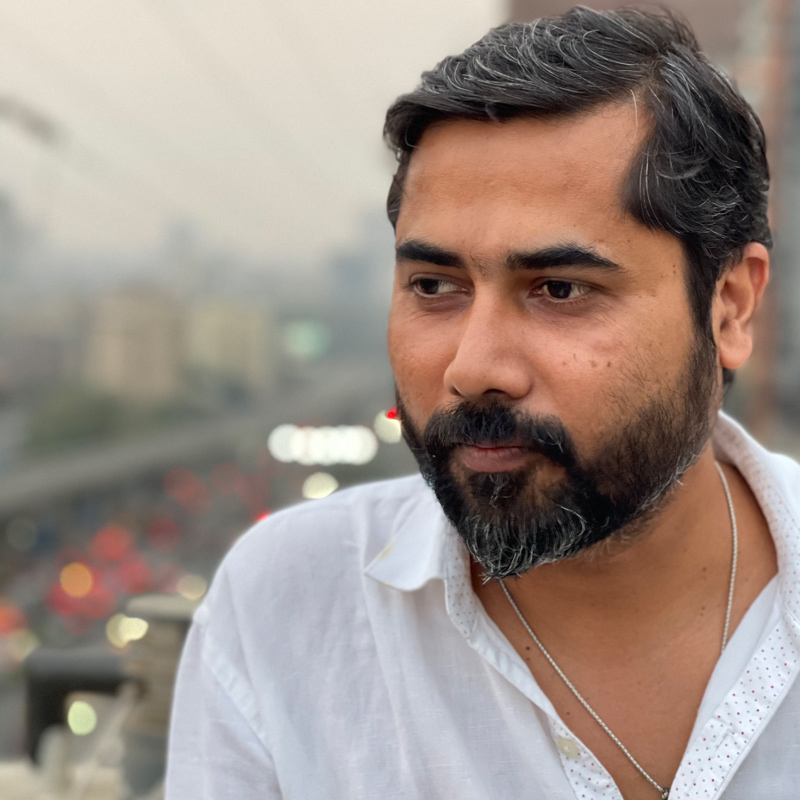
    The author is OMTV (India’s first sanatan storytelling platform) founder and MD Nitin Jai Shukla.

  • “The idea whose time had come”: Hansal Mehta on making financial thriller ‘Scam 1992’

    “The idea whose time had come”: Hansal Mehta on making financial thriller ‘Scam 1992’

    New Delhi: When the ten-part series Scam 1992 hit SonyLIV platform last October, it captured the imaginations of millions of young Indians in no time. The financial thriller chronicling the life of Gujarat-based stock broker Harshad Mehta, and his involvement in the 1992 Indian Stock Market Scam soon became the most-viewed series on the platform.

    On the last day of fifth edition of the Content Hub 2021 -TV, Film, Digital Video, and Beyond’ – the makers and writers of ‘Scam 1992: The Harshad Mehta Story’ got into a freewheeling conversation with Indiantelevision.com founder and CEO Anil Wanvari and showrunner-writer Alok Sharma to discuss the making of one of the most successful digital series on an Indian platform during the pandemic.

    “Harshal Mehta’s meteoric rise and sudden downfall had captured the imagination of millions, especially Gujaratis in the 90s. I was fascinated by his journey ever since I read Sucheta Dalal’s book in 2003-04, and wanted to tell the story. But that was the era of six-pack abs and shirtless songs, and I couldn’t even consider making it, until years later, when Samir Nair (Applause Entertainment) pitched the story to me and I jumped at it,” recalls director-producer Hansal Mehta, “It was the idea whose time had come.”

    The series went LIVE on the SonyLIV platform in October, 2020 when the first wave of the pandemic had begun to ebb away. The show was lauded for its tight screenplay and sparse writing by a team led by Sumit Purohit, Saurabh Dey, Vaibhav Vishal and Karan Vyas.

    The protagonist played by Pratik Gandhi hit it off with the audience with his one-liners, so whether it was ‘Risk hai to, Ishq hai’ which went on to become the tag-line of the series, or ‘Success kya hai, failure ke baad ka chapter’. These were also some of the lines that Hansal Mehta wanted to scrap out of the script believing them to be too filmy.

    “I found these lines to be too naïve and filmy at first. Par writers ka kamaal hai, wo kaise dikhate hain. Pratik (Gandhi) delivered those dialogues with such conviction and belief, that the audience connected with them. Wo daur filmi bhi tha,” smiles Mehta. Such one-liners were also used by stock brokers then, he adds.

    “It was also a casting feat,” quips co-director Jai Mehta. “Pratik (Gandhi) lent authenticity to the dialogues. Both of us had met several brokers on Dalal Street to get those nuances, and gestures right. It was unreal. Also, most actors in the series, including Gandhi understood finer nuances of the language, as they had done Gujarati theatre or stage plays early in their career.”

    Harshad Mehta’ character in the series represented the angry young man, the writers say, drawing inspiration from Amitabh Bachchan of the 70s. All through the series, he is seen, relying on his family for support.

    Delving into the writing process for a financial thriller, replete with several technical terms, filmmaker-writer Sumit Purohit says, the team made a conscious attempt not to dumb down the script to make it look simple. “We wanted to ensure that it looks authentic- whether it was the way the stock brokers were talking, or bankers discussing the financial transactions. It’s like science fiction. It’s not necessary that people understand the terms, for as long as they are emotionally invested with the characters,” he elaborates.
    Saurav Dey concurs, “That’s exactly the brief we got. We could tell the story as it is, and don’t have to spoon-feed the audience. They can use their judgment and draw inferences.”

    The story also carried a deep political undercurrent, with several scenes raising questions over alleged involvement of political leaders during that time. When asked about treading the fine line, Dey says, “We wanted to be responsible about what we show on screen. So, we retained only those parts, which we could substantiate with evidence. Rest was speculation, and we steered clear of that, or it would have irresponsible filmmaking.”

    The team began with the simple idea of telling a human story. “It was a volatile time, and we showed as much as we could do within the limits of the current time. We focussed on the bigger picture, and did not want that it should get impacted by any kind of outrage,” shares the ace director, who won the National Film Award for directing 2013 movie Shahid.

    However, for this series, Mehta says, he acted more like a motivator, than a writer. “I see my job as that of a motivator, who brings a pool of talent together, and ensures they move in a single direction. The biggest thing in long-form writing is patience and discipline, and the team had that,” he shares.

    Also, like his previous movies – Shahid or Omerta, the series Scam 1992 also did not have a lead actor who shared physical resemblance with the lead character in real-life. “My approach is driven by instincts and trust. That’s how I get writers and actors on-board. The physical likeness is not as important as it is to convey the spirit of the character on screen,” he opines.
    The ace-director also credits his association with Applause Entertainment, CEO Sameer Nair, who he says, ‘gave him the freedom to choose and trusted his choices.”

    Among those choices, were also several famed actors from the 90s, including Mamik Singh aka ‘Rattan’ from the iconic movie – Jo Jeeta Wahi Sikandar who played the Citibank chief Rao in the series. The series also had Anant Mahadevan, playing RBI Governor, S Venkitaramanan and Satish Kaushik as the foul-mouthed stock market kingpin Manu Mundra. “It was a masterstroke,” says Mehta emphatically.

    Another crucial element was planning the locations for the series, set in the 90s – ‘Bombay’ that most members of the team had not seen. “We went through books, pictures and did our research to recreate that era. We even got the original CBI office opened for a few scenes we shot there. It has been lying closed for over two decades,” recalls Jai Mehta.

    After the success of Scam:1992, Hansal Mehta is now back on the sets for his next – a crime thriller based on a true incident.

    The fifth edition of the Content Hub 2021 was co-presented by IN10 Media Network and ZEE5, and co-powered by Applause Entertainment and Tipping Point, the digital content unit of Viacom18 Studios. PTC Network was the supporting partner.

  • Takis Candilis returns to Banijay as senior adviser

    Takis Candilis returns to Banijay as senior adviser

    MUMBAI: Banijay has welcomed former head of scripted Takis Candilis back to the business as it looks to expand its investment in the genre. Candilis has returned in the capacity of senior advisor and will drive up co-production and new IP opportunities across southern Europe.

    In recent months, Banijay, which operates 120 production entities across 22 territories, has upped its operations and talent in the scripted space. 

    During his previous stint at Banijay, Candilis was charged with expanding international activity in scripted programming. He left the global producer-distributor in 2018 to take on the role of deputy managing director of broadcast and programming at France Télévisions. There, he spent two years supervising programming and editorial strategy for the group’s national channels.

    Banijay CEO Marco Bassetti said: “While unscripted continues to be at the core of Banijay, we have undoubtedly amplified our scripted efforts through the latest acquisition. Teaming our increased ambition in the drama space with the ample opportunity in the market, we are sure, with Takis, we can further grow our international pipeline and strategically drive up southern European owned-IP for our catalogue.”

    Takis Candilis added: “What a difference two years makes… Banijay was always an inspiring, ambitious and ultimately creative business but over the past few months it has rapidly expanded and become a leading player in the scripted space. It’s a great time to be returning as the group continues to innovate and I look forward to working with the team to identify original premium IP projects and collaboration opportunities across southern Europe.”

    Having started his career as an independent producer, the entrepreneur has also held leadership roles at TF1, Lagardère Entertainment, Tara Productions and Caméras Continentales. As senior advisor, Candilis will partner closely with CEO, Marco Bassetti, and the group’s core leadership team.

  • Godrej adds new furniture brand Script

    Godrej adds new furniture brand Script

    MUMBAI: Godrej has today announced the launch of a new home furniture brand, Script.The aggressive growth plan includes launch of three stores across three cities in this fiscal. Script is pegged as a lifestyle extension from the house of Godrej. Backed by an extensive design thinking process, Script will be tapping into a market size that is estimated to be 10,000+ crores. The first store will be launched in Bangalore followed by stores in Delhi and Mumbai. The business expects a turnover of Rs 320 crores by the end of the 3rd fiscal year.

    Godrej & Boyce MD & Chairman Jamshyd Godrej says, “Godrej has always been celebrated for offering innovations that use cutting edge technology and best in class manufacturing methods with a purpose of providing a great experience to our consumers. Script is a brand that strengthens our commitment to the latter. It is also the first brand from the house of Godrej & Boyce, which establishes Godrej in the attainable premium furniture category. Backed by a strong supply chain infrastructure owing to our existing leadership presence in the furniture segment, we believe Script will be a preferred brand amongst our stakeholders.”

    Godrej & Boyce COO Anil Mathur adds, “We have always believed in going beyond the mundane and therefore consistently provided extraordinarily innovative products to our customers. Script is an earnest endeavour in the same direction. It doesn’t merely attempt to satisfy customers but delight them through finest design features. The brand is premium and niche but endeavours to reach the mass market wherein aspiration for cutting edge products exists but prevailing range remains nonexistent.”

    Script business head Rajat Mathur says, “Script is a new perspective on furniture and accessory design that is inspired by contemporary living. Currently there is limited number of national and international branded furniture players in the market. In addition, there is also a vacuum in the attainable premium segment in furniture retail. With Script we see a huge opportunity to bridge this gap. Backed by a very strong design and R&D team, Script promises to offer our consumers the freedom of living.”

  • Indian media and entertainment firms script growth story in FY’10

    After a lull driven by the recession, the media and entertainment sector is on a strong rebound amid restructuring.

    The combined turnover of 40 listed M&E companies stands at Rs 174.42 billion for the fiscal ended March 2010, up 13.18 per cent over the earlier year, as the stresses and strains of the economy eased during the 12-month period.

    Adjusting to the changing business landscape and absorbing the pain of massive staff layoffs, the sector also improved its profitability. The drive in the last few years was just the reverse as companies stretched to expand their footprint and kept their eye on valuations as raising capital was far easier in a bull-run phase.

    The jump from a FY’09 revenue of Rs 154.1 billion was led by broadcasting, distribution and publications companies.

    Zee Entertainment Enterprises Ltd was ahead of the pack with an income of Rs 22 billion during the fiscal.

    Companies continue to focus on cost-cutting drives, a main corrective step after going on an expansion overdrive. Overall expenses dropped to Rs 127.91 billion, from Rs 146.55 billion in FY‘09, falling by 12.72 per cent between the fiscals.


    Print cut expenses by 92.18 per cent, while production houses dropped costs by 13.4 per cent.

    At an operational level, the sector has had the most remarkable turnaround story between the two fiscals as operating profit rose 198.9 per cent higher in FY’10 over the year-ago period. The FY’10 operating profit of Rs 24.05 billion looked healthier than the earlier year’s Rs 8.04 billion.

    The companies who had the highest operational efficiency in the fiscal are Sun TV (Rs 7.7 billion), ZEEL (Rs 5.8 billion) and Deccan Chronicle Holdings (Rs 4.4 billion).

    In FY’10, broadcast news, production houses, cable TV distribution, specialty retail and radio were in the red as far as bottom lines go.

    However, the media and entertainment sector as a whole posted a net profit of Rs 9.08 billion in FY10, as against Rs 4.86 billion a year ago. This 86.98 per cent jump in bottom line came at the back of strong performances from Sun TV (Rs 5.2 billion), ZEEL (Rs 4.8 billion), Deccan Chronicle (Rs 2.6 billion) and HT Media (Rs 1.2 billion).

    TV18, IBN18, WWIL, Dish TV and Reliance Mediaworks notched up losses of over Rs 1 billion each during the fiscal.

  • Star, Zee both claim rights to ‘Betiyaan’ concept; issue set to reach Court

    MUMBAI: The Diwali fireworks have already hit Indian television’s Hindi Entertainment space with archrivals Star India and Zee Network locking horns over a copyright issue.

    The “war” was kicked off with Zee Telefilms issuing a notice to Star demanding it withdraw all activites around its upcoming soap, tentatively titled Betiyaan, claiming ownership of the concept.

    Star dismissed Zee’s charges, asserting that the show’s writer Rekha Modi had registered the titles and the concept with various copyright bodies well before Zee made its own registration.

    In its legal notice sent to Star, Zee has said that its upcoming prime time soap Ghar Ki Lakshmi Betiyaan, produced by Creative Eye, would face serious market implications if Star went ahead with its prime time project carrying a similar title Betiyaan.

    Revealing the registration dates of the Ghar Ki Lakshmi Betiyaan title and concept with various copyright and industry bodies such as Film Writers Association, Film and Television Producers Guild of India and Society for Copyright regulation of Indian Producers for Film and Television, Zee has warned Star that, “Use of key elements or concept or format in your programme/series may constitute a violation of applicable intellactual property laws, including without limitation those regarding copyright infringement and passing off.”

    Buttressing its case, Star made available to Indiantelevision.com copies of the registrations made with the Film Writers Association on 5 April, 2006; 12 April, 2006 & 27 July, 2006. The show concept, characters and scripts were registered with the Association of Motion Pictures and TV Programme Producers on 29 July 2006 with the titles Betiyaan and Ghar Ki Lakshmi…Betiyaan. A copy of this document was also furnished.

    Zee’s notice to Star further states, “We would like to draw your attention to the fact that the television programme ‘Ghar Ki Lakshmi Betiyaan’ is owned by Zee Telefilms Ltd. We have already started the promotions on 5 August, and have incurred and/or committed substantial sums on business promotion / advertising and publicity etc for the programme. Our right to the programme is highly valuable to us as we have invested a lot of resources in the programme in building up awareness and goodwill in the said programme.

    “We state that, on 2 August 2006, our programme was registered with the “Film Writers Association” and on 21 August, registered with the Film and Television Producers Guild of India and Society for Copyright regulation of Indian Producers for Film and Television (SCRIPT). We understand that, this registration was done by the Guild after confirming with Association of Motion Pictures & TV Programme Producers.”

    A Star spokesperson countered, “We have been working with Rekha Modi on a show which she has registered with various industry bodies. The show concept and script of Betiyaan was registered with the Film Writers Association on 5 April, 2006; 12 April, 2006 & 27 July, 2006. The show concept, characters and scripts have also been registered with the Association of Motion Pictures and TV Programme Producers on 29 July 2006 with the titles Betiyaan and Ghar Ki Lakshmi…Betiyaan.”

    Star has further said that, it would be sticking to its original plan of launching Betiyaan very soon. “We will be launching this show very soon, though we are yet to finalise the title of the same. As far as the show is concerned, we are convinced that this is Rekha Modi’s original concept and will take all steps necessary to protect our position in this regard,” the company said.

    As per the Zee notice, the Star soap will be telecast by Star One. However, the star spokesperson refused to divulge any more details regarding the programme.