Tag: screens

  • APOS 2025 predicts that Asia’s screen economy will shift gears as digital eats into TV pie and growth slows

    APOS 2025 predicts that Asia’s screen economy will shift gears as digital eats into TV pie and growth slows

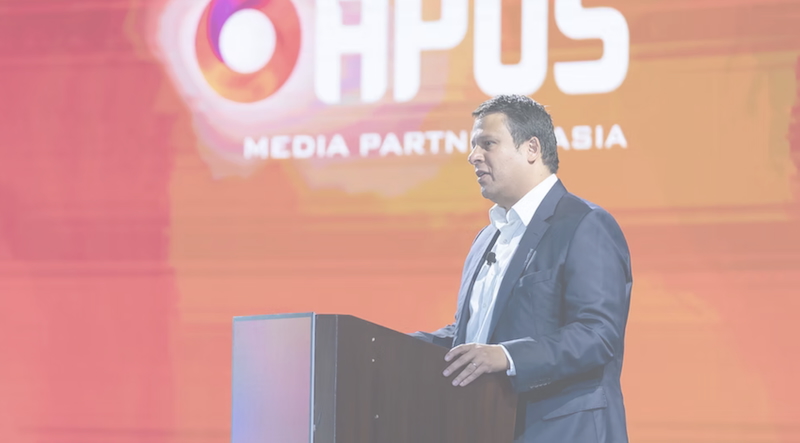
    BALI : The 16th edition of the APOS Summit opened in Bali with a blunt forecast: Asia-Pacific’s media juggernaut is heading into rougher waters. “The next wave in Asia is here and it looks very different,” said Media Partners Asia founder Vivek Couto, addressing 550 delegates from across the region’s fast-evolving screen economy.

    Asia’s screen count is booming—from 4.5 billion today to 5.5 billion by 2030—with smartphones still king, rising to 4.4 billion, and connected TVs becoming the fastest-growing segment at 13 per cent CAGR. Yet the party is winding down. After raking in $36 billion in new revenues during the pandemic-era gold rush (2020–25), the region now expects just $16 billion more over the next five years. The culprit? A steady erosion in traditional TV’s dominance.

    “Monetisation is decisively shifting to digital,” Couto declared. TV, which currently commands 49 per cent of screen revenues, will sink to 41 per cent by 2030. In its place, premium video (SVOD/AVOD) will rise to 29 per cent and UGC/social video will power up to 24 per cent. Theatrical remains flat.

    China and India dominate the region’s screen scale—72 per cent by 2030—while Indonesia, the Philippines and Thailand lead in screen growth. Three markets—China, Japan and India—will account for almost 75 per cent of screen revenues. But their playbooks couldn’t be more different.

    China’s model is fuelled by short-form content, micro-dramas and a mature VOD sector monetised through ads and transactions. Japan stays TV-centric with high-ARPU SVOD and premium AVOD. India is firing on both cylinders with ads and value-led subscriptions across streaming and broadcast, and mobile-first, hybrid OTT platforms.

    Local champions are holding their ground. JioStar is the fastest riser in India, on track to cross $1 billion this year. Australia’s Foxtel and Nine, Korea’s TVING, Indonesia’s Vidio and Thailand’s TrueID are proving that scale outside of global behemoths is not only possible—it’s profitable. “The new video economy isn’t just digital-native—it’s cross-platform,” Couto stressed.

    YouTube still rules the roost, projected to hit $18–19 billion in regional revenues by 2030, followed by ByteDance’s Douyin and TikTok, which are closing in on $10 billion combined. Netflix dominates premium VOD beyond China, with Disney+ and Prime Video scaling in Japan, India and Southeast Asia. Japan’s U-Next is riding a strong mix of sports, local content and Hollywood imports.

    Meanwhile, the creator economy is exploding—with over 100 million creators in 2024 expected to grow to 165 million by 2030. China’s micro-drama boom has already become a $7 billion beast, now expanding globally. “It’s part entertainment, part conversion funnel,” Couto said. Platforms are blurring content and commerce, particularly in China and southeast Asia, where creators are anchoring live shopping and branded content ecosystems.

    Premium content is still critical, but the free-spending days are done. Investment in streaming originals is projected to climb from $17 billion to $21 billion by 2030, but platforms are asking tougher questions: What retains? What monetises? What builds the ecosystem?

    Retail media is the region’s new digital ad workhorse, expected to drive $45 billion in spend by 2030—$26 billion in China, $10 billion in India and $9 billion in Japan. While SVOD and AVOD still rake in the bulk of video monetisation, it’s the integration of retail commerce and media that’s reshaping the ad game.

    Couto’s closing pitch was a rallying cry for innovation: “Asia-Pacific leads the world in screens, time spent and innovation. We’re no longer just a consumption story—we’re a revenue engine. But this next phase is more competitive. Growth must be earned.”

    (If you are an Anime fan and love Anime like Demon Slayer, Spy X Family, Hunter X Hunter, Tokyo Revengers, Dan Da Dan and Slime, Buy your favourite Anime merchandise on AnimeOriginals.com.)

  • From screen to streaming, a new script for Indian entertainment : Ficci Frames

    From screen to streaming, a new script for Indian entertainment : Ficci Frames

    MUMBAI: Lights, camera, transformation! The entertainment industry is in the midst of a plot twist as digital platforms rewrite the rules of audience engagement. At FICCI Frames 2025, industry stalwarts dissected the evolving landscape, debating whether theatres and streaming services could co-exist in a mutually profitable sequel or if the latter would be the ultimate showstopper.

    Filmmaker Hansal Mehta and Netflix India’s VP of content, Monika Shergill, took centre stage in a panel discussion moderated by Saurabh Varma of Content Engineers. The discussion zeroed in on how streaming platforms have not just altered viewing habits but also reshaped Indian storytelling.

    With India’s digital entertainment market projected to hit $13 billion by 2027, streaming platforms are no longer just an alternative, they’re an essential part of the ecosystem. Shergill highlighted how Indian content is increasingly gaining global traction, with 60 per cent of Netflix India’s viewership coming from international audiences. “The power of streaming lies in its ability to amplify diverse narratives,” she said, emphasising how regional content is breaking barriers.

    But does this mean curtains for theatres? Not quite, argued Mehta. “Cinema has a soul that streaming can’t replicate. But the audience is demanding smarter, more immersive experiences,” he noted. With over 10,000 screens in India, he said, exhibitors are innovating enhanced sound, premium formats, and event-based screenings are drawing viewers back.

    The discussion underscored that storytelling now hinges on data-driven insights. “Streaming has democratised content creation. Today, analytics shape scripts as much as creative instincts do,” said Shergill. Mehta echoed the sentiment but warned against formulaic storytelling driven purely by metrics.

    While Hindi cinema’s box office has seen a 15 per cent recovery post-pandemic, OTT subscriptions in India have skyrocketed, with 450 million users now consuming digital content. “It’s a hybrid future,” Mehta admitted. “Theatres will continue to be the temple of cinema, but streaming is the pulpit from where stories reach the world.”

    With international audiences embracing Indian content like never before, streaming platforms have become a powerful gateway for cross-cultural storytelling. From rooted Indian narratives like The Railway Men to high-octane thrillers, OTT platforms are catering to an increasingly global fanbase. “It’s no longer just about Hindi cinema; it’s about India’s rich tapestry of stories,” Shergill pointed out.

    Meanwhile, theatrical releases are also seeing a shift towards large-scale, event-driven experiences. Films that promise visual spectacle historical epics, superhero sagas, and big-ticket entertainers continue to bring audiences to cinemas. “The future of theatres lies in making movie-watching an event, not just a routine,” Mehta observed.

    As India’s entertainment industry rides this digital wave, one thing is clear content consumption is no longer bound by screens or schedules. Hybrid distribution models are emerging, where films are simultaneously released in cinemas and on streaming platforms. Innovative experiments like pay-per-view premieres and interactive storytelling formats are also gaining traction.

    “The lines between mediums are blurring, and that’s not a bad thing,” Varma concluded. “We’re in the middle of a creative renaissance where technology and storytelling go hand in hand.”

    Whether it’s a theatrical blockbuster or a binge-worthy series, the show must go on and in this digital era, the audience is always in the director’s chair.

  • PVR Inox screens a strong  Q3 FY 2025

    PVR Inox screens a strong Q3 FY 2025

    MUMBAI:  Q3 FY 2025 saw the audiences coming back to the theaters drawn in by entertaining films. At least that’s what one can infer  from the financials of PVR Inox Ltd’s for  Q3 FY 2025  and  for the nine months ended 31 December 2024.

    PVR  announced its results  on 6 February through regulatory filings with the Bombay stock exchange. 

     Q3 FY 2025 was especially strong  driven by blockbuster releases and record-breaking figures in ticket prices, food and beverage (F&B) spends, and advertising revenues.

    The company reported revenues of Rs 17,388 million, EBITDA of Rs 2,583 million, and a profit after tax (PAT) of Rs 681 million for Q3 FY 2025. Cinema admissions reached 37.3 million, with the highest-ever average ticket price (ATP) of Rs 281 and F&B spend per head (SPH) of Rs 140. Advertising income surged to Rs 1,486 million, the highest since the pandemic.

    During the quarter, PVR Inox opened 11 new screens across two properties, bringing its total portfolio to 1,728 screens across 350 cinemas in 111 cities.

    For the nine-month period, the company posted revenues of Rs 45,893 million, an EBITDA of Rs 4,453 million, and a net loss of Rs 460 million. Cinema admissions totalled 106.4 million, with an ATP of Rs 259 and SPH of Rs 137.

    Commenting on the performance, managing director Ajay Bijli said, “As we look ahead, our focus remains on adopting a capital-light model, enhancing cash generation, reducing net debt, controlling costs, and delivering a diverse slate of films to excite moviegoers. With a robust content pipeline and strategic growth initiatives, we are confident in sustaining our leadership and driving long-term value for stakeholders.”

    The quarter witnessed record-breaking box office collections, propelled by Pushpa 2, which grossed Rs 1,450 crore in India, including Rs 900 crore for its Hindi dubbed version, making it the highest-grossing Hindi film ever. Tamil and Telugu films continued to perform well, while the Hollywood release Mufasa: The Lion King resonated with urban audiences.

    Despite these successes, key film reschedules affected overall momentum. The company anticipates strong 2025 content pipelines across Hollywood, Bollywood, and regional cinema.

    PVR Inox also announced continued reduction in net debt, which stood at Rs 9,958 million as of December 2024, a decrease of Rs 4,346 million since March 2023. The company exited 67 underperforming screens and expects to open 100–110 new screens by the fiscal year-end, focusing on capital-light models for future expansion.

  • West Asia cinema market to get growth urge from Saudi Arabia

    West Asia cinema market to get growth urge from Saudi Arabia

    MUMBAI: For movie lovers in the middle east north Africa (Mena) region, this is great news. And for Indian movie producers and distributors it is probably even better news. Analysis by London-based research outfit Omdia has revealed that the Mena cinema market is poised to catapult to new heights with revenue growing from $900 million in 2024 to $1.5 billion by 2029. The main driver of this growth is going to be Saudi Arabia which will account for almost two-thirds of the region’s cinema revenue. 

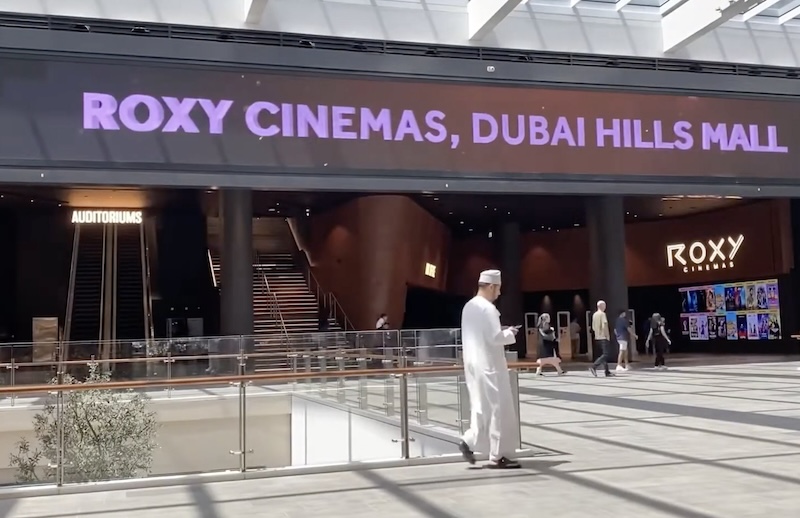
    West Asia, according to Omdia, has emerged as the fastest cinema building market, adding 1,000 new screens, starting 2019 to reach 2.500 screens by end 2024. Saudi Arabia, which is on aggressive city and entertainment hub building spree is expected to lead the additions, reaching 803 screens by year end 2024. The UAE is expected to be next in the pecking order with 734 screens.

    To top that, OMDIA says that even though west Asia is focusing on local productions, expanding its theatre count, and spreading cinema culture there is still much work to be done to sustain interest in local films and broaden their appeal.

    Beyond cinema, the online video streaming market in Mena is also on a strong growth trajectory, projected to reach $2.7 billion by 2029. This reflects the region’s evolving entertainment landscape, where audiences are embracing both traditional cinema and digital streaming platforms, creating a diverse and dynamic entertainment ecosystem.

    Says Omdia senior  director of media & entertainment  Maria Rua Agute: “With films no longer made solely for cinema; streaming platforms play a major role in financing and offer audiences a great variety of films, including those that might not reach traditional cinemas due to cost or limited availability of screens. In a region with relatively few arthouse cinemas in the region, there is a growing need for more diverse venues and programming to reflect the evolving film culture and cater to different tastes and genres. Expanding the availability of diverse cinema will be key to meeting demand.

    “The growth of cinema in the Mena  region, particularly in Saudi Arabia, signals a major shift in both the regional entertainment landscape and global filmmaking. Investments in infrastructure, local film production, and streaming are helping diversify cinema offerings. As audiences embrace both traditional theater and digital platforms, the region’s film culture has immense potential to flourish and gain international recognition.”
     

  • Government keen to resolve issues facing M&E industry

    Government keen to resolve issues facing M&E industry

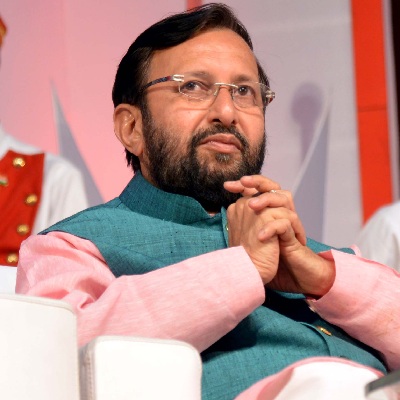
    NEW DELHI: While exuding confidence in the Media and Entertainment industry in the country, Information and Broadcasting Minister Prakash Javadekar today said it was important for the stakeholders to keep the welfare of the citizens in mind.


    He said he knew the sector had immense opportunities and the world “is fascinated by our culture and Indian cinema is becoming very popular.”

     
    “Education and entertainment are the primary needs after roti, kapda and makaan (food, cloth and shelter),” Javadekar added.


    The Minister said that his attempt in keeping with the mandate of the new government would be to take decisions on pending issues as soon as possible as “delay is out, decision is in.”  The work of the government is not to create roadblocks but to give impetus to entrepreneurship and industry. 

    Addressing the ASSOCHAM meet on media and entertainment, SCREENS 2014, the Minister, said the path-breaking initiatives on digitisation were bound to improve the quality of television broadcasting in the country. Both the government and the industry should work together for the welfare of the consumers. “There are issues of distribution, there are issues of taxation,” he added.

    “We, both the industry and the government, have to think about the final consumer. Government and industry have to think about the welfare of common citizen and to that end we are partners, we are the facilitators,” he said. 


    Later, Additional Secretary (Films) Raghvendra Singh said that the government was in the process of revamping the Cinematograph Act 1952 which had been drafted when there was no television or other media,


    Realising that media and entertainment was the biggest market in terms of consumer needs; the government is also on the threshold of announcing a major initiative for curbing piracy.


    He was conscious that entertainment tax being a state subject was not uniform, and that there was a grievance about service tax. He hoped all these issues would be subsumed in the proposed Goods and Sales Tax, which the government hopes to bring forward soon.


    He said that the government was very keen to upgrade the Film and Television Institute of India and the Satyajit Ray Film and Television Institute, also to set up a centre of excellence for animation and special effects as soon as possible.


    He also informed that the government was finalising its work on the National Film Heritage Mission for assessment of preservation and restoration of film material.


    “Funds have already been provided in the Ministry’s allocations for anti-piracy measures but this was not possible without collaboration from the industry itself,” said Singh.


    Telecom Regulatory Authority of India member Vijayalakshmy K Gupta stressed that addressability has led to better television and online video viewership has grown 13 per cent between December 2012 and December 2013.


    It has also led to reduction of carriage fee, she claimed on the basis of the first two phases of digital access system.


    She said that TRAI was firm on its decision not to permit state or central government units in private radio or television broadcasting.


    She felt that as far as cinema was concerned, there was need for a Film Commission for dealing with various issues.


    TRAI advisor N Parameshwaran said, “One major problem is that all multi-system operators are ‘pulling in different directions’ and therefore it is difficult to resolve their problems.”  


    He agreed that there was need for rationalisation of taxes in the country as far as media and entertainment were concerned.


    He said TRAI was already working on the issue of increasing bandwidth in view of 4G technologies coming in after HD.


    He denied charges by cable operators that broadcasters or MSOs were being protected as he said they had also been prosecuted for violating rules.