Tag: SC

  • SC asks Sanjay Dutt to surrender by 15 May

    SC asks Sanjay Dutt to surrender by 15 May

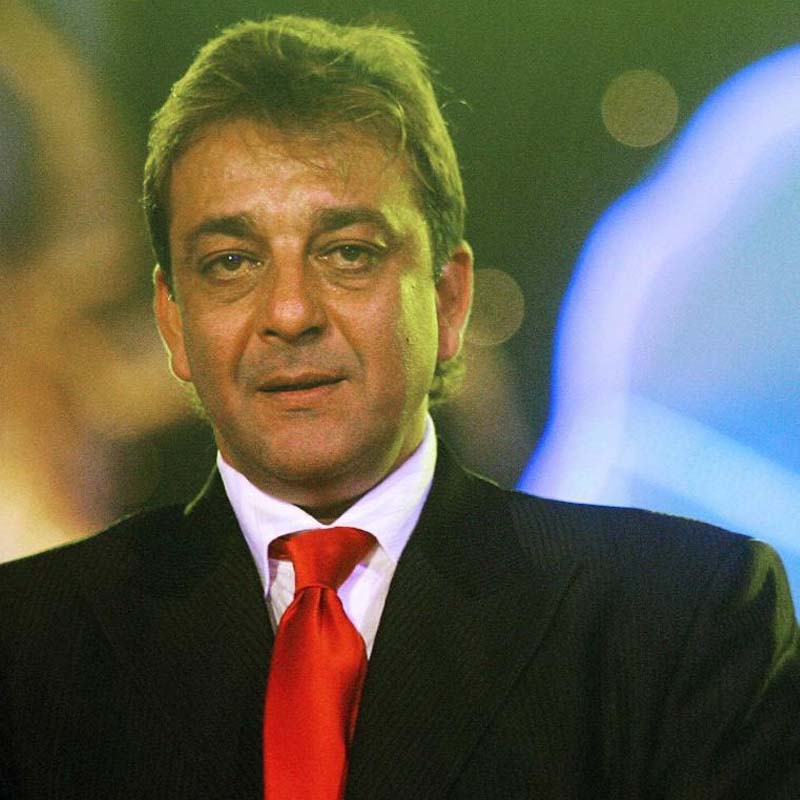
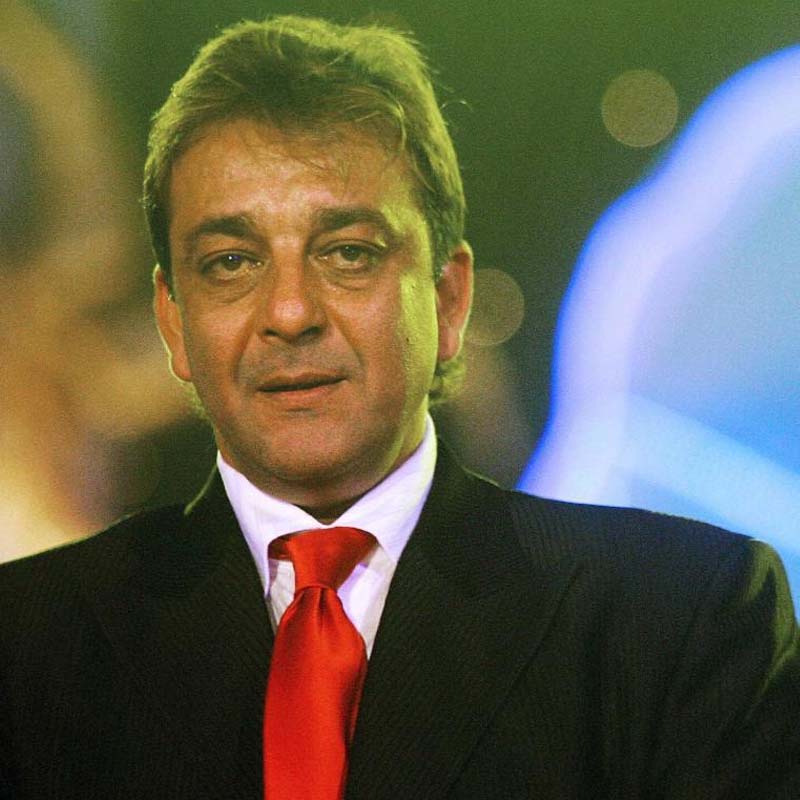
    NEW DELHI: The supreme court today rejected a review petition by actor Sanjay Dutt against his conviction in the 1993 Mumbai riots case under the Arms Act.‘

    The court had earlier on 21 March upheld his conviction under the Arms Act and sentenced him to five years of jail in relation to the 1993 Mumbai serial blasts case. However, he was given time to complete his assignments in the film industry.

    He has to surrender by May 15.

    The court which had upheld the death sentence of Yakub Abdul Razak Memon, a key conspirator with Dawood Ibrahim in the 1993 Mumbai serial blasts, had ordered that Dutt return to jail to serve three-and-a-half years‘ sentence for possessing illegal arms. Dutt has already served a jail term of 18 months.

    A total of 257 persons were killed and 713 others injured when a series 13 coordinated explosions shattered the metropolis on 12 March 1993.

    The blasts occurred at 12 places, including Bombay Stock Exchange building, Air-India Building at Nariman Point, at Worli opposite Century Bazaar, Hotels Sea Rock and Juhu Centaur.

  • SC admits LCOs plea against Tdsat’s DAS order

    SC admits LCOs plea against Tdsat’s DAS order

    NEW DELHI: The supreme court today admitted for hearing an appeal by united cable operators welfare association (Ucowa) challenging the revenue sharing model under the digital addressable system (DAS) for cable television.

    Chief justice Altamis Kabir, justice Vikramjit Sen and justice S A Bobde also issued notice to the telecom regulatory authority of India (Trai) and the information & broadcasting ministry.

    The court also decided to list for hearing this appeal along with the appeals filed earlier by Incable and Digicable.

    All the three appeals are against the judgment of the telecom disputes settlement and appellate tribunal (Tdsat) of 19 October last year.

    In its petition, the Ucowa said the tariff order and regulations were aimed at helping the television broadcasters and the direct-to-home platforms.

    They said it was also clear that the channels were deliberately not revealing their retail tariff per channel.

    The counsel stressed that they were not opposed to introduction of digital DAS but some infirmities had to be corrected.

    The LCOs had failed to get any relief from Tdsat on their plea that the revenue sharing pattern of 55:45 on the basic service tier (free to air television channels) of Rs 100 and 65:35 on the upper tier of Rs 150 (combination of FTA and pay channels), and their appeals were dismissed.

    The appeals by the MSOs had been filed against the unfair fixation of the wholesale rate the price broadcasters can charge of channels for DAS at not more than 42 percent of the non-Cas area rate. The MSOs are concerned about the rate that would be fixed after DAS is implemented countrywide (by December 2014).

  • SC postpones IBF petition on digitisation to 8 July

    SC postpones IBF petition on digitisation to 8 July

    NEW DELHI: The supreme court has once again rejected an application by the Indian Broadcasting Foundation (IBF) for staying the court proceedings in the Andhra Pradesh and Madhya Pradesh high courts.

    Chief justice Altamis Kabir, justice Vikramjit Sen and justice S A Bobde fixed 8 July as the date for further hearing on the petition by the IBF challenging the orders in the Karnataka, Gujarat, Madhya Pradesh and Andhra Pradesh high courts.

    It also listed along with these cases a petition by IBF against the multi-system operator Digicable.

    Some more MSOs from Andhra Pradesh including Chalasani Narendra Varaprasad were allowed to be impleaded in the case.

    The IBF petition seeks to ensure that digitization is implemented as scheduled and without hindrance.

    When the special leave petition had been mentioned before the court on 16 April, it had declined the prayer to stay any of the proceedings in the various high courts as it was informed that the Karnataka high court judgment on the subject was due. The bench presided over by chief justice Altamas Kabir felt it would await the judgment of the high court before taking up the matter.

    The Karanataka, Gujarat and Allahabad high courts have since dismissed as having no merit the petitions seeking extension of the switch-of dates for phase II of digitisation in Bengaluru, Mysore, Ahmedabad, Rajkot, Surat, Vadodara, Agra, Allahabad, Ghaziabad, Kanpur, Lucknow, Meerut and Varanasi.

    Petitions challenging digitisation are currently pending in the Madras, Andhra Pradesh and Madhya Pradesh high courts. These affect the cities of Chennai, Hyderabad, Visakhapatnam Bhopal, Indore, and Jabalpur.

  • IBF petition to prevent any delay of digitisation expected to be heard on Thursday

    IBF petition to prevent any delay of digitisation expected to be heard on Thursday

    New Delhi: The Supreme Court is expected to hear on 25 April a petition by the Indian Broadcasting Foundation seeking to ensure that digitisation is implemented as scheduled and without hindrance.

    The case had been listed for today, but could not be heard because of pending business. The Court is closed tomorrow because of Mahavir Jayanti.

    When the special leave petition had been mentioned before the Court on 16 April, it had declined the prayer for a stay on any of the proceedings in the various High Courts, as it was informed that the Karnataka High Court judgment on the subject was due. The bench presided over by Chief Justice Altamas Kabir therefore felt it would await the judgment of the High Court before taking up the matter.

    The Karnataka and Gujarat High Courts have since dismissed as having no merit to the petitions seeking extension of the switch-off dates for Phase II of digitisation in Bengaluru, Mysore, Ahmadabad, Rajkot, Surat and Vadodara.

    Petitions challenging digitisation are currently pending in the Madras, Andhra Pradesh and Madhya Pradesh High Courts. These will affect the cities of Chennai, Hyderabad, Visakhapatnam Bhopal, Indore, and Jabalpur.

  • SC gives Sanjay Dutt another four week breather before returning to jail

    SC gives Sanjay Dutt another four week breather before returning to jail

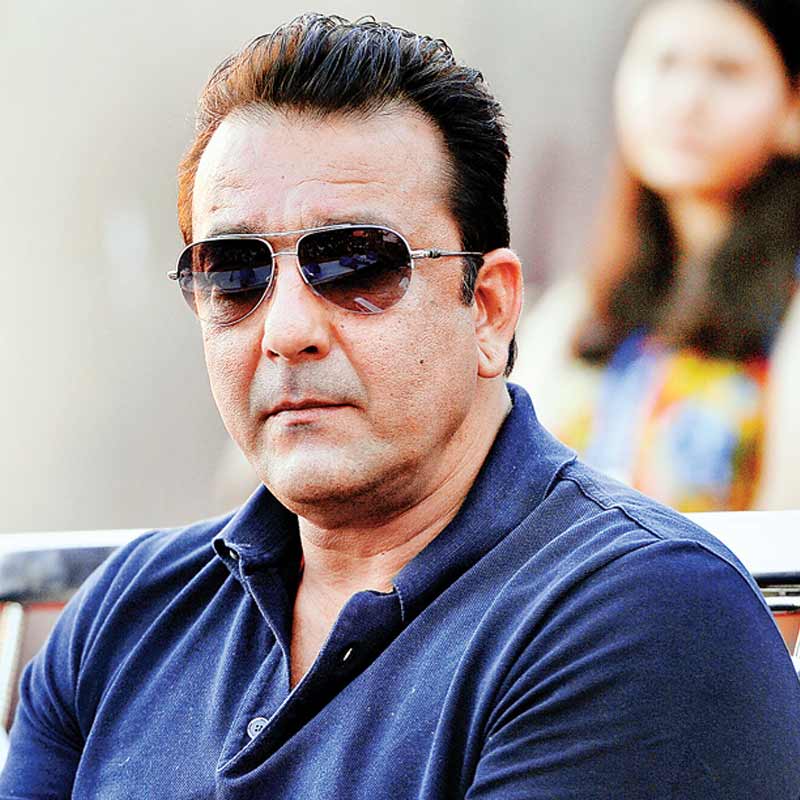
    MUMBAI:With reference to Sanjay Dutt‘s application seeking a six-month extension of his 18 April deadline, the Supreme Court has given him four more weeks‘ time to complete his films before returning to jail.

    The judges responding to Dutt‘s appeal said that the decision was taken on humanitarian grounds. "We extend the time by four weeks from tomorrow. It is made clear that no further extension will be granted," they informed.

    On Monday, while filing the application for a six-month extension, Dutt had said that seven films with a budget of Rs 2.78 billion were under various stages of production and it needed 196 acting days to complete.

    The actor is currently working in double shifts to wrap up the three projects on hand – Peekay, Zanjeer and Polocigiri, before surrendering himself.

    Besides this, he will also be shooting for the cameo he plays in home production Hasmukh Pighal Gaya. The film is being directed by Sejal Shah and has a bunch of newcomers.

  • Sanjay Dutt to spend 42 months in jail in Mumbai blasts case, SC commutes sentence

    Sanjay Dutt to spend 42 months in jail in Mumbai blasts case, SC commutes sentence

    New Delhi: The Supreme Court today gave some relief to actor Sanjay Dutt in the Mumbai blasts case as it commuted his jail sentence from six years to five years but would in effect be in jail for three and a half years.

    The actor was given a six-year jail term by the TADA court. The court took cognizance of the fact that the actor had already spent 18 months behind the bars during the trial.

    At the same time, the apex court rejected his probation plea and directed him to surrender within four weeks.

    Referring to Dutta, the court said: ‘the circumstances and nature of offence was so serious that he cannot be released on probation. “… (the) evidence and materials perused by the TADA court in arriving at the decision against Dutt was correct.”

    The actor had been convicted for illegal possession of a 9mm pistol and an AK-56 rifle, but was acquitted of more serious charges of criminal conspiracy.

    The Court also pronounced judgment in the case of others convicted for the blasts.

    After 10-month hearing that started on 1 November 2011, the Court had in August 2012 reserved its verdict in the case.

    On 12 March 1993, Mumbai was rocked by a series of blasts that killed 257 people and left 713 injured.

  • SC fumes at Bombay HC’s stay on tobacco ads law

    NEW DELHI: The Supreme Court has strongly criticised the Bombay High Court‘s interim order seven years ago staying issuance of ban on advertisements under the Cigarettes and Other Tobacco Products (Prohibition of Advertisement and Regulation of Trade and Commerce, Production, Supply and Distribution) Act 2003.

    “There is total frustration of an Act framed in public interest,” the apex court remarked when counsel Prashant Bhushan sought lifting of the stay on the operation of the law by an interim order seven years ago.

    The Supreme Court expressed surprise that the interim order was continuing for the last seven years. A bench led by Justice G S Singhvi issued notices to the central government and six tobacco traders of Maharashtra on whose lawsuit the Bombay High Court had passed the interim order.

    A non-governmental organisation (NGO) Health for Millions says in a lawsuit that the top court and various high courts have issued specific directions for implementation of provisions of the 2003 Act keeping in mind the larger interests of the society and minors.

    At least one million people die in India every year due to tobacco consumption in its various forms and it is also responsible for 40 per cent of non-communicable diseases, including cancer, cardiovascular diseases and lung disorders.

    But the Bombay High Court ignored these aspects while passing the interim order, Bhushan said, and referred to the Global Adult Tobacco Survey India Report 2010 which stated that about 35 per cent of adults (15 years and above) in India use tobacco in some form or the other.

  • SC asks for explanation over arrest of Facebook users

    SC asks for explanation over arrest of Facebook users

    MUMBAI: The arrest of two girls over Facebook posts following Bal Thackeray‘s death raised a hue and cry. Now the Supreme Court has asked the government to explain why the girls were arrested.

    The Supreme Court has issued notices to the Union government and Tamil Nadu, Maharashtra, West Bengal, Delhi and Puducherry.
    An aspiring Delhi University law student Shreya Singhal filed a PIL before SC stating that Section 66(A) of the IT Act be modified.

    The court has asked Maharashtra to explain the arrest of the girls over Facebook comments on Bal Thackeray.

    The Attorney General, in his response to the petition, told the apex court that the arrest of the girls was unjustified. The Attorney General said the arrests were wrong, but Section 66(A) of the IT Act need not be scrapped.

  • Oz filmmaker moves SC against Screen Australia

    MUMBAI: Australian filmmaker James Ricketson has moved the country‘s Supreme Court against Screen Australia. He claims that Screen Australia has not provided any good reason of banning him from talking to the funding body which he did in May.
    Ricketson wants the film body to produce documents that show how he has “harassed, intimidated or placed staff at risk”.
    Ricketson, who is suing for $1 in compensation, believes he has done nothing wrong.
    The three claims made by Ricketson in his legal documents allege: On or about 12 November 2010, Fiona Cameron, COO of Screen Australia showed other staff at Screen Australia a letter which suggests that the plaintiff came away from a meeting with senior executives at Screen Australia believing that he had been successful in engaging in an action that was in contravention of Screen Australia guidelines, procedures and protocols and hence corrupt. Some time prior to 10 May this year, Ms Ruth Harley, Chief Executive of Screen Australia, presented documents to the Screen Australia Board which contained untrue statements damaging to the plaintiff‘s reputation as a film producer. These documents led the Board of Screen Australia to ban the plaintiff from having any further dealings with Screen Australia and Ms Harley.
    In the case of both Ms Cameron‘s and Ms Harley‘s assertions, the plaintiff has requested that he be provided with copies of the correspondence referred to in their respective letter of 12 November 2010 and 10 May 2012. His requests have been ignored. The plaintiff denies the existence of the correspondence referred to.
    Ricketson is about to travel to Cambodia to film the latest installment of Chanti‘s World, a documentary he has been making for 17 years about a girl growing up in Phnom Penh.
    In the filmmaker has been campaigning against Screen Australia for what he claims was unfairly declining to fund this project.
    However, Screen Australia rejects this claim.

  • SC rejects Subash Ghai’s plea on Whistling Woods land

    SC rejects Subash Ghai’s plea on Whistling Woods land

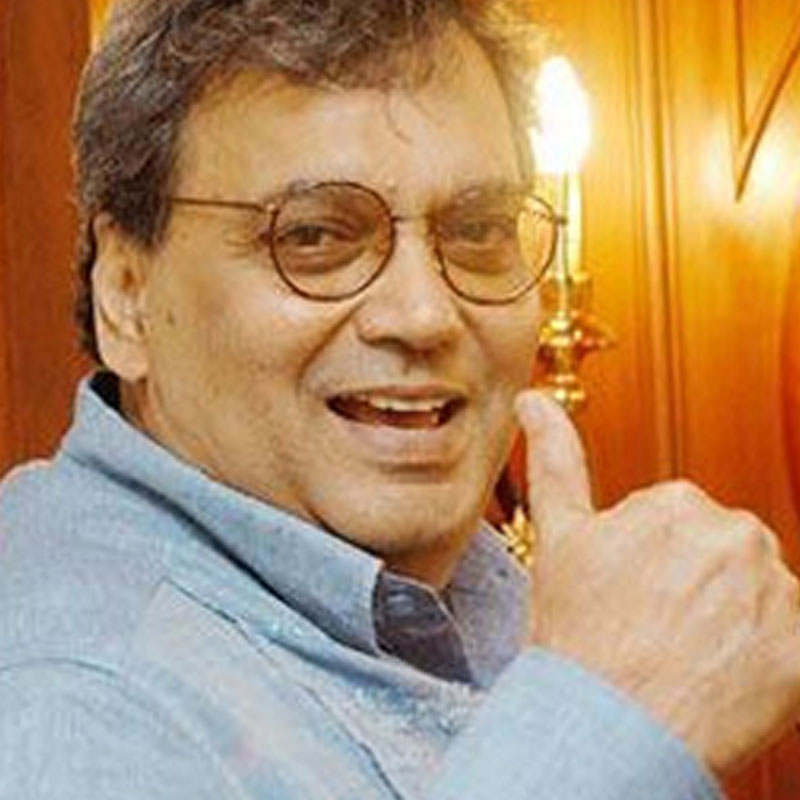
    MUMBAI: The Supreme Court has upheld the Bombay High Court order quashing the 20 acre land allotted to Subash Ghai’s film institute Whistling Wood International at the Film City, Mumbai.

    Saying that the CM cannot bend or bypass rules to give away government land, a bench of justices H L Dattu and C K Prasad pulled up former Maharashtra Chief Minister Vilasrao Deshmukh for allotting the land in 2004.

    “One cannot be treated as blue-eyed boy for which chief minister can bend or bypass rules to give away the land of the state,” the bench observed. They were of the view that there was lack of transparency in the allotment of land as many CMs prior to Deshmukh had not cleared the project.

    On his part Ghai averred, “I respect the judiciary of my country. Supreme Court dismissed our appeal on the grounds that Maharashtra Government should have followed proper governance to enter into a joint venture to run a film school in film city. People also must take precautions before dealing with the state Government than being penalised after 10 years with heavy investment and losses.”

    So what will happen to Whistling Woods? “It will survive as bright as ever though we may miss the land. Land is never a strength of education, rather education is the strength of any land. We are opening Whistling Woods in many states now and will also carry on movie business in full strength. We will discuss future course of action with our team of lawyers and wait for Government reaction on Supreme Court judgment,” said Ghai.