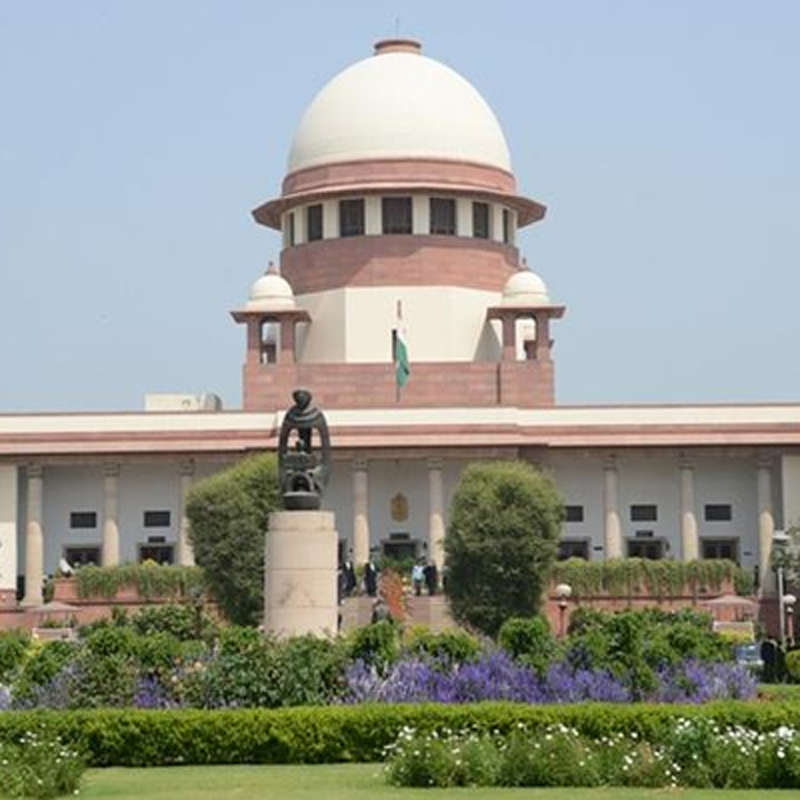
Tag: SC

  • Star India appeal in SC challenging TRAI’s HC verdict slated for Monday

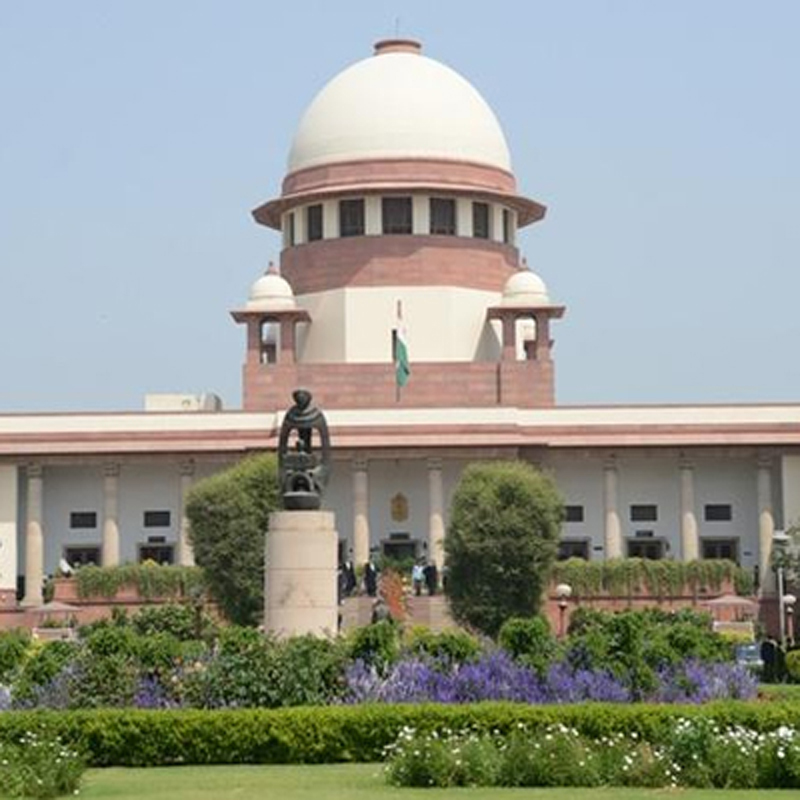
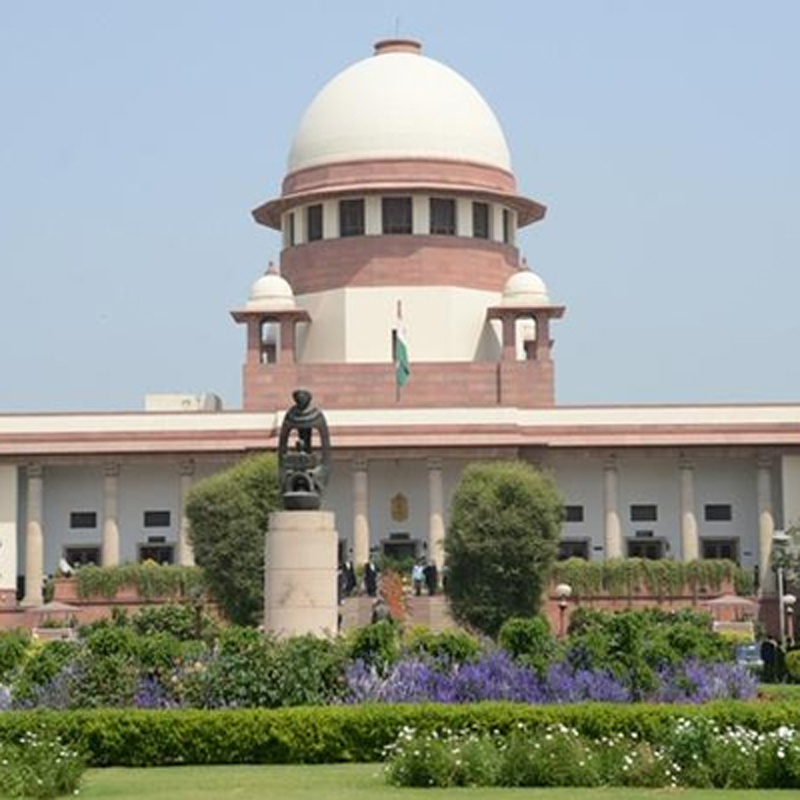
    NEW DELHI: The Supreme Court is expected to hear on 8 May the appeal by Star India and Vijay TV challenging the order of the Madras High Court refusing to stay the DAS tariff order of the Telecom Regulatory Authority of India.

    A bench headed by Chief Justice J S Kehar had earlier this week said the matter would come up for hearing in due course.  

    Meanwhile, TRAI TV reference interconnect offer (RIO) and Quality of service order (QoS) came into effect from 2 May following the order of the High Court.

    High Court Chief Justice Indira Banerjee and Justice M Sundar had directed the main petition by Star India and Vijay TV to be heard on 12 June. However, the court had said Section 3 of the Tariff order and all other consequences of such implementation/enforcement would be subject to the outcome of the main petition.

    The broadcasters had challenged the order of TRAI on the grounds that it had no jurisdiction over content, and that actually came under Copyright Act, which is not administered by TRAI.

    Apart from the Tariff order which had originally been issued on 10 October last year, the regulator also issued the DAS Interconnect Regulations which had been issued on 14 October last year, and the Standards of Quality of Service and Consumer Protection (Digital Addressable Systems) Regulations which had been issued on 10 October last year.

    Also Read:

    Hearing of Star – TRAI case begins before MHC chief justice

    Decks cleared for TRAI tariff order implementation as HC declines stay (updated)

  • No advancing of Star India hearing in TRAI tariff case: SC

    NEW DELHI: The Supreme Court has declined early hearing of an appeal by Star India and Vijay TV against the order of the Madras High Court refusing to stay the DAS tariff order of the Telecom Regulatory Authority of India. A bench headed by Chief Justice J S Kehar said the matter would come up for hearing in due course.   

    The matter was raised through a mention by counsel for Star TV, as the TRAI TV reference interconnect offer (RIO) and Quality of service order (QoS) are to come into effect from tomorrow following the order of the High Court.

    High Court Chief Justice Indira Banerjee and Justice M Sundar had directed the main petition by Star India and Vijay TV to be heard on 12 June. However, the court had said Section 3 of the Tariff order and all other consequences of such implementation/enforcement would be subject to the outcome of the main petition.

    The broadcasters had challenged the order of TRAI on the grounds that it had no jurisdiction over content, and that actually came under Copyright Act, which is not administered by TRAI.

    The Court said the petitioners had not made out a strong and prima facie case for interim stay. It also said that it had noted that the situation prevailing on 3 March 2017 when the order was issued and that prevailing today ‘has not changed so drastically’ as to warrant an interim stay. The Court said that it had also kept in view the larger public plea made by the Government counsel.

    Earlier, TRAI had issued the orders on 3 March after getting the green signal from the apex court even as the broadcasters case was pending in the High Court.

    Apart from the Tariff order which had originally been issued on 10 October last year, the regulator also issued the DAS Interconnect Regulations which had been issued on 14 October last year, and the Standards of Quality of Service and Consumer Protection (Digital Addressable Systems) Regulations which had been issued on 10 October last year.

    The orders can be seen at:
    http://trai.gov.in/sites/default/files/Tariff_Order_English_3%20March_20…
    http://www.trai.gov.in/sites/default/files/QOS_Regulation_03_03_2017.pdf
    http://www.trai.gov.in/sites/default/files/Interconnection_Regulation_03…

    Also Read:

    Hearing of Star – TRAI case begins before MHC chief justice

    Decks cleared for TRAI tariff order implementation as HC declines stay (updated)

  • PEMRA petition in DTH case admitted in Pak SC

    MUMBAI: The apex court of Pakistan on Thursday admitted for hearing an appeal filed by the Pakistan Electronic Media Regulatory Authority challenging a Lahore High Court order of 28 December 2016, that had set aside PEMRA regulations prohibiting television broadcasters from entering the Direct to Home (DTH) market.

    SC’s five-judge bench headed by Justice Gulzar Ahmed granted leave to appeal after hearing the arguments of PEMRA counsel Salman Akram Raja, the Dawn reported.

    Advocate Raja argued that Pakistan’s television broadcast market is dominated by 10 television channels out of a total of 90, in terms of market share and advertising revenue. On 24 November, 2016, PEMRA had auctioned three DTH licences for PKR 14.69 billion with the aim of stopping the proliferation of ‘illegal’ Indian DTH broadcasts which were causing an annual loss of billions of rupees to the national exchequer. The highest bid was raised by Mag Entertainment for PKR 4.91 billion, respectively followed by M/s. Shahzad Sky for PKR 4.90 billion and M/s. Star Time for Rs 4.89 billion. PEMRA had issued non-exclusive licences for 15 years to the three companies.

    PEMRA argued that if the broadcasters were to be allowed to enter the DTH market, one or more of the larger broadcast channels would end up controlling the distribution of the content while monopolising one-third or more.

    Earlier, the Lahore High Court has requested PEMRA to start the bidding process for direct-to-home (DTH) licences again, after it declared the auction void.

    Pakistani DTH services would have countered the sale of Indian DTH services in Pakistan, which leads to annual transfer of between US$ 200 million to US$ 350 million to India on account of subscription fee.

    Also read:

    Pak DTH: Mag, Shahzad & Star Time to start ops in a year

    Pakistan gets tough on Indian DTH & content

    Pak DTH licence bidding stayed

  • NDTV India ban reversal: Centre wants apology, counsel seeks time from SC

    MUMBAI: The Central Government on Friday told the Supreme Court that the one-day blackout order against New Delhi Television Ltd (NDTV) India will be reversed only when the channel offers an apology for its coverage of the Pathankot militant attack on 2 January last year.

    Appearing for NDTV India, senior advocate Harish Salve sought a week’s time to inform the court if the NDTV India would tender an apology.

    Earlier, India’s highest court had, on November 6, deferred the hearing in the case to 5 December, citing reason of no urgency for its hearing. Information and broadcasting ministry had asked NDTV India to go off-air on 9 November after the government accused it of airing sensitive information related to the terror attack.

    NDTV had, however, refuted the allegations stating that other channels had also reported the same. Information and broadcasting minister M. Venkaiah Naidu however supported the ban, stating that it was in the interest of India’s security.

    Major media organisations and journalists condemned the ban and protested against it, comparing it with the emergency when the right of the freedom of press was violated.

    NDTV India channel telecast a report on the Pathankot attack disclosing sensitive information well beyond the briefing given by the designated officer while the anti-terrorist operations were still under way. The content was found in violation of Rule 6(1)(p) of the Programme Code. The matter was placed before the IMC on 25 July, 2016, in which representative of the channel was also afforded an opportunity of a personal hearing. It was recommended that the channel may be taken off air for at least one day keeping in view the gravity of the violation and an order issued on 2 November 2016.

  • SC terms ‘anti-competitve’ barring of TV channels airing dubbed serial

    MUMBAI: In Competition Commission of India versus Co-ordination Committee of Artists And Technicians of WB Film and television, the apex court of India has held that, preventing channels from airing the tele-serial Mahabharat dubbed in Bengali is an ‘anti-competitive’ activity, and the protection under the garb of language goes against the interest of competition.

    The CCI (Competition Commission of India), acting on a complaint that the Committee of Artists and Technicians of West Bengal Film, Eastern India Motion Picture Association (EIMPA) and Television Investors (Coordination Committee), demanded to halt the airing of the dubbed serial on some TV channels, held that this activity was ‘anti-competitive’. 

    The Competition Appellate Tribunal however set aside the order and conclusion of the CCI, stating that the EIMPA and the coordination committee were not an “enterprise.” The CCI then approached the Supreme Court.

    In its judgement, the SC observed: This appeal raises an interesting and important question of law touching upon the width and scope of jurisdiction of the Competition Commission of India (for short, the ‘CCI’) under Section 3 of the Competition Act, 2002. Sajjan Kumar Khaitan is the proprietor of M/s. Hart Video having his establishment in Kolkata. He is in the business of distributing video cinematographic TV serials and telecasting regional serials in the States of Eastern India, which includes West Bengal.

    BRTV, Mumbai, which is the producer of  T.V.   programmes,  had  produced  T.V.  Serial   named ‘Mahabharat’, original version whereof was in Hindi.  BRTV entrusted the sole and exclusive rights of ‘Mahabharat’ to Magnum T.V. Serials to dub the Hindi version of the said serial in Bangla with further rights to exploit its Satellite, Pay TV, DTH, IPTV, Video, Cable TV and internet rights till Septembe, 2016.  Magnum TV, in turn, appointed Hart Video as the sub-assigner to dub the said serial ‘Mahabharat’ in Bangla language, which it did. Thereafter, for the purposes of telecasting the said dubbed serial, an agreement was executed for the time slot, on revenue sharing basis, with Bengal Media Pvt. Ltd., Kolkata, which is the owner of ‘Channel 10’, as well as with Calcutta Television Network Private Ltd., Kolkata, which is the owner of CTVN+ Channel. These two channels were given hard disks of four episodes of the serial on 2 February, 2011 and 12 February, 2011.An advertisement was placed in daily newspapers on 19 February, 2011, informing the public at large that the serial ‘Mahabharat’ would be telecast in Bangla on Channel 10 at 10.00 a.m. in the morning and on CTVN+ at 10.00 p.m. every Sunday.

    Certain producers in eastern India formed an association called Eastern India Motion Picture Association (for short, ‘EIMPA’).  Likewise, the artists and technicians of film and television industry in West Bengal have formed an association known as ‘Committee of Artists and Technicians of West Bengal Film and Television Investors (‘Coordination Committee’).

    Telecasting of serial ‘Mahabharat’ in Bangla after dubbing it in the said language from the original produced Hindi language was not palatable to EIMPA or the Coordination Committee.  In their perception, serials produced in other languages and shown on the T.V. Channels after dubbing them in Bangla would affect the producers of that origin and, in turn, would also adversely affect the artists and technicians working in West Bengal. The apprehension was that it may deter production of such serials in Bangla because of the entry of serials produced in other languages and shown to the public by dubbing the same in their language. 
    Because of this reason, on 18 February, 2011 CTVN+ received a letter from the Coordination Committee to stop the telecast of the dubbed serial ‘Mahabharat’.   Letter dated 1 March, 2011 to the similar effect was written by EIMPA to CTVN+. Identical demands were made to this Channel by the Coordination Committee as well.

    It was alleged that for the last 13 years there was a convention and practice adopted in the said region not to dub any programme from other languages in Bangla and telecast them in West Bengal. A threat was also extended to CTVN+ as well as Channel 10 that in case the telecast   is  not  stopped,  their  channels  would  face non-cooperation from these two bodies, i.e., EIMPA and the Coordination Committee.

    The CCI, after receiving the aforesaid information from Sajjan Khaitan (Hart Video), formed a prima facie opinion that acts on the part of EIMPA and Coordination Committee were anti-competitive. Accordingly, matter was assigned to the Director General (DG) for detailed investigation who found Hart Video information to be factually correct.

    Section 3 of the Competition Act, 2002 reads as under :

    Anti-competitive agreements: 

    No enterprise or association of enterprises or person or association of persons shall enter into any  agreement in respect of production, supply, distribution, storage, acquisition or control of goods or provision of services, which causes or is likely to cause an appreciable adverse effect on competition within India.

    Any agreement entered into in contravention of the provisions contained in subsection (1) shall be void.

    Any agreement entered into between enterprises or associations of enterprises or persons or associations of persons or between any person and enterprise or practice carried on, or decision taken by, any association of enterprises or association of persons, including cartels, engaged in identical or similar trade of goods or provision of services, which—
    (a)   directly or indirectly determines purchase or sale prices;
    (b)  limits or controls production, supply, markets, technical development, investment or provision of services;
    (c)   shares the market or source of production or provision of services by way of allocation of geographical area of market, or type of goods or
       services, or number of customers in the market or  any other similar way;
    (d)   directly or indirectly results in bid rigging or collusive bidding, shall be presumed to have an appreciable adverse effect on competition:

    The CCI thus rightly observed that the protection in the name of the language goes against the interest of the competition, depriving the consumers of exercising their choice. Acts of Coordination Committee definitely caused harm to consumers by depriving them from watching the dubbed serial on TV channel; albeit for a brief period. It also hindered competition in the market by barring dubbed TV serials from exhibition on TV channels in the State of West Bengal. It amounted to creating barriers to the entry of new content in the said dubbed TV serial. Such act and conduct also limited the supply of serial dubbed in Bangla, which amounts to violation of the provision of Section 3(3)(b) of the Act. Resultantly, the instant appeal of CCI stands allowed.

    Click Here

  • Star Plus, Jalsha & Zee telecast challenged in B’Desh SC

    MUMBAI: An appeal has been filed in the Bangladesh Supreme Court challenging the country’s High Court verdict that approved continuing of telecast of three Indian TV channels.

    The Bangladesh High Court had paved the way for continuance of telecast of Star Plus, Zee Bangla and Star Jalsha. The court rejected a writ petition that sought ban on the broadcast of the three. The petitioner’s lawyer had said his client would appeal before the Appellate Division of the Supreme Court.

    Apex court lawyer Syeda Shahin Ara Laily on Sunday afternoon submitted the appeal to the Appellate Division seeking a stay on the high court decision. SC chamber judge might hold hearing on the appeal on Wednesday, Laily’s lawyer Aklas Uddin Bhuiyan told The Daily Star.

    On 7 August, 2014, Laily had filed the writ seeking to stop the operation of the three, arguing that those have been making an adverse impact on the social life of the country’s people. Students’ education and housewives’ normal chores were being affected due to watching the programmes, she had mentioned. On 19 October, the High Court asked the government to explain as to why it should not be directed to ask the cable operators to stop airing the three, the Financial Express reported.

    Influenced by drama serial “Bojhena Se Bojhena” on Star Jalsha, the petitioner argued, three Bangladeshi girls had reportedly committed suicide for not getting “Pakhi” dress used in the serial. Bangladeshi channels, on the other hand, were not allowed to be broadcast in India, she added.

    Also Read:

    B’Desh PIL rejected; Star Plus, Jalsha & Zee Bangla telecast to continue

    Indo-Bangladesh radio channel Akashvani Maitree launched by President Mukherjee

    AIR’s new radio station aimed at Bangladesh with Bangladesh content

  • SC recognises ASCI role

    SC recognises ASCI role

    MUMBAI: The Supreme Court of India (SC), in its recent judgement titled “Common Cause (A Regd Society) v Union of India and Ors”, affirmed and recognised the self-regulatory mechanism put in place for advertising content by The Advertising Standards Council of India (ASCI).

    The SC agrees that ASCI serves as an effective pre-emptive step to statutory provisions in the sphere of media regulation for TV and Radio programmes in India.

    In its judgment, after carefully analyzing the provisions of the Cable TV Act and Rules, as well as the submissions presented by the central government regarding the necessity of self-regulation in media, the court concluded that the current regulatory mechanism involving both statutory and self-regulatory system serves as a sufficient media content regulator and needs no interference. The grievance redressal platform provided by self-regulatory bodies like ASCI, therefore, function as the first step for aggrieved consumers against content in the media which might not be in line with the existing laws.

    Commenting on the Supreme Court’s directive, ASCI chairman S K Swamy said, “It’s a moment of pride and honor for ASCI to have received the highest form of recognition from the Supreme Court of India. This is extremely encouraging as this order endorses ASCI’s processes for self-regulating advertising content and therefore, motivates us further to strengthen our efforts towards protecting the legitimate interests of consumers from misleading, indecent, harmful and unfair advertisements.”

  • Streamline media grievance redressal, SC asks govt

    Streamline media grievance redressal, SC asks govt

    NEW DELHI: Action was taken in 52 cases of television and two of radio in the past three years for violation of the Programme or Advertisement Code of the Government. Minister of state for information and broadcasting Rajyavardhan Rathore said the action in most cases was limited to apology scrolls, or switching off channels for a brief period.

    This included in the case of TV 19,15 and 18 cases in 2014, 1015 and 2016, respectively, and one each in the case of FM radio in 2015 and 2016.

    Meanwhile, the minister said the Supreme Court had, on 12 January 2017, advised the Government to formalise the complaint redressal mechanism including the period of limitation within which a complaint can be filed. 

    The court also said the concerned statutory authority which shall adjudicate upon the same including the appellate and other redressal mechanisms, leading to a final conclusive determination. 

    At present, an Inter-Ministerial Committee takes action on complaints forwarded to it. In addition, there is self-regulation at the level of the Advertisement Standards Council of India, the Broadcast Content Control Council and the News Broadcast Standards Authority.

    The Inter Ministerial Committee (IMC) under Section 20 of the Cable Television Networks (Regulation) Act 1995 comprising officers  from Ministries of Home Affairs, Defence, External Affairs, Law & Justice, Women & Child Development, Health & Family Welfare, Consumer Affairs and a representative from Advertising Standards Council of India, to take cognizance suo moto or to look into specific complaints regarding content on private TV channels on any platform including FM Radio channels.

    As and when there is a prima facie case of violation by private satellite TV channels and private FM channels regarding content aired by them, the matter is placed before the IMC for its consideration/recommendations. Thus, IMC functions in a recommendatory capacity. The final decision is taken on the basis of the recommendations of IMC by the Ministry after which action is taken such as issuing warnings or advisories to the channels or asking them to run apology scrolls on their channels or directing the channels to be taken off air for a limited period depending on the gravity of the violation.

    Apart from this, the Ministry has also issued directions to States to set up District level and State level Monitoring Committees to regulate content telecast of local TV channels carried on Cable TV Networks.

    Also Read:
    SC to MIB: Get mechanism to deal with complaints on TV, radio shows

    MIB urgently seeks pending 78 channels’ equipment details

    Govt warning to TV channels on b’cast norms breach

    Mittal wants self-regulation for new media, Rathore says IT Act adequate

  • Streamline media grievance redressal, SC asks govt

    Streamline media grievance redressal, SC asks govt

    NEW DELHI: Action was taken in 52 cases of television and two of radio in the past three years for violation of the Programme or Advertisement Code of the Government. Minister of state for information and broadcasting Rajyavardhan Rathore said the action in most cases was limited to apology scrolls, or switching off channels for a brief period.

    This included in the case of TV 19,15 and 18 cases in 2014, 1015 and 2016, respectively, and one each in the case of FM radio in 2015 and 2016.

    Meanwhile, the minister said the Supreme Court had, on 12 January 2017, advised the Government to formalise the complaint redressal mechanism including the period of limitation within which a complaint can be filed. 

    The court also said the concerned statutory authority which shall adjudicate upon the same including the appellate and other redressal mechanisms, leading to a final conclusive determination. 

    At present, an Inter-Ministerial Committee takes action on complaints forwarded to it. In addition, there is self-regulation at the level of the Advertisement Standards Council of India, the Broadcast Content Control Council and the News Broadcast Standards Authority.

    The Inter Ministerial Committee (IMC) under Section 20 of the Cable Television Networks (Regulation) Act 1995 comprising officers  from Ministries of Home Affairs, Defence, External Affairs, Law & Justice, Women & Child Development, Health & Family Welfare, Consumer Affairs and a representative from Advertising Standards Council of India, to take cognizance suo moto or to look into specific complaints regarding content on private TV channels on any platform including FM Radio channels.

    As and when there is a prima facie case of violation by private satellite TV channels and private FM channels regarding content aired by them, the matter is placed before the IMC for its consideration/recommendations. Thus, IMC functions in a recommendatory capacity. The final decision is taken on the basis of the recommendations of IMC by the Ministry after which action is taken such as issuing warnings or advisories to the channels or asking them to run apology scrolls on their channels or directing the channels to be taken off air for a limited period depending on the gravity of the violation.

    Apart from this, the Ministry has also issued directions to States to set up District level and State level Monitoring Committees to regulate content telecast of local TV channels carried on Cable TV Networks.

    Also Read:
    SC to MIB: Get mechanism to deal with complaints on TV, radio shows

    MIB urgently seeks pending 78 channels’ equipment details

    Govt warning to TV channels on b’cast norms breach

    Mittal wants self-regulation for new media, Rathore says IT Act adequate

  • Marans discharged, SC ‘no’ to stay, hearing on Wed

    Marans discharged, SC ‘no’ to stay, hearing on Wed

    MUMBAI: The apex court, as of now, refused to grant a stay on the CBI court order discharging the accused in the 2G spectrum scam. The case will be heard again in the Supreme Court next Wednesday.

    The Enforcement Directorate (ED) had moved the court against the discharge of former union minister Dayanidhi Maran, his brother Kalanithi Maran and others in the Aircel-Maxis case. The ED also urged the court not to release the properties of the accused attached in the case. 

    The designated court earlier discharged the former telecom minister, and Kalanithi, and others in the Maxis-Aircel deal case filed by enforcement directorate (ED) and the CBI, PTI reported. Special judge OP Saini, who is especially dealing with the 2G spectrum scam cases and related investigation, passed this order.

    All the accused had denied the charges levelled against them by the law-enforcement agencies. 

    The order may not have any bearing on T Ananda Krishnan and Ralph Marshall as the court already separated the trial against them.

    The CBI had registered a case Krishnan and Marshall, Astro All-Asia Networks, UK, Sun Direct TV, Maxis Communications, Malaysia, South Asia Entertainment Holdings, Malaysia and late JS Sarma (then additional secretary – telecom). They were charge sheeted for alleged offences to be punishable under section 120-B of IPC and under concerned provisions of the Prevention of Corruption Act.

    ED had chargesheeted the Maran brothers, Kalanithi’s wife Kavery, South Asia FM managing director K Shanmugam and Sun Direct TV under provisions of the Prevention of Money Laundering Act (PMLA). The court discharged South Asia Entertainment Holdings and Sun Direct TV apart from the Maran brothers.

    Also Read:

    Aircel-Maxis case: 2G court seeks to speed trial against Marans