Tag: SBI

  • Straddling the extremes of broadcasting & pointcasting: The coming of age of OOH

    Straddling the extremes of broadcasting & pointcasting: The coming of age of OOH

    It is indeed no more a conjecture that digital is on a growth path and despite it blooming to a large extent in 2015, it has a long way to go! 

    Nevertheless, in the process of its bloom, digital media has pushed media-fragmentation to a new limit of ‘singlecasting,’ arguably completing media fragmentation that travelled from broadcasting to narrowcasting to singlecasting. Yes, mobile is almost a personal media device – to each, her own. 

    The story however does not end here and the media fragmentation has been pushed a tad more by OOH wherein the ‘singlecasting’ – transmission of marketing messages to one person has further been fragmented into ‘Pointcasting’ that is, transmission of marketing messages to a ‘persona’ rather than a person. 

    Persona (Pl. – ‘personae’) is defined as the ‘psychological dimension’ of a person, which in turn is defined as a ‘biological being.’ Because man has emotions and these emotions vary according to time, place and state of mind, which exactly are the elements of the ‘media aperture’, OOH media thin-slices a ‘person’ into personae and creates more adequate situation for message reception and retention.

    There is a new awakening on the exact opposite side of the above argument. Whereas OOH media is capable of pushing the fragmentation further than what digital could achieve, it is dawning on all the professionals that OOH has also emerged as ‘the only broadcast media’ capable of delivering undifferentiated audience as all other media have lost their capacity to deliver the undifferentiated audience because of the increasing complexity of their content and distribution. 

    OOH has no content and has no inherent ‘editorial or content environment’ to provide context to marketing messages. It derives the context from the emotional state of the audience and from her exact psychographic state. The media is always ‘on’ and the message is disseminated indiscriminately to anyone who pays it a fleeting glance! The distinction however, lies in the way the message is received, interpreted and retained. And this totally depends on the prevailing psychographic stage of the person, the role she is playing – of a parent or of a spouse or of an executive or whatsoever. OOH media derives its context from ‘life’.

    It is logical that last year was a great revival year in many senses as we had first begun going beyond 2008 levels. The year didn’t have many remarkable events like the general elections but a lot of things were happening. The industry revenue grew by over 18 per cent in 2015 over that of 2014. The year saw e-commerce blooming to a new high with some very high profile launches like Housing.com. 

    The industry also witnessed a reversing trend in terms of the duration of the OOH campaigns. The years before had witnessed the shrinking of campaign periods and most of the campaigns were 10 – 15 days. There were very few three months or six months campaigns, albeit annual sites remaining in fashion. Last year, we saw emergence of Apple, which brought in long term OOH campaigns and showed that OOH media works surely and every week of exposure results into ‘real volume offtake.’ Maruti Suzuki also resorted to long term campaigns and built brand Nexa from concept to a premium destination. Its galloping success with Baleno and its beating the reigning category leader i20 from Hyundai, a part of the advertising and marketing folklore in recent times. The year’s other notable contributors have been mobile phone brands and government. The categories that remained quite subdued are consumer durable, telecom services, ISPs and real estate. 

    Whole of India contributed to the growth of OOH media revenues but almost 60 per cent of spends still remains directed towards top six cities namely Mumbai, Delhi, Bengaluru, Hyderabad, Kolkata and Chennai. When we get into the next level of detailing we see that in terms of media formats that are the recipients of this revenue, billboards still rule the roost. Their share however has declined from 75 per cent three years back to about 60 per cent now. The media formats that have emerged as clear ‘growth formats’ are ambient and transit. The new metro lines, new malls, corporate parks and world-class airports have given a new boost to OOH advertising. It is no surprise that Airport, transit and ambient together account for 26 per cent of revenue share and this segment is posting steady growth. 

    The growth story was scripted by advertisers from across categories like e-commerce, retail, automobile, mobile handsets, education, consumer banking and media except cinema advertising. The top ten OOH advertisers last year were Airtel, Cadbury, Honda, Housing.com, Hyundai, LIC, Maruti Suzuki, SBI, Samsung and Quikr, not necessarily in that order. 

    I am not a big votary of ‘innovation’ in OOH media segment as OOH advertising is subtle advertising and it must ‘occur’ to the audience. I say this because OOH media is not a ‘conscious and committed consumption.’ It is consumed sub-consciously and almost always in a non-committed mode because the audience consumes this media only when it is ‘out-of-home in order to participate in life’ and as such its principal focus, attention and commitment is elsewhere. OOH media receives ‘fleeting attention’ but in the regime of CPA or ‘Continuous Partial Attention’ where no one is investing complete attention in anything or any medium, this has emerged as a distinctive strength of OOH media. Very loud innovations, demand conscious investment of attention, which is contrary to the inherent strength of this medium. 

    The year however saw some offbeat work where people tried to bring in some elements of surprise, which not only generated some interest but also lots of publicity. Maruti Baleno, LED lit innovation on a billboard in Kalkaji, Delhi was extremely innovative. The movement of light created attractiveness for the billboard and the dynamic illumination highlighted the distinct features of the car. Other innovations that generated interest were done by Oreo, Hanuman by Sony Entertainment Television and an innovation for the serial Sumit Sambhal Lega by Star Plus. Aircel executed an Umbrella branding on a bus shelter whereas Godrej Realty used LED in an innovative way to highlight its projects ‘Sky’ and ‘Trees.’ 

    The industry has not seen many take-overs and mergers though some new entities came into being. Most of these are media agencies, which is a disturbing trend as the business model does not require much capital investment. The industry, which is bereft of measurements and operates still largely in commodity-mode, mushrooming of agencies shift the pivot of the game to pricing alone. This creates an internecine war between the incumbent and the newbie, ensuing only in value-erosion for the industry. 

    The industry has been doing well as we did not see any company in the industry going belly up. Every agency has claimed a growth in billing and people also look much better-off. Despite no institutional investment coming to the industry, there has been quite a bit of expansion and upgradation, which means the internal accruals have been healthy. 

    The year ahead looks like a growth year for the advertising industry as a whole. India is conspicuous in still allowing growth to print media. The macroeconomic data have all been in favour of India and now even sectorial green shoots have started showing. With some big events like cricket World Cup T20 and launch of some 70 new automobile models will create a positive growth environment for OOH also. 

    OOH is now an integral part of the media plan in almost all categories, hence growth of advertising will mean growth in OOH revenues. The decline in overall percentage share of ad revenue of OOH media is a statistical eyesore but in absolute number terms, the OOH media industry remains healthy and finds itself in a growth arena. We hope sectors like real estate, telecom, BFSI, consumer durable, FMCG and e-commerce will find more traction and will enhance their ad spend to post better performance. 

    The OOH media industry is progressing institutionally also with IOAA having been recognised by AAAI. The industry will see new SOP being widely accepted this year and with that a lot of vexatious issues in the regulatory structure will be addressed. Smooth flow of transactions will unlock better values for all concerned. 

    The OOH media is finding a new relevance in the fast urbanising world where people are staying out of home much more – either by compulsion or by choice. Since in this fast-paced world, if one has to ‘participate in life,’ chances are that one will mostly have to step out of ‘home.’ It is only after we have taken care of all the ‘businesses’ of life, and nothing remains to be done or having been pushed to tomorrow, we return ‘home.’ It is no wonder that home has emerged as ‘residual destination’ today. This creates its own opportunities and threats for all media formats, which still get consumed mostly ‘at home.’ No wonder OTT is a fast emerging rival to the TV as we know traditionally!! 

    Even TV steps ‘out of home’!! 

    (These are purely personal views of Laqshya Hyderabad Airport Media CEO Shashi Sinha and Indiantelevision.com does not necessarily subscribe to these views.)
  • Straddling the extremes of broadcasting & pointcasting: The coming of age of OOH

    Straddling the extremes of broadcasting & pointcasting: The coming of age of OOH

    It is indeed no more a conjecture that digital is on a growth path and despite it blooming to a large extent in 2015, it has a long way to go! 

    Nevertheless, in the process of its bloom, digital media has pushed media-fragmentation to a new limit of ‘singlecasting,’ arguably completing media fragmentation that travelled from broadcasting to narrowcasting to singlecasting. Yes, mobile is almost a personal media device – to each, her own. 

    The story however does not end here and the media fragmentation has been pushed a tad more by OOH wherein the ‘singlecasting’ – transmission of marketing messages to one person has further been fragmented into ‘Pointcasting’ that is, transmission of marketing messages to a ‘persona’ rather than a person. 

    Persona (Pl. – ‘personae’) is defined as the ‘psychological dimension’ of a person, which in turn is defined as a ‘biological being.’ Because man has emotions and these emotions vary according to time, place and state of mind, which exactly are the elements of the ‘media aperture’, OOH media thin-slices a ‘person’ into personae and creates more adequate situation for message reception and retention.

    There is a new awakening on the exact opposite side of the above argument. Whereas OOH media is capable of pushing the fragmentation further than what digital could achieve, it is dawning on all the professionals that OOH has also emerged as ‘the only broadcast media’ capable of delivering undifferentiated audience as all other media have lost their capacity to deliver the undifferentiated audience because of the increasing complexity of their content and distribution. 

    OOH has no content and has no inherent ‘editorial or content environment’ to provide context to marketing messages. It derives the context from the emotional state of the audience and from her exact psychographic state. The media is always ‘on’ and the message is disseminated indiscriminately to anyone who pays it a fleeting glance! The distinction however, lies in the way the message is received, interpreted and retained. And this totally depends on the prevailing psychographic stage of the person, the role she is playing – of a parent or of a spouse or of an executive or whatsoever. OOH media derives its context from ‘life’.

    It is logical that last year was a great revival year in many senses as we had first begun going beyond 2008 levels. The year didn’t have many remarkable events like the general elections but a lot of things were happening. The industry revenue grew by over 18 per cent in 2015 over that of 2014. The year saw e-commerce blooming to a new high with some very high profile launches like Housing.com. 

    The industry also witnessed a reversing trend in terms of the duration of the OOH campaigns. The years before had witnessed the shrinking of campaign periods and most of the campaigns were 10 – 15 days. There were very few three months or six months campaigns, albeit annual sites remaining in fashion. Last year, we saw emergence of Apple, which brought in long term OOH campaigns and showed that OOH media works surely and every week of exposure results into ‘real volume offtake.’ Maruti Suzuki also resorted to long term campaigns and built brand Nexa from concept to a premium destination. Its galloping success with Baleno and its beating the reigning category leader i20 from Hyundai, a part of the advertising and marketing folklore in recent times. The year’s other notable contributors have been mobile phone brands and government. The categories that remained quite subdued are consumer durable, telecom services, ISPs and real estate. 

    Whole of India contributed to the growth of OOH media revenues but almost 60 per cent of spends still remains directed towards top six cities namely Mumbai, Delhi, Bengaluru, Hyderabad, Kolkata and Chennai. When we get into the next level of detailing we see that in terms of media formats that are the recipients of this revenue, billboards still rule the roost. Their share however has declined from 75 per cent three years back to about 60 per cent now. The media formats that have emerged as clear ‘growth formats’ are ambient and transit. The new metro lines, new malls, corporate parks and world-class airports have given a new boost to OOH advertising. It is no surprise that Airport, transit and ambient together account for 26 per cent of revenue share and this segment is posting steady growth. 

    The growth story was scripted by advertisers from across categories like e-commerce, retail, automobile, mobile handsets, education, consumer banking and media except cinema advertising. The top ten OOH advertisers last year were Airtel, Cadbury, Honda, Housing.com, Hyundai, LIC, Maruti Suzuki, SBI, Samsung and Quikr, not necessarily in that order. 

    I am not a big votary of ‘innovation’ in OOH media segment as OOH advertising is subtle advertising and it must ‘occur’ to the audience. I say this because OOH media is not a ‘conscious and committed consumption.’ It is consumed sub-consciously and almost always in a non-committed mode because the audience consumes this media only when it is ‘out-of-home in order to participate in life’ and as such its principal focus, attention and commitment is elsewhere. OOH media receives ‘fleeting attention’ but in the regime of CPA or ‘Continuous Partial Attention’ where no one is investing complete attention in anything or any medium, this has emerged as a distinctive strength of OOH media. Very loud innovations, demand conscious investment of attention, which is contrary to the inherent strength of this medium. 

    The year however saw some offbeat work where people tried to bring in some elements of surprise, which not only generated some interest but also lots of publicity. Maruti Baleno, LED lit innovation on a billboard in Kalkaji, Delhi was extremely innovative. The movement of light created attractiveness for the billboard and the dynamic illumination highlighted the distinct features of the car. Other innovations that generated interest were done by Oreo, Hanuman by Sony Entertainment Television and an innovation for the serial Sumit Sambhal Lega by Star Plus. Aircel executed an Umbrella branding on a bus shelter whereas Godrej Realty used LED in an innovative way to highlight its projects ‘Sky’ and ‘Trees.’ 

    The industry has not seen many take-overs and mergers though some new entities came into being. Most of these are media agencies, which is a disturbing trend as the business model does not require much capital investment. The industry, which is bereft of measurements and operates still largely in commodity-mode, mushrooming of agencies shift the pivot of the game to pricing alone. This creates an internecine war between the incumbent and the newbie, ensuing only in value-erosion for the industry. 

    The industry has been doing well as we did not see any company in the industry going belly up. Every agency has claimed a growth in billing and people also look much better-off. Despite no institutional investment coming to the industry, there has been quite a bit of expansion and upgradation, which means the internal accruals have been healthy. 

    The year ahead looks like a growth year for the advertising industry as a whole. India is conspicuous in still allowing growth to print media. The macroeconomic data have all been in favour of India and now even sectorial green shoots have started showing. With some big events like cricket World Cup T20 and launch of some 70 new automobile models will create a positive growth environment for OOH also. 

    OOH is now an integral part of the media plan in almost all categories, hence growth of advertising will mean growth in OOH revenues. The decline in overall percentage share of ad revenue of OOH media is a statistical eyesore but in absolute number terms, the OOH media industry remains healthy and finds itself in a growth arena. We hope sectors like real estate, telecom, BFSI, consumer durable, FMCG and e-commerce will find more traction and will enhance their ad spend to post better performance. 

    The OOH media industry is progressing institutionally also with IOAA having been recognised by AAAI. The industry will see new SOP being widely accepted this year and with that a lot of vexatious issues in the regulatory structure will be addressed. Smooth flow of transactions will unlock better values for all concerned. 

    The OOH media is finding a new relevance in the fast urbanising world where people are staying out of home much more – either by compulsion or by choice. Since in this fast-paced world, if one has to ‘participate in life,’ chances are that one will mostly have to step out of ‘home.’ It is only after we have taken care of all the ‘businesses’ of life, and nothing remains to be done or having been pushed to tomorrow, we return ‘home.’ It is no wonder that home has emerged as ‘residual destination’ today. This creates its own opportunities and threats for all media formats, which still get consumed mostly ‘at home.’ No wonder OTT is a fast emerging rival to the TV as we know traditionally!! 

    Even TV steps ‘out of home’!! 

    (These are purely personal views of Laqshya Hyderabad Airport Media CEO Shashi Sinha and Indiantelevision.com does not necessarily subscribe to these views.)
  • Government issues regulations for spectrum trading

    Government issues regulations for spectrum trading

    NEW DELHI: Spectrum trading will be allowed only between two access service providers, holding Cellular Mobile Telephone Service (CMTS) License, Unified Access Service License (UASL), Unified License (Access Services)(UL(AS)) and Unified License (UL) with authorization of Access Service in a licensed service area.


    All access spectrum bands earmarked for Access Services by the licensor will be treated as tradable spectrum bands, according to the Communications and Information Technology Ministry.


    The decision of the government has been announced after considering the recommendations of the Telecom Regulatory Authority of India (TRAI) in this connection.


    Only outright transfer of right to use the spectrum from the Access Service Provider who is transferring the right to use the spectrum is (seller) to Access Service Provider who is acquiring the right to use spectrum (buyer) will be permitted. Leasing of spectrum is not permitted.


    Spectrum trading will be permitted only on a pan-LSA (Licensed Service Area) basis. In case the spectrum assigned to the seller is restricted to part of the LSA by the Licensor, then, after trading, the rights and obligations of the seller for the remaining part of the LSA with regard to assignment of that spectrum shall also stand transferred to the buyer. Further, relevant provisions of NIA with respect to spectrum assignment in part of the LSA, which were applicable to seller before the spectrum trade, will apply to buyer subsequent to the spectrum trade.


    The National Telecom Policy envisages to move at the earliest towards liberalisation of spectrum to enable use of spectrum in any band to provide any service in any technology as well as to permit spectrum pooling, sharing and later, trading to enable optimal utilisation of spectrum through appropriate regulatory framework.


    The spectrum trading leads to greater competition provides incentives for innovation, better services being available to consumers at cheaper tariffs, better choice to consumer, etc. This also facilitates ease of doing business in India by allowing free play in the commercial decisions and leads to optimisation of resources apart from improving the spectral efficiency and quality of service.


    Spectrum trading shall be permitted only in the following block sizes (band wise):


    Spectrum band

    Block Size

    800 MHz

    2×1.25 MHz

    900 MHz

    2×200 KHz

    1800 MHz

    2×200 KHz

    2100 MHz

    2×5 MHz

    2300 MHz

    20 MHz in TDD

    2500 MHz

    20 MHz in TDD and 2×10 in FDD


    Spectrum trading will not alter the original validity period of spectrum assignment as applicable to the traded block of spectrum.


    Only the spectrum specified in the table is permissible to be traded which has either been assigned through an auction in the year 2010 or afterwards, or on which the Telecom Service Provider (TSP) has already paid the prescribed market price as per para 24 below. In such a case, entire spectrum would be tradable. In respect of spectrum in 800 MHz acquired in the auction held in March 2013, trading of spectrum shall be permitted only if the differential of the latest auction price and the March 2013 auction price on pro-rata basis on the balance period of right to use the spectrum is paid


    Both the licensees trading the spectrum shall jointly give a prior intimation for trading the right to use the spectrum at least 45 days before the proposed effective date of the trading as per prescribed format to Wireless Adviser, Wireless Planning and Coordination Wing, Department of Telecommunications, 6th floor, Sanchar Bhawan, 20, Ashok Road, New Delhi – 110001.


    Both the licensees will also give an undertaking that they are in compliance with all the terms and conditions of the guidelines for spectrum trading and the license conditions and will agree that in the event, it is established at any stage in future that either of the licensee was not in conformance with the terms and conditions of the guidelines for spectrum trading or/and of the license at the time of giving intimation for trading of right to use the spectrum, the Government will have the right to take appropriate action which inter-alia may include annulment of trading arrangement.


    The seller will clear all its dues prior to concluding any agreement for spectrum trading. Thereafter, any dues recoverable up to the effective date of trade shall be the liability of the buyer.


    The Government at its discretion will be entitled to recover the amount, if any, found recoverable subsequent to the effective date of the trade, which was not known to the parties at the time of the effective date of trade, from the buyer or seller, jointly or severally. The demands, if any, relating to licenses of seller, stayed by the Court of Law, shall be subject to outcome of decision of such litigation. 


    Where an issue, pertaining to the spectrum proposed to be transferred is pending adjudication before any court of law, the seller shall ensure that its rights and liabilities are transferred to the buyer as per the procedure prescribed under the law and any such transfer of spectrum will be permitted only after the interest of the Licensor has been secured.


    The relevant provisions in the NIA for auction of spectrum with regard to liberalisation of existing spectrum holding in 800 MHz/1800 MHz band shall apply. In respect of other bands, where spectrum has not been acquired through auction, terms and conditions of liberalisation shall be as decided by the Government from time to time.


    A TSP will be allowed to sell the spectrum through trading only after two years from the date of its acquisition through auction or spectrum trading or administratively assigned spectrum converted to tradable spectrum.


    In case of administratively assigned spectrum converted to tradable spectrum after paying the prescribed market price, period of two years will be counted from the effective date of assignment of administrative spectrum.


    If a buyer is acquiring the entire spectrum holding of the seller in a spectrum band, then it shall fulfil the associated roll-out obligations within the balance time period for compliance subject to a minimum period of two years.


    If the buyer is acquiring a part of the spectrum holding of the seller in a spectrum band, then both buyer and seller will have spectrum holding in that band after the trade. In such a scenario, both will be responsible for the roll-out obligations. There is no change in the roll-out obligations prescribed for seller, even if it is holding a lesser quantity of spectrum in that band post-trade. In addition, buyer will also be required to fulfil entire roll-out obligations. Since there is no change in the roll-out obligations of seller and there will be additional roll-out obligations for buyer, the buyer shall be given entire time duration to fulfil these roll-out obligations.


    The seller should clear its Spectrum Usage Charges (SUC) and its instalment of payment due (in case seller had acquired the spectrum through auction and opted for deferred payment) till the effective date of trade and thereafter, the buyer shall clear all these dues.


    A non-refundable transfer fee of one per cent of the transaction amount of aforesaid trade or one per cent of the prescribed market price, whichever is higher shall be imposed on all spectrum trade transactions, to cover the administrative charges incurred by Government in servicing the trade. The transfer fee shall be paid by the buyer to the Government. Transaction amount refers to the amount payable by the buyer to the seller to purchase the rights to use the spectrum block(s). It will be decided exclusively by the buyer and the seller. The market prices shall be equal to the auction determined amount prorated for the balance validity period of spectrum assignment. In case more than one set of market determined prices are available, the latest market determined price available at the time when the TSP wants to trade its spectrum holding, would be applicable. If the auction determined prices are more than one year old, the prevailing market price shall be applied by indexing the last auction price at the rate of SBI PLR.


    Frequency swapping/reconfiguration from within the assignments made to the licensees shall not be treated as trading of spectrum. The conditions in the NIA shall govern frequency swapping/reconfiguration.


    A licensee shall not be allowed to trade in spectrum if it has been established that the licensee had breached the terms and conditions of the license and the Licensor has ordered for revocation/termination of its license.

  • Women bankers lead India in Fortune list

    Women bankers lead India in Fortune list

    MUMBAI: Eight Indian women have made it to the Fortune list of 25 most powerful women ‘shaping the new world order’ in the Asia-Pacific region.


    ICICI Bank CEO Chanda Kochhar has been ranked second across the region while SBI’s Arundhati Bhattacharya, HPCL’s Nishi Vasudeva, and Axis Bank’s Shikha Sharma have also made it to the top-10 earning fourth, fifth and tenth rankings respectively. The list is topped by Australian banking major Westpac’s chief Gail Kelly.


    Releasing the latest rankings, the Fortune magazine said that women around the world are continuing to win the top jobs, so much so that more than a third of the women on this Asia-Pacific list are making their debut in the coveted list, including two from India.


    The two Indian new entrants are Bhattacharya and Vasudeva.


    Bhattacharya is the first woman to hold the ‘three-year post at the country’s largest bank and oversees a 208-year-old institution with $400 billion in assets and 218,000 employees dispersed among 16,000 branches across India’.


    On the other hand, Vasudeva, became the first woman to head an Indian oil company and is ‘and one of only four women to helm a Global Fortune 500 firm in the Asia-Pacific region’.


    Other Indians on the top-25 list include Biocon chief Kiran Mazumdar-Shaw (19), National Stock Exchange CEO Chitra Ramkrishna (22), HSBC’s Naina Lal Kidwai (23) and TAFE chairman and CEO Mallika Srinivasan (25).


    Meanwhile, Indra Nooyi, PepsiCo’s India-born CEO, has been ranked third among the world’s most powerful business women by Fortune. She is only Indian-origin woman on this year’s global list, which has been topped by IBM chairman and CEO Ginni Rometty and General Motors CEO Mary Barra.

  • Mother Dairy launches ‘SBI-Mother Dairy SmartChange Card’

    Mother Dairy launches ‘SBI-Mother Dairy SmartChange Card’

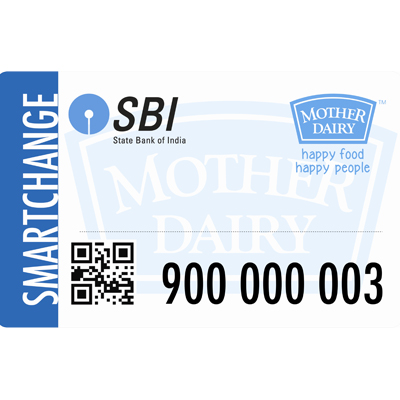
    MUMBAI: Mother Dairy Fruit & Vegetable has strategically tied-up with State Bank of India (SBI) to launch ‘SBI – Mother Dairy SmartChange Card’ for Mother Dairy Milk Booths in Delhi & NCR.


    The first-of-a-kind initiative in the dairy industry will facilitate consumers towards a more convenient mode of payment at Mother Dairy milk booths. These SmartChange Cards will allow the consumers to pay conveniently through this card instead of paying cash and particularly coins, for every purchase at the Mother Dairy booths.


    Mother Dairy Fruit & Vegetable MD S Nagarajan said, “At Mother Dairy we believe in always keeping our stakeholders at the core of all our activities.  We  realised  that  we  had  a  dual  problem  of tendering exact change to consumers after purchase from booths and also for cash handling hassle for concessionaire due to usage of  coins.  While it left the consumers peeved,  it  was  also  not always possible for retailers to tender exact change all the time. This made us realise that while consumers were looking at a solution to this problem, so are the retailers who even do not like seeing consumers returning unhappy.  Hence, we decided to launch the SmartChange Cards at our booths. We are hoping this initiative will start a trend and will ease the life of consumers further in the long-run.”


    Nagarajan further added, “While the solution to the problem was apparent our next step was to find the right partner for this project. The choice to tie-up with SBI was not difficult, keeping in mind its strength and capabilities to provide this initiative with the required back- end support and infrastructure.”


    State Bank of India corporate strategy and new businesses deputy MD SK Mishra said, “State Bank has always been the principal Banker for Mother Dairy and has an association with them since decades. Introduction of a “SBI-Mother Dairy SmartChange Card” is a joint initiative to facilitate cashless payment across Mother Dairy Booth outlets. The Card is specifically designed to be easy to use and convenient to cater to the needs of Mother Dairy Booth consumers and is positioned as an alternative to use of small notes / coins at Mother Dairy Outlets. “


    With this launch, the SmartChange Card service will now be available to 150 booths in its initial phase of three months.

  • SBI selects Global Advertisers for outdoor promotion

    SBI selects Global Advertisers for outdoor promotion

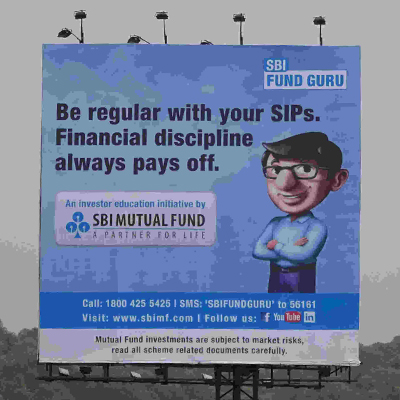
    MUMBAI: Global Advertisers has once again won the account of State Bank of India’s outdoor mandate.


    Despite tough pitching against the media agencies, the OOH agency got the deal on the basis of best rates, innovation and widest range of premium inventories. The agency’s mandate is to promote Systematic Investment Plan (SIP) of SBI pan India, covering 21 cities.


    In order to create awareness and increase the number of investors for SBI, Global Advertisers engaged its finest hoardings and bus media at the strategic locations in all cities.


     “We are driven by the philosophy of quality service and assured returns for our clients. At Global we conceptualised the campaign keeping in mind the high visibility for the brand and the existing competition level. The campaign aims to help potential investors in SIP by guiding them about the market risks and benefits,” said Global Advertisers MD Sanjeev Gupta.


    He further added, “We are glad to meet the expectations from our client, being the top brand in the banking sector. SBI showed deep faith in our approach and the impact of our campaign is out for everyone to look at.”

  • GroupM crowned ‘The Dream Company to Work For’

    GroupM crowned ‘The Dream Company to Work For’

    MUMBAI: GroupM India, the country’s largest media investment conglomerate, was honored with the ‘The Dream CompanyTo Work’Award for in the Media and Entertainment sector. GroupM is also in the overall list of ‘Dream Employer of the Year’in India. The awards have been conferred by the World HRD Congress 2014 in Mumbai.

    The ‘Dream Companies To Work’ is an annual event organized by the World HRD Congress to reward and recognize People and Talent initiatives of organizations across various sectors. Over 100 companies participate at the World HRD Congress 2014event including Accenture, Angel Broking, Citibank, HDFC, Infosys, Samsung, SBI, Cavin Care,Reliance, Novartis,TCS and many more.This was the first time that GroupM participated at the ‘Dream Companies to Work For’ Awards.

    CVL Srinivas, CEO, GroupM South Asia said, “GroupM is extremely proud to receive the awards from the World HRD Congress. The awards reaffirm that investing in our people is the best way to ensure cutting edge product quality and superlative customer delight. Talent management remains a critical focus area for us at GroupM South Asia.”

    Added Gaurav Hirey, Chief Talent Officer, GroupMSouth Asia, “GroupMand its agencies have pioneered some of the best Talent practices in the South Asia markets. We are investors in people and in the last year, we have aggressively pursued a people transformation agenda. We have worked on various capability-building initiatives like the Youth Executive Committee (YCo), The New ME Initiative for digital orientation and looked at getting in fresh ideas and talent through an engaging Campus Connect effort. This allows us to provide huge value to all our stakeholders, especially our clients and our employees.”

    Over the last 11 plus years, GroupMIndia has cemented its position as an innovator and thought leader in the media industry. GroupM also has a distinction of having invested in a full fledged talent management team the only one in the media and entertainment industry. Over the last year, GroupM has made a paradigm shift in the way it operates in South Asia, keeping in mind the ever changing media landscape. With digital at the heart of their processes and planning, it has resulted in the conglomerate winning over 82 new businesses across its agencies and specialist units.


  • Banking on social media

    Banking on social media

    MUMBAI: Given the customer centric nature of banking, financial services and insurance (BFSI) business, it is evident that banks need to constantly engage with their customers. And what better platform than using the digital medium that gives them the scope to interact with their customers on a regular basis.

    It is no surprise to see the banking sector using popular outlets such as Facebook, Twitter, Pinterest, and YouTube to connect with their customers and attract new ones.
    Here‘s how two BFSI entities – SBI Life Insurance and HDFC Bank use social media

    “The digital platform is an opportunity for us. However, to unlock its potential to the maximum, it makes sense to view the possibilities holistically, rather than confining it to merely a function or limiting the scope to a single dimension. We use the digital space for customer acquisition, brand building, service and distribution,” says SBI Life Insurance vice president and head-brand corporate communication and cross sell Chandramohan Mehra.

    SBI Life Insurance which initially followed a strategy of having differentiated content on Facebook and Twitter, now with its increasing fan base is transforming it into a holistic channel. “We are now stretching the scope of social media presence to promote and facilitate online product purchase, customer education and employee and distributor recruitment,” informs Mehra.

    SBI Life is the only life insurance company to have a website in nine Indian languages. “This enables customers to understand our products and services in language they are most comfortable with, before taking a well-informed decision,” he adds. And the company is using its social media presence to draw in potential and existing customers to its own website to keep them informed about developments, products and offerings.

    The insurance company is involved in creating video content in the area of customer education and services, specifically for online visitors. “We have developed apps and games including a virtual life insurance crossword, contests on facebook, e-life insurance dictionary and tax calculator. With increasing penetration of smart phones, we have intensified our efforts on developing apps that will be relevant to both internal and external audiences,” reveals Mehra.

    The use of digital media has helped companies to collect sizable amount of data about the customer‘s needs. The challenge, however, is to make sense of it. “Based on web analytics, integrated with social customer relationship management, one of the possibilities that exists is reaching out to the relevant audience, with targeted message at the right place and time,” Mehra opines.

    SBI Life Insurance creates content for YouTube which caters to varied audiences. “While prospective customers are served through viral ads and educational videos, for existing customers we have service related videos. We engage our employees and potential agents through testimonial videos and the general public through content pertaining to awards and recent recognitions bagged by SBI Life,” informs Mehra. SBI Life Insurance, which currently has 626,272 likes (at the time of writing) on its Facebook page, feels the fans on Facebook are irrelevant if it doesn‘t engage them.

    Engagement score is one of the key metrics we closely follow and we have one of the best engagement scores in the BFSI,” says Mehra. The insurance company has launched many exciting online campaigns. “In light of the Uttarakhand tragic event, we have started speedy claim assistance on our Facebook page. This is one of our initiatives through which we are trying to reach out to our existing customers,” he informs.

    HDFC Bank also engages its customers across social media platforms including Facebook, Twitter, You Tube, Linkedin, Google Plus, Pinterest and Foursquare. “We use updates, offers, financial awareness tips and monthly contests and applications to interact with customers on regular basis,” says a senior official from HDFC Bank. HDFC Bank currently has over 1.5 million fans on Facebook and a total of over 15,000 followers on Twitter handles.

    HDFC Bank gives financial awareness tips and hosts monthly contests to interact with customers

    “Given the customer centric nature of business, we have to ensure that we are present where our customers are and they are present on social media, voicing their views, opinions and engaging with others,” he adds. The bank posts a variety of content on various digital platforms including financial trivia, quizzes, opinion polls, offers on credit and debit cards, bank news, information about their products and services and comments around personal finance, etc.

    “Impressions are generated when viewers see and react to these posts. Updates are created specific to the kind of platform being used for communication,” reveals the senior official.

    “We use digital media to monitor customer feedback, address customer queries/complaints, communicate our products and services and derive insights on them from customers, educate customers, increase financial awareness and also do location based targeting of offers,” he adds.

    HDFC Bank, through its various social networking platforms tracks, identifies and responds to various issues highlighted by customers online. “We are one of the few banks in India which allows users to post on our Facebook page and have been recognised as the most responsive brand on Facebook in India,” he informs.

    The bank has tailored its digital content to help customers learn about their products (including offers and deals), knowledge on managing their finances and gain insights on the economy and finance.

    The digital bug has crawled into the banking sector. With the changing financial paradigm, banks have found an easy way to stay connected to its customers.

  • Vikram Hospitals awards digital & social media duties to Spiider Digital Hub

    MUMBAI: Vikram Hospitals has appointed the digital arm of Concept Group, Spiider Digital Hub, to take care of its digital and social media mandate.

    The agency had to beat nine rivals to bag the account.

    Based out of South India, Vikram Hospitals is a chain of specialty hospitals located in Bangalore, Mysore, Mandya and Tumkur.

    The hospital chain is looking for brand engagement in the online space and aims at enhancing the “Patient-first, patient centric approach” they are guided by.

    Spiider Digital Hub MD Kushal Sanghvi said, “With our expertise in digital marketing and social media along with the various in-house social media mapping tools at our disposal, we hope to provide them with revolutionary brand engagement techniques that will give them widespread exposure and engagement in the digital arena. Our main focus will be social media. Additionally, we will also be spreading education about health. We will be doing viral marketing, video dissemination, search optimisation and other smart things.”

    Vikram Hospitals MD Dr. Vikram added, “The online space can help us serve and bind well with our prospects better than any other medium as it allows us to stay connected with them all the time with real-time updates and we hope that this new venture will help us connect more with the digitally inclined and savvy future generation and create a strong engagement opportunities for our brand.”

    Spiider Digital Hub also handles brands like IOCL, SBI and Religare.

  • Percept/H Delhi appoints Rajiv Agrawal as ECD

    Percept/H Delhi appoints Rajiv Agrawal as ECD

    MUMBAI: Percept/H has appointed Rajiv Agrawal as executive creative director for its Delhi branch. He joined the agency on 13 September and will report to Percept/H chief creative officer Ryan Menezes.


    Formerly, Agrawal was creative director at Lowe Lintas, Delhi and before that senior creative director at JWT. He has also worked with Ogilvy and Draftfcb Ulka.
     
    Agrawal said the creative freedom he was to get as the ECD was one of the primary reasons he moved.


    “Everyone’s take on creativity differs. In bigger agencies this problem seems to exacerbate, as too many people are involved in the creative process. In the field of advertising its very important to have the elbow room; and here as the ECD I will get that,” Agrawal added.


    Besides managing the brands – agency’s Delhi branch handles – such as Hero Honda, Canon and Delhi Police, Agrawal’s mandate also includes getting new businesses and amplifying brand Percept/H’s creative portion. 
     
    “Percept/H is a strong creative agency with a sound business model. Besides getting new business, we are also working towards enhancing the creative side of our agency – strike balance between business and creativity. We will do that by getting new businesses,” Agrawal concluded.


    In his over 17 years of experience Agrawal has worked for brands such as Pepsi, Mountain dew, SBI cards, Horlicks, Monster.com, GE Money, and Hero Honda.