Tag: Saurabh Shukla

  • ‘Kick’ …Get a kick out of it!

    ‘Kick’ …Get a kick out of it!

    MUMBAI: Other films may have done more business at the box office but 2009’sWanted created a new slot for Salman Khan; that of a walking talking killing machine, a Superman (but without his sartorial taste of wearing his underwear over his pants). Being a Hindi film hero, he also has to simultaneously carry out the tougher job of maintaining and placating a girlfriend, and sing and dance with her in garish club sets. Ever since Wanted, films are made for Salman to fit in that same mold which assures success. The planned Eid release, something which now seems like a fixed slot for Salman starrer, adding hugely to the film’s prospects.

    Salman is on a mission; he needs to find a person who, he thinks, is responsible for a certain crime despite being in high position in politics. Meanwhile, he notices Jacqueline Fernandez, a psychiatrist, when she is wearing horn-rimmed glasses and looks like a nerd—though she changes to tiny dresses when she is ready to romance and dance the jig with the hero.

    Impressed with Salman and very much in love with him, Jacqueline ‘s love story with Salman is not quite convincing and uses up most of the first half offering nothing except a few songs on the viewer. Then, Salman is taunted by Jacqueline about his monetary status. He vows to spend his time on making money and turns into a contemporary Robin Hood. It is another matter that a little later his cause for raising money is a small kid suffering from cancer. He makes raising monies for children needing medical attention his life’s mission.

    There is a little girl who is dying of cancer and, unable to meet the expenses of her operation, her parents commit suicide. Salman takes up the cause of that child and approaches the big shots of the town for help. One of the big shots (and a minister), Nawazuddin Siddiqi, along with a bunch of his sycophants, makes the mistake of insulting him by donating Rs 100 while he needs Rs 11 lakh for the child’s survival. That is a reason enough for Salman to eliminate the gang of Nawazuddin one after the other.

    Producer: Sajid Nadiadwala.

    Director: Sajid Nadiadwala.

    Cast: Salman Khan, Jacqueline Fernandez, Randeep Hooda, Nawazuddin Siddiqi, Mithun Chakraborty, Saurabh Shukla, Vipin Sharma, Sanjay Mishra, Archana Puran Singh, Kavin Dave, Sumona Chakravarti and an item number by Nargis Fakhri.

    Meanwhile, the action has shifted to Poland and an Indian cop, Randeep Hooda, is following Salman’s tracks. He is willing and ready to shoot Salman but never does so when Salman is around him because he comes in the guise of a friend, Devi Lal while the thief Hooda is chasing is called Devil (al)!. While Salman and Hooda play cops and robbers, a lot of Nawazuddin henchman millionaires back in India are being robbed. Nawazuddin is exasperated and desperate to find the culprit and add his death to his reputation.

    The film turns into a caper as Salman carries out a number of heists in varied ways maintaining his humour all the while. These missions are serious business for Salman and his romance with Jacqueline has been called off, while Hooda, who has come to Warsaw chasing Salman, happens to be her family friend and it is left to her to look after him. A sort of triangle is formed. Though predictable and seen earlier, now the sequence is such that Salman is hunting for Nawazuddin and Hooda is hunting for Salman the Devil. These are the parts that make Kick interesting as would be expected from a Salman action thriller.

    The script, as should be apparent, is a bit messy .There is nothing solid happening in the first half except a romance without chemistry. All the action is in the second half where there are some sudden jumps and locations unexplained. You don’t know whether you are in Delhi or Europe, whether one is in past or in present as the things unwind. Sajid Nadiadwala’s foray into direction considering these glitches in the script is satisfactory. What matters is that it will go down in the record books as ‘A super hit on debut’ for him. The film has competent cinematography by Ayananka Bose. The film’s music is not up to the mark and adds to the tedium of the first part. The one song which has popular appeal is ‘Jumme ki raat…’ Dialogue has the usual Salman one liners laced with humour.

    The film belongs to Salman Khan all the way and he is in full form. Randeep Hooda comes in a different role and justifies it. Nawazuddin as a maniacal villain, the kind you see in a Bond film or a super hero film, may not come across as strong enough against Salman but looks sinister enough to be slayed. Jacqueline is okay. Mithun Chakraborty as Salman’s father complements him well. Kavin Dave and Sumona Chakravarti lead the supporting cast of able actors like Saurabh Shukla, Vipin Sharma, Sanjay Mishra and Archana Puran Singh.  

    Kick has taken a thundering opening despite coming on the last Friday of Ramzan and Kavad processions in the North as a Maha Shivratri ritual. The film is expected to break first day records and enjoy a ‘10 day weekend’ at the box office and creating more records.

  • Hindi films dominate the 61st National Film Awards

    Hindi films dominate the 61st National Film Awards

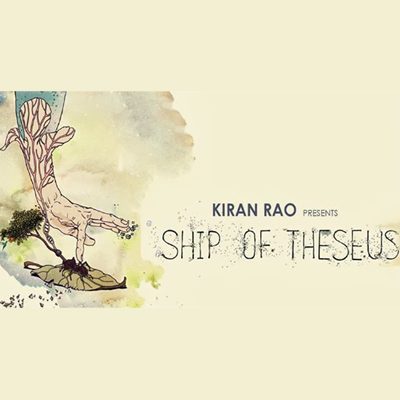
    NEW DELHI: The highly acclaimed film ‘Ship of Theseus’ in Hindi and English which has already won several awards overseas was declared the best film of 2013 in the 61st National Film Awards, while Hansal Mehta bagged the award for best director for his Hindi film ‘Shahid’.


     The best actor award was shared by Raj Kumar of ‘Shahid’ and Suraj Venjaramoodu for the Malayalam film ‘Perariyathavar’ by Dr Biju which also bagged the award for the best film on environment/conservation.


     The best actress award went to Geetanjali Thapa for her role in the Hindi film ‘Liar’s Dice’, while the supporting actor went to Saurabh Shukla for ‘Jolly LLB’ in Hindi. The supporting actress award was shared by Amruta Subhash in the Marathi film ‘Astu’ and Aida El-Kashief in ‘The Ship of Theseus’. The best children’s film was ‘Kaphal’ by Bahul Mukhtiar in Hindi while the best child artiste award was shared by Somnath Avghade of ‘Fandry’ in Marathi and Sadhana of the Tamil ‘Thanga Mangal’.


     Hindi films once again dominated the National Film Awards by getting as many as fifteen awards among feature films. Marathi came next with ten awards followed by Bengali with six and Tamil and Kannada with five each and Malayalam with four.


     However, the highest number of awards went to the Bengali film ‘Jaatishwar’ which won awards for best female playback for Rupankar and the film ‘e tumi kemon tumi’, best costume for Sabarni Das, best make-up for Vilram Gaikwad (for hero Prosenjit) and Kabir Suman for best musical score.


     ‘Bhag Milkha Bhag’ by Rakeysh Omprakash Mehra bagged the award for the most popular film providing wholesome entertainment. ‘Fandry’ got the Indira Gandhi Award for best directorial debut by Nagraj Manjule, the Nargis Dutt award for national integration for Balu Mahendra’s tamil film ‘Thalaimuraigal’ and the social issues award went to the Marathi ‘Tuhya Dharma Koncha’ by Satish Manwar.


     All the films will get awards ranging between Rajat Kamal and Swarna Kamal and Rs 50,000 to Rs 2.5 lakh.


     The best non-feature film is ‘Rangabhoomi’ in Hindi by Kamal Swaroop for Films Division and best debut director for shorts is Christo Tomy of SRFTII for the Malayalam ‘Kanyaka’, with Pranjal Dua getting the best direction award for ‘Chidhiya Udh’ without dialogues.


     The Telugu ‘Cinema Ga Cinema’ by Nandagopal got the best book on cinema award while English critic Alaka Sahani got the best critic award.


    The feature jury was headed by Saeed Akhtar Mirza, the non-feature by Reena Mohan and the book jury by Sharad Dutt.


    The Dadasaheb Phalke Award and the National Film Awards are expected to be given on 3 May to coincide with the release of Phalke’s ‘Raja Harishchandra’ on that day in 1913.


    Please click for the detailed list of awards

  • Gunday: Old wine rebottled

    Gunday: Old wine rebottled

    MUMBAI: Gunday is a story based in 1970s and 80s. And, in keeping with the era, the story is also what was called mass masala in those days. What is new about it? Well, after seeing a lineup of films with Delhi background, this has Kolkata as the backdrop.

    Ranveer Singh and Arjun Kapoor are two orphaned refugee kids from Bangladesh who join the tide of other refuges and enter a refugee camp in Bengal. Wanting to cash in on their innocence, an officer and a tout decide to use them as conduits to transport guns outside the camp. When the officer gets the urge for a woman and finds none in the camp, he decides to use one of the two boys. This leads to the boys committing their first crime as the officer is shot dead. They make their escape on a goods train carrying coal and come to Kolkata.

    While doing odd jobs, they dream big, which of course, is not easy to achieve unless one gets into illegal dealings. They see the use of coal all around and think of the wagon train they travelled in and decide to steal from wagons and sell coal at half the market price. It is the 1980s now and the lads have grown up and graduated to stealing entire trainloads of coal instead of just a few kilos, in the process killing the earlier don and his whole gang. With that materialises the car and the home they dreamt of all along. The boys are more than blood brothers, so inseparable that they even share the same bed!


    Producer: Aditya Chopra.

    Director: Ali Abbas Zafar.

    Cast: Priyanka Chopra, Ranveer Singh, Arjun Kapoor, 
    Irrfan Khan, Saurabh Shukla. (Darshan Gurjar and Jayesh
    V Kardak as young Ranveer
    and Arjun.)

    The two soon start other businesses and even have a logo designed for their ventures: BB (for Bala and Bikram, the screen names). While they have been busy building an empire and establishing themselves as the most feared dons of Kolkata, the police chief is busy collecting a horde of files on their crimes. As the duo looks unstoppable, the chief hands over the case to one cop who can stop them – Irrfan Khan. But they remain unperturbed as even with so many files, the police had no proof or witnesses so far. Irrfan takes on the onus to collect proof against them. He starts his job by planting a mole around them.

    The duo has financed a night club and gets the privilege of inaugurating the club. There they set their eyes on Priyanka Chopra, the club’s star performer. Both fall in love with her instantly. Two men in love with same woman, just the situation that is enough to put their friendship to the test. Circumstances are created whereby not only the friendship is broken but now the friends for life are ready to kill each other. The enmity starts with a no-holds-barred fistfight and later leads to the use of guns.

    As the film gets into the latter parts post interval, things become predictable. The surprises don’t surprise the viewer.

    With few characters to carry it, the film is too lengthy at 153 minutes. It could have been shorter. With a loose script, the direction is copybook, offering no sparks of genius. Kolkata locations are exploited well. The film’s music works to its advantage with three songs having popular appeal in Asalaam- e-ishqum…, Jashn- e- ishq…… and Tune maari entriyaan and has helped the film get a better opening. The lead actors, Ranveer and Arjun are not really known for histrionics but having nothing negative against their names so far, they draw the young crowd. However, they needed a younger girl to fall in love with rather than Priyanka whom one would consider in the senior league. Irrfan and Saurabh Shukla are good as usual.

    Gunday has had a good opening all over (Delhi, NCR and UP affected a bit earlier in the day due to rains). With solo release as an advantage and its two young heroes, the film has everything working for it at the box office.


  • Jolly LLB: A not so jolly fare

    Jolly LLB: A not so jolly fare

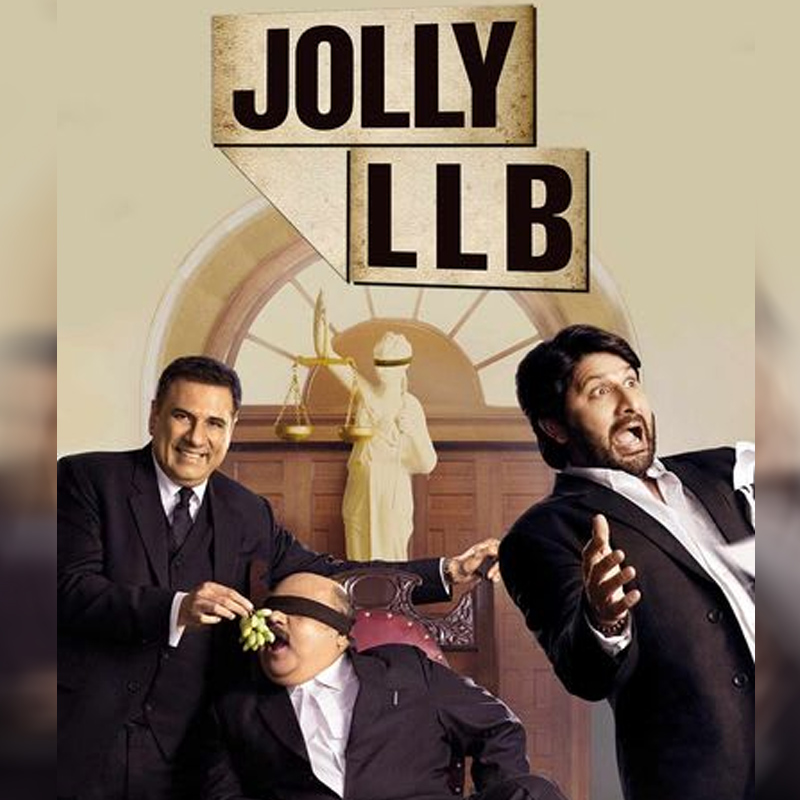
    MUMBAI: Courtroom drama is a rare genre in Hindi film industry, possibly because there is little that is exemplary or inspiring coming out of legal stories. Also, a courtroom drama is a verbal battle of wits and needs good script and skill with dialogue, both of which are rather tough to find. In such an event, the inspiration has to come from a foreign film, especially to base your protagonists on. Arshad Warsi‘s character, in that case, identifies with that of Joe Pesci in the 1992 Hollywood hit, My Cousin Vinny. Only, here it is blended with the screen persona of Warsi. And so also that of the judge, played here by Saurabh Shukla. Of course, the plot is given an Indian hue having been based on the story of Delhi‘s infamous Sanjeev Nanda case about drunken driving, running over and killing six people in 1999.

    Producers: Fox Star Studios
    Director: Subhash Kapoor.
    Cast: Arshad Warsi, Boman Irani, Saurabh Shukla, Amrita Rao, Mohan Kapoor, Mohan Agashe, Harsh Chhaya, Manoj Pahwa, Ramesh Deo.

    Warsi is a lawyer in Meerut, a town about 70kms from Delhi. Like many of his breed, he chases and solicits clients for simple court proceeding like affidavits since nobody would trust him, a fresh out-of-college lawyer, to handle a serious case. In any case, high profile cases are not happening in his town. His ambition to make it big as a legal luminary seems impossible to him in Meerut. Convinced that his only chance to make it big is to go to Delhi, he makes the move leaving his girlfriend, Amrita Rao, behind. Once in Delhi, things are no different. He is still running after anybody and everybody in the court premises seeking a client for simple court paperwork.

    Boman Irani, who ranks among the top few lawyers, is in the district court to defend one of his most controversial clients, Rahul Dewan, the scion of the big business house. The scion has driven his car into six people in a drunken stupor killing them all. Since Irani, one of the renowned practitioners is handling the case, Warsi, among others, is also in the audience to learn a thing or two and he is awed by the way Irani gets his client released in a few minutes.

    Warsi is impressed but idle as he is, decides to dig into the case thinking that this is his chance and that, in India, a PIL is the best way to get noticed and draw media attention overnight, especially, in a case is as controversial as this. The whole world and the media knows the scion killed people but Irani proved it otherwise. A novice, Warsi, who has never argued a court case, learns from his adversary, Irani, and goes along to use what he learnt from him against him as the things proceed. But Irani proves too smart for him, because Warsi‘s prime eye-witness turns out to be Irani‘s plant. Irani uses Warsi to get his dues from the Dewans.

    After that, the scriptwriter takes an easy route; there is a constable who auctions and allots prime posts in Delhi police to the highest bidder (the one with a 65-lakh bid for Delhi Sadar gets the plum post). He agrees to handover the accident videos to Warsi. This is script writing of convenience.

    Warsi is the underdog and has taken on a big fish in Irani and the media want to ride with him. However, the viewer goes along with Saurabh Shukla, the judge, for he is also with the underdog because as he says, ‘The law may be blind but the judge is not.‘ His other observation: ‘The day the case begins, I know what is right but I need to wait till somebody presents proof.‘

    The problem with the handling of Jolly LLB is that, with Warsi and Irani in the lead, it has been promoted as an outright comedy; that is the impression all its media promotion gives. However, the film is never sure about its aim. It keeps swinging between a comedy, a serious social issue and a dig at the Indian judicial system. It could simply have been a good vs. evil or a right vs. wrong story.

    The script is bereft of excitement or twists and turns that could hold a viewer‘s interest. The film has but one such, when Harsh Chhaya turns out to be Irani‘s plant. Director Subhash Kapoor does just a passable job as his characters lack consistency; Irani is a lawyer rated along with Sibal and Jethmalani but loses control at the smallest of adversity while Warsi‘s ambition is to make a name but falls for the first carrot hung at him, a cut of Rs 20 lakh. In this film pitting Warsi and Irani, it is the referee, the judge, who steals a march; Saurabh Shukla is excellent. Amrita Rao, Warsi‘s love interest has nothing much to do. Dialogue doesn‘t provide scope for the verbal duel one would wish for in a courtroom drama. Music is of little help.
    Mere Dad Ki Maruti: A flat script

    Producer: Ashisha Patil.
    Director: Ashima Chibber.
    Cast: Saqib Saleem, Rhea Chakrobarty, Ram Kapoor, Prabal Punjabi, Ravi Kissen, Benazir Shaikh, Karan Mehra, Ritu Khanna Vij.

    A Punjabi wedding becomes impressive depending on the gifts bestowed on the son-in-law and to a filmmaker it gives a chance to fill the screen with colour, dances and songs.

    Ram Kapoor‘s daughter, Benazir Shaikh, is due to marry her boyfriend of many years, Karan Mehra. Kapoor is very happy at the choice as he has always liked Mehra more than he likes his son, Saqib Saleem. For his only daughter, he has decided to gift a high-end Maruti car as a bidaai gift. Saleem does not think much of his brother-in-law to be and thinks it is unfair to give away a new car to him on pretence of giving it to his sister when he himself has no car of his own. Saleem has a sidekick in Prabal Punjabi.

    Saleem likes a particular college hottie, Rhea Chakarobarty, and often tries to approach her but she is hooked to another guy. But then Chakrobarty ticks off her boyfriend and Saleem sees a chance for him to invite her out that night. Wanting to impress his date, Saleem decides to ‘borrow‘ the new Maruti delivered the same day. His plan is very simple: take the car out on the sly, impress the girl, replace it quietly and no one need be any wiser. All goes according to plan and it is time to drop off Chakrobarty back to her hostel. Having done that, Saleem decides he has not had enough of the evening yet. He goes back to the bar to enjoy some more. He is too excited at the outcome of the evening to see that he is handing over the car keys to a person dressed in black, thinking that is the valet.

    There is a girl by his side and car keys in his hand. The man in black decides to take a spin. When he stops to try some ideas with the girl, the cops spring up. The man in black vanishes, leaving the car. The car makes one more journey on its own when a few kids see the car in unlocked, they push it and it lands in some no man‘s land kind of lane.

    Saleem and his sidekick Punjabi are done at the bar and want the car keys from the real valet. His troubles start here. There is no car and Kapoor is sure to find the garage empty in the morning. All sorts of tricks are resorted to so that there is a car in the garage, with the same model and same colour for Kapoor to see until the real one is found. From here till the car is traced should have been a fun ride but it is not. The writers do not manage to give the viewer much enjoyment or thrill until about 15 minutes before the end.

    Mere Dad Ki Maruti comes from Y Films, a division of Yash Raj Films, under which the company gives opportunities to new ideas and talents. However, in the case of Mere Dad Ki Maruti, the idea has come from the Hollywood hit, Dude, Where‘s My Car? Just finding a good starting point is not enough even if it has come from a foreign film. And with newer faces in the lead, the script needed to be solid.

    With content that has little to work on and a budget that is limited; director Ashima Chibber (also one of the three writers) does not deliver. Dialogue is routine and quite a lot of it in Punjabi. Music is all Punjabi and to those who don‘t dig it, it is just a lot of sound. Fine, it is about a Punjabi wedding and based in Chandigarh but did it have to be an almost Punjabi film? Ram Kapoor, in fact, struggles to pass off as a thorough Punjabi. Saleem can loosen up a little. Rhea Chakrobarty and Prabal Paunjabi are okay. Karan Mehra is good in a brief role. Ravi Kissen in a cameo is effective.

    Mere Dad Ki Maruti may be one of the most economical films made and released only through digital platform but is a disappointment for the exhibitors since only a good word of mouth could have brought some patrons to the halls which is unlikely.

  • Indian Express, CNN-IBN journalists win MS Oberoi media awards

    Indian Express, CNN-IBN journalists win MS Oberoi media awards

    MUMBAI: Transparency International India, an international NGO with support from the Oberoi Group has instituted the first MS Oberoi Awards aimed at recognising and rewarding journalists for outstanding stories exposing corruption in India.

    Varghese K George from Indian Express and Rohit Khanna from CNN-IBN won The Gold Award. The Silver Awards were shared by ML Narsimha Reddy of the Telugu Daily Eenadu, and Samudra Gupta Kashyap of the Indian Express in the Print category and by Saurabh Shukla of Aaj Tak and Siddhartha Gautam of CNN-IBN in the Electronic category.
    The jury comprised o B G Verghese, Harsh Mander, Justice Leila Seth, Vinod K Bakshi and Arun Duggal.

    Verghese said, “While shortlisting the entries and selecting the winners, the jury has given weightage to stories that have direct and significant effect on development, progress, human rights violation or public interest. Also the impact and significance of such disclosures and the risks and challenges countered by the journalist in breaking the story were among the factors taken into consideration in making the final decision.”

    Announcing the awards Transparency International India chairman Tahiliani said, “Transparency International aims to increase the level of accountability and transparency of government institutions, elected representatives and the government. In a democratic society all citizens need to take a stand against corruption and must therefore be well informed. The electronic and print media have played a vital role in generating awareness through their reach.”

    The Oberoi Group chairmans P R S Obero added, “Journalists, who often at substantial personal risk, investigate and expose corrupt practices deserve applause, recognition and encouragement. The Rai Bahadur M.S. Oberoi Media Awards are an effort to demonstrate our admiration for these compelling tales of courage, character and integrity. I would like to congratulate the winners for their exemplary zeal, which if relentlessly pursued by all of us, has the potential of making India a better place to live in and do business with.”

    The presentations will be made on 11 January in New Delhi.